Comparison: Perforce and Microsoft Team Foundation Server (TFS)
←
→
Page content transcription
If your browser does not render page correctly, please read the page content below
Comparison:
Perforce and Microsoft Team
Foundation Server (TFS)
Perforce 2012.1 and Microsoft Team Foundation
Server (TFS) 2012
This document compares Perforce (version 2012.1)
with Microsoft TFS (version 2012). Read this
comparison to:
• Understand Perforce and TFS’s major feature
differences
• Explore differences in architecture, administration,
and scalability
• See where Perforce and TFS can work together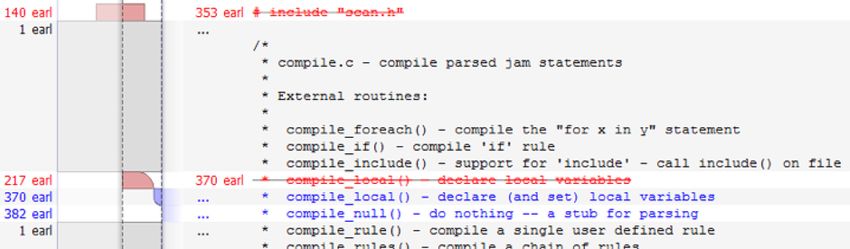
Table of Contents

            Executive Summary________________________________________________________________ 1

            Overview_________________________________________________________________________ 1

            Branching, Merging, and Release Management_______________________________________         2
                TFS __________________________________________________________________________        2
                    Basic Branching and Merging________________________________________________       2
                    Inefficient Merges Lead to Conflicts___________________________________________   2
                    Ignored Merge History Loses Data____________________________________________      2
                    Indirect Merging Not Supported in TFS________________________________________     4
                    Branching Model and Guidance______________________________________________        4
                Perforce______________________________________________________________________        5
                    Basic Branching and Merging________________________________________________       5
                    Branching Model and Guidance______________________________________________        5

            Workspace Management___________________________________________________________ 6
               TFS __________________________________________________________________________ 6
               Perforce ______________________________________________________________________ 6

            Visual Tools_______________________________________________________________________ 6
                TFS __________________________________________________________________________ 6
                Perforce ______________________________________________________________________ 6

            Integration with Related Tools______________________________________________________ 8
                TFS __________________________________________________________________________ 8

            Administration and Support________________________________________________________ 9
               TFS __________________________________________________________________________ 9

            Distributed Development and DVCS Support________________________________________ 10

            TFS		   _________________________________________________________________________ 10
                Perforce_____________________________________________________________________ 10

            Scalability and Performance_______________________________________________________ 10
                TFS _________________________________________________________________________ 10
                Perforce_____________________________________________________________________ 10

            Learn More______________________________________________________________________ 11
                Evaluating Perforce___________________________________________________________ 11
                Scheduling a Demo of Perforce_________________________________________________ 11
                Migrating to Perforce__________________________________________________________ 11

Comparison: Perforce and Microsoft Team Foundation Server (TFS)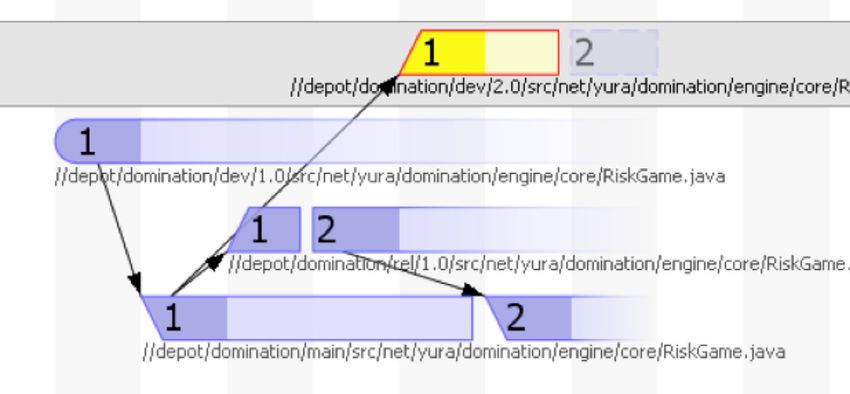
EXECUTIVE SUMMARY
The choice of software version management system profoundly                      This document compares Perforce (version 2012.1) with
affects those involved in digital asset management, from software                Microsoft Team Foundation Server (version 2012), contrasting
developers to artists to managers. An effective software version                 major feature differences and exploring system architecture,
management system is one that:                                                   administration, and scalability. For those using TFS as a work item
•   Provides a full history of the evolution of digital assets                   (issue) management system, a method of integrating Perforce
                                                                                 software version managment with TFS work items is explored.
•   Enables parallel development and concurrent team activity
•   Helps the entire team work more efficiently                                  The analysis in this paper suggests that Perforce is a more
                                                                                 productive and robust software version management system
•   Meets modern development and scalability challenges
                                                                                 with significant advantages in scalability and total cost of
•   Offers fast, flexible, and reliable service                                  ownership. Perforce handles basic and advanced software version
While Microsoft Team Foundation Server (TFS) has several                         management operations more reliably, provides innovative tools,
other Application Lifecycle Management (ALM) components,                         is simpler to install and scale, and does not dictate workflow and
including task tracking and build management, this paper will                    tool selection.
concentrate on the versioning component of TFS.

OVERVIEW

Usability and Collaboration

    Attribute                              Team Foundation Server (TFS)                             Perforce

    Branching, Merging, and                TFS offers basic branching and merging. TFS’s            Perforce automatically tracks the history of all
    Release Management                     lack of support for advanced merging hampers             branch operations with its advanced merge tracking
                                           productivity. Branching framework and release            mechanisms. Streams provide best-practices
                                           model mostly designated by convention.                   branching framework. Granular triggers and broker
                                                                                                    available for guidance.

    Workspace Management                   Changelists are not created until work is submitted.     Changelists can be used to organize work in a
                                           Workspace views are simple 1:1 mappings.                 workspace. Workspace views allow more flexible
                                                                                                    selection of working files.

    Visual Tools                           TFS clients available in Visual Studio, Eclipse, and a   Full-featured multiplatform standalone visual
                                           web client. A simple branch graph is provided.           client available, as well as fully supported
                                                                                                    integrations for Visual Studio and Eclipse.
                                                                                                    Third-party integrations support several other
                                                                                                    IDEs. Visualization tools include Stream Graph,
                                                                                                    MergeQuest, Revision Graph, Time-lapse View, and
                                                                                                    more.

    Integration with Related Tools         TFS includes several Application Lifecycle               Perforce follows a best-of-breed approach and
                                           Management (ALM) components. Integrations                offers fully supported integrations with leading
                                           are available from third parties. APIs available for     defect tracking and build tools, including TFS work
                                           .NET, Java, and web services..                           items. Integration tools include the Defect Tracking
                                                                                                    Gateway and several Perforce APIs. Third-party
                                                                                                    integrations are also available for tools in many
                                                                                                    other categories.

Comparison: Perforce and Microsoft Team Foundation Server (TFS)                                                                                           1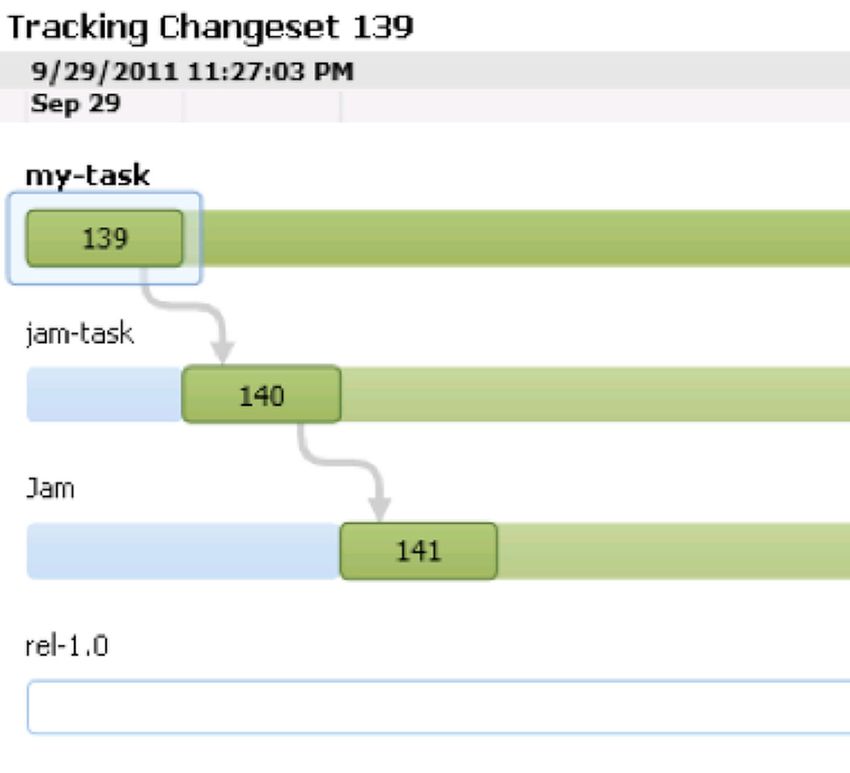
Administration and Scalability

    Attribute                         Team Foundation Server (TFS)                           Perforce

    Administration and Support        Supported by Microsoft. Administration requires        World-class technical support, training, and
                                      knowledge of several components including              professional services provided by Perforce. Simple
                                      TFS, SQL Server, IIS, and SharePoint. All              and consistent deployment results in lower
                                      server components are Windows only. Upgrade            administration costs. Excellent multiplatform
                                      procedures can be complex.                             support. Simple upgrade procedures with good
                                                                                             interoperability across versions.

    Remote Development                Proxy servers cache file content at remote sites.      Perforce Git Fusion provides seamless collaboration
                                      Local workspaces allow some operations to be           for Git users. Proxy and replication services offer
                                      performed while disconnected.                          file and data caching solutions for remote sites for
                                                                                             several scenarios.

    Scalability and Performance       Scaling TFS may require a complex topology with        Perforce scales up to many terabytes and tens of
                                      multiple clustered data and application tiers. The     millions of versioned files. Perforce is currently
                                      data tier can be partitioned across sites, but no      deployed in environments with 10,000+ users and
                                      replication is available.                              heavy automation. Proxies, Brokers, Replication
                                                                                             Services, and Git Fusion provide powerful and
                                                                                             flexible deployment architectures.

BRANCHING, MERGING, AND                                                     edits were made on both branches, and some changes from the
                                                                            child branch (DEV) were merged back (into MAIN). In Step 7,
RELEASE MANAGEMENT                                                          we try to merge the latest changes from the parent (MAIN) to the
                                                                            child (DEV). TFS does not properly consider prior merge credit
TFS                                                                         from Step 5, leading to an unnecessary merge conflict. Although
                                                                            TFS does not report the selected base, it is most likely selecting
Basic Branching and Merging                                                 the wrong base for the merge.
Although TFS offers basic branching and merging, its merge
                                                                            Ignored Merge History Loses Data
algorithms do not support common merge scenarios such as
indirect merges, and sometimes create merge problems. The                   TFS’s merge engine also causes data loss by failing
lack of advanced merge support can decrease productivity, as                to properly consider prior merge history. Consider
developers waste time fixing merge problems and adjusting their             the scenario illustrated in Figure 2.
workflows to work around the limitations. Similarly, uncertainty            In this scenario, a file was branched immediately after creation.
about merging results will slow the adoption of automated release           A change was made to the file in the parent branch (MAIN) and
management processes.                                                       merged into the child branch (DEV), but the change was ignored.
                                                                            A change was then made on the child branch. When merging this
Inefficient Merges Lead to Conflicts                                        change back to the parent in Step 6, TFS overwrites the first line
As a simple example of a case where TFS merging does not work               of the file. In reality, the only unique change on the child branch
properly, consider the scenario illustrated in Figure 1. In this            was the introduction of the new line at the end of the file, so
scenario, a file was branched immediately after creation, several           removing the edit on the first line is unexpected.

2                                                                      Comparison: Perforce and Microsoft Team Foundation Server (TFS)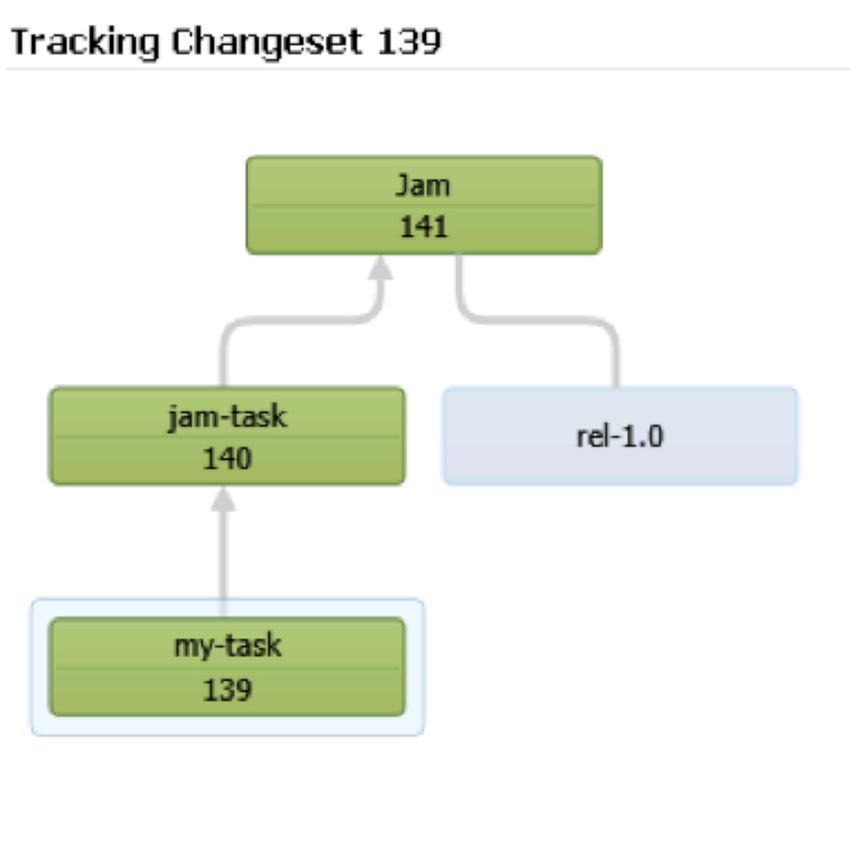
1: edit
                                                                            STEP 4               STEP 6              1 ---
                                                                                                                     > .merge-
                                             2:                         2: foo                  2: bar               right
                                             2 ----                     2 ----                  2 ----               2: ----

                                                Rev 1                       Rev 2                 Rev 3                 Rev 4

                                                                                     DEV

                         STEP 2                                    STEP 5                                             STEP 7

                                                                 MAIN

                          1:                    1: edit                     1: edit
                          1 ----                1 ----                      1 ----
                          2:                    2:                          2: foo
                          2 ----                2 ----                      2 ----

                             Rev 1                    Rev 2                     Rev 3

                           STEP 1                 STEP 3

                                      Figure 1: A simple merge scenario in which TFS causes a merge conflict.

                                                                                                  1:
                                                                                                  1 ----
                                                1:                          1:                    2:
                                                1 ----                      1 ----                2 ----
                                                2:                          2:                    3:
                                                2 ----                      2 ----                3 ----
                                                3:                          3:                    4: new line
                                                3 ----                      3 ----                4 ----

                                                      Rev 1                    Rev 2                   Rev 3

                                                                                        DEV

                                                                                              STEP 5
                                                                re

                       STEP 2                                                 STEP 4                                            STEP 6
                                                              no
                                                          Ig

                                                                     MAIN

                             1:                       1: edit                                                   1:
                             1 ----                   1 ----                                                    1 ----
                             2:                       2:                                                        2:
                             2 ----                   2 ----                                                    2 ----
                             3:                       3:                                                        3:
                             3 ----                   3 ----                                                    3 ----
                                                                                                                4: new line
                                   Rev 1                 Rev 2                                                  4 ----

                                                                                                                   Rev 3
                              STEP 1                  STEP 3

                        Figure 2: A merge scenario in which TFS causes data loss due to ignoring merge history.

Comparison: Perforce and Microsoft Team Foundation Server (TFS)                                                                                    3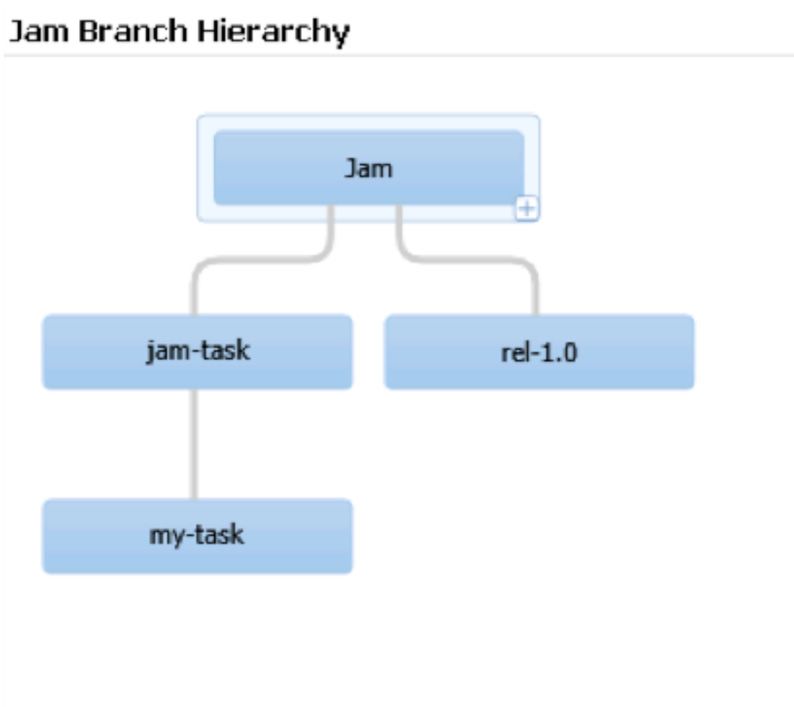
STEP 2           STEP 3
                                            branch            edit

                                                                              DEV A

                                                                 Merge to
                                                                 parent: ok

                                                          MAIN

                         STEP 1                                                 Merge to
                           edit
                                                                               sibling fails

                                                                              DEV B

                                            STEP 2           STEP 4
                                            branch            edit

                                                  Figure 3: TFS cannot handle indirect merges.

Indirect Merging Not Supported in TFS                                          TFS lacks some of the usual tools to guide a custom workflow
                                                                               for branching and release management tasks, such as hooks
Indirect merging (merging between sibling branches) is common
                                                                               or triggers that respond to SCM events. TFS does have some
in advanced environments. Although not a best practice, indirect
                                                                               workflow capabilities in its other components. For example, the
merging is sometimes necessary to quickly propagate a bug
                                                                               TFS build system can enforce a policy that prevents check-ins
fix between indirectly related branches. Indirect merging also
                                                                               unless the code builds successfully. TFS also has an event system
provides flexibility for moving work from one task branch to
                                                                               that can be used for post-processing of SCM events, such as email
another.
                                                                               notifications of check-ins.
TFS does not support indirect merging. Attempting
a merge between sibling branches gives an error, as shown in
Figure 3. Indirect merging can be forced using the baseless option,
but that ignores prior indirect merge history, greatly increasing
the chances of merge conflicts.

Branching Model and Guidance
Development and release management models are built by
convention, usually using a known directory structure for
different branch types. Branch graph visualization is available
in TFS as shown in Figure 4, but it does not indicate the relative
stability of different branches or the intended merge pathways.
For instance, there is no indication that the rel-1.0 branch is more
stable than the my-task branch, and no indication whether the
rel-1.0 branch should accept a change from its parent. Also,
no visual indicator exists when merges are pending between                                     Figure 4: TFS Branch Graph showing the branch
                                                                                               hierarchy for the Jam project.
branches.

4                                                                        Comparison: Perforce and Microsoft Team Foundation Server (TFS)
Perforce In the three merging scenarios described earlier, Perforce
performs the merges correctly:
Basic Branching and Merging • In the scenario described in Figure 1, Perforce selects the
The Perforce Inter-File Branching model is powerful and flexible, correct base which results in a merge with no conflicts.
capable of branching thousands of files rapidly while retaining • In the scenario described in Figure 2, Perforce correctly
a complete branch and merge history (including the method of considers prior merge history and merges cleanly.
resolving merges). Instead of manually tracking all changes across
• In the scenario described in Figure 3, Perforce is able to
branches, users can rely upon Perforce to merge file changes
seamlessly merge between the sibling branches using the
across multiple branches automatically with fewer conflicts to
indirect merge history.
resolve. This enables a variety of development scenarios such as
client-specific versions, experimental branches, personal or task Branching Model and Guidance
branches, and the classic release branching patterns. A built-in
Perforce Streams provide a lightweight but powerful branching
graphical tool, Revision Graph, displays the detailed branching
model. Using streams, a product architect defines the relationship
history of each file for easy visualization of code propagation.
between streams, the modules that compose a product, and the
Perforce’s merge engine is both robust and flexible. direction of change (merges) between streams. This information
The most complex merge scenarios are supported, including simplifies and automates many routine user operations.
refactoring, indirect merges, and handling non-content changes.
When using either streams or regular branching, Perforce offers
Because of this robustness, automation can confidently be
several tools to guide and enforce policy. Triggers and access
incorporated into most branching and release management
control are granular, while the Perforce Broker provides command
workflows.
filtering.
Figure 5: Perforce Revision Graph.
rel2.1 rel2.2 rel2.3
main
dev2.3
Figure 6: Perforce Stream Graph.
Comparison: Perforce and Microsoft Team Foundation Server (TFS) 5WORKSPACE MANAGEMENT Users can create pending changelists to effectively organize work
on several tasks in a workspace. This simple feature helps users
avoid submitting unrelated files by mistake.
TFS
TFS workspaces consist of simple 1:1 mappings between
repository directories and the local file system. New workspaces
VISUAL TOOLS
can be created using an existing workspace
as a template. TFS
TFS’s changesets are roughly equivalent to Perforce changelists, TFS’s visual tools are available in Visual Studio and Eclipse.
representing atomic units of work and sync points in the Besides the Branch Graph (Figure 4), TFS provides other
repository. However, TFS does not allow the creation of pending techniques for displaying the branching history of a changeset
changesets to organize work. Changesets cannot be created until (Figures 8 and 9). However, these tools do not show the full
check-in (Shelvesets can be used to shelve pending work, but lifecycle of a file like Perforce’s Revision Graph (Figure 6).
submitting a shelveset checks in the file content as stored in the
shelf).
Perforce
Perforce P4V, Perforce’s multiplatform visual application, provides
consistent visual tools for all major platforms that are generally
Perforce workspaces are flexible and granular, allowing the more feature-rich than their TFS equivalents. For instance,
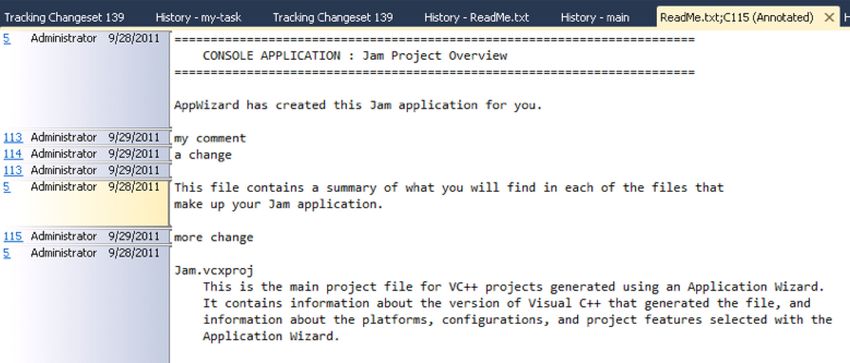
selection, exclusion, or remapping of files. For example, a Perforce Perforce’s annotation tool includes lifecycle indicators and can
workspace could exclude all build artifacts (files with a .obj show a subset of file history.
extension) and move region-specific translation files to a different
folder for localized builds. Innovative visualizations including the Stream Graph and
HTML5 applets enhance productivity. Besides P4V, fully
Perforce workspaces can be generated automatically when supported integrations are available for Visual Studio and Eclipse.
working with streams, allowing team leads to ensure all Third-party integrations support several other IDEs.
developers use the correct set of files. Users
can also create Perforce workspaces manually or use existing
workspaces as templates.
Repository View Mapping Workspace
Source code Source code
Build artifacts Build artifacts not required
English translations Local translation
Japanese translations
Figure 7: A flexible workspace view in Perforce.
6 Comparison: Perforce and Microsoft Team Foundation Server (TFS)Figure 8: Branch history of a changeset (hierarchy) in TFS. Figure 9: Branch history of a changeset (timeline) in TFS.
Figure 10: TFS Time Lapse View.
Figure 11: Perforce Time-lapse View.
Comparison: Perforce and Microsoft Team Foundation Server (TFS) 7INTEGRATION WITH RELATED TOOLS
TFS and Perforce follow radically different philosophies in this area. TFS, as part of the Visual Studio Team System, provides a largely
monolithic ALM package. Perforce practices a best-of-breed strategy, providing the best versioning solution possible and integrating with
powerful tools in other categories.
TFS Perforce
TFS includes other ALM components, including a build Perforce uses a best-of-breed approach, providing powerful
management system, test agents, reporting, and SharePoint for software version managment and integrating with leading tools in
collaboration portals. Indeed, every new TFS project requires the other categories. Although using a single solution for ALM may
selection of a process template. seem simpler, preselecting one tool that works well for all teams
proves challenging. Assembling an ALM package from best-
TFS integrates with Microsoft Excel and Project for work item
of-breed products provides the flexibility to change and adapt
tracking. Custom tools provide basic check-in/checkout features
processes over time.
in other Microsoft Office products.
For example, a site using Visual Studio for some development
Third-party integrations are available for non-Microsoft tools.
efforts may choose to use TFS work items and project
TFS provides APIs for the .NET environment, Java, and web
management. As the public project in Assembla shows
services.
(assembla.com/spaces/tfs-perforce-work-item-sync/wiki),
Perforce jobs can be linked to TFS work items, providing the link
between checkins and work items. Other parts of the company
using other ALM tools can integrate with Perforce as well.
Integration tools include the Defect Tracking Gateway and fully
supported APIs for C/C++, Perl, Python, Ruby, PHP , Java, iOS,
and Android. Perforce also integrates with popular applications in
several categories including:
• IDEs
• Web and graphical tools
• Software build tools
• Microsoft Office (versioning for Word, Excel, PowerPoint, and
Project files)
• Merge and diff tools
8 Comparison: Perforce and Microsoft Team Foundation Server (TFS)ADMINISTRATION AND SUPPORT
Installing and administering a Perforce Shared Versioning Service is significantly simpler than TFS, resulting in a lower total cost of
ownership.
TFS Perforce
TFS is a complex application with several components.1 A Perforce imposes minimal administrative overhead. Perforce
TFS instance includes SQL Server, IIS, and TFS itself, and deployment is simple and consistent. Working in a multiplatform
may include SharePoint and other modules. Architecturally, environment poses no problem, and Perforce has excellent
TFS is minimally divided into data and application tiers with support for mixed services and application versions. Upgrade
several databases and optional SharePoint and reporting tiers. procedures are simple and fast, often requiring nothing but
Depending on deployment size, TFS may run on one to several replacing the service binary and running a single upgrade
servers. The requirement for product components distributed command.
over multiple servers adds to the training, maintenance, and
Scaling out a Perforce deployment requires very little
diagnostic responsibilities of system administrators.
additional expertise. Proxy services and brokers require little
Installing and maintaining TFS requires expertise in all the maintenance, while Git Fusion requires no extra software or
components and a considerable investment in planning the process for developers. Replication services require a small set of
deployment architecture. Backup and recovery procedures configuration changes, but are otherwise identical to a regular
must be implemented and tested for each tier and component. Perforce service. The Perforce service runs on all major platforms.
Upgrades may be complex and time-consuming; for instance,
Expert and responsive technical support is a hallmark of Perforce,
upgrading the application tier usually involves uninstalling the
and full technical support is included during an evaluation.
old version of TFS and then installing the new version.
Because support is better experienced than described, Perforce
Scaling out a TFS deployment requires expertise in several areas, encourages prospective customers to judge for themselves during
including SQL Server, IIS, SharePoint, hardware and network a 45-day trial.
load balancing, and clustering.
Perforce also offers a full range of training and professional
The TFS server runs only on Windows, although clients are services. Perforce provides technical support for past releases for
available for other platforms. TFS is supported an extended duration, and has a defined policy that provides 12
by Microsoft. months’ minimum notice before an older product is retired.
1 http://msdn.microsoft.com/en-us/library/ms252473.aspx
Comparison: Perforce and Microsoft Team Foundation Server (TFS) 9DISTRIBUTED DEVELOPMENT SCALABILITY AND
AND DVCS SUPPORT PERFORMANCE
TFS TFS
TFS offers simple proxy services that cache file contents to Scaling TFS to support a large user base, distributed work, or
support remote sites or build farms. TFS 2012 introduced local heavy data volume can be a daunting task. Examples of scaled-out
workspaces, which cache enough information in a workspace to TFS deployments include multiple application and data tiers,
allow commands like ‘diff’ and ‘status’ to run without a server each running in clusters, with several independent data tiers for
connection. Local workspaces support the modify-merge-commit different sites.2
workflow. However, local workspaces are not truly independent: Despite the complexity of a TFS deployment, simple data
they do not support private local branching or even committing replication is not supported.
while disconnected.
Perforce
Perforce
Perforce is built primarily for speed. Perforce scales linearly,
Distributed development with Perforce is supported by several so there is no performance penalty imposed by the number of
tools. These tools are typically transparent to the end user. revisions or the size of any given file(s). The Perforce Versioning
Git Fusion allows seamless collaboration on the same data for Service has been deployed successfully in environments with
developers working either in Git or Perforce. Git developers enjoy several thousand users, terabytes of versioned content, and
Perforce as a master repository with Git’s distributed features. millions of revisions. Perforce’s deployment architecture includes
proxies, brokers, replicas and Git Fusion, and these tools can be
Perforce proxies at remote locations support Perforce’s distributed tailored to satisfy demanding environments.
architecture. The Perforce Proxy Service caches and serves files
to users at remote locations, reducing traffic across slower WAN Replication Services are particularly useful for supporting
links. All users, local or remote, connect to the same central depot automated processes such as aggressive continuous integration;
and look at the same project files. The Perforce Proxy Service the performance burden of such processes is shifted entirely away
requires minimal administrative attention. from the Shared Versioning Service.
Perforce Replication Services support automated build processes, Tools available for scaling out a Perforce deployment require very
simple disaster recovery, and the read-only activity of end users little extra configuration in comparison to similar efforts in TFS.
at any site. Using replicas provides significant performance
2 http://msdn.microsoft.com/en-us/library/ms400682.aspx
improvements.
Proxy Service
Shared Versioning Service
P4Sandbox Replication P4Sandbox
Service
Figure 12: Perforce’s distributed architecture.
10 Comparison: Perforce and Microsoft Team Foundation Server (TFS)LEARN MORE
Evaluating Perforce Scheduling a Demo of Perforce
More than 400,000 users at 5,500 companies rely on Perforce for To learn more about Perforce, schedule an interactive demo
enterprise version management. Perforce encourages prospective tailored to your requirements:
customers to judge for themselves during a typical 45-day perforce.com/product/demos
trial evaluation. Free technical support is included with your
evaluation. Get started: perforce.com/trial
Migrating to Perforce
Once you have downloaded Perforce, learn more about our Visual
Studio integrations: Perforce Consulting Services has experience assisting customers
with migrations from various software version management
Learn more about P4VS, the Perforce Plug-in for Visual Studio, a systems. For more information, visit:
fully-compliant Visual Studio plug-in with one-stop access to all perforce.com/consulting
of the tools you need.
Visit the VSIP gallery:
http://goo.gl/twQII
Try the Perforce and TFS Work Item Integration:
assembla.com/spaces/tfs-perforce-work-item-sync/wiki
Comparison: Perforce and Microsoft Team Foundation Server (TFS) 11perforce.com
North America Europe Australia
Perforce Software Inc. Perforce Software UK Ltd. Perforce Software Pty. Ltd.
2320 Blanding Ave West Forest Gate Suite 3, Level 10
Alameda, CA 94501 Wellington Road 221 Miller Street
USA Wokingham North Sydney
Phone: +1 510.864.7400 Berkshire RG40 2AT NSW 2060
info@perforce.com UK AUSTRALIA
Phone: +44 (0) 845 345 0116 Phone: +61 (0)2 8912-4600
uk@perforce.com au@perforce.com
Copyright © 2012 Perforce Software Inc. All rights reserved.
All trademarks or registered trademarks used herein are property of their respective owners.You can also read


