COVID-19 Response and WASH Lessons Learned in India - UNICEF
←
→
Page content transcription
If your browser does not render page correctly, please read the page content below
9

COVID-19 Response and WASH
Lessons Learned in India
    SUMMARY
    • As of 5 October 2020, there have been 6.62 million positive cases, with 5.59 million recoveries, and
      103,000 deaths across the country.

    • UNICEF has supported various states in reaching an estimated 40 million beneficiaries with hygiene
      messages, WASH services, and supplies in partnership with government, NGOs, and the private sector
      (via corporate social responsibility initiatives) as of November 2020.

    • As the COVID-19 response was led by the health sector, not all actors had expertise on handwashing and
      hygiene or consulted WASH agencies. It took time to include WASH agencies into the COVID-19
      response. Given the health-led response by government, other line ministries took time to understand and
      take up their roles and responsibilities, requiring advocacy.

Context                                                      private sector (via corporate social responsibility
                                                             initiatives) as of November 2020. UNICEF has, at
The COVID-19 pandemic spread to India when its               the central-level and in states, provided technical
first case, in Kerala, was confirmed on 30 January           support to the government in planning, capacity
2020. As of 5 October 2020, there have been 6.62             building, implementation of COVID-19 activities,
million positive cases, with 5.59 million recoveries,        behavior-change communications as well as the
and 103,000 deaths across the country. On 24                 development/dissemination of protocols on safety
March 2020, Prime Minister Narendra Modi                     practices.
announced a 21-day national lockdown to contain
the pandemic which was further extended until the
end of May, generating a massive urban to rural              Response
exodus with millions of migrants desperately trying
to return home; thousands were seen walking or               Strategy/Approach taken by Country Office:
bicycling hundreds of kilometers to go back to their
                                                             Rapid Assessments: Delhi and 13 state office
native villages.
                                                             teams have led and contributed to multiple rapid
UNICEF has supported various states in reaching              assessments, especially during the beginning of
an estimated 40 million beneficiaries with hygiene           the response period when information was
messages, WASH services, and supplies in                     required to identify urgent needs. UNICEF staff
partnership with government, NGOs, and the                   members in Bihar, Gujarat, Uttar Pradesh (UP),

                   COVID-19 WASH RESPONSE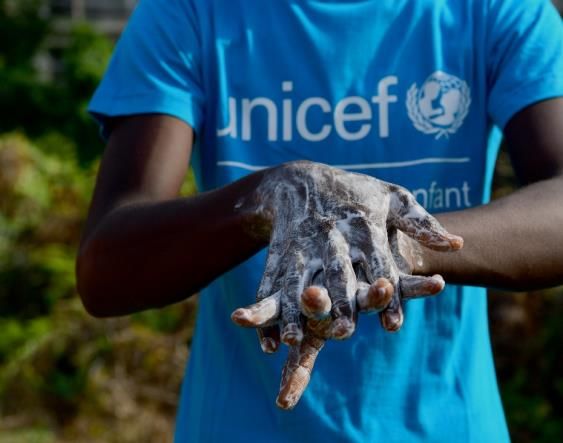
and Chhattisgarh conducted WASH assessments            response to migrants and launched a collaborative
in health care facilities (HCFs) and quarantine        platform (named Jeevan Rath) of 75 partners and
centers. The findings have informed the                over 1,000 volunteers that distributed food, hand-
development of state WASH protocols. Other             hygiene materials, sanitary napkins, footwear,
states, such as Assam, Rajasthan, and Odisha,          water, basic medical support, etc. in Mumbai.
conducted assessments at households, as well as        WASH colleagues in Andhra Pradesh, Karnataka,
intermediary and temporary medical camps, which        Telangana, Chhattisgarh, Odisha, MP, and UP
helped inform state planning. UNICEF supported         also supported addressing migrant populations’
Rapid Needs Assessments on migrants and                needs, including setting up protocols for temporary
shelter camps in Maharashtra, Odisha, UP, and          camp      management;        developing      mobile
Gujarat. The findings were used to support the         applications aiming to map migrant skills to
state to develop a real-time shelter management        ongoing needs in home states; and providing
protocol. Odisha and West Bengal led a detailed        necessary hygiene kits and food rations to people
study to understand the disruption of basic WASH       on the move.
services in urban slum settlements, supporting the
COVID response. Similarly, Gujarat partnered with      Schools: UNICEF provided technical support for
IIT Gandhinagar to conduct a wastewater                the preparation of guidelines on the reopening of
epidemiology study, which will support the states to   schools in seven states. At a national level, the
monitor caseloads in urban settlements.                UNICEF WASH section supported the Ministry of
                                                       Education (MoE) in developing the Safe School
Handwashing: UNICEF supported the installation         Protocol (SSP). In multiple states (e.g. Tamil Nadu,
of around 15,805 handwashing stations in rural         Bihar, Gujarat, Maharashtra) UNICEF oriented
communities and shelter camps, which inspired          block officials, teachers, state/district functionaries,
local governments to scale up this initiative with     principals, wardens of tribal residential schools,
their own resources. UNICEF provided technical         and vulnerable schoolchildren through online
support to state-level PHED water quality              channels. Where schools were used as quarantine
laboratories on the production of hand sanitizers in   and isolation centers, UNICEF advocated for deep
multiple states, and trained Self-Help Groups          cleaning and disinfection. Jharkhand developed
(SHGs) on local soap production. UNICEF’s              reopening protocols that were distributed to over
compendium of handwashing designs, including           150,000 teachers, and Gujarat developed online e-
foot-operated handwashing station designs, has         modules to train and certify teachers on reopening
been particularly successful and translated into       protocols. National IEC materials for COVID
local languages, inspiring local producers to start    Responsive Behaviours (CRB) in schools have
producing and installing these designs.                also been developed for the MoE and a national
                                                       training toolkit on SSPs is being converted to online
Water Supply: UNICEF Jharkhand supported the           modules.
government in ensuring an uninterrupted supply of
water to households, quarantine facilities, rural      Monitoring: UNICEF supported states and
communities, and shelter camps. In UP, Madhya          districts by establishing trackers for monitoring
Pradesh (MP), and Bihar, UNICEF provided               WASH services and supplies. State-wide, real-
technical support to ensure that handpumps             time, monitoring systems (using Rapid Pro)
remain functional and promoted social distancing       collected feedback from sanitation cadres such as
nudges (e.g. white circles around handpumps) at        Swachhagrahis and Jalsurakshaks (over 55,000)
community water points in multiple states.             in Maharashtra and affected communities as well
                                                       as migrants in UP. A dashboard was created to
People on the move: In Maharashtra UNICEF              help state government visualise the data and
WASH colleagues coordinated the humanitarian

COVID-19 WASH RESPONSE C/9/2021                                                                   Page 2
strengthen the role of functionaries (in states (e.g. MP, Maharashtra,
Maharashtra). Chhattisgarh, Telangana, Jharkhand).
Trainings: All 15 UNICEF-supported states have • The Ministry of Jal Shakti (MoJS) was
provided training to almost 800,000 community supported to develop guidance on social
service providers to date on the continuity of distancing post-lock down as well as
WASH services and WASH aspects of COVID-19 guidance on the safety and use of PPE for
prevention. UNICEF has supported extensive sanitation workers.
capacity building and mobilization of
Swachhagrahis, Panchayati Raj institutions (PRIs), • Partnerships with corporations (like
SHGs, frontline workers (GLWs), and CSO Hindustan Unilever Limited, Godrey, and
volunteers who have contributed to promoting RSPL) boosted the provision of critical
hygiene messages reaching urban, rural, and WASH supplies (about 11 million bars of
remote tribal populations. This has been done soap and 800,00 hand sanitizers) for
through multiple online mediums including the states. The UNICEF State Office in
COVID-19 Academy, a joint initiative by SPHERE Maharashtra leveraged more than
India and supported by UNICEF. In UP, 260,000 250,000 USD for WASH essentials and
outreach workers were trained with the support of medical equipment from corporates. The
the WASH section; the government has since been UNICEF Jharkhand Office established a
able to track their outreach activities on a daily partnership with Rotary Jharkhand to build
basis. These workers have reached more than 20 handwashing stations in schools as part of
million people in urban areas with COVID-19 the Safe School Protocol.
prevention messages.
• UNICEF state offices in Jharkhand and
Advocacy: UNICEF successfully advocated with Bihar have supported the installation of
the Government of India (via the Department of touch-free handwashing stations at HCFs,
Drinking Water and Sanitation, Ministry of Jal public spaces, and quarantine facilities. In
Shakti) for the issuance of guidance for the UP, UNICEF advocacy led to the
‘continuity of work for sanitation and hygiene installation of three, new, piped water
activities during lockdown in rural areas under supply schemes in districts as well as the
Swachh Bharat Mission (SBM) Open Defecation disinfection of 1,819 hand pumps located
Free (ODF)+’ as well as for the safety of sanitation around temporary shelters and quarantine
workers. Importantly, these advisories granted the centers.
authorization to state governments to use part of
the programme budgets for COVID-sensitive and
COVID-specific interventions. Learning
Challenges and constraints:
Results achieved:
• As the COVID-19 response was led by the
• In partnership with government, NGOs,
health sector, not all actors had expertise
and CSR critical WASH services ranging
on handwashing and hygiene or consulted
from water and sanitation facilities to
WASH agencies. It took time to include
hygiene supplies (such as hand sanitizers,
WASH agencies into the COVID-19
soaps, etc.) were provided to over 4.3
response. Given the health-led response
million vulnerable communities in villages,
by government, other line ministries took
quarantine centers, and migrant
camps/people on the move in multiple
COVID-19 WASH RESPONSE C/9/2021 Page 3• time to understand and take up their roles
and responsibilities, requiring advocacy. LESSONS LEARNED
• Accessing government data on the WASH • Given the limitations of lockdowns and the
urgent need for protective equipment as well
situation (including WASH in health care
as continued access to WASH services,
facilities) was a challenge, partly due to the state programmes (such as Jeevika - Bihar
sensitivity of the data as well as challenges Rural Livelihoods Project and Maharashtra
in collecting the data given COVID-related State Rural Livelihoods Mission) started to
restrictions. UNICEF conduced baselines produce cloth-based masks, hand sanitiser,
and disinfectants. National sanitation and
in April and May to collect data for water supply campaigns (Swachh Bharat
evidence-based decision making. Mission and Jal Jeevan Mission) were
However, there needs to be follow up leveraged for budget to support the COVID-
surveys to reassess the situation. In 19 WASH response. Human resources such
as Swachhagrahis (sanitation foot soldiers)
settings such as health facilities, teams
and Gram Panchayat members were also
used assessment tools approved by the mobilised to disseminate prevention
government rather than the detailed messages. The participation of women,
WASH assessment tools that they would especially for hygiene promotion at the
otherwise have used. community level, supported overall Risk
Communication and Community
Engagement. Mobilising local resources for
• Gaps in the WASH-related response a quick response was needed for COVID-19
included reaching people with disabilities prevention and control.
and supporting supply chains for
• Partnerships with corporations have
affordable sanitary products to manage supported supplies for handwashing
menstrual hygiene (including making them stations such as soaps and sanitiser. This
available at distribution points given that could be developed further with additional
schools and Anganwadis were closed). partners, especially now that systems are in
place to mobilise supplies more quickly.
Newspaper reports of people drinking
alcohol-based hand sanitiser meant • Building the capacity of various frontline
distributing such supplies to slums and workers from different sectors (health,
education, nutrition, and so on) on the same
schools had to stop, and hand soap had to key messages linked to COVID-19
be promoted more rigorously. prevention and control has the potential to
promote greater convergence, integration,
• A number of states were affected by and multi-sectoral collaboration in the future.
flooding and cyclones during their COVID- • While documentation and evidence
19 response, including Odisha, West generation were invested in a consistent
Bengal, Assam, and Bihar. In Assam, manner through India’s central Knowledge
UNICEF developed guidelines for Management and Social Policy, Monitoring
and Evaluation structures, there needs to be
managing flood relief camps in the context more Country Office investment in
of COVID-19. On the other hand, water conducting follow-ups and ‘end-line’
management interventions were required assessments, even in the absence of
in some places due to an impending water government requests to do so. The quality
and coherence of rapid needs assessments
shortage in large parts of India.
can also be invested in further. This can help
ensure that the analysis of assessment
reports across states and against existing
baseline data can be done to understand the
impact of the disruption of services after a
pandemic or disaster across different
geographies and across time.
COVID-19 WASH RESPONSE C/9/2021 Page 4Additional resources: • ‘Highlights of UNICEF India WASH COVID-19 Response and Programming Newsletter,’ Link. • UNICEF India’s WASH’s Youtube Channel: Link. • PECONet, Maharashtra’s coordination group made of 100+ organisations responding to the daily needs and demands on the ground, including running campaigns such as Jeevan Rath: https://mahac19peconet.org/. About the Authors Contact person: Nicolas Osbert, WASH Chief (nosbert@unicef.org). COVID-19 WASH RESPONSE C/9/2021 Page 5
About the Series
UNICEF’s water, sanitation and hygiene (WASH) country teams work inclusively with governments, civil
society partners and donors, to improve WASH services for children and adolescents, and the families and
caregivers who support them. UNICEF works in over 100 countries worldwide to improve water and
sanitation services, as well as basic hygiene practices. This publication is part of the UNICEF WASH
Learning Series, designed to contribute to knowledge of good practice across UNICEF’s WASH
programming. In this series:

Discussion Papers explore the significance of new and emerging topics with limited evidence or
understanding, and the options for action and further exploration.

Fact Sheets summarize the most important knowledge on a topic in few pages in the form of graphics, tables
and bullet points, serving as a briefing for staff on a topical issue.

Field Notes share innovations in UNICEF’s WASH programming, detailing its experiences implementing
these innovations in the field.

Guidelines describe a specific methodology for WASH programming, research or evaluation, drawing on
substantive evidence, and based on UNICEF’s and partners’ experiences in the field.

Reference Guides present systematic reviews on topics with a developed evidence base or they compile
different case studies to indicate the range of experience associated with a specific topic.

Technical Papers present the result of more in-depth research and evaluations, advancing WASH
knowledge and theory of change on a key topic.

WASH Diaries explore the personal dimensions of users of WASH services, and remind us why a good
standard of water, sanitation and hygiene is important for all to enjoy. Through personal reflections, this
series also offers an opportunity for tapping into the rich reservoir of tacit knowledge of UNICEF’s WASH
staff in bringing results for children.

WASH Results show with solid evidence how UNICEF is achieving the goals outlined in Country Programme
Documents, Regional Organizational Management Plans, and the Global Strategic Plan or WASH Strategy,
and contributes to our understanding of the WASH theory of change or theory of action.

COVID-19 WASH Responses compile lessons learned on UNICEF’s COVID-19 response and how to ensure
continuity of WASH services and supplies during and after the pandemic.

Readers are encouraged to quote from this publication but UNICEF requests due acknowledgement. You
can learn more about UNICEF’s work on WASH here: https://www.unicef.org/wash/

                                          www.unicef.org/wash
                                                     © United Nations Children’s Fund (UNICEF)
          The statements in this publication are the views of the authors and do not necessarily reflect the policies or the views of UNICEF.
                                                           United Nations Children’s Fund
                                                 3 United Nations Plaza, New York, NY 10017, USA
                                              For more information, please contact: WASH@unicef.org
Document No: WASH/C/9/2021
You can also read


