DIVERSITY, A SYNONYM FOR CULTURE
←
→
Page content transcription
If your browser does not render page correctly, please read the page content below
2009 • number 5 • ISSN 1993-8616

 DiversitY,
 A synonym
FOR culture
Contents
                                                                                             2009 - N° 5

                                                      Diversity, a synonym for culture
                                                      A voyage from China to Iran, using calligraphy as a compass; an explora-
                                                      tion of Parisian melancholy, guided by a Japanese photographer; a return
                                                      to the origins of Kung Fu, now an international art; a trip around the world
                                                      along strands of Thai silk; a Turkish escapade with background music from
                                                      Brittany… This month the UNESCO Courier dedicates its pages to cultural
                                                      diversity.
                                                        						                                                 EDITORIAL P3
                                                 DR

                                                                                                     Travelling music
Detail of “Mou-ak” (folk dance). By the Korean
artist, Kim Ki-Chang, added to the UNESCO                                                             The folk traditions of Brittany are making
collection in 1982. Photograph: Patrick Lagès.                                                        a remarkable comeback after being con-
                                                                                                      signed to oblivion for decades. And, 2500
                                                                             kilometres away, traditional song is returning to Anatolian homes,
                     The beauty of the swan                                  having almost disappeared. Today, a non-profit association called
                     Art draws its inspiration from the perfection
                                                                             “A Bridge over the Bosporus” is linking musicians from France
                     of heaven and earth. Culture, from
                                                                             and Turkey who share a similar passion and concerns. P 11
                     the perfection of nature. This idea was
at the centre of a lecture entitled “Return to nature, return to
our origins” given by the Chinese poet and calligrapher, Fan
Zeng at UNESCO in May this year, as part of the International                                            The warrior monks
Festival of Cultural Diversity. P 4                                                                      of the young wood
                                                                                                           The celebrated martial art, Kung Fu,
                      Calligraphy, the art                                                                 was created fifteen centuries ago in
                      of making words sing                                                                 China. We owe its origin to a
                     Persian calligraphy bears the imprint of a              Buddhist monk from India. From there, it spread to Korea,
                     range of influences, while Chinese callig-              Vietnam, the Philippines, Malaysia and Japan … to become,
raphy remains deeply rooted in local tradition, explains Iranian             since the 1950s, a trend that has continued to fuel the dreams
painter, calligrapher and psychoanalyst, Hassan Makaremi. But,               of teenagers around the world. But in this process of globalization,
whatever its history, calligraphy embodies our sense of “being               its intrinsic values are not always respected. P 13
in the world”. P 7

                              The personal eye                                                          Around the world
                              of a familiar stranger                                                    on a silk thread
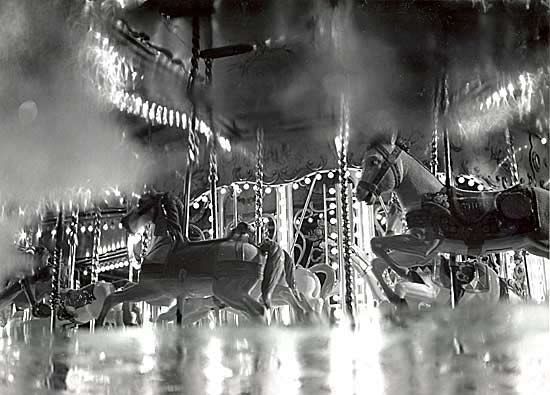
                             “This is not a photo of a merry-go-round,                                   By the first half of the 20th century,
                             but of its reflection,” explains Shigeru                                    the silk tradition in Thailand was on
                             Asano, a Japanese photographer                                              its last legs, only to spring back in
fascinated by the light and shadows of Paris. He has been                    the 1950s, thanks to an American, Jim Thomson. As an ally he
walking the streets of the city for 30 years. Nearly                         had a young Thai woman - none other than Queen Sirikit. This
10,000 kilometres from his native Osaka, he feels at home in                 secular art form, which, today, combines traditional craft and
the French capital, where he finds an atmosphere of melancholy               industrialization, is passed down from generation to generation
more to his taste than “Tokyo’s dazzle”. P 9                                 and has contributed to the country’s developmen. P 14

                                   focus
                                   Much more than “fish and ships”
                                   The United Nations has decided to celebrate the first ever
                                   World Ocean Day on the 8th of June. P 16

The UNESCO Courier 2009 N°5
                                                                         2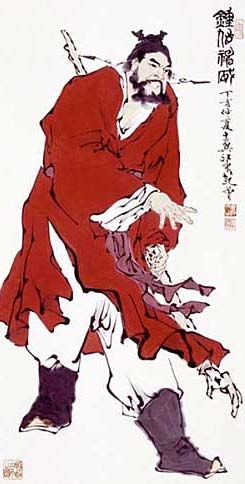
Editorial

              © UNESCO/Georges Malempré

                                          Young man from the Celebes Islands, in Indonesia.

     This year, UNESCO’s celebrations of World Day for Cultural Diversity (21 May) were quite exceptional.
    Throughout the month of May, dozens of artists came from all over the world to demonstrate the wealth
          of humanity’s cultural diversity, as part of the first International Festival of Cultural Diversity.
     The Festival was held simultaneously in several countries, as well as the Organization’s headquarters,
                 and was clear evidence of the fundamental bond between culture and diversity,
                                    as this month’s UNESCO Courier shows.

T
  he relationship between culture and di-                                   This thought seems all the more con-             UNESCO has been devoted to this pur-
versity is one of mutual foundation. Culture                              vincing as one gazes upon a world on the         suit since the adoption of its Constitution
refers both to one’s original way of being,                               verge of becoming a space of integrated          and increasingly, of late, in the wake of the
recognizable through one’s arts, one’s                                    diversity. Fading are the juxtapositions of      2001 Universal Declaration on Cultural
signs, and the rightful pride one takes in                                countless so-called differences. The Earth       Diversity and of the 2005 Convention on
being akin to no other. Yet culture is also a                             we live in today holds only one humanity,        the Diversity of Cultural Expressions. The
gateway to all that is profoundly dissimilar,                             perhaps only one living kingdom compris-         Festival of Diversity, launched this year
to the enchantment of the unknown. And                                    ing all the species. And the concept that        simultaneously in various countries and
as such, it is at once enhancement of diver-                              enables us to reflect on the planet’s critical   at UNESCO Headquarters, is an oppor-
sity and continual construction of univer-                                state of affairs is that of diversity.           tunity to experience the primordial affinity
sality, and in both cases always incomplete                                 It alone derives from universality and ac-     between culture and diversity.
and inexhaustible.                                                        counts for all singularities, treating them as     This issue of the UNESCO Courier
  Thus it is simply a function of diversity –                             an ensemble – and thus offers to the “the        echoes the Festival of Diversity and sup-
the one which gives it its simultaneous ex-                               minds of men” a novel approach to their          ports its aims.
plicitness and profusion. This is the sense                               shared condition: one that befits the reality
in which one might say that there is no di-                               of their common destiny and can replenish                               Françoise Rivière,
versity without culture and no culture with-                              their intelligence of the world.                     Assistant Director-General for Culture,
out diversity.                                                                                                                                             UNESCO

The UNESCO Courier 2009 N°5                                                                      3
Art draws its inspiration from the perfection of heaven and earth. Culture,
                                 from the perfection of nature. This idea was at the centre of a lecture entitled “Return to nature,
                              return to our origins” given by the Chinese poet and calligrapher, Fan Zeng at UNESCO
                                       in May this year, as part of the International Festival of Cultural Diversity.

                                                                             © Fan Zeng
                    The beauty
                    of the swan
                                                                                          “The joy of learning”, by Fan Zeng, 1998.

N         ature is more than generous to-
         wards humanity. Not only does it
         provide all the elements we need to
         survive – air, water and earth – but
         also regulatory forces, like the alter-
         nation of sun and moon or the ben-
         eficial passage of winds and rain,
         which have enabled living beings to
         prosper indefinitely, since the dawn
                                                          Impatient humanity has returned
                                                        this kindness with hostility. Last
                                                        century, one biologist proclaimed
                                                        that “we cannot wait for ever for
                                                        the benefits of nature, we have to
                                                        go and get them!” Like an insolent
                                                        son raising his hand to his caring
                                                        mother. Or a ferocious, wild croco-
                                                        dile, with gaping jaw, that does not
                                                                                                                  dred years earlier, Kant gave pride
                                                                                                                  of place to mathematics in his “Cri-
                                                                                                                  tique of Pure Reason”, anticipat-
                                                                                                                  ing one might say, the inevitable
                                                                                                                  supremacy of numbers which has
                                                                                                                  gradually become established.
                                                                                                                    But nature is distinct from the ra-
                                                                                                                  tional but somewhat forbidding log-
                                                                                                                  ic of numbers. It offers humanity the
         of time.                                       know the extent of what the Earth                         fullness of love and gentleness that
                                                        can serve up to us.                                       are inherent in the beauty of Heaven
© Fan Zeng

                                                          Over 2500 years ago, the great                          and Earth. Let us recall the words
                                                        Chinese philosopher, Laozi, classi-                       of Zhuang Zhou, who lived in Chi-
                                                        fied the components of the universe                       na 2300 years ago, in the “Spring
                                                        into five categories: first the visible,                  and Autumn Period” - an unrivalled
                                                        the audible and the tangible, then                        thinker, divinely wise, and compa-
                                                        the invisible, that perfect existence                     rable to Athena. For him, Heaven
                                                        named dao, a kind of Heavenly Law,                        and Earth are of a perfect and silent
                                                        comparable to Plato’s Ideal, He-                          beauty; the four seasons follow one
                                                        gel’s Spirit or Kant’s transcenden-                       another with a regular rhythm, with-
                                                        tal Finality; finally, beyond the dao,                    out prescription; the ten thousand
                                                        is nature, “perfect existence in itself,                  beings fulfil themselves tacitly, ac-
                                                        spontaneously and already so.”                            cording to the order of things.
                                                          In Buddhism, the notion of “in it-                        This existence in itself, stripped
                                                        self” expresses absolute conformity                       of any form of logos, embodies the
                                                        to the meaning of things, concor-                         excellence of Heaven and Earth. It
                                                        dance and relevance – all attributes                      gives free rein to the creativity of the
                                                        of nature. This existence in itself                       human soul and a generous recep-
                                                        endures, omnipresent, without limit,                      tion to the plurality of human talents
                                                        an incorruptible sign of the vast-                        and forms of intelligence. And the
                                                        ness of time and space. Ten billion                       seeds of this perfect beauty, scat-
                                                        light years would not be enough                           tered across the planet, turn into the
                                                        time to define it, ten billion years                      virtues of sincerity and truth, as well
                                                        not enough to bear witness to its                         as aesthetic expression. Among
                                                        duration.                                                 man’s inalienable rights there is,
                                                          According to Dirac, only the most                       without doubt, the “right to aesthet-
                                                        sophisticated mathematics would                           ic experience”, even if it appears in
             “Zhong kui, hunter of demons”,
             by Fan Zeng, 2007.                         be able to describe it. Two hun-                          none of the declarations and laws
                                                                                                                                                     (•••)
       The UNESCO Courier 2009 N°5                                          4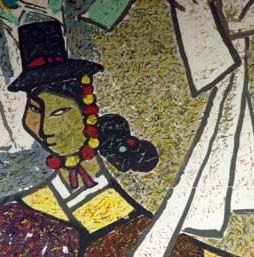
The beauty of the swan

(•••)

(perhaps because it is considered                  well in the 19th century. Yet Maxwell           deliver; and when its magnificence
to be implicit). The perfection of                 did not invent anything. Before him,            turns into terror, humanity appears
Heaven and Earth, from Antiquity to                and even before the Earth existed,              very, very small. As Kant warns us:
today, has been the open and inex-                 this equation was already written               step back a little and the terrifying
haustible source of beauty and the                 somewhere in the universe.                      power of nature will become the
diversity of cultures in our world.                 It is said that art and literature are         object of aesthetic pleasure. But
                                                   endowed with divine power. But                  we do not necessarily need the ter-
Surpassing nature?                                 these are just the words of artists             rifying force of nature to experience
A vanity                                           in need of consolation. In reality,             aesthetic pleasure – as this Cultural
  In the Zhuangzi, Zhuang Zhou                     and whatever artistic license might             Diversity Day proves.
describes a people called the                      have us believe, humanity can only
Hexu who, in ancient times,                        apply itself to tasks that match its            Greed devours the soul
lived without cares, ate well and                  capabilities, while even the slight-             In the far, distant past, in Antiquity
lounged on a full stomach, in the                  est movement of the universe can                and the classical era, humanity lived
company of plants and animals.                     shake the planet with its majestic              principally from agriculture and live-
Our imagination prospers in the                    power. Hurricanes and tidal waves               stock farming, it had faith in nature
same way. From Plato to Owen,                      are just a taste of what nature can             and was close to it. Man showed
and from Thomas More to                                                                                      respect and affection for
Saint-Simon and Fourier,                                                                                     nature and was not arro-
man has thrived on marvel-                                                                                   gant towards it. But indus-
lous dreams. Otherwise,                                                                                      trialisation has increased
                                      © Fan Zeng

humanity would not be what                                                                                   his desires and, in the
it is. If we had to renounce                                                                                 post-industrial era, greed
our dreams, sterility and                                                                                    is devouring his soul.
dreariness is all that would                                                                                   In the early 20th century,
remain, and our entire lives                                                                                 in Britain and Germany,
would be turned towards                                                                                      Toynbee and Spengler
death. A sad state of affairs.                                                                               warned us of the risks of
  Do you not think that                                                                                      capitalism, which, alas, are
UNESCO advocates cultur-                                                                                     being confirmed today. As
al diversity precisely to open                                                                               these two eminent think-
the way to inevitable univer-                                                                                ers foresaw, technologi-
sal agreement? So that this                                                                                  cal progress goes hand in
many splendored culture re-                                                                                  hand with gluttonous con-
tains its beauty for millions of                                                                             sumption, and the threat to
years.                                                                                                       our planet is growing day
  “Return to origins” and “re-                                                                               by day.
turn to nature” are two ex-                                                                                    If we look back with re-
pressions of the same idea.                                                                                  spect to early cultures, it
Culture has always drawn its                                                                                 is because of their wis-
inspiration from nature. Art                                                                                 dom, their elegance, their
and literature may try to imi-                                                                               authenticity and their
tate it, and the sciences may                                                                                simplicity. They are an ex-
make their discoveries, but                                                                                  pression of the purity of
it is nothing but vanity to at-                                                                              the souls of our forebears.
tempt to improve on nature.                                                                                  Of course, they were later
Technological        progress,                                                                               tainted with the colours of
from a simple microphone                                                                                     the sacred, but, to the ex-
to the aerospace industry,                                                                                   tent that religion fulfils its
all comes back to a simple                                                                                   mission of providing com-
equation formulated by Max-                        “The song of a fisherman”, by Fan Zeng, 2009.             fort to the human soul, it
                                                                                                                                       (•••)
The UNESCO Courier 2009 N°5                                             5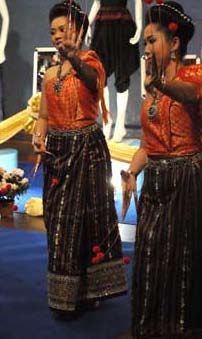
The beauty of the swan
(•••)
can, fundamentally, be considered                  “In any society, whether of ani-                  ural History of Birds , Vol. IX, “The
an art.                                           mals or of men, violence makes                     Swan”.)
  Cultures do not obey the evolution-             tyrants, while gentle authority                     Let us pray together for peace and
ary principles of Darwin or Spencer.              makes kings: on Earth, the lion                    the greatest harmony among peo-
A recent work of art is not superior              and the tiger, in the air, the eagle               ple, and may the swan preserve its
to an older work. The moments of                  and the vulture, do not rule by war                noble beauty forever.
awakening, the efforts to promote                 alone, they do not dominate by
greater confidence and harmony,                   an abuse of power and cruelty;                                Fan Zeng, poet and painter,
that humanity as a whole has shown                whereas the swan rules the water                           is one of the most famous living
on this day of multicultural exchang-             in all the ways that found an em-                    Chinese calligraphers. A book, entitled
es, will remain forever a moving and              pire of peace: greatness, majesty,                          Le vieux sage et l’enfant (2005)
encouraging guiding light.                        gentleness […]” (Buffon, The Nat-                                     is available in French.

 Citations,                                      Spring and Autumn,                                Charles Fourier,
 in order of appearance:                         A period in Chinese history from 8th to 5th       French philosopher (1772-1837)
                                                 century B.C.                                      James Clerk Maxwell,
 Laozi,                                          Athena, Greek                                     Scottish physicist and mathematician (1831-1879)
 Chinese philosopher (between 604-479 B.C.)      goddess of wisdom                                 Arnold Joseph Toynbee,
 Zhuang Zhou,                                    Gwilym Ellis Lane Owen,                           British historian (1889-1975)
 Taoist philosopher (4th century B.C.)           British philosopher1922-1982)                     Oswald Spengler,
 Plato,                                          Robert Owen                                       German philosopher (1880-1936)
 Greek philosopher (5th – 4th century B.C.)      Social reformer and one of the founders           Charles Robert Darwin,
 Georg Wilhelm Friedrich Hegel,                  of socialism and the cooperative movement,        English naturalist (1809-1882)
 German philosopher (1770-1831)                  United Kingdom (1771-1858)                        Herbert Spencer,
 Emmanuel Kant,                                  Thomas More,                                      English philosopher and sociologist (1820-1903)
 German philosopher (1724-1804)                  English lawyer, historian, philosopher, theolo-   Georges-Louis Leclerc, Comte de Buffon,
 Paul Dirac,                                     gian and statesman (1478-1535)                    French naturalist (1707-1788)
 British physicist and mathematician (1902-1984) Claude-Henri de Rouvroy, Comte de Saint-Simon,
                                                 French economist and philosopher (1760-1825)

                                 A scholar-painter
   © UNESCO/Michel Ravassard

                                                                          Master Fan Zeng was born in 1938
                                                                          in Nantong (China) and comes from a long line of
                                                                          scholars going back to the end of the 16th cen-
                                                                          tury. His great grandfather,
                                                                          Fan Dangshi, better known as Fan Bozi (1854-
                                                                          1905), was a celebrated poet
                                                                          at the end of the Qing dynasty.

                                                                          Fan Zeng is an internationally renowned painter
                                                                          and calligrapher and a respected poet and thinker.
                                                                          He is today considered to be a grand master of
                                                                          Chinese classical art. His work, which is in har-
                                                                          mony with nature, follows the tradition of “scholarly
                                                                          painting”, an artistic movement that developed in
                                                                          China from the 10th century.

                                                                          Fan Zeng is research director at the Chinese
                                                                          Academy of Arts and a professor
                                                                          at the University of Nankai in Tianjin.
                                                                          He was recently appointed advisor
                                                                          to UNESCO on cultural diversity..

The UNESCO Courier 2009 N°5                                              6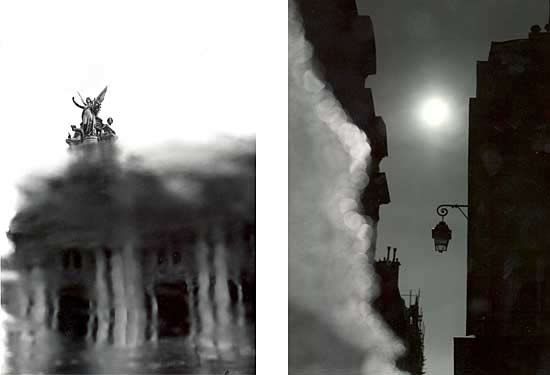
Persian calligraphy bears the imprint of a range of influences,
                                                while Chinese calligraphy remains deeply rooted in local tradition, explains Iranian
                                                painter, calligrapher and psychoanalyst, Hassan Makaremi. But, whatever its history,
                                                calligraphy embodies our sense of “being in the world”.

        Calligraphy,
the art of making words sing
        At UNESCO’s International Festival of Cultural Diversity in May this year, Hassan Makaremi
     and the Chinese Grand Master Fan Zeng, gave a presentation entitled, “Dialogue on Calligraphy”.
       In this interview by Monique Couratier for the UNESCO Courier, he explains how the Persian
          Nas’taliq style of calligraphy has enabled him to put his ideals into colour and movement,
                     in a personal quest that combines poetic intuition and scientific rigour.

                                                                                                             the art moved closer to nature, from
       © Hassan Makaremi

                                                                                                             which it derived the gentle curves so
                                                                                                             typical of the nas’taliq style, which
                                                                                                             inspires my own work. To give you
                                                                                                             an example, in this script, the egg
                                                                                                             is symbolized by a voluptuous loop
                                                                                                             that seems to take flight, light as an
                                                                                                             eyelash.
                                                                                                               This slow progression towards
                                                                                                             other visions – Mongolian, Arab,
                                                                                                             Turkish, Indian, etc. – which are
                                                                                                             reflected in body language and
                                                                                                             therefore also in the gestures of
                                                                                                             the calligrapher, means that Persian
                                                                                                             calligraphy also has a stylized view
                                                                                                             of [what French psychoanalyst,
                                                                                                             Jacques Lacan called] the “speak-
                           “From rock art to human rights”, painting by Hassan Makaremi.                     ing being”, this “desiring being” that
                                                                                                             lives in the metropolis. Chinese cal-
What affinities do you share                                         How do we differ? In our relation-      ligraphy, on the other hand, remains
with Master Fan Zeng                                               ship to society. Chinese writing,         confined to nature, which it distils or
and how are you different?                                         which originated 4000 before the          sublimates. Why is this? I am not a
  What Master Fan Zen and I share,                                 Christian era, remains deeply root-       specialist of far-eastern philosophy,
above all, is our relationship to na-                              ed in nature. There is a direct link      but I think the explanation may be
ture. We see the same things, and                                  between rock art and Chinese char-        found in the notion of detachment
translate this through calligraphy.                                acters, which have hardly changed         with respect to desire, as advocat-
Don’t forget that calligraphy is the                               in six thousand years. That is why,       ed by Buddhism.
art of stylizing the written word,                                 across the ages, the line of ink cast
which was invented by observing                                    by the Chinese calligrapher’s brush       Your encounter with Master Fan
nature. In his inventory of visual                                 continues, instantly, to take the form    Zen is more than simply the
forms, Marc Changizi, a researcher                                 of a horse, ox or a tiger. It takes the   sum of your similarities and
at the Rensselaer Polytechnic Insti-                               skill of a Master to chant the rhythm     dissimilarities. Do you have
tute in Troy in the USA, demonstrat-                               of time.                                  the impression of having
ed some fifty elements that appear                                   But Persian calligraphy has assim-      established a genuine dialogue?
both in nature and in four families                                ilated a series of outside influences.     The very fact that we are present,
of script: cuneiform, hieroglyphics,                               I am thinking of the Arab-inspired        side-by-side, is a form of dialogue
Chinese and Maya. For both Master                                  kufi (angular and geometric) and          – a dialogue between what is
Fan Zeng and myself, calligraphy                                   naskh (supple and rounded) scripts,       common to both of us, and what
embodies our “being in the world”.                                 abandoned in the 14th century, as                                           (•••)
The UNESCO Courier 2009 N°5                                                                7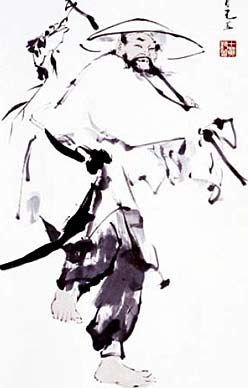
Calligraphy, the art of making words sing

        (•••)
       separates us. So what is the fruit          think that they exist apart from ev-                        opt for rapidity and efficacy, nota-
       of this dialogue? No less than life         erything else, outside this common                          bly by trying to gain mastery over
       itself! Our commitment to use our           “décor” of our humanity. But, with-                         nature. In the East, the preference
       brush to trace the curve of the uni-        out the sentiment of belonging to                           has been to “tell it” to “write it”, in its
       verse is a message, which says              the same species and without the                            fullness and looseness, in its curves
       that humanity, in all its diversity, is     recognition of diversity, humanity                          and silences, by leaving the space
       nevertheless one.                           could not continue to survive. This                         for interpretation, for freedom …
         If I often use the tree as a meta-        is the message of our exchange                                Far from my training as a scien-
       phor, it is because humanity has            between Chinese and Persian cal-                            tist, there is this idea of renounc-
       common roots, which give it a               ligraphy. This is also the message                          ing rigour, clarity and concision.
       unity, thousands of branches that           of the United Nations, whose New                            But I know that the computer
       provide its diversity (its people,          York headquarters has a poem by                             keyboard will never replace the
       who are both so different and               the illustrious Persian poet, Sa’adi                        hand. And I reckon that, today,
       yet so intermixed) and countless            [see box] inscribed over the en-                            calligraphy represents added
       leaves, the undulating products             trance to its Hall of Nations, and                          value. In a motion that is in har-
       of its creative genius. Without             of UNESCO, with which I would                               mony with nature, like a whirling
       its roots, firmly anchored in the           be honoured to continue my col-                             Dervish, the gesture of the cal-
       ground, without its branches –              laboration to promote “cultural di-                         ligrapher-philosopher-poet turns
       even if some die while others               versity in dialogue”.                                       the words of the Universe into
       flourish – without its leaves, con-                                                                     song. That is nas’taliq calligraphy:
       tinually “started afresh”, the tree         Why has calligraphy                                         the alchemy of life!
       could not survive.                          not flourished in the West?
         And you might say, what about             What can it give us today?
       violence? It arises from the fact            In the West, since the 16th cen-
       that certain peoples or individuals         tury, the choice has been made to

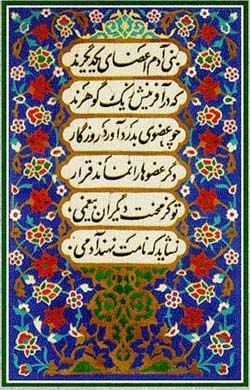
                                                                                                                                  Human beings
                                                                                                                                   are members
© DR

                                                           © Hassan Makaremi

                                                                                                                                    of a whole,
                                                                                                                                In creation of one
                                                                                                                                essence and soul.
                                                                                                                                 If one member is
                                                                                                                               afflicted with pain,
                                                                                                                                  Other members
                                                                                                                                    uneasy will
                                                                                                                                      remain.
                                                                                                                                    If you have
                                                                                                                                   no sympathy
                                                                                                                                for human pain,
                                                                                                                                     The name
                                                                                                                                  of human you
                                                                                                                                  cannot retain

                                                                                                                                Poem by the Persian
                                                                                                                                     poet Sa’adi
                                                                                                                                  on the pediment
                                                                                                                               of the United Nations
                                                                                                                                    headquarters
                                                                                                                                    in New York.

   Poem by Sa’adi, celebrated 13th century Persian poet.               “Whirling Dervish”, painting by Hassan Makaremi.

   The UNESCO Courier 2009 N°5                                                      8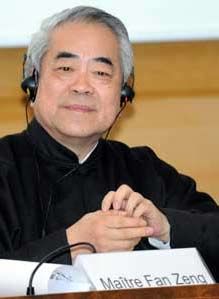
“This is not a photo of a merry-go-round, but of its reflection,”
                         explains Shigeru Asano, a Japanese photographer fascinated by the light and shadows of Paris.
                         He has been walking the streets of the city for 30 years. Nearly 10,000 kilometres from his native
                         Osaka, he feels at home in the French capital, where he finds an atmosphere of melancholy
                         more to his taste than “Tokyo’s dazzle”.

                     The personal eye
                  of a familiar stranger
           As part of the UNESCO World Cultural Diversity Festival, in May this year, Shigeru Asano
           exhibited his work at the Town Hall in the first arrondissement of Paris. He has generously

S
                          allowed us to reproduce a selection here (© Shigeru Asano).

  higeru Asano’s photographs, like          trying to set up his camera on a          It is very motivating.” In eight years,
shimmering skylights, only give a           tripod, aiming his lens a couple of       since he started his “puddles” proj-
partial glimpse of reality - no more        centimetres from the ground. They         ect, Shigeru Asano has made only
than a tiny puddle of water on a            can’t imagine that he has spent           60 photos he is satisfied with.
pavement can hold. Shigeru Asano            months, even years, visualizing the         At the opposite end of the spec-
is not the only photographer to be          photo he is about to take; or that he     trum to his compatriot Nobuyoshi
fascinated by reflection, but he is         might use up thirty films before he       Araki, Shigeru Asano creates a par-
surely one of the very few to have          gets the photo he has seen in his         allel universe, woven with illusions
used it as an aesthetic principle.          mind’s eye.”                              and dreams. He counters violence
These reflections stay surprisingly           This gives an idea of how impor-        with lyricism; uproar with silence;
sharp, even when the wind whips             tant time is in Shigeru Asano’s           the crowd with solitude. His Paris
up a strip of blur, or water forms a        approach as an artist. He avoids          is almost empty of people. “No it
frame of shadow. In any case, the           digital technology because he is          isn’t,” he protests. “Look, there’s a
reflection is the only perceptible re-      not interested in the instantaneous.      man.” And, it’s true, a few rare sil-
ality in his images.                        “With film, you have to wait … and        houettes do cross the black and
  “People sometimes come up to              then the moment of truth comes -          white scenes that Shigeru Asano
me and ask if I am feeling all right,”      success or failure? Sometimes,            composes on the Pentax 6x7 that
he says. “They are concerned when           when the film is developing, no im-       accompanies him everywhere. But
they see someone crouching in the           age appears. Everything is black.         they are always alone. “For me,
rain under an umbrella, trying to stay      So, I have to start again. It is like a   these photos are like a mirror”, he
dry. They don’t see that this man is        perpetual struggle with the image.        finally admits.
                                                                                                                         (•••)
The UNESCO Courier 2009 N°5                                     9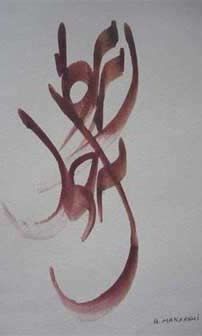
Regards intimes d’un étranger qui n’en est pas un

(•••)
 And the photographer tells of his         himself into photography. He spent       Curious coincidences with the
solitude. He lost his mother at the        the next ten years searching, taking   Stranger we encounter in Paris
age of fourteen. He never knew his         hundreds of photos in flamboyant       Spleen by the French poet, Charles
father. He has no brothers or sis-         colour, some for fashion magazines.    Baudelaire: “Tell me, enigmatical
ter, and no children of his own. “At       “Then, one evening, when I was feel-   man, whom do you love best, your
least, not for the moment,” he adds.       ing low, because the woman I loved     father, your mother, your sister, or
In 1971 he moved to Tokyo to study         had left me – which happens to ev-     your brother? / I have neither father,
design. Five years later he came to        eryone doesn’t it? – I went out for    nor mother, nor sister, nor brother
Paris on a short trip and returned         a walk in the rain. My tears, mixed    [...] / Then what do you love, extraor-
in 1979 to live. In his first ten years,   with the rain, misted my eyes, and I   dinary stranger? / I love the clouds...
he turned his hand to everything –         started to see images that were to     the clouds that pass... up there... up
painter, mechanic, waiter – before         become the photos you see today. I     there... the wonderful clouds!”
discovering a Minolta and throwing         found my path.”
                                                                                                        Jasmina Šopova

The UNESCO Courier 2009 N°5                                 10
© Yücel Yildirimkaya
Hiking and singing in Rize (Turkey).
The folk traditions of Brittany are making a remarkable comeback after being consigned
to oblivion for decades. And, 2500 kilometres away, traditional song is returning to Anatolian
homes, having almost disappeared. Today, a non-profit association called “A Bridge over the Bosporus”
is linking musicians from France and Turkey who share a similar passion and concerns.
T
Travelling music
his summer, the fourth Green Pas- The Breton Gallo songs were in danger of
tures Festival in Rize (Turkey) will renaissance being forgotten, unable to find a
be featuring foreign musicians - Over the past fifty years, in France, place in today’s world. But with the
from France. But not the France of Bretons have started to revive renewal of interest they are leav-
the tourist brochures and embassy their traditional music, dances and ing the archives, and are no longer
crusades that have taken over the festivals. Cut off from its past by esoteric party pieces, brought out
Turkish media in recent years. They urbanization, the new generation on special occasions for a hand-
come from that other France, home has been exploring its ancestral ful of culture buffs. Every day, new
to lovers of traditional music. A heritage. The trend started in parts songs are re-emerging in annual
France that is trying to mend the of the region where Breton is spo- contests, local gatherings in homes
fabric of a society torn apart by ken, and is now turning to another and cafes, village festivals, outings,
years of rural exodus. linguistic area, Gallo, which is schools and in music workshops
The effects of urbanization, indus- closer to French. Meanwhile, the- in small villages and market towns.
trialization and celebrity culture are ory and practice have evolved. And, at the same time, in rural ar-
being felt in Turkey, just as they are In the past, “revivalism” was the eas, young and old, those in work
in France. The art of song is being preserve of researchers, whose and the unemployed, both men and
drowned out by excessive technol- principal goal was to collect, women, are renewing social bonds
ogy, the glitter of globalization and analyze, understand and publish. thanks to this revival of singing.
the glamour of stardom. But both Today, as ethnomusicologist, Among the singers travelling to Rize
countries have managed to pre- Yves Defrance, points out, while this year are some of those spear-
serve a few islands of authenticity, continuing in this tradition, song heading this renaissance. Some,
like Brittany, in the extreme west of and dance collectors also “want like Charles Quimbert or Vincent
France, on the Atlantic coast, and to claim back this repertoire and Morel, come from the community of
the province of Rize, in the far north- bring it up to date, without altering song collectors: they have univer-
east of Anatolia, on the edge of the its character, turning it into a con- sity degrees and work at DASTUM,
Caucasus. temporary means of expression.”
(•••)
The UNESCO Courier 2009 N°5 11Travelling music
(•••)
the regional cultural organization
© Jean-Maurice Colombel
responsible for collecting and pre-
serving Breton intangible heritage.
In 1996 they launched the “Festival
of Traditional Song”, held in Bovel,
a little market town near Rennes in
Brittany, featuring folksongs from
Brittany and elsewhere. Others,
who have grown up with traditional
song, are veritable living treasures -
villagers who still carry and pass on
local history.
It was torrential rain that brought
them together, in the summer of
1997. The festival-goers were start- A night of songs at the café in Bovel.
ing out on a hike in the countryside,
singing as they walked, when a when Birol started to collect, pub- of having preserved Laz, a rare lan-
sudden downpour sent them scur- lish and revive the traditional rep- guage belonging to the Georgian
rying to Bovel’s only cafe. Here, ertoire, it was with a broad vision, or South Caucasian group.
they came across the generation of simultaneously preserving cultural The same passion, the same ap-
“Masters of the Tradition”, gathered heritage, the land and oral tradition. proach, but still an improbable
around the café’s owners, Léone And he makes no bones about us- meeting – after all, who has heard
and Louis Bernier. For them the ing his fame as an established mu- of Bovel, or Rize? But as they were
festival “was for young people.” But sician in Istanbul or the friends he made for each other, “A Bridge
when these ‘young people’ started has made abroad. over the Bosporus” has helped
to sing, they recognized their own In Storm Valley, where white bring them together. This French
songs. Since then, this little café minarets rise above the luxuriant not-for-profit association for cultur-
has become the symbol of recon- green slopes of Rize, the annual al exchange with Turkey is respon-
ciliation between the generations. August Festival is aimed at every- sible for a wonderful love story, told
On the first Friday of every month, one. As in Bovel, it hopes to bring in song, and which shows all the
the café plays host to local school- together young and old, those signs of lasting.
children, teenagers, teachers and a who have left and those who
crowd of others from the region - stayed behind. Songs are on of-
and even Paris – who come to stay fer in every shape and size - while Françoise Arnaud-Demir,
up all night singing. dancing, walking, or eating. But, performer of popular Turkish songs
out of respect for tradition, folk- and researcher/lecturer at the Institute
Songs of every colour tales are still collected, there are for Oriental Languages and Civiliza-
and flavour lessons in traditional cooking, and tions (INALCO) in Paris, is president
In Turkey, the first signs of a return outings to gather wild plants. And of the association A Bridge over the
to the homeland, in song, came there is little effort to mask the pride Bosporus that she founded in 2004
from Birol Topaloglu, someone else
in search of his roots. Combined, in
© Yücel Yildirimkaya
his case, with a strong ecological
awareness. As in other regions of
the country, the very banks of Ana-
tolia’s overburdened rivers, flowing
heavily towards the Black Sea, are
in danger of disappearing if planned
dams are built. Meanwhile, these
lands are gradually being deserted
by country folk looking for the prom-
ise of an easier life in town.
Once, community songs and
dances echoed out in the magnifi-
cent wood and stone houses. Little Typical architecture of the Black Sea amid the tea gardens.
by little they have fallen silent. So,
The UNESCO Courier 2009 N°5 12The celebrated martial art, Kung Fu, was created fifteen centuries ago in China.
We owe its origin to a Buddhist monk from India. From there, it spread to Korea, Vietnam,
the Philippines, Malaysia and Japan… to become, since the 1950s, a trend that has continued
to fuel the dreams of teenagers around the world. But in this process of globalization,
its intrinsic values are not always respected.
The warrior monks
of the young wood some of the monks learned to practice
As part of the UNESCO International Festival of Cultural Diversity martial arts to defend the Temple and
held in May this year, a delegation of monks from the temple its treasures.
of Shaolin (which means ‘young wood’) came to Paris to promote Shaolin Kung Fu is nothing other
the cultural and spiritual values of Kung Fu. One of them, than the path that the Shaolin monks
Abbot Shi Yongxin, explained to our colleague Weiny Cauhape, followed to attain wisdom and a deep
how the Shaolin temple is the product of cultural exchanges understanding of the Buddhist way of
and why it is important to preserve the activities life, or “ch’an”. It is a means to meditate
that have made it a sanctuary for the Chinese soul. on ch’an, by practising martial arts and
letting the ch’an serve as a guide.
“Shaolin Temple” schools and as-
© Temple de Shaolin
sociations seem to be opening up
everywhere in the world. What can
be done to protect the secular values
of Shaolin Kung Fu in the face of this
phenomenon?
It is true that there are many estab-
lishments that teach Shaolin martial
arts across the world. Some have
been set up by the Mount Song Shao-
lin Temple, while others have received
our authorisation after passing an ex-
amination. But most of these “Shaolin
Martial Arts Centres” have just sprung
up on their own.
As I have not visited most of these
establishments, I cannot pass judge-
Shaolin kung fu is both a martial art and a spiritual quest. ment on them. But one thing is cer-
tain: we are opposed to any abuse
of the name of our temple that might
What were the origins ter; know thy true nature and become undermine its traditions.
of the Shaolin temple a Buddha”. He founded the Chan We work tirelessly to protect the cul-
and how did it develop? school, in the temple itself. It is a tural heritage of Shaolin. We have set
In the year 495, Emporer Xiao Wen school of Buddhism that adapted to up a special organization to regulate
of the Northern Wei dynasty built the the Chinese way of thinking, as Bud- the use of the name “Shaolin Temple”
Shaolin temple on Mount Song, in dhism spread. [It became known as and have applied to UNESCO for in-
homage to the Indian monk, Ba Tuo Zen in Japan. Ed]. clusion on its intangible heritage list.
After that, two other Indian monks, Today, Shaolin has become the sym- Inclusion would enable us to take le-
Ratnamati and Bodhiruci, arrived in bol not just of Chinese Buddhism, but gal action, to collect and archive docu-
Shaolin and founded centres there for also of traditional Chinese culture. ments, and therefore to help guarantee
the translation of Buddhist scriptures, the living transmission of this secular
placing the temple at the very centre What is the origin of Kung Fu art. The rules of transmission of the
of Chinese Buddhism at the time. and what is its relationship knowledge and practices of Kung Fu
Later, the Indian monk Bodhidharma to Buddhism? from one generation to another have
settled there and, claiming to “trace As an Imperial temple, Shaolin pos- been strictly controlled since the 13th
his lineage back to the Buddha him- sessed considerable wealth. But, dur- century. They were laid down by Ab-
self,” placed the following thought at ing the final years of the Sui dynasty bot Fu Yu. Since then, some 70 gen-
the very core of his teaching: “Chan (581-681), the country suffered con- erations of masters have been trained
goes straight to the heart of the mat- siderably from successive wars. So, at Shaolin.
The UNESCO Courier 2009 N°5 13© UNESCO/Michel Ravassard
Around
the world
on a silk thread
Mulberry cultivation and silkworm farming in Thailand have been
recorded since the 13th century.
By the first half of the 20th century, the silk tradition in Thailand was on its last legs,
only to spring back in the 1950s, thanks to an American, Jim Thomson. As an ally he had
a young Thai woman - none other than Queen Sirikit. This secular art form, which,
today, combines traditional craft and industrialization, is passed down
O
from generation to generation and has contributed to the country’s development.
n Easter Sunday, 1967, a young to address a letter to “Jim Thomson, people, he decided to settle there
American businessman who had Bangkok”, and it would reach him, when he was demobilized.
been living in Thailand disappeared out of the three million inhabitants As soon as he arrived in the coun-
in the jungle in circumstances that of the Thai capital try, Thompson began collecting
were never to be cleared up. The In the twenty years before his fa- pieces of Thai silk. He was seduced
mystery caught the attention of the tal trip to Malaysia, Jim Thomson by the surprising combinations of
public and media in Asia, as well as achieved what others had been colours and the uneven texture,
the USA and elsewhere, because unable to in an entire life. Special- which distinguish Thai silk from the
this man was by no means un- izing in an art that he knew nothing softer Chinese or Japanese silk. The
known. In those days, one only had about, he created a vast silk indus- difference comes from the quality of
try in Thailand. His house in the silk worms themselves.
Bangkok, itself a work of art, A Chinese diplomat recorded the
© UNESCO/Michel Ravassard
is filled with art treasures Siamese tradition of growing mul-
from the region. berry trees and breeding silk worms
His life story reads like a as far back as the 13th century. But
novel, not just for his per- it was the American architect who
sonal accomplishments, but gave Thai silk its pedigree. When he
for the thousands of lives settled in Bangkok, weavers were
he changed. The name Jim few and far between - the tradition
Thompson is, today, synony- was only being kept alive by a hand-
mous with a booming Thai ful of Muslims in the Benkrua quar-
industry, known the world ter. Thompson decided to market
over, whose silk products Thai silk and contacted them. Most
fill the windows of leading were suspicious, but one head of
stores and grace the best family was intrigued, and decided
hotels and restaurants ev- to go into business with him. It was
erywhere. the start of a great adventure.
In 1947 Thompson left on a flight
Bangkok silk for New York, his suitcase stuffed
Jim Thompson trained as with samples of silk. A fashion edi-
an architect, discovering tor fell in love with the cloth samples
Thailand in 1945 when he and offered her backing straight
was posted there as an of- away. Back in Thailand, he set up
ficer in the US army. At that a company, becoming its director
time there were few modern and holding the majority of shares.
buildings or cars in Bangkok, His management style was original,
and the canals still played a employing mostly women, and al-
Scene from the Thai performance on 18 May major role. Attracted by the lowing them to work from home, so
at UNESCO, as part of the International Festival
of Cultural Diversity. markets and the smiling as not to disrupt their family life. He
Le Courrier de l’UNESCO 2009 N°5 14 (•••)Around the world on a silk thread
(•••)
introduced innovations in manufac- ensuring a happy compromise be- tionals, a third of them the children
turing techniques and replaced the tween craft and industrial manufac- and grandchildren of the first Mus-
old plant-based dyes with chemical turing. lim weavers from Benkrua.
colours, while respecting the tradi- The American businessman’s vi-
tional colours of Thai silk. sion turned out to be right – this From a presentation at UNESCO given
In the early 1950’s Thompson great Thai silk adventure would by Eric B. Booth, of the
opened a store in Bangkok, which bring prosperity to the country. To- “Jim Thompson Thai Silk Company”,
was immediately a huge success. day, 90% of shareholders in Jim during the International Festival
Soon after, he received a visit from Thompson’s company are Thai na- of Cultural Diversity, in May this year
Queen Sirikit, who was a tireless
promoter of Thai crafts and cultural
heritage. She became his most fa-
mous and influential client. On her
official trips abroad, she would wear Champagne et soie : un mariage royal
outfits made of traditional Thai silk,
and did not fail to be noticed by the If champagne is the king of wines,
© UNESCO/Michel Ravassard
celebrated French couturier, Pierre Thai silk is the queen of silks – this
Balmain. On the other side of the could be the motto of a new partnership
between the Inter-professional
Atlantic, Irene Sharaff, costume de-
Committee for the Wines of
signer for the musical comedy, The Champagne (France) and the Queen
King and I by Walter Lang, decided Sirikit Institute for Sericulture
to use Thai silk, the first of a whole (Thailand). Both are powerful symbols
series of films that helped spread of their respective countries, yet, both
its fame. Orders flooded in from all are also victims of their own success –
corners of the world. counterfeiting and misappropriation
Despite industrialization, making Thai silk of the name are the major threats that
depends to a large extent on the nimble fingers
of peasants and women workers. this partnership hopes to defeat.
Maintaining tradition
From the 1970’s, silk manufactur-
ing became established in the prov- What do champagne and silk have nation of silk thread and gold and silver
in common? An aura of charm, a long thread, is much sought after by leading
ince of Khorat, in the north-east of
history, a close link to their land of origin, couturiers and interior designers through-
Thailand. It was while touring this strict rules of manufacture and … coun- out the world.
hot and poor region of farmers that terfeits. Despite its industrialization, Thai silk
Queen Sirikit realized how difficult French champagne is protected by a making still depends to a large extent
life was for the peasants there and whole series of laws, which come under on the nimble fingers of peasants. Silk
offered to help them turn to silk the collective title of the “Champagne farming and unwinding the silk, thread
weaving and traditional dying. In Code”, which precisely defines its origin by thread from the cocoons are still the
1976, the queen set up the SUP- and methods of production. But the preserve of a myriad of small producers.
PORT foundation, which aims to Inter-professional Champagne Commit- And most of the weaving workshops that
develop craft activities in rural areas tee has to fight tooth and nail to avoid buy the silk thread still use wooden looms
and to preserve ancient production its Geographic Indication* being used and other traditional techniques.
techniques. Now, about a thousand illegally. The organization, which dates In 2007, the Champagne Committee
back to 1930 and the Commission for responded positively to an invitation
families have their own mulberry
Propaganda and Defence of the Wines from the Queen Sirikit Institute to form
plantations and breed their own silk
of Champagne, has to ensure that no a partnership and has since become
worms. The cocoons, which take sparkling wine anywhere in the world can an advocate for Thai silk. Thanks to its
23 days to mature, are then sold to benefit from this name. It is a difficult task, support, the Geographic Indication (GI)
Jim Thompson’s farm. because the prestigious name of “Cham- of Lamphun silk is in the process of be-
Nowadays, weaving, which is the pagne” is a superb sales feature and is ing registered with the European Union.
central step in the process of silk- therefore very attractive to counterfeiters. This collaboration, it is hoped, will draw
making, is carried out by about 600 Meanwhile, the relatively young Thai the public’s attention to the notion of
weavers, both men and women, Institute of Sericulture, established in Geographic Indication and help preserve
who continue to pass their skills on 2002, aims to obtain legal recognition of the authenticity of these products, which
from generation to generation. The the Geographic Indication of Lamphun have become icons of French and Thai
cloth is printed using both wooden province as producer of traditional Thai culture.
silk. The renowned Lamphun silk bro-
stencils and digital printers, recon-
cade, traditionally woven on handlooms Katerina Markelova,
ciling traditional and modern prac-
in a complicated process from a combi- UNESCO Courier
tices. Great emphasis is placed on
quality control and hand finishing,
The UNESCO Courier 2009 N°5 15focus
© UNESCO/Dominique Roger
Much more than
“fish and ships”
The oceans are suffering. The main source of food
for two billion people, a key element in climate
control and a largely untapped reserve of vital
resources, they deserve to be managed better. This The Great Barrier Reef, off Australia’s north-east coast.
The world’s largest coral complex is under threat of disappearing.
is why the United Nations has decided to celebrate
the first ever World Ocean Day on the 8th of June.
W
hen the ocean makes the monitoring and enforcing these regula- Because of these alarming trends, the
headlines, the news usu- tions. National and international institu- World Summit on Sustainable Develop-
ally concerns a threat to tions are fundamentally weak. They are ment in 2002 decided to keep the oceans
biodiversity, a crisis in the usually compartmentalized on a sector under permanent review via global and
fishing industry or an oil- by sector division of duties and respon- integrated assessments of the state of
spill accident. These are important is- sibilities, leaving little room for integrated the seas. This is the most comprehensive
sues, but are only part of the much bigger policy-making addressing issues that cut initiative undertaken by the UN system
story that needs telling. across several domains. yet to improve Ocean Governance. In
As our understanding of the climate Thus, despite progress, many major 2005 the UN General Assembly through
system improves, we realize the com- challenges remain to be addressed. Reg- resolution 60/30, requested UNESCO’s
plex yet essential role of the ocean plays ulation of High Seas or trans-zonal fisher- Intergovernmental Oceanographic Com-
in its regulation. Because of its capacity ies is one of them. There is also increas- mission and the United Nations Environ-
to store heat, the ocean is not only the ing concern that many fisheries practices ment Programme (UNEP) to take the
engine of weather but also the memory are unsustainable and that global fisher- lead in getting this process started. The
of climate. Life on earth originated in the ies generally are facing a major crisis. report of three years of work is ready and
margins of the primordial ocean and for has been distributed to the United Na-
millions of years evolved in this aquatic Major challenges tions Member States and the general
milieu. The ocean is the ultimate global Unsustainable uses are posing a dan- public. Later this year, in the emblematic
commons providing essential ecological ger to many special habitats as well, es- UN Headquarters building in New York, a
services that make life possible on our pecially in the coastal environment and Working Group of the whole composed
planet. Humankind has strong funda- including mangroves, estuaries, coral- by all members of the UN will consider
mental reasons to revere the ocean, as reefs and underwater mountains, which this report and propose a course of ac-
ancient civilizations intuitively did. are hot-spots of marine biodiversity. The tion to the 64th Session of the General
But our everyday behavior falls far short illegal traffic of people, arms and drugs Assembly. A positive endorsement will
from this serene ideal. As the current via the High Seas is increasing. open the way for the first Global Integrat-
piracy crisis has revealed - and despite Absorbing millions of tons of CO2 every ed Assessment of the Ocean to be con-
the 1982 United Nations Convention of year - one third of total annual emissions ducted by the UN system for 2014-15,
the Law of the Sea (UNCLOS) - there - the ocean has already spared us from the two years when the Commission on
are many gaps in the governance in this catastrophic climate change. But in doing Sustainable Development will conduct
unique international space. UNCLOS so, its own intrinsic balances are being a review of oceans and coastal issues.
provides an integrated legal framework altered: it is becoming more acidic and Given the high stakes, failure to do so is
on which to build sound and effective has taken the largest fraction of the addi- not an acceptable option.
regulations to the different uses of the tional heat generated by climate change,
ocean, which have been implemented something that might eventually alter the Patricio Bernal,
by the UN specialized agencies and normal patterns of ocean circulation that Executive Secretary of the
programs over the last 30 years. Nev- are so essential for keeping CO2 out of Intergovernmental Oceanographic
ertheless, severe limitations exist for contact from the atmosphere. Commission (IOC), UNESCO.
The UNESCO Courier 2009 N°5 16CONTACT
The UNESCO Courier is published by
the United Nations Educational, Scientific
and Cultural Organization.
7, place de Fontenoy
75352 Paris 07 SP, France
http://www.unesco.org/courier
General inquiries, reprint and reproduction rights
f.ryan@unesco.org
Director
Saturnino Muñoz Gómez
Editor in Chief
Jasmina Šopova - j.sopova@unesco.org
Editorial assistance
Katerina Markelova - k.markelova@unesco.org
Editors
Arabic
Bassam Mansour - b.mansour@unesco.org
assisted by Zaina Dufour - z.dufour@unesco.org
Chinese
Weiny Cauhape - w.cauhape@unesco.org
English
Cathy Nolan - c.nolan@unesco.org
Russian
Victoria Kalinin - v.kalinin@unesco.org
Spanish
Francisco Vicente-Sandoval - l.iglesias@unesco.org
Photo and web layout
Fiona Ryan - f.ryan@unesco.org
PDF Layout
Gilbert Franchi
Web Platform
Stephen Roberts, Fabienne Kouadio, Chakir Piro
s.roberts@unesco.org
Articles and photos credited UNESCO may be
reproduced and/or translated providing the credit line
reads “Reproduced from the UNESCO Courier”
and includes date and hyperlink. Photos without
UNESCO credit require specific authorization.
Articles express the opinions of the authors and do not
necessarily represent the opinions of UNESCO.
Boundaries on maps do not imply official endorsement
or acceptance by UNESCO or the United Nations
of the countries and territories concerned.
The UNESCO Courier 2009 N°5 17You can also read


