Duke Energy/Sullivan County Community Hospital Existing Building Commissioning Phase 2 Report
←
→
Page content transcription
If your browser does not render page correctly, please read the page content below
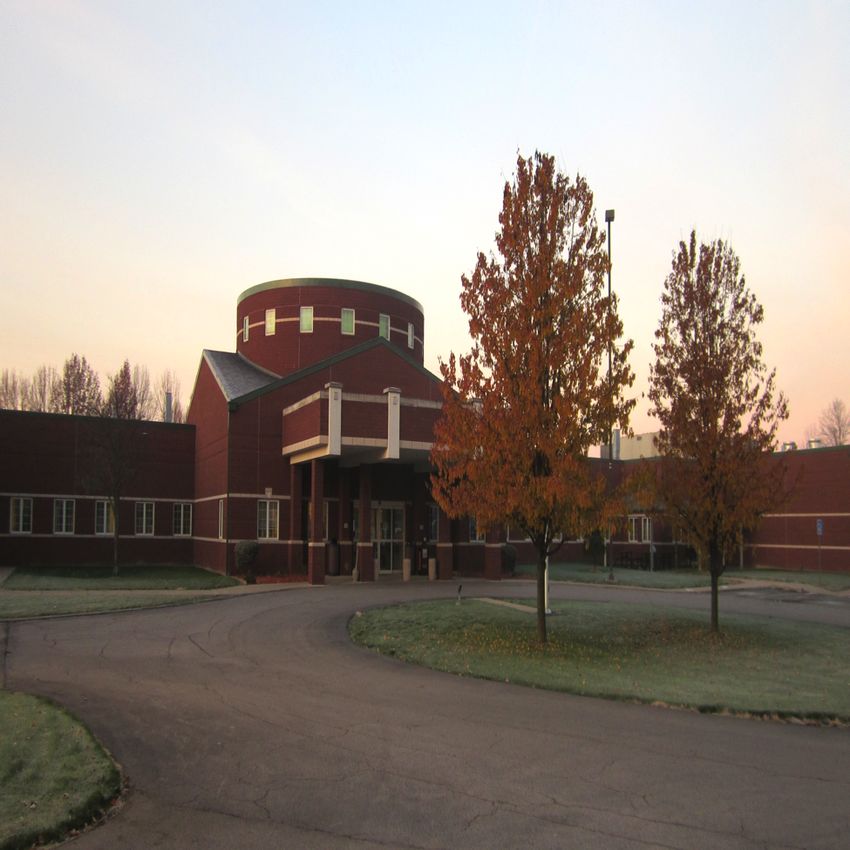
                                                          Duke Energy/Sullivan County Community
                                                          Hospital
                                                          Existing Building Commissioning
                                                          Phase 2 Report

                                                          Submitted By:
                                                          WorkingBuildings
                                                          1756 Huntington Woods Court
                                                          Winston-Salem, NC 27103
                                                          Hoy R. Bohanon, PE, LEED AP, BEAP
                                                          678 990-8001
                                                          hrbohanon@workingbuildings.com

                                                          May 30, 2013


       Atlanta / Albuquerque / Alexandria, LA / Austin / Birmingham / Charlotte /
       Jackson, MS / New Orleans / New York / Ewing, NJ / Winston-Salem* /
       Riyadh, Saudi Arabia *Affiliated Company Office

Sullivan County Community Hospital
2200 North Section Street
Sullivan, IN 47882

                                      Gross Square Footage (GSF):     87,881
                                               Year Constructed:      1999
                                Annual Energy Cost (Before ECMs):     $275,626
                                 Energy Cost/GSF (Before ECMs):       $3.14
                            Annual Energy Consumption: Electricity:   2,730,468 kWh
                                                     Natural Gas:     116,395 Therms

Site Contact
Physical Plant Director
Ron Shake
Sullivan CCH
2200 North Section Street
Sullivan, IN 47882
812-268-2594
Ron.shake@schosp.com

WorkingBuildings                                                        Duke Energy
Phase 2 Report                                     Sullivan County Community Hospital
                                            1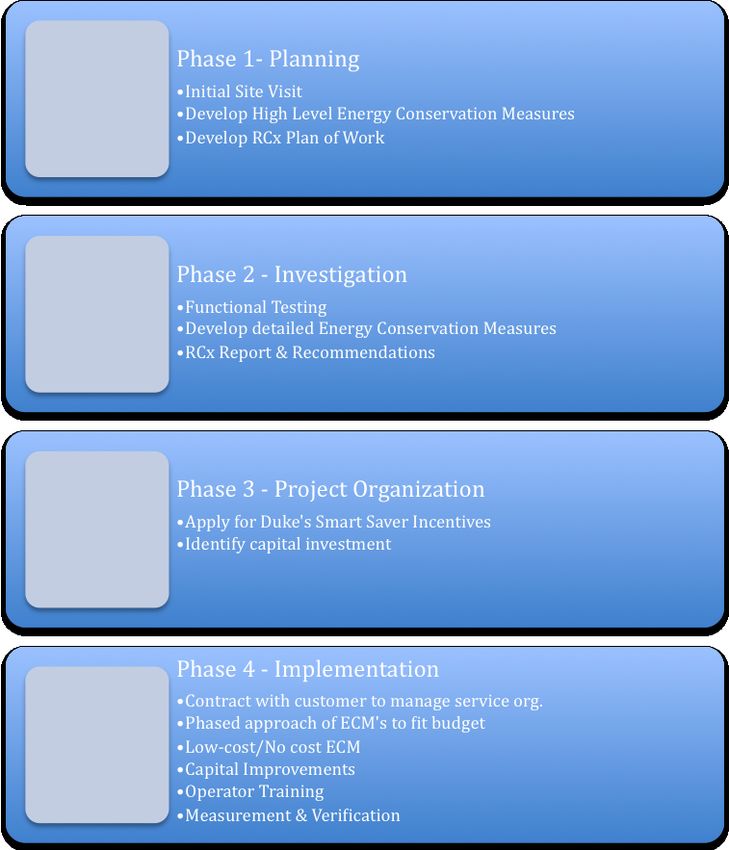
Executive Summary

WorkingBuildings was retained to begin the existing building commissioning process at Sullivan
Community Hospital. The kickoff meeting was held November 14. Hoy Bohanon conducted a
walkthrough energy investigation on November 15th and November 16th. Hoy Bohanon and Chuck
Gaziano conducted a follow up meeting to review the process for Phases 2 and 3 on February 21, 2013.

Phase 2 activities took place on site on April 8-9 conducted by Gerard Roth, Noelle Sagan, and Hoy
Bohanon. The second phase refined the energy conservation measures (ECMs) suggested in the initial
Phase 1 report. The current list of recommended ECMs that are outlined in this report are also contained
in an incentive application that is submitted to Duke Energy as Phase 3 of the process. The recommended
ECMs focus on air handler operations modification for the support areas of the main hospital.

   1. Add new controls to RTU-3 to reduce airflow to unoccupied zones, reduce and control outdoor
      air exchange, provide supply air reset, and control economizer.
   2. Add new controls to RTU-6 to reset economizer, provide supply air reset, and turn unit off when
      zones are unoccupied
   3. Add new controls to AHU-1 to provide supply air reset and reduce airflow when zones are
      unoccupied. Provide backup cooling and sensing for areas that may operate at night

A current estimate of investments to implement these ECMs is $80,000. There is a potential electrical
energy cost savings payback of $16,000 per year and an estimated gas savings of $8500 per year.

The next step is to submit an application for Duke Energy Smart Saver incentives as prepared by
WorkingBuildings.

WorkingBuildings                                                               Duke Energy
Phase 2 Report                                            Sullivan County Community Hospital
                                                   2
Four Phases of the Existing Building Commissioning Process
Parts 2+
WorkingBuildings Duke Energy
Phase 2 Report Sullivan County Community Hospital
3Energy Conservation Measures – Recommendations
Revise Controls on Non-Critical HVAC Systems in Main Hospital
ECM 1 – Revise Controls on RTU-3
The existing RTU-3 is the largest HVAC unit in the hospital. It is a McQuay 65 ton Dx package rooftop
unit with hot water heating. It serves the front center area of the hospital including the main lobby,
administration offices, lab, outpatient surgery, ER waiting room, and medical records. The unit currently
has limited monitoring and control by the building automation system (BAS). The thermostats controlling
the terminal boxes are pneumatic. The boxes are a mix of constant volume with reheat and VAV with
reheat. All reheat is with hot water.
RTU-3 was designed to supply a minimum of 7265 cfm of outdoor air. The unit operates 24/7. Changes
in ASHRAE 170 and 62.1 allow for a recalculation of outdoor air required by this multiple zone system.
Both ventilation standards allow for ventilation to be reduced when zones are unoccupied. Many but not
all of the areas are unoccupied at night. The unit must run 24/7 but the quantity of outdoor air that must
be heated and cooled can be reduced.
Specific steps to optimize energy efficiency include:
1. Reduce exhaust airflow not required on EF-8 by blanking off 1075 cfm of exhaust in the Admin
area. Reduce EF-8 airflow from 1790 cfm to 715 cfm.
2. Reduce total outdoor airflow from 7265 cfm to 6000 cfm.
3. Install new pneumatic controls/relays to shut air off to boxes in unoccupied areas. These will
operate off of one occupied/unoccupied signal from the BAS. The boxes to shut off are 3.2, 3.3,
3.15, 3.17, 3.20, and 3.22. This will reduce air handler total airflow by an average of 7600 cfm
during all the unoccupied hours. This will also reduce the amount of reheat required for the
unoccupied spaces and reduce the total cooling load on the RTU.
4. Change economizer enable setting from 55°F to 66°F. This will decrease cooling load on
compressors.
5. Change supply air temperature default setpoint from 58°F to 56°F. This will use a bit more
energy but will improve humidity control.
6. Implement supply air reset based on outdoor air temperatures. When outdoor air temperature is
greater than 58°F, then set supply air temperature to 56°F. When outdoor air temperature is less
than 58°F, set supply air temp to 62°F.
ECM 2 - Add new controls to RTU-6 and turn unit off when zones are unoccupied.
Provide backup cooling and sensing for areas that may operate at night.
RTU-6 basically serves the cafeteria and kitchen. The unit currently runs 24/7. There is an opportunity
to turn the unit off when the area is not occupied. In order to turn the unit off, the pneumatic thermostats
must be replaced with digital thermostats with telemetry for monitoring the areas. Also, cooling must be
provided to the main electrical switchgear room by installing a fan system. Running the fan will be much
more cost-effective than running RTU-6 at night.
Specific steps to optimize energy efficiency include:
1. Purchase and install inline fan for electrical room. Install thermostat to control fan.
2. Increase total makeup airflow from 6000 cfm to 9000 cfm by buying a new motor and increasing
opening into kitchen hood. This will reduce outdoor air pulled from other areas of the hospital.
WorkingBuildings Duke Energy
Phase 2 Report Sullivan County Community Hospital
43. Install temperature sensors and monitor at BAS for night setback or setup if required. Program
BAS to restart unit if temperatures are out of control range.
4. Program an operating schedule to turn off from 8:00 p.m. until 4:00 a.m. every day.
5. Change economizer enable setting from 55°F to 69°F. This will decrease cooling load on
compressors.
6. Implement supply air reset based on outdoor air temperatures. When outdoor air temperature is
greater than 58°F, then set supply air temperature to 55°F. When outdoor air temperature is less
than 58°F, set supply air temp to 60°F.
ECM 3 - Add new controls to AHU-1 and turn unit off when zones are unoccupied.
AHU-1 supplies heating and cooling to the shops, storeroom and laundry. The unit currently runs 24/7.
Adding digital controls with sensors will allow the unit to be in a reduced airflow mode when areas are
unoccupied.
Specific steps to optimize energy efficiency include:
1. Purchase and install inline fan for dryer room. This will be used for free cooling in the winter
allowing for supply air reset to work for the other areas. Install thermostat and variable speed
control for control of fan.
2. Install VFD on supply air fan and set supply air volume to 2000 cfm outdoor air volume to 1600
cfm when zones are unoccupied or in mild weather.
3. Program an operating schedule to reduce airflow from 6:00 p.m. until 6:00 a.m. every day.
4. Change economizer enable setting from 70°F to 66°F. This will decrease cooling load on
compressors.
5. Implement supply air reset based on outdoor air temperatures. When outdoor air temperature is
greater than 58°F, then set supply air temperature to 55°F. When outdoor air temperature is less
than 58°F, set supply air temp to 60°F.
6. Install four (4) new 5-ton scroll compressors to replace the 22-ton reciprocating compressor
without unloaders. This will allow control of air temperatures under reduced flow conditions and
will greatly improve cooling efficiency.
WorkingBuildings Duke Energy
Phase 2 Report Sullivan County Community Hospital
5ECM Table
Estimated Estimated
Estimated Gas Estimated Gas
Estimated Electric Electric
ECM Title Savings Savings
Cost Savings Savings
Therms/yr Dollars
kWh/yr Dollars
Add new controls to
RTU-3 to reduce total
supply airflow when office
type zones are
1 $22,060 88,506 $6,195 4814 $3,129
unoccupied. Reduce
unnecessary exhaust air
and make appropriate
reductions to outdoor air.
Add new controls to
RTU-6 and turn unit off
when zones are
unoccupied. Provide
backup cooling and
2 $12,340 85,969 $6,018 6519 $4,237
sensing for areas that may
operate at night. Reduce
outdoor airflow by
modifying kitchen makeup
system.
Add new controls to
AHU-1 and reduce supply
air when zones are
3 unoccupied. Replace 20 $44,720 52,736 $3,692 1889 $1,228
ton reciprocating
compressor with (4) 5-ton
scroll compressors
All ECM Total $79,120 227,212 $15,905 13,222 $8,594
WorkingBuildings Duke Energy
Phase 2 Report Sullivan County Community Hospital
6Conclusions
WorkingBuildings recommends that the following ECMs be implemented in Phase 4 of the existing
building commissioning process. All of these ECMs are eligible for Smart Saver Incentives.
Implementation can begin after Duke Energy issues the incentive offer letter. All of the changes should be
designed and commissioned.
1. Add new controls to RTU-3 to reduce total supply airflow when office type zones are unoccupied.
Reduce unnecessary exhaust air and make appropriate reductions to outdoor air.
2. Add new controls to RTU-6 and turn unit off when zones are unoccupied. Provide backup
cooling and sensing for areas that may operate at night. Reduce outdoor airflow by modifying
kitchen makeup system.
3. Add new controls to AHU-1 and reduce supply air when zones are unoccupied. Replace 20 ton
reciprocating compressor with four (4) 5-ton scroll compressors.
WorkingBuildings Duke Energy
Phase 2 Report Sullivan County Community Hospital
7Appendix 1: ECM Calculations
WorkingBuildings Duke Energy
Phase 2 Report Sullivan County Community Hospital
8RTU-3 Modification
Implementation Cost Sheet
Implementation Costs Cost per Unit Quantity Final Cost
Design $0.00
Construction
Mechanical Design $1,000.00 1 $1,000.00
Develop Optimized Sequences $3,000.00 1 $3,000.00
Control Points Installed $1,000.00 2 $2,000.00
New Pneumatic Controls $5,000.00 1 $5,000.00
Reset OA and minimize exhaust $3,000.00 1 $3,000.00
Controls Reprogramming $1,500.00 1 $1,500.00
Contractor Markup $1,560.00 1 $1,560.00
Commissioning $5,000.00 1 $5,000.00
Total $22,060
Duke Energy
Retrocommissioning Phase 2 Report Sullivan County Community Hospital
9RTU-3 Annual Energy Compressor COP Elec Rate ($/kWh) Boiler Efficiency Nat Gas Rate ($/therm) Energy Conv (BTU/kWh) Energy Conv (Btu/therm)
3 $0.07 80% $0.65 3413 100,000
Processes
Condition Mixed Air -
System Cooling Btu Heating Btu Notes Elec Consump (kWh/yr)
Cooling Cost ($/yr) Therm Consump (therms/yr)
Heat Cost ($/yr) Total Cost ($/yr)
Baseline 1,730,509,836 150,511,335 169,012 $11,830.81 1,881.39 $1,222.90 $13,053.72
Optimize SA Setpoints when OAT≥58ºF, SA-T=55ºF; When OAT< 58ºF, SA-T=62ºF
Change Economizer
Setting from OATDOAS OAU-1 Modification
Implementation Cost Sheet
Implementation Costs Cost per Unit Quantity Final Cost
Design $0.00
Construction
Mechanical Design + ASHRAE
calculations $1,000.00 1 $1,000.00
Develop Optimized Sequences $1,000.00 1 $1,000.00
Control Points Installed $1,000.00 4 $4,000.00
Add sensors in kitchen $1,000.00 1 $1,000.00
Add fan in electrical room $3,000.00 1 $3,000.00
TAB $500.00 1 $500.00
Controls Reprogramming 0 $0.00
Contractor Markup $840.00 1 $840.00
Commissioning $1,000.00 1 $1,000.00
Total $12,340
Duke Energy
Retrocommissioning Phase 2 Report Sullivan County Community Hospital
11Nat Gas Rate Energy Conv
RTU-6 and Kitchen Annual Energy Compressor COP Elec Rate ($/kWh) Boiler Efficiency ($/therm) (BTU/kWh) Energy Conv (Btu/therm)
3 $0.07 80% $0.65 3413 100,000
Processes
Elec Consump Therm Consump
Condition Mixed Air Cooling Btu (Btu/yr) Heating Btu (Btu/ yr) Notes (kWh/yr) Cooling Cost ($/yr) (therms/yr) Heat Cost ($/yr) Total Cost ($/yr)
heating is what is required in addition to
Baseline 1,259,856,591 27,940,767 heat from return air 123,045 $8,613.14 349.26 $227.02 $8,840.16
from 24/7 to 04:00 to 20:00, 7 days per
Reduce Operating Hours week
Change Economizer Setting from OATAHU-1 Modification
Implementation Cost Sheet
Implementation Costs Cost per Unit Quantity Final Cost
Design $0.00
Construction
Mechanical Design $2,000.00 1 $2,000.00
Develop Optimized Sequences $4,000.00 1 $4,000.00
Control Points Installed $1,000.00 2 $2,000.00
Replace Compressors $20,000.00 1 $20,000.00
VFD on SAF $4,000.00 1 $4,000.00
New Fan in Laundry $2,500.00 1 $2,500.00
Controls Reprogramming $1,500.00 1 $1,500.00
Contractor Markup $3,720.00 1 $3,720.00
Commissioning $5,000.00 1 $5,000.00
Total $44,720
Duke Energy
Retrocommissioning Phase 2 Report Sullivan County Community Hospital
13Old Compressor
AHU-1 Annual Energy COP Elec Rate ($/kWh) Boiler Efficiency Nat Gas Rate ($/therm) Energy Conv (BTU/kWh) Energy Conv (Btu/therm)
2.5 $0.07 80% $0.65 3413 100,000
Processes
Condition Mixed Air - Elec Consump Therm Consump
System Cooling Btu Heating Btu Notes (kWh/yr) Cooling Cost ($/yr) (therms/yr) Heat Cost ($/yr) Total Cost ($/yr)
Baseline 499,562,768 81,757,476 58,548 $4,098.38 1,021.97 $664.28 $4,762.66
Optimize SA Setpoints when OAT≥58ºF, SA-T=55ºF; When OAT< 58ºF, SA-T=60ºF
Change Economizer
Setting from OATYou can also read


