EDUC 5137 Curriculum & Pedagogy in Vocal & Instrumental Music for Intermediate Grades
←
→
Page content transcription
If your browser does not render page correctly, please read the page content below
Transforming Education. Transforming Lives.

                                 EDUC 5137
  Curriculum & Pedagogy in Vocal & Instrumental Music
                for Intermediate Grades
Instructor:
Danielle Sirek 001
E: dsirek@uwo.ca
Office Hours:
Monday (in office, by appointment): 12:30pm-2:30pm
Tuesday (in office, drop in): 1:00pm-3:00pm
Friday (online, by appointment): 10:00am-12:00pm

Schedule:
 Section 001:    Mon 4:30PM-6:30PM,
                 Room: 1054

Program Context:
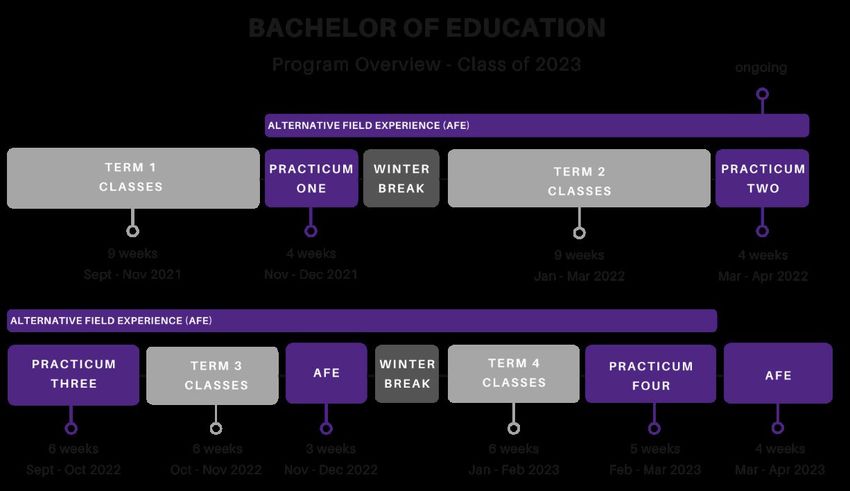
This is a IS Curriculum Course taken by Teacher Candidates during Year 1, Full Year of
the Bachelor of Education.

2021-2022
Music (Vocal & Instrumental) for the Intermediate Grades (EDUC 5137) A focus on the creative process in integrated and learner-centered classrooms. Topics include the development of a philosophy of music education and its relationship to general principles of education, and the acquisition of the understandings, skills, and language required to teach music in intermediate classrooms. 2 hours per week, full year, .5 credit. This course is designed to prepare candidates for entry into the field of music education at the intermediate level in Ontario. It will provide opportunities for candidates to develop the required knowledge, skills and habits of mind to address adolescent learners through the medium of music education. A critical examination of pedagogy, curriculum and resources will be used to refine and develop successful approaches to classroom practice. Emphasis will be placed on instruments and vocal instructions in the traditional and digital classroom. Davids, Julia & LaTour, Stephen (2021). Vocal Technique: A Guide to Classical and Contemporary Styles for Conductors, Teachers, and Singers, 2nd ed., available at the Bookstore or e-text available at: https://waveland.com/browse.php?t=593 (First term) Wasiak, Edwin. (2013). Teaching instrumental music in Canadian schools. Oxford University Press Canada. (Second term) Primary or secondary instrument. (Second term) Number of Credits : 0.5 Number of Weeks: 18 Week 1: Intermediate Vocal (Exposure) This week will be made up with an online viewing party of repertoire assignments. Week 2: Introduction Course Welcome Course Overview
Introduction to the intermediate vocal music warm up (obeservation & pedegogy)

 Learning Activities
 Type             Name                 Description
                                       Observation & pedagogy: intermediate warm up
 Practice        Week 2 Activities
                                       Discussion: What is the purpose of vocal music education?
                                       Due Week 3: My teaching & learning story Flipgrid
 Study / Prep    Week 2 Homework
                                       Prepare round robin warm up activity

Week 3: Building a Warm Up

 Indigenous Music Education: teachings on the drum, Grandmother Song

 Warm up pedagogy

 Gesture & conducting in warm ups

 Learning Activities
 Type        Name          Description
                           1) Indigenous music education teachings, acknowledgment,
                           permissions, and song
             Week 3
 Practice                  2) Round robin warm up
             Activities
                           3) 3-minute free write: How do you build a good warm-up?
                           4) Practice small group gesture & conducting
 Study /     Week 3
                           Due Week 4: Indigenous Arts Flipgrid
 Prep        Homework
                           Davids & LaTour, Intro (pp. 1-9); Ch. 16, Building a Warm Up (pp. 281-
                           288)
             Week 3
 Reading
             Readings
                           Two Minutes for Technique – Episode 17, Building a Warm Up
                           https://www.youtube.com/watch?v=HVQb0uPjmyY

Week 4: Posture/Alignment & Breath Control

 Adolescent voices, adolescent learners: warm ups in the intermediate grades (focus: posture &
 breath)

 Basic anatomy of the singer

 Choral conducting

 Introduction to the curriculum document & lesson planning
Indigenous Music Education: Acknowledgement, permissions, Lil’wat Song
Learning Activities
Type Name Description
1) Kahoot quiz
Week 4
Practice 2) Group of 3 “two minutes for technique” presentation
Activities
3) Choral conducting: observation
Study / Week 4
Due Week 5: Choral conducting quiz
Prep Homework
Davids & LaTour, Ch. 1 Posture/Alignment, Ch. 2 Breath
Control, pp. 9-32
Two Minutes for Technique - Episodes 3 & 6: Breathing.
Week 4
Reading
Readings
https://www.youtube.com/watch?v=DrEShVa9NPo
https://www.youtube.com/watch?v=ncs0TjmuWm4
Week 5: Creative Process
Warm up: vowel concentration
Pedagogy: soundcapes and improvisation
Decolonization of Music Education: Vocal technique & improv as inclusive practices
Creative process in the Ontario Arts Curriculum
Lesson planning continued; guided lesson plan for micro teaching assignment in groups of 3
Learning Activities
Type Name Description
1) Warm up activities based on readings so far
Week 5
Practice 2) Listening and creating soundscapes
Activities
3) Review creative process in the Ontario Arts Curriculum
Study / Week 5 Due Week 6: Creative process vocal micro teaching & lesson plan in
Prep Homework groups of 3 (homework); rubric on OWL
Davids & LaTour, Ch. 5, Vowels pp. 93-119
Two Minutes for Technique - Episode 11 & 13: Vowels
Week 5
Reading
Readings
https://www.youtube.com/watch?v=BjgADE5zldY
https://www.youtube.com/watch?v=1V6IFfjpfAUWeek 6: Microteaching Presentations (Vocal/Creative Process)
Creative Process Micro Teaching & Lesson Plan (Groups of 3) Presentations
Learning Activities
Type Name Description
1) Presentations
Practice Week 6 Activities
2) Class feedback (two stars and a wish)
Week 7: Vocal Repertoire & Changing Voices
Structuring a warm up around repertoire for changing voices
Transitioning and transgender singers
Decolonization of Music Education: Cultural appropriation
Repertoire selection & score study
Digital Audio Workstation (DAW) & virtual choir apps
Indigenous Music Education: Tanya Tagaq & Room Full of Teeth; Sesere eeye
Class choir: rehearsing and singing
Learning Activities
Type Name Description
1) Critical listening & T-P-S: Tanya Tagaq, Room Full of Teeth, what
is cultural appropriation?
Week 7 2) Score study in pairs: Sesere eeye
Practice
Activities
3) DAW virtual choir activities
4) Observation: Repertoire Wednesday videos (watch two)
Study / Week 7 Due Week 8: Repertoire Wednesday Video (due week 8 on Flipgrid);
Prep Homework rubric on OWL
Davids & LaTour, Ch. 13, Changing Voices, pp. 223-241
Week 7
Reading
Readings Katy Harmer, Outward Inclusivity
https://www.katyharmer.com/blog/2021/2/25/outward-inclusivity
Week 8: Introduction to Assessment
Preparing for the first practicumWarm up: Consonants & intonation
Choral music pedagogy synthesis of knowledge (vocal technique, repertoire
selection, score study)
International Phonetic Alphabet (IPA)
Links to curriculum through repertoire (curriculum expectations, success criteria)
Assessment & evaluation, differentiation, universal design, IEPs, rubrics
Class choir: rehearsing & singing
Learning Activities
Type Name Description
1) Choral music pedagogy synthesis of knowledge small group sticky
note activity
Week 8 2) Assessment in music ed interview with Scott Cowan (band focus)
Practice
Activities
3) Review Growing Success document and Achievement Charts
4) Finish Repertoire Wednesday Flipgrid
Davids & Latour, Ch. 6, Consonants (pp. 123-133) & Ch. 10, Intonation
(pp. 189-196)
Video: Two Minutes for Technique – Episode 12: Consonants
Week 8 https://www.youtube.com/watch?
Reading
Readings v=OMW4OherKLg&feature=emb_imp_woyt
Ontario Arts Curriculum, pp. 29-35, Assessment & Evaluation:
http://www.edu.gov.on.ca/eng/curriculum/elementary/arts18b09curr.pdf
Week 9: Vocal Meets Instrumental
Crossover warm ups: vocal meets instrumental
Warm up extensions: Sight singing, sight reading, ear training & rhythm training
Instrumental fundamentals (brass/woodwinds/percussion)
The first rehearsal & rehearsal talk; getting ready for practicum
How to teach marking your score
Decolonization of Music Education: decolonization of the body, the voice, and blend
Indigenous Music Education: Jeremy Dutcher, the body, gender affirmation
Class choir: rehearsing and singing
Indigenous Music Education: Travelling SongLearning Activities
Type Name Description
1) Discussion & modelling on instruments: principles of posture,
breathing, embouchure, gesture, conducting
Week 9
Practice 2) T-P-S: How do you introduce marking a score to your students?
Activities
https://www.youtube.com/watch?v=4jV4D_7sVJI
3) Anonymous class google slide: practicum hopes and fears
Study / Week 9 Due Week 10: Watch class Repertoire Wednesday videos (viewing
Prep Homework party in lieu of week 1 class)
Davids & Latour, Ch. 12, Choral Blend, pp. 213-222
Week 9
Reading
Readings The First Rehearsal: https://www.totalchoirresources.com/how-a-new-
choir-leader-tackled-her-first-rehearsal/
Week 10: Instrumental (Familiarity): Introduction to Instrumental
Instrumental warm up
Warm up extensions: Sight singing, sight reading, ear training & rhythm training
Deep listening: Introduce another’s practicum story
Instrumental fundamentals (brass/woodwinds/percussion)
Introduction to instrumental vlog assignment & andragogy
Round robin part 2: Instrumental fundamentals
Learning Activities
Type Name Description
1) Introduce another’s practicum story (deep listening)
Week 10
Practice
Activities 2) Lead instrumental fundamentals activity in small groups on
instrument of choice
Due Week 11: My Teaching and Learning Story Flipgrid: continued
Study / Week 10 (based on practicum, Standards of Practice, Ethical Standards)
Prep Homework
Select vlog instrument
Week 11: Deep Listening
Decolonization of Music Education: Rocco, Rocco
Instrumental warm up & conductingIntermediate lesson planning continued: focus on listening, music theory, cultural contexts
What is musicianship?
Calypso music
Learning Activities
Type Name Description
1)Student-led warm ups and instrumental fundamentals
Week 11 2) Discussion: What is musicianship?
Practice
Activities
3) Deep listening activity based on Campbell article: Ajamu, My
Calypso
Study / Week 11
Due Week 12: Vlog #1
Prep Homework
Shehan Campbell, Patricia (2005). Deep Listening to the Musical World.
Music Educators Journal 92 (1), 30-36. (On OWL).
Week 11
Reading
Readings
Wasiak, Ed. (2013). Teaching Instrumental Music in Canadian Schools,
Ch. 10: Rehearsing & Conducting, 254-281.
Week 12: Kodály Approach to Music Education
Instrumental warm up & conducting
Hill and Gully Rider (Kodaly approach)
Kodály approach, sequencing, music literacy, links to education (Dewey, Vygotsky, Montessori,
Piaget)
Decolonization of Music Education: Learning with Lizzo (deep listening, music theory)
Rehearsing band instruments
Learning Activities
Type Name Description
1) Student-led warm ups and instrumental fundamentals
2) Follow-up discussion: What is musicianship? What is “good” music?
Week 12
Practice
Activities
3) Deep listening activity based on Campbell article: Lizzo, Juice
4) Think-Pair-Share: What is music literacy?
Week 12 Wasiak, Ed. (2013). Teaching Instrumental Music in Canadian Schools,
Reading
Readings Ch. 6, Planning for Instruction, 103-136.
Week 13: Hip Hop PedagogyInstrumental warm up & conducting
Decolonizing Music Education: Culturally relevant pedagogy & hip hop pedagogy
Co-creating assessment & culturally responsive assessment
Digital Audio Workstation (DAW) software & music apps
Instrumental score study
Rehearsing band instruments
Learning Activities
Type Name Description
1) Co-creating assessment in groups of 2 (hip hop pedagogy)
Week 13
Practice
Activities 2) DAW exploration: Google Chrome Music Maker, BandLab, Garage
Band
Study / Week 13
Due Week 14: Vlog #2
Prep Homework
Podcast: Ladson-Billings, Gloria. (2018). Hip Hop Can Save America.
The Center for Hip Hop Advocacy. www.hiphopadvocacy.org
Week 13
Reading
Readings
Wasiak, Ed. (2013). Teaching Instrumental Music in Canadian Schools,
Ch. 7, Planning for Assessment & Evaluation, pp. 137-169.
Week 14: Orff Approach to Music Education
Instrumental warm up & conducting
Orff approach to music education
Songwriting, composition, & arranging in the classroom
Lesson, unit, and long range planning in the instrumental classroom
Special education in music education, ableism, and dis/ability
Rubrics, co-creating assessment, & culturally responsive assessment
Rehearsing band instrumentsLearning Activities
Type Name Description
1) Orff activities (creative/composition focused)
Week 14
Practice 2) T-P-S: Long range planning & backwards design
Activities
3) Creating a rubric in groups of 2
Due Week 15/16:
Study / Week 14
Prepare micro teaching
Prep Homework
Vlog #3 (due the week you are not teaching)
DeLuca, Christopher & Ben Bolden (2014). Music Performance
Assessment. Music Educators Journal, 101(1), 70-76.
Week 14
Reading
Readings
Wasiak, Ed. (2013). Teaching Instrumental Music in Canadian Schools,
Ch. 5, Long-Term Planning, pp. 79-101.
Week 15: Micro Teaching (Instrumental)
Micro teaching (individual) (9 students)
Learning Activities
Type Name Description
Practice Week 15 Activities Microteaching
Week 16: Micro Teaching (Instrumental)
Micro teaching (individual) (8 students)
Learning Activities
Type Name Description
Practice Week 16 Activities Microteaching
Week 17: Guest Speaker, Hussein Janmohamed
Music & Islam
Systemic barriers in the music classroom
Learning ActivitiesType Name Description
Week 17
Practice Activities with guest speaker
Activities
Study / Week 17
Due Week 18: Final Vlog
Prep Homework
Week 17 Wasiak, Ed. (2013). Teaching Instrumental Music in Canadian Schools,
Reading
Readings Ch. 14: Meeting the Challenges, pp. 384-413.
Week 18: Consolidation
Advocacy, school community, parent engagement
Budgeting & ordering music
Instrument cleaning & repair
Concert planning & logistics
Learning Activities
Type Name Description
1) T-P-S: Building your music program
2) Planning and budgeting for a mini-concert
Week 18
Practice
Activities 3) Getting ready for practicum
4) Consolidation and synthesis of knowledge: sticky note and “explain
everything” activities
Wasiak, Ed. (2013). Teaching Instrumental Music in Canadian Schools,
Ch. 12: Establishing and Maintaining a Positive and Productive Learning
Week 18 Environment.
Reading
Readings
Two Minutes for Technique: Episode 20, Performance Anxiety
https://www.youtube.com/watch?v=InPAxgfnGVMAssessment Activities
Type Name Description
Candidates will complete a guided lesson plan for an
intermediate vocal class incorporating creative process (e.g.,
improvisation, songwriting, composition, etc.) In groups of three
and in collaboration with the instructor, please submit a 3-part
lesson plan (minds on, action, consolidation) of 40 minutes in
Due Wk 06:
length. Include Learning Goals, Success Criteria, Curriculum
Vocal Micro
Assignment Expectations, and pacing. Candidates will present in class (15-
Teaching &
18 minutes, or about 5-6 minutes each).
Lesson Plan
Assessment: Rubric (please see OWL), instructor feedback, and
peer feedback (two stars and a wish). Presentations will be
video recorded for presenter observation and reflection.
.Assessment Activities
Type Name Description
Please watch the following "Repertoire Wednesday" videos and
make notes on how the videos use score study to analyze and
discuss pieces; and make pedagogical decisions when teaching
to choral groups.
After watching the four videos, please navigate to
https://canadianchamberchoir.ca/welcome/repertoirewednesday/
and watch at least one more video of your choosing.
Link: https://www.youtube.com/watch?
v=M_YWvpolvHU&feature=emb_imp_woyt
Link: https://www.youtube.com/watch?
v=0PO8udlZI7M&feature=emb_imp_woyt
Link: https://www.youtube.com/watch?
v=WlTKcyIveV0&feature=emb_imp_woyt
Link: https://www.youtube.com/watch?
v=5WaAyPHEXfE&feature=emb_imp_woyt
Due Wk 08:
Building on your knowledge and additional research on score
Assignment Repertoire
study, please create your own "Repertoire Wednesday'' video of
Video
4-5 minutes, and explain how it encompasses senior vocal
music program and pedagogical needs. This flipgrid should
include images in the score embedded in your flipgrid so that we
can view what you are discussing (e.g., don't just explain but
show us using the embedded image - do not simply hold up the
score to the camera as it will be impossible to read). Score
studying can encompass information about the piece and the
composer, your analysis, your artistic ideas (e.g., phrasing), and
artistic choices of when you would have students take breaths,
any changes in the vocal part to account for specific vocal
ranges, dynamics etc. Please incorporate ideas of what your
students will need to do to study and mark their own scores from
a singer's perspective in addition to your own ideas for score
study and marking from a conductor's/teacher's/leader's
perspective. Videos should explicitly display knowledge and
understanding of the following concepts we have engaged with
so far in the course: vocal technique, score study,
context/background of the music and composer/songwriter,
demonstration, and modelling.
Assessment: Rubric (please see OWL) and instructor and peer
feedback (Flipgrid comments)Assessment Activities
Type Name Description
Weeks 12, 14, 15 or 16 (please submit the week you are not
presenting), and 18
Select one instrumental music learning journey you will embark
upon for the course. This journey must be on an instrument that
is new or almost new to you (i.e., you should not have played it
Due Wk in school, or in lessons; but if you took a 6- or 12-week
12,14,15,16 technique course and want to learn more this is fine – in
or 18: Vlog - essence, you should be a “beginner”). Document your music
Assignment
Instrumental learning process via a vlog, and provide commentary on your
learning and music learning throughout the course. Your learning can be self-
pegagogy directed with a teacher/peer or through online videos, or in a
(virtual) group with peers, or a combination, but you must have
consistent daily engagement (practicing 10 minutes a day) with
your project. The vlogs are evaluated individually, even if you
work in pairs or groups. Assessment: Rubric (please see OWL
and instructor feedback)
.
Candidates will prepare and submit a comprehensive
vocal/choral sample rubric and describe the context with which
Due Wk 14:
Assignment the rubric works best in the vocal music classroom.
Assessment
Assessment: Point system, instructor feedback
.
Candidates will complete a lesson plan and assessment for an
intermediate instrumental class; and will teach the micro lesson
to the class (10 minutes). Micro teaching presentations will be
Due Wk focused on performance-based instrumental classes and
15/16: teaching a music theory concept. Include Learning Goals,
Instrumental Success Criteria, Curriculum Expectations, and pacing (as first
Micro micro teaching assignment); and expand to include your
Assignment
Teaching, knowledge of differentiation, English Language Learners,
Lesson Plan, culturally responsive pedagogy, and other themes engaged with
& during the course.
Assessment
Assessment: Rubric (please see OWL), instructor feedback, and
peer feedback (two stars and a wish). Presentations will be
video recorded for presenter observation and reflection.
Ongoing: Teacher candidates are expected to actively engage in class
Participation, activities, including the demonstrations and discussion of
Discussion Pedagogy & teaching techniques, as well as general discussions (in-class
Teaching and on-line), and forum postings. Achievement will be based on
Techniques a rubric (to be distributed).
Students will be expected to lead and participate in (i.e.,
Ongoing:
teaching and playing with their primary/secondary
Warm ups,
instruments/voice) warm ups, technique, and repertoire.
Assignment teaching
fundamentals,
Assessment: Feedback from instructor and peers.
songs
.This course meets the following Course Outcomes: Band and Vocal Principles Music Education Principals Personal Development Show Your Knowledge
How to Protect Your Professional Integrity:
The Bachelor of Education is an intense and demanding program of professional
preparation. Teacher Candidates are expected to demonstrate high levels of academic
commitment and professional integrity that align with both Western University's
Academic Rights and Responsibilities and the Professional Standards and Ethical
Standards set by the Ontario College of Teachers. These expectations govern your
time in class, in your Practicum, in your Alternative Field Experiences, and include the
appropriate use of technology and social media.
The Teacher Education Office will only recommend teacher candidates for Ontario
College of Teachers certification when candidates have demonstrated the knowledge
of, and adherence to, the faculty polices throughout the two-year program.
To review the policies and practices that govern the Teacher Education program,
including attendance, plagiarism, progression requirements, safe campus and more,
visit: edu.uwo.ca/CSW/my-program/BEd/policies.html

Faculty of Education Pass/Fail Policy:
All courses and assignments in the Bachelor of Education are assessed as Pass/Fail.
Instructors will make the Success Criteria of the assignments clear, and refinements of
the criteria may take place in class as a means of co-constructing details of the
assignments in the first two weeks of a course. This will allow for differentiation of
process, product and timeline depending upon student needs.
Success Criteria will
   • Articulate what needs to occur to demonstrate learning outcomes for a
     course/assignment;
   • Inform the instructional process so that teaching can be adapted to ensure
     students continue to remain on track to meet the criteria as needed and
     appropriate.
   • Align with the assignments created to provide opportunities for students to
     demonstrate the knowledge, skills and abilities they are working toward;
   • Establish clear descriptive language that allows Teacher Candidates to identify,
     clarify and apply the criteria to their work and to their engagement in peer
     feedback;
   • Focus the feedback on progress toward meeting the overall and specific
     tasks/assignment goals for the course.

Participation:

2021-2022
Participation is essential to success in the Teacher Education program. As a
professional school, you need to treat coming to class as showing up for work in the
profession. If you are not in class, you cannot participate. Actively participating in
discussions, peer reviews/feedback, group work and activities is integral to the
development of your own learning and to the learning within your classroom
community.
Given the varied experiences of Teacher Candidates in the program, you may engage
with ideas/concepts or skills that are familiar or unfamiliar to you.
A Professional Teacher Candidate is one who:
• Arrives in class (virtual or online) on time, and prepared. This includes
completing any readings, viewing assignments or tasks in advance of class as
requested.
• Listens to others and contributes thoughtfully to discussions;
• Models respectful dialogue and openness to learn, monitors, self-assesses and
reformulates one’s prior beliefs and understandings in light of new information;
• Monitors and addresses their wellness, practices self-care, and seeks
appropriate support when necessary.
Support Services & Resources:
Health and Peer Support Learning Skills
Wellness westernusc.ca uwo.ca/sdc/learning
uwo.ca/health
Indigenous Student Accessibility Writing Support
Services Services writing.uwo.ca
Indigenous.uwo.ca sdc/uwo.ca/ssd
Financial Not sure who to ask?
Assistance Contact the Teacher Education Office at eduwo@uwo.ca
registrar.uwo.ca
2021-2022You can also read


