Election 2021: What's Next? - Canadian Association of ...
←
→
Page content transcription
If your browser does not render page correctly, please read the page content below
Election 2021: What’s Next?

                              1
1 2 3 4
Results + Party ‘Back to Work’ Health and Health
Post Campaign Performance Priorities Research
Transition Overviews
2 © Hill+Knowlton Strategies
Results +
Transition Timelines
3 © Hill+Knowlton Strategies
Electoral Results
LPC 157
2019 LPC 157 2021
Liberal 157 Liberal 157 121
CPC 121
Conservative 121 Conservative 119
BQ 32
BQ 32 BQ 34
NDP 25
NDP 24 NDP 24
Greens 3 Greens 2
GPC 3 Independent 1
Independent 1
IDP
IND 1
4 © Hill+Knowlton Strategies
Transition Considerations
Before political decision-making can be executed by the ▪ A gender-balanced
winning party, the transition to govern follows a rigorous cabinet is expected to be
process. appointed in October.
▪ In this instance,the incumbent government will work through the transition ▪ Three female cabinet
fairly smoothly and while there will be changes to the composition of cabinet ministers were not re-
due to the election outcome, the operation of government is expected to elected and one did not
resume given the PM and his caucus are familiar with their respective roles. run so to attain gender
neutrality, four new
The transition will be influenced by the minority status of the female cabinet ministers
government which may impact the content for the Speech from will need to be chosen.
the Throne, the update on the state of the economy expected in ▪ New parliamentary
November and the legislative agenda. secretaries, critics and
committee members to
▪ The minority government will seek the support of other parties to receive a follow.
vote of confidence from the House of Commons for the Speech and be
constantly prepared to define the next electoral battle. ▪ New MPs, Ministers and
staff are being briefed.
▪ Senior department
officials and PCO will act
as important advisors.
5 © Hill+Knowlton Strategies
Estimated Transition Timelines
Opening of Parliament,
Speech from the Throne
Cabinet Appointments Budget 2022
*October 18, 2021
Early October Spring
Committee
Constitution
Premiers Meeting
Early November Parliamentary Break
October 5-7
December 20
Return of Parliament
Fall Economic January 31
Election Day Statement
September 20 MP Swearings-in,
Cabinet, Parliamentary November
*The government has yet to officially confirm
Secretary & Critic Appointments timelines for cabinet appointments and the start of
Mid-October the parliamentary session – including a Speech from
the Throne. Estimates are based on a proclamation
published in the Canada Gazette II to open
parliament on October 18, 2021. These timelines
may be delayed at the discretion of the Prime
Introduction of Priority Legislation Minister.
Late October –November
6 © Hill+Knowlton Strategies
Political Performance
7 © Hill+Knowlton Strategies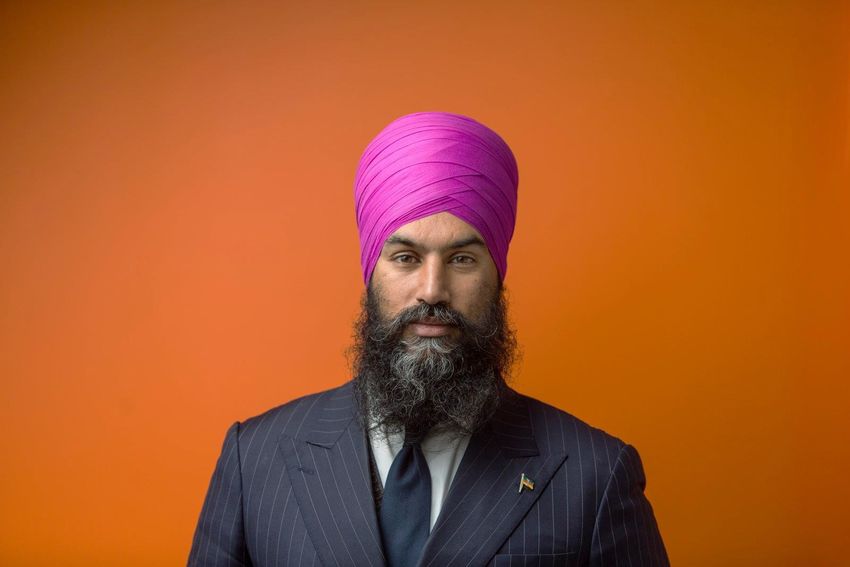
Liberal Party of Canada
The Liberals finished in a similar
position to 2019, shy of a majority. They Government legislation that did not
will need the support of either the NDP pass in the last Parliament will see
or the Bloc to move legislation forward. rapid re-introduction. Bills on privacy,
broadcasting and online harms will
be on the fall legislative agenda.
The tone set by Trudeau’s victory
speech and “clear mandate”
interpretation suggests he plans to
govern as though he has a majority,
securing confidence on a case-by- Given the concentrated opposition of
case basis. the West, the Liberals will have to
emphasize balance of the economy
He does not intend to make any and the environment.
formal agreement with any party.
The next steps in ending the pandemic
will be the focus of the government in the Given the financial readiness of many
near-term, both from a public health and of the opposition parties, this minority
an economic perspective. Efforts to government is expected to last the
increase vaccinations and to help average 18-30 months before another
businesses weather a possible fourth election.
wave this winter will occupy the
government.
8 © Hill+Knowlton Strategies
Conservative Party of Canada
Mr. O’Toole’s legislative priorities will
largely focus on job creation,
The Conservatives won the popular strengthening anti-corruption laws and
vote for the second election in a row – establishing strong mental health
nearly sweeping Alberta and policies. He will remain one of the
Saskatchewan – but were unable to only and likely most vocal champions
make meaningful advances in Atlantic of Canada’s natural resources and
Canada, Ontario and Quebec. energy sectors in Parliament, hoping to
continue to earn the trust of Western
Canadians.
After coming up short of the Conservative's
2019 results, O'Toole will be positioning The Conservatives will control many
himself to hold on to the top job, while of the parliamentary committees in
insiders weigh the prospect of another the new session, giving them
leadership race and potential candidates increased influence on their agendas
begin to jockey for position. and opportunities to thwart or stall
government priorities.
In his day after election day remarks,
O’Toole announced a formal review will be
launched to examine what needs to be done
differently in order to win in the next general
election. Mr. O’Toole’s sales pitch to Conservative
members was that he would deliver the GTA.
At least 4 ridings across Ontario and in His performance saw a drop of one 905 seat
Alberta would have likely elected a and no breakthrough in the 416. Insiders
Conservative MP if not for the PPC, and so expect strong emphasis put on legislation to
Mr. O’Toole will feel a lot of pressure from attract key demographics in these areas.
within to address this in a meaningful way.
9 © Hill+Knowlton Strategies
NDP
The NDP picked up one seat total – with
25 seats, they hold enough to prop up
the government on a vote-by-vote basis
but won’t be making a formal agreement
with the Liberals. The NDP still hold a balance of
power that will given them influence
on an issue-by-issue basis.
Will look to negotiate advances on:
▪ Implementing a wealth tax on the
ultra-rich will be Singh’s number
one priority
▪ Implementing national, universal Singh was successful in a
pharmacare and dental coverage leadership review at the NDP’s
for Canadians earning less than 2021 convention and led all
$90k leaders in likeability throughout the
▪ Ending for-profit long-term care election. Despite not making big
▪ Affordable housing gains, his leadership is safe for the
▪ Climate change moment.
▪ Cell phone and internet prices
Singh’s success will now be measured by his
ability to move the NDP’s agenda forward +
extract concessions from the Liberals.
Expect the NDP to be largely
constructive during the next parliament,
but use what leverage they have to push
their progressive vision.
10 © Hill+Knowlton StrategiesBloc Québécois
The Bloc campaign gained unusual
The Bloc gained 2 additional seats, momentum after the English language
will see Mr. Blanchet likely remain as debate where Mr. Blanchet was asked
a Leader, and a continuation of 3rd about certain laws in Quebec that some
party status.. consider discriminatory. This ignited a
fleury of news stories and comments by
other politicians, including Premier
Legault. It is likely this will remain part of
the discourse surrounding the Bloc.
The party’s single focus on promoting
Quebec interests was not enough to hold
the balance of power that Mr. Blanchet
spoke frequently of.
Blanchet has committed to cooperate on
any issue that is in the interest of Quebec In 2019, Blanchet tried to position
and expects Parliament to work – though the Bloc as an extension of the
it is not his party’s responsibility. CAQ Provincial Government.
Premier Legault’s endorsement of
the Conservative Party in Quebec,
came as a surprise to Blanchet
who was counting on his party’s
The clear mandate the Bloc received association with the popular CAQ.
means there will be no compromise on:
▪ Any plan to move oil across the province
▪ Language rights
▪ Quebec’s commitment to the secularism
of public institutions
11 © Hill+Knowlton StrategiesGreen Party of Canada
Leader Annamie Paul finished 4th in
her local campaign which, in addition
to the ongoing internal issues facing
the Green Party, does not bode well
The Green Party, which in the for her leadership of the Party.
lead up to the election was
suffering major internal strife,
only won 2 seats.
Elizabeth May, the former GPC
Leader and Mike Morrice from
Kitchener Centre will be the lone
flag bearers for the party in the
House of Commons while a
leadership review is likely to be
launched, there will be many Ms. Paul emphasized in her
eyes watching the legislative speech that Canadians have
agenda of the party. decided to maintain Green
representation in Parliament, and
that even though it will be a return
to the status quo and committed to
being the bridge building Party
while others seek to divide.
12 © Hill+Knowlton StrategiesPeoples Party of Canada
Mr. Bernier's party is on the far-right
Maxime Bernier's party might have not spectrum, advocating for reducing
won any seats, but it has played a role immigration, ending supply
in this election with polls signaling an management, withdrawing from the
almost 7% national voting intention. Paris Climate Accord among other
things. However, this election marquee
The PPC potentially split the messages were:
Conservative vote in some ridings.
▪ Opposing COVID-19 restrictions
▪ Protesting mandatory vaccinations
▪ Rejecting vaccine passports
In his Election night speech, Bernier
emphasized that the PPC is a
movement and "ideological revolution".
The growing PPC will likely be a As a supporter of proportional
roadblock to the Conservative Party, representation, he was sure to point out
that under that electoral system the PPC
especially as the party moves to the would have elected 20 MPs.
ideological right and the CPC moves
towards the centre under O’Toole.
Bernier is committed to growing the
PPC, declaring that this is only the
beginning and that they will be better
prepared in 2 years to win seats.
13 © Hill+Knowlton Strategies‘Back to
Work’
Priorities
14 © Hill+Knowlton StrategiesPolitical Environment
▪ Political focus will remain on modest
legislative agendas, strategic consensus
building, greater co-operation with the
provinces.
▪ Another federal election likely within one or
two years, with the very real prospect of at
least one leadership review, with the
Liberals, the Conservatives or both.
▪ Regional divisions/polarities will remain a
factor, specifically an increasingly distressed
Alberta and Western Canada.
▪ Federal/provincial tensions are still
heightened over health care transfers
(funding).
▪ Ontario and Quebec will have elections in
2022, meaning a surge in political activity
and an emphasis on the importance of public
opinion for Conservative and Liberal
branding.
15 © Hill+Knowlton StrategiesLegislative Priorities
The minority Liberal government will look
to:
▪ Finish the fight against COVID-19 and address
issues in the healthcare system.
▪ Commit to large investments in mental health, long-
term care, and providing funding to the provinces to
hire more front-line staff.
▪ Reintroduce bills from the previous parliament that
died when the election was called, including Bill C-
10 and the Ban on Conversion Therapy.
▪ Implement their ambitious commitments to the
environment and climate change. Including
strengthening the Canadian Environmental
Protection Act, putting emission reduction targets
into legislation, and implementing the Just Transition
Act.
▪ Follow through on promises pertaining to Indigenous
reconciliation and racial justice, such as police
practice reforms and the $14 billion in funding to
various programs for Indigenous peoples and
communities.
16 © Hill+Knowlton StrategiesSector Priorities
▪ Economy + Trade – trade deals, inclusive
workforce, $78 billion in new spending
over five years to their campaign promises.
▪ Technology + Digital - open banking
system, amend the Copyright Act, digital
policy task force,, new policies for wireless
spectrum, reintroduce privacy legislation and
a reformed Telecom and Broadcast Act.
▪ Energy + Resources – job training,
increase in the carbon tax, climate targets
enshrined in legislation, diversification of
energy production, electrification of
transportation.
▪ Environment + Climate change – build on
their climate plan, implement the recently
passed Net Zero Emissions Accountability
Act, and advance new measures to achieve
an ambitious 40-45% reduction in emissions
by 2030, goal of net-zero carbon emissions
by the year 2050.
17 © Hill+Knowlton StrategiesHealth Commitments ▪ Provincial funding - $6 billion—on top of $4 billion already committed—to support the elimination of health system waitlists; $3.2 billion for the hiring of 7,500 new family doctors, nurses, and nurse practitioners; expand health services in rural and remote communities. ▪ Mental Health - Permanent, ongoing funding for mental health services under the Canada Mental Health Transfer, with an initial investment of $4.5 billion over the next 5 years; three digit crisis hotline; new fund to improve wait times and increase access to mental health care at colleges and universities; work with provinces and territories to help all Canadians have greater access to mental health courts. . ▪ Long-Term Care - Raise wages for PSW’s, including a guaranteed minimum wage of at least $25 per hour; $9 billion over 5 years to support safer conditions for seniors; improve the quality and availability of long-term care homes and beds; implement strict infection prevention and control measures for long-term care homes; train up to 50,000 new personal support workers. ▪ Substance Use - comprehensive strategy to address problematic substance use to end the opioids crisis; $25 million for public education to reduce the stigma; $500 million to increase treatment; support provinces and territories in creating standards for substance use treatment programs. ▪ Virtual Care - $400 million over 4 years for virtual care ▪ Disabilities - Re-introduce a Disability Benefit Act which will create a direct monthly payment, the Canada Disability Benefit, for low-income Canadians with disabilities ages 18-64. 18 © Hill+Knowlton Strategies
Health Commitments -2-
▪ Indigenous Health –
▪ An additional $1.4 billion for a distinctions based mental health and
wellness strategy with First Nations, Inuit, and the Métis Nation;
▪ Fully implement Joyce’s Principle (right of equitable access, without any
discrimination, to all social and health services);
▪ Co-develop a distinctions-based, community-led, Indigenous Long-term
and Continuing Care Framework.
▪ Bolster Indigenous health system navigators so they can provide
dedicated support to Indigenous people.
▪ Continuing to support Inuit-specific approaches on the elimination of
tuberculosis in Inuit Nunangat.
▪ Expand access to culturally appropriate, trauma-informed mental health
services for Indigenous peoples that access treatment through mental
health courts.
▪ COVID - 10 days of paid sick leave for all federally regulated workers; $1
billion COVID-19 Proof of Vaccination Fund for provinces and territories;
+$110 million in school and business ventilation.
▪ Sexual and reproductive health commitments.
▪ Debt forgiveness and tax credits for health professionals.
19 © Hill+Knowlton StrategiesResearch + Innovation
▪ In addition to delivering on the $3 billion earmarked to biomanufacturing,
AI and Quantum in Budget 2021, the Liberal government has committed
to:
– Establish a Canada Advanced Research Projects Agency (CARPA) as
a public-private bridge for research in high-impact areas: $2 billion.
– Establish a $75 million a year fund for colleges and universities to help
commercialize leading research.
– Introduce a new $100 million a year for “moonshot research” into high-
impact illnesses where a vaccine may be possible.
– Add 1,000 Canada Research Chairs to help attract and retain top talent
at Canadian universities.
– Reform the Scientific Research and Experimental Development
Program to reduce red tape.
– Invest $100 million to study the long-term health impacts of COVID-19.
– Provide $30 million over 5 years for graduate students, support
mentorship and development of younger researchers, and increase
opportunities for Black Canadians in post-secondary institutions.
– Strengthen equity targets for federally funded scientific research
delivered through the granting councils to include a specific target for
the representation of Black Canadians.
20 © Hill+Knowlton StrategiesProfiling Ottawa Newcomers Potential health policy partners in the 44th Parliament
Liberal
Joanne Thompson Randy Boissonnault Viviane Lapointe Michael Coteau
St. John’s East Edmonton Centre, AB Sudbury, ON Don Valley East, ON
▪ Earned a Bachelor of Nursing ▪ Former MP for Edmonton ▪ Useto work for the provincial ▪ Former provincial cabinet
and an MBA in Social Centre from 2015 to 2019, Ministry of Northern minister responsible Children
Enterprise from the University Randy Boissonnault has won Development and Mines. and Social Services.
of Fredericton. re-election as one of only two
liberal MPs in Alberta & ▪ She has experience serving on ▪ Advocate for proper nutrition for
▪ Served as the Executive Saskatchewan. a number of boards for young children and oversaw
Director of The Gathering healthcare companies, where many healthy nutrition
Place, a community health ▪ Advocate for the inclusion of she has developed a passion programs in Ontario while
centre that served vulnerable LGBTQ2 in society and served for supporting less well-off minister.
people. as a Special Advisor to the PM Canadians.
on related issues.
▪ Named a Human Rights ▪ She leads the Community
Champion for NFLD and won ▪ In his time out of office, he Living Greater Sudbury, which
the Senate of Canada founded a medical device provides support to people with 22 © Hill+Knowlton Strategies
Sesquicentennial Medal. import company. disabilities and their families.Liberal
Heath Macdonald Dr. Brendan Hanley Yasir Naqvi Wilson Miao
Malpeque, PEI Yukon Ottawa Centre Richmond Centre
• Served as Third Party House ▪ Dr. Brendan Hanley has been a ▪ Yasir is committed to building ▪ Miao is focused on improving
Leader in the legislature and is northern physician for over 25 the New Civic Campus of the healthcare in his community.
the critic on mental health and years with a focus on rural, Ottawa Hospital.
pharmacare. remote, and Indigenous
populations. Passionate about
• Mr. MacDonald was a Chair public health and emergency
Leader as part of the preparedness in the North.
Canadian Paraplegic
Association's annual ▪ Hanley became the Yukon’s
awareness campaign Chief Medical Officer of Health
in 2008, and guided the territory
• During the campaign over the last 17 months of the
MacDonald was quoted COVID-19 pandemic.
saying that the Liberals would 23 © Hill+Knowlton Strategies
invest in pharmacare.Conservative
Dr. Stephen Ellis Jake Stewart Rick Perkins
Cumberland–Colchester, NS Miramichi–Grand Lake, NB South Shore-St. Margaret's
▪ Dr. Stephen Ellis has spent the ▪ Jake Stewart is a former • Perkins served as Vice-Chair
last 22 years as a family provincial MLA who served as of the Nova Scotia Hearing
physician in Truro, Nova Scotia. Minister of Aboriginal affairs. and Speech Foundation.
▪ He originally enrolled into the ▪ He spent many years
CAF’s Medical Officer Training volunteering for organizations
program, where he left after that support cancer and
attaining the rank of Captain diabetes research.
after 9 years.
▪ He is the founder of a non-profit
▪ Dr. Ellis served as the medical that supports families dealing
officer lead for the northern with the economic hardships of
health zone in Nova Scotia for chronic or life-threatening
the Covid-19 pandemic. illnesses. 24 © Hill+Knowlton StrategiesNDP
Blake Desjarlais Lori Idlout
Edmonton Griesbach Nunavut
• Desjarlais is focused on ▪ Idlout’s work focused on
ensuring that everyone in promoting Inuit health &
Canada can access their wellness within the Northwest
prescription medication with Territories and Nunavut Public
their health card, not their Service, Inuit Organizations,
credit card, through a and Non-Profit Organizations.
Universal Pharmacare.
25 © Hill+Knowlton StrategiesYou can also read


