Electrical and Electronic Engineering
←
→
Page content transcription
If your browser does not render page correctly, please read the page content below
Electronic
    Engineering
    Electrical and
www.manchester.ac.uk/eee   UNDERGRADUATE BROCHURE 2015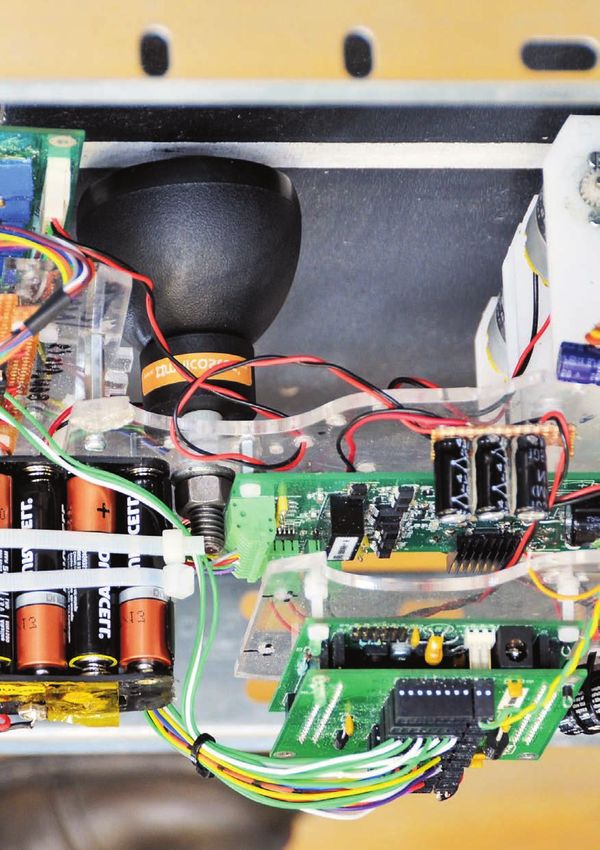
Over a century of
                                            education and
                                            research

                                            Ranked second in

    The facts                               the UK in terms of
                                            research quality

                                            All courses
                                            accredited by the
                                            Institution of
                                            Engineering and
                                            Technology

                                            Awarded 95%
                                            student satisfaction
                                            in the last National
                                            Student Survey

2   Electrical and Electronic Engineering
    Undergraduate brochure 2015
I have a number
of attractive job
opportunities available
to me, thanks to studying
at Manchester
Michael Madera
MEng Electrical
and Electronic Engineering

                             Contents

                               4 Introducing Manchester
                               6 Electrical and Electronic
                                 Engineering at Manchester
                              10 Course details
                              30 Graduate profiles
                              34 Research at Manchester
                              38 Student funding
                              42 Find out more online

                                   Electrical and Electronic Engineering   3
                                            www.manchester.ac.uk/eee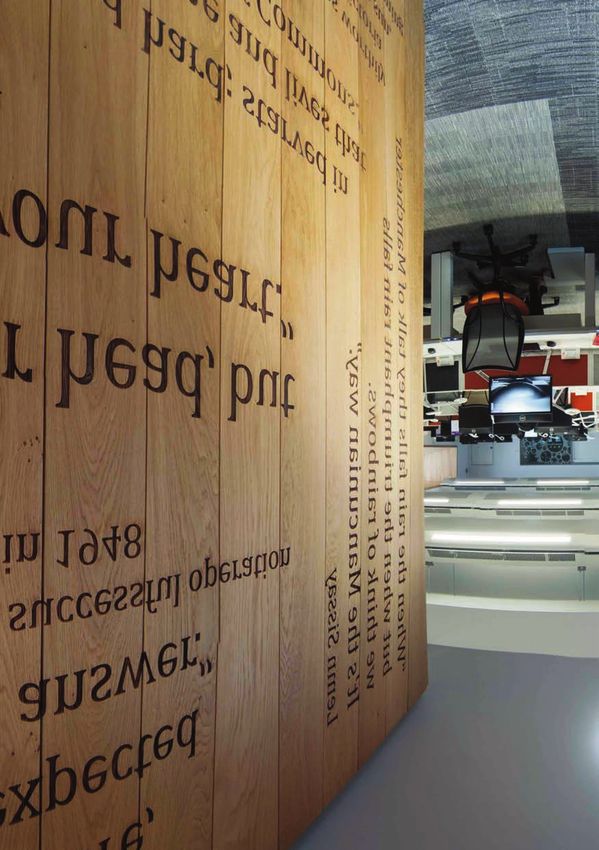
Our University
                                            Making things happen
                                            Influential, forward-thinking and down-to-
                                            earth, we’ll give you an amazing university
                                            experience rooted in a rich academic
                                            heritage. We turn enthusiasm into
                                            achievement and ground-breaking theory
                                            into innovative practice.
                                            We accomplish feats of global significance,
                                            from splitting the atom, to giving the world
                                            graphene—the two-dimensional wonder
                                            material that is one atom thick, but 200
                                            times stronger than steel.
                                            With more Nobel laureates on our staff than
                                            any other UK university, and strong links to
                                            industry and public services, we vitalise our
                                            undergraduate courses with pioneering
                                            research.
                                            Learn more about us:
                                            www.manchester.ac.uk

        Introducing

        Manchester
                                            Our city
                                            Always moving forward
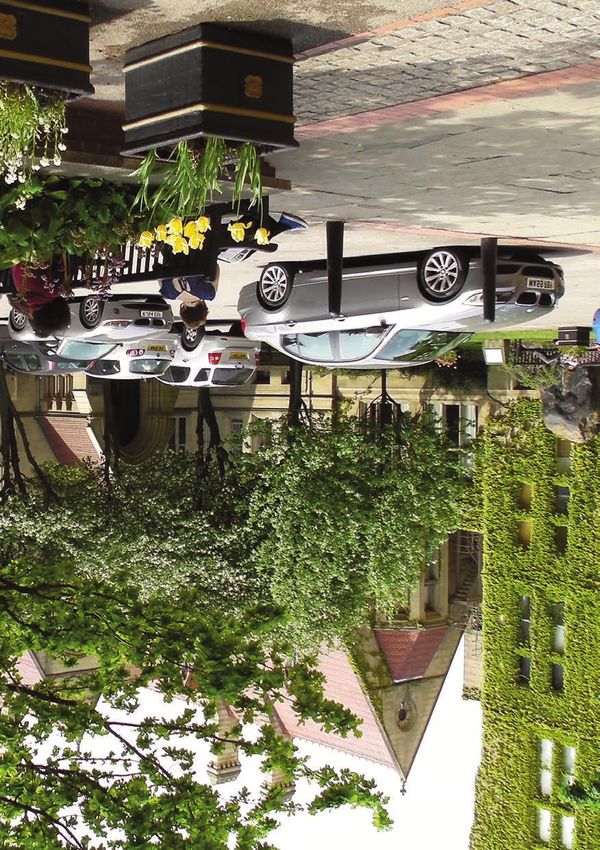
                                            Manchester lives on the edge of tomorrow,
                                            ever a step ahead in science, industry, media,
                                            sport and the arts. The Mancunian
                                            character—exemplified by the city’s central
                                            role in the industrial revolution—strives for
                                            excellence and originality in all walks of life.
                                            This is a city of many accents, having become
                                            a cosmopolitan magnet for students and
                                            professionals eager to experience its can-do
                                            attitude, independent spirit and cultural
                                            wealth.
                                            Never content to live on past glories,
                                            Manchester has a passion for progress. Join
                                            us at the heart of Britain’s most popular
                                            student city.
                                            Discover what makes Manchester unique:
                                            www.manchester.ac.uk/cityofmanchester
4   Electrical and Electronic Engineering
    Undergraduate brochure 2015
Your experience
More than just a degree
With resources from the hi-tech 24/7 learning
environment of our Alan Gilbert Learning
Commons, to the countless personal
development opportunities and specialist support
services we offer, we will empower you to be
your best.
Outstanding sport facilities, nearly 300 student
societies, supported community volunteering,
study abroad pathways, career development
programmes, mentoring and much more all
enable you to grow and develop outside of the
lecture hall, giving you a well-rounded university
experience that prepares you for life after
graduation.
The only thing you won’t experience
is boredom.
Hear from some of our students:
www.manchester.ac.uk/ug/profiles

Your career
On a course to success
We are consistently one of the UK’s most targeted
universities by employers, thanks to courses and
careers services designed with your employability
in mind.
Our problem-based approach to learning inspires
you to think critically, creatively and independently.
Volunteering, personal development programmes
and interdisciplinary learning could also give you a
broader perspective and shape the socially
responsible leaders of tomorrow.
We have the UK’s best careers service, providing a
wealth of advice and skills-development
opportunities, and connecting you with employers
to put you on a path to career success.
Take control of your career:
www.manchester.ac.uk/careers

                                                         Electrical and Electronic Engineering   5
                                                                  www.manchester.ac.uk/eee
Electrical, Electronic and
    Mechatronic Engineering
    at Manchester

6   Electrical and Electronic Engineering
    Undergraduate brochure 2015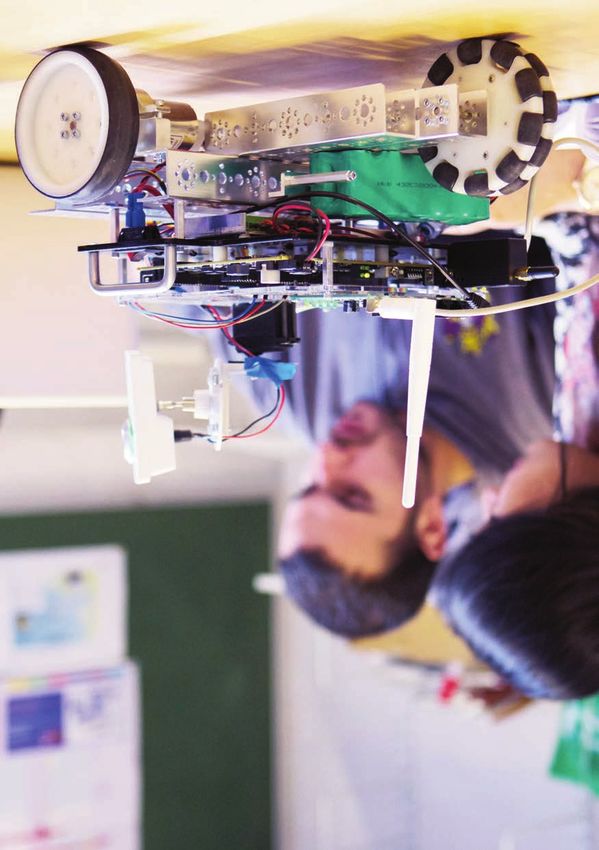
Our School of Electrical and Electronic Engineering is
one of the largest in the UK, with over 70 academic
staff, a similar number of support staff and a student
population of over 950. More than 550 undergraduate
students benefit from our wealth of expertise—and a
warm welcome.
We have been involved in education and research
for over a century. The first stored-program
computer was designed and built by Frederic C
Williams and Tom Kilburn in our School at The            Why Manchester?
University of Manchester; its first program ran on
June 21, 1948.                                           • Free ‘lab in a bag’—every first-year
                                                           student receives a National
Since then, computing has advanced
enormously—and we are proud to remain at the
                                                           Instruments myDAQ—see
forefront of these developments. Computing                 www.manchester.ac.uk/eee/mydaq
equipment at the University alone now requires a         • Free membership of the Institution of
2MW electrical supply system; thankfully, we               Engineering and Technology (IET)
contribute towards providing this as well.
                                                         • Free Microcontroller Development
Our research activities equip us with the expertise to     System (but you will have to build it!)
educate the next generation of electrical, electronic
and mechatronic engineers, who will continue to be
responsible for major changes to the world that we
live in. After all, can you now imagine a world
without computers, smart phones, interactive video
games, flat-screen 3D smart televisions, or Twitter?
Join our School and you could become one of these
engineers.

                                                                       Electrical and Electronic Engineering   7
                                                                                www.manchester.ac.uk/eee
Electrical and Electronic Engineering

    Ten reasons why we should be
    your number one choice:

    01   Employability                                       06   IET accreditation
    Our courses are practical-based to ensure you leave      Even if you don’t yet know about the IET, you will in
    us with not just the theory behind electrical,           the future! Each student on our course receives free
    electronic and mechatronic engineering, but also the     membership to the IET. Read some of the comments
    skills to put that theory into practice. Find out what   from the IET’s last visit to our School on page 16.
    employers say on page 28.

                                                             07   Be associated with the big players –
    02   Teamwork                                                 Strategic Industrial Partners
    Meet new friends, work in groups, learn from each        The University of Manchester has many collaborative
    other and share your experiences. Teamwork plays a       alliances with leading businesses, meaning our
    big part in EEE life; find out more on pages 13, 20,     courses and research is on the cutting edge of
    24 and 26.                                               engineering advances. See pages 12 and 38 to 40.

    03   Clubs and groups                                    08   LabVIEW
    With our EEE Society (EEESoc), Electronics Club (E4C)    The LabVIEW Academy enables us to offer our
    and Formula Student on offer, we give you the            students courses that are accredited by National
    chance to put your studies to work in a social and       Instruments. See page 12.
    fun environment – see pages 26 and 27.

                                                             09   Excellent research rankings
    04   Industrial experience opportunities                 The Research Assessment Exercise (RAE) ranks
         and summer jobs                                     universities’ quality of research against international
    Get paid for a year of your study while gaining          standards of excellence. Our School is ranked second
    hands-on experience as a real engineer – see page        in the UK for its world-class research reputation.
    16. Or why not consider a summer job within our          See page 34 to 37.
    School? See page 28.

                                                             10   Satisfied students
    05   Peer-Assisted Study Scheme (PASS)                   What better endorsement than to achieve 95%
    PASS has proven to be a huge benefit to our              student satisfaction in the 2013 National Student
    students. It helps resolve any concerns as it ensures    Survey, ranking us one of the top institutions in the
    you know that help is always at hand. See page 26.       country for engineering.

                                                             Read some comments from current students about
                                                             their experiences on pages 19, 21, 23, 25, 27, 31,
                                                             32, 33 and 37.

8    Electrical and Electronic Engineering
     Undergraduate brochure 2015
Award-winning community                                   Visiting us
The past few years have been fantastic, especially in     The University of Manchester holds open days for
terms of teaching, research and awards.                   prospective students. Currently, open days are
                                                          planned for 20 and 21 June 2014, 27 September
In 2012, Professor Patrick Gaydecki received a
                                                          2014 and 4 October 2014. Find out more online:
University Teaching Excellence Award for his ‘inspiring
                                                          www.manchester.ac.uk/opendays
commitment and contribution to Teaching and
Learning’. Patrick joins a growing list of academics      We invite students who apply for our courses to
from our School who have received recognition for         attend a UCAS visit day in order to learn more about
their teaching.                                           the School, our courses and career prospects in
                                                          Electrical, Electronic and Mechatronic Engineering.
In 2011, the University Teaching Excellence Award
was presented to Mr Geoff Rubner and in the               For more information contact us at:
previous year one of our senior lecturers, Mr Peter       ug-eee@manchester.ac.uk
R Green, received the same award. The University
also recognised the excellent teaching of Dr Danielle
George when she was awarded a Distinguished
Achievement Award as Teacher of the Year; Danielle
was also a finalist in the Woman of the Future
Awards.
Our students have also been recognised. Martin
Schuster, who spent a year working with Volkswagen
in San Francisco on his industrial experience year,
received a University Distinguished Achievement
Award – Undergraduate Student of the Year. Another
of our students, Hassan Hakim Khalili, received the
Distinguished Achievement Award: Engineering and
Physical Sciences Student of the Year for 2011.
Another of our students, Jessica Hart, received this
award in 2013; you can read more on page 23.
The success of our students has continued with
Simon Watson, who won the Leslie H Paddle
Scholarship of £10,000 from the IET for his
research into mobile platforms for underwater
sensor networks.
A major breakthrough in the battle against breast
cancer has come from our very own Professor
Zhipeng Wu. Professor Wu has invented a portable
breast scanner that, using radio frequency
technology, can in a second show the presence of
tumours, malignant and benign.
All in all, this is an exciting time for our School,
packed with achievements that only push us to build
upon our successes further and, perhaps with your
help, achieve even more in the future.

                                                                           Electrical and Electronic Engineering   9
                                                                                    www.manchester.ac.uk/eee
Course details

ELECTRICAL AND ELECTRONIC                    Mechatronic Engineering BEng 3yrs
ENGINEERING                                  UCAS Code HH36
Electrical and Electronic Engineering        Mechatronic Engineering with Industrial
MEng 4yrs                                    Experience BEng 4yrs
UCAS Code H605                               UCAS Code HH63
Electrical and Electronic Engineering with
Industrial Experience MEng 5yrs              ELECTRONIC ENGINEERING
UCAS Code H601
                                             Electronic Engineering MEng 4yrs
Electrical and Electronic Engineering        UCAS Code H614
BEng 3yrs
UCAS Code H600                               Electronic Engineering with Industrial
                                             Experience MEng 5yrs
Electrical and Electronic Engineering with   UCAS Code H615
Industrial Experience BEng 4yrs
UCAS Code H606                               Electronic Engineering BEng 3yrs
                                             UCAS Code H610

MECHATRONIC ENGINEERING                      Electronic Engineering with Industrial
                                             Experience BEng 4yrs
Mechatronic Engineering MEng 4yrs            UCAS Code H613
UCAS Code HHH6
Mechatronic Engineering with Industrial
Experience MEng 5yrs
UCAS Code HHP3
Course details
Entry requirements Scottish Advanced Highers
AAB-AAA, including grade A in Advanced Higher
GCE A-level / Unit grades
Mathematics and Physics
AAB-AAA including Mathematics and either Physics,
Electronics, or Further Mathematics Scottish Highers
AAAAB-AAAAA including grade A in Higher
GCE AS-level acceptability
Mathematics and Physics
Two GCE AS-levels accepted in place of the third A-
level Irish Leaving Certificate
A1 A1 A1 B1 B1 including A1 Maths and A1 Physics
IB Diploma
at Higher level
35-37 points overall, including 6 points in
Mathematics and Physics at Higher level and a English language qualifications
minimum of 5 points in one other Higher level One of the following: GCSE English Language
subject grade C; IELTS 6 (minimum of 5.5 in any component)
14-19 Diploma Direct entry to the second year
Minimum grade B in the Engineering Progression If you have completed learning equivalent to our first
Diploma plus grade A in A-level Mathematics year, you could be considered for direct entry to our
second year. Each case is considered individually.
BTEC Level 3 Extended Diploma
Contact us for details (see the inner back page of this
BTEC Extended Diploma in Electrical and Electronic
brochure for our contact details).
Engineering with a minimum of 70 credits awarded
at Distinction, including the Further Mathematics for Requirements are subject to change, for most up to
Technicians module, 100 credits at Merit and the date information on entry requirements to specific
remaining 10 credits at Pass or above courses, visit:
www.manchester.ac.uk/eee/undergraduate/courses
Welsh Baccalaureate (including A-levels)
Pass WB and obtain AA in A-Level, including
Mathematics and either Physics, Electronics, or
Further Mathematics
Electrical and Electronic Engineering 11
www.manchester.ac.uk/eeeElectrical and Electronic Engineering
Teaching and learning NI Lab – this undergraduate laboratory has been
equipped with state-of-the-art hardware and
Take a look at our 2013 National Student Survey
software from NI. It is now recognised as one of
(NSS) results: once again, we have achieved a student
the best practical teaching facilities available in UK
satisfaction of 95% and one of the best profiles of
higher education, with enough equipment to
marks across all assessed categories for any course at
accommodate more than 100 students in one
any university in the UK. Find out more:
session. NI and our University have developed a
http://unistats.direct.gov.uk
strong partnership over the past few years, which
we continue to build on so that our students can
What teaching methods help us gain the most out of their studies.
to achieve this?
myDAQ – a lab in a bag. Designed specifically for
Course units students, myDAQ provides you with the technology
to experience hands-on learning anytime, anywhere.
A typical course unit structure comprises:
Within a single plug-and-play USB device, it combines
• Two laboratory exercises (each of three hours) portability with a suite of eight of the most
commonly used instruments in the lab. Every first-
• 20 lectures year student on our courses receives their very own
• Four example classes myDAQ, along with LabVIEW and Multisim software.
You will be able to use your myDAQ for real
• Two personal tutorials engineering and, when combined with NI LabVIEW
and NI Multisim, for prototyping systems and
analysing circuits outside of the lecture theatre and
Laboratory exercises the lab. Find out more:
www.manchester.ac.uk/eee/mydaq
Laboratory exercises are specifically designed for each
course unit to give you the best possible learning LabVIEW – this is an integral part of our courses.
experience as you put theory into practice. In some You will be taught Data Acquisition and Industrial
instances, in-lab marking will be used, giving you Control applications in the LabVIEW structured
immediate feedback on your understanding of the environment, and you will have regular hands-on
subject. Alternatively, you may need to submit a contact with the relevant hardware, particularly ELVIS
concise report after the practical session, which and myDAQ. You will be able to take a free exam on
should combine the lecture material with the your knowledge of LabVIEW at Manchester, and if
laboratory exercise. It is in the laboratory sessions that successful, will be accredited by NI with a Certified
you will meet ELVIS! LabVIEW Associate Developer certificate, an
accreditation that is coveted by Industry. Find out
ELVIS – this Educational Laboratory Virtual more: www.ni.com/academy
Instrumentation Suite is a leading educational
platform by National Instruments (NI). We use it in
our laboratory sessions for course units such as
Electronic Circuit Design. Find out more:
www.ni.com/nielvis
12 Electrical and Electronic Engineering
Undergraduate brochure 2015Course details
Lectures Project work
These are fundamental to our teaching process. We This runs through all years of your course. You will
provide course notes in both printed and electronic build a microcontroller development system as a
format, the latter via our e-learning system. Your project in your first year and then use it in the
lecturers deliver material using a range of teaching embedded systems group project in your second year.
media, such as PowerPoint, black/white board, video
and demonstrations. You will need to take notes to A substantial feature of your third year is the
supplement those provided by the lecturer and you individual project, which allows you to show
are encouraged to ask questions during the session. innovation and application of the knowledge and
techniques you have learned.
There is usually time at the end to talk to the lecturer
directly, or possibly to arrange a meeting if further In your fourth year, you will work on a team project
discussion is required. with five or six other students.
Example classes Team delivery
These are interspersed with the lectures at A lot of our teaching features students working in
appropriate points and help you to understand key teams. This is because team-working skills are an
topics. As with lectures, your entire class will be essential requirement in the work environment.
present as the lecturer works through specific We like to practice what we preach and therefore
examples. You usually have the chance to prepare adopt a team delivery approach for our tutorial
your own solutions before the class. Of course, we scheme, embedded systems project and third and
encourage you to participate; asking questions in fourth-year project delivery. For these activities, we
front of a large audience is an important skill for you work in teams to ensure consistent high quality
to learn and gain confidence in. delivery of teaching materials while maintaining
‘Clickers’ may sometimes be used: this is the term for individual contact with students.
an in-class voting system that enables students to
respond to specific questions. Our lecturers use
feedback from this system to judge the level of
understanding of the class.
Personal tutorials
You will meet your personal tutor on a weekly basis,
in a tutor group of no more than six students. During
these sessions, you present your worked solutions to
the tutorial questions that have been set that week;
these questions will be relevant to what you have
recently covered in lectures. Each week, a particular
subject is targeted for detailed discussion and you
will be assessed on your understanding of it.
Electrical and Electronic Engineering 13
www.manchester.ac.uk/eeeElectrical and Electronic Engineering
Which course is for you? Electrical and Electronic Engineering
Our course structure is aligned with the global drivers (EEE)
that define our research themes and our strategic The use of electricity is an everyday part of our lives.
industrial partnerships. It has to be generated as efficiently and cleanly as
possible, and distributed safely to homes and
Our Mechatronics course is associated with the
industry. Our homes require electrical power for
School’s Rolls-Royce University Technology Centre,
lighting, cooking, washing machines, refrigerators
which focuses on the deployment of autonomous
and freezers. Electrical power is also needed by
systems into extreme environments. For example:
computers, iPads, PlayStations, smartphones, MP3
small, uninhabited aerial vehicles are used in
players, digital cameras and any other electronic
applications such as traffic monitoring, or to provide
gadget that you can think of.
information to the emergency services after natural
disasters such as earthquakes. The domestic mains voltage needs to be converted to
a much lower voltage in other household equipment,
The School’s National Grid Power Systems Research
such as music and video streaming systems,
Centre is playing a significant part in developing the
televisions, DVD and hard disk recorders, PCs, and
changes needed as we move to a low-carbon
peripherals, all of which contain sophisticated
economy. Students studying our Electrical and
electronic circuitry. Industry needs power at a higher
Electronic Engineering course will be the power
level for use in heavy machinery, which must be
engineers of tomorrow tasked with ‘keeping the
controlled and monitored by sophisticated electronic
lights on’ as the world becomes more reliant on
systems. Increasingly in transport, electrical systems
dispersed forms of renewable energy.
are being used in electric vehicles (road and rail),
Syngenta is an international company dedicated to hybrid drives (part electric motor, part internal
improving crop productivity; it funds an innovation combustion), engine management electronics,
centre in our School with the purpose of developing climate control, on-board entertainment and
electronic systems for agricultural processes. Why? navigation systems.
Well, the world population is exploding at the same
Graduate from this course and you will be able to
time that over-farming, over-fishing and
contribute fully in the fields of:
environmental degradation is starting to have an
impact. Food and water shortages are becoming the • Power systems analysis and protection
norm, but advanced communications and sensor
systems have the potential to help solve these • Efficient and clean power generation
problems. We call this area e-Agri and it is a research • Smart grids
theme that aligns with our Electronic Engineering
course. • Renewable energy schemes
Electronic systems are now everywhere: • Power electronics
communications, transport, entertainment, at-home
and in-business systems. More and more of this • Sophisticated control systems
equipment is connected to the web and, as an • Communications
example of growth, the internet doubles in
complexity every two years. Our Electronic • Embedded computer systems
Engineering course prepares you for professional
careers in these areas. Detailed information about our
courses and the content of the course units is
available online:
www.manchester.ac.uk/eee/undergraduate/courses
Let’s take a brief look at these courses.
14 Electrical and Electronic Engineering
Undergraduate brochure 2015Course details
Electronic Engineering (EE) Mechatronic Engineering (MTE)
In the 21st century, we look to electronics to provide Mechatronics is the marriage of mechanical
answers for more and more complicated problems. engineering with smart electronics and is vital to
Take the mobile phone: a very sophisticated industrial automation and robotics.
computer and communications system that links to a
To interact with an object, a system must know
worldwide network of antennas to allow it to
where the object is, be able to move the object and
connect to any other mobile or landline. Or the
be able to place it in the required new position. The
digital camera, at the heart of which is a
electronics therefore require information from sensors
sophisticated electronic device containing millions of
that can detect position, orientation and visual or
individual light-level detectors.
audio signals. The electrical inputs from the sensors
Modern electronics requires an understanding of have to be interpreted and the appropriate signals
basic analogue and digital circuits to enable the sent out to the actuators to perform the required
design of simple elements, which can be connected operation. This process relies on sophisticated
together to make small systems, which can be software and hardware capable of translating low-
connected together to make bigger systems, and so voltage, low-current signals into power signals of
on. When the systems become complicated, we sufficient current to drive the actuators.
require techniques to allow us to design and use A good understanding of feedback control is also
them, such as digital signal processing – for images required in order to make changes in the system from
and audio signals, concurrent processing – to allow one steady position to another, without oscillations or
the manipulation of the massive amounts of data, unpredictable movements.
data networking and digital communication systems
for local distribution and across the internet. Graduate from this course and you will be able to
contribute fully in the fields of:
Graduate from this course and you will be able to
• Robotics
contribute fully in the fields of:
• Actuators (electrical machines and drives)
• Microelectronics
• Sensors and instrumentation
• Mobile and wireless communications • Power electronics
• Smart grids • Mechatronic analysis and design
• Digital signal processing • Advanced feedback control systems
• Embedded computer systems
• Systems engineering
• Production engineering
• Software design
• Concurrent systems
• Embedded computer systems
• Networking
• Analogue circuits and systems
Electrical and Electronic Engineering 15
www.manchester.ac.uk/eeeElectrical and Electronic Engineering
Course types IET
Why ‘with Industrial Experience’? The IET accredits all of our courses at both MEng and
BEng level. Here are some comments from the most
All our courses can be combined with an accredited,
recent IET visit:
year-long industrial placement for the award of a
‘with Industrial Experience’ degree. Students on “The panel was impressed with the recent
these extended courses spend a year in industry developments in the design of the students’ learning
between their second and third years, or third and experience in the first and second years of the
fourth years. undergraduate curriculum. Of special note was the
embedded systems group project work in both years
Our School has strong links with industry and our
and the reorganisation of tutorial support into ‘
students find industrial placements with high profile
Year Teams’.”
companies, such as Red Bull Racing, Jaguar Land
Rover, National Grid, BP, National Instruments, “There are excellent links between the research
AstraZeneca and Texas Instruments. We encourage groups and the MSc courses, as well as with the
you to spend time in industry during your course as it content of the final year of the undergraduate
develops your business, team-working and courses.”
transferable skills, all of which are sought after by
graduate employers. It will also increase your “Feedback from the students indicates that the newly
awareness of the broad range of careers on offer and introduced switch to having specialist teaching teams
guide your choice of option subjects. for each year of the undergraduate courses has
significantly improved the first-year learning
Placements can be accredited by the IET towards experience.”
the training required for attaining Chartered
Engineer status. Also mentioned were:
MEng or BEng? “The development of a strong sense of community
within the School with extra-curricular activities,
All of our courses can be studied at MEng (Master of including ‘EEESoc’ and the Electronics Club.”
Engineering) or BEng (Bachelor of Engineering) level.
The most obvious difference between these is “The significant improvement in the School’s National
duration: four years for MEng and three years for Student Survey results in the last three years.”
BEng. But what else should influence your choice? “Several staff have been shortlisted for IET Innovation
Many students studying for a degree in engineering awards.”
aim to become Chartered Engineers, and accredited “Several staff have obtained awards for the quality of
MEng courses give you the required educational base their teaching.”
to achieve this. Accredited BEng degree courses
require you to complete further study in order to
achieve the same status. This could take the form of
full or part-time postgraduate study, distance
learning, or work-based learning.
16 Electrical and Electronic Engineering
Undergraduate brochure 2015Electrical and Electronic Engineering 17
www.manchester.ac.uk/eeeElectrical and Electronic Engineering
What you study Electronic Circuit Design I
The following sections briefly describe the content Explains the fundamentals of amplification using
of each year of study. For more detailed information, electronic components. Introduces you to the
visit: characteristics of electronic components and the
www.manchester.ac.uk/eee/undergraduate/courses concept of functional flexibility with respect to
operational amplifiers, diodes and transistors.
Year 1
Practical implementation of electronic circuit design
The first year of study is common for all of our is a key part of the learning outcomes.
courses. Course units are:
Energy Transport and Conversion
Embedded Systems I – Practical Electronics
You discuss the various sources and forms of energy.
Introduces you to the practical skills associated with The principles governing mechanics, AC electrical
the design, electronic assembly, mechanical circuits, energy conversion and electrical transmission
fabrication and testing of embedded systems. You are described.
will assemble and test an interface board for a
Electromagnetic Fields
microcontroller development system, based on the
PIC18LF8722, which is used as a teaching vehicle in Introduces you to the fundamental concepts
the rest of the Embedded Systems modules. and basic laws of electromagnetic fields and
demonstrates their application to the solution of
Electronic Materials
field problems, such as the fields produced by metal
Introduces you to states of matter and classifications, security detectors and RFID tag readers. We also link
such as metals, insulators and semiconductors; to field concepts to the passive circuit components and
electronic devices in nanoelectronics and the methods by which they are calculated.
nanophotonics; to sensors for applications in
Microcontroller Engineering I
robotics, renewable energies, medicine and
healthcare. Introduces the fundamental concepts of
microcontroller architecture, digital interfacing and
Measurements and Analytical Software
assembly language programming. You will connect a
Systematically introduces you to the process of Microchip PIC18LF8722 microcontroller to the
electrical measurement and the treatment and interface board assembled in Embedded Systems I,
analysis of measurements and errors, as well as and you will program a range of applications
various types of instruments. The course unit also including a real-world product.
introduces you to LabVIEW, a widely used
Java Programming
programming and computing platform for numerical
analysis, modelling and electrical system simulation. Gives you a foundation in practical programming
skills with an emphasis on problem solving, data
Circuit Analysis
structures and algorithms, using object-oriented
Introduces you to the techniques used to analyse techniques. Java is a modern object-oriented
electric circuits, starting with DC circuits, progressing programming language used in applications for
through Thévenin and Norton equivalent, moving a wide range of platforms, including desktop
on to RL, RC and RLC circuits, and finishing with computers, servers and mobile phones.
AC circuits.
Engineering Mathematics I and II
Digital System Design I
Engineers need the appropriate mathematical skills:
Introduces you to the principles of logic design, functions and geometry, differentiation, integration,
starting with Boolean algebra, progressing through vectors, complex numbers, hyperbolic functions,
combinatorial specification and minimisation, and matrices, ordinary differential equations, partial
culminating with sequential design using finite differentiation and series. These form a skill set that is
state machines. applied in the other course units that we teach and
are taught in this context.
18 Electrical and Electronic Engineering
Undergraduate brochure 2015Course details
Stepping off the bus on my first visit to the
University of Manchester, I knew it was the
right place for me. I already knew of its strong
academic reputation and had heard brilliant
things about it from friends already here. I
loved the buzz of the city and with the
University so close to the centre I knew that I
wasn’t going to get bored easily.
Having a strong background in maths and
physics, and knowing that I’d always been
drawn to control systems and electronics in
general; taking Mechatronic Engineering was
the logical choice for me.
Coming from a relatively rural part of
England, Manchester certainly makes for a
big change! Admittedly I was somewhat
daunted at the prospect of moving. Knowing that the University was so big, I was initially
unsure whether I’d be able to find my place with so many people, but I very quickly met some
amazing friends who made settling in a breeze.
The course teaches both academic and practical skills. In the very first semester we design
PCB layouts and learn how to solder. At the same time we work on a shared project which also
helps to build communication skills. This style of learning is beneficial as you quickly learn real
skills which will be useful in industry.
In the first year, I have especially enjoyed the microcomputer course unit as this gives the first
real taste of what it’s like to design and manufacture an electronics based product.
At the University there are plenty of societies that you can get involved with, covering such a
wide variety of interests, meaning that time outside of studying can still be put to good use!
The electronics club in particular provides an excellent framework for anyone who would like
to get involved in additional electronics projects. It provides an opportunity to speak with
experienced staff and other students to gain guidance on any technical issues. The fact that
Manchester is such a well-established university means that there are many diverse options
for extra-curricular activities—even outside electronics.
My advice to anybody applying to this course would be to truly throw yourself into it, and
indeed university life as a whole, because starting at university is such a big opportunity to
take advantage of.
Ben Scott, first year student
BEng Mechatronic Engineering with Industrial Experience
Electrical and Electronic Engineering 19
www.manchester.ac.uk/eeeElectrical and Electronic Engineering
Year 2
The first semester is common for all three courses,
while the second semester introduces the topics that
lead to the specialisations of each course.
The theme of practical application and project work
continues with the Embedded Systems Team Project.
In this team project, you work in a small group to
solve a realistic engineering design problem, using
the microcontroller development system built in your
first year.
The project centres on the design, construction and
testing of a robotic buggy and culminates in a race
day, when your buggy will be competing to be the
fastest, most energy-efficient, cheapest, or simply the
most innovative design. To win, your team needs to
be able to bring together the very best skills in
sensing, circuit design and building, chassis
construction, programming, and navigation.
Year 2 course units EEE EE MTE
Digital System Design II C C C
Electronic Circuit Design II C C C
Engineering Mathematics III C C C
Microcontroller Engineering II C C C
Signals and Systems C C C
Analogue and Digital Communications C C C
Control Systems I C C C
Embedded Systems IV – Team Project C C C
Machines, Drives and Power Electronics C C C
Sustainable Development for Electrical and Electronic Engineering C C C
Generation and Transport of Electrical Energy C
Microelectronic Components C
Materials and Structures C
C = Compulsory course unit course unit
20 Electrical and Electronic Engineering
Undergraduate brochure 2015Course details
Partway through my A-levels I became sure
that my future was in engineering, as it was the
perfect balance between Maths and Physics,
and played a key role in the real world.
Choosing Manchester for Electrical
Engineering was a decision I finalised after
visiting the EEE department on my interview
day. The strong links with industry combined
with the broad- based first year made
Manchester the perfect choice for me.
The most enjoyable part of my course would
be the embedded systems project.
Engineering is naturally a very academic
course, but our end goal is always to use this
knowledge to build something useful in the real
world—and it is for this reason why I find this
project so exhilarating. Working in groups of
four or five, we are tasked at the start of the year to design and build an autonomous line
following robot. This isn’t just a technical challenge which can be solved by mere number
crunching—but it requires teamwork, creativity and sound organisation. Just as though we
were in industry, we work together considering our constraints and resources to build the
fastest buggy to win on race day. After 24 weeks of intense lab work, vigorous calculations and
numerous group meetings; watching our buggy make its first steps across a home made mock
track really is a heart touching moment.
To see university simply as a means to higher education would be wrong. It’s a much greater
step than that: a step up into the real world, where most students—for the first time—feel the
independence and responsibility for their own lives. And because everyone’s in the same boat,
the environment is booming with activity and opportunities. Undoubtedly for me, the greatest
skills I have gained from my course would be the constant opportunities to talk with potential
employers and gain a deeper insight into the industrial world of engineering. Manchester offers
a perfect work-life balance for everyone, so it’s down to the individual to ensure they can
uphold that balance.
With regards to the course itself, I would say it’s very well designed. We have a nice balance
between lectures and tutorials for theory, and then practical lab sessions and projects where
we apply the theory we’ve learnt. There is also an EEE society that organises various socials
and other events. And with everything else on at University, you’ll probably find that your
weeks are very packed out!
Obaidah Sheikh, second year student
MEng Electrical and Electronic Engineering
Electrical and Electronic Engineering 21
www.manchester.ac.uk/eeeElectrical and Electronic Engineering
Year 3
By the third year, our courses are quite distinct and • Integration of wind turbines into the electric
you will be studying towards your chosen area of distribution network
specialism. The table below illustrates the structure of
the third year, including the elective course units • Water droplet movement in a High Voltage (HV)
available to each course. environment
Your third year also contains an individual project that • Transparent flexible electronic devices
consolidates your knowledge, skills and • Financial time series modelling using neural
understanding. Some of our projects are organised networks
around ‘themes’, such as Photovoltaics, e-Agri
• Colour readers for the blind/visually impaired
(electronics in agriculture), Green Communications,
Smart Grids and Autonomous Systems. Two of our third-year students kept a weekly blog
following the progress of their projects (on hexapod
We run over 160 different individual projects in the
robots and colour readers, respectively). You can view
third year. Example projects include:
their blogs online:
• Active control of vehicle vibration www.manchester.ac.uk/eee/blogs
• Design and build a symmetrical hexapod robot
with autonomous navigation
Year 3 course units EEE EE MTE
Individual Project C C C
Analogue Electronics E E
Computer Systems Architecture E C
Concurrent Systems E E E
Control Systems II (State Space and Digital Control) E C
Data Networking E E E
Digital Mobile Communications E C E
Digital Signal Processing E C E
Electrical Drive Systems E E
Engineering Analysis C C C
Leadership in Action or Manchester Leadership Programme E E E
Mechatronic Analysis and Design C
Mixed Signal Design E E E
Power Electronics II E C
Power System Analysis E
Power Systems: Plant and Protection E
Robotics and Actuators C
Sensors and Instrumentation E E C
Tools and Techniques for Enterprise C C C
Transmission Lines and Optical Fibres E E E
VLSI Design C
C = Compulsory course unit
E = Elective course unit
22 Electrical and Electronic Engineering
Undergraduate brochure 2015Course details
When I first visited Manchester, I knew I had
found where I wanted to study. It had all the
things I was looking for in a university: a good
academic reputation, central campus, diverse
student body, and with the added bonus of
being in an exciting city. It was somewhere I
could see myself living for four years.
When it came to choosing a course, my path
was less clear-cut and a bit daunting. I had
studied on the IB program in sixth form, so I had
a range of options for study. My preference was
for a science-based course, having focused on
Maths, Physics and Chemistry at school.
However, for me the study of pure science,
though interesting to read about, was too
theoretical and lacked application. At school
(and in life) I was always more interested in
something for which I could see a practical use. Engineering is perfect for this, combining the
scientific theory and practical skills.
I researched different types of engineering, but ultimately my choice was based on just two
factors. Firstly, in the year after sixth form I was offered a five-month work placement at a local
firm specialising in electrical and electronic engineering. I loved my work there. The second
factor, and probably the most influential, was my visit to Manchester’s EEE department when I
came for interview. I met loads of truly enthusiastic and sincere people and I grew more
impressed as I learnt more about the course units; it was obviously well planned out. I was
certain it was an environment that I would do well in.
I was surprised by the range of student backgrounds: each of us had come to the course with
different skills and experience which means that we find different course units difficult. I’ll be
honest, some of the material is hard and I’ve had to work at it. Yet at the same time, if it’s too
much there are both students and staff I can go to for help.
While it was important to me to study at a ‘good university’, I knew there were other questions I
had to ask. For example, will I be happy living in this city for four years? Will I be motivated to
come to lectures in the morning? Will I be academically stretched but still be able to lead a
balanced life? Both the lifestyle Manchester could provide and the quality of the EEE course
made me sure. I’m now coming to the end of my final year and I really can say that I’m happy
with the decision I made.
Jessica Hart, third-year student
BEng Electronic Engineering
Electrical and Electronic Engineering 23
www.manchester.ac.uk/eeeElectrical and Electronic Engineering
Year 4 (MEng) An example of a recent project includes:
The MEng fourth year comprises a team project, an Wireless Sensor System for Industrial Gas
Enterprise course unit and a range of advanced study Turbine Engines
course units taught at masters level.
The aim of this project was to develop wireless
Industrial problems are not solved by individuals communication technologies to support the
working alone, so being able to work effectively as a development of industrial gas turbine engines, and
team member is a sought-after skill. Our fourth-year to design, implement and characterise a prototype
team project provides you with this challenge and Wireless Sensor Network capable of working
accounts for 50% of the assessment for your fourth effectively within the complex Radio Frequency
year. Many of the projects are directly funded by environment found within these engines. The
industry, or inspired by actual industrial needs. project was undertaken in collaboration with Rolls-
Royce and NI.
For further information on fourth year projects please
see www.manchester.ac.uk/eee/undergraduate
Year 4 course units EEE EE MTE
Group Project C C C
Advanced Power Electronics E E
Advanced Technology Enterprise C C C
Analysis and Modelling of Electrical Systems E E
Antennas and RF Systems E E
Design of Electrical Machines E E
Digital Image Processing E E E
High Speed Semiconductor Devices E
Integrated Circuit Technology E
Intelligent Control and Robotics E E
Microwave Systems Engineering E E
Nanoelectronic devices E
Power System Analysis E
Power System Operation and Economics E
Power System Protection E
Process Control and Automation E E E
Sensing and Transduction E E E
Solar Energy Technologies E E E
System Identification E E E
Tomography Engineering and Applications E E E
Understanding Energy as a System Driving Modern Society E E E
Wireless Communication and Mobile Networks E E
C = Compulsory course unit
E = Elective course unit
24 Electrical and Electronic Engineering
Undergraduate brochure 2015Course details
After studying Physics, Maths, Further Maths
and Product Design at 6th form, I had a clear
idea that I wanted to do something that was
both heavily theoretical, but also highly
practical. I was drawn to Electrical and
Electronic Engineering as it combined both
these things with my interest of all things
“techy”.
I had always wanted to go to a top University
and Manchester fit the bill with membership of
the Russell Group, along with its academic
history and high league table position for
Electrical and Electronic Engineering. But, it
wasn’t until I visited the University that I knew
this is where I wanted to be. I was blown away
by the facilities and the friendliness and
enthusiasm of the staff and students. All of
this topped off with being in such a vibrant city as Manchester made my decision to come here
easy.
Being a local meant that I knew a lot about the city, or so I thought. I had never really been very
far down Oxford road and was surprised to find such a huge student population hidden just
outside the city centre. I was impressed by the size and diversity of the student population and
how the University had facilities to cater to all needs, with its huge variety of halls and locations.
This course had given me the tools for industry I need, teaching me to think in a methodical
manner and find new solutions to a problem.
Outside of studies I have been a part of the University’s Hockey team, which helps build
interpersonal skills, while also allowing for a release from study.
I feel that Manchester has many benefits to offer and has a great reputation allowing for easy
access to jobs and placements, during and after university. I have taken advantage of these
links to industry in the form of the Power Academy Scholarship. This allows me to work inside a
well-known and respected company getting a flavour of work in the real world, while helping
support me through my studies.
I have been asked if I believe that due to the difficult nature of the course, has it impacted on my
social life; I do not think it has. I would urge anyone applying not to be put off by its difficulty, but
rather to relish in the level of knowledge you gain from such a degree and the satisfaction of
completing seemingly impossible tasks.
Thomas Wright, fourth-year student
MEng Electrical and Electronic Engineering
Electrical and Electronic Engineering 25
www.manchester.ac.uk/eeeStudent-run activities
EEE Society PASS
Our EEE Society (EEESoc) is the School’s social society. PASS runs across many different Schools within our
It is run by students, but our events are attended by University. Being student-led, it is naturally tailored to
everyone from undergraduates to lecturers. Some the particular needs of the students within our
past events have included paintballing, a pool School. The scheme has run within our School of EEE
tournament, go-karting, a football mini-league and for almost four years now, enhancing the first-year
a pub quiz sponsored by NI. student experience at Manchester.
The society also organises industrial visits. In the PASS sessions are informal weekly study sessions
past, we have visited: Drax Power Station in Selby, where first-year students get together in groups and
North Yorkshire; Electric Mountain in Llanberis, discuss any challenging academic material, revision
North-West Wales; and the Jaguar Land Rover site questions, or even their experience in adjusting to
in Gaydon, Warwick. university life. The sessions are facilitated by students
who are mostly in their second year, who are there to
The biggest event of the year is the annual ball and share their experiences and to act as a first point of
prize-giving in spring. This is a formal event where contact for the attendees, guiding them in the right
everyone has the chance to celebrate all their hard direction in case of any particular issues.
work over the year and students and staff are
honoured for their contributions to life in the School. You will find these sessions very beneficial. It is a
Many of our events are sponsored and attended by chance for you to discuss questions, go over the basic
high-profile engineering companies, giving you a concepts taught during that week and explore
great chance to network with people in the industry different approaches to difficult tutorial questions
in a more social environment. with fellow classmates. It is an ideal way for you to
meet new people on the course and make long-
To see more of what EEESoc get up to, add us on lasting friendships.
Facebook: www.facebook.com/eeesoc
Besides the regular sessions, PASS is involved in
further events, including activities in Welcome Week,
revision quizzes, a circuit-building exercise and extra
lab sessions where you get a chance to play around
with the equipment away from any regular class
time. In short, PASS can enhance your life as a
student in our School both academically and socially.
EEE Electronics Club (E4C)
E4C provides technical support and workshop
facilities that enable you to create, develop and
promote your own ideas for electrical, electronic, or
mechatronic robotic systems. In addition to practical
work, the club organises presentations by industrial
speakers, and a formal project evening. The club has
a Facebook page and a website describing past and
present projects. Find out more at the E4C webpage:
www.manchester.ac.uk/eee/e4c
26 Electrical and Electronic Engineering
Undergraduate brochure 2015The Orb WiSET
The Orb is our School’s student magazine. Published Members of our School are actively involved in
quarterly, it covers a diverse range of topics, including WiSET: Women in Science, Engineering and
arts and entertainment, reviews of technical gadgets, Technology.
student survival guides, cookery, quizzes and This is a network for all female students, research
competitions, and interviews with students and staff. and academic staff in our Faculty of Engineering and
The magazine is written by students for students, so Physical Sciences. The network organises a series of
if you would like to combine journalism with your social networking events, industrial site visits, skills
course, then this is your chance. workshops and debates.
Robotics Society The WISE award recognises the efforts of early-career
female engineers in encouraging women and girls to
participate in science and engineering.
Find out more:
Robotics can be a fascinating area of study; www.wiset.eps.manchester.ac.uk
the combination of electrical, electronic www.wisecampaign.org.uk
and mechanical systems can make for
some weird and terrifying creations. Our
newly formed Robotics Society (RoboSoc)
hopes to build on this, supporting
everyone from first year engineers to
budding Roboticists. Officially formed in
September 2013 by students from the
School of Electrical and Electronic
Engineering and the School of Mechanical,
Aerospace and Civil Engineering and has
delivered weekly training and practical
sessions to teach students robotic
fundamentals and Arduino laboratories.
Right now, we’re working on a project to
get all our first-year members to build their
own quadruped (four-legged) robot. The
RoboSoc Quad, as it’s called, is a simple
robot that uses four legs for locomotion,
and should help our first-year members to
gain experience with practical robotics,
electronics and mechanical design. Our
future plans involve building a variety of
different robots and running a robot-dance
competition! We hope to see you in one of
our sessions soon.
Josh Elijah
Third-year student MEng Electrical and
Electronic Engineering with Industrial
Experience
Electrical and Electronic Engineering 27
www.manchester.ac.uk/eeeCareer opportunities
While you study
Summer placements in our School
As well as studying in our School for a degree, many
of our students take on summer placements Our relationship with The University
(jobs/internships) with us as well. Why? Simply put, of Manchester, as well as our involvement
they are a fantastic way to enhance your with the Power Academy, provides us
understanding of the subject and, in many cases, with the quality of engineers that we
experience research work first-hand. You may receive require to meet our future business needs.
a bursary, so it could help with your finances. We want to recruit professional engineers
who enjoy analysing technical
It will also give you work-based experience, which is requirements, specifying innovative
a very important factor that will be taken into solutions and being involved in the
account when you apply for graduate jobs. That installation and commissioning of vital
experience doesn’t have to be directly related to the infrastructure projects for the UK both
job that you have applied for; it is to show that you
onshore and offshore.
are aware of the challenges of the work
environment. Having this experience will complement
your course and improve your employability—it will
Students who come to work for us
set you apart from others. ypically undertake a graduate training
programme to ensure they obtain a full
We also benefit from summer placements. A appreciation of the different engineering
placement may involve the development of teaching disciplines involved in the delivery of our
materials. Who better to help with this than our exciting energy transmission projects.
students, they know which parts of the subject they
find difficult and can help develop material that will
enhance the student experience? If the project is Kevin Hewling Engineering Manager
research-based, then the benefits to the School are Siemens plc
obvious—it enhances our research reputation. It can
also help us to identify students with the ability to
continue after their first degree to study for a PhD.
After graduation It is important that we have well-qualified
On successful completion of your chosen course, you engineers coming into the company, and we
will be well equipped for a graduate career in target specific centres to ensure that we
engineering and other sectors. Read on to find out have a flow of well-qualified graduates. It is
what employers have to say about our graduates. important to us that we play to the
interests and ambitions of students
through the industrial placements, which
can be up to 12 months.
Students who come to work with us have a
couple of years’ grounding within their
chosen field. They come to the company and
we would typically have a major programme
for them to work on, where they will make a
genuine contribution to the company.
Brian Simmers
Engineering Manager
28 Electrical and Electronic Engineering
Undergraduate brochure 2015Careers
Opportunities are available to our graduates
across a massive range of industry areas and
companies, including:
• Research and development – Siemens, ABB,
National Grid
• Design – ARUP, Rolls-Royce
• Process engineering – BP, AMEC
• Control – Bentley, ABB, BP, P&G
• Manufacturing – FKI plc, DIODES Inc
• Information technology – Intel, IBM
• Consultancy – Accenture, Detica
• Investment banking – Goldman Sachs,
Deutsche Bank, Citi, Deloitte
• Communications – BT, Agilent Technologies,
Vodafone, Nortel Networks
• Automotive and aviation – Bentley, Jaguar
Land Rover, Red Bull Racing, Rolls-Royce
• Energy – ABB, AREVA, BP, EDF Energy, E-On,
National Grid, Shell, United Utilities
Of course, not all engineering students decide
to pursue a career that is directly related to the
course they have studied. Our courses will
provide you with many key skills, such as logical
thinking, team working, report writing,
analytical and presentation skills, programming
and a high level of numeracy. These skills will be
useful in any career and will put you in a good
position to apply for the 40% or so of graduate
jobs that are not degree-specific.
Around 15% of our graduates decide to
continue their studies by following a
postgraduate degree course. This could be in
the form of a specialist taught course, or a
research programme, either of which can give
you a further boost in the jobs market, or lead
you into a research career.
For more information on postgraduate
opportunities, see our website:
www.manchester.ac.uk/eee/postgraduate
Electrical and Electronic Engineering 29
www.manchester.ac.uk/eeeYou can also read


