ELIMINATING POOR VISION IN A GENERATION - What will it take to eliminate uncorrected refractive errors by 2050? - Essilor See ...
←
→
Page content transcription
If your browser does not render page correctly, please read the page content below
ELIMINATING
                                              POOR VISION
                                              IN A GENERATION
                                              What will it take to
                                              eliminate uncorrected
                                              refractive errors by 2050?

                                              2020

2   ELIMINATING POOR VISION IN A GENERATION                                3
Foreword

                                                                                              Ridding the world of
                                                                                              poor vision is within our
                                                                                              grasp. I urge everyone
                                                                                              reading this report to
                                                                                              join the effort to make
                                                                                              this happen.

                                              Through my engagement with leading              I therefore welcome this report and the
                                              eye health organisations, including             ambition behind it to see poor vision
                                              The Queen Elizabeth Diamond Jubilee             eliminated by 2050. The report makes
                                              Trust, I have seen many people both             clear that committed partnerships
                                              young and old have sight restored to            and collaborative working are key to
                                              their unseeing eyes.                            realising this ambition. I have seen just
                                                                                              how powerful these approaches can be,
                                              It is a truly joyful experience to witness      to make progress towards overcoming
                                              the profound, positive change this              one of the world’s biggest unmet health
                                              brings to them and to their families and        needs and bring hope to millions who are
                                              communities. The Trust’s work, now at an        unable to live life to its fullest because of
                                              end, demonstrated quite how much can            an avoidable and treatable disability.
                                              be achieved in a short time by working          Ridding the world of poor vision is
                                              collaboratively with the aim of long term,      within our grasp. I urge everyone reading
                                              systemic change. While the Trust is             this report to join the effort to make
                                              closing, it is vital that others take forward   this happen.
                                              action to free the world of all forms of
                                              avoidable blindness.                            HRH The Countess of Wessex
                                              Great progress has been achieved
                                              towards ridding the world of blinding
                                              trachoma, an infectious cause of
                                              blindness. An equivalent concerted effort
                                              is needed to eliminate refractive errors.

4   ELIMINATING
    ELIMINATING POOR
                POOR VISION
                     VISION IN
                            IN A
                               A GENERATION
                                 GENERATION                                                                                                   1
Foreword
                                                                                            As the world leader in ophthalmic
                                                                                            optics, and a firm believer in business’
                                                                                            responsibility to serve society, we have
                                                                                            an ambition to eliminate poor vision.
                                                                                            While recent years have seen a move
                                                                                            from the private sector to fulfil its social
                                                                                            obligations, it is rare for one company
                                                                                            to take on such a challenge and, as such,
                                                                                            there is simply no blueprint to follow
                                                                                            to achieve our ambition. To help us go
                                                                                            further in our efforts, we commissioned
                                                                                            McKinsey &
                                                                                            Company to
                                                                                            investigate what
                                                                                            it will take.           We have a
                                              Good vision is a basic human right,           This analysis offers
                                                                                            insight into the
                                                                                                                    once in a lifetime
                                              and sight is our most powerful sense.
                                                                                            scale of the vision     opportunity
                                              These fundamental beliefs drive
                                              Essilor’s mission to improve lives by
                                                                                            problem between
                                                                                            now and 2050,
                                                                                                                    to end a public
                                              improving sight.                              and the actions         health crisis
                                                                                            and investments
                                              Affecting everyone at some stage
                                                                                            needed to solve it. It proves we have a
                                              of life, one in three people today
                                                                                            once in a lifetime opportunity to end a
                                              cannot see the world clearly due to a
                                                                                            public health crisis.
                                              refractive error. This is unacceptable
                                              when we have the solutions to fix it.         We present this report with the hope it
                                                                                            will spark the right debate. That it will
                                                                     In 2013, Essilor       raise awareness about poor vision and
                                                                     announced 2.5          inspire widespread systems change to
                                                                     billion people         make good vision accessible to all.
                                                                     were living with
                                                                     uncorrected            Hubert Sagnières
                                                                                            Executive Vice-Chairman, EssilorLuxottica
                                                                     refractive errors.
                                                                                            Chairman, Essilor SAS
                                                                     This was perhaps
                                                                     the first time         Laurent Vacherot
                                                                                            Chief Executive Officer, Essilor SAS
                                              the scale of the vision care crisis was
                                              understood. A few years later, the
                                              World Economic Forum and EYElliance
                                              published the groundbreaking report,
                                              Eyeglasses for Global Development:
                                              Bridging the Visual Divide, making the
                                              case for the urgent provision of eyeglasses
                                              to improve educational outcomes,
                                              increase productivity and stimulate the
                                              global economy. While the world has seen
                                              some success, it is simply not enough.

2   ELIMINATING POOR VISION IN A GENERATION                                                                                                3
Our priority is
                                                                                         health and among
                                                                                         other things, we
                                                                                         wish for every
                                                                                         Bhutanese person
                                                                                         to live a fulfilling life,
                                                                                         relishing rich colors
                                                                                         and beauties in our
                                                                                         country’s natural
                                                                                         surroundings.
                                                                  Eyes are an important sensory organ.
                                                                  We treat those who are visually impaired,
                                                                  ensuring protection and correction of
                                                                  poor vision for our people.
                                                                  Eyeglasses are encouraged as an
                                                                  answer to the growing vision problems.
                                                                  But for a nation like ours, not everyone
                                                                  can afford a pair. This is where we see
                                                                  our partners coming in.
                                                                  Through them, we can make glasses
                                                                  available for all those in need, particularly
                                                                  our rural folks who are unable to afford
                                                                  one. Thanks to the support of our partners
                                                                  like Essilor, we are motivated to make
                                                                  Bhutan the first country in the world
                                                                  where every citizen has ‘clearer’ vision.
                                                                  This, in turn, will translate to a nation
                                                                  where its citizens live a good life of health
                                                                  and happiness.

                                                                  Dr Lotay Tshering
                                                                  Prime Minister of Bhutan

                                              We are
                                              motivated to
                                              make Bhutan
                                              the first country
                                              in the world
                                              where every
                                              citizen has
                                              ‘clearer’ vision

4   ELIMINATING POOR VISION IN A GENERATION                                                                           5
Contents

                                              08   Preface

                                              10   Key messages

                                              12   Overview

                                              14   The world’s largest unaddressed disability

                                              20   The true cost of uncorrected poor vision

                                              22   State of the world today
                                                   Affordable products
                                                   Access creation
                                                   Refraction tools
                                                   Public awareness
                                                   Expansion of funding
                                                   Government programs
                                                   Coalitions and data

                                              42   Where we could be by 2050
                                                   and how much it will cost
                                                   Creating sustainable access points
                                                   Innovating for affordable solutions
                                                   Funding subsidized and free services
                                                   Raising awareness
                                                   Accelerating actions through coalitions and data

                                              62   What will success look like?

                                              64   Closing statement

                                              66   Appendix
                                                   How eliminating poor vision contributes to
                                                   the UN SDGs
                                                   Methodology

6
6   ELIMINATING
    ELIMINATING POOR
                POOR VISION
                     VISION IN
                            IN A
                               A GENERATION
                                 GENERATION                                                           7
Preface

        We are pleased to support Essilor                            The time is now.
        See Change’s Eliminating Poor Vision
        in A Generation, a roadmap of how                            We will not succeed with the status quo.
        uncorrected refractive errors can                            And we will not succeed alone. The eye
        be eliminated by 2050. The analysis                          health sector must seek the support and
        presents a real opportunity for vision                       engagement of those whose resources
        care and an urgent need for investment.                      can accelerate progress towards the
        We believe it can be done.                                   goal of eliminating uncorrected refractive
                                                                     errors by 2050.
        With collective action, we have the rare
        opportunity to solve one of the world’s                      We are committed.
        biggest problems and have the means
        to do it. By improving the vision of
        billions of people, we can improve their
        lives through better education, work
        opportunities, safety and overall well-
        being and health.

        Kiran Anandampillai                      Peter Holland                              Dr. Gullapalli N Rao
        Founder and Chief Executive Officer,     Chief Executive, International Agency      Founder-Chair, L V Prasad Eye
        Drishti Eye Hospitals                    for the Prevention of Blindness (IAPB)     Institute

        Aly Bandali                              Professor A.H.M. Enayet Hussain            Sabine Rehbichler
        President & Chief Executive Officer,     Additional Director General, Planning      International Director Programmes
        Operation Eyesight Universal             & Development, Directorate General of      - Advocacy and Strategic Partners,
                                                 Health Services, Ministry of Health and    Light for the World
        Dr. Andrew Bastawrous                    Family Welfare, Bangladesh
        Co-Founder and Chief Executive                                                      Dr. Serge Resnikoff
        Officer, Peek Vision                     Jordan Kassalow                            International Eye Health Expert
                                                 Co-Founder, EYElliance                     Former Senior Policy Advisor
        James Chen                                                                          and Coordinator, World Health
        Founder, Clearly                         Professor Li Ling                          Organization (WHO)
                                                 Director, China Center for Health
        Nicola Chevis                            Development at Peking University           Dr. Sanduk Ruit
        Chief Executive Officer,                                                            Founder & Executive Director,
        Vision Aid Overseas                      Dr. Umang Mathur                           Tilganga Institute of
                                                 Executive Director, Dr. Shroff’s Charity   Ophthalmology
        Vinod Daniel                             Eye Hospital, New Delhi, India
        Chief Executive Officer and Managing                                                Dr. Timothy P. Shriver
        Trustee, India Vision Institute          Dr. Allyala Krishna Nandakumar             Chairman, Special Olympics, Inc.
                                                 Professor of the Practice and Director
        Professor Daniel Etya’ale Essi           of the Master of Science Program           Elizabeth Smith
        Chief Executive Officer,                 in Global Health and Development,          Chief Executive and Co-Founder,
        Magrabi ICO Cameroon Eye Institute       Brandeis University                        EYElliance
                                                 Chief Economist at the Office of the
        Reade Fahs                               Global AIDS Coordinator, USA               Kathy Spahn
        Chairman of the Board, VisionSpring      Former Chief Economist for Global          President and Chief Executive                        India Vision Institute
        Chief Executive Officer, National        Health, USAID                              Officer, Helen Keller International
        Vision Inc,
        Board Member, RestoringVision            K-T Overbey                                Dr. Aravind Srinivasan
                                                 President and Executive Director,          Chief Medical Officer, Aravind
        Kristan Gross                            OneSight                                   Eye Hospital
        Global Executive Director,
        Vision Impact Institute                  Dr. Babar Qureshi                          Dr. J. Daniel Twelker
                                                 Director Inclusive Eye Health, CBM         President, VOSH/International
        Dr. Danny Haddad
        Chief of Programs, Orbis International   Arun Bharat Ram                            Ian Wishart
                                                 Chairman, SRF Limited                      Chief Executive Officer, The Fred
        Dr. Caroline Harper CBE                                                             Hollows Foundation
        Chief Executive, Sightsavers

                                                                                                                                  Names and logos are listed in alphabetical order

8       ELIMINATING POOR VISION IN A GENERATION                                                                                                                                      9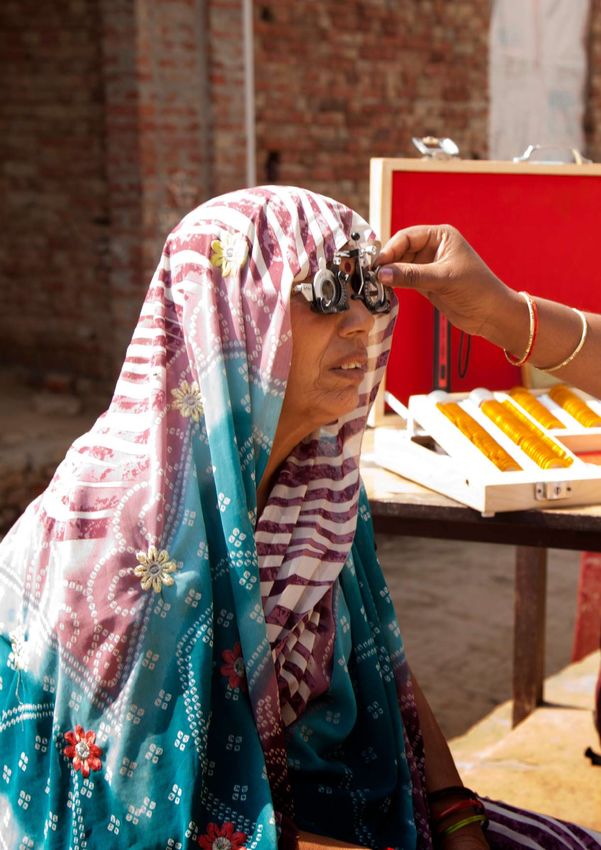
Key messages
Timeline Of Investment Uncorrected Refractive Errors (URE)
Cumulative Spending Innovation
$14 BILLION
Awareness
Funding Gaps
IS NEEDED TO CREATE A WORLD FREE FROM Sustainable Access Points
UNCORRECTED REFRACTIVE ERRORS
$2.4B
to create 1 million new sustainable Aligning the necessary organizations
access points which will equip 90 and resources around an agreed set
percent of the population in need of goals is an immediate priority.
Of the 1 million new sustainable access
points, 600,000 need to offer full
refraction services.
$0.7B
Uncorrected Refractive Errors (Billion)
for innovation to accelerate the Governments, NGOs, bilateral and
affordability of cost-to-serve and multilateral organizations, donors
cost of products and the private sector all have a
Investment in low-cost, digital or role to play in securing this funding
automated screening tools requiring and ensuring uncorrected refractive
errors are eliminated by 2050.
Investment ($)
less operator training can significantly
accelerate the scale-up of digitization
of existing and new efforts.
$4.5B
to increase awareness of poor vision While strategic investments will be
and its socio-economic impact at an made at specific times to prioritize
individual and societal level action in certain areas, investment
Increased awareness of poor vision and cannot be made into one area in
its socio-economic impact is needed isolation; awareness drives demand,
at both an individual and societal level sustainable access points provide the
to drive demand for glasses and the service, affordable solutions make
uptake of services, and drive investment the cycle sustainable and a portion
in new and existing services. of the population will always need
subsidized/free support.
$6.2B
to fill funding gaps across
affordability and access for people
unable to pay for services
50 percent of wearers in need of
subsidized or free services can be
served, through specialist schemes and
programs, by sustainable access points.
2019
2020
2021
2022
2023
2024
2025
2026
2027
2028
2029
2030
2031
2032
2033
2034
2035
2036
2037
2038
2039
2040
2041
2042
2043
2044
2045
2046
2047
2048
2049
2050
10 ELIMINATING POOR VISION IN A GENERATION 11
Overview

                       Eliminating Poor Vision in a                                       ▪ Optometrists and Ophthalmologists are the
                       Generation seeks to define the scale                                   foundation of eye care infrastructure and
                       of the vision care crisis, as it relates                               there is a need to create more. This report
                       to uncorrected refractive errors, over                                 does not address this need and focuses
                       the next 30 years and proposes key                                     on the potential to develop a global
                       priorities, actions and investment                                     network of primary vision care providers.
                       needed to sustainably address it.                                  ▪   This report focuses on eyeglasses as
                                                                                              the simplest solution to refractive errors.
                       What follows is an evidence based plan,                                The refraction test and opportunity for
                       using analytical support provided by                                   on-the-spot delivery provide instant
                       McKinsey & Company, with the objective                                 positive change to the beneficiary.
                       of catalyzing greater engagement and                                   Other solutions are acknowledged but
                       resources, and inspire widespread systems                              not featured in this report.
                       change by clarifying what it will take to                          ▪   While other strategies are recognized,
                       eliminate refractive errors by 2050.                                   this report proposes specific interventions
                                                                                              for investment as priorities to bring about
                       Over 100 experts in eye health, academia
                                                                                              access to glasses.
                       and program implementation were
                       interviewed for the study. Key data
                                                                                          ▪   This report takes the position that
                                                                                              subsidized or free services should be
                       sources include: the World Bank Group,
                                                                                              provided to the poorest of the poor
                       The Economist Intelligence Unit, World
                                                                                              through government funding, NGOs and
                       Poverty Clock, Dalberg and various reports
                                                                                              philanthropic aid. Where the means for
                       and databases focused on vision care.
                                                                                              sustainable enterprises exists, it should
                       While acknowledging technological                                      be used to drive affordable, sustainable
                       advances, regulatory shifts, demographic                               access for the economic base of the
                       shocks and other such disruptions will                                 pyramid (BoP)2.
                       change the vision correction landscape                             ▪   Predictions regarding innovation
                       between now and 2050, several                                          have been conservative. The report
                       assumptions and considerations                                         recognizes the difficulty in predicting
                       were made in the development of this                                   how improvements in today’s products,
                       report, including:                                                     technologies and service delivery models
                                                                                              will have an impact over the long-term
                       ▪ ‘Poor vision’ is defined as refractive                               time frame the report attempts to tackle.
                           errors (RE) and ‘uncorrected poor                                  Therefore, actions and investments
                           vision’ as uncorrected refractive errors                           have been estimated based on what is
                           (URE) unless stated otherwise.                                     thought to be possible in the next three
                       ▪   For the purpose of this report,                                    to 10 years, rather than the next 30.
                           McKinsey estimates the number of                                   Nevertheless, a front-loaded innovation
                           people suffering from URE in 2018                                  investment (in the first 10 years) will
                           to be 2.7 billion1 people. Calculations                            continue to be needed. The sooner
                           in this report use this figure, while                              product, technology and service delivery
                           the report makes the case to create                                model innovations are realized, the faster
                           a sustainable infrastructure that can                              the elimination ambition can be achieved.
                           service many more. All figures are                             ▪   All $ are USD unless stated otherwise.
                           indicative, not absolute.                                      ▪   While this report highlights some of the
                                                                                              efforts already underway to eliminate
                                                                                              uncorrected refractive errors, there are many
                                                                                              more it could not include. What follows is
     1
      Those with a Visual Acuity of 6/9 or worse. See ‘Methodology’ in the Appendix for       not intended to be a glossary of actions
     more information.
     2
      Coimbatore Prahalad, and Stuart Hart, “The Fortune at the Bottom of the Pyramid,”
                                                                                              happening today, rather a look to the
     Strategy+Business 26 (2002): 54-67, http://dx.doi.org/10.19177/reen.v1e220081-23.        future and what should, and can be done.

12                   ELIMINATING POOR VISION IN A GENERATION                                                                                  13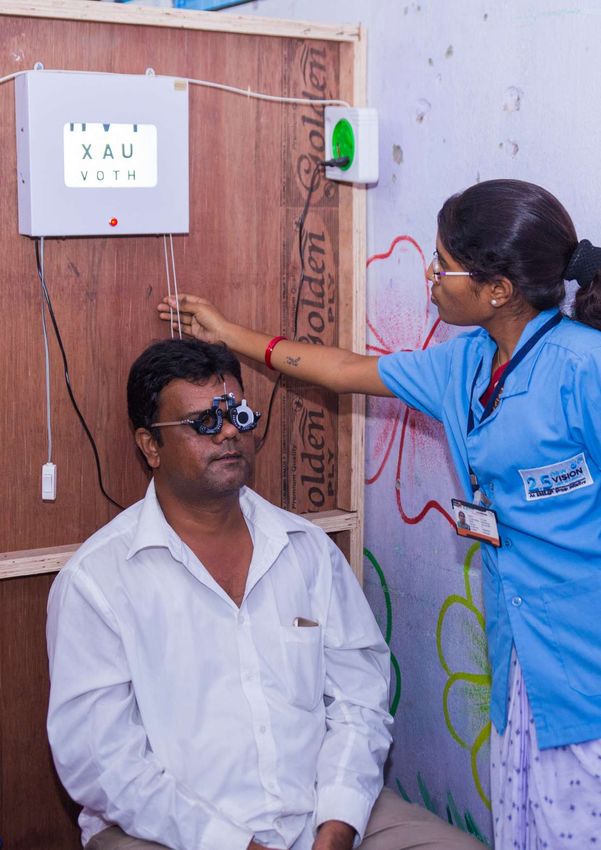
The world’s largest
unaddressed disability
GLOBAL REFRACTIVE ERROR BURDEN 4
Uncorrected poor vision is the world’s most widespread unaddressed disability.
2018 2050
It indiscriminately affects one in three people, 90 percent3 of whom live in the If the Industry maintains its 2018 focus, serving
developing world at the BoP. established markets using similar channels and products:
And these numbers are rising.
3.2B
3.2B need no
POPULATION GROWTH vision correction
Billions of people
2018 6.2 +34%
Developing 2.9B
economies 2.9B need no
2050 8.3 3.4B people will live with
vision correction corrected RE, having maintained
3.4B their position in or moved up
the economic pyramid to gain
Developed
2018 1.4 +7% affordability, awareness and
economies existing access offered by the
2050 1.5 industry
2.0B 0.7B people will continue to
2.0B people live live with URE even if they
GDP with corrected RE have moved up the pyramid,
Trillion USD, constant 2010 $ no longer facing affordability
and awareness as barriers but
0.7B still facing the challenge of
Developing 2018 49 +88 2.7B people access if the industry has not
2.7B
economies live with URE – 2.5B expanded to address this
2050 137 90 percent of
those live in the 2.5B people will live with URE
developing world with affordability, awareness
at the BoP and access being barriers at
Developed 2018 47 +34 the BoP
economies
2050 81
Population Population
7.6B 9.8B
Contributing factors include population growth, rise in myopia (near-sightedness)
and increase in presbyopia (age-related inability to focus on near objects).
3
World Health Organization, “Universal Eye Health: A Global Action Plan 2014–2019,” World Health Organization (2013): 4, https://www.who.int/
blindness/AP2014_19_English.pdf. 4
Those with a Visual Acuity of 6/9 or worse. See ‘Methodology’ in the Appendix for more information.
14 ELIMINATING POOR VISION IN A GENERATION 15
REFRACTIVE ERROR CASES BY TYPE REFRACTIVE ERROR TYPES BY AGE
2018 Population 4.7B
Myopia | 1.5B people suffer from myopia5 (below 40 years old)
1.5B
Myopia | 1.0B people suffer from myopia5 (above 40 years old i.e., overlap with presbyopia)
1.0B
Presbyopia | 1.4B people suffer from presbyopia6
BABY/CHILD TEENAGER ADULT SENIOR
(0 - 10 years) (11 - 17 years) (18 - 60 years) (over 60 years)
1.4B
Hyperopia Hyperopia Hyperopia Hyperopia
Hyperopia | 0.6B people suffer from hyperopia7
(far-sightedness) is Myopia Myopia Myopia
0.6B common in children might worsen tabilizes in early
s Astigmatism
and should be during puberty adulthood but Presbyopia
corrected if it persists. Astigmatism sometimes it continues slows down near
Astigmatism | 0.2B people suffer from astigmatism8
Some children can develop to progress with age 60 years old
“outgrow” it as the gradually in life Astigmatism Aging of the eye
0.2B eyeball lengthens Presbyopia is often associated
with normal growth (long-sightedness), with diseases
Myopia will arise from that can lead to low
(short-sightedness), 40 onwards vision or blindness
often inherited,
2050 Population 6.6B (if current actions are maintained)
appears between 5
Myopia | 2.2B people suffer from myopia5 (below 40 years old) and 10 years old
Astigmatism
2.2B can be present at
the time of birth,
Myopia | 2.1B people suffer from myopia (above 40 years old i.e., overlap with presbyopia)
5
or develop gradually
in life
2.1B
Presbyopia | 1.3B people will suffer from presbyopia6
1.3B
Hyperopia | 0.8B people will suffer from hyperopia7
0.8B
Astigmatism | 0.2B people suffer from astigmatism8
0.2B
5
The value of myopia here refers to all cases of myopia, including those who have myopia with other refractive errors, such as myopic astigmatism, myopia
with presbyopia etc. McKinsey & Company were able to procure the prevalence for the entire myopic population by using prevalence inputs from paper “Global
Prevalence of Myopia and High Myopia (2016)”. Source: Brien A. Holden PhD, DSc et al., “Global Prevalence of Myopia and High Myopia and Temporal Trends from
2000 through 2050,” Ophthalmology, Volume 123, Issue 5 (May 2016): 1036-1042, https://doi.org/10.1016/j.ophtha.2016.01.006.
6
The value of presbyopia here refers to cases of pure presbyopia (presbyopia with no overlap with other refractive errors) and presbyopia with astigmatism.
McKinsey & Company excluded myopia by using inputs from paper “Global Prevalence of Presbyopia and Visual Impairment (2018)”, which already excludes
myopes whose dominant symptom is myopic. Source: Timothy R. Fricke MSc et al., “Global Prevalence of Presbyopia and Vision Impairment from Uncorrected
Presbyopia: Systematic Review, Meta-analysis, and Modelling,” Ophthalmology, Volume 125, Issue 10 (October 2018): 1492-1499, https://doi.org/10.1016/j.
ophtha.2018.04.013.
7
The value of hyperopia here refers to all cases of hyperopia, including those who have hyperopia with other refractive errors, such as hyperopic astigmatism,
hyperopia with presbyopia etc.
8
The value of astigmatism here refers to cases of pure astigmatism (astigmatism with no overlap with other refractive errors). This is assumed to be ~10 percent of
the entire astigmatic population.
16 ELIMINATING POOR VISION IN A GENERATION 17REFRACTIVE ERROR CASES BY REGION TOP 10 COUNTRIES
WITH LARGEST URE
NORTH AMERICA EUROPE ASIA POPULATIONS
0.3B RE 0.5B RE 2.8B RE
(0.06B URE) (0.16B URE) (1.76B URE)
2018 2050
Population 2.7B Population 2.5B
23% live in India 19% live in India
22% live in China 6% live in Nigeria
2018
5% live in Indonesia 5% live in China
Population 4.7B
3% live in Pakistan 4% live in Indonesia
3% live in Bangladesh 4% live in Pakistan
3% live in Nigeria 3% live in Democratic
LATIN AMERICA AFRICA MIDDLE EAST Republic of the Congo
0.4B RE 0.4B RE 0.3B RE
(0.18B URE) (0.34B URE) (0.18B URE) 3% live in Brazil 2% live in Bangladesh
2% live in Russia 2% live in Brazil
NORTH AMERICA EUROPE ASIA
0.3B RE 0.5B RE 3.8B RE
(0.06B URE) (0.1B URE) (1.15B URE) 2% live in Philippines 2% live in Ethiopia
2% live in Vietnam 2% live in Philippines
2050
Population 6.6B
LATIN AMERICA AFRICA MIDDLE EAST
0.5B RE 1.0B RE 0.5B RE
(0.17B URE) (0.73B URE) (0.28B URE)
18 ELIMINATING POOR VISION IN A GENERATION 19The true cost of
uncorrected poor vision
Despite the staggering number of people
it affects, the impact of poor vision is
largely unknown by those with the ability
to influence, change and enforce public
policy for good eye health.
Many of those suffering do not know
something can be done or may be
subject to cultural stigmas around vision
correction or use of glasses.
Children with
30% poor vision are
of commercial
drivers9 lack the ability 3x
to see in the distance, more likely to
putting themselves fall behind
and others in class10
In the UK,
in danger
elderly with low
vision are more prone
to falls - treating
these injuries cost
GBP128
million 11
every year
Every year uncorrected
poor vision costs
the global economy
$272 billion in lost
12
productivity.
And the problem is only getting worse. 9
Extrapolated from: Central Road Research Institute,
“Assessment of Visual Limitations of Commercial Drivers
in Metropolitan Cities in India,” Vision Impact Institute
Modern lifestyles, including children spending (September 2017), https://visionimpactinstitute.org/
less time outdoors and the ever increasing research/assessment-visual-limitations-commercial-drivers-
metropolitan-cities-india-interim-report/.
use of screens, have contributed to a rise 10
Carolina Cumani Toledo et al., “Early Detection of Visual
Impairment and its Relation to Academic Performance,” Rev.
in myopia. This crisis is predicted to reach Assoc. Med. Bras. [online] vol.56, n.4 (2010): 415-419, http://
dx.doi.org/10.1590/S0104-42302010000400013.
epidemic proportions. By 2050, over 50 11
Bruce J. W. Evans, and Gillian Rowlands, “Correctable
percent of the world’s population is expected Visual Impairment in Older People: A Major Unmet Need,”
Ophthalmic Physiol Opt. 24(3) (May 2004): 161-80. https://doi.
to suffer from myopia13, many with serious org/10.1111/j.1475-1313.2004.00197.x.
12
TST Smith et al., “Potential Lost Productivity Resulting from
vision-threatening side effects and drastic the Global Burden of Uncorrected Refractive Error,” Bull
long-term implications. World Health Organ. 87(6) (June 2009): 431–437, http://
dx.doi.org/10.2471/BLT.08.055673. Updated for population
and inflation, 2015.
But it doesn’t have to be this way. 13
Kovin S. Naidoo PhD et al., “Potential Lost Productivity
Resulting from the Global Burden of Myopia: Systematic
Review, Meta-analysis, and Modeling,” Ophthalmology Volume
We can choose to solve it. 126, Issue 3 (March 2019): 338-346, https://doi.org/10.1016/j.
ophtha.2018.10.029.
20 ELIMINATING POOR VISION IN A GENERATION 21State of the world today
More than 7.6 billion people share our
planet. 2 billion of them enjoy vision
correction provided by 600,000 eye
care professionals predominantly
operating in big towns and cities.
But 2.7 billion people live with
uncorrected poor vision due to a lack
of affordability, access, awareness,
and in some cases, acceptance.
There are many actions happening
around the world today to bring good
vision to everyone everywhere. These
efforts are led by both the public
and private sector and supported by
multilateral organizations and donors.
The following pages highlight some
examples of:
▪ Affordable products
▪ Access creation
▪ Refraction tools
▪ Public awareness
▪ Expansion of funding
▪ Government programs
▪ Coalitions and data
22 ELIMINATING POOR VISION IN A GENERATION 23The Ready2Clip™ range is designed to fit any face shape and enables on-the-spot
customization and delivery for each wearer, adapted to their unique prescriptions.
AFFORDABLE PRODUCTS
Essilor’s experience shows the men Despite this and other successes, there is
and women who live in BoP a need to do more.
communities share the same
aspirations as consumers with high In addition to continued
levels of disposable income. They innovation to increase the
want quality, comfort and style at affordability of glasses,
a price they can afford. further efforts are needed to develop
logistics and supply chains that can keep
In 2013, Essilor recognized the need cost-to-serve low. Progress on this front
to produce solutions to meet these remains limited. However this is not a
aspirations and invested in the unique challenge for eye health and does
development of an affordable product not need to be the case. Best-in-class
range. In 2019, more than 250 affordable examples can be found in consumer
styles, certified to European standards, goods companies who have successfully
are available for BoP consumers and provided products like personal care and
NGO partners through 2.5 New Vision beverages to rural communities.
GenerationTM (2.5 NVGTM).
Regulatory barriers and high import
duties also inhibit the reduction of
“Using ready-made spectacles
delivery costs around the world. Until this
for school eye health
is addressed by national governments,
programs can increase access
affordability will remain an issue.
to spectacles for children.
Dispensed on the spot, they
have the potential to increase
Studies found on average, Asia’s working poor are willing
compliance by reducing waiting
to pay ~three days wages ($7-$11) for glasses14.
time and minimizing costs for
parents. The cost savings to
Working poor average monthly expenses, USD per person (absolute, not PPP15) programs is also significant
(over USD 1,500 per 100
CHINA, 2016 INDONESIA, 2018
children needing spectacles)
Health
Other cost allowing service providers to
Health
4
4
utilize these resources for other
9 aspects of the program e.g.
Other cost
12
Total Transport
11
Total health education, primary eye
Housing monthly monthly
37 expenses:
Housing
expenses:
care services.”
39
Transport $95 $85
14
Food
Dr. Priya Morjaria, PhD completed
Food 27 her doctorate on interventions to
23
increase the efficacy of school eye
health programs and implemented
a clinical trial on the use of
3.4 days of working poor income 3.4 days of working poor income
in China is USD ~$10.80 Ready2ClipTM glasses.
in Indonesia is USD ~$9.60
14
McKinsey & Company extrapolated the data based on the following studies conducted in China, Indonesia and Bangladesh.
- China: “China Consumption Trends - China Digital Banking Report 2017,” BBVA Research, accessed August 27, 2019, https://www.bbvaresearch.com/wp-
content/uploads/2017/03/2017-China-Consumption-Trends-1.pdf.
- Indonesia: McKinsey & Company used mean single adult monthly data from Living Wage Series for overall population (urban + rural) - January 2018 in local
currencies and converted to USD using exchange rates as of 23 November 2018. Source: “Living Wage Series - Indonesia - January 2018 - In Rupiah, per Month,”
WageIndicator.org, accessed August 27, 2019, https://wageindicator.org/salary/living-wage/indonesia-living-wage-series-january-2018-country-overview.
- Bangladesh: estimates are based on study “Understanding Demand and Provision of Eye Care Services among Slum-Dwellers in Dhaka, Bangladesh”. Source: Dr.
Malabika Sarker et al., “Understanding demand and provision of eye care services among slum-dwellers in Dhaka, Bangladesh,” IAPB.com, accessed September 5,
2019, https://www.iapb.org/wp-content/uploads/Bangladesh-Report_final-version_02-06-2015.pdf.
15
PPP stands for Purchasing Power Parity - a way of measuring prices at different locations and different currencies using a common currency.
24 ELIMINATING POOR VISION IN A GENERATION 25ACCESS CREATION
There are a number of initiatives Working to create
providing access to subsidized/free sustainable access
and sustainable services that have where none exists, 2.5
seen great success over the years. NVGTM’s flagship model
Eye Mitra (‘Friend of
Governments and NGOs have long- the Eye’ in Hindi), trains
established vision centers and other young, under and unemployed people
integrated eye health services as to become primary vision care providers.
the critical backbone of eye care The program trains them to carry out
infrastructure. Hospitals have further basic vision tests, refer people to other
developed this network through eye care providers for non-refractive
onsite and satellite locations. Mobile issues, and supports them to set up their
(van) clinics, while incurring a capital own business to sell prescription glasses
expense and running costs, have proved and sunglasses in their community.
extremely effective in providing access
to rural communities. Participants follow certified vocational
training in refraction and visual health
Hospitals and NGOs have perhaps over 12 months as well as learn the
had the biggest impact to date on eye commercial skills to run a successful small
health through eye camps and outreach vision care business. Essilor provides
services. Traditionally leveraged to ongoing skills and entrepreneurship
identify and treat conditions like cataracts training and logistics and marketing
and glaucoma, many have more recently support to help Eye Mitras grow their
begun to integrate refraction services. business, and run outreach screening
However, there is a recognition these events to expand vision care to outlying
need to adapt to sustainable eye care rural areas. Today, Eye Mitra is the world’s
programs implemented at scale. largest rural optical network.
Since 2013, Essilor’s inclusive business,
2.5 NVGTM, has worked to help support
and extend the eye care infrastructure
for refractive error through a range of
sustainable models.
A large part of our success in providing widespread
vision care is down to the investment we have
made in training across all levels; from Vision
Technicians to Optometrists and Ophthalmologists.
By creating this comprehensive infrastructure we
have been able to provide for even the most
remote and hard to reach communities.
Dr. Gullapalli N Rao
Founder-Chair, L V Prasad Eye Institute
26
26 ELIMINATING
ELIMINATING POOR
POOR VISION
VISION IN
IN A
A GENERATION
GENERATION 27In Indonesia, there is a unique network.
30,000 primary vision care providers,
known as Optik Keliling (‘Mobile Optician’
in Bahasa), travel on motorbikes to
perform basic vision screenings and
provide glasses outside cities. Essilor is
working to upskill these entrepreneurs
with specialist training to provide
affordable, quality vision care across
Indonesia. After completing a course in
refraction, business management and
referral training, participants qualify as
Mitra Mata (‘Friend of the Eye’ in Bahasa).
The introduction of our
Essilor offers Mitra Matas the opportunity self-sustaining solution
for further professional development
through its Mitra Mata Optician program.
demonstrates how the
Comprising continual professional global vision care gap
development and specialized training
recognized by optometry schools, the
can be solved through
program supports Mitra Matas to set up partnering and empowering
optical shops in their communities.
local governments and
Independent NGO OneSight works within
existing public health systems to create
NGOs to provide
sustainable access. Working with local self-sustaining care.
governments, they build and develop
K-T Overbey
vision centers, providing vision care at a
President and Executive Director, OneSight
community level and a source of income
for the public health facility to promote
Even with these and other efforts,
sustainability. Since 2013, they have
sustainable access for BoP communities
established 131 vision care centers.
remains limited.
28 ELIMINATING POOR VISION IN A GENERATION 29REFRACTION TOOLS
Despite progress in affordability
Correcting refractive
and access, the equipment and tools error is one of the most
needed to diagnose refractive errors
are still prohibitively expensive.
cost-effective ways individuals
with poor vision can realize
Autorefractors are costly
and require electricity to their potential. Appropriate
run, and retinoscopes, technology to identify those
although relatively
inexpensive, are difficult to use. Unless in need and ensure they get
we can resolve this bottleneck for vision affordable treatment in a
care organizations and entrepreneurs,
we will never realize the scale of access timely manner will radically
needed to serve everyone, everywhere. increase access to good vision
and all the benefits it brings.
Dr. Andrew Bastawrous
Co-Founder and Chief Executive Officer, Peek Vision
Some promising innovations include:
QuickSee, designed GoCheck Kids is ClickCheck was the
by PlenOptika (USA) an easily deployed, winner of the See Change
and manufactured by low-cost mobile app Challenge launched by
Aurolab, is a handheld used to detect Essilor in 2016 to uncover
autorefractor that makes amblyopia18, risk factors low-cost, easy-to-use,
clinically accurate16 in children too young scalable solutions that
measurements possible for visual acuity can be used by primary
anywhere. It combines an tests. It is currently only vision care providers
open, binocular view and available in the US. in underserved areas
wavefront aberrometry in to accurately measure
a portable, field-durable refractive errors. Pilot tests
format. In 2017 QuickSee in India and Indonesia of
was awarded a special this portable, handheld
Grand Jury Prize in the device have shown more
Essilor See Change than adequate accuracy for
Challenge for its innovative an initial diagnosis. At the
approach to addressing time of print, the device is
the global burden of poor expected to be available
vision. e-see is a special for use by primary vision
version of QuickSee care providers for $50 by
exclusively for Aurolab the end of 2019.
to market in the SAARC17
region. 16
QuickSee’s clinical accuracy is supported by the following studies:
- In study #1, a minimally trained technician used QuickSee to measure over 700 patients in rural India in the Aravind Eye
Care System. The results showed marginal difference in both prescription preference and resulting visual acuity between
eyeglasses derived from subjective refraction versus QuickSee autorefraction. Source: Nicholas J Durr et al., “Quality of eyeglass
prescriptions from a low-cost wavefront autorefractor evaluated in rural India: results of a 708-participant field study,” BMJ
Open Ophthalmology 2019;4:e000225, http://dx.doi.org/10.1136/bmjophth-2018-000225.
- Study #2 shows visual acuity improvement resulting from correction based on QuickSee was the same as that achieved
by subjective refraction in 87% of the eyes tested. This is compared to results reported from clinically established benchtop
systems and exceeds those of other handheld autorefractors. Source: Marcos Rubio et al., “Validation of an affordable handheld
wavefront autorefractor,” Optom Vis Sci. 2019 Oct;96(10):726-732, https://doi.org/10.1097/OPX.0000000000001427.
17
South Asian Association for Regional Cooperation.
18
Amblyopia is the number one cause of childhood blindness..
30 ELIMINATING POOR VISION IN A GENERATION 31PUBLIC AWARENESS
One such campaign tackling
these issues is See Now.
While possibly the most critical
intervention to drive the uptake of See Now is a global campaign
services, we have seen comparatively created by The Fred Hollows
little success in raising awareness of Foundation in partnership with
refractive error on a large scale. Sightsavers, Vision 2020 and
Essilor’s social impact fund
We know from the success Vision For LifeTM. Its objective is
of awareness-raising around to increase awareness and drive
cataracts and trachoma, public mobilization on ending
eye health campaigns avoidable blindness and vision
can drive not only patient impairment.
awareness and education, but also
advocacy engagement. In 2019, See Now launched a pilot
campaign in Uttar Pradesh, North
However, there are unique challenges India, with the support of celebrity
when it comes to awareness and ambassador Amitabh Bachchan.
education on refractive error. Even when The campaign was designed to be
services are available, people do not get sustainable, calling for people to
their vision tested. Why? Many people get their vision tested at existing
are unaware their vision problems can be eye care services. Targeted
solved, have learned to compensate or communications on eye health
may be subject to cultural stigmas around were delivered via social media,
wearing glasses. radio, television, local newspapers,
WhatsApp, cinema advertising and
Awareness for the uptake of services is
outdoor billboards. Using a free
just one aspect of what is needed.
“call back” service, respondents
Advocacy is also needed to raise were advised the location of their
awareness of good vision and its socio- nearest eye health service. And
economic impact among policy makers results were positive:
and key opinion leaders. Read more on
existing advocacy efforts on page 40. At the time of print the
campaign had reached
more than 32 million people
Four out of five people
requested a call back to
learn where their nearest
service is located
Eye camps in urban and
regional settings saw a
38 percent increase in
attendance
The message was passed
among families and
communities; while men
were overwhelmingly the
recipients of the call
center calls, women
were the predominant
attendees to camps
32
32 ELIMINATING
ELIMINATING POOR
POOR VISION
VISION IN
IN A
A GENERATION
GENERATION 33EXPANSION OF FUNDING
NGOs and governments have long Launched in March 2018, the Cameroon
fulfilled a critical role providing Cataract Bond is a type of Development
subsidized and free services, but a Impact Bond, a results-based contract
significant global funding gap still in which investors provide financing
remains. Encouragingly a number of for social programs upfront, and
efforts have been announced in recent donor organizations repay investors
years to help fill this gap, but they are their principal plus a return based on
not enough. These include: realized performance in delivering social
outcomes. The Cataract Bond will support
The Vision Catalyst Fund, an ambitious the Magrabi ICO Cameroon Eye Institute
multi-stakeholder initiative to bring eye (MICEI) to provide 18,000 cataract
care to all people in the Commonwealth surgeries in Cameroon over five years,
and around the world is set to launch enabling low income patients to receive
in 2020 with public and private surgery for free or low cost, and help
sector partners including Standard MICEI become self-sufficient in five years.
Chartered, UBS, Essilor International, The bond is led by the Cataract Bond
Clearly, Sightsavers, The Fred Hollows Design Coalition, comprising The Fred
Foundation, the International Agency Hollows Foundation, the Conrad N. Hilton
for the Prevention of Blindness, CBM Foundation, Sightsavers, the African Eye
and the London School of Hygiene Foundation and Volta Capital.
and Tropical Medicine.
Once operational, the $1 billion Fund will
seek to accelerate systems change and
expand universal eye health The Cameroon Cataract Bond has
services led by governments, strengthened our community-wide
to provide sustainable and mandate to ‘reach out to all’ in so
efficient long-term many ways. Not only by giving a new
solutions for eye health. impetus to our outreach activities
but also helping us realize how many
ATscale is a global partnership of DIFD, more ‘needs’ are out there besides the
USAID, WHO, UNICEF, Kenya, Norway, cataract blind. Which explains why our
the Clinton Health Access Initiative and outreach services now routinely include
others. Its objective is to accelerate screening for diabetic retinopathy and
access to assistive technologies for 500 refractive errors, and providing readers
million people by 2030, through service to all those in need of them onsite.
delivery and market-shaping approaches.
Glasses, wheelchairs, hearing aids and While the above initiatives, many of
prosthetics, along with others, have been them hospital-based, may go some way
recognized as critical devices to alleviate in helping address the current huge
disability around the world. gap in refractive services delivery,
more sustainable approaches, built on
Vision For LifeTM, Essilor’s social impact fund networks of or nation-wide fixed access
was created in 2015, to support sustainable points, must urgently be promoted,
vision care infrastructure and programs, further tested and where successful,
focusing on the one in three people in the scaled up. Something which, at MICEI,
world living with poor vision. It is dedicated we plan to do and properly document.
to eliminating uncorrected refractive error.
Professor Daniel Etya’ale Essi
Chief Executive Officer, Magrabi ICO Cameroon
Eye Institute (MICEI)
34 ELIMINATING POOR VISION IN A GENERATION 35GOVERNMENT PROGRAMS
No efforts will truly reach the rapid scale needed to eliminate poor vision by at, or near schools, will be performed by In 2018, the State Government of
2050, without the engagement of national and local governments. There are a combination of private optometrists Telangana, India pledged to create the
encouraging actions happening in different corners of the world. and public eye health professionals first state free from avoidable blindness.
employed by the Ministry of Health & Providing universal eye care to state
In 2017, the Government of The Government of Botswana developed Wellness. 500,000 children will receive citizens, medical teams screened 35 million
Liberia launched a national a National Plan for Eye Health to reduce a vision screening, a pair of eyeglasses if people, provided glasses, medicine, surgery
campaign in collaboration avoidable blindness by 30 percent and all needed, and be referred for appropriate and other treatments free of cost to those
with EYElliance and its visual impairment by 25 percent by 2020 treatment if non-refractive eye conditions in need, and ran awareness and education
members (Sightsavers, – in line with commitments to the WHO’s or disorders are found. campaigns on eye health. The program,
LV Prasad Eye Institute, OneSight, Our Global Action Plan19. Part of its plan Kanti Velugu (Eye Light), was successfully
In 2008 the Government of Uganda completed in only eight months, with 27
Children’s Vision, Essilor’s 2.5 NVGTM includes a particular focus on national implemented a National Intervention
and New Sight Eye Center) to provide school eye health. The government makes percent of those screened equipped with
on Uncorrected Refractive Errors. The free glasses, and 0.93 million identified for
eye care to Liberians via schools and use of Peek Vision’s technologies to program trains eye health personnel
community health workers. The campaign scale and optimize health service delivery secondary and tertiary referrals. Medical
to conduct refraction screenings and teams comprised a medical officer, an
is due to screen 1 million school students across schools in the country, including order affordable glasses which are then
for vision problems every year and the use of a smartphone app to facilitate optometrist and up to eight support staff.
delivered in three days. In addition,
provide glasses to those in need. In vision screenings. Botswana is also integrated school eye health initiatives
addition, 1.2 million Liberians living in fortunate to have a relatively high number and an Optometry degree, subsidized by
remote communities far away from of eye health professionals (compared to the government, have been introduced.
existing health care will also receive other nations in the region). This means Recognized by the International Council
basic vision care. comprehensive eye exams conducted of Ophthalmology as ‘best practice’, the
program is supported by Light for the
World and Brien Holden Vision Institute.
Project DRESTI (District Refractive Error
and Eye Care Search and Treat Initiative)
was launched by the Clear Vision
Collective comprising VisionSpring, BRAC,
OneSight, Orbis and Essilor’s 2.5 NVGTM,
in partnership with the Government of
Bangladesh. Over a two-year pilot period,
the project aims to dramatically increase
eyeglasses coverage and vision correction
rates among adults and children in the
Sherpur district of Bangladesh, by using
inclusive market-based solutions to
provide sustainable vision care services.
The Government of Bhutan has
committed to being the first country to be Ensuring our citizens can
free from refractive error. By strengthening
the current health system’s vision screening see well is one of the most
capabilities and supporting the creation of simple but effective things
a network of vision care entrepreneurs, the
availability of affordable solutions will be we can do to ensure
made more widespread and sustainable. a good quality of life.
To drive the uptake of services, community-
level health assistants and the nationwide Shanti Kumari
IAS, Chief Special Secretary, Health & Family
network of monasteries will spread
Welfare, Government of Telangana, India
19
Andrew Bastawrous et al., “Blindness and Visual Impairment Due to Age-Related Cataract in Sub-Saharan Africa: A Systematic Review of Recent awareness about the importance of
Population-Based Studies,” Br J Ophthalmol. 97(10) (October 2013): 1237-43, http://dx.doi.org/10.1136/bjophthalmol-2013-303135.
good vision.
36 ELIMINATING POOR VISION IN A GENERATION 37The Ministry of Health and Family The Government of Huoqiu County,
Welfare of the Government of Anhui Province, China is the first in the
Karnataka launched the Namma Kannu country to commit to and execute plans
Namma Doddaballapura (My Eyes, My to eliminate poor vision from the county.
Doddaballapura) with the support of In 2019, it announced a partnership with
Prerana Trust, Drishti Eye Hospital and Essilor and Huoqiu Boai Hospital to correct
Essilor Vision Foundation (EVF) India the vision of its people in three years. The
in 2018, to make Doddaballapura the partners will conduct vision screenings for
first Indian region free from uncorrected more than 200,000 elderly people and
refractive errors by 2021. A team school children across the county, and
of trained personnel will visit every provide free glasses to those who cannot
household of Doddaballapura to conduct afford them. They will also collaborate
eye screenings, dispense glasses if on training support for vision care
needed and spread awareness on the providers and other philanthropic activities.
importance of good vision. People with
complex vision correction needs who While these and other efforts are
cannot be equipped on the spot will be commendable, other governments must
referred to a mobile eye camp. There follow their example if the world is ever
they will receive a comprehensive eye to be free of uncorrected refractive
exam carried out by staff from Drishti errors. Including refractive services as an
Eye Hospital. Within 15 days, a pair of integrated part of eye care and health
customized corrective glasses will be services is an absolute necessity.
delivered to their doorstep. The goal is to
reach 325,000 people across the region’s
290 villages and 33 urban wards.
The joy in the face of a rural school child when
they see their vision can be clear is something
to cherish. We know how to create the required
talent, use proven low-cost technology and create
sustainable economics to ensure everyone in a
given geography can be screened and treated.
It is time for Social and Philanthropic capital along
with Governments to make the commitment
to scale up these innovations and ensure a world
without uncorrected refractive errors.
Kiran Anandampillai
Founder and Chief Executive Officer. Drishti Eye Hospitals
38
38 ELIMINATING
ELIMINATING POOR
POOR VISION
VISION IN
IN A
A GENERATION
GENERATION 39COALITIONS AND DATA
Both within and outside the urgent need for national governments, the
public health, coalitions private sector and development partners to
are effective in catalyzing substantially increase investment in providing
efforts and campaigning for eyeglasses to improve educational outcomes,
change, while independent increase productivity and stimulate the global
data has helped to define strategies economy. In 2018, EYElliance’s efforts led to
and move agendas. the US Government allocating a distinct line
item for the provision of eyeglasses within
The World Health Organization (WHO) USAID’s annual budget.
publishes data driven, vision-centric
publications, including the upcoming World The Vision Impact Institute (VII) curates
Report on Vision. The report will offer a global database of reports, studies and
recommendations focused on ensuring articles to inform government policymakers,
comprehensive and integrated vision optical industry professionals and other
services to assist countries to reduce the advocates. Its objective is to increase
burden of vision loss, improve the lives awareness of the importance of good vision
of people with vision impairment, and and inform smart policy decisions.
achieve the UN SDGs.
In 2016, the VII, in partnership with Optometry
Founded in 1975, the International Giving Sight and other US organizations,
Agency for the Prevention of Blindness created Kids See: Success, an initiative
(IAPB) is perhaps the most well designed to advocate for eye exams for
established alliance of civil society children before they enter kindergarten. The
organizations, corporations and campaign’s most notable success to date
professional bodies promoting eye has been lobbying the State of New Jersey
health. IAPB leads international efforts to require children, age six and younger,
in blindness prevention and its entering a public preschool, public school,
Refractive Error Work Group is specially or a Head Start Program for the first time,
tasked with keeping the issue of to have a comprehensive eye examination
refractive error on the agenda of health by January 1 of the child’s first year of
and development policy makers. enrollment. Bill SB2804 passed unanimously
in the Senate and then was unanimously
IAPB’s Vision Atlas provides approved by the State Assembly in May 2019.
comprehensive data and evidence on At the time of print, the Bill was pending the
avoidable blindness. The data provides a Governor’s signature to pass into legislation.
wealth of information relevant to policy
makers, health planners, eye health Launched in 2016, Our Children’s Vision
professionals, NGOs, patient groups and was founded by the Brien Holden Vision
advocates. The Vision Atlas is a valuable Institute and Essilor’s Vision For LifeTM to
resource for those responsible for accelerate and expand access to eye health
achieving Universal Health Coverage and services for children all over the world. Over
the implementation of the SDGs. 80 partners share a commitment to reach
50 million children by 2020. Essilor supports
Established in 2016, EYElliance is a the campaign by providing free glasses to
multi-sector coalition that drives the global partner programs. By the end of 2019, it will
strategy to increase access to spectacles have supported the donation of more than
at scale. Its report, Eyeglasses for Global 500,000 pairs of glasses.
Development: Bridging the Visual Divide,
published with The World Economic While today’s efforts have made great
Forum in 2016, is a collection of findings on progress, actions must be scaled and any
shortfalls addressed to meet the needs of a
growing population.
40 ELIMINATING POOR VISION IN A GENERATION 41Where we could
be by 2050 and
how much it will cost
McKinsey’s analysis estimates
$14 billion is needed to create
a world free from uncorrected
refractive errors.
This is to be invested in:
▪ Creating sustainable access points
▪ Innovating for affordable solutions
▪ Funding subsidized and free services
▪ Raising awareness
This allows for relatively conservative
investment in innovation to break
down existing bottlenecks including,
but not limited to, low-cost, easy-to-
use autorefractors and technologically
advanced delivery systems.
A small fraction of the total invested
in public health, $14 billion for eye
health will generate huge socio-
economic returns.
42 ELIMINATING POOR VISION IN A GENERATION 43How 2.5 Billion People Will Be Served
0.26 Billion
People
subsidized and
2050
free services
POOR VISION
CAN BE ELIMINATED BY 2.24 Billion
People20
sustainable
access points
Investment in
600,000 screening tools requiring
full refraction less operator training
service points Uncorrected Refractive Errors (URE)
400,000 Innovation
readers-only Awareness
points needed $2.4B to create $0.7B for
Timeline Of Investment Funding Gaps
1 million new innovation to Accelerate the scale-up
Cumulative Spending
sustainable access accelerate the of digitization Sustainable Access Points
points which will affordability of
equip 90 percent cost-to-serve
of the population and cost of
in need products
$14B
Uncorrected Refractive Errors (Billion)
IS NEEDED TO
CREATE A WORLD
FREE FROM
UNCORRECTED
Investment ($)
REFRACTIVE
ERRORS
$4.5B to increase $6.2B to
awareness of poor fill funding
vision and its gaps across
socio-economic affordability and
impact at an access for people
individual and unable to pay
societal level for services
To drive demand
for glasses and the
uptake of services 50% of wearers in
need of subsidized
or free services
2019
2020
2021
2022
2023
2024
2025
2026
2027
2028
2029
2030
2031
2032
2033
2034
2035
2036
2037
2038
2039
2040
2041
2042
2043
2044
2045
2046
2047
2048
2049
2050
can be served
by sustainable
To drive investment
access points
in new and existing Governments, NGOs, bilateral and multilateral organizations, donors and the private
services sector all have a role to play in securing this funding. While strategic investments will
be made at specific times to prioritize action in certain areas, investment cannot be
made into one area in isolation; awareness drives demand, sustainable access points
provide the service, affordable solutions make the cycle sustainable and a portion of
the population will always need subsidized/free support.
20
With most retail categories witnessing a rapidly growing e-commerce share and assumed developments in digital eye screening and vision tests, McKinsey &
Company’s analysis conservatively surmises 25 percent of wearers, 0.56 billion, will be served through e-commerce and will not require a physical access point.
44 ELIMINATING POOR VISION IN A GENERATION 45CREATING SUSTAINABLE
ACCESS POINTS
1 MILLION NEW ACCESS POINTS 90 PERCENT OF THE PROBLEM
CAN EQUIP 90 PERCENT OF THE SOLVED FOR 17 PERCENT OF
POPULATION IN NEED THE TOTAL COST
McKinsey’s analysis shows it will cost $2.4 The cumulative investment needed
billion to create 1 million new sustainable into financially sustainable access
access points, offering products and points is calculated to be $2.4 billion,
services at an affordable price point21, to approximately 17 percent of the total
serve 90 percent of the BoP population $14 billion investment for the global
who are able and willing to pay for elimination of uncorrected refractive
products and services22. errors. This is lower than the cost
Sustainable access points are defined estimates associated with raising
as those providing ongoing access to awareness or the provision of subsidized
the services and products needed to and free services.
correct someone’s vision (e.g., screening,
refraction, spectacles). These access 50 PERCENT OF WEARERS IN NEED
points are managed to ensure financial OF SUBSIDIZED OR FREE SERVICES,
sustainability, guaranteeing communities CAN BE SERVED THROUGH
have ongoing access without the need SUSTAINABLE ACCESS POINTS
for subsidy.
As McKinsey considered what it would
~600,000 FULL REFRACTION take to serve those who could not afford
ACCESS POINTS even the most affordable glasses, they
determined this financially sustainable
~600,000 full refraction sustainable infrastructure was a platform from
access points are needed to serve those which subsidized or free glasses could
requiring bespoke prescriptions. be distributed to the most financially
Where this service is not required vulnerable. While recognizing these
(primarily people over 35 who have schemes (e.g. voucher schemes),
become presbyopic), readers-only access administered through a mix of sustainable
points will suffice. channels, are not easy to structure or
manage, this is an important finding as we
~400,000 READERS-ONLY work towards efficient solutions that can
ACCESS POINTS equip everyone who needs glasses and
does not currently have access. In this
Readers-only sustainable access
context, local vision care entrepreneurs
points do not need to stand alone.
have the potential to become suppliers
They can, and in most cases should,
of affordable optical correction to local
be integrated into existing channels,
hospitals and clinics, resolving current
including pharmacies and general stores.
logistics and financial barriers.
This assumes reading glasses can be
dispensed without a highly trained
technician, as is common in many
countries today. Education on the need
for a regular, comprehensive eye exam
must happen in parallel.
21
Studies found on average, Asia’s working poor are willing to pay ~three days wages ($7-$11) for glasses. Please refer to page 24 for more information.
22
Predicated on the scale-up of existing access points and assumes global costs are similar to those observed in Asia.
46 ELIMINATING POOR VISION IN A GENERATION 47You can also read


