Embodying Spanishness: La Argentina and her Ballets Espagnols - Core
←
→
Page content transcription
If your browser does not render page correctly, please read the page content below
Embodying Spanishness:
La Argentina and her
Ballets Espagnols
Idoia Murga Castro

On the night of December 3, 1931, barely six months after the
proclamation of the Second Spanish Republic and the flight of King
Alfonso XIII, the president Manuel Azaña awarded the Bow of the Order
of Isabella the Catholic to the dancer Antonia Mercé, also known as La
Argentina (b. Buenos Aires, 1890, d. Bayonne, 1936). (For a broader
look at the biography and work of Antonia Mercé, see Manso 1993,
VV. AA. 1990, Bennahum 2008). This was significant for a number
of reasons. One, it was the first time that the new regime granted its
most esteemed decoration; two, the person recognized was a woman;
and three, it was given to a dancer, a profession with less prestige
than other artistic fields in Spain at the time. The award honored La
Argentina's extensive work as a “cultural ambassador,” her role in
spreading a modern image of Spain through her Ballets Espagnols
dance company, and her performances in international circuits. In the
ceremony in which Azaña presented Antonia Mercé with the award,
the dancer became the embodiment of a new Spain, bringing together
tradition and the avant-garde, the popular and the national, in short,   Photo 1: Manuel Azaña awarding the Bow of the Order of Isabella the Catholic to Antonia
                                                                         Mercé, La Argentina. Teatro Español, Madrid, 3 December 1931. Photo: Díaz Casariego.
the modern nation that emerged with the Republic. (See photo 1.)         Museo Nacional del Teatro, Almagro.

Before receiving that long-awaited recognition in her homeland, La
Argentina had been travelling the world for many years performing
solo concerts and dancing with her Ballets Espagnols. They were
a “Spanish style” version of Diaghilev’s Ballets Russes, based on

PAGE 12                                                                                                                            2019 | Volume XXXIX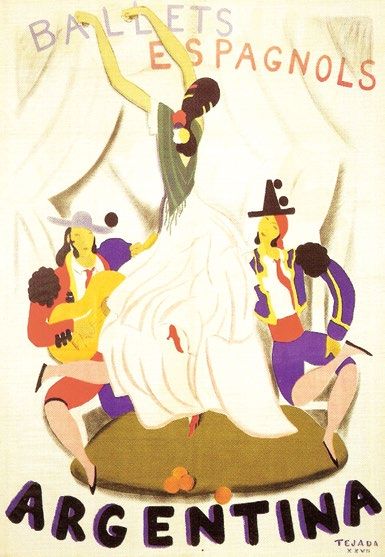
national imagery and put together with the support of a large group
of modern artists and intellectuals (Murga Castro 2017). This initiative
responded to critics who had called for the need to curb the excessive
deformation of the nineteenth-century espagnolade that was seen on
the Parisian stage, proposing—as the writer Enrique Estévez Ortega
stated—an “indigenous espagnolade,” which was defined as a “very
Spanish espagnolade; that is to say, done by Spaniards, taking
advantage of our own art and its extensive folklore” (1928, 188–189).
(See photo 2.)

Antonia Mercé’s repertoire deeply marked the reception of Spanish
culture abroad, intrinsically linking Spanish stereotypes with her
dance, from the bolero school to folklore and flamenco. It was a
strategy on which she had been working for some time, as we can
see in her text entitled “The Spanish Dance” that Cuban newspapers
had published during a tour of the Caribbean island in 1917: “As for
me, I have attempted to merge two dances: the Spanish and the so-
called ‘modern’ dance. I have eliminated the stridency and acrobatics
of Spanish dance and have left its primitive beauty and its special
meaning and colour” (Hermida 1917).

This stylization sought to steer clear of clichés: “Avoiding caricature,
and refining and defining the essence of Spain, I have presented
abroad a Spain that for many educated people, including Spaniards,
is ‘more Spain’ than the real Spain” (“La Argentina ...” 1926, 5).
Antonia Mercé’s contribution, therefore, focused on several aspects:
the combination of a deeply rooted Iberian tradition on a modernized
stage; knowledge of academic dance through her family; support
of the intelligentsia; continued study of artistic and documentary
sources; and the incorporation of other Hispanic folklore into her
eclectic repertoire. Nevertheless, her statement regarding her
search for something “‘more Spain’ than the real Spain” evinces
the construction of a Spanishness based on the perception of the
Other (Said 2002). Since the nineteenth century this process had
contributed concepts such as charm, passion, voluptuousness and
                                                                           Photo 2: Carlos Sáenz de Tejada, Argentina’s Ballets Espagnols poster, 1927. Museo
bravery to the stereotype, which, incidentally, was intrinsically linked   Nacional Centro de Arte Reina Sofía, Madrid. © VEGAP, Madrid 2019.
to the presence and nature of the dance. Moreover, by taking on or
accepting these Spanish clichés, which had originally been imposed
from the outside, and projecting them internationally, they would be
also applied to her benefit (Bhabha 2002). (See photo 3.)

www.dancestudiesassociation.org                                                                                                                     PAGE 13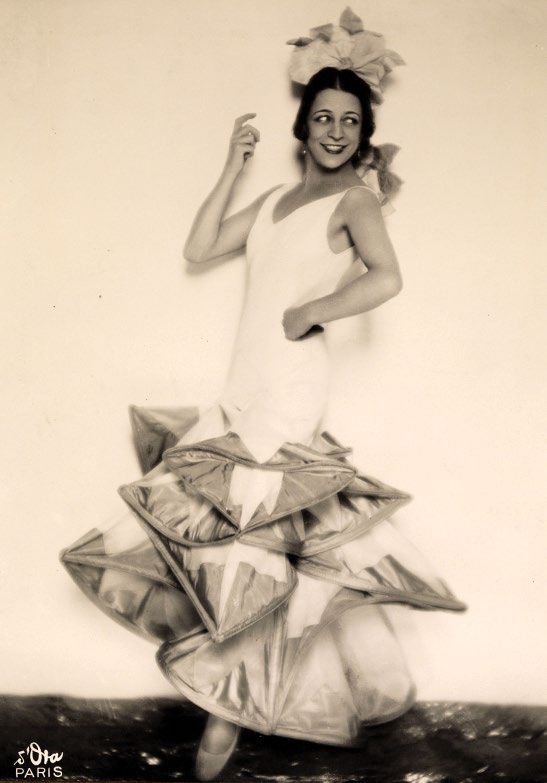
The definition of Spanishness at that time became a fundamental
question. The last colonies had been lost in 1898. Additionally,
Spain was in the middle of a serious crisis that did not go
unnoticed by intellectuals and artists, who reacted by insisting on
the need for national modernization through Europeanization and
internationalization. In this sense, Antonia Mercé’s programs merged
the preservation of traditional heritage and its modernization, and
spread it abroad in a national imaginary which, as an “imagined
community” (Anderson 1993), defined and consolidated nationalism
through its cultural expressions. Her proposal received the support
of both experts and the public. The art critic and socialist politician
Margarita Nelken considered that her work was the “enthronement,
in European refinement, of the deepest purity of our truest essence”
(Nelken 1929, 104). Other intellectuals, like the poet Federico García
Lorca, while presenting her in New York, referred to how Spain’s
“national heart” and ancient history had emerged through the body
of the women dancers, the current allegory of the “authentic” and
traditional common values (1930). The assumption of this narrative by
the Second Republic, which was proclaimed the following year, could
be interpreted as a political identification of the powerful emotional
charge that the performance of these modernized national dances had
for popular audiences (Franko 2002, 11).

It is ironic to think of Antonia Mercé as a guardian of the national
essences, especially when we consider that her life and professional
career took place predominantly abroad. She was born in Buenos
Aires, from which she took the artistic name of “La Argentina,” died in
Bayonne, lived for long periods in Paris and New York, and went on
long tours throughout Europe, the Americas, and Asia. The national
essences of Spanish dance that Antonia Mercé refers to are based on
its supposed ancient origin in Greco-Roman culture and a Hispano-
Muslim influence, and she classified it into three groups: Classical,
Gypsy—where flamenco was located—and regional (Hermida 1917).
The latter are especially relevant when establishing an almost mythical
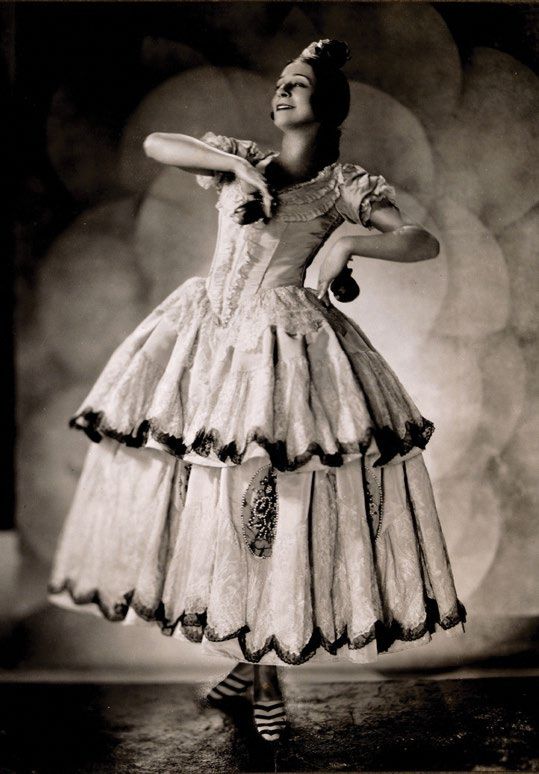
link between the dance and the essence of the nation, a well-exploited    Photo 3: Antonia Mercé, La Argentina, in Triana, with a costume designed by Néstor
resource in the romanticism that legitimized the dancer, dressed in       de la Torre, circa 1929. Unknown photographer. Legado Antonia Mercé, La Argentina,
                                                                          Fundación Juan March, Madrid.
traditional costumes, as a representative of regional diversity that
embodied a single “Spanish people.” (See photos 4 and 5.)

PAGE 14                                                                                                                          2019 | Volume XXXIX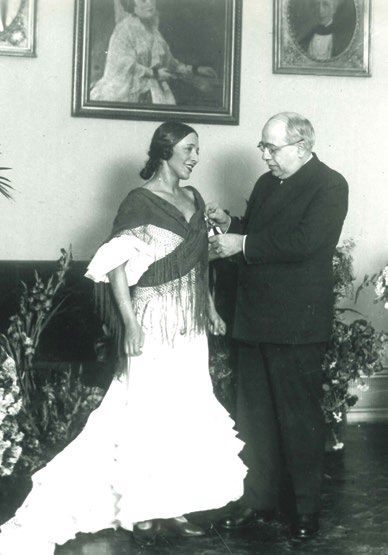
Photo 4: Antonia Mercé, La Argentina, in El contrabandista, with a costume designed by   Photo 5: Antonia Mercé, La Argentina, in Malagueña. Photo Mme. D’Ora. Residencia de
Gustavo Bacarisas, circa 1927–1929. Unknown photographer. Legado Antonia Mercé, La       Estudiantes, Madrid.
Argentina, Fundación Juan March, Madrid.

www.dancestudiesassociation.org                                                                                                                                    PAGE 15

This appropriative process, by which the Spanish dancer would end
                                                                                    up creating programs where lengthy ballets were mixed with diverse
                                                                                    examples of adaptations of folk dancing from different Spanish towns
                                                                                    and regions (for example, Lagarterana, Malagueña, Rapsodia vasca,
                                                                                    Charrada, Castilla, Valenciana, Almería, Madrid) is not trivial. She
                                                                                    also incorporated a very interesting aspect into her repertoire based
                                                                                    on popular pieces from former Spanish colonies, like Suite Argentina,
                                                                                    Cubana, and La Cariñosa, a Philippine dance, which she learned during
                                                                                    her tour of Manila in 1929. Moreover, some of these pieces would be
                                                                                    included in a larger work entitled España Tropical. Here she would stoke
                                                                                    the imaginary of the colonial past that had disappeared in 1898 and use
                                                                                    it to reclaim a positive Spanish influence in the syncretic heritage that
                                                                                    remained in the respective mestizo dance forms. (See photo 6.)

                                                                                    With her mark as both “Spanish” and “Argentinian,” Antonia Mercé
                                                                                    underlined an Hispanic heritage with colonial roots that integrated the
                                                                                    syncretic dialogue with other forms of “indigenous” or local dance.
                                                                                    Moreover, this “otherness” could be applied to the Spanish dance
                                                                                    itself, understood as “indigenous” in the sense of “authentic,” as
                                                                                    Estévez Ortega stated. Its vernacular value and its peripheral nature,
                                                                                    compared to the hegemonic circuits of the canonical academic dance
                                                                                    with their center in Paris, made it exotic. It was analogous to that of
                                                                                    other companies based on their respective national imaginaries, like
                                                                                    the Russian, Swedish or Viennese groups, but different. The objective
                                                                                    was the definition of a modern Spanish dance language, based on
                                                                                    its own bolero, flamenco, or folkloric idiosyncrasy. It was through the
                                                                                    interpretation of those dances, with its “authentic” costumes, that the
                                                                                    exoticness became visible to the foreign public as a visual metonymy
                                                                                    of “Spain.” Not only was she able to avoid negative connotations
                                                                                    during her appropriative processes, the consideration of her work
                                                                                    as a cultural policy of Spanishness or Hispanidad would lead to the
                                                                                    recognition of Antonia Mercé’s contribution as a sort of prestigious
                                                                                    diplomatic campaign by the modern state that was engaged in
                                                                                    promoting the brand new regime of the Second Republic. It was so
Photo 6: Antonia Mercé, La Argentina. Unknown photographer. Archivo General de la   successful that it would become a major reference for subsequent
Nación, Dpto. Doc. Fotográficos, Buenos Aires, Argentina.                           Spanish dance companies, even during opposing political periods and
                                                                                    tendencies, and continues to be so today.

PAGE 16                                                                                                                              2019 | Volume XXXIX
.......................................................................................................................................................   .......................................................................................................................................................
Works Cited                                                                                                                                               Notes
Anderson, Benedict. 1993. Comunidades imaginadas. Reflexiones                                                                                             1.       The text "El baile español" was reproduced in the article by
sobre el origen y la difusión del nacionalismo. México: Fondo de                                                                                                   Francisco Hermida, “Teatro &., &.”, published in La Discusión, La
Cultura Económica.                                                                                                                                                 Habana, on February 20, 1917, and included in album no. 1, p.
                                                                                                                                                                   91 of the Legacy of Antonia Mercé, la Argentina, Fundación Juan
Bennahum, Ninotchka Devorah. 2008. Antonia Mercé La Argentina. El                                                                                                  March, Madrid. Reproduced in Murga Castro 2017, 406.
flamenco y la vanguardia española. Barcelona: Global Rhythm.
                                                                                                                                                          2.       This research is framed under the R&D&I project entitled
Bhabha, Homi K. 2002. El lugar de la cultura. Buenos Aires: Manantial.                                                                                             Ballets Espagnols (1927–1929): A Dance Company for the
                                                                                                                                                                   Internationalisation of Modern Art (P. E. I+D+I Acciones de
Estévez Ortega, Enrique. 1928. Nuevo escenario. Barcelona: Lux.
                                                                                                                                                                   Dinamización "Europa Excelencia", funded by the Spanish
Franko, Mark. 2002. The Work of Dance. Labour, Movement, and                                                                                                       Ministry of Science, Innovation and University – Agencia Estatal
Identity in the 1930s. Middletown, CT: Wesleyan University Press.                                                                                                  de Investigación, ref. ERC2018-092829).

García Lorca, Federico. 1930. "Elogio de Antonia Mercé, “la
Argentina”," in García Lorca, Federico. 1997. Obras completas, edited
by M. García Posada, Vol. 3, 283–285. Madrid: Círculo de Lectores.

“La Argentina y el baile español”. 1926. Heraldo de Madrid, Madrid,
(26 September): 5.

Manso, Carlos. 1993. La Argentina, fue Antonia Mercé. Madrid:
Devenir.

Murga Castro, Idoia (ed.). 2017. Poetas del cuerpo. La danza de la
Edad de Plata, ex. cat. Madrid: Residencia de Estudiantes.

Nelken, Margarita. 1929. "La Argentina ha vuelto a París,"Cosmópolis,
Madrid (June): 102–104.

Said, Edward. 2002. Orientalismo. Barcelona: Debate.

VV. AA. 1990. Antonia Mercé “La Argentina”. Homenaje en su
Centenario, 1890–1990. Madrid: Ministerio de Cultura.

www.dancestudiesassociation.org                                                                                                                                                                                                                                                                    PAGE 17
CONVERSATIONS
ACROSS THE FIELD OF
DANCE STUDIES
Dance Under the Shadow of the Nation
Dance Studies Association
2019 | Volume XXXIXTable of Contents
On the Umbra and Penumbra of Nations: “Urban Meets Traditional:” Constructing Metropolitan
A Word from the Guest Editors | Dance Aesthetics in Kampala City |
Arshiya Sethi and Tani Sebro............................................................. 6 Alfdaniels Mabingo........................................................................... 28
Belly Dance, Persona Non Grata of Cultural Dance | Sustaining, Shifting, and Shaping a Nation One Step
Ainsley Hawthorn............................................................................... 8 at a Time: Dance Practices in Ramallah, Palestine,
as a Location for Reimagining National Identity |
Embodying Spanishness: La Argentina and her Rose Martin...................................................................................... 34
Ballets Espagnols |
Idoia Murga Castro........................................................................... 12 We All are Makwerekwere: Xenophobia, Nationality,
Dance and South Africa |
Changing Paradigms: India’s Early Aesthetic Sarahleigh Castelyn......................................................................... 38
Nationalism |
Arshiya Sethi.................................................................................... 18 Navigating State Ideologies Through Aesthetic
Experimentations: Dance on Television at the Turn
Uncovering the Limitations of the Indian State’s of the Century in China |
Ideologies of Nationalism and Democracy: Jingqiu Guan.................................................................................... 42
The Official Discourse on Modern Indian Dance
in the Twentieth Century | Rihanna and Choreographies of Black Nationhood
Arushi Singh..................................................................................... 24 on the MTV Video Music Awards |
Raquel Monroe................................................................................. 46
PAGE 4 2019 | Volume XXXIXWhen Time Won’t Tell: Power, Performance, and Ethnicity in Sri Lanka | Ahalya Satkunaratnam and Venuri Perera....................................... 49 The Aesthetic Nationalism of Exile: Hidden Transcripts from the Thai-Myanmar Border | Tani Sebro........................................................................................ 54 Contributors................................................................................. 59 News............................................................................................... 62 www.dancestudiesassociation.org PAGE 5
News

2019 Dance Studies                                                    Conversations Across the
Association Awards                                                    Field of Dance Studies
Recipients                                                            Editorial Board
Selma Jeanne Cohen Award                                              Rosemary Candelario, Editor and Chair (Texas Woman’s University)
Benjamin Bilgen, "Kurdish Group Dance as Resistance in Turkey"        Lynn Matluck Brooks (Franklin & Marshall College)
Mika Lior, "Circling the Saints, Ceremonial Sambas and Macho
Femininities of Bahian Candomblé"                                     Rachel Carrico (University of Florida)

Miya Shaffer, "Questioning the Common, Theorizing the Concept of      Susanne Foellmer (Coventry University)
'Mixed Race' in American Dance"
                                                                      Sanja Andus L'Hotellier (Université de Paris 8)
The de la Torre Bueno® First Book Award
Hannah Schwadron, The Case of the Sexy Jewess: Dance, Gender
and Jewish Joke-work in US Pop Culture                                DSA Annual Conference
                                                                      Dancing Resilience: Dance Studies and Activism in a Global Age
Gertrude Lippincott Award
Rizvana Bradley, "Black Cinematic Gesture and the Aesthetics of       October 15-18, 2020 - Vancouver BC, Canada
Contagion"                                                            Call for Papers open now.

Oscar G. Brockett Book Prize for Dance Research                       www.dsa2020.dryfta.com
Colleen Dunagan, Consuming Dance: Choreography and Advertising

The de la Torre Bueno Prize®
Emily Wilcox, Revolutionary Bodies: Chinese Dance and the Socialist
Legacy

Outstanding Scholarly Research in Dance
Susan Leigh Foster

PAGE 62                                                                                                                 2019 | Volume XXXIX
‘Conversations Across the Field of Dance Studies’ Editor c/o DSA Account Manager 7044 S. 13th St. Oak Creek, WI 53154 USA Address Service Requested DSA is a constituent member of the American Council of Learned Societies Cover photos: Left: "Dancer, Nadia Khattab, Ramallah". Photography by ASH. Upper right: Flatfoot Dance Company’s Homeland (Security) (2016). Choreographed by Lliane Loots. Performed at The Elizabeth Sneddon Theatre, Durban, South Africa, April 6–10, 2016. Photographed by Val Adamson. Dancers, from left to right: Sanele Maphumulo, Zinhle Nzama, Sifiso Khumalo, Kim McCusker, Tshediso Kabulu and Jabu Siphika. Lower right: Youth participants exploring Runyege dance of the Banyoro people of Western Uganda during Equation event at Uganda National Cultural Center in Kampala.
You can also read


