Empower parents, enable breastfeeding - Now and for the future! www.worldbreastfeedingweek.org - World ...
←
→
Page content transcription
If your browser does not render page correctly, please read the page content below
Empower parents,
enable breastfeeding
       Now and for the future!

          WABA | WORLD BREASTFEEDING WEEK
                  1-7 AUGUST 2019

                www.worldbreastfeedingweek.org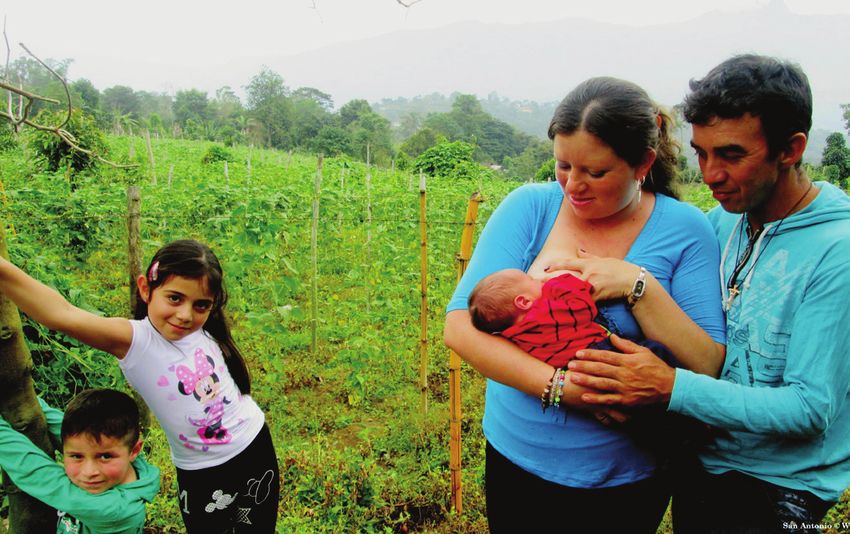
INTRODUCTION
Breastfeeding is one of the best investments in saving lives and improving                           Breastfeeding is a team effort. It also requires evidence-based unbiased
the health, social and economic development of individuals and nations.                              information and a warm chain of support to create an enabling
Although global breastfeeding initiation rates are relatively high, and                              environment that empowers mothers to breastfeed optimally. Although
despite international recommendations, only 40% of all babies under 6                                breastfeeding is the mother’s domain, with close support from fathers,
months are exclusively breastfed and 45% continue breastfeeding up to                                partners, families, workplaces and communities, breastfeeding improves.
24 months. Additionally, there are large regional and in-country variations                          Since breastfeeding involves the mother and her closest supporters,
in breastfeeding rates. Scaling up optimal breastfeeding according to the                            adopting an inclusive approach is important. By considering the needs
recommendations could prevent more than 823 000 child and 20 000                                     of all genders in relation to breastfeeding, gender equity is achieved. A
maternal deaths each year. Not breastfeeding is associated with lower                                gender-equitable parental social protection that includes measures
intelligence and results in economic losses of about $302 billion annually1.                         such as paid leave and workplace support can help create the enabling
Concerted action is needed in order to achieve the World Health Assembly                             environment for breastfeeding in the context of both formal and informal
(WHA) target of at least 50% exclusive breastfeeding for 6 months by                                 work sectors.
2025. Many barriers to optimal breastfeeding exist, one of the largest
being lack of support for parents at work.

                                                                               OBJECTIVES

                Inform                                              Anchor                                                Engage                                         Galvanise

    people about the links                              parent-friendly values                              with individuals and                               action on gender-
    between gender-equitable                            and gender-equitable                                organisations for                                  equitable parental
    parental social protection                          social norms at all levels                          greater impact                                     social protection to
    and breastfeeding                                   to support breastfeeding                                                                               advance breastfeeding

Research shows that paid maternity leave policies could help reduce                                  According to the International Labour Organization (ILO), more than 830
infant mortality by 13% for each additional month of maternity leave2.                               million women workers do not have adequate maternity protection. Of
Paid leave enables women to physically recover from childbirth before                                approximately 170 countries studied, paternity and parental leave are
returning to work and benefits their physical, mental and emotional health                           available in only 78 and 66 countries respectively. Most countries offer
in the short- and long-term3. Policies that ensure parental and paternity                            at least some paid maternity leave. However, progress is slow in meeting
leave should not compromise existing maternity leave benefits or leave                               the World Health Organization (WHO) recommendation for the provision
availability. Rather, these policies should enable fathers/partners to                               of at least 6 months paid leave to support exclusive breastfeeding5. The
prioritise family-related responsibilities, while meeting work demands.                              minimum global standards for maternity leave outlined in the ILO C183-
This can significantly increase the personal and economic wellbeing                                  Maternity Protection Convention, 2000 and the ILO Recommendation
of their families. Limited or no paternity leave reduces the time fathers                            (R191) are 14 and 18 weeks respectively, that is, less than the required 6
can spend with their families to develop the relationships and patterns                              months (or 26 weeks). R191 also recommends parental leave after the
that result in gender-equitable parenting. Fathers who are given leave                               expiry of maternity leave. Approximately half of the countries worldwide
are able to work with mothers and shape a parenting and breastfeeding                                meet the ILO standards, including 47% of low-income countries, 43% of
team4. Working as a team can empower parents and enable exclusive                                    middle-income countries, and 77% of high-income countries. Hence,
breastfeeding.                                                                                       socioeconomic status is not a barrier to providing paid leave, since
                                                                                                     several countries provide 26 weeks or longer6.

        Parental social protection (PSP) includes public-funded paid leave policies, legislation, and parent-friendly or family-friendly workplaces.
        To empower parents and ensure their rights, we advocate for (a) parental social protection policies and legislation, (b) parent-friendly
        workplaces in both formal and informal sectors, and (c) parent-friendly values and gender-equitable social norms. These measures
        promote optimal breastfeeding, health and wellbeing as well as protect against discrimination at work. Gender-equitable parental social
                    protection also advances the Sustainable Development Goals (SDG). Let us work together to make this a reality.

COPYRIGHT NOTICE: WABA asserts all rights under the Berne Convention over World Breastfeeding Week 2019 (WBW2019) materials. This copyright is subject to fair use, with appropriate attribution to
WABA. The materials may be used in celebrating World Breastfeeding Week and other activities related to the protection, promotion and support of breastfeeding. The materials must not be changed in
any way or used in any way that damages WABA’s reputation, whether by content, context or association. Permission must always be sought before the materials are used in any commercial activity. The
materials must not be used in any activity sponsored by companies manufacturing or distributing breastmilk substitutes, related equipment such as feeding bottles and teats, and complementary foods.

ACKNOWLEDGEMENTS: WABA would like to thank the following:
Contributors : Aapta Garg, Alyson McColl, Bianca Stumbitz, Duncan Fisher, Jennifer Cashin, John Rempel, Lynn Rempel,                  Editorial team    : Amal Omer-Salim, Revathi Ramachandran
               Ruti Levtov, Wessel van den Berg                                                                                       Design & Layout   : Nisha Kumaravel, Chuah Pei Ching
Reviewers    : Anne Batterjee, Ann Yates, Anwar Fazal, Claudio Schuftan, Elien Rouw, Frenny Jowi, Hiroko Hongo,                       Advisor           : Felicity Savage
		 Hussein Tarimo, Irma Chavarria de Maza, Irum Taqi, JP Dadhich, Juanita Jauer Steichen, Julie Ware,                                 Designer          : C-Square Sdn Bhd
		 Kathleen Anderson, Kathy Parry, Larry Noble, Laurence Grummer-Strawn, Lee Claassen, Maryse Arendt,                                 Printer           : Jutaprint
		 Margaret Kyenkya-Isabirye, Marina Ferreira Rea, Michele Griswold, Paige Hall Smith, Prashant Gangal,
		 Roger Mathisen, Rufaro Madzima, Rukhsana Haider, Taru Jindal and Zaharah Sulaiman                                                                      REFERENCES: See the WABA #WBW2019 Insert
PARENTAL SOCIAL PROTECTION POLICIES
                                                                           AND LEGISLATION

Parental Social Protection (PSP) policies can play an important role               Current PSP policies are often inadequate. In cases where these policies are
in enabling breastfeeding. These policies are an important aspect of               available, most target women as primary beneficiaries, with the assumption
distributing care work and transforming social norms. PSP addresses one            of females as the sole caregivers. This exacerbates the burden of unpaid
of the greatest barriers to breastfeeding, namely the lack of support at           care work for women. The UN Women’s SDG fact sheet reports that women
work. PSP measures include, but are not limited to: paid public-funded             perform 2.6 times more unpaid care and domestic work compared to
leave for both parents, flexible workplace policies that enable breastfeeding      men. Policies that protect maternity rights, while allowing for a more equal
and parenting, as well as state-supported cash transfer programmes for             distribution of the burden of care, are integral to achieving greater gender
parents and families. Supporting parents at work through the provision             equality and empowerment. A gender-equitable division of labour would
of paid public-funded maternity, paternity, parental or family leave is            recognise the unique care work done by breastfeeding women, enable
a prerequisite for optimal breastfeeding. To transform social norms, it            women to combine breastfeeding and work, and fathers/partners to take
is necessary to improve women’s access to health services, enhance                 responsibility for a larger share of other childcare duties. Men should be
community understanding of existing inequalities, and engage men and               encouraged to take paternity or parental leave, and both parents should be
boys to support women’s needs and rights.                                          able to share the responsibility of caring for their children on an equal basis.
                                                                                   Empowering parents by providing social protection can enable and create
                                                                                   demand for breastfeeding-friendly policies and programmes that would
                                                                                   help both women and their partners to balance care with other work.

                                                                           FACTS

                              50 to 60% of families in low-income                                        Only about 10% of countries in the Americas,
                              countries have no access to income                                         East Asia and the Pacific, the Middle East and
                              support7.                                                                  North Africa provide childcare benefits7.

   PAID                       Increasing paid leave and innovative                                       When men take paternity leave, their infants are
   LEAVE
                              strategies to break down cultural                                          more likely to be breastfed at 2, 4 and 6 months9.
                              barriers, can have a big impact on
                              the duration of paternity leave a
           UPTAKE OF          father takes8.
           PATERNITY LEAVE

                                                           Paul Carter @ WBW2012                                                                  Nazziwa @ WBW2012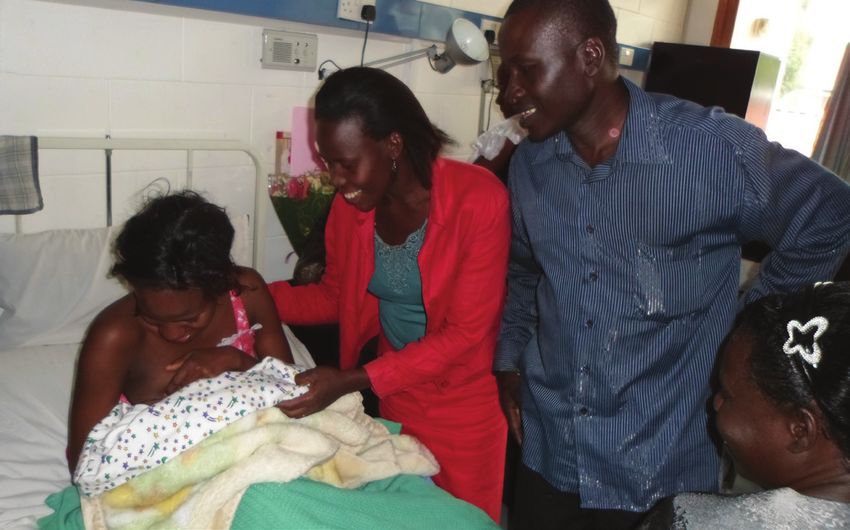
PARENT-FRIENDLY WORKPLACES IN BOTH
                                                            FORMAL AND INFORMAL SECTORS

                    FORMAL SECTOR                                                                 INFORMAL SECTOR
Paid parental leave benefits children, families, employers, and economies. No    Much of the global effort to improve maternity protection at work has
parent should have to choose between providing for their family economically     focused on strengthening related laws at national levels. However, more
and delivering the best nourishment and care for their child. Family-friendly    than half (61.2%) of the global workforce make a living in the informal
workplaces offer paid leave after the birth or adoption of a child along with    economy, and is not covered by these policies. Informal employment can
time, space, and support for mothers to breastfeed successfully, and for         be found everywhere, but is much more common in low- or middle-income
parents to care for a young child upon return to work. Where these options       countries particularly among women, who face a higher risk of poverty
are not possible, mothers need time and a private space with facilities to       than men. In Africa, almost 90% of employed women work in the informal
breastfeed or express and store breastmilk. Affordable childcare within          economy. Only one in four employed women around the globe, and one
the workplace or nearby, along with flexible working hours, help mothers         in ten employed women in Africa and Asia receive paid maternity leave.
continue breastfeeding and enable both parents to provide the best care to       Women who do not get paid leave, or whose maternity cash benefit is very
their young children. These arrangements also reduce stress and improve          low, tend to return to work out of necessity much sooner, sometimes only
family wellbeing. Recent evidence shows that paid maternity leave and            a few days after childbirth. Workers in the informal economy face many
workplace interventions that support breastfeeding improve breastfeeding         barriers to breastfeeding such as living far from work, long working hours
rates and other health outcomes, including economic improvement and a            without breaks, and dangerous work environments. Furthermore, there
reduction in child mortality.                                                    is also a general lack of knowledge on how supporting breastfeeding is
                                                                                 beneficial for businesses, workers and their families.

                               FACTS                                                                           FACTS

                    Globally, a mother’s return to paid work after                                  More than half (61.2%) of the global workforce
                    childbirth is one of the leading reasons for early                              make their living in the informal economy as self-
                    supplementation with artificial formula and early                               employed (own-account), migrant, domestic,
                    cessation of breastfeeding10.                                                   agricultural, casual or temporary workers13.

                    Many of the world’s leading companies are                                       In Africa, almost 90% of employed women work
                    adopting more equitable, generous parental                                      in the informal economy, in Asia and the Pacific
                    leave and other family-friendly policies for                                    the figure is 64.1% and in the Arab States it is
                    reputational and cost-saving benefits11.                                        61.8%14.

                    In developing countries with struggling                                         There are low-cost ways of supporting pregnant
                    economies, private companies can become more                                    women and new mothers in informal employment,
                    supportive by engaging in national maternity                                    such as rearranging tasks, adjusting work hours
                    protection programmes12.                                                        and supporting breastfeeding and informal
                                                                                                    childcare15.

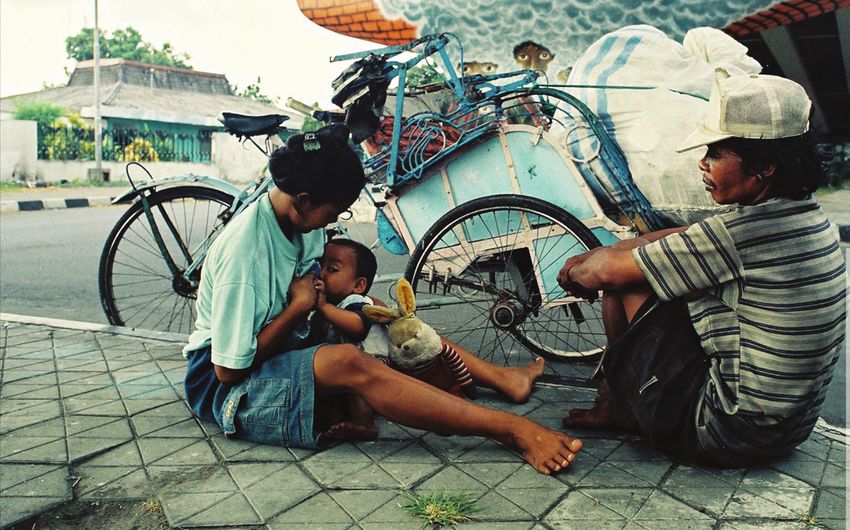
                                                             Vanessa @ WBW2015                                                        Berlina Nugroho @ WBW2008
PARENT-FRIENDLY VALUES AND GENDER-
                                                                EQUITABLE SOCIAL NORMS

Breastfeeding is the mother’s domain. When fathers/partners support                Sometimes it is challenging for fathers to be involved. Fathers are often
breastfeeding and have responsive relationships with their infants, there          seen as babysitters, rather than caregivers. Child health and social
is an improvement in breastfeeding practices and parental relationships.           services often ignore or exclude fathers and do not inform them about
Additionally, fathers also become more attached to their infants, and their        pregnancy, childbirth, infant care, and breastfeeding support. Limited or
infants develop more quickly. Like partners on a two-person sports team,           no paternity leave reduces the time fathers can spend with their partners
mothers and fathers/partners in a gender-equitable parenting team need             and infants in order to learn how to parent.
to watch, communicate, adjust, and trust each other. Besides, whenever
necessary, they have to be ready to help, rather than take over.                   However, fathers can learn. They can be taught co-parenting strategies
                                                                                   for supporting breastfeeding that are sensitive to what the mother
Fathering norms are changing. Many fathers are not only family                     wants and needs. Couples need to agree on breastfeeding goals and
providers, but are also directly involved with mothers and children, which         communicate well with each other, especially when there are challenges
is important for the development of their children. Gender-equitable               to breastfeeding. Fathers/partners can learn about breastfeeding, provide
parenting that includes fathers as equal partners on the parenting team            emotional support, share tasks around the house, care for and play with
benefits both children and parents.                                                their infants.

                                                                               FACTS

         VIETNAM                                                 CANADA                   97%                         CHINA
                                                                                    88%

           From                                                  Still being                                          Exclusively             40%
           birth to               35%                            breastfed                                            breastfed
           at least                                              at least                                                              18%
           one month       6%                                    12 weeks

In Vietnam, an intervention taught fathers               In Canada, a co-parenting intervention              In China, an intervention in which fathers
to work with mothers as a parenting team                 taught couples to work cooperatively                were taught to be involved with decision-
to improve breastfeeding outcomes.                       to meet jointly-determined parenting                making about breastfeeding and supporting
35% of infants in the intervention group                 outcomes. As a result, 97% of the                   breastfeeding practices resulted in 40%
were exclusively breastfed for one month                 infants continued to be breastfed for               of the infants being exclusively breastfed,
compared to 6% of those whose fathers were               at least 12 weeks, compared to the                  compared to the control group (18%)18.
not involved16.                                          control group (88%)17.

                                                  Hospital San Antonio @ WBW2014                                                             Namatovu @ WBW2012
TAKE ACTION
       Let us all create the supportive environment that empowers parents and enables breastfeeding.
                                      Some of the ways to do that are to:

                              1. Implement global guidance and national policies that promote flexible and family-friendly workplaces to support
                                 breastfeeding.
                              2. Develop a public-funded maternity and parental leave funding model that does not require employers to carry the
                                 full burden of leave payments. Ensure that breastfeeding interventions and parental entitlements are prioritised in
   Policy- and                   public spending.
                              3. Promote tools for engaging fathers (e.g. a resource website) that could be adapted and used globally in
    decision-                    breastfeeding programmes.
     makers                   4. Provide parental leave that enables mothers to exclusively breastfeed for six months and promotes involvement
                                 of fathers/partners in childcare and domestic work, resulting in gender-equitable parenting.
 5. Adopt non-transferable parental leave for all parents, including fathers/partners, during children’s infancy to ensure support for breastfeeding.
    Ensure that parental and paternity leave do not compromise existing maternity leave benefits.
 6. Monitor relevant policies, develop and implement action plans to include informal workers in maternity protection policies that support
    breastfeeding.
 7. Ratify and implement the ILO C183 - Maternity Protection Convention, 2000 and R191 as the minimum standards.
 8. Explore how breastfeeding can be protected in other relevant ILO Conventions and Recommendations e.g. C156 - Workers with Family
    Responsibilities Convention, 1981; C184 - Safety and Health in Agriculture Convention, 2001; C102 - Social Security (Minimum Standards)
    Convention, 1952.
 9. Ensure that the International Code of Marketing of Breastmilk Substitutes and relevant WHA resolutions are fully implemented and monitored.

1. Create a warm chain of support for breastfeeding by linking community peer groups and healthcare providers.
2. Showcase successful policy models that promote gender-equitable parenting and breastfeeding.
3. Work with governments to review and improve national laws that cover maternity and parental social protection
   to support optimal breastfeeding. Ensure that workers in the informal economy and other vulnerable groups
   are also recognised and protected by national laws.
4. Engage with trade unions and employers to implement breastfeeding-friendly workplaces by establishing                                                 Advocates
   support facilities such as crèches, breastfeeding rooms, and flexible work hours.
5. Use the media and community platforms to raise awareness on ways a woman can combine productive and reproductive work, including
   breastfeeding.
6. Collaborate with researchers to gather evidence on the impact of maternity and parental protection on breastfeeding and disseminate it.
7. Advocate for workplace support on issues such as breastfeeding facilities, paid breastfeeding breaks, and flexible working arrangements to
   support breastfeeding.
8. Increase access to culture-specific programmes that assist mothers, fathers/partners and families to work together as a breastfeeding team.

                                 1. Seek information on optimal breastfeeding from the local midwife, doctor or lactation consultant during the
                                    antenatal period.
                                 2. Ensure that the father/partner and family are informed about breastfeeding goals so that they can provide support.
                                 3. Find out what kind of practical help may be needed along the way, and ask fathers/partners and family members

      Parents                       for support.
                                 4. Join a peer support group that can help answer questions regarding difficulties faced.
                                 5. Negotiate with the partner on ways to allocate and manage maternity or parental leave and working arrangements
                                    to enable exclusive breastfeeding for the first six months.
6. Use the time during maternity leave or parental leave to establish breastfeeding and plan for return to work.
7. Ask employers and trade unions for breastfeeding support at the workplace.
8. Work with colleagues and trade unions to advocate for maternity, parental and breastfeeding rights at the workplace.

          Let us work together to empower parents and enable breastfeeding,
                                now and for the future!

               World Alliance for Breastfeeding Action (WABA) is a global network of individuals and organisations dedicated to the protection, promotion and support of breastfeeding worldwide
               based on the Innocenti Declarations, the Ten Links for Nurturing the Future and the WHO/UNICEF Global Strategy for Infant and Young Child Feeding. WABA is in consultative status
               with UNICEF and an NGO in Special Consultative Status with the Economic and Social Council of the United Nations (ECOSOC). WABA coordinates the annual World Breastfeeding
               Week campaign. WABA works closely with many organisations and individuals. Our partners in this effort include: the Academy of Breastfeeding Medicine (ABM), International Baby
               Food Action Network (IBFAN), International Lactation Consultant Association (ILCA), La Leche League International (LLLI), United Nations Children’s Fund (UNICEF), World Health
               Organization (WHO), and several other international organisations.

               WABA, PO Box 1200 10850 Penang, Malaysia             |   Tel: 60-4-658 4816      |   Fax: 60-4-657 2655      |   Email: wbw@waba.org.my          |   Web: www.waba.org.my
You can also read


