EXPLAINED TO PARENTS OF YOUNG CHILDREN - COVID-19
←
→
Page content transcription
If your browser does not render page correctly, please read the page content below
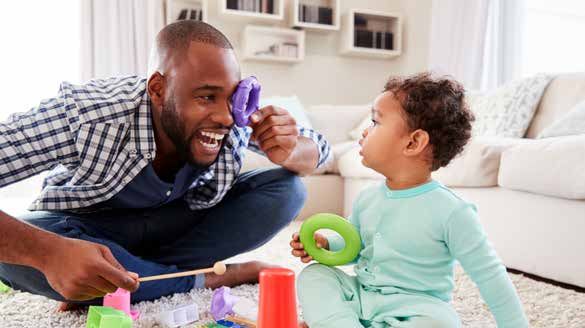
COVID-19
                   CORONAVIRUS

  EXPLAINED TO PARENTS OF
      YOUNG CHILDREN
        Based on the World Health Organisation’s guidelines

Little hands matter

                        social development                    basic education
                        Department:                           Department:
                        Social Development                    Basic Education
                        REPUBLIC OF SOUTH AFRICA              REPUBLIC OF SOUTH AFRICA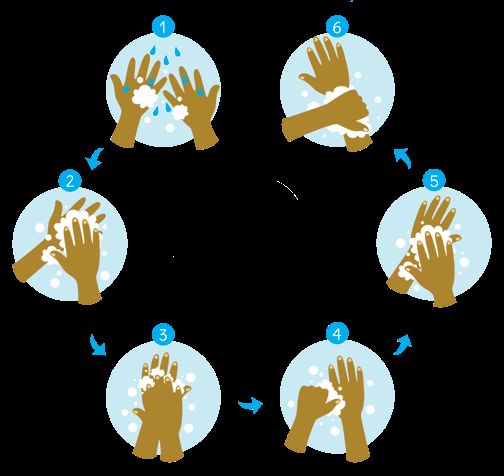
COVID-19 coronavirus explained to parents of young children

                                                                                 I am
                                                                           COVID-19. I am a
                                                                         new Coronavirus. Here
FIRST THINGS FIRST                                                       are some facts about
                                                                                 me.

  WHAT IS THE CORONAVIRUS OR COVID-19?
Coronaviruses are a large family of viruses which may cause illnesses
that are known to cause infections that impact on your lungs and your
breathing. These include the common cold, flu and serious forms of
pneumonia.
The most recently discovered coronavirus causes coronavirus disease
COVID-19 and it was unknown before the outbreak began in Wuhan,
China, in December 2019.

               SYMPTOMS (signs of infection)
The symptoms (the signs that
show that a person may be
infected with the virus) are very                             DO NOT PANIC
similar to that of a common cold                             Your health care
or flu. It may include signs such                         practitioner will do the
as a fever, feeling tired, coughing,
                                                                necessary
aches and pains, nasal congestion
                                                         examinations, tests and
(also called a stuffy nose), runny
nose, sore throat or diarrhea (a                         provide you with all the
runny tummy). If you, your child or                        information that you
any family member shows any of                                     need.
these signs, please seek medical
attention.

         IMPORTANT                                              Did you know?
                                                               Most people, about
 Do not self-medicate! Call your                              8 in every 10, recover
  clinic or doctor ahead of your                                 from this disease
   visit or the National Institute                             without getting very
 Communicable Diseases (NICD)                                 ill or needing special
               hotline:                                              treatment.
    0800 029 999
        See page 9 how to explain coronavirus disease COVID-19 to your child.
                                               2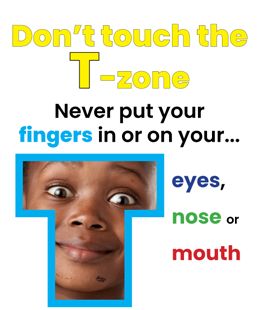
COVID-19 coronavirus explained to parents of young children

                                                                                    Here
                                                                                  are some
                                                                             good ideas on how

PROTECT & PREVENT                                                            to protect yourself
                                                                              against me - the
                                                                               COVID-19 virus.

                   It starts with your HANDS
 What is so special about our HANDS?
 MOST infections are spread through your hands and the hands of
 others.
 That is why keeping your hands clean is the easiest and most effective
 way to prevent you from picking up germs and viruses that will make
 you ill.

WASH your HANDS regularly with soap and clean water
Handwashing with soap and running water
is the best way to prevent the spread of                                         I and my other
germs and viruses.                                                             coronavirus family
                                                                               members are very
Wash your hands often with soap and                                            scared of soap and
running water for 20 seconds.                                                        water!

The easiest way to know how long 20
seconds is, is to sing ‘happy birthday’                                              Look on page 10
                                                                                    for the 6 steps of
         two times or to sing the                                                     handwashing
         first verse of our national
         anthem, Nkosi Sikelel’
         iAfrika.

 When washing your hands with soap and
  running water, you should not open the
   tap fully. Be wise with the water usage              REMEMBER
           when using this method.
                                                        Wash your hands with soap and
                                                        water - and assist your child to
          Did you know?                                 wash his or her hands properly
 Regularly washing your bare                            with soap and clean water.
 hands with soap and running                            This will not only help with the
 water offers more protection                           prevention of diseases, but also
 against catching the COVID-19                          create healthy habits that will last
 virus than wearing rubber gloves.                      a lifetime.
                      (World Health Organisation)

                                                    3
COVID-19 coronavirus explained to parents of young children

                 More about your HANDS
                        From the HANDS
                 to the EYES, MOUTH AND NOSE
When our hands are not clean and we
touch our (or other people’s) eyes, nose or                                               I am
mouth, we spread germs and viruses.                                                  COVID-19 and
                                                                                  I love dirty hands.
Try to avoid touching your or your child’s                                       Dirty hands take me
eyes, nose or mouth unnecessarily, and                                          to other parts of your
if you must, wash your hands before you                                                  body.
touch these areas.
Teach this to your child from a young
age. Another healthy habit that will last a
lifetime.

                         Did you know?
                         Our hands touch many surfaces and objects
                         every day. This is how germs and viruses get
                         from these surfaces and objects to our hands –
                         and then when we touch our eyes, nose or mouth,
                         these germs and viruses enter our bodies.

                                              4
COVID-19 coronavirus explained to parents of young children
Even more about your HANDS
From HAND TO HAND
COVID-19 just
When we greet each other, we
loves to meet
often do that by shaking hands or other people. I then
hugging. It is time to learn a new can go and visit their
way of greeting that will help us to bodies too.
protect ourselves from germs and
viruses.
It is called the ‘elbow greet’.
DO IT LIKE THIS:
1. Bend your arm and
extend your elbow to the
person that you want to
greet.
AVOID
the following when
2. He or she should do the you greet other
same. people:
3. Then you greet by • shaking hands
touching elbows. It’s cool.
• hugging
4. And we should teach our
• kissing, even on
children to do the same.
the cheeks
Here are other cool non-contact ways to greet • high 5’s
wave namaste foot • fist bumps
is a slight shake
bow and
hands • thumb greets
pressed
together
A quick summary about
HANDS
Most infections are spread through your hands and the hands of
others
Wash your hands regularly with soap and running water for 20
seconds.
When our hands are not clean and we touch our (or other people’s)
eyes, nose or mouth, we spread germs and viruses.
Greet with the elbow greet. Do not shake hands.
5COVID-19 coronavirus explained to parents of young children
COUGHS AND SNEEZES
CATCH your cough or sneeze I am
When we cough and sneeze, COVID-19 and I
droplets leave our mouths and can travel for a short
noses into the air – about one distance from your
meter around us. mounth and nose
when you cough.
If you cough or sneeze, cover your
nose and mouth with a flexed
elbow or tissue. Remember to
throw the tissue away in a closed
dustbin after using it. REMEMBER
Teach your child to do the same Wash your hands with soap and
when he or she coughs or sneezes. clean water every time after you
have coughed or sneezed. And
teach your child to do the same.
Another healthy habit to learn
from an early age.
If you
COUGH or SNEEZE X
cover your
nose and mouth
with a tissue please
OR
Now
these are
smart ways to put
a travel ban on me
and other viruses
or germs.
Little hands matter
6COVID-19 coronavirus explained to parents of young children
ONE METER DISTANCE
Keep at least one (1) meter distance
between yourself and anyone coughing Even if I am
and sneezing. The droplets from a in the droplets that
sneeze or cough cannot travel that far in leave your mouth, I
the air! cannot travel that far
by air.
Avoid touching people unnecessarily.
This is also called social distancing.
1 meter 1 meter 1 meter
AVOID CROWDED PLACES
In crowded places like shopping centres, places of worship and
community gatherings, we are very close to other people. Lots of people
touch the same surfaces that we do, cough and sneeze and are very
close to us. This creates opportunities for germs and viruses to spread
very quickly.
If you can, avoid these places or go at times when there are not many
people.
I love crowded
places. It makes it
easy for me to visit
other people.
7COVID-19 coronavirus explained to parents of young children
WHEN YOU FEEL SICK
STAY AT HOME WHEN SICK As COVID-19,
I show the signs of
If you feel sick or your child feels sick -
infection that are very
stay at home. In this way, you protect similar to that of my other
yourself, your child as well as other family members - the
people. Remember to seek medical help common cold or flu.
immediately as well.
Do not go back to work if you have not fully
recovered, or send your child back to the
early childhood development programme
or school before he or she has fully
recovered.
IF YOU OR YOUR CHILD HAS COVID-19
(the new Coronavirus)
If your health care practitioner Here are a few things to
confirms that you or your child keep in mind:
has the COVID-19 (newest 1. Eat healthily (this helps
Coronavirus), DO NOT PANIC. the body to fight the virus)
They will tell you what to do and
prescribe any medication that you 2. Drink lots of fluid (water)
or your child may need. 3. Avoid contact with other
people (in this way we
prevent other people from
getting the virus too)
4. Speak to your child about
his or her illness in a calm
and comforting manner
5. Stay at home until fully
recovered
6. Monitor the symptoms.
If they get worse, contact
your health care
practitioner
8COVID-19 coronavirus explained to parents of young children
TALK to your YOUNG CHILD about the
CORONAVIRUS (COVID-19)
Be willing to talk. Your young child is curious and
attentive. They will already have heard something.
Silence and secrets do not protect our children.
Honesty and openness do. Think about how much they
will understand. You know them best.
Your child may ask (many) questions. And even if
your child does not ask questions or is too young to ask
questions, you will notice that he or she is still curious about the changes
happening in their world (and your response to it).
There are a lot of stories going around. Some may not be true. Get the
correct information about the coronavirus (COVID-19). Speak accurately
about the risk of COVID-19 based facts and the latest official health
advice (see pages 2 and 11).
Be open and listen. Allow your child to talk freely. Ask them open
questions and find out how much they already know.
Be honest. Always answer their questions truthfully. Think about how
old your child is and how much they can understand. Discuss the
issues simply and in a calm manner. Remember young children often
understand complicated issues better if we explain it to them in a
concrete manner.
It is OK not to know the answers. It is fine to say: “We don’t know, but
we are working on it; or “We don’t know, but we think...”. Use this as an
opportunity to learn something new with your child!
Be supportive. Your child may be scared or confused. Give them space to
share how they are feeling and let them know you are there for them.
Heroes not bullies. Explain that COVID-19 has nothing to do with the way
someone looks, where they are from, or what language they speak. Tell
your child that we can be compassionate to people who are sick and
those who are caring for them. Look for stories of people who are working
to stop the outbreak and are caring for sick people.
End on a good note. Check to see if your child is okay. Remind them that
you care and that they can talk to you anytime. Then do something fun
together!
(sources: COVID-19 PARENTING 6: Talking about COVID-19 (some text quoted directly), UNICEF; Save the Children; and Zero to Three)
9COVID-19 coronavirus explained to parents of young children
HEALTHY HABITS
START HERE END Rinse your
hands with
Wet your hands clean water
with clean water
and soap
Wash your
wrists
Rub your palms
together to
scrub
20
seconds
Wash the back
of your hands
Rub between
your fingers
Clean
underneath your
nails
10COVID-19 coronavirus explained to parents of young children
MORE INFORMATION AND SUPPORT
There are a lot of stories going around. Some may not be true. On this
page you will find websites and telephone numbers where you will find
the correct information.
WEBSITES CALL CENTRES &
HOTLINES
Government’s general website
www.gov.za/Coronavirus Emergency number
More information on - (COVID-19)
Lockdown 0800 029 999
https://sacoronavirus.co.za/2020/03/23/south-
Gender-based Violence
african-lockdown-guidelines-information/
Command Centre:
Frequently Asked Questions -Covid-19 0800 428 428 or
www.gov.za/coronavirus/faq *120*7867# (free)
Schools Persons with disabilities
www.gov.za/Coronavirus/schools SMS “HELP” to 31531
Hospitals
Childline
www.gov.za/Coronavirus/hospitals
08000 55 555 (free)
Social Grants
www.gov.za/coronavirus/socialgrants Department of Education
0800 202 933
Department of Social Development
www.dsd.gov.za/ SASSA (grants)
0800 60 10 11
Department of Basic Education
https://www.education.gov.za/ AIDS help line
Department of Health 0800 012 322
https://sacoronavirus.co.za/ Women Abuse Helpline
National Institute for Communicable Diseases 0800 150 150
http://www.nicd.ac.za/
South African Police
World Health Organisation (WHO) Services
Parenting in the time of COVID-19 08600 10111
www.who.int/emergencies/diseases/novel-
coronavirus-2019/advice-for-public/healthy- Lifeline / National Crisis
parenting Line
0861 322 322
UNICEF
https://www.unicef.org/coronavirus/covid-19 Presidential hotline
17737
WhatsApp
COVID-19 Whatsapp
Little hands matter Say “Hi” to 0600 123 456
on stay informed.
11COVID-19
CORONAVIRUS
EXPLAINED TO PARENTS OF
YOUNG CHILDREN
March 2020
UNICEF South Africa Department of Social Department of Basic
Equity House Development Education
659 Pienaar Street HSRC Building 222 Struben Street
Brooklyn 134 Pretorius Street Pretoria
Pretoria Pretoria South Africa
South Africa South Africa Telephone: 012 357 3000
Telephone: 012 425 4700 Telephone: 012 312 7727 www.education.gov.za
pretoria@unicef.org www.dsd.gov.za
www.unicef.org/southafrica
In partnership with the National Early Childhood Development Alliance (NECDA),the South African Congress for Early
Childhood Development and the LEGO Foundation
COVID-19 coronavirus explained to parents of young children
Little hands matter
social development basic education
Department: Department:
Social Development Basic Education
REPUBLIC OF SOUTH AFRICA REPUBLIC OF SOUTH AFRICAYou can also read


