Faculty of Health Sciences 2019 - GraduIn
←
→
Page content transcription
If your browser does not render page correctly, please read the page content below

Faculty of
  Health Sciences
Today’s Millennials Tomorrow’s Originators #WitsEdge

                                                 2019
                      WITS GUIDE FOR
                      UNDERGRADUATE
                      APPLICANTS                 www.wits.ac.za
The University of the
                                                                                      Witwatersrand, known as Wits,
                                                                                      consists of several campuses
                                                                                      spread over 400 acres in the suburbs of
                                                                                      Braamfontein and Parktown in
           APPLY ONLINE                                                               Johannesburg (South Africa), the vibrant,
                   www.wits.ac.za                                                     culturally diverse and leading
                    /applications                                                     commercial city on the African continent.

                                                   Published by the Wits Marketing Department in 2018.
Disclaimer: This publication contains information about regulations, policies, tuition fees, curricula and programmes of the University applicable at the
 time of printing. Amendments to, or updating of the information in this publication may be effected from time to time without prior notification. The
 accuracy, correctness, or validity of the information contained in this publication is therefore not guaranteed by the University at any given time and
 is always subject to verification. The user is kindly requested to, at all times, verify the correctness of the published information with the University.
                 Failure to do so will not give rise to any claim or action of any nature against the University by any party whatsoever.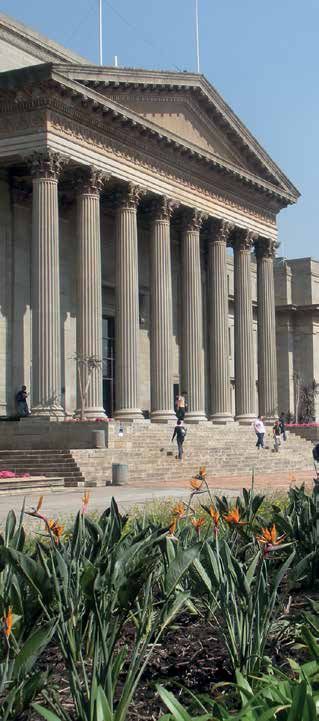
CONTENTS                                          University Rankings..............................................1
                                                      The Dean of the Faculty of Health Sciences........2
                                                      The Dean’s Welcome Message............................2
                                                      Admission Requirements:
                                                      National Benchmark Tests (NBT)..........................3
                                                      Wits Additional Placement Test (WAPT)...............3
                                                      Application Closing Date......................................3
                                                      Compliance .........................................................4
                                                      Admission Requirements:
                                                      Faculty of Health Sciences...................................5
                                                      Faculty of Health Sciences...................................7
                                                      Undergraduate Programmes:
                                                      Bachelor of Health Sciences (BHSc) in:
                                                         - Biokinetics......................................................8
                                                         - Biomedical Sciences......................................9
                                                         - Health Systems Sciences..............................10
                                                      Bachelor of Clinical Medical Practice...................11
                                                      Bachelor of Medicine and
                                                      Bachelor of Surgery..............................................12
                                                      Bachelor of Dental Science..................................13
                                                      Bachelor of Nursing..............................................15
                                                      Bachelor of Science in
                                                      Occupational Therapy..........................................16
                                                      Bachelor of Oral Health Sciences........................17
                                                      Bachelor of Pharmacy..........................................18
                                                      Bachelor of Science in
                                                      Physiotherapy.......................................................19
                                                      Course Selection..................................................20
                                                      Study Fees...........................................................22
                                                      Apply to Wits........................................................23
                                                      Student Support...................................................24

Student Enrolment Centre
Private Bag 4, WITS 2050
Ground Floor, Solomon Mahlangu House, Jorissen Street, Braamfontein, 2000
Operating Hours: Monday to Friday 08:00 to 16:30 | Wednesday 09:00 to 16:30
    www.wits.ac.za/askwits/
Student Call Centre
011 717 1888

           2
Wits is among the
            TOP 400
    universities in the world
                                                    Academic Ranking of World Universities

               Wits                                                 230
             Rankings                                                 Globally

                                                     Wits is the HIGHEST RANKING university
                                                                   in South Africa

    *Centre for World University Rankings                 QS World University Rankings

            1                       181                             364
       in South Africa              Globally                          Globally

                         BRICS                               Times Higher Education

                                                                    251-
                         36
                                                                    300
                         Globally                                     Globally

                     www.wits.ac.za/about-wits/facts-and-figures/academic-rankings/

1
Professor Martin Veller (MBBCh, FCS(SA), MMed(Surg)) is Dean
                                                    of the Faculty of Health Sciences at Wtis University.
                                                    He is currently the President of the College of Surgeons of the
                                                    Colleges of Medicine of South Africa as well as the President of
                                                    the World Federation of Vascular Societies.
                                                    “It is a privilege to be given the opportunity to lead a very large
                                                    and productive Faculty of Health Sciences into an era when this
                                                    country faces extensive health care reforms,” says Veller.
                                                    We want to help improve the health care provision for every
                                                    individual, based on the fact that a country whose citizens are
                                                    healthy will flourish.”

                                 Welcome!
         Join a community of excellence and achievement and
                   participate in shaping the future
The Wits Faculty of Health Sciences remains a leading
                                                            employ over 800 medical and dental consultants who
research hub on the continent and in the world and our
                                                            are involved in teaching undergraduates and postgrad-
research continues to impact directly on improving and
                                                            uates and in the research programmes. We graduate
saving the lives of people every day.
                                                            approximately 500 students each year.
The Faculty and its associated entities and partners
                                                            Our students receive academic training and practical
provide a vibrant environment within which some of
                                                            experience in five major hospitals in Johannesburg, the
the best research in the world is undertaken.
                                                            Wits Donald Gordon Medical Centre as well as several
In partnership with the Gauteng Health Department, we       clinics and rural hospitals in Gauteng.

                                                                                              Professor Martin Veller
                                                                               Dean of the Faculty of Health Sciences

                                                                                                                   2
Admission Requirements:
National Benchmark Tests (NBT)

Health Sciences

All applicants to the Faculty of Health Sciences (except applicants who are applying for admission into the Graduate
Entry Medical Programme – GEMP) are required to write the National Benchmark Tests (NBT) before being con-
sidered for admission.

There are two tests: The first is the Academic and Quantitative Literacy Test and the second is the Mathematics Test.
The test results are used in addition to the Grade 11 results (for early decision making purposes) and the Grade 12
results (for final decision-making purposes) and other admission criteria.

Please Note:

• Applicants who achieve in the ‘basic’ range (refer to table below), are unlikely to be considered for a place in
   the Health Sciences degrees. For more information on the Performance levels, please refer to the NBT website.

• These are standard tests for all medical schools in South Africa, and you are only required to write the tests once,
   irrespective of the number of medical schools you have applied to.

Rules:
• Applicants must register on the NBT website, or by mobile, to write the tests. Registration closes approximately
   three weeks prior to each of the test dates. You can register for the NBT even before you submit your application
   to the University. DO NOT wait for an official notification from the University in order to register and write the tests.
   You may miss the end of July deadline.

• A fee is charged for the tests. The fee can only be paid once you have registered to write the test.

• The tests should have been written by 11 August 2018. Results received for tests written after this date WILL NOT
  be taken into consideration. Applicants are encouraged to write the tests as early as possible.

• For a comprehensive list of test dates, registration dates and available venues, please refer to the NBT website.

                 Benchmark Performance Levels                    • Both tests must be written at one session.
                    Academic    Quantitative
                     Literacy    Literacy        Maths           • ONLY the first attempt results will be taken into account
                                                                    for selection purposes and thus it is not advisable to write
                    Min   Max   Min    Max      Min   Max
                                                                    the tests more than once in any year.
    Proficient      64    100    70    100      68    100
Intermediate        38    63     38     69      35     67        • NBT results are valid for 3 years.
      Basic          0    37     0      37      0      34              www.nbt.ac.za

Wits Additional Placement Test (WAPT)
(GEMP Applicants only)
To be able to calculate a composite index, all compo-                                   APPLY ONLINE
nents that contribute to this must be finalised (i.e. Tertiary                             www.wits.ac.za
                                                                                            /applications
Aggregate). Applicants will be notified of their eligibility
to write the WAPT, scheduled for September, as and
when documentation for applications is complete. This
means that the Faculty has received an academic tran-
script and all other pertinent documents. If documents
are not submitted by 15 July, no further consideration
                                                                           APPLICATION
will be given to your application. Applicants will need
to start preparing well in advance of notification. All                   CLOSING DATE
information about the content and nature of each of the

                                                                                     30 JUNE
components of the test is given on the GEMP website.
       www.wits.ac.za/health/gemp

3
Compliance
A Health Sciences practitioner without the necessary skills and expertise may improperly endanger the life and
limb of the patients he or she treats and thereby infringe the patient’s fundamental human rights. Great effort
has been made to identify the minimum requirements for training to meet this aim. Aspects of clinical practice
including history taking, examination of the patient and basic patient care issues must be completed and not
influenced by the individual’s belief system. The standard of ethical practice which supports an open and trusting
relationship between the patient and the health professional must be adhered to.
According to this commitment, the Faculty of Health Sciences will not condone any personal belief system that
prevents, interferes with, or is contrary to these minimum requirements for training. After intensive consultation,
we have ascertained that the various belief systems would support this approach in the training of the health
professionals.
In practice, a number of situations have been noted, where students’ religious beliefs appear to conflict
with programme requirements. These include but are not limited to:
• Travelling on certain days, or travelling unaccompanied on certain journeys
• Attending a certain venue for training purposes
• Attending lectures at certain times of certain days
• Examining patients of both sexes
• Acquiring appropriate clinical skills relating to Choice on Termination of Pregnancy (CTOP/Sterilisation
   procedures)
• Complying with certain clothing requirements e.g. not wearing veils, which might impede or detract from
   patient care or appropriate training
• Performing certain skills (e.g. scrubbing) in the available facilities
• Being assessed on religious holidays which are not on the University’s official list of approved holidays (pub-
   lished and placed on all notice boards at the start of each academic year)
• Being on intake duty on certain days or nights.
Such objections and failure to comply with programme requirements would interfere with the training offered
by the Faculty. The student in question would therefore fail to meet the requirements for a particular course
as stipulated by each particular School or Department. The final decision regarding assessment and whether
requirements have been met remains with the School or Department concerned.
The following situations are known to conflict with requirements:
• In any Department/Discipline requiring physical/personal interaction with patients e.g. Psychiatry, Surgery,
   Emergency Medicine etc. or, where a specific dress code is required e.g. Physiotherapy, Nursing etc., where
   the wearing of veils is unacceptable
• In the School of Oral Health Sciences students wearing veils will be required to identify themselves at the
   start of every clinical session and to conform to the clothing requirements as laid down by required infection
   control protocols
• In tests or examinations, where students wearing veils will be required to identify themselves prior to
  commencement.
The process is guided by the following principles:
• Meeting the minimum requirements for training as set by the Faculty
• A culture of religious tolerance.
This information has been drawn up and approved by all of the Faculty’s Undergraduate Committees and the
Teaching and Learning Committee.
Any clarity required may be directed to the Office of the Assistant Dean (Student Affairs).
Statutory bodies:
• All students registering for the first time for the MBBCh, BSc (Physiotherapy), BDS, BOHSc and BCMP have
   to register with the Health Professions Coucil of South Africa (HPCSA).
• All new BNurs students are required to register with the South African Nursing Council.
• All new Pharmacy students register with the South African Pharmacy Council.
Please bring two certified copies of your identity document when you register.

                                                                                                                      4
Minimum Admission Requirements

                                                       Faculty of Health Sciences
                     National Senior Certificate (NSC) Minimum Admission Requirements (Bachelor’s Degree Pass)

                                                        Closing Date: 30 JUNE 2018
               NB: Due to the limited number of places available, meeting the minimum requirements does not guarantee a place.
                          Final selection is made subject to the availability of places, academic results and other entry
                                                        requirements where applicable.
                                           www.wits.ac.za/undergraduate/entry-requirements/admission-requirements-nsc/

                                                                                 English
                                                                                                                                                    Life
                                                                                  Home
                                                                                                                                                  Sciences
                                                     Selection                  Language                       Maths        Life      Physical
              Programmes                                                                      Mathematics                                         AND/OR
                                                    Procedures                   OR 1st                       Literacy    Sciences    Sciences
                                                                                                                                                  Physical
                                                                                Additional
                                                                                                                                                  Sciences
                                                                                Language

       When applying to the Faculty of Health Sciences, you will not be selected solely on your school leaving results, although they are very important. A
        composite index is calculated, taking into consideration (1) your academic results for five subjects and (2) National Benchmark Test scores. Only
      five subjects are used to derive a matriculation score, which is calculated according to the percentages obtained, NOT symbols. These are English,
      Mathematics, Physical Science/Life Sciences and the best two other subjects. Dental Science requires English, Mathematics, Physical Science AND
        Life Sciences. All applicants (excluding applicants who are applying to the Graduate Entry Medical Programme (GEMP)) are required to write the
                                         National Benchmark Test (NBT). Refer to page 6 for more information on the NBT.

    Bachelor of Health Sciences:
    (BoHSc)
    • Biomedical Sciences (3 years)
                                                                                     5              5                                                 5
    • Biokinetics (3 years)
    • Health Systems Sciences
       (3 years)

    Bachelor of Clinical Medical
    Practice
                                                                                     4              4             7                                   4
    (BCMP)
    (3 years)

    Bachelor of Medicine and
    Bachelor of Surgery
                                                                                     5              5                                                 5
    (MBBCh)
    (6 years)

    Bachelor of Dental Science
    (BDS)                                                                            5              5                         5           5
    (5 years)

    Bachelor of Oral Health
    Sciences
                                                                                     4              4             7                                   4
    (BOHS)
    (3 years)

    Bachelor of Nursing
    (BNurs)                                                                          4              4                                                 4
    (4 years)

    Bachelor of Pharmacy
    (BPharm)                                                                         5              5                                                 5
    (4 years)

                                        ALL Applicants to BSc (Occupational
    Bachelor of Science in                   Therapy) must spend time
    Occupational Therapy                      observing a professional
                                                                                     4              4                                                 4
    (BSc (OT)                          Occupational Therapist and complete a
    (4 years)                                 certificate of attendance
                                                (mimimum 16 hours)

                                       ALL Applicants to BSc in Physiotherapy
    Bachelor of Science in
                                            must spend time observing a
    Physiotherapy
                                            professional Physiotherapist             5              5                                                 5
    (BSc Physiotherapy)
                                            and complete a certificate of
    (4 years)
                                          attendance (mimimum 16 hours)

5
Faculty of Health Sciences
International Qualifications (Relevant exemption from South African Matriculation Board)
Closing Date: 30 JUNE 2018
NB: Due to the limited number of places available, meeting the minimum requirements does not guarantee a place.
Final selection is made subject to the availability of places, academic results and other entry requirements
where applicable.
www.wits.ac.za/undergraduate/entry-requirements/admission-requirements-nsc/
Advanced Level (A Level)
Ordinary Level (O Level)/
Certificate of Secondary
Higher Int. Certificate of
Higher Int. Certificate of
Higher Int. Certificate of
Secondary Education
Secondary Education
Secondary Education
International General
Advanced Subsidiary
Advanced Subsidiary
Advanced Subsidiary
Education (IGCSE)
Advanced Level
Advanced Level
Baccalaureate
Baccalaureate
Baccalaureate
(IB Diploma))
International
International
International
(IB Diploma)
(IB Diploma)
(AS Level)
(AS Level)
(AS Level)
(HIGCSE)
(HIGCSE)
(HIGCSE)
(A Level)
(A Level)
English Language Mathematics Biology/Physics/Chemistry
ALL Applicants must have done English Language, Mathematics, Biology, Physics or Chemistry.
Bachelor of Denistry applicants must have done English Language, Mathematics, Biology, Physics AND Chemistry.
A-C A-C HL 4-7, SL 5-7 1-2
A choice of A choice of A choice of A choice of
TWO from TWO from TWO from TWO from
HL 4-7, HL 4-7,
A-C A-C A-C 1-2 A-C A-C 1-2 Biology, Biology, Biology, Biology,
SL 5-7 SL 5-7
Physics Physics Physics Physics
OR OR OR OR
Chemistry Chemistry Chemistry Chemistry
A-C A-C HL 4-7, SL 5-7 1-2
A choice of A choice of A choice of A choice of
TWO from TWO from TWO from TWO from
HL 4-7, HL 4-7,
A-C A-C A-C 1-2 A-C A-C 1-2 Biology, Biology, Biology, Biology,
SL 5-7 SL 5-7
Physics Physics Physics Physics
OR OR OR OR
Chemistry Chemistry Chemistry Chemistry
A-C A-C HL 4-7, SL 5-7 1-2
A choice of A choice of A choice of A choice of
TWO from TWO from TWO from TWO from
HL 4-7, HL 4-7,
A-C A-C A-C 1-2 A-C A-C 1-2 Biology, Biology, Biology, Biology,
SL 5-7 SL 5-7
Physics Physics Physics Physics
OR OR OR OR
Chemistry Chemistry Chemistry Chemistry
A-C A-C HL 4-7, SL 5-7 1-2
HL 4-7, HL 4-7, Biology AND Biology AND Biology AND Biology AND
A-C A-C A-C 1-2 A-C A-C 1-2
SL 5-7 SL 5-7 Physics OR Physics OR Physics OR Physics OR
Chemistry Chemistry Chemistry Chemistry
A-C A-C HL 4-7, SL 5-7 1-2
A choice of A choice of A choice of A choice of
TWO from TWO from TWO from TWO from
HL 4-7, HL 4-7,
A-C A-C A-C 1-2 A-C A-C 1-2 Biology, Biology, Biology, Biology,
SL 5-7 SL 5-7
Physics Physics Physics Physics
OR OR OR OR
Chemistry Chemistry Chemistry Chemistry
A-C A-C HL 4-7, SL 5-7 1-2
A choice of A choice of A choice of A choice of
TWO from TWO from TWO from TWO from
HL 4-7, HL 4-7,
A-C A-C A-C 1-2 A-C A-C 1-2 Biology, Biology, Biology, Biology,
SL 5-7 SL 5-7
Physics Physics Physics Physics
OR OR OR OR
Chemistry Chemistry Chemistry Chemistry
A-C A-C HL 4-7, SL 5-7 1-2
A choice of A choice of A choice of A choice of
HL 4-7, HL 4-7, TWO from TWO from TWO from TWO from
A-C A-C A-C 1-2 A-C A-C 1-2
SL 5-7 SL 5-7 Biology, Biology, Biology, Biology,
Physics OR Physics OR Physics OR Physics OR
Chemistry Chemistry Chemistry Chemistry
A-C A-C HL 4-7, SL 5-7 1-2
A choice of A choice of A choice of A choice of
TWO from TWO from TWO from TWO from
HL 4-7, HL 4-7,
A-C A-C A-C 1-2 A-C A-C 1-2 Biology, Biology, Biology, Biology,
SL 5-7 SL 5-7
Physics Physics Physics Physics
OR OR OR OR
Chemistry Chemistry Chemistry Chemistry
A-C A-C HL 4-7, SL 5-7 1-2
A choice of A choice of A choice of A choice of
TWO from TWO from TWO from TWO from
HL 4-7, HL 4-7,
A-C A-C A-C 1-2 A-B A-C 1-2 Biology, Biology, Biology, Biology,
SL 5-7 SL 5-7
Physics Physics Physics Physics
OR OR OR OR
Chemistry Chemistry Chemistry Chemistry
6
Faculty of
                         Health Sciences
                                                                     The Wits Faculty of Health Sciences remains a leading
                                                                     research hub on the continent and in the world, and
                                                                     our research continues to impact directly on improv-
                                                                     ing and saving the lives of people every day.

                                                                     The Faculty and its associated entities and partners
                                                                     provide a vibrant environment within which some of
                                                                     the best research in the world is undertaken.

                                                                     In partnership with the Gauteng Health Department,
                                                                     we employ over 800 medical and dental consultants
                                                                     who are involved in teaching undergraduates and
                                                                     postgraduates and in the research programmes. We
                                                                     graduate approximately 500 students each year.

                                                                     Our students receive academic training and practical
                                                                     experience in five major hospitals in Johannesburg,
                                                                     the Wits Donald Gordon Medical Centre as well as
                                                                     several clinics and rural hospitals in Gauteng.

                                                                     We offer professional medical degrees in:
                                                                     • Medicine • Dentistry • Nursing • Pharmacy
                                                                     • Physiotherapy • Occupational Therapy

                                                                                                                   www.wits.ac.za/health/

UNDERGRADUATE PROGRAMMES
                                                                     Index
The Bachelor of Health Sciences provides an appropri-
                                                                     Bachelor of Health Sciences (BHSc):
ate undergraduate qualification to fulfill the needs of a
number of health-related industries, including biotech-                - Biokinetics.....................................................8
nology, forensic science, health service and hospital                  - Biomedical Sciences.....................................9
management, health policy and economics, insurance
                                                                       - Health Systems Sciences..............................10
and medical aid, medical science and research, the
pharmaceutical industry, sport and fitness.                          Bachelor of Clinical Medical Practice -
                                                                     BCMP.................................................................11
Note!
                                                                     Bachelor of Medicine and Surgery -
Before applying for admission, applicants should be aware
                                                                     MBBCh...............................................................12
that from time-to-time they may be exposed to life-threat-
ening diseases. The University is concerned about the risks          Bachelor of Dental Science - BDS.....................13
that HIV/AIDS poses to its students. It is recognised that the
main route of acquisition of HIV is via unprotected sexual           Bachelor of Nursing - BNurs..............................15
contact but the Faculty wishes to draw to your attention that
in the occupational setting, an additional risk exists to its stu-   Bachelor of Science in Occupational
dents and healthcare professionals. The risk, however, remains
low (0,36% following a needle stick injury). To minimise the
                                                                     Therapy - BSc(OT)..............................................16
risk of occupational acquisition of HIV infection, instruction
                                                                     Bachelor of Oral Health Sciences - BOHSc.......17
in “Universal Precautions” will be provided to all students.
In addition, when appropriate, instruction on post-exposure          Bachelor of Pharmacy - BPharm.......................18
prophylaxis will be provided. Applicants who know at the time
of application that they are HIV+, are advised that they may         Bachelor of Science in Physiotherapy -
have a reduced immune response system and that this renders
them vulnerable to certain infectious diseases which they are        BSc(Physiotherapy)............................................19
likely to encounter in their daily activities in the hospitals.

7
Bachelor of Health Sciences
Biokinetics Biokinetics
(3 years)
Are you 1ST YEAR CURRICULUM COURSES
interested in Introduction to Medical Sciences
applying Chemistry
scientifically Physics I
based physical Health Systems Sciences
activity to System Dynamics for Health Sciences
prevent disease 2ND YEAR CURRICULUM COURSES
or assist in Human Anatomy II
rehabilitation? Exercise Science II
Physiology and Medical Biochemistry II
3RD YEAR CURRICULUM COURSES
Physiology III
Exercise Science III
There are three study plans available in the Bachelor of Health
Sciences Programme, Biokinetics, Biomedical Sciences and Health
Systems Sciences.
Biokinetics provides you with the knowledge and skill to apply
scientifically based physical activity, to either help prevent disease
or assist in rehabilitation, following the onset of disease.
It is an entry level degree with a strong scientific emphasis. Majors in
Physiology in Exercise Science will make you eligible for consideration
into the Bachelor of Health Sciences with Honours in Biokinetics
programme. The BHSc (Hons) degree is offered through the Centre
for Exercise Science and Sports Medicine. It provides applicants
with the opportunity to pursue studies and professional training as
a biokineticist (a specialised exercise therapist). Biokineticists offer
specialised exercise rehabilitation for persons with orthopaedic
injuries, sports injuries and chronic diseases.
www.wits.ac.za/course-finder/undergraduate/health/biokinetics/
Careers
• Biokineticist • Sports Massage Therapist
8Bachelor of Health Sciences
Biomedical Sciences Biomedical Sciences
(3 years)
1ST YEAR CURRICULUM COURSES
Are you
Introduction to Medical Sciences
interested in
Chemistry cells, organs
Physics I and systems
Health Systems Sciences function of the
System Dynamics for Health Sciences human body?
2ND YEAR CURRICULUM COURSES
Human Anatomy II
Molecular Medicine II
Physiology and Medical Biochemistry II
3RD YEAR CURRICULUM COURSES
Two of the following courses:
• Human Biology III
• Medical Cell Biology III
• Molecular Medicine III
Biomedical Sciences offers exciting opportunities within the bio-
• Pharmacology III logical sciences such as molecular medicine, physiology, applied
• Physiology III anatomy and pharmacology.
In the first two years students will cover the fundamental topics in
biomedical science: Cell Biology, Human Anatomy and Physiology.
Honours degrees are available for many of the major subjects com-
pleted within the Bachelor of Health Sciences degree including
Forensic Sciences, Human Genetics, Medical Cell Biology and
Physiology, Anatomical Pathology, Chemical Pathology, Clinical
Microbiology and Infectious Diseases.
ww.wits.ac.za/course-finder/undergraduate/health/
w
biomedical-sciences/
Careers
• Biomedical Scientist • Forensic Scientist • Healthcare Scientist
• Medical Sales Representative • Microbiologist
• Research Scientist • Science Journalist/Writer
9!
NEW Bachelor of Health Sciences
Health Systems Sciences Health Systems Sciences
(3 years)
Students will study the factors and processes that contribute to dis- 1ST YEAR CURRICULUM COURSES
ease, including a combined Anatomy and Physiology module to assist Introduction to Medical Sciences
with understanding the underlying principles of health and disease.
Chemistry
They will also gain a basic understanding of disease epidemiology,
leading into courses dealing with public health, primary health care Physics I
and management of health and health systems. Students will also Health Systems Sciences
gain biostatistics skills to help with the interpretation of data. These
System Dynamics for Health Sciences
skills are currently in short supply in Southern Africa.
2ND YEAR CURRICULUM COURSES
Are you
Applied Anatomy and Physiology II
interested in Health Systems Sciences II
public health, Public Health II
incidence, 3RD YEAR CURRICULUM COURSES
distribution, Health Systems Sciences III
and possible Public Health III
control of
diseases?
ww.wits.ac.za/course-finder/undergraduate/health/
w
health-systems-sciences/
Careers
New and exciting career opportunities in:
• Epidemiology • Health Systems Management
• Public Health
10Bachelor of
Clinical Medical Practice
(BCMP)
(3 years)
1ST YEAR CURRICULUM COURSES
Interested in The aim of the programme is to develop a
new group of healthcare workers (Clinical
Fundamentals of Medical and
Clinical Science
assisting doctors Associates) who will have the necessary
2ND YEAR CURRICULUM COURSES
in district knowledge, attitudes and psychomotor
hospitals so skills to be able to assist doctors and health
Fundamentals of Clinical Medical Practice
as to improve care team members in district hospitals so
3RD YEAR CURRICULUM COURSES as to improve patient care especially in rural
patient care? and disadvantaged communities.
Applied Clinical and Medical Practice
The qualified Clinical Associate will be expected to:
• Assist with the assessment and management of emergencies in
casualty or ward situations for children and adults, for all conditions
likely to occur in a district hospital
• Take responsibility for performing routine procedures in district
hospital wards, casualty and the outpatient departments under
supervision
• Form an essential part of the health care team in areas of need.
The Clinical Associate will be a proud, independent member of the
medical team with unique skills and knowledge. The Clinical Associate
will be taught mainly at district hospitals with some training at other
hospitals and Wits Medical School. The Clinical Associate curriculum
is based on the principle of developing a sound knowledge of the
medical and clinical sciences to enable understanding of conditions
and management strategies. Students will be expected to have a
detailed knowledge of the biomedical sciences in areas related to
the performance of procedures. It is a three year full-time programme
resulting in a degree qualification.
ttps://www.wits.ac.za/course-finder/undergraduate/
h
health/clinical-medical-practice/
11Bachelor of Medicine and
Bachelor of Surgery
(MBBCh)
(4 or 6 years)
Surgeons, Completing an MBBCh degree in 1ST YEAR CURRICULUM COURSES
the 21st Century opens the door to
paediatricians, an enormous variety of exciting and
Introduction to Medical Sciences I
pathologists, challenging careers. Surgeons, pae-
Chemistry I
radiologists, family diatricians, pathologists, radiologists, Physics I
medicine family medicine practitioners, all start Medical Thought and Practice I
by graduating with an MBBCh.
practitioners, all South Africa offers great scope to
Sociological Foundations of Health
start by graduating medical practitioners. There is a crit- Psychological Foundations of Health
with an MBBCh ical need for doctors in underserved 2ND YEAR CURRICULUM COURSES
areas and it is a challenge to provide
Human Anatomy
good quality preventative, diagnostic and therapeutic services in a
resource-poor setting. However, the personal rewards of giving back Molecular Medicine
and making a difference to the lives of so many people make the Physiology and Medical Biochemistry I
effort worthwhile. On the other hand, the country offers up-to-date
Medical Thought and Practice II
facilities in both academic and private practice settings with the
opportunity of being involved in research at many levels. 3RD YEAR CURRICULUM COURSES
Integrated Basic Medical and
Human Sciences A
Admission into MBBCh: 4TH YEAR
There are two points of entry into MBBCh: Integrated Basic Medical and
• fi
rst year for applicants who are currently in Grade 12, and Human Sciences B
• third year for applicants who have completed a relevant degree (this is the 5TH YEAR
Graduate Entry Medical Programme (GEMP).
Integrated Clinical Medicine A
No application to second year will be considered. Those applicants who are
currently studying or who have studied at a tertiary institution are advised to 6TH YEAR
complete their studies and apply for admission to the GEMP.
Integrated Clinical Medicine B
GEMP
Do you already have a degree?
The GEMP offers an entry point to the third year of the MBBCh degree at
Wits for suitably qualified graduates who are interested in becoming doctors.
The MBBCh years III, IV, V and VI comprise integrated multidisciplinary and
clinical courses and, as each year of study is compulsory, no student may be
admitted to the degree beyond the third year of study.
For more information, visit: www.wits.ac.za/health/gemp/
Areas of Specialisation:
• Anaesthesiology • Clinical Microbiology and Infectious Disease
• Community Health • Family Medicine • Forensic Medicine
• Internal Medicine • Obstetrics and Gynaecology
• Ophthalmology • Pathology • Paediatrics • Psychiatry
• Radiology • Surgery
ww.wits.ac.za/health/academic-programmes/
w
undergraduate-programmes/medicine-mbbch/
12Bachelor of Dental Science (BDS)
(5 years)
1ST YEAR CURRICULUM COURSES
Bioethics, Health Law and Human Rights I
Oral Microbiology I Are you
Prosthodontics I interested in
Public Oral Health I diagnosing,
Dental Materials for Dental Students I treating and
Operative Dentistry I preventing
Anatomy for Dental Students diseases of the teeth,
Physiology and Medical Biochemistry I mouth tissue and
2ND YEAR CURRICULUM COURSES supporting bones of
Integrated Learning I the mouth?
Prosthodontics II
Public Oral Health II
Bioethics, Health Law and Human Rights II
Dental Materials for Dental Students II
Dental Practice Management I
Maxillo-Facial and Oral Radiology I
Endodontics I
Operative Dentistry II
Pathology (Anatomical and Haematological) Dentistry is a career for those with sharp and enquiring minds, who
Oral Biology for Dental Students gain satisfaction in combining hand skills with mental challenge, who
enjoy contact with people and who value the opportunity to place
Medical Microbiology
their knowledge and skill at the service of others.
Oral Microbiology II
The Bachelor of Dental Science (BDS) is offered over five years and
3RD YEAR CURRICULUM COURSES
is a full-time course.
Pharmacology
During years one to three, there will be a strong focus on bioethics,
Maxillo-Facial and Oral Radiology II
health law and dental sciences.
Emergency Medicine
In years four and five, the focus is on understanding the medical,
Public Oral Health III
dental, social and community context of dental clinical practice.
Prosthodontics III
Introduction to Maxillo-Facial and
Oral Surgery
Introduction to Periodontology
Integrated Learning II
Dental Materials for Dental Students III
Dental Practice Management II
Operative Dentistry III
Endodontics II
Paediatric Dentistry I
Dento-Facial Growth and Development
Essentials in Orthodontic Techniques and
Diagnosis
Oral Pathology
13Bachelor of Dental Science (BDS)
(5 years)
4TH YEAR CURRICULUM COURSES
General Medicine and Paediatrics for Dental
Students
General Surgery
Integrated Learning III
Prosthodontics IV
Periodontology I
Maxillo-Facial and Oral Radiology III
Maxillo-Facial and Oral Surgery II
Public Oral Health IV
Bioethics, Health Law and Human Rights III
Oral Medicine I
Dental Practice Management III
Dental Materials for Dental Students IV
Comprehensive Patient Care
Operative Dentistry IV
Endodontics III
Paediatric Dentistry II
Clinical Orthodontics I
5TH YEAR CURRICULUM COURSES
Anaesthetics
Integrated Learning IV
You will be required to work one year community service after com-
Prosthodontics V
pleting your 5 year study. Students registering for the first time for
the BDS, must register with the Health Professions Council of South Periodontology II
Africa (HBCSA). Maxillo-Facial and Oral Surgery III
Public Oral Health V
Most people would describe the work of a dentist as ‘looking after
teeth’, but modern dentistry has moved far beyond the scope of Oral Medicine II
the ‘drilling and filling’ of the past. Management of diseases and Advanced Comprehensive Patient Care
abnormalities of the face, the jaws, the joints of the jaws and the soft Operative Dentistry V
tissue lining of the mouth has extended the field into a comprehensive Endodontics IV
system of care for the whole oral and facial system. Dentists are Paediatric Dentistry III
virtually ‘physicians of the head and neck.
Clinical Orthodontics II
ww.wits.ac.za/course-finder/undergraduate/health/
w
dental-science/
Career
Dentist (Community, Industrial, Private Practice and
Public Service Clinics)
14Bachelor of Nursing
(BNurs)
(4 years)
1ST YEAR CURRICULUM COURSES
Are you Nursing is one of the health
care professions that is diverse
Introduction to Medical Sciences
interested in working and uniquely rewarding.
Chemistry I collaboratively with Nursing combines compas-
Comprehensive Nursing I physicians, therapists, sion, knowledge and sophis-
Physics I patients and families, and ticated health technology to
achieve its goals: to restore,
Introduction to Psychology I focus on treating illness to maintain and promote the
asic Principles of Group and Individual
B improve quality of life? health of individuals, groups
Psychology I or communities.
Human Behavioural Sciences I
Nursing is a science and an art: The science component is the
2ND YEAR CURRICULUM COURSES development and application of nursing knowledge and techniques.
Anatomy for Nursing Students II The art of nursing is the establishment of a caring, compassionate
relationship through which nurses apply knowledge and skill in a
Comprehensive Nursing II
discerning and ethical manner.
Physiology and Medical Biochemistry I
Wits nurses study in a rigorous, vibrant multidisciplinary environment
3RD YEAR CURRICULUM COURSES that stimulates intellectual inquiry and professional responsiveness.
Microbiology Small group learning is the main teaching/learning strategy- students
engage in cooperative learning to systematically work through care-
Comprehensive Nursing III
fully constructed real-life health scenarios, deciding what learning is
Women’s Health I needed to access information, discerning which information produces
Psycho-Social Health I the best evidence into the management of health issues.
Pharmacology Nurses practice in a range of contexts and health care settings,
Health Psychology some of these include: hospitals, community clinics, industry, the
military, private practice, homes in specialised areas such as hospice,
Research Design and Analysis
rehabilitation and aged care facilities.
4TH YEAR CURRICULUM COURSES
Opportunities for further study in Nursing are also available at
Comprehensive Nursing IV
Wits.
Women’s Health II
Psycho-Social Health II
ww.wits.ac.za/course-finder/undergraduate/
w
health/nursing/
Careers
Having completed a four year degree, a nurse may elect to
practice as: • a general nurse • a midwife in a hospital, clinic
or in the community. Alternatively, a nurse may elect to study
further in a speciality area. Specialisation is possible in many
areas, for example: • child nursing health mangement
• community nursing • education • intensive care nursing
• medical • midwifery • operating theatre nursing
15 • psychiatric nursing • researchBachelor of Science in
Occupational Therapy BSc (OT)
(4 years)
Are you interested in helping Occupational Therapy 1ST YEAR CURRICULUM COURSES
(OT) is the therapeutic use
clients who are temporarily of self-care, work, educa-
Introduction to Medical Sciences
or permanently impaired by tion, play, leisure and social
Chemistry I
illness, accident, disability, activities to increase inde- Fundamentals of Occupational Science and
Occupational Therapy I
environmental limitations or pendent function, enhance
development, promote Physics I
developmental delay? health and wellbeing and
Introduction to Psychology I
prevent disability. OT is
indicated for people of any age when a person’s ability to carry out Basic Principles of Group and Individual
Psychology I
their everyday activities is temporarily or permanently impaired by
illness, disability, environmental limitations and developmental delay. Human Behavioural Sciences I
What do occupational therapists do? 2ND YEAR CURRICULUM COURSES
Anatomy for Physiotherapy and Occupational
Occupational therapists assess a person’s functional capacity and Therapy Students II
then engage the person in a programme of scientifically chosen,
Fundamentals of Occupational Science and
meaningful and culturally appropriate activities to assist in maximising
Occupational Therapy II
their functioning and wellbeing. This engagement in activity empow-
ers the person to be as independent as possible, enhances dignity Physiology and Medical Biochemistry I
and quality of life at work/school, at home and during recreation. 3RD YEAR CURRICULUM COURSES
Intervention may also include the adaptation of the environment to
Occupational Therapy III applied to Physical
facilitate coping. Conditions
OT is practiced in a wide range of public, private and voluntary ccupational Therapy III applied to Psychiatric
O
sector settings, such as, the person’s home environment; schools; Conditions
workplaces; health centres; supported accommodation; housing edicine and Surgery for Occupational
M
for seniors; rehabilitation centres; hospitals and forensic services. Therapy
The profession is listed as a scarce ‘growth industry’ in many parts Science of Occupation II
of the world, and is diversifying into new avenues in South Africa Psychiatry in Relation to Occupational
partly in response to new legislation like the Labour Relations Act Therapy
and the Bill of Rights.
Health Psychology
Research Design and Analysis
www.wits.ac.za/course-finder/undergraduate/health/
occupational-therapy/ 4TH YEAR CURRICULUM COURSES
Science of Occupation III
All students applying for the BSc in Occupational Therapy must spend time
with an Occupational Therapist to gain insight into the profession. A certificate Occupational Therapy as applied to
of attendance must be submitted with the application. Please download a cer- Psychiatric Conditions
tificate of attendance from the Wits website, under additonal forms (www.wits.
Occupational Therapy as applied to Physical
ac.za/undergraduate/apply-to-wits/). Students who fail to submit this certificate
Conditions
will not be considered for admission to the programme. Applicants are expected
to spend at least 16 hours with an Occupational Therapist.
First year courses are taught on the Braamfontein Campus.
Fundamentals of Occupational Therapy is taught on the Wits Education Campus
in Parktown.
Careers
• Aged Care Facilities • Community Health Centres
• Home Care Services • Hospitals and Rehabilitation Units
• Independent Living and Respite Centres
• Private Practice • Psychiatric Clinics
• Schools and Education Facilities
• Vocational Rehabilitation Centres
16Bachelor of Oral Health Sciences
(BOHSc)
(3 years)
1ST YEAR CURRICULUM COURSES
Anatomy, Oral Biology and Physiology
for Dental Auxiliaries
Fundamentals of Clinical Oral Health
Behavioural and Social Sciences for
Dental Auxiliaries
Oral Microbiology for Dental Auxiliaries
Oral Pathology for Dental Auxiliaries
2ND YEAR CURRICULUM COURSES
Integrated Clinical Dentistry for Oral
Hygienists
Bioethics for Dental Auxiliaries I
Community Dentistry for Dental Auxiliaries
Being one of few
Fundamentals of Clinical Oral Health I
oral health training
institutes in South
3RD YEAR CURRICULUM COURSES
Africa, the School
Applied Research and Dental Practice
Management for Dental Auxiliaries prides itself in
Bioethics for Dental Auxiliaries II graduating world
Community Dentistry for Dental
class dental
Auxiliaries II professionals
Fundamentals of Clinical Oral Health II every year
The Oral Hygienist is a professional who focusses on the prevention
of oral disease and maintenance of good oral hygiene.
The programme aims to address and improve the oral health needs
of patients and communities by training oral hygiene professionals
who will be able to deliver appropriate services in a wide range of
settings - ranging from schools, private practice, academia, research,
community health centres, sales and marketing, military health etc.
The candidates may be employed in the government sector, uni-
versities, private surgeries, private companies, research institutions
and will be able to pursue postgraduate studies on completion of
the programme.
ww.wits.ac.za/oralhealthsciences/
w
Careers
• Dental Assistants • Dental Hygienists
17Bachelor of Pharmacy
(BPharm)
(4 years)
Are you interested in Pharmacy focuses on devel- 1ST YEAR CURRICULUM COURSES
oping in-depth knowledge of
dispensing medicine and the chemistry, pharmacology,
Introduction to Medical Sciences
screening patients for and therapeutics of various
Chemistry I
chronic diseases? drugs and how they react in Physics I
humans as well as with each System Dynamics for Health Sciences
other. The pharmacist advises the patient and other health care pro-
Sociological Foundations of Health
fessionals on the optimal use of medications to achieve a desirable
therapeutic outcome. Pharmaceutical Practice
Pharmacy is expanding in new directions, and moving away from 2ND YEAR CURRICULUM COURSES
the compounding and dispensing of medicine towards a more pro- Anatomy for Pharmacy Students
fessional advisory and primary health care role. While pharmacists
Physiology and Medical Biochemistry I
are experts in the field of manufacture, supply and use of medicines,
they also provide information and advice to patients. The pharmacist Pharmaceutical Chemistry I
is a key source of information for the public concerning: Pharmaceutics I
• the prevention of disease Pharmacy Practice I
• the treatment of health problems that fall within their field of training
3RD YEAR CURRICULUM COURSES
• health and emergency care
• education, promotion and maintenance of the general health of Pathology
the public. Medical Microbiology
Pharmacotherapy (Clinical component of Pharmacy) Introduction to Biomedical Ethics
A pharmacist doesn’t only dispense medicine according to your Pharmaceutical Chemistry II
doctor’s prescription. They also screen patients for chronic diseases Pharmacotherapy I
like dyslipidaemia, diabetes and hypertension by undertaking a
Pharmacy Practice II
lipogram for a patient, calculating a cardiovascular risk score or an
HBA1c for a patient and giving dietary advice. You will learn how Pharmaceutics II
to screen and monitor for chronic diseases through our Screening Pharmacology I
and Testing Programme for Pharmacy Students (STEPPS) and our
4TH YEAR CURRICULUM COURSES
Clinical Pharmacotherapy programme where you will learn using
state of the art screening equipment. You will also learn how to give Pharmaceutics III
advice to patients on how to get the best out of their medicines and Pharmaceutical Chemistry III
advice patients on treatments for minor illnesses such as colds, flu,
Special UG Research Projects
constipation, diarrhoea, sore throats and skin conditions. You will
also learn how to vaccinate adults and children as well as disease Pharmacotherapy II
prevention and management. Pharmacy Practice III
Pharmaceutical Research Pharmacology II
Pharmacists are also responsible for the research and development of
new medicines. As a Wits Pharmacy graduate you will be exposed to
cutting-edge global pharmaceutical research and distinctive research-
led pharmacy education.
ww.wits.ac.za/course-finder/undergraduate/
w
health/pharmacy/
Careers
• Academia and Research • Clinical Research Associate
• Community Pharmacy • Hospital Pharmacy
• Industrial Pharmacy • Managed Healthcare • Pharmacologist
• Product/Process Development Scientist • Toxicologist
18Bachelor of Science in
Physiotherapy
Bachelor of Science in Physiotherapy
BSc (Physio)
(4 years)
1ST YEAR CURRICULUM COURSES
Are you
Introduction to Medical Sciences
interested in
Chemistry I improving patients’
Introduction to Physiotherapy I quality of life
Physics I through improving
Introduction to Psychology I their ability to carry
Basic Principles of Group and Individual out activities of
Psychology I
daily living?
Human Behavioural Sciences I
2ND YEAR CURRICULUM COURSES
Anatomy for Physiotherapy and Occupational
Therapy Students
Physiotherapy I
Physiology and Medical Biochemistry Physiotherapy forms part of the health care profession and practi-
3RD
YEAR CURRICULUM COURSES tioners often work as part of a multidisciplinary team when treating
patients. As first line practitioners, patients are able to come to you
Pharmacology
with their health needs without being referred by a doctor.
Physiotherapy II
Physiotherapists aim to better patients’ quality of life through improv-
Rehabilitation I ing their ability to carry out activities of daily living. It further aims
Clinical Physiotherapy I to restore human functional ability, maintain mobility, strength and
endurance.
General Medicine and Surgery
Research Methodology Part I This degree enables you to work in hospitals, clinics, private practice,
schools for children with disabilities, as well as in sports with sports
4TH YEAR CURRICULUM COURSES
teams or individuals.
Management for Therapists
Physiotherapy III
Rehabilitation II www.wits.ac.za/therapeuticsciences/physiotherapy/
Clinical Physiotherapy II
Research Methodology Part II All students applying for the BSc in Physiotherapy must spend time with an
Physiotherapist to gain insight into the profession. A certificate of attendance
must be submitted with the application. Please download a certificate of
attendance from the Wits website, under additonal forms (www.wits.ac.za/
undergraduate/apply-to-wits/). Students who fail to submit this certificate will
not be considered for admission to the programme. Applicants are expected
to spend at least 16 hours with a Physiotherapist.
First year courses are taught on the Braamfontein Campus.
Fundamentals of Physiotherapy is taught on the Wits Education Campus in
Parktown.
Careers
The field of physiotherapy is vast, encompassing six
different areas, namely:
• Cardiopulmonary • Community Health • Neuromuscular-Skeletal
• Neurology • Orthopaedic • Paediatrics
• Sport Physiotherapy (specialised branch of Physiotherapy which
deals with injuries and health of the sports person)
19COURSES
All degrees offered in the Faculty of Health Sciences have fixed curricula for all years of study.
CHEMISTRY
The syllabus for the full course is similar to that of Chemistry I offered in the Faculty of Science; thus a pass in this course may be
used as a credit towards a BSc degree by students who decide to change faculties. The half-course cannot be used as a credit
in the Faculty of Science. The full course involves three to four lectures and one tutorial period per week, plus twelve practical
sessions spaced at approximately two-week intervals throughout the academic year. The half-course has approximately half the
number of lectures, tutorials and practicals.
The full course covers: the language of chemistry, stoichiometry, kinetic molecular theory, simple models of structure and bond-
ing, quantum theory in relation to atomic and molecular structure, the periodic table, equilibrium and thermodynamics, kinetics,
electrochemistry, aqueous solutions and aspects of organic and inorganic chemistry. Laboratory work involves the preparation
of substances and the determination of their composition, structure and behaviour.
CLINICAL DENTISTRY
An introduction to the different disciplines of dentistry and cardiology. Students learn basic restorative and prosthetic techniques
and relevant materials science. Students also commence clinical experience in preventative dentistry.
COMPREHENSIVE NURSING
Introduction to concepts of health, wellness and illness, in relation to the individual family and community; introduction to pro-
fessional practice including caring, rights, values and beliefs; aspects of transcultural care including interpersonal relationships,
communication and lifestyle; introduction to research; first aid and clinical skills related to the above.
HUMAN BEHAVIOURAL SCIENCES
The HBS course is concerned with the integration and application of the social sciences in the health environment. Among health
workers there is an ever-increasing awareness that the biological aspects of health and disease are integrally related to social,
psychological, economic, cultural and political factors. The aim of this course is to sensitise students to these broader aspects
of health and to lay the foundation for an understanding of holistic health care.
INTRODUCTION TO MEDICAL SCIENCES
Introduction to medical sciences places man in his environment and explores man and his relationship to his environment. The
course is designed to form a basis for the study of human health and disease.
Topics covered include: basic classification; the evolution of early life; cell and molecular biology of living organisms through
functional anatomy, to evolution, genetics, parasitology and ecology. As we construct an organism from its component parts,
the emphasis is on the interrelatedness of the living world and the body systems that we all share.
MEDICAL THOUGHT AND PRACTICE I
The course comprises two separate components:
• System Dynamics in Health, and
• Critical Thinking and Learning Skills for Health Sciences
System Dynamics in Health aims at giving the student a firm foundation in systems thinking and analysis. The course takes
students through the concept of systems and how they function with different data and variables and develops the capacity to
handle all manner of problems encountered by the health professional namely, biological, chemical, physical pathological, social,
administrative and economic, in the context of a systems approach. As such, the students will recognise the common features
of these disciplines and the ways in which they are intersected. The course will use system simulation software and have allotted
laboratory time for that.
Critical Thinking and Learning Skills for Health Sciences is made up of a number of related outcomes. Students will learn
the principles of logic and apply them to verbal reasoning and critical analysis and arguments; English language skills such as
reading, writing and presentation; the Latin and Greek foundations of English medical science terminology, and basic study skills.
This integration of the English language, ethics, argumentation, formal logic and an awareness of the ways in which words can
be used to project ideologies facilitates effective learning strategies. In addition, students will receive regular inputs from health
professionals to illustrate how the learning in the Health Sciences degrees relate to the practice of medicine. Finally, students
working in groups will be given assignments in which they have to illustrate their ability to integrate the content of different courses
of the overall health sciences degrees.
In both components, real life examples from all disciplines, but mainly medicine will be drawn upon during the course. The
examples will be derived from physiology, pharmacology, molecular medicine, clinical medicine, public health, epidemiology
and socio-economic aspects of health care.
OCCUPATIONAL THERAPY
This course comprises:
• Preparations for problem-based learning, communication, teaching and study skills.
• Science of Occupation: the study of occupations carried out in personal, social, work and leisure spheres of life; the introduction of
research into occupations.
• Occupational Therapy: philosophy, process and practice of occupational therapy; roles of the occupational therapist and use of
activities as treatment.
20PHYSICS
The full course is a transferable credit recognised by the Faculty of Science, while the half course is offered only to students
registered in the Faculty of Health Sciences. The objective of both courses is the understanding of the principles of physics and
the application of these principles in the medical field.
Examples and tutorial problems are chosen to illustrate the importance of physics in the study of anatomy and physiology.
Topics covered include the following:
• classical mechanics
• fluid mechanics
• waves and optics
• thermal physics
• electricity and electromagnetism
• atomic and nuclear physics
The full course treats these topics in considerably more detail than the half-course. Modern medicine increasingly utilises sophisticated
instrumentation, e.g. CAT scanners and MR imagers. The underlying principles of many of these instruments are treated in the
full course.
The associated laboratory courses have three main objectives:
• an introduction to the experimental (scientific) method
• an introduction to instrumentation
• the illustration of lecture material
In the full course students carry out 10 experiments in a variety of fields while in the half-course students do half this number.
PHYSIOTHERAPY
The main focus of this course is an introduction to physiotherapy practice and learning of the basic therapeutic techniques and
skills. The course covers four main areas: professional practice, respiratory therapy, neurology rehabilitation and soft tissue man-
agement. Some of the topics in these areas include: professional code of ethics, postural drainage, breathing exercises and manual
chest therapy, passive movements, bed mobility and wheelchair activities, hot and cold therapy, massage and crutch walking.
PSYCHOLOGY
The main focus of these courses is the application of the principles of psychology in the health sciences.
The courses cover four main areas:
• introduction to psychology
• psychology of the individual
• human development
• psychology and health
Some of the topics in these areas include: intelligence and mental abilities; social psychology; physiology and behaviour;
sensation and perception; personality and abnormal behaviour; stress and health psychology.
PSYCHOLOGICAL FOUNDATIONS OF HEALTH
This full semester course introduces students to theoretical and practical topics in human development, behaviour and personality
traits that influence the well-being of individuals. The course will provide a broad introduction to the field of psychology and the
systematic and scientific study of human behaviour, the underlying theories and the application of knowledge of psychology. The
main focus of the course will be the application of introductory principles of psychology for the Health Sciences. The teaching of
this course will be closely integrated with sociology using methods which include formal lectures, tutorials, practicals and field trips.
PHARMACEUTICAL PRACTICE
The South African Pharmacy Council recommended the introduction of a professional course for Pharmacy students in their
first year of study.
Pharmaceutical Practice is therefore an introductory course for Pharmacy students in order to equip them with a fundamental
understanding and sound background knowledge to basic Pharmacy principles, including:
• calculations
• legislation
• pharmacy practice
• pharmaceutics
These important concepts will be enhanced further in later years of study.
SOCIOLOGICAL FOUNDATIONS OF HEALTH
This is an independent half course taught from an applied sociological perspective that has been especially tailored to the needs
of future medical practitioners. The course introduces the MBBCh, Pharmacy and BHSc student to the multi-factoral causation
of health and disease, and the role that the broader social environment plays in determining, shaping and intervening in health
and disease in South Africa. With content including the social context of health and disease, sexuality and HIV and AIDS, the
course lays the foundation for the bio-psychological perspective and to provide the basis for which the spiral curriculum can
take root with direct linkages to the community doctor, public health and bio-ethics offerings of the GEMP programme. Through
the use of sociological perspectives and insights as applied to very concrete practical and contemporary health-care issues,
course objectives will be met.
21You can also read


