Galway and Roscommon Education and
           Training Board

            Service Plan
               2020
←
→
Page content transcription
If your browser does not render page correctly, please read the page content below
Galway and Roscommon Education and
Training Board
Service Plan
2020
Table of Contents

   1. Foreword from CE                                   3
   2. Background and Profile of GRETB                    4-5
   3. Vision, Mission, Core Values and Strategic Goals   6-7
   4. Statement of Service
            4.1 Schools
            4.2 Further Education and Training
             4.3 Organisation Support and Development    8-15
   5. Strategy Statement 2020                            16-18
   6. Performance Delivery Goals and Priorities          19-21
   7. Projected Expenditure                              21-23

2|Page
1. Foreword from CE In line with legislative requirements, the Service Plan 2020 sets out the type and volume of education and training which will be provided by Galway and Roscommon Education and Training Board (GRETB) within the funding allocated by Government over the course of the year. The Service Plan comprehends GRETB’s Strategy Statement 2017-2021 that will guide our work until 2021. Our core values of leadership, accountability, innovation, collaboration and inclusivity, inspire the work of all staff to deliver on our vision to actively lead the provision of high-quality education and training programmes and services that respond to the changing needs of learners and society. Our mission is to support individuals through learning, to achieve their full potential and contribute to social, cultural and economic development. To this end GRETB provide a wide range of education services across a very large region in the West of Ireland. We cater for a diverse population with different educational, social and cultural needs. We provide high quality, sustainable education and training opportunities to post-primary, Post-Leaving Certificate, 2nd Chance Education and Training, Apprenticeships, Traineeships, Community, Literacy and Outdoor Education, and many other programmes and services in the region. GRETB became the patron of a two Community National Schools in 2019 (one in Roscommon and one in Galway City) and hope to build on this in the future. Whilst continuing our efforts to improve services and educational outcomes, we must also focus on the cost and sustainability of services and ensure that we are achieving the best value for money for both the public and our learners. GRETB fully acknowledges the requirement to operate within the limits of the funding provided. Given the scale of the geographical and demographical challenges involved, GRETB will strive to do the maximum we can with the resources provided. I want to acknowledge the continuing commitment of all staff, who ensure through their daily endeavours that GRETB continues to grow and to be the educator of choice for the people of the region David Leahy Chief Executive 3|Page
2. Background and Statistical Information
Galway and Roscommon Education and Training Board (GRETB), was established on 1st July
2013 under the Education and Training Boards Act, 2013, as an amalgamation of three
Vocational Education Committees (Galway City, County Galway and County Roscommon). The
former FAS Training Centre, Mervue, Galway, came under the auspices of GRETB in July 2014.
GRETB has a corporate structure which is made up of a democratically appointed committee
and a management (executive) team. Our Head Office is located in Athenry and sub-office in
Roscommon town.
GRETB provide a wide range of education services across a very large region in the West of
Ireland. We cater for a diverse population with different educational, social and cultural
needs. We provide educational services to a population of over 324,000 (CSO 2016). These
services include, community national schools, post-primary schools, further education and
training, and community based education programmes and training. GRETB runs and
manages Petersburg Outdoor Education Centre, a Centre in Castlerea Prison and an Education
Centre for refugees in Ballaghaderreen. GRETB was appointed as the lead partner for three
Music Generation projects (County Galway, Galway City and Roscommon). These
programmes are currently being rolled out in the region. In accordance with the Education
and Training Boards Act 2013, we are also responsible for supporting the provision,
coordination, administration and assessment of youth work services in counties Galway and
Roscommon.
GRETB’s target clients are:
Students and their parents/guardians
Adult learners
Communities
Young people and volunteers
Applicants and grant recipients under the various student support schemes
administered directly by the ETB
Employers seeking to address skills gaps
Employed people wishing to upskill
Service Locations No of Participants 2019/20
Community National Schools 2 63
Second Level & Post Leaving Certificate 20 7493*
Evening Classes in Schools 2018/2019 2321**
Total No of Beneficiaries 2019
Further Education and Training Centres 40 16363***
Music Generation (regular participants) 2017
Music Generation - taster courses, workshops 1880
*Post Leaving Certificate and Evening Classes in schools are recorded under Schools in this Service Plan.
** Evening class figures are for the 2018/2019 academic year.
*** Beneficiaries refer to the total number of participants on our programmes from the 1 st January 2019 to the
31st of December 2019
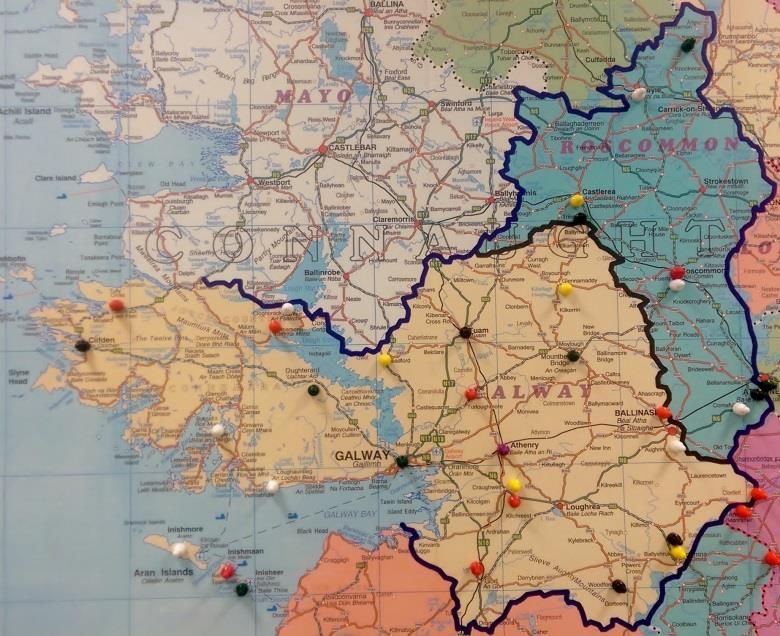
4|PageGRETB is the second largest ETB in the country, in terms of geographical area, and includes four
islands. It extends from Boyle in Co Roscommon, to Connemara in the West, Galway City and to
Portumna in the east of Galway. County Galway has the single largest and most populous Gaeltacht
area in the country. Promoting Gaeilge is an essential element of GRETB’s core service. We have eight
Coláistί Lán-Ghaeilge and a number of our Further Education and Training centres in Connemara,
operate through Irish.
Population 2016 Galway Roscommon
Population 2016 258,552 64,544
Population Change (2011-2016) 3.00% 0.70%
Population Density (2016) 42.04 persons
25.33 persons
Source: CSO Census of Population 2011 per sq km
per sq km
5|Page3. Vision, Mission and Core Values
GRETB Strategy Statement 2017-2021 was approved by our Board in June 2017. In preparing this
Strategy Statement, key national strategies, such as the DES’s Action Plan for Education 2016–2019,
the FET Strategy 2014-2019, and the other national strategies were considered. Common themes
were identified, and these formed the basis for the development of GRETB’s strategy. A collaborative
cross-sectoral consultation process took place with key stakeholders. Arising from this, strategic goals
and priorities were identified, and an action plan has been developed and time lined. These goals,
priorities and actions will form the basis of implementation plans for each strand of the organisation.
Progress on the actions will be monitored on an annual basis by the Senior Management Team.
Vision, Mission and Core Values
• To actively lead the provision of high quality
education and training programmes and services
that respond to the changing needs of learners
Vision and society
• To support individuals through learning, to
achieve their full potential and contribute to
Mission social, cultural and economic development
• leadership, inclusivity, collabortion, innovation,
and accountability
Values
6|PageStrategic Goals
GRETB’s Strategy Statement sets high level objectives for the organisation under four strategic goals,
which are in line with national strategies on education:
1. Improve the learning experience and success of learners
2. Improve the progresss of learners at risk of disadvantage, those with
special needs or with lanugage, cultural or social differences
3. Provide high quality education and training programmes
4. Ensure our organisational infastructure (people, process and
structure) is efficient and effective
Each goal has its own set of strategic priorities which will be met through a series of supporting actions.
These goals and priorities have been designed to assist GRETB to avail of the opportunities which will
arise and to meet the challenges it faces over the next five years.
7|Page4. 1 Statement of Service – Schools
Galway and Roscommon Education and Training Board is Patron to 20 post primary schools and 2
Community National Schools which offers a range of services and support to these schools including
programme development, human resource, financial, building and maintenance as well as improving
teaching and learning for the 2019-2020 academic year.
A multi-million capital funding project for GRETB commenced by Department for Education and Skills
(DES) for the rebuild of Clarin College, Athenry, work begun in December 2018, this work is now
complete. Schedule of proposed new accommodation for 400 pupil school for Coláiste an Eachréidh,
Athenry has been received by GRETB, commented upon and returned to DES. Awaiting decision from
DES to proceed.
Galway and Roscommon Education & Training Board’s Community Colleges are an integral part of
their local communities. They are inclusive and enable young people to meet their full potential in
society. The ETB Community Colleges empower students, teachers and parents to achieve educational
progress in a positive and encouraging atmosphere.
Programmes being offered in our Community Colleges include:
Junior Certificate
Junior Certificate Schools
Transition Year
Leaving Certificate
Leaving Certificate Applied Programme
Leaving Certificate Vocational Programme
Post Leaving Certificate courses
Fishing Skills Programme
One academic year offshore island scholarship
Adult Education & evening classes programme
A full range of subjects including languages, the humanities, arts, technology and science is offered at
both junior and senior cycle. Students are encouraged to take part in all aspects of school life including
extra–curricular activities such as drama, music, debating, sport, cultural, Leargas/Erasmus and Irish
Language activities.
In order to ensure the highest quality of teaching and learning and the best possible educational
experience for our students, supports will be offered by GRETB to all schools in:
Special Education and Learning Support;
CPD for teachers and support staff, Numeracy and Literacy, Technology Enhanced Teaching
and Learning;
CPD Child Protection (on school request for existing teachers and as an integral part of GRETB
new staff induction);
Oideachas trí mheán na Gaeilge chomh maith le hoideachas Gaeltachta, 8 GRETB schools
provide Irish-Medium Education;
Development programmes for GRETB’s Principals, Deputy Principals and Middle Management
post holders in conjunction with PDST, JCT, Teaching Council and other relevant agencies;
Other key staff cohorts, including SNAs, administration and caretaking staff.
In addition to the above, support will also be offered in the areas of policy making and governance
through ongoing work and training with schools and Boards of Managements (BOM). A nationally
8|Pageagreed training programme for School Board of Managements will commence in February 2020, supported and coordinated by ETBI. Modules such as Governance, Child Protection and Finance will be explored. GRETB will organise 4 venues in GRETB schools across Galway and Roscommon to facilitate the training. In the latter part of 2019, a GRETB wide Parents’ Forum was established, its implementation will be initiated in 2020 as new members are elected following the establishment of new ETB/School Boards. GRETB worked with Universities from which participants in Professional Masters in Education (PME’s) programmes undertake teaching placements in GRETB schools and formalised an agreement with regard to Garda Vetting. Tá 20 scoil ag GRETB agus 8 gcinn díobh seo ag múineadh trí mheán na Gaeilge, seacht (7) gcoláiste Gaeltachta ina measc. Is é GRETB an t-aon ETB sa tír le trí iarbhunscoil ar oileáin scoite amach ón gcósta. Tá fás leanúnach ar earnáil na scoileanna i GRETB le deich mbliana anuas agus leanfaidh an fás sin ar feadh roinnt bhlianta eile. GRETB’s island schools present a unique set of challenges regarding securing adequate and appropriate resources to support and sustain them. Notwithstanding the absence of any national education policy for island communities. GRETB has developed support strategies to resource our island schools. GRETB has and will continue to engage with DES, other Government Departments and agencies to secure DES and Roinn Ealaíon, Oidhreachta, Gnóthaí Réigiúnacha, Tuaithe agus Gaeltachta assistance in sustaining vulnerable island post primary schools through the creation of national policy in this area. As GRETB’s pupil cohort has increased by approximately 25% since 2013, the Board will continue to engage with DES to have this growth fully comprehended within the financial resourcing model in use since 2012. In addition, GRETB took over the Patronage of two Community National Schools, Lecarrow CNS, Roscommon (formally St. Johns National School) and Cuan na Gaillimhe Community National School (formally Galway Steiner School), Knocknacarra, Galway. Lecarrow CNS is the first Community National School in County Roscommon and also the first non-denominational school in the county. Cuan na Gaillimhe is the first Community National School in Galway. 9|Page
Post–Primary Schools

                   School Name                        Enrolment 2019/2020   PLC

Abbey Community College, Boyle                               424

Archbishop McHale College, Tuam                              249

Clarin College, Athenry                                      523             73

Coláiste an Chreagáin, Mountbellew                            80             63

Coláiste an Eachréidh, Athenry                               241

Coláiste Bhaile Chláir, Claregalway                          1158

Coláiste Chilleáin Naofa, New Inn                            165

Coláiste Cholmcille, Indreabhán                              114

Coláiste Ghobnait, Inis Oírr, Oileáin Árann                   24

Coláiste Mhuirlinne/Merlin College, Galway City              621

Coláiste na bPiarsach, Ros Muc                                65

Coláiste na Coiribe, Galway City                             598

Coláiste Naomh Éinne, Cill Rónáin, Oileáin Árann              55

Coláiste Naomh Eoin, Inis Meáin                               40

Coláiste Naomh Feichín, Corr na Móna                          78

Elphin Community College, Roscommon                          162

Galway Community College, Galway City                        266            317

Galway Technical Institute, Galway City                                     1059

Roscommon Community College                                  496

St Brigids College, Loughrea                                 622

                       Total                                 5981           1512

Adult Education/Evening Classes in schools 2018/19:          2321

Community National Schools:

                   School Name                        Enrolment 2019/2020

Lecarrow Community National School                            8

Cuan na Gaillimhe Community National School                   55

                       Total                                  63

10 | P a g e
4.2 Statement of Service – Further Education and Training The SOLAS FET Strategy 2014-2019 reflected the principles articulated in the Action Plan for Jobs, National Skills Strategy 2025, Pathways to Work and broader education policy. The Strategy addressed the unique challenges faced in the sector and promoted targeted skills programmes to support job seekers to re-skill and up-skill in areas where suitable employment opportunities were emerging. In doing so, Further Education and Training developed and expanded to deliver higher quality, flexible, and progressive programmes of education and training. The 2020-2024 FET Strategy proposes to build on the previous initiatives taking into consideration the changed economic landscape with unemployment at a low level of 4.5%. The development of strategic performance agreements between SOLAS and ETBs identified six core aspects of further education and training, with associated FET system targets. These core areas are as follows: Supporting Job Creation; Learning Pathways; Active Inclusion; Lifelong Learning and Workforce Upskilling, Meeting Skill Gaps and New Models of Delivery. GRETB completed and signed off on a Strategic Performance Agreement with SOLAS for the period 2018-2020 which identified sector specific targets and strategic priorities for GRETB. These priorities included an increase in Traineeship and Apprenticeship provision, integration of literacy across programmes, upskilling employees in the workforce and provision of programmes for those returning to the workforce. The targets included increases in certification, increased progression to employment and further education as well as increases in people accessing lifelong learning provision. Galway and Roscommon ETB specifically supports the principles of the FET Strategy in all planning and provision by continuing to align skills development and training with the enterprise needs of the region and by continuing to contribute to the primary objective of the Action Plan for Jobs in increasing employment in the region by 10-15% in the period up to 2020 (Action Plan for Jobs West 2015-2017). GRETB will continue to maintain its leadership in FET provision in the region, across all sectors from basic education to specific skills and work-based training. As the provider of choice, GRETB will be at the heart of relevant and innovative partnerships with industry driving the development and delivery of quality programmes of education and training. This will be achieved whilst maintaining a community focus where the vulnerable and those on the margins of society are included. This will be the marker of the success of FET in the region. GRETB has significant facilities infrastructure, skill, and competence for the delivery of Apprenticeship programmes and it will continue to deliver Craft Apprenticeships in line with increased demand. Apprenticeships in Electrical, Carpentry & Joinery, Metal Fabrication and Motor. In 2019 GRETB submitted an application to SOLAS to provide the Plumbing Apprenticeship here in Mervue and that capital bid was successful. The Plumbing Apprenticeship is scheduled to start in Q3 2020. New models of apprenticeship and traineeships continue to be rolled out with targets for 31,000 and 13,900 registrations on these programmes nationally between 2016 and 2020. The delivery of new apprenticeships and traineeships is supported by coordination and collaboration with industry and other providers. In 2019, GRETB rolled out the Auctioneering Apprenticeship in collaboration with CDETB, a second intake of apprentices is expected in September 2020. We are currently collaborating with LCETB on the Hairdressing Apprenticeship with an expected start date of September 2020 and with MSLETB on their Butchery and Sales Apprenticeships, both apprenticeships are expected to start in Q2 of 2020. The Accounting Technician Apprenticeship in association with Accounting Technicians Ireland is being rolled out in GTI in Galway City with a second intake of apprentices scheduled for 2020. 11 | P a g e
GRETB is leading out on the development of a National Apprenticeship in Arboriculture and has
submitted the Apprenticeship for validation to QQI with an expected roll-out date of September 2020,
This Apprenticeship was developed in collaboration with industry.

Traineeships offer flexible, responsive, occupational skills development training programmes which
are tailored to the identified needs of a specific industry sector or sub-sector. They lead to nationally
recognised qualifications. In 2018 and 2019 GRETB began to roll out Traineeships in some of the FET
centres throughout its region. A Traineeship in Childcare began in Galway City and in Ballinasloe and
a Hospitality traineeship started in Ballinasloe. GRETB led out on the development of a skills-based
traineeship in 2019 to meet the demand of the Audio-Visual industry in the West of Ireland in
collaboration with Screen Training Ireland. This Traineeship is scheduled for a second intake in 2020.

In 2019 GRETB was represented on the Bia Innovator project in Athenry in collaboration with Teagasc
and Galway Co. Council and plan to support the roll-out of a food innovation hub for food production.
GRETB plans to roll-out programmes in early 2021. GRETB is also represented on the Udarás na
Gaeltachta, Marine Park initiative in Cill-Chiaráin where skills development in the Aquaculture and
Marine sector is identified as critical to the success of this industry led initiative.

In addition, technology-based education tools and programmes are becoming embedded in the FET
sector as flexible learning opportunities are offered via online, blended, modular, semester and
evening delivery. GRETB was successful in its bid for funding to develop TEL and virtual learning tools
for the delivery of the Aquaculture programmes in collaboration with industry

GRETB has designed a range of TEL initiatives to upskill FET staff and have created a panel of TEL
champions across FET centres to support on-line TEL based education and training. Different teaching
methodologies can support learning styles and the diversity of learning modes and opportunities
available to FET learners. We are currently developing TEL hubs across the GRETB region which will be
based in our FET centres. These measures will impact positively on the outcomes and opportunities
for learners and, provide flexibility in our reach to learners.

Throughout 2018 and into 2019 GRETB worked in partnership with MSLETB and WWETB to develop
new awards in Agriculture at Level 5 and 6, these awards have been validated and are being rolled out
in 2020.

The Skills to Advance Initiative introduced by the government in 2018 is designed to target employees
in all parts of the workforce and prioritises employees whose skills level is below level 5 on the NFQ
and who are classified as vulnerable. It will mean that for these learners Level 5 programmes are free
and only a 30% contribution needs to be made by the learners for a Level 6 programme.

A Skills to Advance Coordinator is now in place in GRETB as part of the Employer Engagement Unit
with a remit to support companies in developing the skills of their workforce. The Coordinator works
closely with companies and bodies such as Bord na Móna where employees are displaced and require
upskilling and reskilling.

The GRETB Community Education Service (CES) Plan for 2019 focused on engaging the most hard to
reach learners in community settings to identify their learning needs, engage them in a short term and
part-time programme and aid their progression into other accredited FET options. This will continue
with a particular emphasis on areas of low employment such as recognised economic blackspots.

The CES provides grants and tuition hours to local community and voluntary groups. The main target
groups across Galway and Roscommon for Community Education include; people who are long term
unemployed; early school leavers; people with a disability; disadvantaged Men and Women; Traveller
community; homeless groups; older people; Migrants/Refugees/Asylum Seekers.

12 | P a g e
The EROC (Emergency Reception and Orienteering Centre) opened in Ballaghadereen, Co Roscommon
in April 2017 and GRETB began the delivery of a range of education programmes to support the
residents. Two dedicated primary classrooms were set up incorporating Junior and Senior classes, a
Post Primary class to support teenagers and a range of adult and further education classes to support
English language teaching. There are currently 4 primary teachers in the EROC as we have a Transition
programme in place for children who are ready to enter mainstream classes in the local area, there
are three local primary schools involved in the Transition programme and two 2 nd level schools. In
2019 there were 142 residents in the centre, 37 children in Primary, 20 in Post Primary and 75 adults,
most attending classes. 2020 will see a continuation of the education provision.
Throughout 2020 FET will:
continue its work as an active member of the Regional Skills Forum
maintain quarterly meetings with DSP throughout the region facilitating the identification of
the training needs of the unemployed
continue to work with Chamber of Commerce strengthening links with employers
develop the programme for the Arborist Apprenticeship due for roll-out in 2020
continue its work developing new apprenticeships in partnership with industry
work with MSLETB on roll-out of a new Butchery and Sales Apprenticeship
work with LCETB on roll-out of the new Hairdressing Apprenticeship
rollout CDETB Auctioneering and Property Services Apprenticeship
rollout of a Software Development Apprenticeship in collaboration with FIT
rollout the new Agriculture awards at Level 5 and 6 in conjunction with MSLETB and WWETB
increase provision in key skill areas including Tourism and Hospitality, Marine and
manufacturing
implement the TEL Action Plan
implement the SOLAS CPD Strategy
deliver on its Public Sector duty.
Youth Services
GRETB Youth Services will continue to administer the Department of Children and Youth Affairs funded
Local Youth Club Grant Scheme to voluntary youth groups, and will continue to roll out the new VfM
Youth projects. GRETB Youth Officers are also responsible for implementing the National Quality
Standards Framework (NQSF) with staff led Youth Services.
Western Regional Drugs Task Force.
The Community Liaison Officers will roll-out initiatives such as Planet Youth to support young people
and communities to engage proactively in a positive lifestyle.
Traveller Interagency.
GRETB will support the work of the Traveller Interagency in the delivery of its strategy.
Other Supports
GRETB also co-operates with agencies engaged with vulnerable groups such as those physically or
intellectually impaired; prison services, providing 53,400 teaching hours through co-operation to
support their work.
13 | P a g eFET provision 2019 figures Programme Category Distinct Learner Beneficiaries Apprenticeship Training 930 930 Adult Literacy Groups 1,565 2,380 Blended Training 40 50 BTEI Groups 2,281 3,864 Community Education 2,214 3,030 Community Training Centres 51 63 ESOL 937 1,296 Evening Training in FET 791 889 FET Cooperation Hours 388 1,061 ITABE 88 132 Justice Workshop 86 90 Local Training Initiatives 163 200 Other Funding 58 87 PLC (recorded under schools in this Service Plan)* Refugee Resettlement 7 7 Skills for Work 170 200 Specialist Training Providers 161 181 Specific Skills Training 604 719 Traineeship Employed 14 14 Traineeship Training 181 192 Voluntary Literacy Tuition 29 33 VTOS Core 475 554 Youthreach 293 391 Distinct Learner v Activity: 10244 16363 *Beneficiaries refer to the total number of participants on programmes from the 1 st January 2019 to the 31st of December 2019 *PLC and evening training in school enrolments are recorded under post-primary school in this service plan In addition, GRETB had over 2000 regular participants on Music Generation programmes and over 10,000 beneficiaries from Youth Service, Adult Guidance Service and grants provided in the region. 14 | P a g e
4.3 Statement of Service – Organisational Support and
Development
The Organisational Support and Development (OSD) team are located in GRETB’s Head Office in
Athenry and our sub-office in Roscommon Town. GRETB has an annual budget of over €110m, almost
2000 staff and over 23,000 learners/beneficiaries and students. The back office supports required to
service this vast organisation are provided by the OSD team and cover the following administrative
areas: HR, Finance, Corporate Services, IT and Buildings.
The OSD team’s goals are to enhance the processes and procedures that underpin good corporate
governance in GRETB and to ensure that human, financial and infrastructural resources, appropriate
to the delivery of front-line services are deployed efficiently and effectively across GRETB.
The OSD team are committed to implementing GRETB’s Strategy Statement 2017-2021 and the
associated actions. Projects and initiatives planned for the coming year include:
continue to rollout the implementing the new Code of Governance ETBs
support GRETB’s new Community National Schools
provide training and support for GRETB’s new Board and Committees
continue to work with the ESBS on their shared services payroll project, to ensure the smooth
transition of GRETB’s payroll to shared services. This is currently scheduled for transfer in June
2020
work with ESBS to ensure GRETB’s operational and governance requirements are met as part
of both the payroll and the financial shared services projects
work with the DES and SOLAS on their project to transfer apprentice payments to a new
shared services programme
continue to embed good practice around GDPR
provide on-going support on the rollout of Music Generation programmes in County Galway,
Galway City and Roscommon
assist with the implementation of the Digital Strategy for schools
manage a significant capital programme (major projects include – the extension in
Roscommon Community College, the new ASD unit in Abbey Community College, significant
refurbishment works in the sub office in Roscommon, a new school for Coláiste an Eachréidh
and works in the Training Centre Mervue to name a few)
provide support for major devolved capital projects in non-ETB schools (as resources allow)
provide administrative support for the new DEIS scholarship programme for the Gaeltacht
rollout of purchasing cards in GRETB schools
develop a new website for GRETB
continue to work with ETBI and associated forums on national issues
implement new circulars, relevant legislative changes and any new national policies and
initiatives as applicable to the sector in 2020
liaise with ETBI and the DES on the national Organisational Design Phase II process to ensure
GRETB has the admin structure and expertise to meet GRETB’s statutory obligations, to
support schools and centres, and to implement both national strategies and GRETB’s Strategy
15 | P a g e5 Strategy Statement 2020
The following actions will be either commenced or delivered during 2020 in line with GRETB’s Strategy
Statement
Strategic Goal 1:
Improve the learning experience and success of leaners
Priority 1.1: Provide responsive and innovative programmes
Continue work in preparation for rollout of new arborist apprenticeship, as well as new
hairdressing, software development, sales and butchery apprenticeships
Ongoing engagement with employers in the region to support programme development
Priority 1.2: Provide relevant knowledge and skills for lifelong learning, personal development,
progression and employment
Offer programmes with entrepreneurial and digital skills elements
Offer Microsoft exams to staff and students
Continue to rollout the National Guidance Strategy
Work with organisations across the region to develop new programmes and traineeships
Continue to rollout our new Music Generation programmes and take advantage of any
opportunities which may arise as a result of Galway being the European Capital of Culture for
2020
Priority 1.3: Promote positive learning experiences and environments
Assist with the development of a Plan for Outdoor Education Centres for the sector
Provide well-being workshops for staff and learners
Commence pilot of IBEC’s Keep-Well Mark in HQ
Continue work on the Planet Youth Project
Work with the 8 schools who are participating in DES Gaeltacht School Recognition Scheme
Priority 1.4: Provide technology enhanced learning environments
Expand blended learning options in FET
Continue to rollout TEL training for staff
Implement the digital strategy in schools
Develop further policies in ICT to improve security
Continue with project to rollout SharePoint in GRETB schools
Strategic Goal 2:
Improve the progress of learners at risk of disadvantage, those with special
needs or with language, cultural and social differences
Priority 2.1: Promote equality and active inclusion
Continue to support the EROC in Ballaghadereen
Continue to seek DEIS status for Merlin College and Island schools
Commence work on public sector duty plan
Continue work with ETBI on project regarding ETB’s core values
Priority 2.2 Provide accessible and flexible education and training programmes
Develop and promote online/ blended learning programmes
Progress capital projects which will improve accessibility e.g. Colaiste Colmcille, RCC, Inish Meain
Liaise with Galway City Council to identify a site for Cuan na Gaillimhe
Continue to raise nationally and at EU level, the need for a policy on island education
Priority 2.3: Provide high quality inclusive education with improved learning outcomes
Extend GRETB’s highly successful literacy and numeracy programme for apprentices to support
learners on other FET programmes
16 | P a g e Continue to seek a dedicated disability fund for FET learners
Implement the Quality Improvement Plan
Priority 2.4: Improve the transition of learners at critical stages in the education and training system
Continue to support the Turas pilot programme for 12-15-year-olds who do not transition to 2nd
level
Continue to build relationships with third-level colleges through representation on the NUIG FE to
HE Working Group, and collaborate with GMIT & NUIG on programmes and access pathways
Research the challenges faced by students’ transitions from primary to secondary schools, and
identify agreed action areas for GRETB schools.
GRETB Strategic Goal 3:
Provide high quality education and training programmes
Priority 3.1: Promote quality assurances in our education and training programmes
Implement the Quality Improvement Plan QIP and set up a QA Unit
School to participate in self-evaluation (SSE) programmes and to ensure their “Know Your School”
document is up to date
Priority 3.2: Support staff in the pursuit of quality teaching and learning standards
Encourage ongoing collaboration in cluster groups of teachers which have been established in
subjects across GRETB schools
Develop expertise in child protection best practice through supporting CPD and establishing a collective
coordinated approach across GRETB Schools.
Develop expertise in SEN best practice through supporting CPD and establishing a collective,
coordinated, and mentoring approach across GRETB Schools.
Develop expertise in new teacher induction best practice, through supporting and resourcing CPD and
establishing a collective coordinated approach to mentoring NQTs and PME placement teachers across
Schools
Develop strategic alliances with PME colleges to give best effect to the needs of GRETB
Establish communities of practice in fields of learning across FET and share collaborations
Priority 3.3: Increase the use of quality data, analysis, research and evaluation to inform
service delivery and identify emerging issues
Continue to collate, review and measure state exam results against national norms
Review MLL and WSE reports and schools to share WSE experience at PPF
Continue to use PLSS and CSO data to track learners and plan programmes
Work with Regional Skills Forum and IBEC to monitor economic trends
Support the newly established Parents Forum for schools
Priority 3.4: Promote leadership, innovation, continuous improvement and sharing of knowledge
Continue to collaborate with other ETB’s in the development and rollout of new apprenticeship
programmes e.g. hairdressing, auctioneering, accounting technician, butchery and sales
Develop a new apprenticeship in arboriculture
Actively engage in CE/Director forums and other ETBI forums such as PLC, Principals, Finance, HR,
IT and Corporate Services
Strategic Goal 4:
Ensure our organisational infrastructure (people, processes and structure) is
efficient and effective
Priority 4.1: Ensure GRETB has the capacity to successfully meet the current demands and to
influence the future direction of the sector
Assign a budget for CPD and invite and encourage applications from staff each year
Continue to engage with the DES to ensure GRETB has the appropriate administrative structure to
meet our clients’ needs and legislative requirements, through the Organisation Design Phase II
process
17 | P a g e Continue to engage with DES and Solas regarding funding to ensure it meets our increasing
student /learner numbers and increasing costs e.g. insurance
Work with ESBS to transfer GRETB’s payroll to shared services as per ESBS current project plan
Work with ESBS to ensure payroll and the financial shared services project meet GRETB needs in
terms of operations, governance and business continuity
Work with DES on transfer of apprentice payments to new shared services programme
Priority 4.2: Enhance our internal and external communication systems
Establish a Communications Working Group
Develop a new GRETB website
Commence work on GRETB’s customer charter and associated plan
GRETB’s representatives to actively engage on the LCDC in Galway City, County and Roscommon,
Regional Skills Forum and Action Plan for Jobs West representation
Enhance links with NUIG, GMIT, Bord Iascaigh Mhara, Údarás na Gaeltachta, GRD, Forum
Connemara, Councils in the area
Priority 4.3: Provide the best possible teaching, learning and working environments while
maximising resources
Continue to seek funding for capital projects as needs arise
Work with DES to progress a new school for the Coláiste an Eachréidh, as well as significant
extensions for Archbishop Bishop McHale College Phase II, Roscommon Community College Phase
II and Coláiste Colmcille
Advance other capital projects already in progress e.g. sub-office Roscommon, Abbey ASD Unit,
summer works and H&S related projects
Explore potential facilities for NZEB and other new FET programmes
Continue to seek to extend the high speed broadband available in schools to FET Centres
Implement a number of projects to improve IT security
Priority 4.4: Ensure best practice in corporate governance throughout GRETB
Continue to embed risk management across GRETB
Provide training for new Board and Committees on the new Code of Governance
Promote ETBI’s online training tool on GDPR
Provide training for new BOM
Rollout purchasing cards in schools and commence closure of associated school bank accounts
Review and update existing policies
Continue to implement the new Code of Governance for ETB e.g. develop a customer charter and
commence work on a related customer plan
18 | P a g e6 Performance Delivery Goals and Priorities
GRETB’s Service Plan for 2020 also includes relevant actions, performance indicators and targets in
line with the goals and priorities identified by the Department of Education and Skills as part of ETB’s
Performance Delivery Agreements (see table below);
Goal Priority Action Performance Target
Indicator
Optimise Provide a positive learning Identify the challenges and Agreed action Q3
Student/ experience for all learners, supports measures required areas identified
Learner including learners from for transferring from primary for all GRETB
Experience marginalised groups to post-primary school schools
Provide a broad- Offer new NCCA subjects e.g. Subjects offered Q3
based curriculum Politics /PE and short courses
in schools
Implement Quality Assurance Set up a FET Quality Council Council Q2
systems established
Support students/learners at Establish a group to support Group established Q3
risk of educational students transitioning from
disadvantage in line with DEIS schools to FET
current national policy programmes
Provide guidance and Combine GRETB’s Course Single line Q4
counselling services Recruitment Section with the manager in place
Guidance Services to
streamline services
Provide high quality Explore facilities for NZEB Identify location Q4
learning/training facilitiesand other new FET
Programmes
Promote and develop outdoor Assist with the development Plan Published Q2
education of a Plan for Outdoor
Education
Plan for changing Utilise SLMRU and AIRO Raised awareness Q3
demographics Maps for planning in Schools and training
and FET provided
Engage effectively with Set-up an Employer Unit established Q1
employers Engagement Unit
Provide and develop Submit new arborist Validation process Q3
traineeship and apprenticeship apprenticeship programme completed
programmes for validation
Ensure all necessary child Continue to raise awareness Reviewed DES Ongoing
safeguarding measures are in and require all GRETB inspections
place in accordance with the schools /centres to comply on the
Child Protection Procedures with Child Protection effectiveness of
for Primary and Post-Primary legislation implementation,
Schools and followed up
on any findings
Priorities STEM/STEAM in Assist with implementation Increases in Q3
schools of skype programme to uptake for Physics
encourage uptake in Physics
Provide high quality ICT Implement the Digital Grant for same Q4
learning supports in Strategy for schools and TEL utilised in line with
schools/centres Strategy for FET parameters
19 | P a g eStaff Support Recruitment and retention of Agree appropriate OSD OSD Phase II Q4
staff structure with DES agreed
Support staff in ongoing Assign dedicated funding for Budget utilised Q3
professional development CPD
Support and develop high Appoint a PD Co-ordinator. Post filled Q2
quality leadership in the ETB Promote CSL opportunities in
coaching and mentoring, and Increased uptake Q4
encourage and support staff rates by GRETB
to participate staff
Promote awareness of health Assign a dedicated budget Budget committed Q1
and safety for increased awareness and
training in H&S in GRETB
Provide a positive and Commence pilot on IBEC Register for Q1
supportive work environment Keep-Well Mark in HQ programme with
IBEC
Support staff wellbeing Deliver wellbeing workshops Workshops Ongoing
delivered
Governance Develop organisational Establish and train new Training Ongoing
structures and systems to Boards/BOM and commenced
meet the changing needs of Committees
the organisation
Effectively manage finances Work with ESBS on Payroll transferred Q2
and risks implementation of the to Shared Services
payroll shared services
project
Efficiently use resources Rollout purchasing cards in Purchasing cards Q4
GRETB schools, and continue being utilised in
to close school bank schools
accounts
Communicate effectively Establish a Communication Group established Q1
Group
Develop Service Level Develop a register of SLA’s Register in place Q4
agreements with external with external stakeholders
stakeholders
Ensure effective data Contribute to the national Revised policy Q2
protection review of the existing data issued
protection policy for ETB’s
Seek sanction for a dedicated Sanction sought Q2
DPO
Engage effectively with In terms of education New associated Q4
stakeholders and develop provision, assist Udaras na programmes in
partnerships Gaeltachta in implementing place
their development plan in
tourism and marine
Follow best practice in Raise awareness and provide Updates and Ongoing
procurement training on best practice in training provided
procurement
Ensure compliance with Establish formal vetting co- Agreements in Q3
statutory and regulatory operation agreements with place
requirements third level colleges supplying
PME’s
Protection Assist the DES, as needed, to Co-operate with DES as the Co-operated as Q4
Programmes meet the needs arising need arises required
from the Irish Refugee
Protection Programme and
provision for international
protection applicants
20 | P a g eGRETB Financial Summary
Year Ended Estimated Year Ended
31/12/2019 1 31/12/2020 2
RECEIPTS
Schools & Head Office 61,359,352 53,416,6153
Further Education & Training 37,120,894 46,504,474
Youth Services 2,348,928 2,500,000
Agencies 2,924,669 2,600,000
Self-Financing 2,556,859 2,840,000
Capital 4,462,184 7,000,000
110,772,886 114,861,089
PAYMENTS
Schools & Head Office 59,921,611 53,416,615
Further Education & Training 37,265,833 46,504,474
Youth Services 2,323,056 2,500,000
Agencies 2,420,041 2,600,000
Self-Financing 3,137,166 2,840,000
Capital 5,335,145 7,000,000
110,402,852 114,861,089
Important Changes regarding Post Leaving Certificate (PLC) 2020
The responsibility and administration for all budgets for the National Post Leaving Certificate
(PLC) Programme and co-operation hours for further education and training was transferred from
the Department of Education and Skills to SOLAS with effect from 01 Jan 2020. The final budget
for PLC and FET co-operation hours for GRETB has yet be established and agreed with SOLAS
1 2019 Receipts & Payments are subject to change following completion and audit of the Financial Statements
2 2020 FET Estimates are subject to approval from SOLAS following submission of the FAR4
3Funding for PLC’s and co-operation hours FET is transferring from the DES (Schools) to SOLAS Further Education and
Training from Jan 2020
21 | P a g eGRETB SCHOOLS & HEAD OFFICE
Year Ended Estimated Year Ended
31/12/2019 1 31/12/2020
Payments
PAY
Administrative 3,633,764 3,674,685
Instruction 49,541,296 43,087,414
Maintenance 1,279,703 1,385,224
54,454,763 48,147,323
NON PAY 3,418,819 3,398,467
ASSOCIATED PROGRAMMES 2
Book Grant Needy Pupils 210,261 160,845
Bus Escort 47,718 50,000
DEIS Grant & Home School Liaison 52,480 57,000
Digital Strategies for Schools 2015-2020 63,748 287,030
Gaeltacht School Recognition 2018 316,935 440,744
Island Schools Additional Funding 2018 2,701 45,000
School Services Support Fund (SSSF) 3 1,013,777 673,715
Special Class Grant (Equipment) 31,415 3,629
Transition Year 160,284 76,285
Traveller Capitation 45,792 47,838
Other 102,920 28,739
2,048,030 1,870,825
59,921,613 53,416,615
1 2019 Payments are subject to change following completion and audit of the Financial Statements
2 Expenditure may include funding from previous years
3Funding for PLC’s including (SSSF Grant for PLCs) is transferring from the DES (Schools) to SOLAS Further Education
and Training from Jan 2020
22 | P a g eGRETB FURTHER EDUCATION & Payments Estimated
TRAINING Year Ended Year Ended
31/12/2019 1 31/12/2020 2
Adult Guidance 451,258 440,698
Adult Literacy 2,574,495 2,514,252
Advocacy 205,373 200,567
Apprenticeship 3,617,699 3,533,045
Apprenticeship 2016+ 299,078 792,080
Back to Education Initiative 2,625,782 2,564,339
Blackspot Provision 220,021 214,872
Breacadh 184,321 180,008
Community Education 569,940 556,604
Community Training Centre 769,712 751,701
Evening Courses 279,999 273,447
Innovation 247,035 241,255
ITABE 91,414 89,275
Justice Workshops 161,779 157,993
Local Training Initiatives 1,149,544 1,122,644
On-Line/Blended 107,505 104,990
PLC (Enhanced Capitation, Rent, LDA's) 358,297 6,349,913
Refugee Programmes 591,907 578,056
Skills for Work 46,771 45,677
Skills to Advance 469,730 1,000,000
Skills Training 2,921,507 2,853,143
Specialist Training Providers 2,146,222 2,096,000
Technology Enhanced Learning 126,061 123,111
Traineeship 873,666 853,222
VTOS 5,355,274 5,229,960
Youthreach 5,427,605 5,300,599
Co-operation Hours 3,006,928
Salary Costs - Training 2,794,589 2,729,196
FE Buildings and Support Services 1,416,089 1,382,952
Overheads - Training 967,997 945,346
Quality Assurance 150,733 147,206
Management & Admin - FE 90,509 88,391
CPD 37,890 37,003
37,329,802 46,504,474
1 2019 Payments are subject to change following completion and audit of Financial Statements
2 2020 FET Estimates are subject to approval from SOLAS following submission of the FAR4
23 | P a g e24 | P a g e
You can also read


