GENERATION THE NEXT OF TRUST - A Global Survey on the State of Investor Trust - 2018 Report - CFA Institute
←
→
Page content transcription
If your browser does not render page correctly, please read the page content below
THE NEXT
GENERATION
                      OF      TRUST
A Global Survey on the State of Investor Trust

                                 2018 Report
A NEW ERA OF INVESTOR TRUST
Investor expectations are changing. We studied these through the lens of trust in
producing our third investor trust study. Ten years after the global financial crisis,
we are seeing encouraging trends. While the 2018 Edelman Trust Barometer shows
that trust in institutions is very low among the general population and the reputation
of finance keeps it ranked relatively low among industries, the better-informed
population—who are actual participants in the markets—have a more favorable view.
Our survey data, gathered by Greenwich Associates, finds that trust levels among
investors—institutional asset owners and retail—have risen since 2016, but it is
not all good news. With higher trust comes higher expectations, and among retail
investors, the gap between what investors want and what we as an industry are
delivering has widened. Just as we have seen polarization of trust across many
industries, the investment industry must strive to relate effectively to individual
investors and provide high service levels to them. We know this is possible since
institutional investors report very high satisfaction with their asset managers.
Finance is democratizing—there is a transition to a state where finance is
Authors available to everyone. In this democratization process, we find some interesting
Rebecca Fender, CFA opportunities for the investment industry in technology. Investors of every age are
Robert Stammers, CFA using technology more, and the smart use of technology increases their trust in the
Roger Urwin, FSIP investment professionals with whom they work.
Demographically, we see significant shifts in the attitudes toward investing, with
Survey respondents
younger investors reporting higher trust levels and satisfaction in the financial
3,127 retail investors from 12 industry. Thus, a pressing question is: Can the industry retain this level of trust as
markets, 25+ years old, with the increasingly influential millennials age?
investable assets of at least
US$100,000 Finally, we analyze the components of investor trust through the CFA Institute
829 institutional investors, trust equation and offer recommendations for the industry to increase trust in
with assets under terms of credibility and professionalism. While investment performance cannot
management of at least be guaranteed, the other actions essential to building trust are very much within
US$50 million the industry’s control. In an industry where revenues are now driven more by
client retention than client acquisition, the bottom line value of trust should not be
underestimated as a competitive advantage.
We hope you find the research that follows useful, as you seek to serve your clients
effectively and navigate the next generation of investor trust.
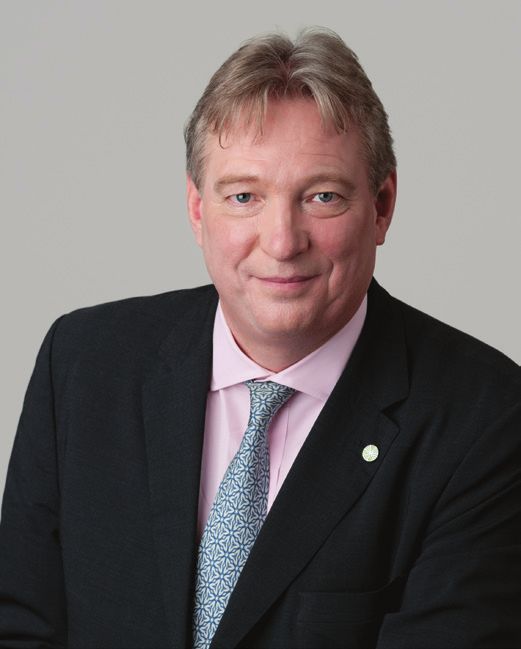
Paul Smith, CFA
President & CEO
1 THE NEXT GENERATION OF TRUSTThe Next Generation
of Investor Trust
The nature of trust can be difficult to assess and quantify, but everyone knows we need
trust to make society work. Nowhere is this more evident than in the world of finance,
where well-functioning markets are necessary to create value, and in investment services,
where experts work to safeguard and grow the financial wealth of their clients. In this—the
third CFA Institute investor trust study—we analyze trends in investor trust and provide
recommendations for investment practitioners on how to improve trust with clients. We find
that the nature of trust is changing because of a new generation of investors and a new
generation of investing technologies.
Key Themes
I. Trust in Financial II. The Bottom Line
Services Industry: Value of Trust through
Reputation versus Realities the Client Life Cycle
While investor trust overall in financial Clients consistently rank trust as the biggest
services is only slightly higher, there are differentiator in hiring an investment adviser. Trust
many positive signs regarding actual also contributes to whether a client will refer others
client experiences. Reputational issues for or expand the relationship with additional mandates.
the industry remain, but there are ways Underperformance is the primary reason clients
investment professionals are effectively leave, but understanding client goals and fears are
building and maintaining trust with clients. ways to build trust and weather uncertainty.
III. Technology Enhances IV. The Trust Equation:
Investor Trust but Does Not Credibility and
Replace the Need for Humans Professionalism
Investors of all ages and regions want more The trust equation gives investment
technology applied to investing, and trust in professionals tools to build trust. Credibility is
technology is generally high. Effective use of composed of easily observed factors such as
technology increases trust in a financial adviser track record, brand, credentials, and use of a
or firm, and blockchain holds potential for more code of conduct, and these are highly valued.
trust in the system. For advice, however, people Professionalism is more difficult to assess but
are much more trusted, and robo-advisers are is essential to trust, focusing on factors such as
the least trusted segment of the industry. competency and values.
3 THE NEXT GENERATION OF TRUSTA STRONG
FOUNDATION:
TRUST IN THE
SYSTEM OVERALL
Following the global
financial crisis, there
was a severe loss of
confidence in the financial
system overall, but ten
years later, we find this
is not the case among
investors. Nearly two-
thirds of institutional
investors believe the
financial system is
appropriately regulated,
and only 10% of retail
investors disagree with
the statement: “I have
a fair opportunity to
profit by investing in
financial markets.”
NEXTGENTRUST.CFAINSTITUTE.ORG 4I. Trust in the Financial
Services Industry:
Reputation versus Realities
TRUST IN THE FINANCIAL SERVICES INDUSTRY
n Higher n Lower n Unchanged n New
Canada
51% UK Germany
31% 24%
US France China
48% 40% 70%
UAE Hong Kong
46% India SAR, China
71% 35%
Brazil Singapore
48% 47%
Australia
31%
5 THE NEXT GENERATION OF TRUSTWhen we began our studies on investor trust five include law and government in the comparison industries.
years ago, we knew that the reputation of the Trust is not given uniformly among markets or age groups.
Trust levels were higher in most markets, but levels ranged
financial services industry was lackluster, but from 24% in Germany to 71% in India.
we hypothesized that its reputation was better
among those who knew it best: investors. Younger investors are more trusting of financial services than
older investors are. This raises the question about whether
This was not the case in 2013, when investors and the public trust is diminished over time and if the industry can find ways
alike were negative about the industry. Today, however, we to maintain trust levels through the investor life cycle.
see much greater distinctions between the general view
of trust of financial services and the personal view of trust TRUST IN FINANCIAL SERVICES BY AGE
related to actual experiences.1
Millennials
The Edelman Trust Barometer shows that trust in financial 25–34 5
5%
services has been rising in recent years, though among the Gen-Xers
public it remains stubbornly low versus other industries.2 35–44 4
9%
Among retail investors, there are three tiers of trust, and we find 45–54 35%
that financial services has moved into the middle tier—likely Baby Boomers
helped in part by recent strong market returns. Meanwhile, 55–64 4
0%
industries like the media and government are becoming actively 65+ 40%
distrusted, at levels double the distrust of financial services
(about 40% vs. 20%, respectively). Technology continues to Institutional Investors Have
be the most trusted industry by a wide margin—a fact that
represents an opportunity for financial services.
Greater Trust in All Industries
Institutional investors are much more trusting of all
industries than retail investors, and do not differentiate
2018 RETAIL INVESTOR TRUST BY INDUSTRY significantly among them. Like retail investors, however, they
trust technology most and entertainment, government, and
Technology 6
4%
media least.
Food and beverage 50%
Law 47% INSTITUTIONAL INVESTOR TRUST BY INDUSTRY
Financial services 44% Technology 8
5%
Pharmaceuticals 44%
Automotive 4
4% Food and beverage 74%
Energy 4
1% Financial services 72%
Telecommunications 4
0% Automotive 7 1%
Energy 7 1%
Entertainment 3
5% Telecommunications 7 1%
Government 30% Law 7 1%
Media 26% Pharmaceuticals 7 0%
This year we focus on “high conviction trust,” and this narrower Entertainment 6
4%
definition of trust indicates the trust that is strong enough for Government 6
0%
investment firms to leverage for more profitable relationships.3 Media 53%
We find that 44% of retail investors trust financial services, while
35% are neutral, and 21% are distrusting of the industry. When Within industry sub-sectors, 70% of institutional investors trust
compared to 2016, we find that financial services and the auto investment management firms, though that trust varies among
industry increased their trust ranking, while telecommunications areas of investment management, with real estate trusted
and entertainment fell in the rankings. In addition, we now most and hedge funds the least.
1 For more discussion on the nature of trust, see Rachel Botsman, Who Can You Trust? (New York: Public Affairs, 2017).
2 Edelman, 2018 Edelman Trust Barometer (New York, NY: Edelman, 2018).
3 In prior years, we considered trust as 6–9 on a 9-point scale. We now count 4 and 5 on a 5-point scale, which is similar to 7–9 on the old scale. This conversion
has very little impact on the relative rankings of industries but eliminates about 20% of respondents who answered with “weak trust.”
NEXTGENTRUST.CFAINSTITUTE.ORG 6INSTITUTIONAL INVESTOR TRUST WITHIN FINANCIAL SERVICES Institutional investors’ expectations were also high, but
they are much more satisfied with their managers, likely
Real estate because of higher service levels given their asset base.
7 4% The most important factor to institutional investors is
Mainstream asset manager data security.
72%
Investment management firms INSTITUTIONAL INVESTOR EXPECTATIONS
70% n Importance n Satisfaction
Private equity
6
8% Has reliable security measures to protect my data
Other alternative investment managers 82%
-8
6
0% 74%
Hedge funds Fully discloses fees and other costs
5
9%
-8
7 9%
71%
What Investors Want Acts in an ethical manner in all our interactions
Moving from the high-level indicators of industry trust, we -6
7 9%
asked respondents about seven specific actions investment 73%
firms could take to build trust. These were rated as very Takes time to understand my organization's priorities, liability
important in our 2016 study,4 and this year expectations were structure, and political dynamics with different stakeholders
even higher among retail investors. Meanwhile, satisfaction -9
7 9%
levels remained stable, leading to widening gaps of 20–30+ 70%
percentage points. The biggest gaps were related to Generates returns similar to or better than a target
disclosures, specifically about fees and conflicts of interest. benchmark
-8
7 8%
RETAIL INVESTOR EXPECTATIONS 70%
n Importance n Satisfaction Employs investment professionals with credentials from
respected industry organizations
Fully discloses fees and other costs
-8
7 8%
-36
8
4% 70%
8%
4 Sets fee arrangements so our financial interests are aligned
Has reliable security measures to protect my data
-4
7 3%
-29
8
4% 69%
55%
Is forthright about disclosing and managing conflicts of interest Client Experiences
-37
8
0% Given the large divide in responses from retail and
43% institutional investors, we looked more specifically
Provides investment reports that are easy for me to understand at retail investors that have financial advisers, which
-29
8
0% represented just over half of the respondent base. First,
5
1% we asked about their most trusted source of investment
Generates returns similar to or better than a target benchmark advice. Only 65% said that their adviser is their most
78% trusted source of advice. The rest responded similarly to
-34
4%
4 those without an adviser, who rely on online research,
Charges fees that reflect the value I get from the relationship friends and family, and investment newsletters. In Asia, a
74% much larger number of investors with an adviser rely on
-33
41% these alternate sources. Overall, nearly one-fifth of those
Employs investment professionals with credentials from without an adviser say they get no investment advice.
respected industry organizations
73%
-22
51%
4 CFA Institute, From Trust to Loyalty: A Global Survey of What Investors Want (Charlottesville, VA: CFA Institute, 2016).
7 THE NEXT GENERATION OF TRUSTMOST TRUSTED SOURCE OF INVESTMENT ADVICE DEFINITIONS
n Those with an adviser n Those without an adviser
Trust
My primary financial adviser
Trust from an end investor is the dependency
6
5%
on a service provider in a situation of risk over a
Friends and family prolonged period.
10%
20% Trust in investment firms is far more complex and tacit
than trust for almost any other product providers.
Online research
8% The importance of trust grows with risk and term of
27% engagement.
Academic experts/books In the investment industry, trust and value are
4
% interconnected.
8% For the end investor, value will relate to perceptions of
Investment newsletters outcome relative to expectations (not performance
4
% versus benchmarks).
10%
Value and trust are shaped by building credibility and
My employer’s retirement plan provider demonstrating professionalism.
3
%
7% Credibility
Other Credibility is reasonably tangible with objective features,
1%
which can be broken down into three parts:
5%
Credentials: end investors need some assurance
I don’t get investment advice
that their investment professional or organization
2
%
is accredited to provide the service needed for
18%
success. Examples for an organization include
regulations or a voluntary code like the CFA
When we looked at trust factors related to the actual Institute Asset Manager Code, and the CFA®
client experiences, the results were positive. Most designation for investment professionals.
retail investors feel that their advisers are accessible, Track record: demonstration of value and trust
transparent, and fair. Eighty-three percent reported proposition. It must be demonstrated that this
their advisers are accessible, although lower responses individual or organization is able to add value and
in Hong Kong and Singapore may be why they use deserves trust; this includes performance track
alternative advice sources. Those whose advisers records and other factors relevant to the value
were more accessible were also more likely to trust the proposition.
industry overall (54% vs. 30% trust levels). Brand: what the organization represents through
its image, values, and capabilities, and how it lives
In terms of transparency, most retail investors said up to this picture.
their adviser was very or somewhat transparent around
fees, market events, and other items, though less than Professionalism
half thought their adviser was very transparent around Professionalism, in contrast, is more tacit and has
conflicts of interest. Regarding fees, 72% thought the fees subjective elements:
they paid were fair, 10% thought they were unfair, and 18%
Competency: the mix of competency attributes
were unsure. needed for an investment role varies; you can specify
certain ever-critical skills and experiences (e.g.,
subject matter knowledge and problem solving), but
each role has an additional contextual set.
Values: strong ethics and client-centric focus, such
as empathy and loyalty in putting clients first, are
the values needed by an investment professional or
organization for trust to be granted.
NEXTGENTRUST.CFAINSTITUTE.ORG 8II. Trust through
the Client Life Cycle
Trust is an important factor when MOST IMPORTANT ATTRIBUTE WHEN HIRING FINANCIAL ADVISER/ASSET MANAGER
clients decide on a firm or adviser n Trusted to act in my best interest
n Recommended by someone I trust
to hire, and it is an indicator n Ability to achieve high returns
of the health and term of the n Commitment to ethical conduct
relationship—both for potential to n Amount/structure of fees
expand it, or the risk of losing it. n Compliance with industry best practices
Retail
Hiring
In each of our trust studies, retail respondents 35% 18% 17% 14% 8% 8%
have consistently and overwhelmingly (by
a 2-to-1 margin) chosen trustworthiness
over investment performance as the top
attribute when selecting a financial adviser. Institutional
Trustworthiness is also a top attribute for
institutional investors when selecting an 24% 12% 24% 16% 11% 12%
investment manager, though they focus
equally on ability to achieve high returns.
9 THE NEXT GENERATION OF TRUSTMaintaining Trust Retaining Clients
How well trust is maintained within a professional Trust maintenance must be connected to meeting
relationship may depend on whether trust is earned or client expectations, and for retail investors globally,
given. In some markets, trust is commonly assumed while the common reasons they leave their advisers are
in others it must be earned once or continuously over underperformance and a lack of communication or
time. One-quarter of retail investors globally said they responsiveness. This means investment performance
tend to grant trust from the outset, about one-quarter is more important for retaining clients than in getting
need initial proof of trustworthiness and then will give the new ones. A data or confidentiality breach is another
benefit of the doubt, and about half say their trust must be significant reason retail investors give for leaving (40%),
constantly earned and maintained. Institutional investors and for institutional investors, it has now outpaced
are more likely to initially grant trust, though they typically underperformance as the top reason to leave an asset
have rigorous selection processes. manager.
HOW DO YOU DETERMINE WHEN A PERSON OR BUSINESS TOP 5 REASONS TO LEAVE AN INVESTMENT MANAGER
IS TRUSTWORTHY?
n I assume they are trustworthy unless they prove otherwise Retail
n Once they demonstrate they can be trusted, I will give Underperformance
them the benefit of the doubt going forward 47%
n My trust must be constantly earned and maintained over time Lack of communication/responsiveness
43%
Data/confidentiality breach
40%
24% Increase in fees
28%
Departure of the financial adviser from his/her current firm
26%
46% Retail Institutional
Data/confidentiality breach
38%
Underperformance
29% 3
4%
Lack of communication/responsiveness
2
5%
Increase in fees
25%
Negative word of mouth
2
0%
Expanding Relationships
Trust can also pay off in extending the relationship
34% because two-thirds of institutional investors are planning
38% to add to their manager lineups in the next one to three
years, and the majority of these say they would prefer
Institutional to work with a manager with which they already have a
relationship. In addition, among retail investors, there is
a correlation between those who trust finance and those
who are likely to recommend their financial adviser.
27%
NEXTGENTRUST.CFAINSTITUTE.ORG 10Trust and Uncertainty By understanding client goals better, firms have an
Uncertainty is a necessary ingredient to test trust, and opportunity to provide increased customization and
with market uncertainty, those in financial services have personalization of products and services. This is in
plenty of opportunity to demonstrate trustworthiness. demand: the majority of retail investors responded they
Investment professionals can proactively build trust by are interested in more personalized products and of these,
understanding the two primary motivations of clients: a majority would be willing to pay more for them. This is
their goals and fears.5 consistent with the Parallel Worlds scenario of Future State
of the Investment Profession, in which investment firms
Investment Goals can provide greater value through customization.6
Investment goals can vary significantly by age group or
geography. Retail investors in more developed markets are RETAIL INVESTOR INTEREST IN PERSONALIZED PRODUCTS
focused on reaching retirement, while in other markets, n Interest in more personalized products
investors are investing to consume or to maintain financial n Willing to pay more for personalized products
security. It is important that the adviser defines investment
success in the same way the client does.
No
RETAIL INVESTOR GOALS (ITEMS RANKED #1 BY 37%
10% OR MORE OF RESPONDENTS)
n Retirement
n Saving for large purchase (i.e. house, car)
n Emergency funds n Beneficiaries/Estate Planning
n Education savings n Saving to start a business
Total Retail
56% 11% 10% No Yes
Canada 37% 63%
78%
Australia
74% 10%
US
71%
UK
71%
Singapore
57% 12% Yes
Brazil 63%
50% 12% 13%
Hong Kong
48% 17% 10%
Germany
40% 16% 27%
France
27% 21% 26%
India
22% 20% 10% 14% 12% 16%
UAE
12% 21% 16% 31%
China
18% 42% 12% 12%
5 See State Street and CFA Institute, Discovering Phi: Motivation as the Hidden Variable of Performance (Boston, MA: State Street, 2016).
6 CFA Institute, Future State of the Investment Profession (Charlottesville, VA: CFA Institute, 2017).
11 THE NEXT GENERATION OF TRUSTInvestment Fears Although the fear of a crisis is high, the good news is most
Retail investor fears are also related to their goals; thus, retail and institutional investors think their advisers or
many have concerns about retirement-related issues, either asset managers are well positioned and prepared to meet
a financial crisis that reduces the value of their retirement the challenges a financial crisis may bring. An interesting
portfolio, or living past their wealth. Investors of all ages element is whether the client holds the investment firm
have similar concerns, although younger investors are also accountable during a crisis. Institutional investors seem
worried about missing out on investment opportunities. to be more inclined to blame their investment firm, as 32%
said they would re-evaluate their investment firm based on
These fears are not decades away either, as nearly 40% of performance through the crisis. Only 17% of retail investors
retail investors globally fear another financial crisis within the would re-evaluate their firm, which is down from 27% in 2016.
next three years. In the last two years, the expectation of a
INVESTORS WHO THINK THEIR INVESTMENT FIRM(S) ARE VERY
financial crisis has increased in all markets surveyed except
WELL PREPARED OR WELL PREPARED FOR A FINANCIAL CRISIS
India and France. The largest increases are in the US, the UK,
and Hong Kong. Younger investors are also more concerned
Retail
about an impending crisis in the next three years, with 48%
of investors age 24–34 deeming it very or extremely likely.
55%
Institutional
INVESTORS WHO BELIEVE A FINANCIAL CRISIS
80%
IN THE NEXT 1–3 YEARS IS LIKELY OR VERY LIKELY
Retail markets
n Retail n Institutional
India
2018 38% 83%
2016 3
3% UAE
70%
2018 54% US
2016 29% 6
3%
Brazil
POTENTIAL CAUSES OF THE NEXT FINANCIAL CRISIS
6
2%
China
n Retail n Institutional
6 0%
National/Global politics Canada
1%
5 55%
39% UK
Housing bubble/mortgage crisis 5
0%
29% Germany
26% 49%
Governments defaulting on debt Australia
2
7% 49%
2
8% France
A major cyberattack/hacking 46%
24% Singapore
26% 41%
Hong Kong
2
5%
NEXTGENTRUST.CFAINSTITUTE.ORG 12III. How Technology
Impacts Investor Trust
Technology itself does not HOW HAS THE INCREASED USE OF TECHNOLOGY IN FINANCIAL SERVICES
CHANGED YOUR RELATIONSHIP WITH YOUR ADVISER?
augment trust, but it can n Trust more n No change n Trust less
facilitate it. Technology
enables professionals to Retail
provide investors with valuable 40% 55%
information and services, in an
Ages 25–34
efficient and consistent way,
70% 22%
which can influence trust.
Ages 35–44
The survey suggests a strong link 54% 36% 11%
between use of technology by Ages 45–54
financial advisers and increases
33% 64%
in trust, and this is especially true
among younger investors. Ages 55–64
26% 73%
Ages 65+
18% 80%
13 THE NEXT GENERATION OF TRUSTWhile technology facilitates trust most with younger There are two disadvantages to tech, however. The first is
investors, investors of every age are increasing their use that technology is not yet trusted to give advice. Globally,
of technology over time. Nearly half of all retail investors 72% of retail investors say they are more likely to trust a
say that in three years, it will be more important to have recommendation from a human than from a robo-adviser.
tech tools to execute their own strategy than to have a The subsectors within financial services that provide
person to help. In our 2016 survey, only China and India clients with more personal familiarity, such as financial
had a strong preference for platforms over people, but planners, are more trusted, while robo-advisers are
now seven of the twelve markets prefer tech. Those who trusted least.
still prefer humans include the US, Canada, UK, Australia,
and Germany. PERSONALIZED SUBSECTORS MORE TRUSTED
BY RETAIL INVESTORS
IN THREE YEARS, WHICH OF THE FOLLOWING Investment counselor/private wealth manager
DO YOU THINK WILL BE MORE IMPORTANT TO YOU? 44%
n Having access to the latest technology platforms Financial planners
and tools to execute my retail investment strategy 43%
n Having a person to help navigate what is best Consumer credit (credit cards, mortgages, etc.)
for me and execute on my retail investment strategy 41%
Insurance
4
8% Total 5
2% 39%
Investment management
6
7% Ages 25–34 33% 38%
Other personal financial services (estate planning, etc.)
6
4% Ages 35–44 3
6% 37%
Full-service brokers
4
7% Ages 45–54 5
3% 33%
Robo-advisers
3
6% Ages 55–64 6
4% 22%
3
0% Ages 65+ 7 0% The second challenge is cybersecurity. Some high publicity
data breaches at US companies like Equifax and Target
Developments like blockchain could accelerate the pace have created awareness of the issue, and while the tech
of change, and through a distributed transparent ledger, sector continues to be highly trusted, a misstep around
trust in the system could be strengthened by reducing security has serious consequences. Investor expectations
reliance on counterparty organizations. Indeed, a majority surrounding cybersecurity are high, and significant
of institutional investors think blockchain has this potential satisfaction gaps remain regarding the ability of advisers
to increase trust in markets. and asset managers to protect data consistently.
DOES BLOCKCHAIN HAVE POTENTIAL TO
INCREASE TRUST IN INSTITUTIONAL INVESTORS?
Not Sure
21%
Yes
63%
No
1 6%
NEXTGENTRUST.CFAINSTITUTE.ORG 14IV. The Trust Equation
CREDIBILITY
+ PROFESSIONALISM
= TRUST
AND VALUE
In Future State of the Investment Profession7, Credibility
CFA Institute introduced a trust equation to Credibility can be demonstrated and earned, but it can also
be assigned by a trustworthy source. When asked to rank
outline some of the components of trust. In the
attributes needed in making a decision to hire a financial
equation, trust and value are a function of both adviser, more retail investors globally chose Recommended by
credibility and professionalism. someone I trust (18%) than Ability to achieve high returns (17%).
Credibility, which is dependent on track record and
Brand
experience, provides investors with confidence that the
Brand is also becoming a more important method of
investment professional or organization is professionally
establishing credibility, and is increasingly a proxy for trust.
accredited to provide the required service successfully.
As the investment industry gets more concentrated, there
Credibility factors are relatively straightforward to assess and
are dominant brands, and these firms will have an edge on
include reputation, brand, and credentials.
trust. Brand, while it works as a shorthand for trust, may
Professionalism is more subjective and much harder to assess. also be a weak substitute for strong personal relationships,
Professionalism factors include competency and subject matter as globally 46% of retail investors say when considering
knowledge, and values such as putting clients’ interests first, an investment firm, a trusted brand is more important than
empathy, and demonstrating a fiduciary mindset. “people I can count on.”
7 CFA Institute, Future State of the Investment Profession (Charlottesville, VA: CFA Institute, 2017).
15 THE NEXT GENERATION OF TRUSTIMPORTANCE OF INVESTMENT FIRM BRAND TO CREDENTIAL IMPORTANCE VERSUS SATISFACTION GAP
RETAIL INVESTORS n Importance n Satisfaction
n 2016 n 2018
Total Retail
33% 46% 51% 73%
US Institutional
17% 39% 70% 78%
Canada
20% 32% Professionalism
UK Professionalism encompasses values and competence.
25% 42%
France Values
24% 50% When considering hiring an adviser or firm, investors rated the
Germany values of Trusted to act in my best interest and Commitment
36% 52% to ethical conduct as a combined 40% (institutional), and 49%
Australia (retail investors). Given the importance of alignment of interests,
20% 38% it is concerning that only one-third of retail investors and
China a quarter of institutional investors think their investment
56% 78% adviser or firm consistently puts their interests first.
Hong Kong
42% 57% DOES YOUR INVESTMENT FIRM PUT YOUR INTERESTS FIRST?
Singapore n Always n Usually n Sometimes n Rarely n Never
26% 49%
India Total Retail
68% 77% 35% 49% 12%
Brazil Institutional
48% 25% 47% 22%
UAE
67% Retail by market
US
A more fundamental gauge of reputation and credibility for 46% 46%
younger investors, brand is more than just advertising; it India
encompasses how people perceive and feel about a person 45% 45% 10%
or business. This makes relationship building more valuable, Australia
including community outreach, corporate social responsibility 44% 42% 12%
programs, and other types of philanthropy. In fact, 44% of retail UK
investors globally responded they would be more trusting of 40% 47% 10%
an adviser or firm that worked as a philanthropic partner for Canada
community efforts. Philanthropy as a trust enhancer was more 39% 45% 11%
important for some markets, specifically for 85% of investors Brazil
in China and 83% of those in India. This was also the case for 31% 48% 16%
younger investors as reported by 68% of retail investors from the UAE
ages of 24–34 and 62% of those 35–44 years old. 31% 44% 24%
China
Credentialing 29% 58% 12%
Other methods of building credibility can lead to greater trust. Germany
Credentialing of professionals helps to increase confidence 23% 58% 14%
in a person’s or a firm’s ability to provide valuable services, France
so it is not surprising that having highly credentialed staff is 16% 62% 17%
important to 73% of retail investors and 78% of institutional Singapore
investors. Similarly, 64% of global retail investors said they 10% 59% 24%
would have greater trust in an investment firm that adheres to Hong Kong
a voluntary code of conduct for the industry. 7% 44% 31% 11%
NEXTGENTRUST.CFAINSTITUTE.ORG 16Competency
Of course, values are not enough without the competency
to accomplish the investment goals. When we asked
institutional investors to rank attributes in terms of the
competence of an asset manager, the most often selected
was Long-term track record (23%). Continuing education is
also an indicator of development and competency. In every
market, a majority of retail investors agreed they would
trust their adviser more if the investment staff performed
continuous professional development.
TRUST MORE IF INVESTMENT STAFF DOES
CONTINUOUS PROFESSIONAL DEVELOPMENT
Retail
7 9%
Institutional
8
6%
Retail by market
Brazil
9
2%
India
8
9%
China
87%
US
8
0%
UAE
8
0%
Canada
77%
Australia
76%
UK
75%
Singapore
74%%
France
73%
Germany
72%
Hong Kong
66%
17 THE NEXT GENERATION OF TRUST8 Steps to Increasing
Credibility and Professionalism
Credibility
1 Maintain strong brand identity and follow through on brand
promises
2 Employ professionals with credentials from respected industry
organizations
3 Stay focused on building a long-term track record to demonstrate
competence
4 Adopt a code of conduct to reinforce your firm’s commitment to
ethics
Professionalism
5 Improve transparency and clarity regarding fees, security, and
conflicts of interest
6 Use clear language to demonstrate that client interests come first
7 Showcase your ongoing professional development to improve
investment knowledge
8 Demonstrate your dedication to the values that clients hold dear
Conclusion
The investment industry is competitive and changing quickly, but investor trust
remains a foundational element for success. The good news is that actions and
tools exist to increase trust. By knowing investors’ goals and fears, investment
professionals can serve them better and provide more customized products and
solutions. Firms can address the components of the trust equation—credibility and
professionalism—and they should use technology to enhance trust. In turn, these
actions will create a more professional industry—one that is worthy of greater trust
from current and future investors and that has the capacity to build greater wealth
and well-being as a result.
NEXTGENTRUST.CFAINSTITUTE.ORG 18ABOUT THE SURVEY The Next Generation of Trust data collection was conducted by research firm Greenwich Associates and consisted of a 15-minute online survey conducted in November and December 2017. The survey sampled 3,127 retail investors 25+ years old and with investable assets of at least US$100,000 in the United States, Canada, Brazil, the United Kingdom, France, Germany, the United Arab Emirates, Australia, India, Singapore, China, and Hong Kong, China SAR. It also sampled 829 institutional investors with assets of US$50 million or more in these markets. The margin of error for total retail investors is ±1.9%; the margin of error for total institutional investors is ±2.1% at a 95% confidence level. CFA Institute encourages you to share the survey and related data available at nextgentrust.cfainstitute.org. ABOUT US CFA Institute is the global association of investment professionals that sets the standard for professional excellence and credentials. The organization is a champion for ethical behavior in investment markets and a respected source of knowledge in the global financial community. The end goal: to create an environment where investors’ interests come first, markets function at their best, and economies grow. There are more than 150,000 CFA® charterholders worldwide in 165+ countries and territories. CFA Institute has eight offices worldwide and there are 151 local member societies. © 2018 CFA Institute. All rights reserved.
You can also read


