Glocal Islamism 2019 Phenomena, Interdependencies, Prevention 15 - 17 October 2019 Kongresshotel Potsdam am Templiner See
←
→
Page content transcription
If your browser does not render page correctly, please read the page content below
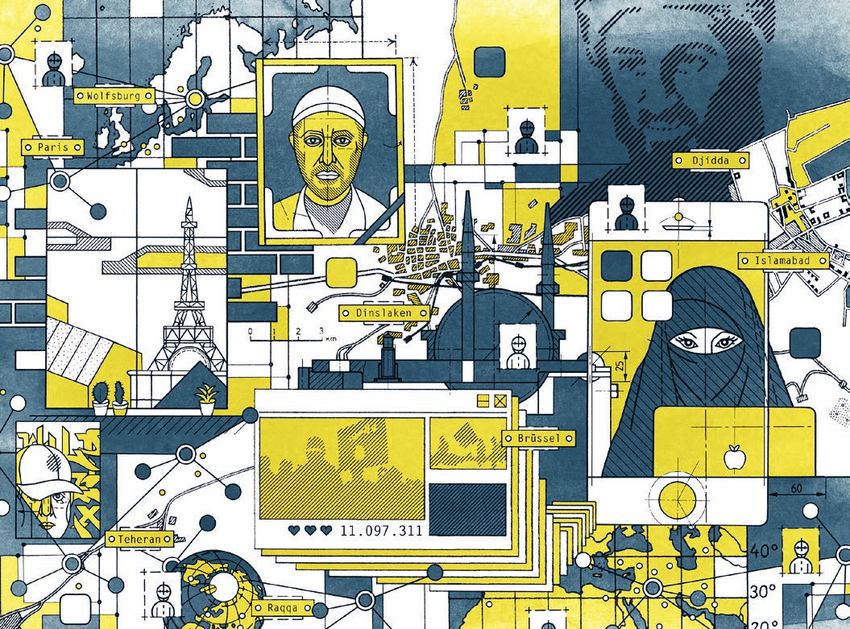
Glocal Islamism 2019
Phenomena, Interdependencies, Prevention

15  – 17 October 2019
Kongresshotel Potsdam am Templiner See
Organisation Registration Please make sure to register until 27th of September 2019 by using the link www.bpb.de/glocalislamism or www.bpb.de/glocalislamism_en (English version). The number of participants is limited. Your registration will only become effective if it was confirmed by the “bpb – Bundeszentrale für politische Bildung” (Federal Agency for Civic Education). Participation fee 1. Participation without overnight stay (including meals): 80,00 € 2. Participation with two overnight stays (15.-17.10.) in a double room (including meals): 120,00 € 3. Participation with two overnight stays (15. – 17.10.) in a single room (including meals): 170,00 € With the confirmation of your participation you will receive the bank data for the transfer of the fee. Participants who wish to stay overnight will be accommodated near the conference venue. Unfortunately, we have to charge you the full amount for the cancellation of the hotel accommodation and meals resulting from a cancellation or non-arrival. Registration is binding, and no refund of the participation fee is possible. The participation fee will be credited to the cost of canceling the hotel accommodation and meals. Reimbursement of travel costs by the bpb is not possible. If you have any questions regarding your participation, please contact the agency directly: glocalislamism@valentum.de Venue Kongresshotel Potsdam am Templiner See Am Luftschiffhafen 1 14471 Potsdam Germany For The conference addresses to all prevention players and practitioners of all areas: Science, Journalism, Schools, non-formal Education, Social Work, Civic Education, Religious Institutions, Public Administration, Security Authorities and NGOs.
Editorial
Islamist actors operate across borders, and their transnational ideology attracts
sympathisers and supporters everywhere in the world. Analysing and combating
Islamism within national boundaries is largely ineffective. If the phenomenon is to be
fully understood, the background against which Islamism has developed must be
considered in a far wider context. For organisations working in prevention, in particular,
it is essential that they understand the interdependencies between global and local
manifestations of Islamism before developing effective solutions to combat it.
In other words, engaging in an international dialogue with other organisations involved
in prevention, building networks between them, and an interdisciplinary knowledge
transfer are vital when it comes to combating this transnational phenomenon effectively
and in the long term.
1979 was a turning point for the development of globally active Islamist groups. In the
wake of incidents such as the establishment of the Islamic Republic of Iran, the seizure
of the Grand Mosque in Mecca and the Soviet invasion of Afghanistan, Islamist
movements all over the world began to gather traction. Four decades on, the Federal
Agency for Civic Education wishes to direct the spotlight at how these and other past
incidents have impacted on the present. The conference will give greater visibility
to the historical origins of current conflicts. In addition, we wish to discuss the roots,
the genesis and the aims of various internationally active Islamist groups. An analysis
of current trends will enable participants to assess the implications of Islamist move-
ments for the global community.
Besides the phenomenon of Islamism itself, the conference will also focus on the subject
of prevention. Experts from a number of countries with challenges and approaches
of their own will convene in Potsdam to share how they deal with Islamism in their
national and local contexts. Their respective perspectives, approaches and project
reports will be valuable sources of inspiration when it comes to developing new solutions
to current problems.
The conference languages are German and English, with simultaneous interpretation
provided in all sessions.
3Programme
1 pm Tuesday, 15 October 2019
Registration
PROJECT SHOWCASE I
Introduction to international organisations engaged in preventing (violent) extremism
3 pm
Opening Remarks
Thomas Krüger, Federal Agency for Civic Education, Bonn, Germany
Keynote Address
Glocal Islamism – From Reformed Islam to International Jihadism
The teachings of 18th and 19th century Muslim reformists were primarily consumed
in the countries in which they originated. However, owing to their intention to renew
Islam across the entire community of believers, their work had a considerable impact
beyond national borders, too. Current forms of Islam, some of which go back to the
teachings of these reformists, run the entire gamut from nonviolent Islam to global
Jihadism and terrorism. The international debate around how to deal with the phe
nomenon of Islamism often fails to differentiate between the individual groups located
along this broad spectrum. What forms of Islamism are there? Where are they active
and what is their relationship with local communities and rival ideologies? How do
they manifest internationally? And what trends emerge when looking at current global
developments?
Dr Guido Steinberg, German Institute for International and Security Affairs,
Berlin, Germany
Host:
Elif Şenel, journalist, Bonn, Germany
44 : 30 pm
Coffee break
5 pm
Plenary Discussion
Hijacked Revolution? Global Islamism after the Arab Spring
The Tunisians and Egyptians who took to the streets in 2011 did so to protest against
their autocratic regimes and demand social justice, a revolutionary movement that
soon spread across the entire Arab world. However shortly after, the euphoria came
to a screeching halt, with the region soon dominated by chaos, war and crises. Eight
years after what has become known as the Arab Spring, many refer to this period
as a failed opportunity for change that was instrumentalised by Islamists, among others,
as a chance to seize power. How exactly did the Arab Spring influence the rise of
Islamism in the Arab world? What role did Islamists play in the protests? And what is
the significance of these regional developments in the general global context?
Opening Statement:
Prof. Dr Fawaz Gerges, London School of Economics and Political Science,
United Kingdom
Panel members:
Dr Elisabeth Kendall, University of Oxford, United Kingdom
Khaled Diab, independent journalist and blogger, Gent, Belgium
Daniel Gerlach, Zenith – Zeitschrift für den Orient magazine, Berlin, Germany
Dr Shadi Hamid, The Brookings Institution, Washington D.C., USA
Host:
Julia Gerlach, Amal Berlin! Germany
7 pm
Dinner
5Programme
9 am Wednesday, 16 October 2019
Welcome Address
Hanne Wurzel, Federal Agency for Civic Education, Bonn, Germany
Keynote Address
Islamism beyond the Eurocentric Perspective
Having lost its final stronghold in Baghouz, the so-called Islamic State is generally
assumed to have sustained a lasting military defeat. Yet even without the Caliphate of
a terrorist organisation that is as delusional as it is logistically brilliant, in the West, the
seed of resentment and mistrust vis-à-vis Islam and all Muslims continues to grow.
That being said, Europe and the U.S. frequently overlook the fact that ISIS has inflicted
immeasurably greater damage on the social fabric in the Muslim world, has taken
the divide between Sunni and Shia Muslims to devastating depths, and has turned its
erstwhile (and by no means willing) subjects into potential terrorist suspects and
second-class human beings. The West’s perception of Islamism, the amalgamation
of power and faith, is narrowed down by its own feelings of vulnerability to be inter-
preted as a terrorist threat.
But what if we look beyond Europe? What role do Islamists have in predominantly
Muslim countries?
Christoph Reuter, Der Spiegel magazine, Hamburg, Germany
Host:
Elif Şenel, journalist, Bonn, Germany
10 : 30 am
Coffee break
611 am
BREAKOUT SESSIONS
Analysis of the Phenomenon
Twelve concurrent breakout sessions will analyse the phenomenon of Islamism and
share knowledge with participants in a compact form. Each session focuses on
one section of the broad spectrum that is Islamism, with presentations on subjects
ranging from legalistic Islamism all the way to international terrorism.
Besides a discussion of individual Islamic groups, the sessions will also focus on
specific phenomena that influence the development and the narrative of Islamism,
such as colonialism and Islamophobia.
1. The New Muslim Brotherhood in the West
Throughout Europe and North America, networks that can be traced back to the
Muslim Brotherhood and other Islamist movements have bloomed into multi-
functional and financially viable organisations. But who are the people behind the
Muslim Brotherhood? What unites them in the various countries? In what way are
they networked and actively exchange?
Dr Lorenzo Vidino, George Washington University, Washington D.C., USA
Host:
Ulf Brennecke, Legato, Hamburg, Germany
2. After the “Islamic State”? Current Status and Potential E
volution
of the Jihadi Galaxy
The self-proclaimed Islamic State has left the world shell-shocked at its savagery,
its sheer force and its successful recruiting efforts. What were local and global root
causes that enabled the Islamic State to gain power? What implications does
the current situation in the Middle East and worldwide have for the terrorist group?
Prof. Dr Fawaz Gerges, London School of Economics and Political Science,
United Kingdom
Host:
Reinhard Fischer, Berliner Landeszentrale für politische Bildung, Germany
73. Hizbullah: Reinventing the Relationship between Islam,
Armed Struggle and Politics
The Shia Hizbullah (“Party of God”) views itself as the first Arab resistance group
which succeeded in fighting Israeli troops. In part, Hezbollah is supported and funded
by Iran. Yet, it is also active beyond the Middle East. How did this group successfully
take on a significant role in the developments in the Middle East?
Dr Aurélie Daher, Université Paris-Dauphine, France
Host:
Dr Dennis Walkenhorst, Violence Prevention Network, Berlin, Germany
4. The Taliban Movement in the Context of Transnational Islamism
The Taliban movement started in the early 1990s as an organisation of Pashtun-Afghan
refugees in Pakistan. In 1994, they seized large parts of Afghanistan. Since their fall,
transnational Islamists have been operating from Pakistan and are maintaining a global
network that also counts local groups in Europe among its number. How powerful
is the once US-backed Taliban movement today?
Dr Katja Mielke, Bonn International Center for Conversion, Germany
Host:
Stella Covaci, Federal Agency for Civic Education, Bonn, Germany
5. 30 years of Al-Qaida – Local is Going Global, Global is Going Local
Once the blueprint of a transnationally operating network, Al-Qaida had the world’s
attention at least by the time the 9/11 attacks occurred. What started as a loose
group with no clear aims developed into a dangerous Islamist terror organisation in
the 1990s. How successful is Al-Qaida in fitting local conflicts into a global context?
What is its current role in transnational Islamism?
Dr Behnam Said, author, Hamburg, Germany
Host:
Dr Stefan Hößl, NS-Documentation Center of the City of Cologne, Germany
86. Hizb ut-Tahrir
Hizb ut-Tahrir (Party of Liberation), the self-proclaimed pan-Islamic political party,
is striving for a global Islamic State led by a Caliph. Who is behind this global
network? What are Hizb ut-Tahrir’s goals? What connections does Hizb ut-Tahrir
maintain to other Islamist groups?
Rashad Zaman Ali, Institute for Strategic Dialogue, London, United Kingdom
Host:
Sakina Abushi, ufuq.de, Berlin, Germany
7. On the Relationship between Wahhabism and Salafism
The terms Salafism and Wahhabism are often used interchangeably. While there are
many similarities between the two ultra-orthodox movements, such as almost identical
articles of faith, there are also vast differences in their methods. How do these two
ideologies influence each other?
Dr Hazim Fouad, Senator of the Interior, Bremen, Germany
Host:
Dr Christian Saßmannshausen, Federal Agency for Civic Education,
Bonn, Germany
8. Legalist Islamism Using the Example of the Islamic Community
of Milli Görüş (ICMG)
Islamism, as proclaimed by the ICMG, differs fundamentally from ideologies of other
associations in political Islam. One of the central aspects: ICMG categorically rejects
violence. How should organisations like ICMG be classified in the spectrum of legalist
Islamism? And how should this kind of Islamism be handled?
Dr Thomas Schmidinger, University of Vienna, Austria
Host:
Rüdiger José Hamm, National Committee on Religiously Motivated Extremism,
Berlin, Germany
99. The Impact of Colonialism on the Emergence of Islamism
The colonisation history of mainly Muslim countries in North Africa and the Middle
East had far-reaching implications. Muslim intellectuals and academics orchestrated
a rebellion against their invaders and declared that returning to Islam was a means
of throwing off the shackles of the oppressors. The narrative of the worldwide
oppression of Muslims has gained traction since then – it also plays into the hands
of those recruiting Islamists. What exactly is behind this narrative? To what extent
is colonialism to blame for the development of Islamism?
Dr Mehdi Sajid, Utrecht University, Netherlands
Host:
Dr Konrad Sziedat, Bayerischen Landeszentrale für politische Bildungsarbeit,
Munich, Germany
10. The Scourge of Terrorism in Africa: Boko Haram
The Nigerian terror organisation Boko Haram is currently the single most dangerous
movement in Western Africa. Boko Haram has joined forces with the transnational
terror networks of Al-Qaida and the “Islamic State” and aims to totally eliminate
Western influence in the region. Who is behind Boko Haram? Where are they active?
And what role do transnational terror organisations play for Boko Haram?
Dr Medinat Abdulazeez Malefakis, Berlin Social Science Center, Germany
Host:
Jamuna Oehlmann, National Committee on Religiously Motivated Extremism,
Berlin, Germany
11. Islamophobia and Radicalisation: A Vicious Cycle
Ever since the “War on Terror” began, Islamophobia has increased in the West.
The resulting ramifications include discrimination and ostracism and are often deemed
to be one of the catalysts for Islamist radicalisation and narratives. The way anti-
Muslim resentment and radicalisation interact is looked at in more detail in this session.
Prof. Dr Tahir Abbas, University of Leiden, Netherlands
Host:
Khaled Diab, author and journalist, Gent, Belgium
1012. Hamas’ Ideology through their Words
The acronym “Hamas” derives from Ḥarakat al-muqāwama al-islāmiyya and means
“Islamic resistance movement”. In Europe and North America, Hamas is said to be
radically Islamist, its “resistance” equalling terrorism. Hamas’ language and the self-
perception and ideology it expresses are the focus of this session. A discourse analysis
will be used to explore how Hamas legitimises its actions and itself as an Islamist
organisation and mobilises its members.
Dr Pamela Murgia, Pompeo Fabra University, Barcelona, Spain
Host:
Saba-Nur Cheema, Anne Frank Educational Center, Frankfurt am Main, Germany
13. Neuroimaging the “Will to Fight”
Social e xclusion is a broad and complex phenomenon – a person’s feeling that they
do not have a seat at the table in their own society. This feeling creates social cracks
that local extremist groups can exploit by claiming they are fighting on the behalf
of these disenfranchised groups. An international research group has studied the
willingness to fight and die for sacred values among supporters of a radical Islamist
group. They measured brain activity in radicalized individuals as they indicated their
willingness to fight and die for sacred and non-sacred values.
Nafees Hamid, ARTIS International, USA
Host: Djamila Benkhelouf, journalist, Hamburg, Germany
Noon
Lunch | Project Showcase II
1 : 30 pm
Breakout Sessions 1 – 13 (repeated)
2 : 30 pm
Coffee break
113 pm
PANELS
International Approaches to Prevention
Practical Experience
1. Prevention on the Internet
In young people’s lives, the line between online and offline is becoming increasingly
blurred. Spreading hate speech and denigrating content is easy due to the availability
of platforms and the anonymity of the Internet. Social media channels like Youtube
or Facebook and messenger services like Telegram are particularly prone to becoming
a communication and recruiting tool for Islamists. How can prevention efforts counter
these developments in youth work?
Rewind: a User Tool against Online Hate Speech
Laura García Pesquera and Mónica Martin Pascual, Rewind, Madrid, Spain
Bringing the Online In Line with Human Rights
Claudia Schäfer, International Network Against Cyber Hate, Amsterdam, Netherlands
Host:
Nava Zarabian, Middle Eastern Scientist, Mainz, Germany
2. Religious Education as a Means for Prevention?
The question of whether religious education can and should be used to counter
radicalisation is often the subject of a heated discussion. In fact, some Muslim
associations and individual groupings have lately taken up preventative efforts against
radicalisation and discrimination. What is the purpose of prevention work in religious
education and what different approaches are taken?
Developing a Citizenship Curriculum through an Islamic Perspective
Farooq Mulla and Sarvat Mulla, Strengthening Faith Institutions, London,
United Kingdom
The Islamic Community in Bosnia and Herzegovina: A Model for Preventing
Extremism and Violence
Dr Dževada Šuško, Islamic Community in Bosnia and Herzegovina, Sarajevo
Host:
Anja Rockel, Violence Prevention Network, Berlin, Germany
123. International Youth Exchange
International and intercultural exchange and dialogue is essential to developing
understanding and tolerance for ambiguity. International youth exchange projects
provide viable formats for the prevention of radicalisation by fostering democratic
values and skills for an active society. The trinational project PRIDE presents its
approach.
This presentation will be held in French and German, with simultaneous interpretation.
PRIDE – Prevention of Radicalisation through Intercultural Dialogue and Exchange
Alioune Niang, ufuq.de, Berlin, Germany
Aurélien Durbec, IKAB-Bildungswerk, Bonn, Germany
Ikram Ben Hassine, Club Culturel Ali Belhouane, Tunis, Tunisia
Sanae El Abbeir, Association du Lien Interculturel Familial et Social, Bordeaux, France
Host:
Dr Yasemin Nur Ural, Freie Universität Berlin, Germany
4. Prevention and Intervention in Formal Education
Schools are of paramount importance when it comes to preventing radicalisation
in general and countering religiously founded extremism. However, with a long list of
requirements, schools run the risk of overstretching the resources of the system and
their staff. How can radicalisation processes be detected early on and disrupted?
What methods should be used?
The Royal Atheneum
Karin Heremans, GO! Atheneum, Antwerp, Belgium
Clearingverfahren und Case Management
Lisa Kiefer, Aktion Gemeinwesen und Beratung, Düsseldorf, Germany
Host:
Mirjam Gläser, ufuq.de, Berlin, Germany
135. Social Cohesion through Inter-Faith Dialogue
Social cohesion is indispensable for a peaceful life in a diverse society. Inter-faith
dialogue can foster mutual understanding and knit a society closer together. Can inter-
faith dialogue also prevent extremism? Two projects present their approaches. Both
projects face the challenge of fostering social cohesion by bringing together internally
displaced people as well as refugees and even former terrorist fighters.
Promoting Peaceful Coexistence within Diverse Communities in the Ninewa Plains
Dr Sarah Markiewicz and Tharaa A. Simaan, Malteser International, Erbil, Iraq
Religious Social Responsibility for Citizenship and Coexistence
Ahmed Nagi, Adyan: Foundation for Diversity, Solidarity and Human Dignity,
Beirut, Lebanon
Host:
Reinhard Fischer, Berliner Landeszentrale für politische Bildung, Germany
6. Peer-to-Peer-Approaches
At some point in their lives, adolescents start to care more about their peers than
about adults; their peer group provides support and a sense of belonging. In the
process of forming their identity and solving problems, young people value the
exchange with other members of the tribe. How does the cooperation with juveniles
work? How best to involve young people to prevention activities?
Countering Radicalisation through Religious Education: A Peer-to-Peer-Approach
Nuwagaba Muhsin Kaduyu, Allied Muslim Youth Uganda, Kampala
Jamal Al-Khatib – My Path
Florian Neuburg and Rami Ali, Turn – Association for the Prevention of
Violence and Extremism, Vienna, Austria
Host:
Jawaneh Golesorkh, ufuq.de, Berlin, Germany
147. Women’s Empowerment and Gender-responsive Prevention
Islamist extremism in general and jihadism in particular have long ceased to be
exclusively male phenomena. Gender-sensitive approaches to prevention now focus
on the decisive role women play in extremist groups. This panel takes up two
examples from practical projects to highlight opportunities and challenges in gender-
reflective radicalisation prevention.
This presentation will be held in Arabic and German, with simultaneous interpretation.
The Morchidat
Asma Charif and Bouchra Berrady, Institut Mohammed VI pour la formation
des Imams Morchidines et Morchidates, Rabat, Morocco
MotherSchools: Parenting for Peace!
Dr Edit Schlaffer, Women Without Borders, Vienna, Austria
Host:
Samy Charchira, Aktion Gemeinwesen und Beratung, Düsseldorf, Germany
8. Prevention Projects with Returnees
Disillusioned, traumatised and lacking an existential basis: returnees pose a major chal-
lenge to the society they come back to and especially to their more immediate environ-
ment. How to deal with them? How to support their moving away from the ideology?
With Participatory Democracy for a Kosovo without Radicalisation
Kreshnik Gashi and Arber Kadriu, Balkan Investigative Reporting Network,
Pristina, Kosovo
The Resocialisation and Reintegration of Returning Foreign Terrorist Fighters
Annelies Jansen, Radicalisation Awareness Network (RAN) Centre of Excellence,
Amsterdam, Netherlands
Host:
Ariane Wolf, Violence Prevention Network, Berlin, Germany
159. Prevention at a Municipal Level
The vital importance of prevention at the local level is increasingly perceived. Therefore
a stronger networking of the municipalities on the international stage is demanded.
The European Forum for Urban Security’s cooperation project BRIDGE – Building
resilience to reduce polarisation and growing extremism – connects 13 public
authorities and conducts pilot projects to weaken and prevent polarisation on a
municipal level. Project partner present their approach within this panel.
Preventing Polarisation at the Municipal Level
Dr Eolene Boyd-MacMillan, IC Thinking Research Group, Department of
Psychology, University of Cambridge, United Kingdom
Tanja Schwarzer, Municipal Prevention Office, Düsseldorf, Germany
Lluís Paradell i Fernàndez, Intelligence and Counterterrorism Service,
Barcelona, Spain
Host:
Moritz Konradi, European Forum for Urban Security, Paris, France
10. Repression and Prevention: On Cooperating with Security Authorities
When dealing with young people prone to radicalisation, involving the authorities is
a slippery slope. Prevention workers (from civil society) and security authorities need to
fulfil different roles yet still cooperate. Community policing has proven successful in
English-speaking countries. Exactly how does this cooperation work? What are good
practices? Which aspects need to be developed further?
Community Policing to Counter Violent Extremism: A Process Evaluation
in Los Angeles
Prof. Dr Stevan Weine, University of Illinois, USA
Prevention of Extremism: International cooperation
Brahim Ben Slama, Federal Criminal Police Office, Wiesbaden, Germany
Host:
David Aufsess, VAJA – Verein für akzeptierende Jugendarbeit, Bremen, Germany
1611. Prevention in Prisons
Prisons are often considered potential hotbeds for extremists. The inmate’s search
for absolution, guidance or meaning in life can culminate in a situation that makes it
particularly difficult to prevent against Islamist extremism. What measures can
counteract radicalisation in prisons? How can already radicalised individuals be
encouraged to move away from the ideology? And how can inmates once marked as
Islamists find their way back into society?
Testing Transitions: The Reintegration of Former Extremist Prisoners in Indonesia
Cameron Sumpter, Nanyang Technological University, Singapore
Correctional Skills for Professionals Dealing with Radicalised Juveniles
Torben Adams, Senator for Judicial and Constitutional Affairs, Bremen, Germany
Khaled Awad Abdelwaly Aljabrah, Public Security Directorate, Correctional
and Rehabilitation Centres Department, Amman, Hashemite Kingdom of Jordan
Host:
Dr Malika Bouziane, Deutsche Gesellschaft für Internationale Zusammenarbeit (GIZ),
Bonn, Germany
12. International Justice Cooperation
Combating cross-border terrorism calls for international cooperation between justice
authorities. In the past few months, the large number of foreign fighters potentially
returning from former IS territories posed major challenges to governments around
the world. There are issues such as reintegration into the receiving society but also
potential risks: could these returnees continue to be involved in politically motivated
crime in their home or receiving country? What are the challenges legal authorities
face? How does international cooperation work here? Can justice systems contribute
to prevention?
Extremism and Terrorism – Legal and prevention options
Prof. Dr Helmut Fünfsinn, Attorney General, Central Public Prosecution Office,
Frankfurt am Main, Germany
Foreign Fighters and the States’ Obligation to Repatriate Them
Prof. Dr Francesca Capone, Scuola Superiore Sant’Anna, Pisa, Italy
Host:
Judy Korn, Violence Prevention Network, Berlin, Germany
175 pm
Coffee break
5 : 30 pm
Keynote Address
Women and Children in the Ideology of Islamism
In Islamist ideologies, the gender roles are clearly defined. Women are expected to
provide active ideological support to their husbands while taking care of raising the
next generation. Children are introduced to the principles of Jihad early on. In crisis
regions, they are often even used for propaganda purposes and are familiarised with
weapons and violence at an early age. One current concern is how to deal with female
returnees. What world views are they bringing back with them to their home countries?
How should society in the country they come back to respond to these women,
many of whom are severely ideologised? How can the continued indoctrination of
their children be prevented?
Dr Elham Manea, University of Zurich, Switzerland
Storytelling
A Different Kind of Daughter
As a young girl growing up in Taliban-occupied Waziristan and with a keen interest in
sports, Maria Toorpakai had no opportunity to achieve her goals, for it was common
knowledge that girls were not allowed to do sports. With the approval of her parents,
Maria assumed a male identity and henceforth pretended to be a boy to pursue her
dreams. Today, Maria is one of the world’s top squash players. Her book describes
her journey and provides an insight into life in a world dominated by Islamists both
male and female.
Maria Toorpakai, The Maria Toorpakai Foundation, New York, USA
Host:
Dr Merjam Wakili, journalist, Bonn, Germany
7 pm
Dinner
18Programme
9 am Thursday, 17 October 2019
Panels 1 – 12 (repeated)
11 am
Coffee break
11 : 30 am
Political Cabaret
From Kebab at the Corner to Top-Level Terrorism
“ISIS made us acutely aware: We have absolutely no clue how to counter fanatism.
We’re like headless chicken.” Thus concludes Cologne political satirist Fatih Çevikkollu.
He approaches the difficult debates about integration and transnationally operating
terrorism with wit and humour and mocks politicians from Germany and beyond,
exposing day-to-day racism. With courage, provocation and self-irony he tackles
prejudices in his sets. Describing the steep social climb of Muslims in German
mainstream society, Fatih says: “Yesterday they were making kebabs at the corner,
today they’re top-level terrorists!”
Fatih Çevikkollu, satirist, Cologne, Germany
Host:
Elif Şenel, journalist, Bonn, Germany
Closing Remarks
Hanne Wurzel and Lobna Jamal, Federal Agency for Civic Education,
Bonn, Germany
1912 : 15 pm
Lunch
2 pm
End of conference
Location and getting there
By car
From the North
approaching on the A24, exit onto the A10 (Berliner Ring), junction “Potsdam Nord”,
towards Potsdam-Zentrum via Zeppelinstraße, turn left before leaving the city
From the West
approaching on the A2, exit onto the A10, junction “Groß-Kreutz”,
towards Potsdam-Zentrum, turn left as you enter the city
From the South / East
approaching on the A9 / A13 / A12, exit on the A10, junction “Michendorf”, via the B2
towards Potsdam-Zentrum via Zeppelinstraße, turn left before leaving the city
By bus and train
to “Potsdam Hauptbahnhof” (Central Station) via the S-Bahn (commuter train)
or Regionalbahn (regional train) and then take…
… tram 91
to the final stop “Bahnhof Pirschheide”, please follow signs to the Kongresshotel
Potsdam, approx. 3-minute walk (200 metres) on an even path to the hotel
… bus 631
towards Werder and get out at “Luftschiffhafen”, before reaching the bridge,
turn left and follow the hotel signs, 500-metre walk on slightly uneven path
including cobblestones to the Kongresshotel Potsdam
… regional train
to “Potsdam-Pirschheide”, then approx. 7-minute walk (500 metres) on an even path
to the Kongresshotel Potsdam
20Airports
Berlin Schönefeld
Take the Regionalbahn (regional train) RB 22 from Berlin Schönefeld Airport to
“Potsdam Charlottenhof” and then take tram 91 to the final stop “Bahnhof Pirschheide”.
The journey takes around 55 minutes. From “Bahnhof Pirschheide”, it is a 5-minute
walk to the Kongresshotel Potsdam. Please follow the hotel signs.
Berlin Tegel
Take bus 109 towards Zoologischer Garten and get out at “S-Bahnhof Charlottenburg”.
From there, take regional train RE1 to “Potsdam Hauptbahnhof". Then take bus 631
or tram 91 to “Luftschiffhafen”. The journey takes around 60 minutes. From there
it is a 5-minute walk to the Kongresshotel Potsdam. Please follow the hotel signs.
By car you need around 60 minutes from the Tegel Airport to the Kongresshotel
Potsdam.
Potsdam
ße Hauptbahnhof
s tra Central Station
e lin
Fo r s t s t r a ß e
pp
Ze
BUS Tram S
H
ei
nr
ic
h-
M
an
n-
Al
BUS Luftschiffhafen
le
e
Kongresshotel
Potsdam
e
se
Pirschheide
us
ha
Tram
ß
rC
e
ra
St
r fe
er
l in
do
en
Te m p
ch
MiOrganiser bpb – Bundeszentrale für politische Bildung (Federal Agency for Civic Education) Contact bpb – Bundeszentrale für politische Bildung (Federal Agency for Civic Education) Mrs. Hanne Wurzel Director of the Department “Prevention of Extremism” Adenauerallee 86 53113 Bonn Germany E-Mail: glocalislamism@bpb.de Press contact bpb – Bundeszentrale für politische Bildung (Federal Agency for Civic Education) Executive department “Communication” Adenauerallee 86 53113 Bonn Germany Tel +49 (0) 228 99 515 - 200 Fax +49 (0) 228 99 515 - 293 E-Mail: presse@bpb.de Image: Christian Gralingen
You can also read


