GMCHWB FORUM HEALTH AND EDUCATION - NAVIGATING THROUGH COVID RECOVERY - FRIDAY 10 JULY 2020 MS TEAMS LIVE STREAM @GM_HSC @GMEC_SCN #GMCHWBForum ...
←
→
Page content transcription
If your browser does not render page correctly, please read the page content below

GMCHWB FORUM
HEALTH AND EDUCATION - NAVIGATING
THROUGH COVID RECOVERY

FRIDAY 10 JULY 2020

MS TEAMS LIVE STREAM

#GMCHWBForum

@GM_HSC      @GMEC_SCN

Greater Manchester Health
     and Social Care Partnership

INTRODUCTION AND SCENE SETTING
DR CAROL EWING
Greater
      Manchester
 Children’s Health
   and Wellbeing
       Framework
      2018 – 2022
Endorsement by GM Health and
              Care Board 2018
       Oversight of Framework
  Programme by GM Children’s
Health and Wellbeing Executive
                        Board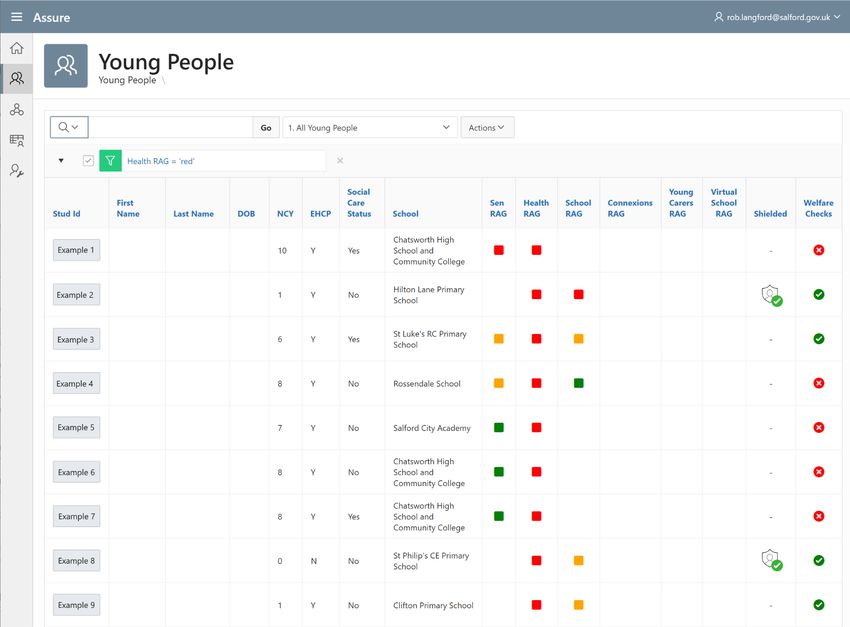
Greater Manchester Health
          and Social Care Partnership

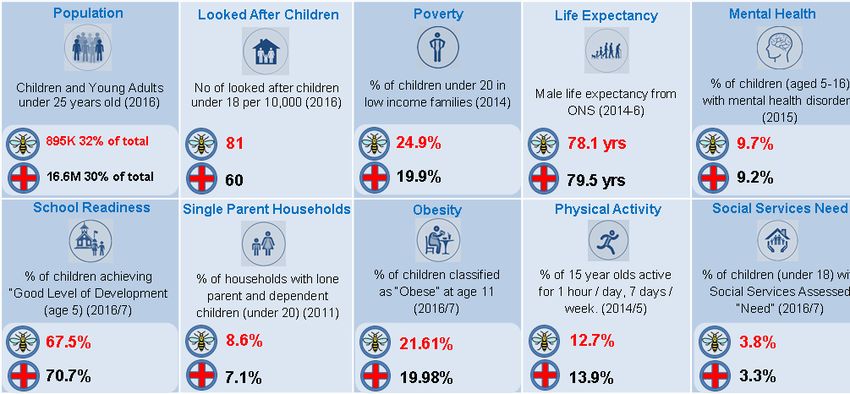
            GM CHILDREN AND YOUNG PEOPLE:
                  POPULATION PROFILE

ENGLAND                           GREATER
                                 MANCHESTER
Greater Manchester Health
    and Social Care Partnership

GM CHILDREN’S HEALTH AND WELLBEING
     FRAMEWORK DELIVERABLES
Greater Manchester Health
     and Social Care Partnership

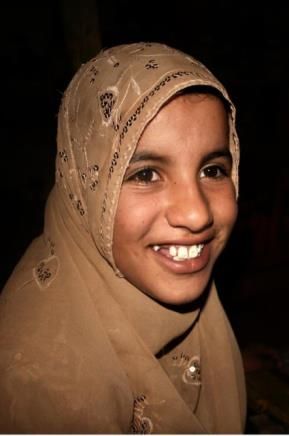
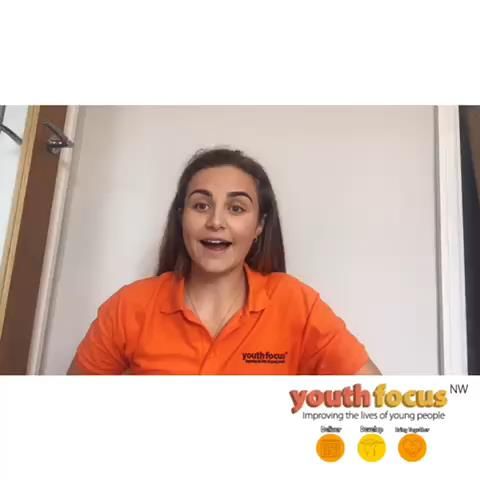
CYP VOICE
LAUREN BARCLAY
‘Our efforts don’t scale, they proliferate at the speed of
trust’.
(Cormac Russell 2020)
CYP MH COVID-19 Recovery
Time to Restore, Recover & Reimagine
MH Recovery Planning

Activities to support phase 3 planning have included:
• MH Trust led demand and capacity planning, including
  identifying capital investments needed
• Development of a report on the impacts of COVID-19 from
  localities and different GM system stakeholders and
  understanding rapid changes. Supported by Health Innovation
  Manchester
• Templates for each NHSE/ GM MH priority areas pulled
  together highlighting COVID-19 impacts and activities for
  programmes in the short to medium term
Greater Manchester Health
and Social Care Partnership

                                     PROPOSED CLINICAL LEADERSHIP MODEL

      GM MH Programme Board             GM MH Programme Clinical
                                             Leads Group

  Adults and Children and Young
          People Boards                 CYP MH/ Adult MH Clinical
                                             Leads Groups

     Workstream (Project) Board(s)

                       Operational       Clinical/ Expert
                        Delivery            Reference
                        Group(S)             Group(s)
Connecting clinical
leadership &
Cultural change – commissioning
Lived experience in co-
looking after people and development and
staff
Leaner systems outcomes
Research and innovation
Digital offers supporting MH
Respecting choice –
All age Thrive model
face to face vs remote
Standardisation across
The Harnessing COVID-
GM Wellbeing 19 community spirit
and goodwill
Align to start well, live
well, age well
Wishbone
Rapid changes are
possible –
Learning from prepared to be
COVID-19 Thinking of the whole agile and work at
person pace
Building the whole
system for MH• CYP MH Crisis care and tier 4
• iThrive – next phase of the model
• Transitions (including ADHD and CYP
Priority areas CEDs)
for GM CYP • Community Eating Disorders for CYP
Mental Health • Perinatal and parent-infant MH
(PIMH)
• Mental Health in Education Settings
(MHiE)Mental Health Capacity Planning for Greater Manchester Phase 3
Greater Manchester – CAMHS/CYP Community Services
• Similar to Adult Community Services, services for CYP
experienced a reduction in referrals between March and April.
GM - CAMHS and CYP EDS
• Between January 2019 and February 2020 there were an
8,000 average of 2800 though this fluctuated between a range of
6,000 1800 and 3300.
4,000
• Between March and May 2020 there was a reduction in
2,000 referrals of 50% (supressed demand of 2800 referrals) which is
0 predicted to enter services from July 2020 to February 2021
Oct-18 May-19 Dec-19 Jun-20 Jan-21 Jul-21
• An average 17% increase in new demand is predicted between
Referrals received Referrals forecast July and December (8000 additional referrals) that will then
stabilise at a sustained 15% from January (equating to an
Average Received Upper Limit
additional 400 referrals per month.
Lower Limit
• A peak in the supressed demand entering services is predicted
in September when children are likely to return to school. This
is also the case for the GM student service population.
• There have been changes to increase the number of non-face
to face contracts during the covid-response period and these
are being carefully evaluated for service user experience,
outcomes where available and impact on inequalities.Education Perspective
Mental Health
Lisa Fathers
Director of Teaching School & PartnershipsMental Health & Wellbeing
Key Challenges
Collaboration
Early Years – Challenges & Evidence

• Risks to childcare and early years provider market and offer to
  families
• Early intervention with families – reduced universal contacts during
  early years to support early identification of need
• Cancellation of EYFS assessment 19/20
• Impact of school closures on reception/Yr 1
• Widening attainment gap and impact on vulnerable children
Early Years – Opportunities / Building Back Better

• Enquiry led model to support development of recovery curriculum
  (with a focus on Yr 1)
• Focus on social, emotional, behavioural support
• Refocussing assessment as a tool to support understanding child
  needs and accelerating implementation of universal 18 month
  assessment model
• Increased engagement of parents in home learning environment
• Developing a more holistic framework of measures to understand
  child development
Early Years – Mentimetre Question

What’s your main concern about the impact that Covid has had on
families with children under 5? Choose a word of short phrase.
Special Educational Needs & Disability

   Challenges for Local Areas across Greater Manchester

❖ Getting accurate, well informed and up-to-date
  information

❖ Working differently

❖ Responding quickly to the changing situation and
  government advice and guidance

❖ Meeting needs of all those with identified SEND
Special Educational Needs & Disability

                                             Opportunities

Information
•     LAs have used their Local Offer websites and set up Covid19 pages, sent out Local Offer Newsletters,
      published responses to FAQS for families
•     Frequency of contact with Parent Carer Forums and other community groups has increased and helplines and
      virtual drop-ins set up, at different times, involving wider range of services and professionals
•     Contact made with families through school and college welfare checks, conversations about risk assessments
      and reasonable endeavours for those with EHCPs have taken place and personal letters sent out to all families
      with information
•     Regular SEND bulletins with latest advice, guidance and resources circulated to colleagues across GM
•     Weekly forum between GM Mental Health team, special schools and SEND colleagues across GM to raise
      questions, share practice and local and national information and advice

Working differently
•    Virtual person centred reviews of EHCPs taking place with increased engagement from young people and
     families
•    Online learning and individual tuition set up
•    Education staff working with families at home which has highlighted unidentified needs
•    EPs, Community Paediatricians and therapists carrying out virtual assessments
•    Virtual decision making panels set up involving all services
•    Virtual SENDCo and Preparation for Adulthood networks set up
Special Educational Needs & Disability
Opportunities
Response
• Flexibility in use of short breaks budgets and introduction of one off payments to support families
• Risk assessment documentation for individual children and young people shared across LAs
• Best interest meetings with parents of children who had been shielding and health colleagues to discuss
requests to return to schools
• Delivery of activity resources and co-production of sensory packs for families with children with complex needs
• Therapy sessions and training delivered on-line
• LAs sharing their approaches to reasonable endeavours duties
• Health, care and education colleagues working together on reasonable endeavours duties
• Access to schools outdoor spaces provided to support the need for some children to run around in a safe
space
• Aids and equipment delivered to homes to support therapy programmes
• EPs commissioned to provide mental health and well being support to education staff
• Settings going “above and beyond” to support families
Meeting needs of all those with identified SEND
• EP helpline for families of children at SEN Support set up
• Specialist teachers and special school outreach teams providing advice to mainstream colleagues on suitable
resources
• LAs continuing to deal with new requests for EHC needs assessments, working within statutory timescales and
making decisionsSpecial Educational Needs & Disability
Building Back Better
Practical steps to support children and young people with SEND and their families
VOTE FOR YOUR TOP 3
1. Positive relationships 8. Virtual EHCP reviews
2. Use of social media to connect 9. Sharing good practice across LAs,
with families schools and health services
3. Multi-agency helplines and drop-ins 10. On-line training and intervention from
therapists
4. Access to ICT for families
11. Those at SEN Support
5. Specialist multi-agency hubs
12. Children and young people who may
6. Common standards and approaches have
across to continue to shield
GM
13. Contingency plan for possible 2nd wave
7. Access to on-line learning or
localised lockdown
14. Transition for children moving from one
setting to anotherGreater Manchester Health and Social Care Partnership PHYSICAL HEALTH FROM A SCHOOL NURSE PERSPECTIVE SCREENING AND IMMUNISATION CAROL BAILEY
Greater Manchester Health
       and Social Care Partnership

CHALLENGES
• Obesity and/ or malnutrition
   •   reduction in physical activity during lockdown
   •   School meals
• Safeguarding
   •   Children we don’t know about, reduction in Section 47 presentations
• Reduction in attendance for LTCs
• School imms and vaccs programme
• Healthy child programme, universal services and assessments
  reduced-school nurses have been redeployed
OPPORTUNITIES
• School nurses can make a real difference -critical to prevention, identifying
  the needs of children and families
• The 4-5-6 model-Healthy child programme
Greater Manchester Health
and Social Care Partnership
IMMUNISATIONS GIVEN IN SCHOOL
• Flu – October – December Reception – year 6 (nasal
immunisation)
• Human Papilloma Virus (HPV) - Year 8/9
• School Leaver Booster – Year 9/10 (this completes the
course of vaccinations they started as babies)
• Meningitis ACWY – Year 9/10Greater Manchester Health
and Social Care Partnership
SCHOOL IMMUNISATION SERVICE DURING COVID-19
• Suspended on 23rd March
• Some children have not completed the immunisations they
would have had in this school year
• School immunisation teams setting up clinics over the summer
to catch up. Will also catch up during next school year
WHAT CAN PARENTS/CARERS DO TO HELP?
• Reply to invitations to appointments –attend/rebook
• Return consent forms to the schools
• Talk to your children about the vaccinations and why they are
having themGreater Manchester Health
and Social Care Partnership
MENTIMETER POLL
What practical step could be taken to improve physical
health when all children return to school?
Short phrase answerLA perspective Cathy Starbuck Assistant Director, Education and Skills and Work
Use of a Triangulation App – Assure

• IT platform (Assure) has been developed to share concerns ( via
  RAG risk ratings and welfare checks) across all agencies below
  social care thresholds
• Virtual locality meetings for children/families, supporting a multi-
  agency response for children and families at early help level
• The meetings ensure that concerns regarding the needs of children
  and families are captured, supported and monitored by relevant
  professionals involved with the family.
• The meeting will enable reflective professional discussions to take
  place to allow appropriate support packages and a clear route for
  escalation of concerns

                             NB This COVID -19 process does not replace
                             existing ‘worried about a child’ processes and is
                             for lower level concerns. If in doubt a professional
                             should use the Bridge referral pathway.
NEXT STEPS, ANY OTHER BUSINESS AND
CLOSE
THANK YOU
Contact us
If you have any queries about these guidelines,
contact the GMHSC communications team:
gm.hsccomms@nhs.net
www.gmhsc.org.uk
@GM_HSCYou can also read


