ASSISTANCE PLAN IN THE NORTH-WEST AND - GOVERNMENT EMERGENCY HUMANITARIAN ASSISTANCE PLAN IN THE NORTH WEST AND SOUTH WEST REGIONS
←
→
Page content transcription
If your browser does not render page correctly, please read the page content below
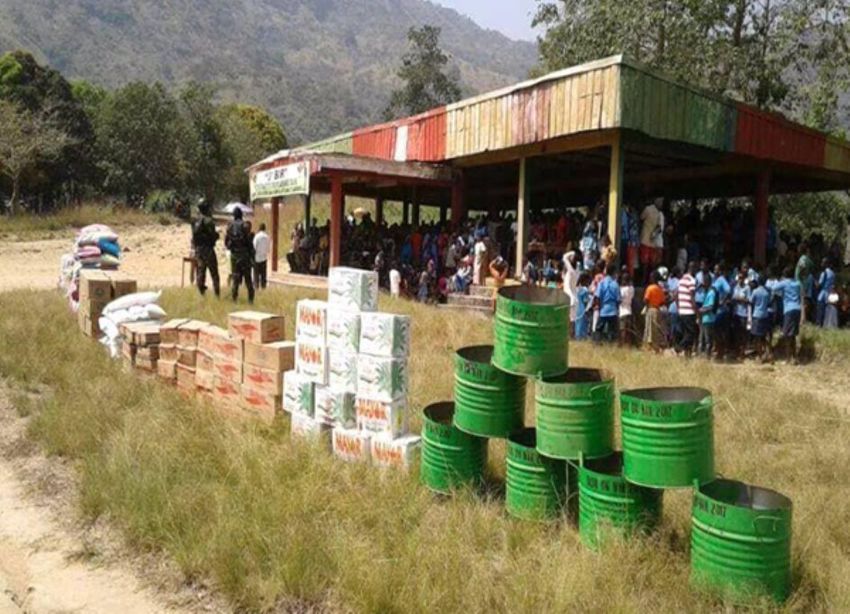
GOVERNMENT                EMERGENCY HUMANITARIAN
  GOVERNMENT EMERGENCY HUMANITARIAN ASSISTANCE PLAN IN THE NORTH WEST AND SOUTH WEST REGIONS

ASSISTANCE PLAN IN THE NORTH-WEST AND
       SOUTH-WEST REGIONS 2018-2019

                         CAMEROON
                                                                           CAMEROON            1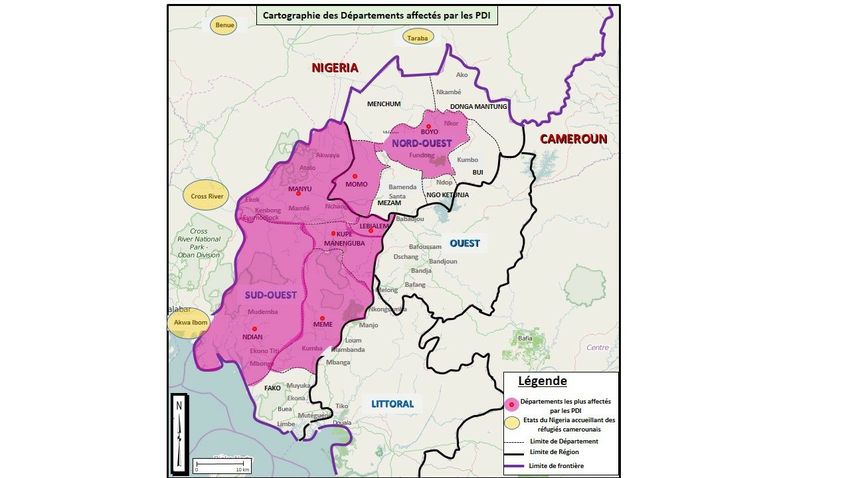
GOVERNMENT EMERGENCY HUMANITARIAN ASSISTANCE PLAN IN THE NORTH WEST AND SOUTH WEST REGIONS

                                      PLAN
I-      BACKGROUND AND RATIONALE
        1.1    Violation of the Right to Education
        1.2    Disruption of Economic Activities
        1.3    Attacks against members of the Defence and Security Forces
        1.4    Attacks against Administrative and Traditional Authorities
        1.5    Conscription of Children into Militia Groups
        1.6    Incitement to Violence through Social Media
        1.7    Numerous Terrorist Abuses against the Population
        II- CURRENT SITUATION
        2.1 Geographical Breakdown of Internally Displaced Persons
        2.2 Geographical Breakdown of Refugees in Nigeria
        III-ACTIONS ALREADY TAKEN
        3.1 National Solidarity Actions
        3.2 Actions by Administrative Authorities

        IV-ASSISTANCE OBJECTIVES AND THRUST AREAS
        3.1Strategic Objectives
        3.2Assistance Thrust Areas
        V- IMPLEMENTATION
        5.1   Institutional Stakeholders
        5.2   Other Stakeholders
        5.3   Financing
        5.4   Needs
        5.5   Timeline
        5.6   Budget Execution Timeframe
        ANNEXES
        Summary Table of the Emergency Humanitarian Assistance Plan

        I- BACKGROUND AND RATIONALE
        Cameroon has been experiencing socio-political unrest in the North-
          West and South-West Regions since 2016. This situation partly
          resulted from socio-professional grievances to which the
          Government, through consultation and dialogue with the relevant
          trade unions, provided appropriate solutions that, at times, even
          went beyond the expectations of the social partners.

                                                                              CAMEROON            2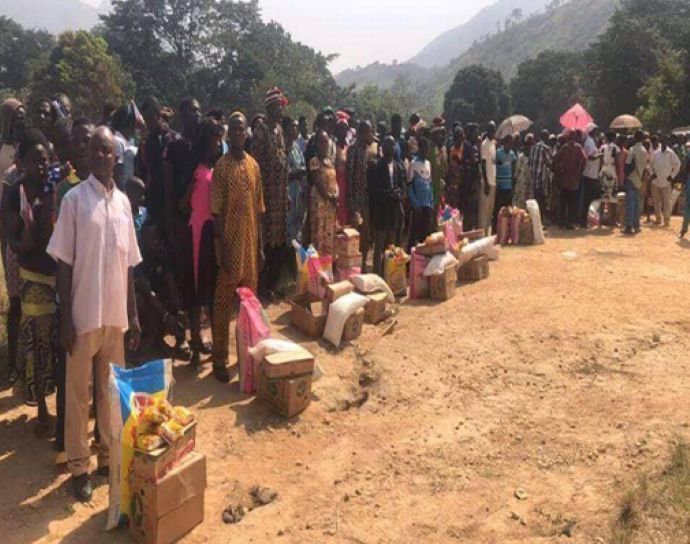
GOVERNMENT EMERGENCY HUMANITARIAN ASSISTANCE PLAN IN THE NORTH WEST AND SOUTH WEST REGIONS

     The Government's good will notwithstanding, extremists in the Diaspora
        and their local networks moved from socio-professional grievances to
        secessionist plans. After provoking a stalemate in dialogue by raising
        the stakes, engaging in intimidation and exerting various forms of
        pressure, they created and sustained an atmosphere of fear and
        tension through misinformation, dissemination of hate messages and
        incitement to violence. Finally, they formed armed groups and
        embarked on terrorist attacks against the authorities and civilian
        populations in a futile attempt to concretize their pipe dream of
        partitioning Cameroon.
     In addition to calls for hatred and violence on social media, the terrorists
        have committed many crimes and abuses in the North-West and
        South-West Regions, mostly against the education sector, economic
        activities, members of the Defence and Security Forces,
        Administrative and Traditional Authorities and, especially, the
        civilian population.

      The civilian populations, mostly in rural areas, have paid the highest
price of the ugly war imposed by the terrorists on the Cameroonian people.
Victims of numerous atrocities (assassination, theft, rape, abduction,
extortion, etc.) and gripped by the fear created by threats, intimidations, fake
news, etc., many of them have sought refuge abroad or in other regions of
Cameroon.

      Although the Cameroonian people once more demonstrated their
hospitality and great spirit of solidarity towards their compatriots in distress,
the Government thought it necessary to prepare a structured and overall
assistance plan to address the urgent and essential needs of the populations
living under terrorist threats or forced to abandon the quiet of their homes and
their activities, and to flee from the murderous madness of these terrorists.

      1.1 Violation of the Right to Education
      The education sector was and remains one of the prime terrorist targets.
Schools are repeatedly attacked by armed terrorist groups. Students and
teachers have been threatened, brutalized, mutilated and killed right in their
classrooms and dormitories. Since the outbreak of the crisis, more than 120
schools have been burnt down in the two regions. A bomb was planted in the
premises of Presbyterian Comprehensive Secondary School Aziri in Bamenda
on 20 October 2017, but it was fortunately deactivated by the security forces.
      Because of these attacks which are part of an obscurantist and senseless
strategy, thousands of students and teachers, eager to continue their
educational career or their professional activities in peace, have migrated to
other regions of Cameroon. Apart from the break-up of family units, this has

                                                                           CAMEROON            3
GOVERNMENT EMERGENCY HUMANITARIAN ASSISTANCE PLAN IN THE NORTH WEST AND SOUTH WEST REGIONS

led to the degradation of one of the most reputed and efficient educational
systems of the country and even the continent. The consequences of such a
situation will be felt for a very long time after the inevitable return to
normalcy. Meanwhile, the master-minders of these terrorist acts living abroad
are flooding social networks with pictures of their children celebrating the
award of their certificates.
       Here are some examples of terrorist attacks against the education sector.
-    5 February 2017, burning down of Government Technical High School
Barombi-Kang;
-   17 May 2017, burning down of Government Bilingual High School
Kumbo in Bui Division;
-    Night of 8 to 9 March 2017, burning down of Government Secondary
School (GSS) Barombi-Kang;
-    28 July 2017, burning down of the administrative block of Government
High School Kembong;
-      31 July 2017, burning down of Government High School Afap;
-    19 January 2018, burning down of the administrative block of
Government High School Balikumbat (Ngoketunjia);
-     23 January 2018, burning down of the girls' dormitory of Saint Rita
College Nkambe. The lives of the students were saved because they had left
the dormitory for the refectory prior to the act;
-   24 January 2018, burning down of Government Primary School Etam,
Tombel (Kupe-Muanenguba);
-    1 February 2017, the terrorists carried out machete attacks against the
teachers of Government Secondary School Mbeta, Nguti Sub-division,
wounding many;
-     20 September 2017, a home-made bomb exploded in a classroom in
Government Teachers' Training College (ENIEG) Bonadikombo, Limbe I Sub-
division;
-    29 January 2018, about 50 club- and machete-armed terrorists entered
Government High School Bangem (Kupe-Muanenguba) and chased away
students from their classrooms. As a result of the fear thus created, the other
students in the locality deserted their schools;
-     1 February 2018, armed and hooded terrorists broke into Seat of Wisdom
College Menji (Lebialem) They held up the boarding students and took three
Sisters teaching there hostage, namely: Sisters Anne Marie, Martine and Nova,
of Philippine, French and Italian nationalities;
-    21 February 2018, at about 1 p.m., terrorists kidnapped and assassinated
the Head Teacher of Government Primary School Etam, Ejolle Patrick, while

                                                                             CAMEROON            4
GOVERNMENT EMERGENCY HUMANITARIAN ASSISTANCE PLAN IN THE NORTH WEST AND SOUTH WEST REGIONS
he was travelling to Tombel. The terrorists accused him of collaborating with
the authorities;
- 10 April 2018, heavily armed terrorists stormed schools in the localities
of Ngussi and Nyassosso in Kupe-Muanenguba Division;
- 25 April 2018, Mr Ashu Thomas Nkongho, Discipline Master in
Government Bilingual High School Kossala in Meme Division, was
assassinated in his school by terrorists;
- 25 May 2018, Mrs Enanga, Principal of Government Bilingual High
School Buea, was kidnapped by terrorists, etc.
In its report of 28 June 2018, Amnesty International denounced these
attacks against students and teachers in the North-West and South-West
Regions.
In a joint release of 1 June 2018, in Yaounde, the Representative of the
United Nations Children's Fund and the Director of the United Nations
Educational, Scientific and Cultural Organization (UNESCO) Regional Office
for Central Africa condemned the acts perpetrated by the terrorists in North-
West and South-West Regions.
They also urged the terrorists to immediately release all the education
staff kidnapped.
1.2 Disruption of Economic Activities
Addressing the concerns raised by the population during government
field missions, the Head of State ordered the release of special funds for the
implementation of a number of development projects, especially infrastructure
projects, in the North-West and South-West Regions. Paradoxically, most of
these projects are being slowed down by repeated abuses perpetrated by the
terrorists against staff of companies responsible for implementing the projects.
Here are some examples:
- on 15 March 2018, four employees of SOROUBAT in charge of
constructing the Kumba-Ekondo Titi road were kidnapped. One of them, a
Tunisian, was later killed by his abductors;
- on 12 December 2017, 7 employees of the Geotechnical Research,
Studies and Control Firm (BRECG), hired to conduct geotechnical studies for
the construction of the bridge over River Ebinsiont, were kidnapped in Akwaya
Sub-division (Manyu Division) and are believed to have been assassinated by
the terrorists.
The objective of the terrorists seems to be to destroy the economy of the
North-West and South-West Regions. In addition to repeated attacks against
essential infrastructure construction projects, they attack existing
infrastructure (destruction of the pylons of telecommunication companies,
etc.) and economic activities. “Ghost town” operations imposed through
intimidation and threat are having disastrous consequences on economic
activities and household incomes. Due to these “ghost town” operations,
CAMEROON 5GOVERNMENT EMERGENCY HUMANITARIAN ASSISTANCE PLAN IN THE NORTH WEST AND SOUTH WEST REGIONS
burnings and explosive attacks, many businesses and markets have closed
down. The activities of industries in the South-West Region (PAMOL and
CDC), which are victims of repeated attacks, are being paralyzed and their
survival threatened. Thousands of people thus run the risk of losing their jobs.
Agricultural activities are also affected by the criminal actions of terrorist
militia groups. Many families are compelled to abandon their agro-pastoral
activities.
Driven by greed, the terrorists also attack goods transport and travelling
activities, increasing hold-ups and looting.
1.3 Attacks against members of the Defence and Security
Forces
Statistics as at 11 June 2018 showed that 123 attacks had been carried
out claiming 84 lives, including 32 soldiers, 42 gendarmes, 7 police officers, 2
prison warders and 1 eco-guard assassinated in a cowardly manner. Several
victims were mutilated or beheaded and their corpses displayed on social
media.
These devoted civil servants, whose job is to protect citizens and their
property, died in the discharge of their sacred duty. Their comrades are
carrying on with their duty to preserve peace and the safety of the population
with courage and determination.
1.4 Attacks against Administrative and Traditional
Authorities
Administrative authorities have been regular targets of the terrorists
who, in their propaganda, have continued to call for the murder of these
representatives of the State.
Here are some examples:
- 11 February 2018, kidnapping and assassination of the Divisional Officer
of Batibo, North-West Region;
- 20 March 2018, attack on the convoy of the Lebialem Senior Divisional
Officer at Mockmbie. The Senior Divisional Officer was seriously wounded and
the Divisional Delegate of State Property, Surveys and Land Tenure killed;
- 22 April 2018, attack on the convoy of the Governor of the South-West
Region in Lebialem Division;
- 20 May 2018, kidnapping of the 2nd Assistant Divisional Officer of
Lebialem;
- 17 March 2018, kidnapping of Professor Ivo LEKE TAMBO, Chairman of
the GCE Board Council, in Alou Sub-division;
- Moreover, at least 15 attacks have been carried out against traditional
chiefs;
CAMEROON 6GOVERNMENT EMERGENCY HUMANITARIAN ASSISTANCE PLAN IN THE NORTH WEST AND SOUTH WEST REGIONS
- 5 February 2018, assassination of the 3rd Class Chief of Esukutan in Toko
Sub-division;
- 19 February 2018, burning down of the residence of the traditional chief
of Etam (Kupe-Muanenguba);
- 13 and 24 February 2018, burning down of the residences of the Chiefs of
Myerem in Akwaya Sub-division (Manyu) and Nguti (Kupe-Muanenguba).
1.5 Conscription of Children into Militia Groups
For some time now, child soldiers have been seen in the propaganda
videos of the terrorists. In fact, many minors are taken out of school and
recruited by militia groups as combatants. Drug consumption and magical and
occultist rituals (Odeshi) are used to control these children's minds. They are
then forced to commit atrocities, including against their family members.
1.6 Incitement to violence through the social media
The social media have played a particularly noxious role in the
degradation of the humanitarian situation in the North-West and South-West
Regions. The climate of terror created by these social media is indeed the
source of the fear observed among the populations and the forced
displacements of these populations internally and out of the country.
Through the social media, the terrorists and their sponsors carried out a
sustained campaign to spread fear, hatred and violence. The hate speech calls
for the killing of members of the defence and security forces, as well as the
assassination of administrative authorities and other State representatives.
The terrorists even called for attacks on ethnic or linguistic bases. The hate
campaign on the Internet is also fuelled by fake news through which the
terrorists accuse the defence and security forces of imaginary atrocities and
even of perpetrating a genocide in the North-West and South-West Regions.
Such false accusations, often echoed by irresponsible politicians seeking
notoriety, increase the fear and dissuade the populations who fled their
villages from returning.
Many of the people inciting the population to hatred and violence are
based abroad: Mark Bara, alias Bareta (Belgium), Ayaba Cho Lucas (Norway),
Tapang Ivo Tanku, Akwanga Ebenezer, Dereck Mbongo, Nsoh Nkem Foncha,
Chris Anu and Yinkfu Nsangong (United Stated of America), Shey Kaavi Wo
Melim (Austria), Akoson Pauline Diale and her husband Akoson Raymond and
Brado Etchu Tabenyang (Nigeria), John Mbah Akuro and Larry Eyong (South
Africa). These terrorist networks even organize fundraising from their country
of residence to purchase weapons and fund terrorist activities.
The Cameroonian Government has approached the authorities of the
said countries to put an end to the terrorist support activities carried out on
their territory. Reactions to this request are still awaited.
CAMEROON 7GOVERNMENT EMERGENCY HUMANITARIAN ASSISTANCE PLAN IN THE NORTH WEST AND SOUTH WEST REGIONS
1.7 Abuses against the population
Since the beginning of the crisis, the people of the North-West and South
-West Regions have been victims of all sorts of violence and atrocities from the
terrorists. Instigated by the people behind the scene, most of whom live
abroad, hordes of armed youths under the influence of drugs, scour villages
and rural areas where they kill, rape, loot and extort the populations. Just in
the first half of 2018, more than a hundred properties were destroyed or
torched by the terrorists. Many women and girls were victims of sexual abuse
(rape, false marriages, unwanted pregnancies, etc.). Such is the case of three
teenage girls who were raped by terrorists on 23 May 2018 in the locality of
Matazem, Mezam Division. Several persons suspected of collaborating with
the authorities were murdered. This abuse against civilian populations was
confirmed by Transparency International in its latest report in June 2018.
During the past twelve months, the two regions have recorded more than
a hundred civilians killed by theses bands of armed terrorists.
In the North-West Region, the following recent cases were recorded:
- Bangha Antony and Chia Emmanuel, killed on 23 March 2018 in
Belo by terrorists who accused them of collaborating with the defence
and security forces;
- Awira Joseph Wirba, abducted and beheaded by his abductors on 14
February 2018 in Kitiwum, Bui Division;
- Salman Fasil Lemnyuy, murdered on 27 March 2018 in Kikaïkom,
Boyo Division;
- Fosso Taka Armel Shelia, killed on 7 March 2018 in Batibo,
Momo Division;
- Nganyou Robert, killed by terrorists on 25 January 2018 in Tadu,
Bui Division;
- Boumzina Albert, killed on 24 April 2018 in Ngie, Momo Division;
- Gallega Emmanuel, killed by terrorists on 26 March 2018 in
Widikum, Momo Division;
- Acha Clarisse, killed by terrorists on 23 March 2018 in Batibo,
Momo Division.
In the South-West Region
- Netomba Simon, killed on 1 June 2018 at Bamuso;
CAMEROON 8GOVERNMENT EMERGENCY HUMANITARIAN ASSISTANCE PLAN IN THE NORTH WEST AND SOUTH WEST REGIONS
- On 7 April 2018, the irredentists abducted 8 people in Ebonji village,
Tombel Subdivision. The brother of the Village Head, Eboka Samuel, who
resisted, was murdered in cold blood;
- On 4 April 2018, the businessman Budze Tayoh, alias DJ Plaza, was
murdered by the irredentists in the locality of Nteho, Bangem Subdivision
(Kupe-Manenguba). They accused him of providing supplies of beverages to
the defence and security forces;
- On 17 March 2018, a bus transporting 30 passengers, including many
students on their way to Menji, was attacked by terrorists, its occupants
illegally confined and despoiled of their property;
- On 6 April 2018, the terrorists forced villagers to contribute to the “war
effort” in Balangi, Mbonge Subdivision (Meme);
- On 13 April 2018, the terrorists attacked the villages of Ediki and
Balangi, on Highway No. 8 (Muyuka-Kumba) in Mbonge Subdivision (Meme).
Fleeing these acts of violence, 210 people crossed River Moungo through the
Kumba-Mbanga railway bridge and arrived in Mbanga (Moungo) the same
day.
The acts of violence and atrocities perpetrated by the terrorists
undoubtedly forced some members of the population of the North-West and
South-West Regions to seek refuge in other regions of Cameroon and in
neighbouring Nigeria.
In the face of the insecurity created by the terrorists and its
humanitarian consequences, the Government, aware of its responsibility to
protect citizens and their property, embarked on two types of actions.
Firstly, it focused its efforts on restoring security to protect the
populations and create conditions to enable displaced persons and refugees to
return to their usual places of residence. These efforts are beginning to bear
fruit with the recent annihilation of several bands of terrorists. They will
continue resolutely, until return to normalcy in these areas. Civilian and
military actions will also be taken with more intensity by the defence and
security forces, in order to reassure the population and dissipate the intense
fear created by the terrorists' noxious propaganda.
Secondly, worried about the condition of the population in distress
owing to the situation created by the terrorist bands, the Government sent out
teams in the crisis Regions and beyond, to assess the humanitarian situation
and bring urgent and appropriate humanitarian assistance to these people.
This humanitarian assistance plan has been prepared to that end.
II- CURRENT SITUATION
CAMEROON 9GOVERNMENT EMERGENCY HUMANITARIAN ASSISTANCE PLAN IN THE NORTH WEST AND SOUTH WEST REGIONS
The envisaged humanitarian assistance concerns internally displaced
persons (IDPs) estimated at 74 966, including 66 412 in the South-West
Region and 8 554 in the North-West Region. In addition, there are victims of
abuses in the host localities and communities.
The needs identified are food security, health, education, housing,
security and psycho-social assistance.
2.1 Geographical Breakdown of Internally Displaced Persons
Locality IDPs Remarks
Region Division Sub-division
Fako Muyuka, Ekona 3 000 In addition to the 3 000
persons, the Division is
host to 3 600 persons
from neighbouring
localities, making a total
of 9 600 IDPs
Kupe- Bangem 2 281
Manengouba Nguti 3 000 Some of these persons are
found in Moungo
Division
Tombel 9 000
South-
West Sub-Total 17 281
Lebialem Menji, Alou, 9 000 Some of these persons are
Wabane found in Menoua
Division
Manyu Akwaya 2 400 The refugees are mostly
found in the Cross-River
and Benue States of
Nigeria; the majority of
IDPs are found in Mamfe
Subdivision
Eyumojock 1 964
Upper-Bayang 900
Sub-Total 14 264
Meme Konye 1 867 About 3 000 in Kumba
Mbonge 27 000 and 25 800 in the forest
Sub-Total 28 867
Ndian Toko, Dikome- 5 850 The majority of IDPs are
Balue, Bamusso, civil servants who have
Ekondo-Titi relocated to Mudemba,
Ekondo-Titi and Kumba
Total South-West Region 66 262
CAMEROON 10GOVERNMENT EMERGENCY HUMANITARIAN ASSISTANCE PLAN IN THE NORTH WEST AND SOUTH WEST REGIONS
Belo 1 148 IDPs have settled mainly
Njinikom 619 Nyos and Babanki
Boyo Fundong 841
Bum 1 324
Sub-Total 3 939
North Momo Batibo 1 200 Of the 4 800 IDPs, 2 000
West Mbengwi 300 are within the Division,
Ngie 900 while 2 800 relocated to
Njikwa 1 500 Bamenda, Kumba and
Widikum 900 Mamfe
Sub-Total 4 800
Total North-West Region 8 732
GRAND TOTAL 74 994
2.2 Geographical Breakdown of Refugees
Regarding refugees, as at 8 May 2018, the United Nations High Commission
for Refugees (HCR) had registered 21 291 refugees in Nigeria, settled in Benue,
Akwa-Ibom, Taraba and Cross-River States.
CAMEROON 11GOVERNMENT EMERGENCY HUMANITARIAN ASSISTANCE PLAN IN THE NORTH WEST AND SOUTH WEST REGIONS
State Locality Number
Obanliku 6 750
Boki 4 911
Cross-River Akamkpa 2 195
Etung 1 959
Ikom 996
Calabar 151
Obudu 41
Benue Kwande 3 525
Taraba Sardauna 584
Mkpat-Ennin 96
Akwa-Ibom Eket 51
Oron 32
TOTAL 21 291
III- ACTIONS ALREADY TAKEN
The fight against Boko Haram showed the wonderful solidarity of
Cameroonians with their compatriots in distress. This has also been confirmed
during the crisis in the North-West and South-West Regions. As part of this
spirit of solidarity, tolerance and hospitality typical of Cameroonians, many
displaced persons were received by their family members living in major
urban centres such as Bamenda, Buea, Limbe, Yaounde, Douala and
Bafoussam.
Other displaced persons have also benefited from assistance by
administrative authorities to care for them at local level. Such measures
include:
reception and resettlement of displaced persons;
distribution of beddings, toiletry, food and essential items.
Such has been the case for displaced persons in Ediki and Bombe-
Bakundu villages in Meme Division, who were received in Mbanga in
the Mungo Division, under the supervision of local administrative authorities.
Similarly, persons from Lebialem Division in the South-West Region have
been resettled in Fongo-Tongo Subdivision in Menoua Division, under the
same conditions.
Measures for the enrolment of students from crisis-prone areas into
schools in the Littoral, West and Centre Regions continued during the
2017/2018 academic year.
The defence forces carried out civilian and military actions for crisis
victims in Akwaya Subdivision, through the construction of water points,
CAMEROON 12GOVERNMENT EMERGENCY HUMANITARIAN ASSISTANCE PLAN IN THE NORTH WEST AND SOUTH WEST REGIONS
healthcare delivery, rehabilitation of classrooms, distribution of health kits,
provision of educational materials and food items.
The various actions taken to that effect were particularly appreciable and
of great use to the beneficiary populations. The magnitude of the needs
however requires more efforts by the Government, with the contribution of all
persons of good will.
IV- ASSISTANCE OBJECTIVES AND THRUST AREAS
4.1 Strategic Objectives
To restore a living environment that is conducive for the well-being
and development of the communities affected by the socio-political
situation in the North-West and South-West Regions;
To provide affected persons with emergency humanitarian
assistance;
To ensure the socio-economic reintegration of affected persons;
To promote social cohesion and living together;
To rehabilitate damaged infrastructure.
4.2 Thrust Areas
Government's actions will focus on the following areas: access to
accommodation, supply of food items and essential goods, education, housing,
protection and reconstitution of personal documents.
These actions will be supplemented by visits to provide assistance and
comfort to persons who have sought refuge in Nigeria.
Regarding health, Government's actions will consist in rehabilitating
health centres that have been damaged, abandoned or closed down. Awareness
campaigns on hygiene and sanitation measures will also be conducted to
reduce risks of waterborne diseases or epidemics.
Regarding agro-pastoral activities, the emergency plan will support the
supply of agricultural inputs and livestock in order to revamp the activities of
affected rural people.
CAMEROON 13GOVERNMENT EMERGENCY HUMANITARIAN ASSISTANCE PLAN IN THE NORTH WEST AND SOUTH WEST REGIONS
Concerning education, schools will be rehabilitated and measures taken
to protect teachers and students in view of a smooth start of the 2018-2019
academic year.
In the area of housing, emergency accommodation will be provided to
IDPs and damaged houses rebuilt.
To ensure the protection of vulnerable groups, awareness campaigns
against gender-based violence, early marriage and early pregnancy, child
labour, drogue use, enrolment of youths in armed groups will be carried out.
The humanitarian emergency plan also provides for the delivery of
psycho-social assistance to victims and the reconstitution of lost or damaged
civil status or identification documents.
V- IMPLEMENTATION
5.1 Institutional Stakeholders
An ad-hoc Committee under the authority of the Minister of
Territorial Administration, assisted by the Minister of External relations,
will be responsible for coordinating the humanitarian response to the
situation in the North-West and South-West Regions. The Committee
will be responsible for:
- coordinating assistance to internally displaced persons and to
Cameroonian refugees abroad;
- ensuring synergy and coordination of the operations of various
national and international stakeholders in the implementation of the
Humanitarian Assistance Plan;
- monitoring and evaluating the implementation of the
Humanitarian Assistance Plan;
- collecting and putting into use the resources required for the
humanitarian assistance;
- serving as a forum for consultation between the Government and
the various national and international stakeholders for a harmonious and
concerted management of the situation of the populations in distress;
- proposing any other measure likely to contribute to the
management of the population concerned.
At national level, the following government services will be involved
in the implementation of the Government emergency humanitarian plan:
CAMEROON 14GOVERNMENT EMERGENCY HUMANITARIAN ASSISTANCE PLAN IN THE NORTH WEST AND SOUTH WEST REGIONS
- The Ministry of Territorial Administration (coordination, planning,
sensitization, monitoring and evaluation, etc.);
- The Ministry of External Relations (interface with international
partners, negotiations for the repatriation of refugees from Nigeria,
in conjunction with international bodies);
- The Ministry of Public Health (health response);
- The Ministry of Agriculture and Rural Development (food security);
- The Ministry of Livestock, Fisheries and Animal Industries (food
security);
- The Ministry of Social Affairs (solidarity and psycho-social care);
- The Ministry of Water Resources and Energy (water supply, hygiene
and sanitation);
- The Ministry of Decentralization and Local Development
(rehabilitation of basic social amenities) ;
- The Ministry of Communication (Government communication);
- The Ministry of Secondary Education (rehabilitation of the
education system);
- The Ministry of Finance (State common expenditures, opening of
the special account at the Treasury for collection of financial
contributions);
- The Ministry of Defence (civilian and military actions);
- The General Delegation for National Security (reconstitution of
official documents);
- The Secretariat of State for Defence in charge of the Gendarmerie
(security and evaluation);
- The Directorate General for External Research (information
gathering).
Administrative authorities will serve as a relay of the Ad-Hoc
Committee's action at local level.
5.2 Other Stakeholders
Various national (Cameroon Red Cross, the National Community-
Driven Development Programme (PNDP), local civil society
organizations, enterprises, individuals) and international (international
institutions, NGOs, etc.) players may be called upon to support
Government's actions for IDPs and refugees.
In this regard, the United Nations humanitarian country team will
certainly be of precious assistance.
CAMEROON 15GOVERNMENT EMERGENCY HUMANITARIAN ASSISTANCE PLAN IN THE NORTH WEST AND SOUTH WEST REGIONS
5.3 Financing
The emergency humanitarian plan will be financed through the
State budget, national solidarity (fundraising) and the contribution of
international partners.
The budget is estimated at CFAF 12 716 500 000 (twelve
billion seven hundred and sixteen million five hundred
thousand) on the basis of assessments that may be modified according
to changing situations and needs.
Emergency actions to be carried out in the first three months would
amount to CFA F 10 191 000 000 (ten billion one hundred and
ninety-one million).
5.4 Needs
The urgent needs identified concern essential equipment, food items,
shelter, water, hygiene and sanitation, enhanced security, rehabilitation of
basic social amenities, reconstruction of the economic fabric, protection and
planning of development actions. These needs and their implementation costs
are listed in the table below.
Headings Description Quantity Unit Total amount Remarks
price (CFAF)
EMERGENCY HUMANITARIAN ASSISTANCE
Essential Blankets
goods Mattresses
Dignity kits 75 000 41 660 3 124 500,000
Containers
Soap
Emergency Essential drugs,
healthcare vaccines, LLINs,
psycho-social care,… Package 500 000 000
Emergency Water purifies Travel
equipment Generators expenses and
cost of
operating
equipment
Package 12 000 000
stored at
Department of
Civil Protection
warehouses
Food items 75 000 50 000 3 750 000 000
Construction of
drinking water
points, water
purification
Package 100 000 000
Rehabilitation
of damaged
Water and
CAMEROON 16GOVERNMENT EMERGENCY HUMANITARIAN ASSISTANCE PLAN IN THE NORTH WEST AND SOUTH WEST REGIONS
hygiene water
catchments and
pipes
Construction of
latrines
About two
hundred tents
Shelter Tents available at
Department of
Civil Protection
warehouses
Reconstructi 10000 500 000 5 000 000 000 Assistance for
on the
reconstruction
of the houses of
10 000 families
Preparation Package 100 000 000 Procurement of
of scheduling light office
equipment and
functioning of
local and
national crisis
committees
Communicat Awareness 30 000 000 Promotion of
ion campaigns social cohesion
Visit to Package 100 000 000
comfort
refugees
Functioning
of ad-hoc
committee Package
TOTAL: CFAF 12 716 500 000
RESILIENCE
Rehabilitation and
reconstruction of
Enhancement of public service buildings housing
government
services.
Support to
Rehabilitation In the
administrative
of basic two
authority
amenities Regions
Strengthening
health facilities
Rehabilitation of health centres with staff and
equipment
Reconstruction of
schools
Support in terms of
Rehabilitation of the school system teaching staff and
school supplies
Agriculture Provision of
Agricultural inputs
Reconstruction
CAMEROON 17GOVERNMENT EMERGENCY HUMANITARIAN ASSISTANCE PLAN IN THE NORTH WEST AND SOUTH WEST REGIONS
of the economic Stockbreeding Livestock support
fabric
Support to families
in carrying out
Trade income-generating
activities
Tourism Rehabilitation of
tourist sites
Reconstitution of official
documents
Protection Enhanced security Civil status
documents,
certificates,
identification
papers, etc.
Communication Awareness campaigns Promotion of social
cohesion and living
together
Strategic coordination Ad-hoc Committee
Coordination PRC National
Platform
Operational coordination Administrative
authorities
5.5 Timeline
The implementation timeline of all the activities identified over an
eighteen-month period is as follows:
MINISTRIES
No. ACTIVITIES IMPLEMENTATION PERIOD (MONTHS)
1 2 3 4 5 6 7 8 9 1 11 12 13 14 15 16 17 18
0
1 Coordination MINAT
and MINCOM
Communication MINREX
Food items MINAT
Essential goods MINAT
Emergency MINSANTE
healthcare
Makeshift MINAT
shelters
Visits to comfort MINAT
Cameroonian
refugees in MINREX
Nigeria
Rehabilitation MINDEF
of houses
Water, hygiene MINEE
and sanitation MINSANTE
CAMEROON 18GOVERNMENT EMERGENCY HUMANITARIAN ASSISTANCE PLAN IN THE NORTH WEST AND SOUTH WEST REGIONS
Enhancing MINDEF
security DGSN
Rehabilitation MINEDUB
of basic social MINESEC
amenities MINDEF
MINSANTE
Reconstruction MINCOMMERC
of the economic E
fabric MINADERMIN
EPIAT
MINAS
MINEDUB
Protection MINESEC
MINDEF
MINDDEVEL
DGSN
Preparation of All relevant
the development Government
actions services
implementation
plan
5.6 Budget Execution Timeframe
Execution periods Amount
First quarter 10 191 000 000
Last five quarters 2 525 000 000
Total 12 716 500 000
CAMEROON 19GOVERNMENT EMERGENCY HUMANITARIAN ASSISTANCE PLAN IN THE NORTH WEST AND SOUTH WEST REGIONS
ANNEXES
Emergency Humanitarian Assistance Summary Table
HEADINGS DESCRIPTION QUANTITIÉS UNIT PRICE TOTAL REMARKS
AMOUNT(CFAF)
EMERGENCY HUMANITARIAN ASSISTANCE (first quarter)
Blankets
Mattresses
Essential goods Dignity kits 75,000 41 660 3 124 500,000
Containers
Soap
Emergency Essential drugs,
healthcare vaccines, LLINs,
psycho-social Package 500 000 000
care, etc.
Water purifiers Travel expenses
Generators and cost of
operating
Emergency Package 12 000 000 equipment at
equipment Department of Civil
Protection
warehouses
Food items 75 000 50 000 3 750 000 000
Package 100 000 000 Construction of
drinking water
points, water
Water, hygiene purification
and sanitation
Rehabilitation of
damaged water
catchments and
pipes
Construction of
latrines
Shelters Tents About two hundred
tents available at
DPC warehouses
Assistance for 10 000 500 000 2 500 000 000 Assistance for the
reconstruction reconstruction of
the houses of 10
000 families
Communication Awareness 5 000 000 Promotion of social
campaign cohesion and living
together
Visit to comfort Package 100 000 000
refugees
Functioning of Package Package
the ad-hoc
Committee
Total: CFAF 10,191,000,000
CAMEROON 20GOVERNMENT EMERGENCY HUMANITARIAN ASSISTANCE PLAN IN THE NORTH WEST AND SOUTH WEST REGIONS
EARLY RECOVERY (5 QUARTERS)
HEADINGS DESCRIPTION EFFECTIVE UNIT TOTAL REMARKS
QUANTITY PRICE AMOUNT
Assistance for 10 000 440 000 2 200 0000 Assistance for the
reconstruction reconstruction of
the houses of 10
000 families
Communication Awareness 25 000 000 5 000 000 per
campaign quarter
Preparation and 100 000 000 20 000 000 per
Planning quarter
Functioning of the Package 200 000 000 40 000000 per
Ad-hoc quarter
Committee
TOTAL 2 525 500 000
CAMEROON 21GOVERNMENT EMERGENCY HUMANITARIAN ASSISTANCE PLAN IN THE NORTH WEST AND SOUTH WEST REGIONS
END
CAMEROON 22You can also read


