Growing diff erently - BPCE
←
→
Page content transcription
If your browser does not render page correctly, please read the page content below
Growing
                                      differently
                                      PANORAMA OF GROUPE BPCE’S
                                                    ACTIVITIES IN   2012

                                                            Advancing
                                                              together
                                                                     page 16

                                                               A matter
                                                                of trust
                                                                     page 28

                                                   Hyper-connected
                                                                     page 52

                                                      Entrepreneurs
                                                            at heart
                                                                     page 60

                                                            Panorama
                                                           of activities
                                                                     page 73

BPCE_RA-BPCE 2012-complet-UK.indd 1                                     03/07/13 17:02
GROWING DIFFERENTLY
                                      2012 REVIEW OF OPERATIONS
                                      AND SUSTAINABLE DEVELOPMENT REPORT
                                      www.bpce.fr

                                      02   Contributors
                                      04   The world around us
                                      06   Received ideas
                                      10   Message from François Pérol
                                      12   If I were… a unique and different group?
                                      14   Facts and figures
                                      16   Advancing together
                                      21   The Supervisory Board

                                      22   … FIRST OF ALL, MEANS BEING RESPONSIBLE

                                      24   Does the cooperative business model have a future?
                                      28   A matter of trust
                                      32   In pictures
                                      38   And me and me…

                                      42   … IT ALSO MEANS BEING A PIONEER

                                      44   The Dinosaur, the Banker and the little Nomad
                                      47   Financial independence and social solidarity
                                      48   Money? Learn about it!
                                      49   Responsible investor, philanthropic entrepreneur
                                      50   The private banking institution for the social housing movement
                                      51   Innovating for local authorities
                                      52   Hyper-connected
                                      54   Laboratory of ideas
                                      56   It’s better when you can talk about it…

                                      58   … AND, FINALLY, IT ALSO MEANS POSSESSING
                                           AND SUPPORTING THE ENTREPRENEURIAL SPIRIT

                                      60   Entrepreneurs at heart
                                      66   A business with bite!
                                      68   Review of commitments
                                      72   Organization chart of Groupe BPCE

                                      73   PANORAMA OF ACTIVITIES IN 2012

BPCE_RA-BPCE 2012-complet-UK.indd 2                                                                   03/07/13 17:02
Growing
               differently
               Growing differently by focusing all our
               resources on our customers, making finance
               serve the needs of the real economy in an
               innovative, responsible, efficient and
               competitive way, giving our employees good
               reasons to be committed to our values and
               proud to be part of this project: this is our
               motivation! Because we are a unique and
               distinctive banking group, we have decided
               to address our public in an original way by
               presenting our activities from a new,
               unorthodox angle. We hope you enjoy
               reading this report.

               France’s 2nd-largest banking group thanks to its flagship Banque Populaire and Caisse d’Epargne retail
               banking brands, Groupe BPCE and its 117,000 employees serve 36 million customers, 8.6 million of whom
               have become cooperative shareholders of their respective banks. The Group’s subsidiaries offer banking
               services tailored to the needs of the individuals and communities they serve.
               Working through its 19 Banque Populaire banks, 17 Caisses d’Epargne, Natixis, Crédit Foncier, Banque
               Palatine, BPCE International et Outre-mer…, Groupe BPCE offers a full range of products and services:
               savings and investment solutions, cash management services, financing solutions, insurance, and
               wholesale banking services.
               Faithful to its cooperative status, the Group accompanies its customers in the realization of their different
               projects and develops long-lasting relationships with them, thereby contributing 20% to the drive to
               finance the French economy.

                                                                                                                               3

BPCE_RA-BPCE 2012-complet-UK.indd 3                                                                                            03/07/13 17:02
Prominent external
         figures

                                                                         Vincent
                                                                         Cespedes,
                                                                         PHILOSOPHER

                                                                             Happiness, love,
                                      Serge Papin,                       education, the Internet,
                                                                         business, youth, trust,
                                      CEO                                jealousy… Vincent Cespedes’
                                                                         thinking covers a wide
                                           Serge Papin, the son
                                                                         variety of topics which he is
                                      of shopkeepers, has spent his
                                                                         delighted to share with others.
                                      entire career in Système U, a
                                                                         Creator of the first ever
                                      cooperative group. Appointed
                                                                         philosophical game, each
                                      CEO in 2005, and again in 2012,
                                                                         month he invites us to visit his
                                      he contributed to the success
                                                                         basic primer presented in the
                                      of favorite supermarket
                                                                         form of philosophy lectures.
                                      brand in France that is now
                                      the 4th largest player in its
                                      sector. By promoting
                                      responsible consumption,
                                      long-term relationships
                                                                         Jacques
                                      with producers, and social
                                      mobility, Serge Papin strives
                                                                         Vallée,
                                                                         VENTURE CAPITALIST,
                                      to create a retail distribution    SAN FRANCISCO
                                      model of benefit for all!
                                                                             Jacques Vallée is
                                                                         a venture capitalist and
                                                                         co-founder of the
                                      Olivier Pastré,                    EuroAmerica investment
                                      ECONOMIST                          funds that have completed
                                                                         more than 20 IPOs in
                                           A professor of economics      the USA since 1990.
                                      at the university of Paris VIII,   After studying astrophysics
                                      a member of the scientific         in France, he settled
                                      council of the AMF financial       in California, where
                                      markets authority, a director      he contributed to
                                      of several banks, a producer       the development of the
                                      at France Culture and editor       Internet as a research
                                      of a collection published by       director at the Stanford
                                      Fayard, Olivier Pastré recently    Research Institute and
                                      published Rethinking the           Institute of the Future
                                      economy. The bottom-up             after obtaining a PhD in
                                      economy (Fayard). He is            computer science from
                                      convinced that only a radically    Northwestern university.
                                      different approach will lead
                                      to economic recovery.
                                      Successful economies are no
                                      longer managed top-down
                                      but bottom-up.

         4

BPCE_RA-BPCE 2012-complet-UK.indd 4                                                                         03/07/13 17:02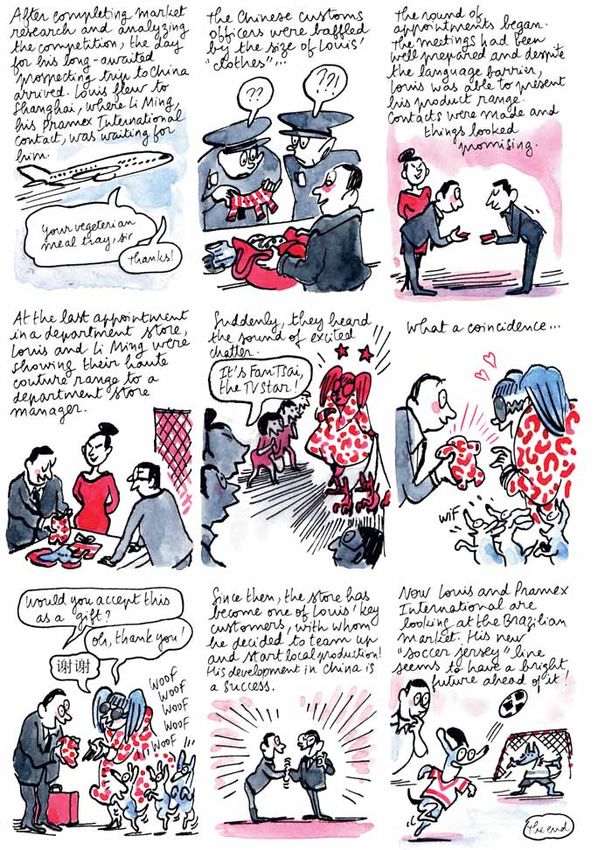
Young
                                                                                                              CONTRIBUTORS

         talent
                                      Gwendal
                                      Le Scoul,                           Catherine
                                      ILLUSTRATOR
                                                                          Meurisse,
                                          As a child, he used to play     CARTOONIST AND AUTHOR
                                      with dinosaurs on the beaches       OF GRAPHIC NOVELS
                                      of his native Brittany. Drawing
                                      them was his other favorite             After studying literature,
                                      pastime, a passion that led         she obtained a diploma in Arts
                                      to his enrolling at the Lorient     and Crafts from École Estienne
                                      School of Fine Art and, later,      before joining the National
                                      at the National School of           School of Decorative Arts
                                      Decorative Arts in Paris.           in Paris, from which she
                                      After graduating with honors,       graduated with honors. One
                                      Gwendal took his whip, his hat      of the cartoonists on the
                                      and computer and set off on         magazine Charlie Hebdo, she
                                      adventure. Exploring a              works for the press, illustrates
                                      fantastic world of bright colors,   children’s books and has also
                                      disturbing monsters and             created graphic novels.
                                      surrealist allegories, he pursues   She won a prize in the Caisse
                                      his art in newspapers,              d’Epargne’s 1997 Schools
                                      magazines and publishing.           Comic Book Competition.

                                      Bruno                               Stephen
                                      Bressolin,                          Cheetham,
                                                                          ILLUSTRATOR AND DESIGNER
                                      PAINTER AND ILLUSTRATOR
                                                                               Based in London, Stephen
                                          He works both as a painter      has a particularly idiosyncratic
                                      and as a graphic designer.          style, as revealed in a series
                                      Black ink flows from his brush,     of illustrations for major Anglo-
                                      fluid in its power of expression.   Saxon brands. His scalable
                                      The darkness of his vigorous        vector images combine
                                      brush strokes are offset by         bright colors, pure lines and
                                      patches of bright, cheerful         a scattering of humor.
                                      and disrespectful colors.
                                      The images he creates lend
                                      dynamic momentum to space.

                                                                          Anne-Julie
                                                                          Marang,
                                      Yohanne                             ARTISTIC DIRECTOR
                                      Lamoulère,                              In the summer of 1976, under
                                      PHOTOGRAPHER                        a clear blue sky, Anne-Julie put
                                                                          on her Ray-Bans and opened her
                                           A graduate of the National     eyes. She loves the following:
                                      School of Photography in Arles,     clear lines, the whiteness
                                      Yohanne lives in Marseilles.        of polar bears and, above all,
                                      In 2007, she published The          to converse with her library of
                                      Wheel, or the Endless Round         books. One day, she went to
                                      of Seasonal Agricultural            her bookseller to find The Monk,
                                      Workers, and presented in           by Matthew Lewis, when she
                                      2008 an exhibition entitled “The    met Sylvie Saulnier, a creative
                                      Damned in the Greenhouse”           director, and together they
                                      after a three-year journey          dreamt up, among many other
                                      among seasonal workers in           beautiful things, this mook, a
                                      Europe. Member of the Transit       blend of magazine and book…
                                      group of photographers and the
                                      Picturetank network, she also
                                      works as a press photographer.

                                                                                                                         5

BPCE_RA-BPCE 2012-complet-UK.indd 5                                                                                      03/07/13 17:02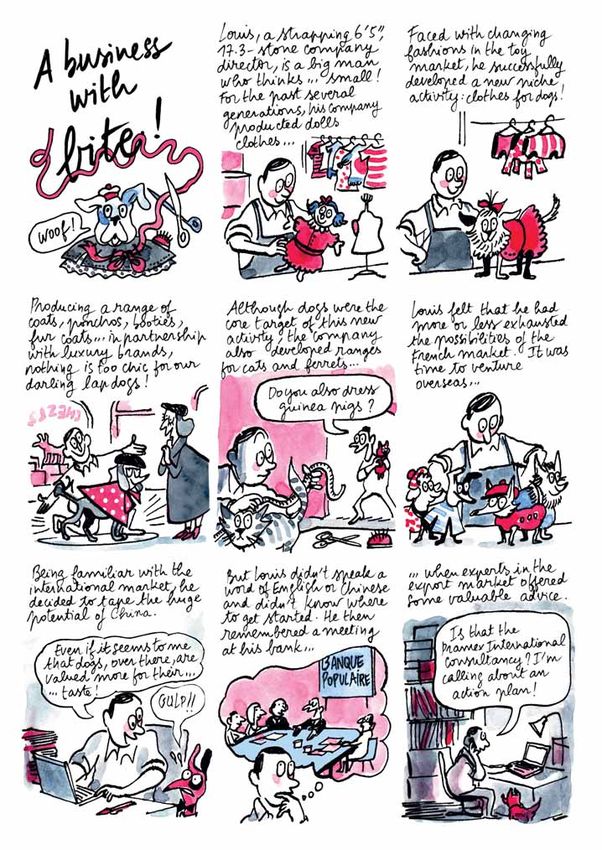
The world
         around us
         Sociological and
         economic indicators
                                                                              Consumption
                                                                              and purchasing
                                                                              power
                                                                                   In 2012, consumption fell

         39
                                                                              by 0.1% while purchasing power
                                                                              declined by 0.4% after rising
                                                                              by 0.2% and 0.5% respectively
                                                                              in 2011. At the end of 2012,
                                           e-commerce                         one French person out of every
                                %               €45 billion is the            two anticipated that their
                                           turnover generated by              purchasing power would decline
              This is the percentage                                          over the next three months.
         of French people who are          online shopping in France
                                           in 2012. Up 19% in the             Food, taxes, fuel and energy are
         confident about the future,                                          the items of greatest concern.
         down from 60% in 1982.
         More than two out of every
                                           space of one year, it is equal
                                           to one half of consumer            The median disposable income                Infrastructure
                                           goods sold in supermarkets         of French households is €28,910:     The European Union
         three believe that today’s                                           27% is devoted to spending on needs to invest between
         young people are less likely      and is accompanied by an
                                           explosion in sales concluded       basic necessities.               €1,500 billion and €2,000 billion
         to do better than their parents                                      Viavoice-BPCE, December 2012;
         in the French society of          via a smartphone or                                                 in major energy, information
                                                                              Insee and DADS, 2012, 2010 data.
         tomorrow. Their primary           tablet device, equal to an                                          and communication technology
         concerns are unemployment         estimated €1 billion.                                               infrastructure projects
         (78%), health and quality         Fevad, January 2013.                                                by the year 2020. It will be
         of care (58%), purchasing                                                                             impossible to raise this amount
         power (54%) and pensions                                             549,975                          without the participation of
                                                                                                               private investors.
         (49%). Fortunately, three out
                                                                                   More than half a million

                                           1
         of four French people trust                                                                           European Commission.
         in themselves and two                                                businesses were created
         out of three think they will                                         in 2012 (including 307,000
         manage to get by.                                                    set up by self-employed
                                                                              entrepreneurs) and about
         TNS Sofres-La Poste,
         December 2012.                            out of 2                   360,000 discontinued
                                                                              their activity. France has
                                                At the end of 2012, nearly    3.5 million companies
                                           one out of every two French        including 4,900 middle-
                                           households (48.6% to be            sized firms, 203,000 SMEs
         Financial                         precise) was paying back
                                           a loan vs 52.6% in 2008.
                                                                              and 3.3 million businesses
                                                                              with fewer than
         protection                        But the persistence of the         10 employees.
                                           economic crisis is making          Insee, tables of the French economy,
             Two out of every              them more cautious about           2013 edition, BPCE L’Observatoire,
         three French people worry         contracting new loans: the
                                                                              December 2011.
         about their family’s financial    percentage of borrowers fell
         security in the event             from 33.8% to 27.6% during
         of an emergency. Fewer            the same period. Regarding
         than half (43%) have
         an insurance policy in case
                                           mortgages, the proportion          Local
         of death, disability or
                                           of borrowers has remained
                                           stable since 2008 but, despite
                                                                              investment
         incapacity.                       historically low interest               For the first time at the end
         TNS Sofres-Generali, 2012.        rates, new loan production         of their term in office, fewer
                                           fell by 31.6% in 2012.             than one mayor in three (30%)
                                           Review of household loans-FBF,     plans to increase capital
                                           November 2012, and Statinfo-Banque spending. 86% say the finances
                                           de France, December 2012.
                                                                              of their municipality are in good
                                                                              shape but feel hampered by
                                                                              budgetary constraints (58%),
                                                                              the proliferation of standards
                                                                              (53%) and the social impact
                                                                              of the economic crisis.
                                                                              TNS Sofres-Association of Mayors of Major
                                                                              French Cities, September 2012.

         6

BPCE_RA-BPCE 2012-complet-UK.indd 6                                                                                                                03/07/13 17:02
Savings
                   The French feel compelled to save (84%) but find
                   it very difficult to do so (81%). The virtual stability
                   in household savings rates in 2012 (16% vs 16.2%
                   in 2011) is exceptional considering the decline
                   in purchasing power that typically leads to higher
                   spending to maintain levels of consumption.
                   Rising unemployment and growth in ambient
                   pessimism has changed the way French people
                   choose between savings and spending: the gap
                   between the opportunity to save and the opportunity
                   to make a major purchase is the largest in the past
                   twenty-five years.
                   In 2012, to avoid taking risks with their savings and
                   to enjoy a good net rate of return (after tax), savers
                   preferred the Livret A and Sustainable Development
                   passbook accounts (deposits up €52 billion) at the
                   expense of other bank deposits and life insurance.
                   Viavoice-BPCE, December 2012; Insee, quarterly national accounts,
                   March 2013, and monthly economic review, April 2013.

                                                                                                                                     8             out of 10
                                                                                                         Eight French people out of ten surf on the Internet
                                                                                                         and three quarters of them say that the Web plays
                                                                                             an essential role in their everyday lives. They have an average
                                                                                                  of 6.2 screens per household (TV, monitor, smartphone,
                                                                                               tablet, game console). The 15-24 age group and executives
                                                                                                 are the most addicted, and eight out of ten internet users
                                                                                                                       belong to at least one social network.
                                                                                                    Ifop-Netexplo, January 2012; Mediamétrie Screen 360, November 2012;
                                                                                                                                    Ifop, July 2012; BVA, September 2012.

                                                                                       Employment
                                                                                             71% of French people feel that they achieve something useful
                                                                                           in their professional life, and 80% say they enjoy going to work.
                                                                                                 But more than 3.2 million French people are unemployed.
                                                                                          Among young people of working age, one in four is without a job
                                                                                       (rising to nearly one out of every two without formal qualifications)
                                                                                                and, when they join the labor market, two out of three work
                                                                                                     on fixed-term contracts, temporary work assignments
                                                                                                                              or State-subsidized contracts.
                                                                                                 OpinionWay Cevipof, December 2012; TNS Sofres-Le Pèlerin, January 2011;
                                                                                                                                   Insee-French Ministry of Labor, 2012.

                                                                                                                            Energy transition
                                                                                                       Almost three out of every four French people worry
                                                                                                  about climate change, but more than one in two consider
                                                                                                               that the cost of energy is the most important
                                                                                                        factor to be considered in energy policy, and nearly
                                                                                                 two out of three think that energy transition should only be
                                                                                                         pursued if it does not involve higher energy prices.
                                                                                                                                    Harris Interactive-Institut Montaigne-
                                                                                                                                 Genshagen Foundation, November 2012.

                                                                                                                                                                        7

BPCE_RA-BPCE 2012-complet-UK.indd 7                                                                                                                                    03/07/13 17:02
[definition]
          Received ideas: commonplace,
          stereotypical and cliché
          opinions that are accepted
          as standard and readily believed,
          for various reasons.

         Received
         ideas
         8

BPCE_RA-BPCE 2012-complet-UK.indd 8           03/07/13 17:02
The banks
                                                             are never
                                                             committed
                                                             false             The main activity of a retail
                                                             bank is to collect deposits from its customers
                                                             and to transform them into loans for the
                                                             individuals, companies, government bodies
                                                             and local authorities that need them.
                                                             This function can only be achieved if the
                                                             depositors are certain they will get their money
                                                             back.The banks must consequently weigh up
                                                             the risks inherent in any projects they finance
                                                             and obtain the necessary guarantees to limit
                                                             the impact of a total or partial inability to pay.
                                                             The banks are committed to their customers
                                                             but they proceed in a responsible manner
                                                             to protect their customers’ interests as well as
                                                             the interests of their cooperative shareholders
                                                             and other investors in their equity.

          The banks
          have stopped
          financing the
          real economy
          false             Figures released by the Banque
          de France contradict this idea. Loans granted
          by French banks to businesses and individuals
          have not stopped growing since the start of the
          economic crisis. Between December 2009 and
          December 2012, this lending represented an
          additional injection of nearly €190 billion into
          the French economy. For the year 2012 alone,
          aggregate loans to households increased by 2.3%
          and loans granted to micro-enterprises and SMEs
          rose by 2.5%. At the same time, the increase in
          outstanding loans granted by Groupe BPCE’s
          banking networks increased by nearly €20 billion
          to reach a total of more than €345 billion.

                                                                                                                  9

BPCE_RA-BPCE 2012-complet-UK.indd 9                                                                               03/07/13 17:02
RECEIVED IDEAS

                                                               The banks
                                                               make exorbitant
                                                               profits
                                                               false              Banks have three sources
                                                               of income: their interest margin (which is the
                                                               difference between the interest they receive on the
                                                               loans they grant and the interest paid to customers
                                                               and lenders), commissions for services rendered,
                                                               and the revenues earned on proprietary trading

         The banks ask                                         operations, an area of activity from which Groupe
                                                               BPCE has now completely withdrawn. In 2012, the
                                                               net income generated by Groupe BPCE amounted

         increasingly                                          to €2.1 billion; 80% of this profit will be reinvested
                                                               in the Group in order to strengthen its financial
                                                               position and to enable it to fully assume its role

         personal                                              as a provider of finance for the French economy.

         questions
         true              Knowing your customers is
         essential to understanding their individual needs
         and future projects, to providing relevant,
         customized solutions, to building trusting,
         long-term relationships but also vital in order to
         comply with French and European regulations.
         The banks in Groupe BPCE put customer
         satisfaction at the heart of their drive to win the
                                                               The banks
         loyalty of their existing customers and to attract
         new ones. Considerable resources are devoted to
         this effort: training given to advisors in adopting
                                                               have cost
         an integrated approach to customers’ needs,
         providing easier access via remote banking            taxpayers a
         solutions, the involvement of future users in
         developing new offerings, the organization of
         mystery visits to branches to measure the quality
         of customer reception and how well their needs
                                                               fortune
         are understood, and the conduct of regular
         satisfaction surveys.The result is that the vast
         majority of the Group’s customers say they
                                                               false              During the 2008 financial crisis,
                                                               the French government gave its guarantee to the
         would recommend their bank to their friends;          French banks to allow them to borrow in the financial
         this is a good test of their satisfaction!            markets. It also acquired an equity stake in some
                                                               of them to strengthen their capital base.These
                                                               contributions were accompanied by progressive
                                                               rates of interest to encourage the banks to reimburse
                                                               the capital injections rapidly. At the end of 2011,
                                                               all the French banks had repaid the State, which
                                                               earned €2.7 billion in interest from its investment.
                                                               Groupe BPCE received an injection of €7.1 billion
                                                               euros, which it had reimbursed in full by the end
                                                               of March 2011, nineteen months earlier than
                                                               initially planned.

         10

BPCE_RA-BPCE 2012-complet-UK.indd 10                                                                                   03/07/13 17:02
For the banks,
micro-credit is
a major issue
true Professional or personal
micro-credit solutions allow people excluded
from traditional financing channels to realize
their projects with the help of a general interest
association. In France, professional micro-credit
solutions guaranteed 31,000 companies, including
12,000 new creations, and helped to create
57,000 jobs in 2011. Nearly 30,000 personal
micro-loans(1) guaranteed by the Social Cohesion
Fund have been granted since the concept was
launched in 2005. Many of these loans are used to
fund initiatives facilitating access to employment
Banking jobs
such as driving lessons, the repair or acquisition
of a vehicle, enrolment on a training course, or
relocation to a new town or city. With more than
are routine
12,000 projects financed in 2012 for a total of
€84 million, Groupe BPCE is the no. 1 French
banking group for personal and professional
and offer
micro-credit solutions working in partnership with
local authorities and specialized associations.
(1) Source: Baromètre de la microfinance 2012 (2012 barometer survey of
little variety
micro-finance) – Convergences 2015.
false A leading banking group offers
an extraordinary range of career opportunities:
more than 100 different professional activities
are pursued in Groupe BPCE, and many of them
have changed in recent years.Three quarters of
the Group’s 117,000 employees work in sales,
serving a wide variety of clients ranging from
individual customers to major corporations.
Banking is also a major hub of innovation in both
commercial and many other areas: production
(yes, banking is also an industry!), IT, risk analysis,
marketing, communications, etc. Although people
who have studied economics and banking
are in the majority, mathematicians, statisticians,
engineers, lawyers and former students of
literature all coexist within our different companies.
Career paths are very open and social mobility is a
concrete reality: thanks to training – representing
an investment of more than 5% of the aggregate
payroll – 75% of new job opportunities are filled
through in-house promotion.
11
BPCE_RA-BPCE 2012-complet-UK.indd 11 03/07/13 17:02MESSAGE FROM FRANÇOIS PÉROL
CHAIRMAN OF THE MANAGEMENT BOARD OF BPCE
Useful to our customers, useful to the economy:
since Groupe BPCE’s creation almost four years ago,
we have kept to our decision to work exclusively
for our customers and devote all our resources to
them. Groupe BPCE’s defining vision is “finance
at the service of the economy,” served by a team
of 117,000 resolutely useful people!
Useful
12
BPCE_RA-BPCE 2012-complet-UK.indd 12 03/07/13 17:02Thanks to this strategy, we have built a
financially robust group.The only risks we
assume are taken on behalf of our customers
and as we are good at running our banking
business – which is to lend wisely and to ensure
these loans are repaid – our cost of risk is
M
aking finance address the among the lowest in the French banking
needs of the real economy industry. We have also trimmed our costs,
is the strategic approach improved our productivity, generated synergies
pursued since the creation of between our operations, and obtained results
Groupe BPCE: a cooperative that have enhanced our solvency on a regular
banking group owned by the basis. Our regulatory capital has increased by
8.6 million cooperative more than €17 billion since the Group’s creation
shareholder-customers of to reach €40.9 billion at the end of 2012; our
the Caisses d’Epargne and capital adequacy ratio stood at 10.7% at the
Banque Populaire banks, a group of regional same date.
banks deeply rooted in their local communities, The joint governance system adopted
well placed to give priority to medium- and by the Banque Populaire banks and Caisses
long-term objectives for the benefit of the d’Epargne has been put in permanent footing.
individuals, professionals, businesses, local The Supervisory Board has appointed BPCE’s
communities, and institutions they serve. Management Board to a new 4-year term. Plans
In 2009, we discontinued our proprietary exist to simplify the Group’s structures whereby
trading operations to devote all our resources Natixis will cease to hold cooperative
to our customers. We refocused our activities investment certificates in the Banque Populaire
around our core banking and insurance banks and Caisses d’Epargne to return them
businesses directly contributing to the collection to the exclusive ownership of their cooperative
of savings and the financing of the economy: shareholders(1). All this enables Groupe BPCE
Commercial Banking and Insurance, Corporate to base the drafting of its new strategic plan
and Investment Banking, Asset Management for 2014-2017 – to be presented in the autumn
and Financial Services. of 2013 – on strong foundations.
When we turn to the financial markets, Our industry is entering a new transformative
it is simply to hedge our customers’ phase for our business models. Our challenge
foreign-exchange and interest-rate risks or to will be to successfully negotiate this
allow them to raise funding. Since 2010, the transformation while continuing to develop
Group’s strategic project “Together” has our activities. I am fully confident in our ability
mobilized the strengths of all our businesses to rise to this challenge.
around a common goal: to serve the needs of all We enjoy a unique ability to attract new savings
our customers and to do so even more effectively deposits in France and our potential for new
thanks to the wealth of expertise and talent, synergies is far from exhausted. Our 36 million
and the quality and efficiency of all the customers know who we are: local banking
resources at our disposal within the Group. institutions actively committed to serving their
This strategy has enabled us to build the needs; our 117,000 employees know where we
2nd largest banking group in France that is are: at the heart of the drive to finance the
useful to its customers because it protects French national and regional economy with
their savings and lends them the money they the firm intention to continue on this path.
need to realize their projects, useful to the Positively useful.
French regions because our banks are deeply
rooted in their local communities, and useful
(1) This project must first be submitted to the employee representatives
to the French economy as a whole of which we for consultation purposes and then be approved by the Group’s different
finance 20% to 25% of its needs. governing bodies.
We are the banking group that has seen its
loan outstandings grow the most in France since
2009 in pursuit of our role as a major provider
of funding for local authorities, for infrastructure
projects and social housing; the no. 1 bank
for the social economy, for solidarity-based
finance, socially responsible investment and
micro-credit solutions.
13
BPCE_RA-BPCE 2012-complet-UK.indd 13 03/07/13 17:02ere a thousan
fI I w do
pp
or
gy? If I were
er aw
tun
n
fe a
supporter?
ities
yt
o
a
ere If
rce
om
w tor
y? If I were
Iw
rri
tastic sou
I
?
deal? If I
thropist? If
ere
an i
ake dream
a p a mission? If I r
we
te
re
If I were
re a
we
re
rior
a sponsor
lue? If I
ity? If I w
we
a va
? If I
w
ere
re
model? a
n
e
n
n
e ea
?I
izo
quality? If I w
a
a
s
fI
l
f
a
om were a time hor
hi
c
a
p
h
e
e tr a u
r
re
n
ue? If I we
e
w
d
re
db IfI
usin es?
ess activiti
If I were…
If I were curious, I’d find the answers
on the inside back cover of this report.
14
BPCE_RA-BPCE 2012-complet-UK.indd 14 03/07/13 17:02…a unique and
different group
… I would be Groupe BPCE. Different thanks to its business And different thanks to its corporate
model of a decentralized cooperative culture: that of finance serving the
Unique thanks to the strength group owned by its customers. economy with a view to the long
of its brands: Banque Populaire, term, that of a pioneering, committed
Caisse d’Epargne, Natixis, Unique thanks to its banks deeply and responsible group.
Crédit Foncier, Crédit Coopératif, rooted in their respective territories,
Banque Palatine, etc. playing a key role in regional Groupe BPCE is the 2nd largest
development. banking group in France.
The Group’s
principal brands
Equity
interests
15
BPCE_RA-BPCE 2012-complet-UK.indd 15 03/07/13 17:02Facts
and figures
SUMMARY INCOME STATEMENT
(in millions of euros) 2012 2011 2010
Net banking income 21,946 23,357 23,359
Gross operating income 6,011 7,476 7,302
Income (loss) before tax 3,743 4,663 5,749
Net income attributable to equity holders of the parent 2,147 2,685 3,640
BUSINESS CONTRIBUTION TO GROUP (1) BUSINESS CONTRIBUTION TO GROUP(1)
NET BANKING INCOME IN 2012 INCOME BEFORE TAX IN 2012
(as a %) (as a %)
63%
8% 5%
Commercial
Equity Equity Banking and
interests 65% interests Insurance
Commercial
Banking and
Insurance
27% 32%
Wholesale Banking, Wholesale Banking,
Investment Investment
Solutions, and Solutions, and
Specialized Financial Specialized Financial
Services Services
(1) Excluding “Workout portfolio
management” and “Other
businesses”.
Robust results despite the adverse Revenue synergies generated down 18.3% compared with last year.
business environment between Natixis and the retail These results demonstrate the ability
Buoyed up by the dynamism of their networks came to €616 million, of Groupe BPCE to generate robust
commercial activities, the revenues chiefly derived from consumer recurring income despite the fragile
generated by the core business lines in finance, payments and insurance. economic environment marked by an
2012 came to €20.9 billion, marginally The downturn in the general economic increase in the cost of risk and higher
down vs 2011 (-1%). The generation of environment combined with the taxes and social security contributions.
synergies has progressed faster than impact of a specific issue have
initially anticipated: cost synergies triggered a 17.7%(2) rise in the
reached €930 million thanks to the cost of risk, which now stands at
streamlining of external expenditure, €2.2 billion. Net income, excluding
the optimization of purchasing, the negative impact of non-operating (2) Increase calculated on the basis of the 2011 cost
and the pooling of IT expenses. items, comes to €2.8 billion, of risk, excluding Greek government bond impairment.
36 million
customers
8.6 million
cooperative shareholders
14
BPCE_RA-BPCE 2012-complet-UK.indd 14 03/07/13 17:02ACTIVITIES
(in billions of euros) 12/31/2012 12/31/2011 12/31/2010
Balance sheet total 1,147.5 1,138.4 1,048.4
Customer loan outstandings (gross) 586.5 583.1 573.8
BANQUE POPULAIRE BANKS CAISSES D’EPARGNE Buoyant commercial activities
(in billions of euros) (in billions of euros)
In the Commercial Banking and
Insurance segment, the Group’s retail
Financial savings Financial savings
networks are continuing to expand their
71.8 117.2 customer base; customer relations, at
69.4 118.6 the very heart of their strategy, has led
118.1
to the attraction of new customers and
65.9
a strengthening of relations with their
Customer deposits Customer deposits existing clientele. The dynamic growth
111.8 218.1 in on-balance sheet savings deposits(1)
123.0 226.6 is continuing: +6% for the Banque
Populaire banks and +8% for the
132.8 240.7
Caisses d’Epargne. Loan outstandings
Customer loan outstandings Customer loan outstandings have also risen despite sluggish new
146.1 155.0 production, depressed by weaker
154.8 171.0 demand: +3% for the Banque
Populaire banks and +8% for the
160.0 185.3 Caisses d’Epargne.
12/31/2010 12/31/2011 12/31/2012 12/31/2010 12/31/2011 12/31/2012 (1) Excluding centralized savings.
FINANCIAL STRUCTURE Prudential ratios (1) (as a %)
Overall capital adequacy ratio
Tier-1 ratio
(in billions of euros) 12/31/2012 12/31/2011 12/31/2010 Core Tier-1 ratio
Equity attributable to the parent company 50.6 45.1 47.4 12.5
CoreTier-1 capital(1) 40.9 35.4 33.1 11.6
11.6
Tier-1 capital(1) 46.5 41.1 41.0
(1) 2010 Core Tier-1 capital pro forma of the full reimbursement of the French state: €31.9 billion. 12.2
2010 Tier-1 capital pro forma of the full reimbursement of the French state: €38.8 billion.
10.6
10.1
CREDIT RATINGS AT MARCH 22, 2013 10.7
8.1 9.1
The ratings concern BPCE and are also applied to Groupe BPCE.
Standard & Poor’s Moody’s FitchRatings 12/31/2010 12/31/2011 12/31/2012
Long-term rating A A2 A+ (1)Excluding the floor effect – Ratios calculated according
to Basel 2.5 as of December 31, 2011. 2010 ratios pro
Short-term rating A-1 P-1 F1+ forma of the full reimbursement of the French State:
Outlook Negative Stable Negative Core Tier-1 ratio of 8.0%, Tier-1 ratio of 9.7% and overall
capital adequacy ratio of 11.2%.
8,000bank branches
117,000
employees
15
BPCE_RA-BPCE 2012-complet-UK.indd 15 03/07/13 17:02Advancing
together
Board also appointed the members of the Mana-
gement Board for this new period – Jean-Yves
Forel, Daniel Karyotis and Anne Mercier-Gallay
– who also sit on the General Management Com-
mittee alongside Laurent Mignon and Marguerite
Bérard-Andrieu.
At the same time, after extensive work with
the Group’s shareholders (the Banque Populaire
banks and the Caisses d’Epargne) initiated by
C
reated in 2009, Groupe BPCE Yves Toublanc, the two cooperative banking
pursues a full range of banking networks’ equal ownership of BPCE’s capital has
and insurance activities via the been put on a permanent footing two years ahead
coo perative networks of the of schedule.
19 Banque Populaire banks Groupe BPCE now enjoys the visibility and
and 17 Caisses d’Epargne and governance it needs to confidently prepare its
through its subsidiaries such as strategic plan for 2017 with wide-ranging contri-
Crédit Foncier, Banque Palatine, butions from its different teams.
BPCE International et Outre-mer, Early 2013 saw the launch of a project designed
and Natixis, the Group’s corporate, investment to simplify the Group’s structure that will be
management and financial services arm, listed presented to the employee representative bodies
on the Paris stock exchange. BPCE, the Group’s for consultations before being submitted to the
central institution, is a French limited company Group’s governing bodies for approval. If this
(société anonyme) governed by a Management operation goes ahead, the cooperative share-
Board and a Supervisory Board in charge of the holders of the two retail banking networks will
Group’s strategy, control and coordination. All the own 100% of their banks (via their local savings
credit institutions affiliated to BPCE benefit from companies for the Caisses d’Epargne). This project
a guarantee and solidarity mechanism. is in line with the strategic decisions taken since
“Together”, the Group’s strategic plan for 2009: the confirmation of the Group’s cooperative
2010-2013, has mobilized all its entities around a banking model, the clarification of its organization,
single goal: to serve their customers and to do so the transformation of Natixis’ business model and
better together thanks to the wealth of expertise risk profile, a stronger customer focus adopted
and talent, the quality and efficiency of the by all our business activities. Laurent Mignon will
resources within the Group.The sharing of tools, then join the Management Board of BPCE.
analyses and good practices, the pooling of Our watchword: release energies to continue
investments for development and innovation, advancing together by giving absolute priority to
the synergies generated between Natixis and our customers.
the retail networks allow us to create more value
for customers, increase their satisfaction, and
generate profitable growth in the process.
The next strategic plan for 2014-2017 is already
being prepared. To ensure the continued impact
of actions taken over the past three years, the
Supervisory Board re-appointed François Pérol
as Chairman of the BPCE Management Board
for a further 4-year term at a meeting on Novem-
ber 21, 2012 chaired by Yves Toublanc. Following
proposals by François Pérol, the Supervisory
16
BPCE_RA-BPCE 2012-complet-UK.indd 16 03/07/13 17:02François Pérol
“A new phase”
2012 marked the successful conclusion of the first
three years in the life of Groupe BPCE. Since the
launch of the strategic plan“Together”, all our activities
have developed good commercial momentum.
We are winning new customers; synergies between
Natixis and the retail networks, the pooling of
resources and development of industrial cooperation
between our entities are bearing fruit. Our Group
has returned to profit, reduced its risk profile, and
consolidated its financial structure and solvency.
We are now fully prepared to draw up our strategic
plan running to 2017. The banking industry is entering
a new phase of its history. We are faced with an
enduring shift toward more expensive resources,
a trend that will deeply affect the banking business
models in all the segments of our industry. The
challenge is to pursue growth while successfully
completing this transformation. Groupe BPCE boasts
some powerful advantages faced with this challenge:
a remarkable ability to raise new funds, close
relationships with its customers thanks to its regional
cooperative banking model, a stronger financial
base, and a reserve of potential synergies that we
have far from exhausted.
François Pérol, Chairman of the Management Board
Jean-Yves Forel
“At the service
of the Group’s
companies”
Our companies are successfully continuing their strategy of attracting
new customers, winning the loyalty of existing ones and achieving
greater efficiency. Building on their status as the 1st and 3rd most
preferred banks of the French public, the Caisses d’Epargne and Banque
Populaire banks have pursued their dynamic commercial policies.
This focus on customer relations, the heart of their strategy, has won
them new customers and forged a stronger relationship with existing
ones. These changes are visible among all types of customers of both
networks. The success of Crédit Foncier’s bond issue and the good
results of Banque Palatine also reflect this dynamism. To satisfy our
customers, we have focused on innovation in mobile applications,
means of payment, Internet solutions, etc. We are stepping up our
presence on social networks and are actively developing new
concepts to imagine and create the bank of the future.
Jean-Yves Forel, Chief Executive Officer, member of the Management
Board responsible for Commercial Banking and Insurance
17
BPCE_RA-BPCE 2012-complet-UK.indd 17 03/07/13 17:02ADVANCING TOGETHER
Daniel Karyotis
“Efficiency
in action”
In 2012, our Group continued its profound
transformation and further strengthened its financial
fundamentals. As a result, we have outperformed
all other French banks in improving our capital
adequacy since 2010 (Basel 2.5 Core Tier-1 ratio of
8% in 2010 and 10.7% in 2012). What is more, our
profitability has made us a benchmark performer,
one of the top five European banking groups
(at the same level as Crédit Mutuel) with a net
income attributable to equity holders of the parent
of €2.15 billion. In addition, the continuous
refocusing of all Groupe BPCE entities on their
core businesses is paying off, and our risk profile
is now in line with our growth strategy and our
determination to be the leading banking institution
committed to financing the real economy. Finally,
the drive to streamline our external expenses and
to manage our costs more closely was pursued
in 2012 and will be further intensified in 2013.
In an economic and financial environment that
is both difficult and complex, Groupe BPCE is
financially more robust than it was in 2011. We
must now continue our efforts and further enhance
our foundations and our financial independence.
Daniel Karyotis, Chief Executive Officer, member
of the Management Board responsible for Finance,
Risks and Operations
Anne Mercier-Gallay
“Listening and
anticipating”
The success of the Group’s project depends on the active involvement
of its employees. Giving everyone the means to develop their skills,
unleashing the capacity for initiative, offering encouraging prospects,
facilitating mobility, giving good reasons to be proud of the Group and
its companies: these are the values that guide our actions.
In 2012, more than 100 executives changed companies within the
Group and we created a system that will facilitate, at every level, the
development of career paths and mobility across the Group.
23 women’s networks have been set up to help female employees
rise to positions of responsibility. The 2nd Innovation Awards organized
within the Group confirmed the success of this initiative with
85 high-quality entries. We have also developed a major e-learning
platform and adopted a comprehensive solution for online appraisals
in line with our training programs to which we devote more than 5%
of our aggregate payroll costs. We have also heightened the awareness
of Group employees about the proper use of the social media.
Anne Mercier-Gallay, Chief Executive Officer, Member of the Management
Board responsible for Human Resources and Group Internal Communications
18
BPCE_RA-BPCE 2012-complet-UK.indd 18 03/07/13 17:03Laurent Mignon
“At the heart
of the Group”
2012 confirmed the effectiveness of the New Deal strategic
plan first implemented in 2009 and the successful transformation
of Natixis. Our revenues are increasing in our three core business lines:
Wholesale Banking, Investment Solutions, and Specialized Financial
Services. This good performance demonstrates Natixis’ ability to
generate good recurring results despite the adverse economic
environment while simultaneously adapting to new regulatory
constraints. We have strengthened the financial structure of Natixis,
which is now in line with Basel III requirements with a Core Tier-1
ratio of more than 9% in January 2013. We completed our program
to reduce scarce resources one year ahead of schedule. Finally, we
launched an ambitious operational efficiency program that will give us
additional flexibility to develop our business. Resolutely focused
on its customers and fully integrated into Groupe BPCE, of which it
is the publicly-listed vehicle, Natixis can begin work on preparing its
new 2014-2017 strategic plan on robust foundations.
Laurent Mignon, Chief Executive Officer of Natixis
Marguerite Bérard-Andrieu
“Looking
toward
the future”
In September last year, 500 senior managers attended
the Group’s 3rd Summer School. The aim of this event
was to analyze the progress made since the strategic
plan“Together” was launched three years ago, to
discuss what the banking industry will be in the future,
and to begin collective reflection on our corporate
ambition and our next strategic plan for the period up
until 2017. Regulations, the macroeconomic outlook,
new technologies, changes in customer behavior and
the expectations of society in general have committed
us to a profound transformation of our banking
models. The shift in the global economy toward
emerging markets is creating new needs and
questions. We need to integrate these factors of
change, identify our way forward, and make a success
of our adaptation. All the employees and all the
companies in the Group are concerned. We therefore
chose as inclusive and participatory approach as
possible to develop our new road map and ensure that
everyone is involved in, and feels concerned by, our
common strategic future.
Marguerite Bérard-Andrieu, Deputy Chief Executive
Officer responsible for Strategy, Legal Affairs and
Compliance and Group Company Secretary
19
BPCE_RA-BPCE 2012-complet-UK.indd 19 03/07/13 17:03ADVANCING TOGETHER
Yves Toublanc
“Vigilance
and progress”
Groupe BPCE has been in existence for almost four years and we
can measure the progress it has made. Thanks to our return to
profitability, a more efficient management of our risk-weighted
assets, the trust of our cooperative shareholders who have
massively subscribed for our share issue, we are in line with Basel III
requirements. Building on this success, the Supervisory Board has
renewed the terms of François Pérol and the members of the
Management Board for a further four years. The renewal of the
Board enabled us to redefine the responsibilities of each member
at the service of their enterprise and of the Group as a whole, under
the aegis of a balanced governance system founded on dialogue
and mutual respect. We have put BPCE’s equal ownership by its two
groups of shareholders on a long-term footing and strengthened
the solidarity system between the Group’s companies. This was
a necessary step to begin drafting a new strategic plan focused
on shared goals. Our cooperative status – whose originality we
must continue to promote – shelters us from short-termism.
It allows us to eliminate speculative activities, to think in the
medium term and to work solely for the benefit of our customers,
society in general and our country’s economy. Despite the adverse
economic environment, we have not only continued to support
the local economy but also increased the volume of loans granted
to our customers. We must continue in this way inspired by
the highest ethical standards and, within the framework of my
responsibilities, I shall be particularly vigilant in this respect.
Yves Toublanc, Chairman of the Supervisory Board
Marwan Lahoud
“An external
perspective”
The independent members of the Supervisory
Board provide an external perspective and their
personal experience that is, for my part, extremely
international and highly industrial. A new strategic
plan is being prepared: our role is to develop a
constructive dialogue with the management team,
to challenge the scenarios, examine what might
undermine these assumptions, and consider
alternatives. As Chairman of the Audit Committee,
I am completely focused on the risk management
processes, the appropriateness of the appraisal
methods, and the effectiveness of the different
control systems. Finally, investors must be able
to rely on high-quality financial information when
making their decisions. It is the role of the Audit
Committee to ensure this.
Marwan Lahoud, an independent member
of the BPCE Supervisory Board, Chairman of
the Audit and Risks Committee
20
BPCE_RA-BPCE 2012-complet-UK.indd 20 03/07/13 17:03The Supervisory Board
at January 1st, 2013
Yves Toublanc Representatives of the Caisses d’Epargne Censeurs (non-voting members)
Chairman
Catherine Amin-Garde(1) Natixis, represented by
Stève Gentili Chairman of the Steering and Supervisory Laurent Mignon
Vice-Chairman Board of the Caisse d’Epargne Loire Chief Executive Officer
Drôme Ardèche
Gils Berrous(3)
Representatives Bernard Comolet(2) Chief Executive Officer
of the Banque Populaire banks Chairman of the Management Board of of Banque Populaire Nord
Gérard Bellemon(1) the Caisse d’Epargne Ile-de-France
Pierre Carli
Chairman of Banque Populaire Francis Henry Chairman of the Management Board of
Val de France Chairman of the Steering and Supervisory the Caisse d’Epargne de Midi-Pyrénées
Thierry Cahn(2) Board of the Caisse d’Epargne Lorraine
Champagne-Ardenne Alain Denizot
Chairman of Banque Populaire Chairman of the Management Board of
d’Alsace Pierre Mackiewicz(1) the Caisse d’Epargne Nord France Europe
Alain Condaminas Chairman of the Steering and Supervisory
Board of the Caisse d’Epargne Côte d’Azur Raymond Oliger
Chief Executive Officer of Banque Chairman of the Fédération Nationale
Populaire Occitane Didier Patault des Banques Populaires
Pierre Desvergnes(1) Chairman of the Management Board of the
Caisse d’Epargne Bretagne Pays de Loire Michel Sorbier
Chairman of the CASDEN Chairman of the Fédération Nationale
Banque Populaire Pierre Valentin(2) des Caisses d’Epargne
Philippe Dupont Chairman of the Steering and Supervisory
Board of the Caisse d’Epargne Dominique Wein
Chairman of ISODEV SA Chief Executive Officer
Languedoc-Roussillon
Catherine Halberstadt(2) of Banque Lorraine Champagne
Chief Executive Officer of Banque Independent members
Populaire du Massif Central The following also attend Board
Maryse Aulagnon(1) meetings
Chairman-Chief Executive Officer
of the Affine Group Jean-Luc Débarre
Pierre-Éric Randrianarisoa,
Laurence Danon(1) representatives of the BPCE Works
Co-President of the Management Board Council
de Leonardo & Co
(1) Member of the Appointments and Remuneration
Marwan Lahoud(2) Committee.
Director of Strategy and Marketing (2) Member of the Audit and Risks Committee.
and member of the Executive Committee (3) Appointed to the Executive Management Board
of Natixis to assume responsibility for the Specialized
of EADS Financial Services division at the Supervisory
Board meeting convened on February 17, 2013 and
Marie-Christine Lombard(2) replaced by Yves Gevin, Chief Executive Officer
Chief Executive Officer of Geodis of Banque Populaire Rives de Paris.
What is the role
played by the Supervisory Board?
The role of the Supervisory Board is to maintain constant oversight over
2
the managerial activities of the Management Board. This oversight includes
monitoring the appropriateness of actions taken and their regulatory
compliance. The cooperative shareholders are represented on the Supervisory
Board by the Chairmen of the Boards of Directors of the Banque Populaire banks
and by the Chairmen of the Caisses d’Epargne Steering and Supervisory Boards.
The Supervisory Board of BPCE is comprised of 18 members: specialized committees make
14 representatives of the Caisses d’Epargne and Banque Populaire banks; recommendations to the Supervisory
4 independent members. Board to assist it in its deliberations
2 non-voting representatives from the BPCE Works Council attend Board and decisions:
meetings.
the Audit and Risks Committee,
The Supervisory Board also includes 7 censeurs (non-voting directors) chaired by Marwan Lahoud, an
acting in an advisory capacity: independent member;
Natixis is a non-voting director as of right; the Appointments and Remuneration
6 non-voting members from the Banque Populaire banks and Caisses Committee, chaired by Laurence Danon,
d’Epargne are appointed at the Ordinary General Shareholders Meeting. an independent member.
21
BPCE_RA-BPCE 2012-complet-UK.indd 21 03/07/13 17:03BPCE_RA-BPCE 2012-complet-UK.indd 22 03/07/13 17:03
Growing
                                       differently,
                                              first of all, means
                                              being responsible

                                          And being responsible means remaining
                                        close to our customers to fully appreciate
                                                  their needs, being imaginative and
                                          competent to provide the right financing
                                             or investment solutions and to build a
                                             long-term relationship based on trust.
                                          It also means putting our strength at the
                                       service of the most fragile members of our
                                              community, helping to finance green
                                            growth and giving our employees the
                                          resources they need to build successful
                                                           careers within the Group.

                                                                   23
BPCE_RA-BPCE 2012-complet-UK.indd 23                                              03/07/13 17:03
Does the
cooperative
business model
have a future? SERGE PAPIN,
CEO OF THE SYSTÈME U RETAILERS
COOPERATIVE GROUP
OLIVIER PASTRÉ,
PROFESSOR OF ECONOMICS AT
THE UNIVERSITY OF PARIS VIII,
MEMBER OF THE CIRCLE OF ECONOMISTS
What are the strengths the common structures is not to generate
of the cooperative model? profits and pay dividends: they are management
companies designed to promote the success
OLIVIER PASTRÉ of the partners, who focus on their customers
––– The cooperative model is based on four without the distraction of having to consider
key principles that distinguish it from the financial strategies.They benefit from the strength
capitalist model.The first is a long-term outlook of the group and the experience of its members
that allows cooperative structures to consider and, in return, commit themselves to the success
investments offering no guarantee of immediate of the network. As each store is owned by an
profitability.The second is the absence of an independent retailer, an entrepreneur determined
obsession with profit, which is seen as a way to succeed, we create a virtuous circle.
to consolidate the strength of the structure and
not as an end in itself.The third is solidarity The cooperative model is governed by a system
between members, the principle that inspired of “one man, one vote” participatory democracy
the creation of the cooperative movement in where each member contributes to the decision-
the 19th century.The fourth principle is a strong making process. What are the advantages and
local presence; the cooperative members limitations of this governance style?
are known to one another, and membership
of the cooperative movement is partly based OLIVIER PASTRÉ
on cooptation.These principles are respected, in ––– The advantage is twofold. It ensures that
various guises, by the entire European the group is run democratically where equality
cooperative movement. is given the status of a founding principle.
This principle confers legitimacy to the decision-
SERGE PAPIN making bodies that has no equivalent in the
––– The cooperative model is able to combine capitalist model.The constraint imposed by this
strength with a local presence. While the system is the need to inform and educate the
integrated chain-store model chiefly serves members to enable them to join in the decision-
the interests of the majority shareholder, the making process in full possession of the facts.
cooperative model follows an entirely different This means they must have all the information
rationale. In a cooperative group, the aim of they need to form an opinion.
24
BPCE_RA-BPCE 2012-complet-UK.indd 24 03/07/13 17:03BEING RESPONSIBLE
“The cooperative
SERGE PAPIN
––– The success of this organization lies in the
fact that the people involved in making decisions
is a fantastic
are also responsible for their implementation.
It’s a collective dynamic at the service of
individual progress thanks to a convergence of
breeding ground
interests around the success of the stores, the
group’s only profit centers.The decision-making
process may be longer but it is enriched by the
diversity of viewpoints, analyses and proposals.
for new ideas.”
Serge Papin
The cooperative is a fantastic breeding ground
for new ideas.
Can we say there is, or should be, a social
A strong local presence is central to the model in cooperative groups, notably in terms
cooperative business models. In your opinion, of training, career development, and employee
what role is played by cooperative groups integration?
at a regional level?
OLIVIER PASTRÉ
SERGE PAPIN ––– Generally speaking, the social ladder has
––– Our tagline is “U, trade from which everyone been broken in France for the past twenty years
benefits”: every store owner strives to makes or so.The cooperative banks have a major role
this true within their catchment area. We have to play in this area in the future. For a great
four regional purchasing centers and our stores many years, the cooperative model has
give prominence to both U items as well as allowed ordinary employees to rise to the
regional and local products. 85% of our stock highest echelons of the management
is supplied by French SMEs under long-term structure.Training is the best way to ensure
contracts to encourage them to invest. And this that people can continue to climb the social
enables us to enjoy long-term sources of supply ladder.This training must be both technical
and to distinguish our offering from that of our and “political” in its ability to provide a better
competitors.The quality of our foodstuff is one understanding of the complex workings
of the strengths of our brand, and our customers of managerial action.
appreciate a policy that protects jobs and
enhances regional expertise. SERGE PAPIN
––– In Système U, upward social mobility – which
OLIVIER PASTRÉ we also call “the social staircase” – is a reality.
––– The cooperative banking model was A large number of employees who joined as
developed in the 19th century from the need section chiefs have become entity managers.
to finance social categories, professions or Personal skills and a passion for the retail
regions poorly served by the private banks. trade, vocational training, internal promotion,
The emphasis on a local presence was a way and independence are our core values.
for this type of bank to minimize risks thanks to We have our own training center to transmit
their intimate knowledge of their customers. these values to others, and we promote
This close, local relationship must constantly entrepreneurship through sponsorship.
be strengthened and renewed.The cooperative We encourage the creation and transmission
banks must be exemplary in the regions in of stores via the Expan U funds, to which all
which they operate. Social solidarity must be the partners contribute financially. Distribution
driving force behind this striving for excellence. and redistribution is our social model.
25
BPCE_RA-BPCE 2012-complet-UK.indd 25 03/07/13 17:03DOES THE COOPERATIVE BUSINESS MODEL HAVE A FUTURE?
Don’t you feel that this model is threatened play its role – which can be essential – in
in a globalized economy? How can you make resolving the crisis, four principles must guide
it thrive as a specific model? the actions of the cooperative banking groups.
The first is to
SERGE PAPIN return to the origins of a highly decentralized
––– The cooperative model has its place; it’s bottom-up model(1) in which social solidarity
even exceedingly modern because it unites reclaims its rightful place.The second principle
rather than divides, and does so in a spirit is pro-active training. “There is no wealth other
of solidarity and shared performance.The crisis than in people” (Jean Bodin).This is particularly
has enhanced its significance and value; we true in the banking sector where any errors,
realize that alternatives to the capitalist model or erring ways, are rapidly sanctioned.Training
exist. Cooperation has a role to play and must should also help to strengthen the affectio
be concentrated for greater strength.The model societatis undermined by globalization.The
is also interesting to emerging countries. third principle: a “glocal” strategy. Cooperative
We have been approached by representatives banks must preserve their roots in their local
of the Chinese government wanting to learn environment without, however, sacrificing their
from us and encourage their retailers to get global ambitions.This internationalization must
organized and not leave the field free to large focus principally on Europe to create truly
international groups. European mutual banking groups by leveraging
the dynamics of the recently-launched European
Banking Union.The final principle is more
“The cooperative effective communications.The specific qualities
of the cooperative model are poorly known,
including by some of its members…This
model is explains why the regulations currently under
consideration – Basel III, Solvency II, etc. – fail
to take sufficient account of this type of banking
particularly well institution. A communication drive must be
launched to show that these specific features
are not an anomaly to be corrected but a model
suited to the adapted to defining a collective strategy to lead
us out of the crisis.
current period (1) Olivier Pastré: Repenser l’économie. L’économie bottom-up
(Rethinking the economy. The bottom-up economy), Fayard, 2013.
of crisis.”
Olivier Pastré
OLIVIER PASTRÉ
––– The cooperative model is particularly
well suited to the current period of crisis.
The principles of “long-termism”, the refusal to
be a slave to profit, the values of social solidarity
and local presence meet, each at its particular
level, the challenges forced upon us by the
economic crisis. For the cooperative model to
26
BPCE_RA-BPCE 2012-complet-UK.indd 26 03/07/13 17:03You can also read


