DIALOG GLOBAL FINANCIAL SUPPORT FOR MUNICIPAL PARTNERSHIPS Watching others at work - Learning from their experience - Servicestelle Kommunen in ...
←
→
Page content transcription
If your browser does not render page correctly, please read the page content below
DIALOG GLOBAL
FINANCIAL SUPPORT FOR MUNICIPAL
PARTNERSHIPS
Watching others at work – Learning from their experience
No. 57

2

    Service Agency Communities in One World
    Phone +49 228 20717-2670
    info@service-eine-welt.de
    https://skew.engagement-global.de/home.html

    No. 57 in the ‘Dialog Global’ series published by the Service Agency Communities in One World

    Responsible for content: Service Agency, Dr Stefan Wilhelmy
    Project management: Dr Britta Milimo
    Text: Christine Rohrer
    Editing: Christine Rohrer, Dr Britta Milimo, Brigitte Eiselt, Ulrich Held
    Translation: Dr John Cochrane
    Cover photos: eThekwini Municipality (top left and bottom left), Danny Huhn (top right),
    Stefanie Windhausen (bottom right)
    Layout, typesetting and cover design: Fabian Ewert, Königswinter
    Printed by: Bonifatius GmbH
    100 % recycled paper, Vivus 89
    Printed using mineral oil-free printing inks, carbon offset

    Bonn, March 2021

    This publication, or extracts from it, may not be reproduced without the publisher‘s prior consent. The ‘Dialog
    Global’ series is sponsored by the Federal Ministry for Economic Cooperation and Development and the federal
    states of Baden-Württemberg, Bremen, Hamburg, North Rhine-Westphalia and Rhineland-Palatinate .

    This printed product has been awarded the Blue Angel ecolabel.

                www.blauer-engel.de/uz195
                 · ressourcenschonend und
                   umweltfreundlich hergestellt
                 · emissionsarm gedruckt
                 · überwiegend aus Altpapier      RG 4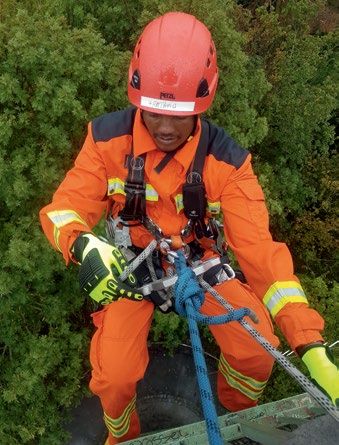
DIALOG GLOBAL
          FINANCIAL SUPPORT
 FOR MUNICIPAL PARTNERSHIPS
            Watching others at work –
Learning from their experience | No. 57
CONTENTS
1.   Foreword .....................................................................................................6
2.   Legal and Political Aspects ......................................................................... 8
3.   Opportunities For Support In Municipal Develpopment Cooperation ............11
     3.1. The Service Agency’s support instruments ..........................................................11
     3.2. Further support instruments............................................................................... 16
     3.3. Combining support instruments.......................................................................... 19
     3.4 The funding process.............................................................................................22

4.   Broad Diversity Of Projects ........................................................................26
     4.1. Topics...................................................................................................................26
     4.2. Geographic distribution ...................................................................................... 31
     4.3. Actors...................................................................................................................38
     4.4. Relevance............................................................................................................ 40

5.   Practical Challenges And Solutions From The Municipalities...................... 44
     5.1. Designing a project.............................................................................................. 44
          5.1.1. Planning a project..................................................................................... 44
          5.1.2. Adjusting your plans................................................................................. 46
          5.1.3. Project term and delays..............................................................................47
     5.2. Conditions in the partner countries..................................................................... 49
          5.2.1. Geographic conditions............................................................................... 49
          5.2.2. Legal and systemic frameworks ................................................................52
          5.2.3. Intercultural differences.............................................................................55
     5.3. Political challenges...............................................................................................57
          5.3.1. Political backing.........................................................................................57
          5.3.2. Political crises............................................................................................59
          5.3.3. New political appointments....................................................................... 61
     5.4. Cooperation agreement........................................................................................62
     5.5. Finance.................................................................................................................63
          5.5.1. The municipalities’ own contribution........................................................63
          5.5.2. Transfer of funds....................................................................................... 64
          5.5.3. Record keeping...........................................................................................66
     5.6. Procurement and imports into the partner country.............................................67
     5.7. Communication....................................................................................................69
     5.8. Change of contact persons................................................................................... 73
     5.9. Dealing with criticism...........................................................................................74
     5.10. Working together as equal partners.....................................................................76
     5.11. Sustainability.......................................................................................................78
6.   Why Get Involved –
     How Municipalities Benefit From Partnership Projects................................ 81
     6.1. Top municipal officials speak their minds ........................................................... 81                     5
     6.2. Guidance – What do these partnerships really do? .............................................82
     6.3. ‘The world’s future is in our hands’ –
          Five questions put to three mayors from the Global South.................................83

7.   Annex........................................................................................................85
     7.1. List of acronyms and abbreviations.................................................................... 85
     7.2. Glossary............................................................................................................... 86
     7.3. Offerings of the Service Agency.......................................................................... 90
          Financial and human resources support............................................................. 90
     7.4. List of projects.....................................................................................................92
1. FOREWORD

    Municipalities are essential partners for official      (a division of Engagement Global) on behalf of
6   German development cooperation. This is no coin-        the German Federal Ministry for Economic Coop-
    cidence, because in a largely urbanised world they      eration and Development (BMZ). These support
    are the ones who shoulder major responsibility.         instruments provide a legal, financial and profes-
    Together with their citizens, municipalities can        sional framework that had not previously existed
    deliver results for sustainable development pre-        in this form in conventional municipal partnership
    cisely where they are needed – at the local level.      work for international understanding. It is worth
    Addressing concerns and needs at the sub-national       studying them in detail. To do so, many interested
    level is their core task. At the same time, their       individuals and institutions take advantage of the
    action at the municipal level can always respond        seminars, conferences and advisory services we
    to global interdependencies and challenges, and         offer. In this issue of ‘Dialog Global’ we have put
    positively affect them. Based on their competences      together key aspects and lessons learned for the
    and long-standing experience with local self-gov-       benefit of readers.
    ernment, many German municipalities today are
    making a large and important contribution towards       The publication aims to pass on the experiences of
    a sustainable planet through their development          individual municipalities that are already familiar
    engagement.                                             with supported projects, and to provide helpful
                                                            information to those readers approaching the topic
    The formal framework for foreign engagement is          of municipal development engagement for the first
    provided by municipal partnerships and friend-          time. The main section (Chapter 5) gives readers a
    ships, as well as municipal networks that include       glimpse into the ‘workshops’ of project implemen-
    local authorities of all kinds from the Global South.   tation. It also deliberately includes the challenges
    The municipalities learn from each other through        and imponderables of such a project. This is there-
    dialogue and exchange across a wide range of            fore not a presentation of good practice examples.
    areas. These include for instance waste manage-         Because one can and should learn not only from
    ment, water management, disaster risk manage-           best practice stories, but also – indeed especially
    ment, healthcare, climate action and institution        so – from how others deal with deviations from
    building. Through this knowledge transfer and joint     the plans, unforeseeable events and mistakes.
    project work the actors involved help implement         Watching how experienced municipal experts do
    the Sustainable Development Goals (SDGs) – the          things can then be especially helpful. The experts
    centrepiece of the United Nations’ 2030 Agenda          tell their stories below in their own words.
    – at the local level, both in Germany and in our
    partner municipalities worldwide.                       Our thanks go to those individuals who were so
                                                            forthright and constructive in their contributions to
    To support and expand these efforts, as well as         the production of this publication. And we’d also
    numerous networks and projects, since 2012 there        like to thank you for your interest as readers. And
    have also been various instruments to promote           who knows – perhaps you’re already considering
    municipal partnerships. These are delivered by          implementing a partnership project yourselves, or
    the Service Agency Communities in One World             passing this idea on?
FOREWORD

Please feel free to contact us at any time with
any comments, criticisms or requests for further                                                                            7
information. The Service Agency is glad to be at
your disposal.

We hope you enjoy reading the publication.

Dr. Stefan Wilhelmy                                      Ulrich Held

Director,                                                Department Head for Municipal Promotion,
Service Agency Communities in One World                  Service Agency Communities in One World

             How this issue of ‘Dialog Global’ is structured and how you can use it

  This edition begins by asking the question that         annex contains a glossary, a list of abbreviations,
  comes up time and time again: ‘From a legal point       an overview of the various programmes offered
  of view, is a municipality even allowed to get          by the Service Agency and a list of all the projects
  involved in development work?’ It then looks at         mentioned in the publication.
  possible sources of support, with a focus on the
  programmes offered by the Service Agency. An            Readers who are new to the topic of municipal
  overview of the diversity of partnership projects       engagement for development are best advised to
  is provided by introductions to project topics,         follow the structure of this publication, in order
  geographic distribution and actors involved, plus       to obtain some basic information on sources of
  an outline of the relevance of such projects. Next      support and partnerships before reading about the
  comes the centrepiece of this publication, which is     lessons learned by practitioners. Those who are
  the view from the inside provided by practitioners.     just embarking on planning their project, have just
  Municipal experts describe the challenges they          received approval for support or are in the middle
  faced when working on projects, identify solutions      of a project with their partners can go straight to
  and provide some helpful hints. After each section      chapter five to hear what the practitioners have to
  the key points are summarised once again in small       say. Readers who are looking for arguments to per-
  boxes. In the next chapter, elected municipal offi-     suade the top decision-makers in their municipality
  cials take stock of the lessons they learned through    to get involved in partnership work should consult
  the projects of their partnerships. Finally, the        chapter six.
2. LEGAL AND POLITICAL ASPECTS

    Partnerships between municipalities in Germany
8   and the Global South offer a wide range of oppor-
    tunities for development engagement. Municipali-
    ties that still lack experience of working together
    in partnership first of all face a number of ques-
    tions and uncertainties. The information below
    is designed to support municipalities in planning
    partnerships and joint activities on a sound basis.

    In political and purely legal terms, can and should
    municipalities get actively involved in development
    cooperation? The answer is: Yes they can!

    In fact, international engagement for sustainability
    by municipalities is explicitly welcome at the
    political level. Germany’s Conference of Federal          Up on the roof: Two engineers installing a photovoltaic system
    State Prime Ministers has adopted numerous reso-          at the tourist information office in Hoi An in Viet Nam. Written
    lutions in support of this, such as its resolution of 1   cooperation agreements between the municipalities of Hoi An
                                                              and Wernigerode provided the firm foundations on which this
    June 2017 concerning federal state and municipal
                                                              project was built. © Lothar Andert
    partnerships with Africa.

                                                                 the 2030 Agenda and achieving the 17 Sustainable
      For an overview of the resolutions of the Confer-
                                                                 Development Goals, both in Germany and abroad.’
      ence of Prime Ministers on development policy
                                                              ÆÆ ‘2. It underlines the fact that municipal partner-
      from 1962 to 2017, see the brochure ‘German
                                                                 ships for development or for expertise can make a
      Federal States in Development Policy’ (June
                                                                 contribution to this. This also applies to engage-
      2020), published by the World University Service –
                                                                 ment by municipally-owned enterprises, which
      German Committee:
                                                                 possess special managerial and organisational
                                                                 expertise in areas of municipal services of general
      https://www.wusgermany.de/en/global-
                                                                 interest and municipal infrastructure.’
      education/information-centre-educational-
      mandate-north-south/publications/
                                                                           Source: Standing Conference of the Federal State
      german-federal-states-development-policy                        Ministers of the Interior and Senators: Compilation of
                                                                         the Resolutions of the 210th Session of the Confer-
                                                                            ence of Germany’s Federal State Ministers of the
                                                                         Interior and Senators (held in Kiel from 12 to 14 June
    Germany’s federal states and the federal govern-                     2019), approved for publication. Berlin, 17 June 2019.
    ment also support municipal activities through                       www.innenministerkonferenz.de/IMK/DE/termine/
    resolutions, as well as advice and funding pro-                  to-beschluesse/20190614_12/beschluesse.pdf;jsession
                                                                      id=31920FE596B248997A13535177AE1284.1_cid339?__
    grammes. By way of example, here are two resolu-
                                                                       blob=publicationFile&v=2 [as at 22/06/2020, German
    tions from the 210th Session of the Conference of                                                              only]. p. 44.
    Germany’s Federal State Ministers of the Interior:

    ÆÆ ‘1. The Conference of Ministers of the Interior
       emphasises that municipal involvement in devel-
       opment cooperation is supported both by the Fed-
       eral Government and by the Federal States, and
       is recognised as a key element of implementing
LEGAL AND POLITICAL ASPECTS

                                                       ÆÆ the object of the development cooperation
But what about the legal situation?
                                                          concerns municipal competences, which is to say,
                                                          relates to the body of statutory and voluntary
In answer to this question, Professor Frank Bätge
                                                          tasks of self-government for which the municipal-
of the University of Applied Sciences for Police and
                                                          ity concerned is responsible.
Public Administration in North Rhine-Westphalia
                                                       ÆÆ the foreign partner is also a territorial entity below
produced the legal opinion ‘Legally certain
                                                          the level of the nation state.
municipal engagement abroad’. This was published                                                                     9
                                                       ÆÆ the activities of civil engagement are rooted in the
in January 2018 as ‘Dialog Global’ No. 49 [German
                                                          local community or relate to it in a specific way,
only]. It deals with questions of the legitimacy
                                                          in that knowledge and experience are shared and
of municipal development cooperation as part
                                                          joint learning takes place.
of municipal engagement for development more
                                                       ÆÆ the principle is observed that general political
generally. His key findings are briefly summarised
                                                          issues of the partner municipality may only be
below.
                                                          addressed from a locally specific perspective. This
                                                          principle arises from the responsibility of the Fed-
N.B.: These excerpts written by a named author
                                                          eration for conducting foreign relations pursuant
– like all other articles by named authors – do not
                                                          to Article 32(1) GG.
necessarily reflect the opinions of the publisher or
editors of this publication. The content thereof is    … can be financed with municipal budget
provided for information purposes and does not         funds, because municipalities have financial
constitute binding legal advice                        autonomy.
                                                       ÆÆ The general budgetary principles and the obliga-
                                                          tion to balance the budget must be complied with.
Municipal development cooperation
                                                       ÆÆ Municipalities may draw the funds required for
… accords with the set of values enshrined in             development cooperation from the general budget
the Basic Law.                                            items earmarked for the relevant purpose, such as
Municipal development cooperation accords with            travel costs and personnel costs, if there is other-
the set of values enshrined in the Basic law, as          wise no specific allocation.
well as the state’s goals of peace and international   ÆÆ Municipalities may participate in public fund-
cooperation for understanding among peoples,              ing programmes for development cooperation
which also apply to municipalities. (BVerwGE87,           purposes. The terms of support must be complied
237)                                                      with and explained clearly to the partner munici-
                                                          pality. If any unforeseen problems or requirements
… is not precluded by the Federation’s                    arise the recipient must get in touch with the
responsibility for foreign relations.                     funding agency at an early stage.
Pursuant to Article 32(1) of the Basic Law (GG),
relations with foreign nation states are to be         … may also include material support for
conducted by the Federation. Since municipal           the foreign partner municipality within
development cooperation involves transnational         reasonable limits.
cooperation rather than cooperation between            Such support cannot be viewed in isolation as
nation states, and no agreements with such states      a unilateral donation; it is an integral part of an
under international law are entered into, no barrier   exchange between partners. If the relationship
to municipal development cooperation arises from       between the German municipality and the foreign
Article 32 GG.                                         partner municipality is limited entirely to unsus-
                                                       tainable unilateral assistance that is not integrated
… is enshrined in the rights of associations of        into an agreement between partners based on
municipalities.                                        mutuality, there is a lack of legitimacy
Given the guarantee of municipalities’ right to
self-government pursuant to Article 28(2) GG,          … should be made binding through a written
municipal development cooperation is a matter of       agreement.
voluntary self-government for municipalities. The      This applies all the more so insofar as the develop-
municipality is responsible when:                      ment cooperation involves support in the form
                                                       of financial, human and technical inputs with
LEGAL AND POLITICAL ASPECTS

              monetary value. As a rule, an external funding
              agency will therefore also attach importance to
              appropriate written agreements.

              … is permissible only to a limited extent if
              it supports supra-local aid organisations or
10            private initiatives.
              Municipal budget funds may only be used to sup-
              port projects of supra-local aid organisations if:

              ÆÆ these projects are based on activities in the Ger-
                 man municipality in question, or

              ÆÆ the supra-local aid organisation organises the
                 inter-municipal cooperation for the German
                 municipality and the municipality in the Global
                 South in order to pool the local activities of the
                 member municipalities.

              Direct support of private initiatives within the
              framework of municipal development coopera-
              tion is only permissible if the project is actively
              implemented by citizens in the local German
              municipality.

              … also includes assignments of municipal
              personnel to the partner municipalities on
              official business trips.
              When providing advice and conducting dialogue
              in the foreign partner municipality, municipal
              personnel should always be acting on behalf of the
              German municipality. The general rules for official
              business trips abroad under civil service and
              employment law apply.

              The municipality must always be responsible for
              the official conduct of the officials acting on their
              behalf, and should insure this liability risk.
3. OPPORTUNITIES FOR SUPPORT
IN MUNICIPAL DEVELPOPMENT
COOPERATION
11
Not so easy to keep track of things © Dr. Bernd M. Schmitt
Municipalities involved in development coopera- 3.1. The Service Agency’s support
tion should find out about the support available. instruments
If municipal funding is not sufficient to realise an What do I need to know?
idea for a project, there are various opportunities
to obtain financial support. If human resources ÆÆ The municipal entity (or entities) submitting the
are required to support the further development of proposal (also referred to as the ‘applicant/s’)
municipal engagement, various models are avail- always hold/s overall responsibility for the project.
able to provide them . They are responsible for the technical content, and
play an active role in implementing the project.
A precondition for any kind of support is the ÆÆ The partner entity (municipality, municipal asso-
political will of the municipalities submitting the ciation or municipally-owned enterprise) must be
proposals and their partners to jointly realise the from a country of the Global South (Section 4.2.).
project. ÆÆ Implementing a project in cooperation with third
parties is also possible. These can be for instance
The short descriptions below will give you a first partnership associations, local initiatives or uni-
overview of opportunities for support. They con- versities. The applicant always remains the lead
tain extracts from the various offerings, and show agency. It can also transfer up to one third of the
interested readers where they can find out more. grant funds to other project actors.
ÆÆ All municipal actors should bring their knowledge
and interests to bear in the design and realisation
of the project as equal partners.
ÆÆ Clear objectives and targets must be defined for
the envisaged financial support and time frame.O P P O RT U N I T I E S F O R S U P P O RT I N M U N I C I PA L D E V E L P O P M E N T C O O P E R AT I O N
Project planning and implementation should be ‘Fund for Small-Scale Municipal Development
results-based. Cooperation Projects’
ÆÆ The project should be sustainable. It should
continue to generate results beyond the period of What is the German abbreviation?
support.
ÆÆ The project should also be aligned with the goals ÆÆ KPF
12 of gender mainstreaming.
ÆÆ The project term and financial volume of the What is the purpose of the support?
project should be carefully planned together with
the partners. ÆÆ Help get things started with new activities and
ÆÆ All the Service Agency’s funding programmes partnerships for municipal development coopera-
presented here involve partial funding. Usually the tion
partners’ own contribution must be at least ten ÆÆ Stimulate the development debate and engage-
per cent of the total eligible expenditure. There is ment in German municipalities, and support the
one exception to this: see the brief description of networking of relevant actors
‘Coordinators for Municipal Development Work’. The ÆÆ Promote inter-municipal dialogue with the Global
partners’ contribution must be monetary, and may South
also be provided in the form of third-party funds.
ÆÆ The administrative costs may amount to a Who can submit a proposal?
maximum of seven per cent of the total eligible
expenditure. ÆÆ German municipalities/municipal administra-
ÆÆ To ensure smooth implementation of a project, tions, possibly with their partners from the
the contractual stipulations should be read and Global South
complied with precisely. ÆÆ German municipal associations, possibly with their
ÆÆ The accounting requirements following comple- partners from the Global South
tion of the project should be taken into account ÆÆ German municipal enterprises, possibly with their
before the project comes to an end. partners from the Global South
ÆÆ Information sheets and instructions for filling
in forms make it easier to submit the proposal. What can be funded?
For some support programmes there are special
seminars on proposing a project to help applicants ÆÆ Project designed to support sustainable global
complete the formalities. development in the applicant’s own municipality
ÆÆ Within a development-oriented relationship and/or the partner municipality
between the German municipal partner and the ÆÆ Project in one of the following areas at the local
partner from the Global South, several projects level:
can be implemented concurrently. For these • Fair trade and fair procurement
projects it is possible to apply for support from • Migration, development and displacement
several programmes. In this case it is important • International inter-municipal relationships and
that all projects are implemented independently partnership work.
of each other. • Implementation of the 2030 Agenda for Sus-
ÆÆ What information is required for the proposal? tainable Development
What does ‘results-based’ or ‘results orienta- ÆÆ What exactly we support:
tion’ mean? How can the use of funds and the • Public information and education work for
achievement of objectives be demonstrated? development
What is included in the ‘eligible expenditure’? • Further refinement of municipal development
Interested readers can obtain answers to these cooperation and capacity development for
questions and many more besides by approaching municipal actors
the Service Agency for a free and comprehensive • Networking, dialogue and cooperation between
consultation. municipal actors in Germany and actors from
the partner municipalities
Phone +49 228 20717-670 • Missions to initiate inter-municipal relation-
Email: service-eine-welt@engagement-global.de ships and new development-related projects
https://skew.engagement-global.de/consultation.htmlO P P O RT U N I T I E S F O R S U P P O RT I N M U N I C I PA L D E V E L P O P M E N T C O O P E R AT I O N
• Missions to bring about dialogue between local ‘Partnership Projects for Sustainable Local
councillors and administrators – on issues of Development’
general interest services, local governance, and
the implementation of projects in partnership What is the German abbreviation?
What are the requirements? ÆÆ Nakopa
13
ÆÆ The project must not yet have been started, and What is the purpose of the support?
no payment obligations may have been entered
into. ÆÆ Jointly develop local solutions to global issues – as
ÆÆ The activity must not be part of another project envisioned in the 2030 Agenda for Sustainable
funded by the BMZ or Engagement Global. Development
ÆÆ Realise a specific project in the partner country.
How high is the funding amount? The focus is on working together in partnership
and sharing municipal expertise, including capacity
ÆÆ Between 1,000 and 20,000 euros for a develop- development.
ment activity in Germany
ÆÆ Between 1,000 and 50,000 euros for South- Who can submit a proposal?
North/North-South meetings
ÆÆ German municipalities/municipal administrations
How long does a project run? with their partners from the Global South
ÆÆ German municipal associations with their partners
ÆÆ A maximum of twelve months: up to the end of from the Global South
the current calendar year ÆÆ German municipal enterprises with their partners
from the Global South
How can a municipality get involved?
What can be funded?
ÆÆ Proposals can be submitted at any time.
ÆÆ The proposal must be submitted at least ten ÆÆ Projects in one of the following three areas:
weeks prior to the planned launch of the project. sustainable general interest services, good local
governance, or climate change mitigation and
Tips adaptation
ÆÆ Links to the themes of migration and develop-
ÆÆ Planning the project and submitting the proposal ment, or fair trade and fair procurement, are also
early will help make the process run smoothly. welcome.
ÆÆ Municipalities that lack experience with develop- ÆÆ Accompanying measures in Germany, such as
ment work can use the KPF to reach out to poten- development education activities, are eligible.
tial actors and discover their options for municipal
development cooperation. What are the requirements?
ÆÆ For partners that already possess experience, the
KPF can be used to plan conceptually more ambi- ÆÆ A track record of trustful partnership involving
tious projects, such as a Nakopa or FKKP project, joint project experience over several years
through an exploratory trip. ÆÆ A young partnership that is already taking part in
another Service Agency project (climate partner-
Find out more: ships, partnerships for sustainability, networks for
the Middle East or Ukraine etc.)
ÆÆ https://skew.engagement-global.de/fund-for- ÆÆ The project to be funded relates to the sphere of
small-scale-municipal-development-cooperation- influence of the municipalities or the tasks of both
projects.html municipalities.
ÆÆ kleinprojekte.skew@engagement-global.deO P P O RT U N I T I E S F O R S U P P O RT I N M U N I C I PA L D E V E L P O P M E N T C O O P E R AT I O N
How high is the funding amount? ‘Programme to Support Municipal Climate Change
Mitigation and Adaptation Projects’
ÆÆ Between EUR 50,000 and EUR 250,000
ÆÆ The funding amount should be aligned with the
experience of the partnership to date, in other What is the German abbreviation?
words a young partnership will usually begin at
the lower end of this range. ÆÆ FKKP
14
ÆÆ At least 80 per cent of the funding must be spent
in the partner country. What is the purpose of the support?
How long does a project run? ÆÆ Develop a project for climate change mitigation
and adaptation together with the partner munici-
ÆÆ Maximum of three years pality – based on the existing joint programme of
ÆÆ Project launches in the current calendar year action within the existing climate partnership
ÆÆ Realise a specific project in the partner country.
How can a municipality get involved? The focus is on working together in partnership
and sharing municipal expertise, including capacity
ÆÆ Call for proposals: once a year development.
ÆÆ Two-stage procedure: expression of interest fol-
lowed by submission of proposal Who can submit a proposal?
Tips ÆÆ German municipalities/municipal administrations
with their partners from the Global South
ÆÆ Due to the long project term and the high project ÆÆ German municipal associations with their partners
volume, project proposals should be prepared from the Global South
together with the partners from the Global South, ÆÆ German municipal enterprises with their partners
and with particular care. from the Global South
ÆÆ The KPF can be used for preliminary studies and
planning workshops. A further condition is that the municipalities sub-
ÆÆ The municipal administration can manage and mitting the proposal
implement the project jointly with municipal ÆÆ are working together in the Service Agency’s
associations. ‘Municipal Climate Partnerships’ project for envi-
ronment-related development cooperation and
Find out more: ÆÆ possess experience in implementing publicly
funded projects.
ÆÆ https://skew.engagement-global.de/funding-
from-the-nakopa-programme.html What can be funded?
ÆÆ nakopa.skew@engagement-global.de
ÆÆ Project in one of the following areas: emission
reduction, adaptation to climate change, marine
and coastal protection, forest conservation or
protection of biodiversity
ÆÆ Links to other relevant themes such as rural
development, agriculture, water or energy, are also
welcome.
ÆÆ Projects are supported that:
• reduce greenhouse emissions by using efficient
and/or renewable technologies
• enable adaptation to climate change in regions
particularly hard-hit by its impacts
• support the integration of climate change
mitigation and adaptation into national devel-O P P O RT U N I T I E S F O R S U P P O RT I N M U N I C I PA L D E V E L P O P M E N T C O O P E R AT I O N
opment goals, and promote corresponding ‘Coordinators for Municipal Development
activities. Cooperation ‘
What are the requirements?
What is the purpose of the support?
ÆÆ Partner municipalities are already taking part in
the Service Agency’s ‘Municipal Climate Partner- ÆÆ Offset the shortage of human resources for
15
ships’ project municipal development cooperation
ÆÆ The project to be funded relates to the sphere of ÆÆ Encourage municipalities, municipal associations
influence on the municipalities or the tasks of the and municipal enterprises to embark on or expand
German municipality. their engagement for development
ÆÆ Establish municipal development cooperation as a
How high is the funding amount? cross-cutting task in the local administration
ÆÆ Create the foundations and structures among
ÆÆ Between EUR 100,000 and EUR 500,000 the project executing agencies that will enable
ÆÆ At least 80 per cent of the funding must be spent development issues to be addressed sustainably
in the partner country. beyond the funding period
How long does a project run? Who can submit a proposal?
ÆÆ Three years ÆÆ German municipalities/municipal administrations
ÆÆ Project starts on 1 January of a year with their partners from the Global South
ÆÆ German municipal associations with their partners
How can a municipality get involved? from the Global South
ÆÆ German municipal enterprises with their partners
ÆÆ The proposal must be submitted in the year prior from the Global South
to the project.
ÆÆ Call for proposals: once a year What can be funded?
ÆÆ Two-stage procedure: brief description and pro-
posal Possible activities of the coordinator:
ÆÆ Devise conceptual strategies for development
Tips action
ÆÆ Create sustainable structures for municipal devel-
ÆÆ Due to the long project term and the high project
opment cooperation
volume, project proposals should be prepared
ÆÆ Implement and facilitate development activities
together with the partners from the Global South,
and projects
and with particular care.
ÆÆ Education and information work for municipal
ÆÆ In case of major infrastructural investments,
policy-makers and administrators
potential delays due to e.g. bidding procedures
ÆÆ Establish and develop municipal partnerships with
or tax issues should be taken into account in
municipalities in the Global South
advance.
ÆÆ Networking of and with development actors in the
municipality
Find out more:
These activities will relate to one or several of the
ÆÆ https://skew.engagement-global.de/financial- following areas:
support-for-municipal-climate-partnerships.html
ÆÆ The 2030 Agenda for Sustainable Development
ÆÆ fkkp.skew@engagement-global.de
with its Sustainable Development Goals
ÆÆ Fair trade and fair procurement
ÆÆ Partnerships with municipalities in the Global South
ÆÆ Migration and development at the local levelO P P O RT U N I T I E S F O R S U P P O RT I N M U N I C I PA L D E V E L P O P M E N T C O O P E R AT I O N
What are the requirements? 3.2. Further support instruments
Two further programmes are available, which
The activities must be: offer human resources to support the work of
ÆÆ project-related, i.e. do not involve any institutional partnerships. The first is implemented jointly by
(line) tasks the Service Agency and the Deutsche Gesellschaft
ÆÆ additional, i.e. no substitution of existing human für Internationale Zusammenarbeit (GIZ) GmbH,
16 resources. while the second – the Senior Expert Service – is a
separate programme in its own right.
How high is the funding amount and ‘Experts for Municipal Partnerships Worldwide’
the partners’ own contribution?
What is the German abbreviation?
Funding amount:
ÆÆ FKPW
ÆÆ staff costs EG 11 to EG 13
ÆÆ additional budget for project activities, travel and
training What is the purpose of the support?
Partners’ own contribution/third-party funds: ÆÆ Human resources to support partner municipali-
At least ten per cent of total expenditure in the first ties or municipal associations in the Global South
project and at least 25 per cent of total expendi- ÆÆ Experts promote active partnerships by providing
ture in the follow-on project advice on professional topics
ÆÆ Accompanying activities such as networking and
expert dialogue events
How long does a project run?
Who can submit a proposal?
ÆÆ Two years
ÆÆ Possible after that: two-year follow-on project ÆÆ German municipalities/municipal administrations
ÆÆ Project will normally commence in the year follow- with their partners from the Global South
ing the call ÆÆ German municipal associations with their partners
from the Global South
How can a municipality get involved? ÆÆ German municipal enterprises with their partners
from the Global South
ÆÆ Call for proposals: once a year
ÆÆ Single-stage procedure: proposal What can be funded?
Tips Possible activities of the experts:
ÆÆ Improve municipal services and local self-admin-
ÆÆ The KPF can be used to prepare the coordinator’s
istration
position.
ÆÆ Developed specific solutions to current issues such
ÆÆ It is helpful to consult with the municipal person-
as climate change, municipal finance, sustainable
nel office in good time, in order to prevent delays
economic development or solid waste manage-
in filling the position.
ment
ÆÆ Expand cooperation between partner municipali-
Find out more: ties and implement joint initiatives
ÆÆ Involve new actors in the partnership, such as
ÆÆ https://skew.engagement-global.de/ koordina-
administrators, civil society or the private sector
tion-kommunaler-entwicklungspolitik.html
ÆÆ kepol-koordination.skew@engagement-global.deO P P O RT U N I T I E S F O R S U P P O RT I N M U N I C I PA L D E V E L P O P M E N T C O O P E R AT I O N
What expert models exist? Tips
ÆÆ Integrated experts: European experts who are ÆÆ The objectives of the expert assignment need
employed in key positions in the partner munici- not be defined when the expression of interest is
pality to work on technical and strategic issues submitted. To jointly develop the objectives, the
ÆÆ Development workers: European experts who programme can finance a visit by a representa-
advise the partner municipality on technical and tive of the municipality in Germany to the partner
17
methodological issues, and support them in their municipality.
organisational development and networking ÆÆ FKPW staff support the selection of the expert,
ÆÆ National experts: experts from the partner coun- take care of the outward journey and remain avail-
try who work on technical and strategic issues in able continuously to provide advice.
the partner municipality
N.B.: Not all models are possible in all countries. Find out more:
ÆÆ https://skew.engagement-global.de/experts-
How high is the funding amount and worldwide.html
the partners’ own contribution? ÆÆ FKPW@engagement-global.de
ÆÆ Integrated experts: local employment contract Special feature
from the employer in the partner country with a
local salary, which is topped up to a European level ÆÆ This programme is a BMZ-commissioned joint
ÆÆ Development workers: service contract from the venture between Engagement Global/the Service
GIZ under the provisions of the Development Agency, and the GIZ.
Workers Act, plus a fixed subsistence package ÆÆ The Centre for International Migration and
from the FKPW programme Development (CIM) supports the placement of
ÆÆ National experts: local employment contract from integrated experts.
the employer in the partner country with a local
salary, funded 100% by the FKPW programme
ÆÆ German municipalities need not provide any finan-
cial contribution of their own.
How long does a project run?
ÆÆ Usually between two and four years
ÆÆ Extension is possible
How can a municipality get involved?
ÆÆ Expression of interest can be submitted at any
time
ÆÆ Two-stage procedure: expression of interest fol-
lowed by submission of proposalO P P O RT U N I T I E S F O R S U P P O RT I N M U N I C I PA L D E V E L P O P M E N T C O O P E R AT I O N
„Senior Expert Service“ How high is the funding amount and the
partners’ own contribution?
What is the German abbreviation? ÆÆ SES staff propose a suitable expert free of charge,
provide the selected individual with intercultural
ÆÆ SES and country-specific training before their depar-
ture, and organise the journey.
18
What is the purpose of the support? ÆÆ SES experts work on a honorary basis, which
means they do not receive any fee.
ÆÆ By transferring their knowledge and experience, ÆÆ For assignments to partner countries:
retired experts and managers help to improve the • On a case-by-case basis, the programme
future prospects of others, while responsibility for examines whether travel, ancillary and project
the project rests with the client. processing costs can be met partially or fully
ÆÆ Help towards self-help, by supporting measures to with BMZ funds.
tackle individual challenges. Amongst other things • As a rule the client pays the costs for accommo-
problem-solving strategies are devised, measures dation, board and transport at the assignment
are designed, training (including train the trainer) location, and possibly interpretation services
is carried out and the solutions developed are and pocket money.
operationalised. The client decides where the sup- ÆÆ For assignments in Germany:
port is required. • The funding amount and partners’ own contri-
bution vary depending on the nature and dura-
Who can submit a proposal? tion of the assignment.
In Germany and partner countries: How long does a project run?
ÆÆ Public administrations
ÆÆ Small and medium-sized enterprises ÆÆ Usually four to six weeks, maximum of six months
ÆÆ Professional and business associations ÆÆ Follow-on assignments are possible
ÆÆ Social and medical facilities ÆÆ Many SES experts also continue supporting their
ÆÆ Basic education and vocational training institu- respective clients after returning to Germany.
tions
What does an interested client need to
What can be funded? do?
Assignment to help solve a specific problem, on ÆÆ Proposals can be submitted at any time.
themes such as: ÆÆ Downloadable proposal form is available online in
ÆÆ Regional development strategy several languages
ÆÆ Sustainable tourism
ÆÆ Solid waste management Find out more:
ÆÆ Water supply and treatment
ÆÆ Renewable energy ÆÆ https://www.engagement-global.de/ses-senior-
ÆÆ Environment experten-service.html
ÆÆ Agriculture ÆÆ ses@ses-bonn.de
ÆÆ Business centre/incubator ÆÆ +49 228 26090-0
ÆÆ Administration
ÆÆ Fund-raising Special feature
ÆÆ Emergency services, fire protection and disaster
risk management ÆÆ As a Foundation of German Industry for Inter-
ÆÆ Public facilities such as libraries or museums national Cooperation, the SES is a non-profit
ÆÆ Vocational training and economic development organisation.O P P O RT U N I T I E S F O R S U P P O RT I N M U N I C I PA L D E V E L P O P M E N T C O O P E R AT I O N
3.3. Combining support instruments This wide range of options clearly demonstrates
Some support programmes can be combined with one thing: Before submitting a proposal, it makes
each other like gear wheels to mobilise the best sense to think about what other forms of support
possible support for the projects of two partner you might also consider for a particular Nakopa or
municipalities. Here are two examples: Which FKPW project. Here it is important to ensure that
support programmes go well with the Partner- no so-called ‘chains of support’ arise. This means
ship Projects for Sustainable Local Development that a Nakopa or an FKPW project must not be 19
(Nakopa) programme or the Programme to Sup- dependent on the approval of another application
port Municipal Climate Change Mitigation and for support. Nor is it possible to support the same
Adaptation Projects (FKKP)? project content through different support instru-
ments at the same time (double support). The
To prepare a Nakopa or an FKKP project it is pos- Service Agency staff would be glad to advise you
sible to use the Fund for Small-Scale Municipal on how different support instruments can be com-
Development Cooperation Projects (KPF). One bined effectively to align with individual needs.
conceivable example would be using it to finance
reciprocal visits between potential partner munici- But what does this look like for municipalities in
palities. During these exchange visits delegates can practice? The three examples below show how this
identify cornerstones of cooperation and generate can work.
ideas for a joint project. Actors that are already
linked through a partnership and have a track Leipzig and Addis Ababa used Nakopa plus
record of joint activities can use the KPF to meet KPF
again and plan a project. The KPF can also be used ‘The KPF is a good instrument for smoothing the
to finance a preliminary study or a feasibility study path for larger projects’, is how Katja Roloff, Inter-
to carefully prepare a potential Nakopa project. national Affairs Officer in the Mayor’s Department
in Leipzig, sums it up. Together with the fire depart-
The Experts for Municipal Partnerships Worldwide ments in Leipzig and Addis Ababa, she used it to
(FKPW) programme or the Senior Expert Service prepare a Nakopa project on emergency rescue and
(SES) can be used to prepare, or to facilitate, a disaster risk management. ‘We used the KPF twice
Nakopa or an FKKP project. The experts work at the start to conduct exploratory missions and
on this in the partner municipality in the Global enable both sides to familiarise themselves with
South, usually for two years in the FKPW pro- the situation in the respective partner city’, she
gramme and less in the SES. They can support explains. Addis Ababa is growing rapidly. More and
regular communication between the partner more skyscrapers and an extensive rail network
municipalities and deepen the professional coop- are emerging in the capital. These pose challenges
eration. for the local fire brigade. It needs a plan on how to
rescue people from great heights or from trains, for
The Coordinators for Municipal Development instance.
Cooperation programme enables a German
municipality to employ a coordinator for a limited In the first KPF project, firemen from Addis Ababa
period of initially two years. In their role this indi- travelled to Leipzig, where they familiarised
vidual can support the staff in writing a proposal themselves with the equipment and procedures
for a Nakopa or an FKKP project. If the proposal is of their colleagues there. Katja Roloff recalls: ‘We
approved they can then support implementation had a very good final meeting, where we discussed
of the project. The main contact persons for the the areas in which we could work together.’ This
project should, however, be permanent members resulted in the three key areas of the project:
of staff, to ensure that projects can continue to respiratory protection, technical relief and rope
be successfully implemented after the human rescue. In the course of the second KPF, one expert
resources support has come to an end. It should for each key area travelled from Leipzig to Addis
also be noted that the aforementioned activities Ababa. The three familiarised themselves with the
must be included in the so-called list of objec- conditions, in order to find out together with the
tives and activities for the coordinator’s position. Ethiopian side what the starting point for the future
Moreover, existing tasks of other staff members Nakopa project should be. The Nakopa project is
cannot be transferred to the coordinator. now in full swing, and Katja Roloff confirms thatO P P O RT U N I T I E S F O R S U P P O RT I N M U N I C I PA L D E V E L P O P M E N T C O O P E R AT I O N
both sides are benefiting: ‘Although we have a well Nakopa plus ‘Coordinators for Municipal
developed fire service in Leipzig, our colleagues in Development Cooperation’ in Gudensberg
Addis Ababa were able to tell us things we didn’t and Schtschyrez
know, for instance about how to work under dif-
ficult and restricted conditions. Conditions like that
sometimes call for solutions using simpler means.
20 And we shouldn’t underestimate the experience we
gained in working together across cultures.’
Visiting a construction site in Kassel, organised by the Municipal-
ity of Gudensberg. The participants from Schtschyrez are looking
at some underground constriction work. There are plans to lay a
sewer in Schtschyrez in the same way.
© Stadt Gudensberg
The key focus of the partners Gudensberg (Ger-
many) and Schtschyrez (Ukraine) is water supply
and sanitation in Schtschyrez. Having installed
sanitary facilities at Schtschyrez town hall, the
two sides are now implementing a first phase of
sewerage constriction in the Ukrainian munici-
pality. Both activities are part of a Nakopa project.
The staff member responsible In the Municipality
of Gudensberg, a town in Germany’s federal state
A fireman from Addis Ababa during an exercise in Leipzig. The of Hesse, is also responsible among other things
two partner municipalities are working together on disaster
for managing the town’s international partner-
risk management. They are focusing on rope rescue, respiratory
protection and technical relief. © Danny Huhn ships.
He is supported by Dr Eberhardt Kettlitz, Coor-
dinator for Municipal Development Cooperation
in Gudensberg. ‘To speak with one voice and
avoid otherwise unnecessary discussions within
the municipality, all external communication and
PR work on the Nakopa project is channelled
through me’, explains Dr Kettlitz. The administra-
tive and technical sides of the project are kept
separate. Together with the partner municipality,
the officials from Gudensberg have thus secured
the services of several external experts who
are familiar for instance with sewage system
construction, planning sewage treatment plants
and using sewage sludge. Alongside his work inO P P O RT U N I T I E S F O R S U P P O RT I N M U N I C I PA L D E V E L P O P M E N T C O O P E R AT I O N
conjunction with the Nakopa project, Dr Kettlitz’s she took our partnership and our projects further
portfolio also includes many other tasks: ‘My job forward.’
as a coordinator is also designed to help ensure
that the work entailed by the municipality’s devel- Helge Mehrtens was also well networked. Bon-
opment engagement is shouldered by several gomusa Zondo, Jörn Hendrichs’ counterpart in
actors, which I why I create structures for this, eThekwini Municipality and responsible amongst
both within the municipality and together with other things for implementing the Sustainable 21
civil society.’ Development Goals (SDGs), appreciated this very
much: ‘She brought various people on board with
Three of the best for Bremen and Durban: the project and was permanently in contact with
Nakopa plus FKKP plus FKPW other cities in the country.’ The integrated expert
also took care of all the funding-related issues.
For a time Bremen (Germany) and Durban (South She knew the procedures associated with the
Africa) used three support programmes at the use of funds. Jörn Hendrichs recalls with a smile:
same time. As well as a Nakopa project on sustain- ‘Whenever she was in Bremen from time to time,
able consumption and tourism, and an FKKP we would always grab her attention to discuss all
project on marine environmental protection, manner of things involving the projects. Without
they worked with an integrated expert placed her, none of that would have worked so well.’
through the FKPW programme on whole-of-city
open space concepts. Through her assignment to
eThekwini (Durban) Municipality, Helge Mehrtens
was familiar with the way the administration there
saw things. At the same time she was also familiar
with administrative procedures in Germany. As
Jörn Hendrichs, Development Cooperation Officer
in Bremen, puts it: ‘If there was something that
we in Bremen didn’t understand, or if things were
delayed, we could ring the expert Helge Mehrtens
to ask what was going on.’ She suggested what
the next steps might be. Jörn Hendrichs is pleased
to add: ‘It was very good to know she was there,
Helge Mehrtens (left) discussing draft designs for a green space
with colleagues. The urban planner worked as an integrated
expert in eThekwini (Durban) Municipality in South Africa. © GIZO P P O RT U N I T I E S F O R S U P P O RT I N M U N I C I PA L D E V E L P O P M E N T C O O P E R AT I O N
3.4 The funding process
If a municipality (of any kind) wishes to implement From submitting the proposal
a project with its partner municipality, and receive to achieving the objectives
financial support from the Service Agency in order
to do so, it is advisable to first of all consider a few 1. Estimation of the budgeted funds
basic points. We will now define the terms ‘grant’ Expenditure and income are entered in the
22 and ‘project funding’, and then outline the funding project budget
process from the submission of the project pro-
posal, to approval, to auditing after completion of 2. Call for proposals
the project. Announcement of:
• Objectives of the activities
What is a grant? • Funding criteria
A grant is funding provided by the German Federal • Deadlines
Government. It is awarded voluntarily to entities • Procedure (with two-stage procedures,
outside of the federal administration, hence there is submission of a proposal is preceded by an
no legal entitlement. The grant is always earmarked expression of interest)
for a specific purpose. The German Federal Govern-
ment must have a special interest in the achieve- 3. Advice to interested applicants and
acceptance of the proposals
ment of that purpose. Furthermore, activities may
The Service Agency provides advice on the
only be funded that cannot be implemented at all,
components of a proposal both individually
or not to the necessary extent, without the grant. and in seminars.
Unlike the award of a public commission, the
recipient of a grant is not required to provide any 4. Evaluation of proposals and evaluators’
service directly in return for it. comments
The following points are evaluated:
What is project funding? • Eligibility to submit a proposal
As well as institutional funding, where an institu- • Financial standing
tion receives financial support on an annual basis, • Proper procedures and value for money
there is also project-specific funding. A project that • Objectives, intended results and activities
is eligible for support must be limited in terms • Financing plan
of duration, content and finances – this is what
distinguishes project funding from institutional 5. Decision on approval
funding. The project must not be profit-oriented. • Grant is approved or turned down
It must be geared to the grant recipient’s own • If documents are incomplete: non-binding
interest. The recipient must manage the funds effi- assessment
ciently and economically. The grant may only be
6. Announcement of decision
used to cover the project costs actually incurred.
Agreement under private law is concluded
between Engagement Global/the Service
The principles of allocations for grants are laid Agency, and the municipality submitting the
down in Germany’s Federal Budget Code and the proposal.
General Administrative Regulations enacted in
conjunction therewith (particularly concerning 7. Project implementation by municipalities
Sections 23 and 44). Project funding is explained • Service Agency advises on content-related
in detail in the General Auxiliary Conditions for and administrative processes
Grants for the Promotion of Projects (ANBest-P). • Municipalities call up grant funds from
These stipulate among other things how a grant the Service Agency as required, use these
is called up and used, and how contracts are promptly and ensure compliance with the
awarded. contractual stipulations
• Municipalities monitor projects and make
The table on the right outlines the project funding appropriate adjustments
process.You can also read


