GUIDE TO RETURNING TO RUTGERS - Updated: 7/28/21
←
→
Page content transcription
If your browser does not render page correctly, please read the page content below
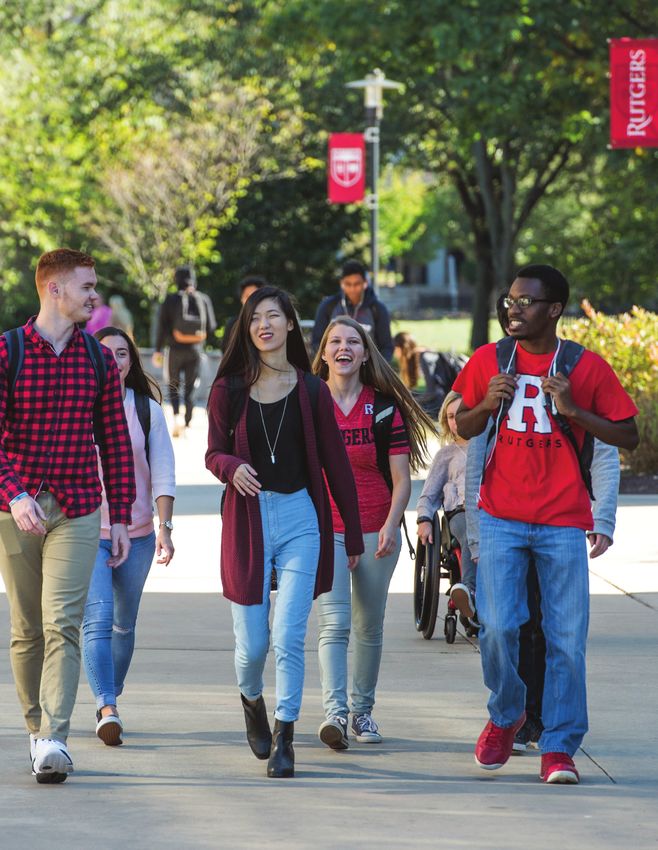
GUIDE TO
RETURNING TO
RUTGERS        Updated: 7/28/21
Guide to Returning to Rutgers
SUMMARY OF CONTENTS Updated: 7/28/21
GUIDING PRINCIPLES.......................... 4 ACCOMMODATIONS........................ 11
Gratitude Requests to supervisor or UHR
Health and Safety https://uhr.rutgers.edu/oee/home
Safe Repopulation
MEETINGS........................................... 11
MYCAMPUS PASS................................ 5 In-person meetings strongly discouraged
Must be used prior to coming to work Social distancing required
https://my.rutgers.edu
OFFICE OCCUPANCY PLANNING... 11
VACCINATIONS.................................... 6 IP&O FAST can assist
Strongly recommended for employees https://go.rutgers.edu/pn09atn6
Administered for free on campus
https://coronavirus.rutgers.edu/covid-19-vaccine/ TRAVEL................................................. 12
Travel remains restricted
TESTING................................................. 6 https://coronavirus.rutgers.edu/restricted-travel-and-
Required for certain employees exception-approval-process-announcement/
Administered for free on campus
https://rtr.ipo.rutgers.edu/vaccines/ VISITORS.............................................. 12
Casual visitors not permitted
PHYSICAL DISTANCING...................... 7 Visitor Log must be used
Still applies in the office environment https://visitorlog.rutgers.edu
HVAC...................................................... 8
LABORATORY WORK........................ 12
Managing and Maintenance
Protocols developed
https://go.rutgers.edu/wy65r2q7
FACE COVERINGS................................ 9
Not required outdoors
COMMON SPACES............................ 13
Still required indoors, with limited exceptions
The 3 W’s
University will provide face coverings
WELLNESS........................................... 13
PHASED STAFFING............................ 10 Resources are available
Options https://uhr.rutgers.edu/covid-19-telecommuting/wellness
All changes comport with CNAs
2
Guide to Returning to Rutgers
INTRODUCTION                                                                          Updated: 7/28/21

The past year has brought disruption to our personal and professional lives on
a scale that no one could predict. The many serious challenges of the pandemic
shook us to our core and tested our resolve in ways that were unimaginable.

Through it all, a dedicated group of our frontline     Rutgers has been leading by example in navigating
colleagues – custodians, maintenance personnel,        the pandemic. We have employed all the tools at
operations staff, public safety workers, health care   our disposal to keep our community safe. We have
providers, and researchers – have labored on a daily   been providing face coverings for every community
basis to press ahead and keep the university open.     member, conducting weekly surveillance testing
We at Rutgers have continued to house students         of every individual on campus, mandating vaccine
who had nowhere to go, have made invaluable            for students, making vaccine readily available at all
research contributions like the development of the     of our campuses, and making the difficult decision
COVID-19 saliva test, and have continued to treat      not to repopulate too early. The COVID-19 testing
the ill and infirm. We owe these individuals a huge    statistics, with an infection rate that is a fraction of
debt of gratitude. We are also thankful to all those   the overall state rate, are evidence of the success of
who have been able to effectively serve our students   our approach. As we continue to monitor the public
and the university despite the challenges of working   health situation, we are able to update our approach
remotely.                                              as we repopulate our campuses and buildings.

                                                       Our updated strategies, coupled with widespread
   We’re looking forward                               vaccination and the fundamental understanding
                                                       of how to co-exist with COVID-19, enable us to
  to seeing you in-person                              repopulate our campuses. While our normal is in

    on campus this year!                               fact a “new normal,” different from pre-pandemic, it
                                                       is nonetheless a vibrant and exciting normal. Since
                                                       July 6, 2021 our colleagues have begun to return to
                                                       the workplace, in a staggered and safe fashion. This
                                                       Guide to Returning to Rutgers provides updated
                                                       guidance on how we will continue to return in a safe
                                                       and responsible manner.

                                                                                                                  3
Guide to Returning to Rutgers
GUIDING PRINCIPLES Updated: 7/28/21
Over the past year, activities at the university have been informed and guided
by the Centers for Disease Control and Prevention (CDC), requirements of the
state (Governor’s Executive Orders, Department of Health Guidelines, Office
of the Secretary of Higher education (OSHE) standards), and requirements
documented in the Returning to Rutgers document.
As the public health situation in our region continues from state agencies, and guidance from OSHE.
to improve, Rutgers will continue to comply with These requirements change frequently, and as such
state requirements and public health guidelines. the information in this guide is subject to continual
State requirements are imposed through Executive updating.
Orders from the governor, Administrative Orders
The Guiding Principles of
Repopulation of Our Campuses:
1 2 3
We will recognize that there To ensure the commitment To recognize that safe
are many employees who to the health and safety of repopulation of our university
never left campus to work our community remains locations remains a shared
remotely, and we are grateful paramount. responsibility.
for their service. We will
all return in support of our Public health guidelines will We all have to play a part in
continue to be adhered to. keeping our spaces safe.
mission of teaching, research,
clinical care, and service. State requirements will be There will be equity in how
followed. our units manage the return to
Science will lead us. campus.
4
Guide to Returning to Rutgers
BEFORE REPOPULATING OUR CAMPUS                               Updated: 7/28/21

Comprehensive resources regarding health and safety during the pandemic are
available here. Employees and students should familiarize themselves with the
resources available.

MY CAMPUS PASS
We share a collective responsibility to protect one
another and ourselves from COVID-19. The shared
responsibility for the health and safety of the Rutgers
community during the pandemic begins each day with
every employee and student planning to be on campus
making a quick self-assessment – monitoring for signs
and symptoms of COVID-19 before reporting to work
or coming to campus. If an employee does not feel
well or is sick, then the standard practice of notifying
a supervisor and charging the appropriate time-off is
mandatory.

The university has developed a screening app, My
Campus Pass, available through the myRutgers portal
or via the My Dashboard screen. This tool is intended
to inform you, the user, and need not be exhibited to
gain entry into any Rutgers building. All members of
the Rutgers community must use the self-screening
tool and be guided accordingly. More information can
be found here.

                                                                                5
Guide to Returning to Rutgers
BEFORE REPOPULATING OUR CAMPUS                                                 Updated: 7/28/21

                                                     VACCINES
                                                     Vaccination is the cornerstone of our foundation
                                                     of a safe repopulation, and vaccinations are
                                                     available on campus to all members of the Rutgers
                                                     community at no cost to the student or employee.
                                                     The rapid spread of the Delta variant among the
                                                     non-vaccinated underscores the importance and
                                                     effectiveness of the vaccine. All employees are
                                                     urged to get vaccinated. Vaccines are required of
                                                     students. Click here for details.

                                                     TESTING
                                                     Individuals who are fully vaccinated, upon
                                                     uploading their vaccine card to the portal, are no
QUARANTINING                                         longer eligible to participate in the university’s
                                                     testing program. Those individuals not vaccinated
Fully vaccinated individuals who are exposed
to a positive case of COVID-19 but remain            are required to be tested weekly.
asymptomatic are not required to quarantine
and may continue their regular duties.
Unvaccinated individuals who are exposed to
a positive case of COVID-19 must quarantine,
even if asymptomatic.

WORKPLACE EXPECTATIONS
All faculty and staff are expected to fully comply
with applicable state requirements as well
as Rutgers policies, protocols, and guidance
related to COVID-19. Failure to do so presents
unnecessary risk to our community and may
result in disciplinary action.

                                                                                                          6
Guide to Returning to Rutgers
WHILE ON CAMPUS Updated: 7/28/21
Best practices with respect to human behavior are critical to co-existing with the
virus. Wear a face covering (when appropriate), Watch your distance, and Wash
your hands remain our best preventive measures and defenses.
PHYSICAL DISTANCING
Maintaining space among individuals is one of
the best tools to avoid exposure to the COVID-19
virus and to slow its spread. Since people can
spread the virus before they know they are sick, it
is important to stay distanced from others, when
possible, even if you have no symptoms.
Social distancing is important for everyone,
especially to help protect people who are more
vulnerable to illness. Employees working in
administrative/office areas must follow these
social distancing practices:
Always stay at least six feet from others
Do not gather in groups
Stay out of crowded places and avoid
gatherings
Physical distancing is not required at any outdoor
meeting or gathering.
7
Guide to Returning to Rutgers
WHILE ON CAMPUS Updated: 7/28/21
HEATING, VENTILATION AND AIR
CONDITIONING (HVAC)
Management of Heating, Ventilation, and Air
Conditioning (HVAC) systems is one component of the
overall COVID-19 risk mitigation strategy described
throughout this guide. Our experienced HVAC
maintenance professionals and engineers manage
and monitor all of our infrastructure and continue
to manage, monitor, and adjust our equipment as
necessary to ensure proper and healthy operation.
All HVAC systems and buildings have undergone:
Maintenance to ensure that ventilation systems
operate properly and provide appropriate indoor
air quality for the occupancy level in each space;
Assessment and, where required, replacement of
filters to ensure they functioning appropriately;
Inspection of filter housings and racks to assure
appropriate filter fit and to minimize any air flows
around, instead of through, each filter;
Extended operation of systems to enhance air
exchanges throughout our buildings;
Maintenance to ensure that restroom and other
local exhaust ventilation fans are fully functional
and operating at maximum capacity;
Disabling of demand-controlled ventilation (DCV).
Some buildings have operable windows and doors to
increase outdoor air flow, when weather conditions
permit. In addition, applicable CDC and public
health guidance has been taken into consideration
and has guided actions taken to address each HVAC
recommendation. This information can be found here.
8
Guide to Returning to Rutgers
WHILE ON CAMPUS Updated: 7/28/21
FACE COVERINGS
Face coverings are not required when outdoors on
Rutgers property. Face coverings must be worn:
Indoors in shared spaces (e.g. meeting rooms,
conference rooms, breakrooms, copy rooms,
etc.)
Indoors in classrooms, seminar rooms, lecture
halls, etc.
Indoors in private spaces with more than one
occupant (shared offices)
Indoors in public spaces (e.g hallways,
restrooms, stairs, elevators, etc.)
Face coverings are not required indoors when
seated in a private office occupied by one person.
Face coverings are not required indoors when
seated at a workstation, provided that there is six-
HYGIENE AND SANITATION foot separation from other seated people.
Wash your hands often with soap and water for at The university will provide face coverings upon
least 20 seconds, especially after you have been in a request. Employees should review face covering
public place, or after blowing your nose, coughing, requests with their supervisors.
sneezing, or touching your face. If soap and water are
not readily available, use a hand sanitizer that contains
at least 60% alcohol. Cover all surfaces of your hands
with sanitizer and rub them together until they feel dry.
Avoid touching your eyes, nose, and mouth, and wash
your hands after touching your face. Sanitizing stations
have been placed in building common areas.
While custodial crews will continue to clean office
and workspaces based on CDC guidelines, additional
care should be taken to wipe down commonly used
surfaces. Before starting work and before you leave
any room in which you have been working, you must
wipe down all work areas with the EPA-registered, 60%
alcohol disinfectant provided by your school or center.
This includes any shared-space location or equipment
(e.g. copiers, printers, computers, A/V and other
electrical equipment, coffee makers, desks and tables,
light switches, doorknobs, etc.).
9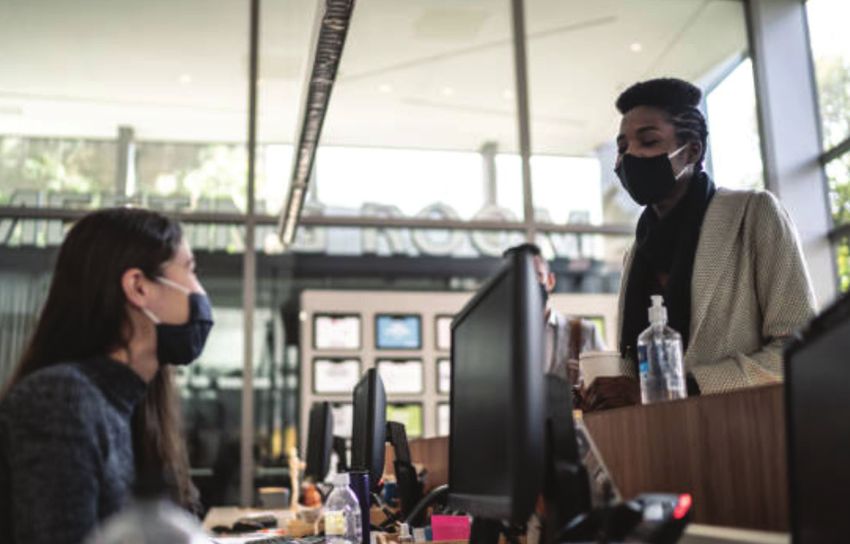
Guide to Returning to Rutgers
RETURN TO THE WORKPLACE                                                                Updated: 7/28/21

The Rutgers workplace will be carefully managed to control risks and ensure the
safety of members of our community, as well as the communities where Rutgers
resides and serves. Employees must return to Rutgers in a planned manner that
results in an appropriately reduced density of occupancy. There must be equity
among the workforce in this balanced reduced density – that is to say, there
cannot be some who are working remotely full time and causing others to be
present at all times.

PHASED STAFFING                                          Alternating Days/Flexible Work Hours: In order to
                                                         limit the number of individuals and interactions among
Phased staffing may be necessary in locations where
                                                         those on campus, departments should schedule
distancing requirements do not allow for a full
                                                         partial staffing on alternating days, or allow flexible
repopulation at this time. In those situations, there
                                                         work hours. Such schedules will help enable social
are several options departments should consider to
                                                         distancing, especially in areas with large common
maintain required social distancing measures.
                                                         workspaces.
Hybrid – Remote Schedule: Schedules associated
                                                         Staggered Reporting/Departing: The beginning
with blocks of time, typically in one-week increments,
                                                         and end of the workday typically bring many people
whereby employee cohorts may be in person on the
                                                         together at common entry/exit points of buildings.
first and third week of a given month and remote the
                                                         Staggered reporting and departure times will reduce
second and fourth week. This would then be alternated
                                                         traffic in common spaces.
with the corresponding cohort. These arrangements,
which must be approved by the department head, can
                                                         All schedule and hours of work changes which may
be done on other schedules as appropriate.
                                                         be implemented will be done so in accordance with
                                                         the relevant provisions set forth in the collective
                                                         negotiations agreements.

                                                                                                               10
Guide to Returning to Rutgers
RETURN TO THE WORKPLACE Updated: 7/28/21
OFFICE ENVIRONMENTS
Staffing and occupancy of offices must be planned
to accommodate distancing. Rutgers has prepared
a Guide to assist with planning. If additional help is
needed, the Institutional Planning and Operations
Facilities Assessment Special Teams (FAST) can be
called upon to assist. Click here for information.
If you work in an open floor plan environment,
be sure to maintain at least six feet of distance
from co-workers. If possible, have at least one
workspace separating you from another coworker.
Wear a face covering at all times while in a shared
REASONABLE ACCOMMODATIONS workspace/room. Departments should assess open
work environments and meeting rooms to institute
Employees who have a medical condition that
measures to physically separate and increase
places them in a higher risk group, or those who
distance between individuals:
are pregnant who wish to seek a reasonable
accommodation related to returning to the
Placing visual cues such as floor decals,
workplace, should speak to their supervisor to
colored tape, or signs to indicate to
review telecommuting options. If no telecommuting
individuals where they should stand while
options are suitable, the employee should contact
waiting in line.
University Human Resources’ Office of Employment
Equity. Posting one-way directional signage for large
open workspaces with multiple throughways
MEETINGS to increase distance between individuals
moving through the space.
In-person meetings are strongly discouraged and
all in-person participants must wear face coverings If you work in an office, no more than one
and be seated with minimum six-foot separation. person should be in the same room unless
Departments should remove or rearrange chairs the required six feet of distancing can be
and tables or add visual cues in meeting rooms consistently maintained. If more than one
to support social distancing practices among person is in a room, face coverings should
attendees. always be worn.
Convening in groups increases the risk of viral
During your time on campus, you are encouraged transmission. Where feasible, meetings should be
to communicate with your colleagues and held in whole or part using available electronic
supervisors as needed by email, telephone, or collaboration tools.
other available technology rather than face-to-face.
If weather permits, outdoor meetings may be an
option for essential in-person meetings.
11Guide to Returning to Rutgers
RETURN TO THE WORKPLACE Updated: 7/28/21
VISITORS
Visitors with no business purpose and other
guests are not allowed in workplaces; this includes
visitors who may be friends or family of employees.
Department heads must carefully consider the
need for in-person meetings, and invite visitors
with legitimate business purposes selectively. All
visitors must be registered using the university’s
visitor log, accessed here. This system is the official
repository of visitor data for the university. Visitors
(those people who are not faculty, staff, students, or
patients) must be registered using this platform. This
platform replaces any paper logs or local systems
that were previously in use. The data will be retained
for 30 days and will only be used for contact tracing
purposes if needed. Anyone with an active NetID
can enter a guest through the system.
TRAVEL GUIDELINES
LABORATORY WORK
Rutgers will generally continue its broad
restriction on both foreign and domestic travel for Specific protocols have been developed for
University purposes, while allowing limited travel faculty, staff, and students undertaking research
that is explicitly approved as an exception via a in laboratory environments. Click here for more
information.
waiver process. Click here for more information.
RECREATION CENTERS
Capacity limits at the Rutgers University- Newark
recreation center necessitate the continued
prohibition of faculty and staff use. Effective
August 2, 2021, recreation centers in New
Brunswick and Camden will re-open to faculty and
staff. Recreation centers may have registration
and occupancy rules applicable to their specific
location, and patrons must familiarize themselves
with those rules.
HOURS OF OPERATION
On-site hours of operation may be affected by
limits in staffing. Every effort should be made to
model hours of operation as close as possible to
those in effect pre-pandemic.
Off-site (remote) hours should reflect an
employee’s typical work day.
12Guide to Returning to Rutgers
RETURN TO THE WORKPLACE Updated: 7/28/21
BEHAVIORAL HEALTH AND WELLNESS
This is a difficult time that presents new stressors
and burdens on our community members. Please
remember that support and guidance services are
always available to our students in need through
CAPS or UBHC.
MYWELLNESS APP
Rutgers University has launched the My Wellness
app, now available within the Rutgers University
mobile app and within the MyRutgers portal. The
purpose of the app is to support the physical,
emotional, and social well-being of the Rutgers
community by providing quick and easy access
to wellness content from your mobile device. All
members of the Rutgers community are encouraged
to participate in activities that promote physical,
COMMON SPACES emotional, and social well-being.
Elevators, rest rooms, break rooms, and other common
Rutgers4U is a confidential support line to offer
spaces will experience increased foot traffic as the
emotional and therapeutic support during and
campuses are repopulated. Common sense, the “3
following the COVID-19 pandemic to Rutgers staff,
W’s,” and courtesy, are tools that will allow safe use of
faculty, and their families. The support line will be
common spaces.
operational Monday through Friday from 8 a.m. to
Restroom occupancy should be limited based on room 4 p.m., with additional hours to be added. Access
size to ensure at least six feet of distance between the support line by calling 1-855-652-6819.
individuals. Whenever possible, no more than one
person should be in a restroom.
TELECOMMUTING AND WELLNESS
The general guidelines for keeping yourself and others WEBSITE
safe in any environment are no different from those that
In addition to the services mentioned above,
should be practiced in the restrooms:
University Human Resources has wellness
webinars and resources already available on UHR’s
Practice physical distancing and wear a face
Telecommuting and Wellness site; a selection of
covering.
digital learning resources has been curated to
Avoid touching your face.
support your well-being and working in a virtual
Avoid loitering in common areas and placing
environment.
personal items on restroom surfaces.
Wash hands for at least 20 seconds with warm
water and soap.
Dry hands thoroughly.
Use a paper towel to turn off the sink and open
the door to exit.
13You can also read


