Healing Urban Fractures - INSIDE A PANDEMIC Vulnerability, imagination, innovation in the City of Tshwane - University of Pretoria
←
→
Page content transcription
If your browser does not render page correctly, please read the page content below
Healing Urban Fractures

  INSIDE A PANDEMIC
   Vulnerability, imagination,
innovation in the City of Tshwane

             Urban Studio
        Annual Reflective Report
TABLE OF CONTENTS

Inside a pandemic                  p.01
     Stephan de Beer
When or demons are unleashed       p.14
     Lance Thomas
Urban Studio: Annual Report 2020
    Jude Nnorom                    p.17
  Burgers Park                     p.21
  Salvokop                         p.27
  West Capital Precinct            p.32
  Mamelodi East                    p.39
  Eersterust                       p.43
  Woodlane Village                 p.46
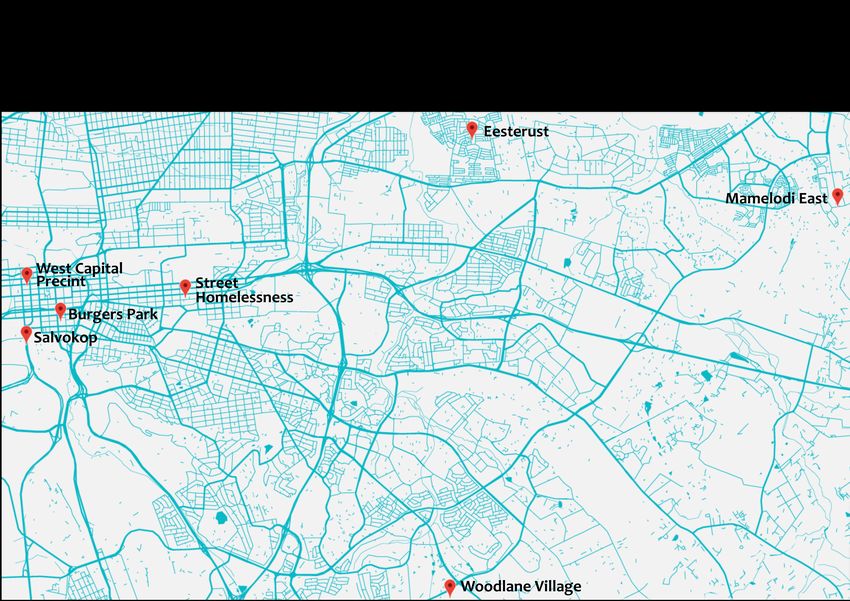
  Street homelessness              p.56
  Urban Studio Map                 p.66

Epilogue                           p.68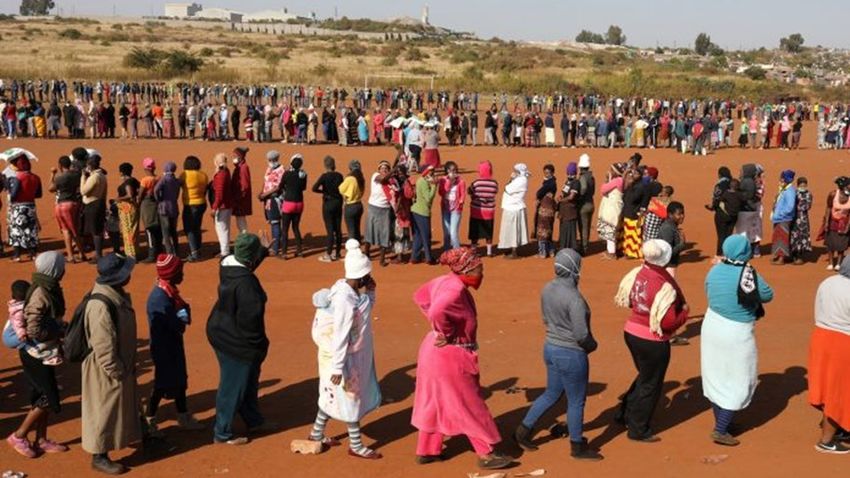
STEPHAN DE BEER

   C
          ovid-19 is not really the                                             but, because this takes place in
          great equalizer, as some                                              the global South, the world does
          would   have  it.   Instead,                                          not come to a standstill and hardly
          ways more visible than be-                                            anyone gives it a thought.
   fore, it illustrated the cruel ine-
                                                                                The cruelty of debilitating poverty
   qualities that face humanity. And
                                                                                and the criminality of inequality
   only some have the ability to
                                                                                are not called out for what it is.
   protect themselves from the virus,
                                                                                Instead, it is regarded as inevita-
   whilst others are placed at greater
                                                                                ble. We even resort to Jesus, in-
   risk. Whereas Covid-19 reveals our
                                                                                terpreting his response to Judas,
   common and interconnected humanity,
                                                                                saying, 'The poor will always be with us!’
   it also puts on vivid display our
                                                                                suggesting that Jesus thereby con-
   cruel and calculated inhumanity.
                                                                                doned poverty and inequality. What
                                                                                Jesus really did was to turn on the
T HE   PANDEMIC , AND OTHER DEATH - DEALERS
                                                                                farcical Judas, pretending to care
                                                                                for the poor, whilst he not only
   Many have commented that Covid-19                                            exploited the poor, but was also
   is not the only pandemic we face at                                          about to betray Jesus for money2.
   this time. Annually 7 million chil-
   dren die of preventable diseases1,
   1
    World Health Organisation, 2020, ‘Child Mortality’, https://www.who.int/data/gho/data/themes/topics/topic-details/GHO/child-mortality, accessed 8
   November 2020
   2
     Theoharis, L., ‘Understanding “The poor will always be with you”. Presented at the Vineyard Justice Network’s 2015 Forum: ‘Jesus, the Kingdom and
   the Poor’, 16-17 October 2015, https://kairoscenter.org/understanding-the-poor-will-always-be-with-you/, accessed 6 November 2020
Not only do we live inside the glob-                                                           less than the threat of temporary
 al Covid-19 pandemic. For many in                                                              Covid-19 shelters closing down.
 the sites and themes highlighted in
 this report, negotiating daily liv-
 ing inside the pandemic is not so
                                                                                                S   ubstance users who had access to
                                                                                                    shelter and opioid replacement
                                                                                                therapy– finding a moment of stability
 much different from negotiating life
                                                                                                and a real sense of hope, sometimes
 before the pandemic: hustling for
                                                                                                for the first time in many years –
 piece jobs; avoiding the abuses of
                                                                                                faced the streets and relapses into
 law enforcement agencies; fending
                                                                                                substance use, as the lockdown lev-
 off sexual predators; fighting pos-
                                                                                                els were relaxed, and the pressure
 sible evictions; securing a safe
                                                                                                to maintain temporary shelters subsided.
 space to stay; or ensuring at least
 one meal per day for your children.
 Homeless persons in the City of                                                                T  he cruelty of        debilitating
                                                                                                   poverty; the scourge of gender-
                                                                                                                based violence; the
                                                                                                                anxiety of teenage
                                                                                                                girls in neighbour-
                                                                                                                hoods with no access
                                                                                                                to safe, decent or
                                                                                                                private     sanitary
                                                                                                                facilities;     food
                                                                                                                deserts      amidst
                                                                                                                massive wastage of
                                                                                                                food; are daily
                                                                                                                occurrences      all
                                                                                                                across the world.
                                                                                                                In   this    report,
                                                                                                                they are named as
                                                                                                                real death-dealers
Fig 1. People standing in a queue to receive food aid amid                                                      in our own city,
the spread of the COVID-19 outbreak, at the Itireleng
Informal settlement, near Laudium suburb in Pretoria.                                           even though they do not affect
                                                                                                everyone, as Covid-19 does. Those
 Tshwane, during Covid-19, feared the                                                           who make the decisions and dictate
 possible infection with the virus                                                              the future trajectory of the city

FIG1. CGTN, 2020, South Africa to lift alcohol sales ban for home consumption, 25 May 2020, https://news.cgtn.com/news/2020-05-25/S-Africa-to-lift-alcohol-sales-ban-for-home-
consumption-from-June-QLYZNi6W4g/index.html, accessed 3 November 2020

                                                                                            4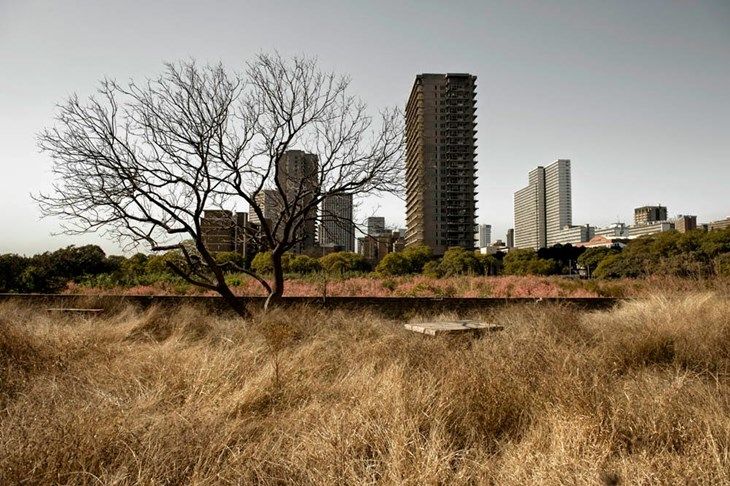
HEALING URBAN FRACTURES                                                                       INSIDE A PANDEMIC

   cannot be ‘infected’ by those who are                                            often comes in the way of threatening
   poor, landless or violated sexually.                                             local livelihoods or the right of
   Their general distance from the most                                             people to be in the city, through
   vulnerable and contested spaces in                                               attempts at replacing people with
   the city means that they mostly                                                  more profitable endeavors.
   remain unaffected by these death-                                                In many of the sites, the presence
   dealing tentacles holding thousands                                              of elected politicians does not nec-
   captive3.                                                                        essarily translate into these commu-
                                                                                    nities –and the most vulnerable in
U RBAN   VULNERABILITY AND ( LACK OF ) VISIONARY                                    these communities –either having a
   POLITICAL OR BUREAUCRATIC LEADERSHIP                                             voice, or experiencing having fair
                                                                                    and proper representation. A lack of
   In the City of Tshwane, we entered                                               visionary political leadership, a
   the Covid-19 lockdown being a city                                               managerialist approach to urban
   under administration. This meant we                                              governance,       and    consultative
   did not have elected ward councilors                                             processes that do not include
   actively engaging their constituencies                                           communities       authentically       in
   and serving their communities, ex-                                               collaborative decision-making, have
   cept where they considered this                                                  left many of these communities in a
   their vocation and not merely a paid                                             state of perpetual abandonment and
   position. Some ward councilors continued                                         decline. Salvokop, the Woodlane Village,
   to serve their communities whilst                                                and parts of the West Capital
   others went undercover.                                                          Precinct, are visible demonstrations

   B
                                                                                    of that fact.
       ut, even before the city was
       placed under administration, with
   hindsight we can say that successive
   local governments led by different
                                                                                    T  he bias of this report, and the
                                                                                       theological conviction that
                                                                                    undergirds our reflection, is to
   political parties, often failed the                                              prioritize the most vulnerable in
   communities featured in this report.                                             considering urban planning, policy-
   These communities in many instances                                              making and investment, in order to
   experienced slow but real decline,                                               level playing fields. It is our
   disinvestment, and       disinterest.                                            submission that the well-being of
   When there is interest shown, it
   3
    In 2016, 18,2% of the population of the City of Tshwane – about 600,000 people – was living informally, with all the associated challenges. Source: City
   of Tshwane, Office of the Executive Mayor, 2017, Annexure 1: Integrated Development Plan 2017-2021, Final Draft, May 2017, http://
   www.tshwane.gov.za/sites/Council/Ofiice-Of-The-Executive-Mayor/201721%20Draft%20IDP/Annexure%20A%20-%20COT%20IDP%202017-21%
   20PDF.pdf, accessed 8 November 2020
the city should be assessed through                                                     people, blind people, disabled peo-
how it includes and creates proper                                                      ple, with nowhere else to go, with no
access to sources of well-being to                                                      public transport in sight, began a
those inhabitants of the city that                                                      long march home to their villages…
are most excluded or marginalized.                                                      Some died on the way.
Not only the City of Tshwane, but
cities and urban political leaders
across the world, struggle to                                                           T       hey      knew         they
                                                                                                home potentially to slow starva-
                                                                                        tion. Perhaps they even knew they
                                                                                                                                 were        going

engage urban vulnerability in
decisive, imaginative, innovative                                                       could be carrying the virus with
and radically inclusive ways.                                                           them, and would infect their families,
Shoshana Brown4 speaks of how it                                                        their      parents,          and        grandparents
took a pandemic to expose New York                                                      back home… As they walked, some
City afresh to its food and health                                                      were beaten brutally and humiliated
care inequities. And in the                                                             by the police, who were charged

                                                                                                                                               ”
megacities and towns of India,                                                          with strictly enforcing the curfew.
millions of urban poor people were
                                                                               And yet, there are also real
driven out. In her essay, The
                                                                               attempts in other places to embrace
Pandemic is a Portal, Arundhati
                                                                               the most vulnerable urban populations
Roy5 describes the horror of not
                                                                               politically and otherwise. The
belonging, when it matters.
                                                                               Partnership for Health Cities

       “
            As the wealthy and the middle-                                     convened online platforms where
            classes enclosed themselves in gat-                                cities as diverse as Chicago in the
            ed colonies, our towns and megaci-                                 USA and Colombo in Sri Lanka,
            ties began to extrude their working-                               shared good practices and innovative
            class citizens– their migrant workers –                            ways of supporting vulnerable urban
            like so much unwanted accrual.                                     populations during Covid-196.
            Many driven out by their employers

                                                                                   “
                                                                                        A session for mayors addressed safe-
            and landlords, millions of impover-                                         ly     loosening           physical          distancing
            ished, hungry, thirsty people, young                                        measures, and a second session later
            and old, men, women, children, sick

4
 Brown, S., 2020, How cities can provide rapid relief for vulnerable people during the Covid-19 crisis, The Commonwealth Fund, 24 April 2020, https://
www.commonwealthfund.org/blog/2020/how-cities-can-provide-rapid-relief-vulnerable-people-during-covid-19-crisis, accessed 7 November 2020
5
    Roy, A., 2020, Azadi: Freedom. Facism. Fiction, London, Penguin Books, pp.209-210
6
 Vital Strategies, 2020, No one left behind: Supporting vulnerable populations in the COVID-19 era, 15 May 2020, https://www.vitalstrategies.org/no-
one-left-behind-supporting-vulnerable-populations-in-the-covid-19-era/, accessed 6 November 2020

                                                                           6
HEALING URBAN FRACTURES                                                                      INSIDE A PANDEMIC

          in the week guided cities’ public                                  were unprecedented, and significant
          health teams on enhancing services                                 gains    were   made.    The   new
          for migrant, homeless, incarcerated                                administration in the city since
          and other disadvantaged popu-                                      November 2020, would do well to

                      ”
          lations.                                                           attend to the innovative, collabo-
                                                                             rative model that emerged during
In the City of Tshwane, after a                                              this time, and to build on its
false start, a remarkable recovery                                           successes.
occurred in how it dealt with home-
lessness during Covid-197. In only                                                C ONTESTED           SITES IN THE         C ITY    OF T SHWANE :
21 days, 25 temporary Covid-19                                                         CAN INCLUSIVE FUTURES BE                      IMAGINED ?
shelters were created, accommodating
1,800 people, and offering primary                                           The Urban Studio is a deliberate
health care, psycho-social programmes,                                       attempt to accompany selected geo-
harm reduction support, and family                                           graphical sites and themes in the
reintegration programmes in all the                                          City of Tshwane, where socio-
sites.                                                                       spatial contestations are in the
                                                                             order of the day. At the same time,
This was enabled by key officials
                                                                             these sites and themes offer the
in different municipal departments,
                                                                             promise of a radically inclusive
creating the environment for
                                                                             and flourishing city, should
collaborative action, in which the
                                                                             innovative and courageous urban
City of Tshwane joined hands with
                                                                             interventions be made.
the Tshwane Homelessness Forum,
more than 20 NGOs and FBOs, and
researchers from the Universities
of Pretoria and South Africa.
                                                                             A   great concern is that the
                                                                                solution   for    the   challenges
                                                                             facing some of these communities
                                                                             are mostly not sought from within.
Although marred by alleged corrupt
                                                                             External   plans    and   investment
dealings with food contracts to
                                                                             threaten the futures of residents
some of the shelters, and discontinuity
                                                                             in places like Salvokop and Woodlane
in terms of collaboration between
                                                                             Village, as they might have to make
the City and its broad range of
partners, the fact remains that the                                          way for more ‘desirable’ developments.
collaborative interventions made                                             Instead              of       truly           participatory

7
 De Beer, S., 2020, Homelessness and Covid-19: the miracle of Tshwane, Spotlight Africa, 23 April 2020, https://spotlight.africa/2020/04/23/
homelessness-and-covid-19-the-miracle-of-tshwane/, accessed 4 November 2020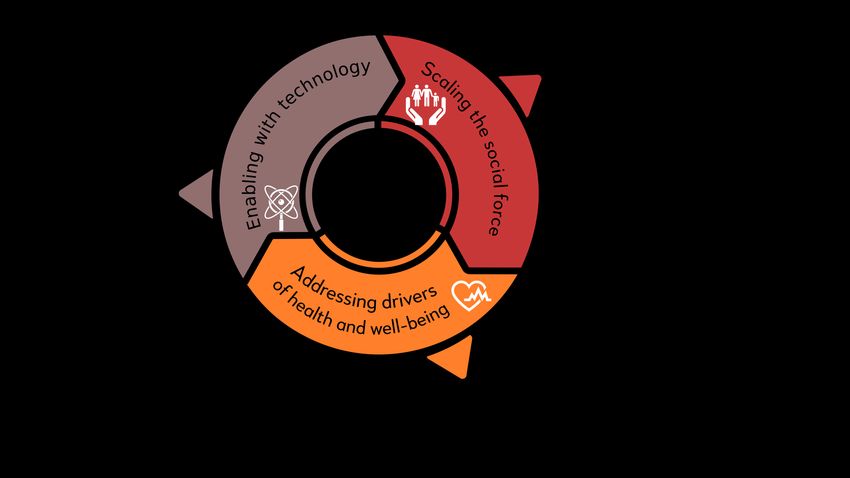
planning and developmental process-        development like the Thembelihle
es, external consultants call resi-        Village took 18 years to complete,
dents to once-off meetings, where          from inception, due to officials in
the residents are merely informed          the city blocking the project for
what the programme of action will          at least 12 years; and a lack of
be, without having solicited any           political leadership failed all
input or participation either from         those years to override crooked bu-
residents –some who have resides in        reaucratic processes. Schubart Park
these neighbourhoods for over 30           and Kruger Park still stand as
years –or from other long-term             monuments of a complete failure of
institutional partners and land            urban governance, having affected a
owners that invest in these                few thousand people detrimentally.
neighbourhoods on a daily basis.

I  n places like Burgers Park, the
   presence of strong anchor in-
                                           A   place like Eersterust, from
                                              the perspective of the land-
                                           less, is simply forgotten, first by
stitutions, and the high percentage        the apartheid rulers and now by suc-
of property ownership probably             cessive post-apartheid governments.
contribute to the relative well-           A sense of fragmentation also
being and stability of this                hinders    decisive     action    to
neighbourhood, as compared to some         overcome different forms of vio-
of its immediate surrounding               lence that plague this community.
neighbours. In the past, the               Churches now consider safe space
Burgers Park neighbourhood also            for victims of gender-based vio-
demonstrated its ability to self-          lence. This should be accelerated
organize in ways that enabled              with all the support necessary.
resistance to possibly negative
                                           Mamelodi     East    has   literally
external impacts on the local
                                           exploded in size over the past 30
people and their interests.
                                           years. Predominantly informal, it
The fact that the largest percentage       has often been the dumping ground
of land in the West Capital                for people being displaced from all
Precinct is state-owned, has not           over the city, or it became the
translated in fast-tracking the            entry point into a city that is
redevelopment of these areas. To           still extremely divided spatially.
the contrary, an innovative and            The    distance     from    economic
ground-breaking social housing             opportunity and the lack of significant

                                       8
HEALING URBAN FRACTURES INSIDE A PANDEMIC
investment in the neighbourhoods of can inclusive futures be imagined?
Mamelodi East, condemn thousands to
It is fairly simple to renew urban
perpetual marginalization.
areas through the kind of investment
I nstead, this should be considered
a new growth point in the city.
In the same way as places like the
that ordinarily displace the poor.
To imagine inclusive urban futures
—grounded in a different kind of political, moral
Menlyn Mall and the Woodlands
and human imaginary— would require a
Boulevard Mall have been drivers of
prior decision to invest (only) in
investment, tailor-made and innovative
innovative processes that will
investment need to be designed and
foster, build and ensure radically
implemented in partnership with the
inclusive urban neighbourhoods.
communities of Mamelodi East. This
Development proposals that perpetuate
should not be done in the way in
segregated cities-socially,
which the Denneboom informal
economically or racially –should be
traders are displaced as a result
challenged.
of a new mall development. It
should be done through building on
the existing local asset-base, F ROM IMAGINATION TO INNOVATION :
complementing and strengthening it, STRATEGIES FOR COLLABORATIVE URBAN CHANGE
instead of displacing it.
The work of the Urban Studio is to Once a city resolved to place their
accompany local communities through most vulnerable populations centre
research, capacity-building and stage –imagining their complete
documentation of local processes. integration into a city that will
Its bias is inclusive urbanism, be truly and deeply inclusive,
imagining processes and mechanisms innovative strategies are required
that could replace traditional to enable such an imagination
urban developmental practices that into reality. In reflecting upon
rarely honour the assets, agency the urgent demands made upon health
and imaginative capacities, of care strategies during Covid-19,
local residents and institutions. Begun and Jiang 8 draw from the
insights of complexity science.
The question behind this report and
They suggest that effective health
the work of the Urban Studio, is
services that responded effectively
simply:
8
Begun J.W. & Jiang H.J., 2020, Health Care Management During Covid-19: Insights from Complexityand at high speed during Covid-19, Speaking specifically of health
were characterized by three care and urban vulnerability in New
complementary processes, namely York City during Covid-19, Brown
communication, collaboration and innovation. writes10
“
The kind of urban change that will
While we cannot end structural racism
integrate vulnerable populations
and break intergenerational cycles
fully and effectively into the
of poverty in the midst of this crisis,
urban fabric as participants and
there are three interrelated efforts
contributors, and that will support
that every city can undertake to
the holistic flourishing of diverse
provide some relief to people hit
neighbourhoods such as the ones
hardest by COVID-19 and to establish
featured in this report, requires
innovation. But innovation without an improved infrastructure for
on-going communication and addressing health beyond this crisis.
collaboration between the various None of these steps is enough on its
stakeholders that make up the city, own; they must be implemented in
will never be optimal. Local gov- concert and developed at levels
ernments should spend much more commensurate with local need,
time on carefully cultivating broad
-based collaborative partnerships
The three
demand, and priorities.
processes
”
she proposes
as vehicles for long-term and lo-
are:
cally-owned urban change.
1. ENABLING SOCIAL CARE PROVIDERS WITH
Whilst the processes of communica- TECHNOLOGY
tion, collaboration and innovation 2. SCALING THE COMMUNITY HEALTH WORKFORCE
apply to urban governance and de- 3. FOCUSING ON THE SOCIAL DRIVERS OF HEALTH
velopment in its broadest sense,
Brown9 speaks of three interrelated Brown argues that low-income workers
processes that any city should placed themselves and their
adopt and implement, was it to families at high risk, ‘in ways that
ensure safety nets for its most privileged people are spared’, to access
vulnerable populations and
food and unemployed benefits during
neighbourhoods.
the pandemic. Through these three
interrelated processes people will
9
Brown, 2020 , Science, NEJM Catalyst Innovations in Care Delivery, October 9, 2020. DOI: 10.1056/CAT.20.0541
10
Brown, 2020 Science, NEJM Catalyst Innovations in Care Delivery, October 9, 2020. DOI: 10.1056/CAT.20.0541
10be supported to stay home, whilst
accessing the social care and
support they require.
T his has been clearly demonstrated
through the collaborative approach
to establish 27 temporary Covid-19
shelters for homeless communities
in the City of Tshwane. Site
managers in the NGO-managed sites
were all connected to each other
through Whatsapp technology;
Fig 2. Strategies for Collaborative Urban Change
resource distribution was managed
through a shared application, and
mental well-being through daily
urgent placement of people who
psycho-social care. The social
needed shelter was facilitated in a
drivers of health have been
similar way. It was the first time
successfully addressed and there
that technology was utilized at
was no reported incidence of
such a scale to provide a safety
infections with the virus in any
net for homeless persons in the
of the Covid-19 shelters in the
city.
City of Tshwane.
This was further enhanced by a
During this time a Helpline was
large network of social and health
created by Lawyers for Human Rights
care volunteers. Site managers, social
to assist people facing evictions
workers, community health workers,
from their homes. Within days more
peer counsellors, clinical assistants,
than 1,000 persons called in and
and occupational therapists, all
was assisted to prevent their
contributed to span an extensive
eviction, something that was
net of care.
prohibited during the hard lockdown
T hirdly, the availability
shelters facilitated adherence
of levels.
to medication, diagnosis and
treatment, as well as emotional and
O f course, Brown’s proposal relates
not only to health, but to
FIG 2. De Beer, S. (concept) & Makina, T. (design), 2020, ‘Strategies for Collaborative Urban Change’the general well-being of vulnerable of urban vulnerability, prevents
urban communities. Her proposal is decisive action to address and
for innovative safety nets including reduce vulnerability. Urban
the use of technology, expanding vulnerabilities can only be
the social care workforce, and overcome through a deep acknowledgment
ensuring that the drivers of health of its existence and impacts.
and well-being are addressed. Such
Once lockdown happened, the reality
strategies require prior commitment
of fo od s ho rt a ge s a nd t he
from urban leadership dedicated to
concentration of homeless persons,
build inclusive cities, in which
now even in traditional suburbs,
vulnerability will be replaced by
could no longer be denied. This
resilience, access and agency.
was because that which is often
rendered invisible in urban policy
A DDRESSING URBAN VULNERABILITIES
and the public mind, gained much
THROUGH VALUE - DRIVEN URBAN GOVERNANCE
more visibility. Part of the obligation
of activist scholarship is exactly
A resolve to address urban this: to make visible what is
vulnerability in decisive and rendered invisible; to acknowledge
transformative ways, needs to be vulnerability and its depths, where
undergirded by value-driven forms denied.
of urban governance11, or, even a
In the context of Covid-19, the
certain kind of urban spirituality.
idea of social distancing was
Again, the pandemic can teach us in
peddled by political leaders and
this regard. Even though there is
the media. And yet, those most
still much more to be understood
vulnerable needed tight support
about Covid-19, a signi fican t
systems and the proximity of people
contributor to fast infection
who cared, more than ever. Instead
rates in some contexts, was the
of distance and isolation, it be-
denial of the seriousness of Covid-19 by
came important to learn the art of
political leaders. Similarly, a
proximity amidst the pandemic. Only
denial to comprehend deeply both
proximity can breed solidarity. In Cape
the drivers as well as the effects
Town, different movements reframed
11
Cf. De Leeuw, E. & Simos, J.(eds), 2017, Healthy Cities: The Theory, Policy, and Practice of Value-Based Urban Planning, New York, Springer-Verlag
12the challenge during Covid-19,
suggesting instead that we should
practice physical distance and
H ealing the urban scars of places
like Marabastad and Schubart
Park, w ould in clude d ealin g
social solidarity. This was a with the psychological, emotional
crucial corrective. And yet, social and racial wounds of the apartheid
solidarity would also require city, but also the more recent
physical proximity at times. This evictions by post-apartheid local
was the risk taken by those who governments; but it would also manifest
sought to ensure social care and itself in the actual construction of
health support of vulnerable beautiful spaces that will include
populations during lockdown. either those who were forcefully
removed (if still possible), or of
A s vulnerable communities experience
the solidarity of
standing with them in their
partners
others who historically would not
have been deemed welcome in this
part of the city.
struggles –contrasting the apathy
towards their challenges which is The sites and themes surfaced in
often the norm –they gather this report tell of neighbourhoods
confidence to practice a new sense where inhabitants often experience
of agency, drinking from their own profound un-freedoms. These un-freedoms
wells, developing their own resources, result from the perpetuation of the
and increasing their own resilience. apartheid city structure; the denial
Over time, such solidarity helps to of people’s right to the city and
slowly reduce the depths of its resources; but also an exclusion
vulnerability previously faced. of people from making their own
Urban vulnerability results from urban spaces and determining their
own urban futures. In many of these
deep urban wounds –at a personal,
sites, the most stable occurrence
communal and spatial level. In
is of daily injustices meted out
considering the West Capital
against people.
Precinct, the scars of forced
removals from Marabastad and ille-
gal evictions from Schubart Park,
are visible to see. The Urban
I nside the pandemic there is a
new awareness, for those with
eyes to see, of the profound
Studio is committed to contribute inequalities, oppressions and
to healing urban wounds and fractures. un-freedoms, still encountered bythe majority of urban dwellers. which is rendered invisible,
Value-driven urban governance would creating proximity where there is
not speak intellectually only of large-scale abandonment, fosters
(in)equality, (in)justice and (un-)freedom, but solidarity where there is apathy,
would carve out strategies for long carefully heal where there are deep
-term liberation and change that are tan- fractures, and develop strategies
gible, that can be measured, that to arrest and overcome un-freedoms,
can be seen and felt, even by a injustices and inequalities that
little child. are written into the urban fabric.
This can only be done by soulful,
In many of the sites we reflect upon, faithful urban leaders, that
the inherent beauty of these places acknowledges the inherent –and
and their people, is overshadowed potential –beauty of every urban
by the ugly realities of neglect, inhabitant and every urban space.
abandonment and estrangement from
people’s own spaces. The soullessness BEYOND ‘NORMALITY’: FINDING THE EXTRA-ORDINARY
of urban governance has to be
replaced with soulful engagement, With reference to the ‘rupture’ of the
carefully luring out the beauty from Covid-19 pandemic, and our ‘longing
within and from below, allowing for local for a return to normality’, Roy12 writes:
“
communities to claim their own Nothing can be worse than a return
voice, to practice their own to normality. Historically, pandemics
agency, and to innovate with bold
have forced humans to break with
imagination, where bureaucratic
the past and imagine their world
urban management processes fail to
anew. This one is no different. It is a
go.
portal, a gateway between one
V alue-driven urban governance,
or a spirituality of urban
governance, that places the city’s
world and the next.
”
This reflective report does not
engage all the neighbourhoods and
most vulnerable populations and
political processes in the City of
neighbourhoods at the core, will
Tshwane. It provides insight into
embrace an acknowledgment of that
the contestations, challenges and
which is wrong, making visible that
12
Roy, A., 2020, Azadi: Freedom. Facism. Fiction, London, Penguin Books, p.214
14promises of six urban neighbourhoods in spaces remarkably resilient and
the City of Tshwane, as well as the beautiful?
reality of street homelessness as
an urban theme. T HE U RBAN S TUDIO 13
I n each of these sites, and in
relation to street homelessness,
the temptation might be to return
The Urban Studio is committed to
accompany neighbourhoods as a partner
and a participant, in solidarity
to ‘normality’, which, in this with the future aspirations of local
case, would mean to do things as we residents and stakeholders.
have always done them, which
resulted in deep fracture and Upon request we seek to contribute
destroyed enormous potential. Such through research, documentation,
a return to normality has to be capacity-building, advocacy and
resisted. awareness-raising, and strategic
communication.
Instead of being communities
together, or managing urban spaces, We do this as an expression of our
as were done before Covid-19, could commitment to advance and broadcast
not the pandemic also in the small where community-based action and
microcosms of these urban sites, be reflection (praxis) could contribute to
transformational change.
a portal enabling them ‘to break with
the past and imagine their world anew?’ It attempts to practice an option
Could not, in the ordinary for the city’s most vulnerable
spaces of everyday urban dwelling populations, as faithfully and as
and vulnerability, extraordinary best as we could•
transformations be imagined, allow-
ing communities to achieve the un-
thinkable, and a city to be truly
inclusive, and its people and
13
De Beer, S., 2020, Clown of the City, Stellenbosch, African SunMedia, pp.99-118LANCE THOMAS
On March 11, 2020, the Director Latin daimonium (Greek: daimon) which is
General of the World Health Organ- an evil spirit or demon. Pandemoni-
ization, Tedros Adhanom Ghe- um is thus loosely translated as all
breyesus, declared the novel coro-
the demons.
navirus SARS-CoV-2 (better known as
Covid-19) a pandemic. Pandemonium is also the name of Mil-
ton’s city of demons in Paradise Lost.
The word pandemic evokes, in my mind
Here the capital of hell is in fact
at least, the strange image of de-
called Pandemonium. Little had I re-
mons floating around the city, try-
ing to scare and possess people, alised just how apt a description
thus making them ill. This image is this would prove to be under the
due to me confusing the etymology Covid-19 lockdown, and how demons,
which were previously veiled or in-
of the words pandemic and pandemoni-
visible, would rush to the surface
um. The etymology of the word pan-
as ‘ordinary’ people retreated to
demic is derived from the Greek their homes. The pandemic was, for
words, pan—meaning all; and the Greek the majority perhaps, more like
word demos—meaning people (from pandemonium, in the sense of all
which we get the English word de- the city’s demons being unleashed.
mocracy—i.e. the rule of the peo- When President Cyril Ramaphosa an-
ple). Because I conflate pandemic nounced the national lockdown, the
with pandemonium, I end up with the demons that pervade our cities wereHEALING URBAN FRACTURES WHEN OUR DEMONS ARE UNLEASHED
quickly exposed. The President had
legislated that everyone,
deemed essential workers, were to
not T hese acts of kindness were met
with compassion by relevant
Departments in the City of Tshwane,
remain at home. Churches, schools responding to this generosity, and
and businesses were closed. an exorcism of these demons were
This pronouncement also put many enacted. More than 20 temporary
homeless people in our city in an shelters were constructed and people
extremely precarious situation. Our who had been tortured by the demon
President, hopefully through reading of namelessness on the street, were
the letter sent to him by the National now restored to their previous
Homelessness Network, tried to make humanity. This model of holistic
provision for the homeless, but healing demonstrates what collaboration
through poor implementation the between the City, educational
disconnect between policy and facilities, churches and civil
implementation –or the will to society can achieve when working
implement policy in a humane together.
way–quickly became evident.
Unfortunately, in Cape Town the
F or the sake of brevity, I would
like to list some of the demons
that Covid-19 has exposed. In
story was not as positive, and an
opportunity for exorcism was flout-
ed. Instead of following the leads
Tshwane, nearly two thousand of Durban and Tshwane, the City of
previously invisible people on Cape Town opted to move the
our streets were lumped together homeless community to the sand
into the Caledonian Stadium close dunes of Strandfontein, denying the
to the city centre. People who have humanity of homeless persons by not
been socially distancing for many even bothering to explain to them
years were now placed in close where they were being taken and
confinement with their vulnerability why. As one homeless person, who was
to the disease clearly evident to caught in this craziness, and now
anyone who cared to look. Fortunately, writing for Cape Argus, says, ‘this
there were a few churches, NGOs, camp was a prison’ There was little
Civic organisations and people of care for the needs of fellow
good will who were not willing to human beings. Strandfontein resulted
look the other way and offered in even more inhumane conditions
their assistance. than homeless persons found on the
streets.This unbridled inhumanity was and selling them to scrap dealers,
reflected also in the way ordinary were arrested for being on the
citizens and city officials responded streets. These are people who
to homelessness elsewhere in Cape cannot eat if they do not work.
Town. A couple in Sea Point, who tried What is more demonic is that this
providing food to the many homeless hapless pair were arrested but
and jobless left destitute by the never processed and thus ended up in
pandemic, had their vehicle –a Mini prison, completely unregistered,
Cooper– burnt, for caring for which means that they never appeared
homeless persons. This car has now before any court and thus were lost
become a symbol of resurrection and in the prison system.
protest on the beachfront of Sea
Point. It was a living symbol
that resurrection was possible, in
I f it were not for the concerns
of non-clerical ministers of the
city, in the form of the Lawyers for
spite of the supposed triumph of
Human Rights, who knew these two
evil.
personally and went looking for
A nother horror image in Cape
Town
Qholani
was
of
that of
Khayelitsha,
Bulelani
being
them, they would still be in pris-
on, because there was no record of
them. What is even more scary is
dragged naked outside of his home, the fact that these two guys met
as city officials moved in to three other men in the prison
destroy it. This happened while caught in the same situation. Luckily
city officials informed South Africans the demons of inhumanity and
that they were simply protecting regarding the homeless as subhuman
city land, in spite of the and not deserving of any care by
President’s call that no evictions the state, was exorcised by the
should take place during the Covid-19 ministry of these lawyers who have
lockdown. It is ironic that lived an ‘option for the poor’. In the absence
Khayelitsha means ‘new home’ when indeed of ecclesial ministers, who chose
it is, for many people, no secure rather to minister to a select
and safe home at all. group of people in their ‘online
These horror stories are not limited churches’ the Beatific Vision had to
to Cape Town. The day after the be actualised by God’s other servants
lockdown was declared, two waste We heard reports nationally of Ward
pickers, who make their daily Councillors taking much needed
living off collecting recyclables
18HEALING URBAN FRACTURES WHEN OUR DEMONS ARE UNLEASHED
food, destined for starving people • Government’s investment in
who were unable to work under shelters and other safe places
Covid, and using it for political for vulnerable urban people,
point scoring, or for feeding close is dismal. There are far too
family and friends. We heard daily few places of safety in all
reports of how the ‘Stay home, stay our cities.
safe’ slogan of government contra- • Local governments are very ill
dicted the demon of gender-based prepared to deal with disasters
violence, where home was anything such as what the Covid-19 pan-
but safe. demic surfaced.
I learnt a number of simple things • Laws and bye-laws often protect
during lockdown: certain people, whilst
• What we hear and assume about homeless persons are often
the good we do is a lie, as we not deemed human enough to
are caught up in a meta- experience the same legal
narrative that keeps us docile protection.
as we try and outsource our • With the right care, mobilised
responsibility for our brother when all spheres of society
and sister to leaders who are collaborate, many of the
not necessarily concerned demons pervading our cities
about others. can in fact be exorcised. I
• The narrative that homeless think especially of substance
persons are lazy is flouted users, having access to
by the fact that many homeless shelter and opioid replacement
persons had to remain on the therapy, finding a moment of
streets, working, just to have stability and a real sense of
a daily meal, whilst the hope, sometimes for the first
rest of us retreated to our time in many years.
homes. Amidst all of the above, as churches
• The church exists, not for the closed their doors and went online,
poor but for the middle classes, a new type of church was developing
catering mainly for those with on the streets, all over Tshwane: a
internet connections. church whose deity was not locked
inside a building and had to be
visited on a Sunday. What unfoldedunder COVID-19 was a new type of ness’ (NIV: Jn10: 10). I have won-
church that resonated with the pain dered what such ‘life in all its fullness’
of God’s people. The ministers of might mean for all our churches,
these churches were ‘essential workers’, generally speaking, but partic-
putting their lives on the line ularly inside a pandemic, when pande-
every day in order to bring healing monium breaks loose•
to those tormented by multiple demons.
Their rites of exorcism were to
offer spaces of healing and
life. They mediated what I be-
lieved Christ calls us to: ‘The thief
comes only to steal, kill and destroy. I have come
that you might have life, life in all its ful-
20JUDE NNOROM
T
he Urban Studio seeks to spaces in South Africa, as well youth
advance a community-based movements, churches and other
urban praxis though its organizations seeking to become
strategic engagement with six agents of inclusive urban
geographical sites in the City of transformation.
Tshwane (CoT) and to the theme of
street homelessness. The Urban Studio operates on five
key functions or strategic objectives:
The Studio unveils local experiential urban immersions; building leadership;
knowledges in these sites of urban doing engaged research; documenting
contestation and struggle through and strategic sharing of information,
its use of the city as a classroom and advocacy for change.
for action, reflection, dialogue,
learning, and research. The Studio’s The Urban Studio’s immersions are
primary partners are the Centre for always alongside existing community
Faith and Community (CFC), based in - or faith-based actors working for
the Faculty of Theology and Religion change. We document and reflect on
at the University of Pretoria, and existing actions and contestations,
the Tshwane Leadership Foundation, an supporting local initiatives through
ecumenical grassroot organization. building leadership and doing engaged
The Studio has a range of secondary research. Where required, we
partners –community based organizations share information strategically to
that are active in these sites and other help shape alternative narrativesthat support local advocacy for This report will focus on the
change. activities of the studio which are
different from site to site and
T he Urban Studio employs a trans
-disciplinary methodology of
action, reflection, dialogue and
offer proposal for 2021. In some
sites, the Studio seeks to empower
local organizations through capacity
research, in advancing her community-
building and education while in
based urban praxis. In each site,
others, its focus in on advocacy
the Studio seeks to collaborate
and demonstration projects.
with practitioners and communities
seeking to find realizable and workable
solutions for existential problems,
by engaging in capacity-building
T hrough these activities, the Studio
aims to inform research and
trans-disciplinary curricular
and education, advocacy and support development.
for community projects.
• The Studio has created a website
With the outbreak of COVID-19 in as part of its process of
2020, and its impact on the most democratizing knowledge to
vulnerable people in the sites of curate and archive issues
the Studio, new forms of collaboration coming out of the different
emerged between the Studio and its sites to facilitate research
six sites. COVID made more visible and the production of
socio-economic fractures and knowledge. It can be visited
inequalities that mark these sites, at www.urbanstudio.org.za.
but also unveiled opportunities for • In order to enhance effective
strategic interventions in the collaboration, the Urban Studio is
areas of social housing, and the ensuring community associates
necessity of building the capacity in every site, to alert us
of community based organizations about events happening and
who were not deterred by the issues arising in these
effects of COVID and went out to sites•
provide basic needs for their
communities especially during the
period of the hard lock down.T
he Burgers Park area of the the Berea Cricket Grounds –reduced
inner city is the oldest to a skeleton by a fire and
residential neighbourhood abandonment, and the Old Fire Station,
in Tshwane. Only a small currently occupied by an artist
remnant of the historical core community.
remains. At the heart of it all
sits Burgers Park, a public park The City Hall is another landmark
first laid out in 1870. Across the building currently unoccupied after
road, the Melrose House is a renovations that were supposed to
national monument, and inside the turn it into the offices of the
park the house of the city’s first Executive Mayor, but upon completion
chief horticulturist is a reminder was handed over worse than before
of the area’s early glory. The renovations started.
stately building of the Tshwane
Over time, almost all the stand-
Central Station, designed by
alone houses were demolished to
architect Herbert Baker, and the
make place for a high-rise residential
beautiful Barton Keep house on
area. Today, the majority of erven
Justice Mahomed Street, built
in the Burgers Park neighbourhood
between 1886 and 1888, are other
are occupied by high-rise residential
glorious examples of architecture
apartments, student housing, social
from a bygone era. The Victoria
housing and housing for older
Hotel has seen better days but has
persons. A number of churches -
once been a central beacon, as was
both traditional and emerging, andboth in traditional church buildings the area, in some ways having been
and shopfronts –are active in this anchor institutions, alongside the
area. Both public and private churches, when the area went
schools and a number of NGOs are through rapid transition in the
actively present in Burgers Park. 1990s. Whereas these hotels used to
accommodate many tourists in the
Being a 5-10 minute walk from the
1990s, shifting demographics and
Central Business District with mul- negative discourses about the inner
tiple headquarters of national gov-
city saw tourists moving east, but
ernment departments, there are a most of the hotels repositioned
number of well-utilized hotels in
themselves well to accommodate
Fig 3. Burgers Park, Pretoria’s oldest park
24HEALING URBAN FRACTURES RECLAIMING THE CORE
government functions and related property c o m p a n y trying to
visitors to the city. f o r c e t h e sequestration of 18
inner city buildings. This was pre-
In the 1990s the residential vented through activism from this
neighbourhood changed in a very Forum and almost all 18 buildings,
small space of time from a 100% that back then had serious finan-
white to 90% black population. cial problems and municipal debt,
This had implications for the were supported to now be in a sol-
composition of local churches, the vent and well-run state.
nature and demand of local
business, and the exodus of
resources from the area to the S ocially, Burgers Park always
accommodated a significant
homeless population, and substance
south and east of the city. Much of
the disinvestment was based on use and commercial sex work have
stereotypes about the inner city, often been visible in this area,
and on institutional racism that especially at certain times of the
equated black with bad, shaping the day, and in certain areas. Churches
decisions of investors14. and faith-based organisations have
engaged constructively with these
A t some point in the late 1990s
and early 2000s a strong local
civic forum was created, which contrib-
groups, offering them services as
well as possible pathways to re-
integration.
uted to the well-being of the
area. It offered property owners’ In 2006, a collaborative urban
education to the large number of management training programme was
first-time b l a c k h o m e o w n e r s developed between the Berea-Burgers
b u y i n g residential apartments in Park neighbourhood, the City of
the area. It informed the trajecto- Tshwane, the Institute for Housing
ry of the Gautrain, preventing the and Urban Development Studies in
demolition of 7-10 apartment build- Rotterdam, and the University of
ings. At some point the local ward Pretoria. 20 representatives from
councilor was collaborating with a the community, the City and Gauteng
14
Refer for more extensive reflections on the changes in the Burgers Park area to the following sources:
De Beer, S., 2014, Whose knowledges shape our city? Advancing a community-based urban praxis, De Jure 47(2), pp.218-230
De Beer, S., 2017, Mother bird hovering over the city: space, spirituality and a community-based urban praxis, Unpublished PhD-thesis, University of
Pretoria, pp.131-226
FIG 3. Jansen, C., 2011, Burgers Park, Pretoria’s oldest park, http://www.carolizejansen.com/Burgerspark.html, accessed 7 November 2020Province underwent an intensive award-winning Park, also at times
urban management training carry the effects of poor local
programme, both in Rotterdam and in government management, and the
Tshwane, which culminated in the greenhouse, fountains and other
development of an action plan, assets have been in steady decline.
known as the Berea-Burgers Park On the other hand, the Park is very
Regeneration Plan. Sadly, this plan utilized by the local community,
was never implemented, as and particularly children and young
responsible for implementation was people, find it a very productive
given to the City, and they failed space. Annually, the Feast of the
to activate it, still 14 years later. Clowns has become a feature in the
Park, offering a week-long space in
Burgers Park, like many other inner
which the community can participate
city or transitional neighbourhoods,
in live concerts, a range of
does not have a single narrative
activities, and awareness-raising
and have to deal with many contes-
programmes around social justice.
tations. The Park itself, being an
W hy has Burgers Park
resisted going the route
of so many other similar inner city
percentage of residents are
government officials working in the
central business district? What
neighbourhoods in South Africa, could the relative stability and
that experienced complete decline? well-being of this neighbourhood be
Is it the presence and commitment ascribed to?
A
of local hotels? Is it the active
t the same time, however,
religious institutions in the area?
why is it that economic
Can it be the presence of strong
lungs such as the Paul Kruger
NGOs and FBOs and their investment
Street precinct, running from the
in the area? Is it because a large
Central Station, have a different
26HEALING URBAN FRACTURES RECLAIMING THE CORE
dynamic, with larger national conventional wisdom about inner
franchises struggling to make ends city areas and offer much potential
meet whilst smaller businesses and promise. It is a third assertion
seem to flourish? that the future well-being of this
neighbourhood lies with the local
T hirdly, why do government
assets such as the Berea
Sporting Grounds, the City Hall and
community itself: reclaiming the
core would probably require local
community-led processes, bringing
Old Fire Station, and – sometimes –
together churches, NGOs, hoteliers,
Burgers Park, seem abandoned and
property owners, small and bigger
left to their own devises? If these
business, and school principals, to
assets – in the heart of the neigh-
carve out a common vision and agenda
bourhood – can be protected and
for the future of this area.
nurtured, they could help sustain
Perhaps, once the Berea-Burgers
the well-being of Burgers Park?
Park Regeneration Plan was developed in
F ourthly, why, if agency is 2006, the local community should
shown by the local community have created an implementation vehicle
in organizing an extensive urban to implement parts of the plan they
education and planning programme, had control over. In the absence
fully funded, does the City fail to thereof, a huge investment seems to
honour such agency and commitment, have been wasted.
and simply disregard the commitment
Unless those who use the area daily
shown and investment made?
–living, playing, working and doing
It is the assertion of this article business there –reclaim the core,
that Burgers Park belongs to the the core will always be at risk of
core or heart of the city, and if being claimed, tainted and violated
the heart is not well, the city by external forces. The status and
will be sick. It is a further promise of the Burgers Park
assertion that, comparatively neighbourhood need to be honoured
speaking, this neighbourhood defies –and the best place to start is
from within!•Burgers Park
Strategic focus
Collaborative inner-city management of mixed-income, mixed use precinct
Activities: 2020
1. Revisiting the Berea-Burgers Park Regeneration Plan
2. Brainstorming ways forward with local community organisations
3. Capacity-building for community mapping
4. Mapping of the major stakeholders in the area
5. Collaborating with the Department of Geography at the University of
Pretoria in developing a geocoded map of the area
6. Visual documentation of the challenges and visions for this inner-city
neighborhood
Proposals: 2021
1. Drafting a letter inviting the major stakeholders to a mini-consultation
2. Preparation of a well-grounded proposal for a mini-consultation for all
major stakeholders to create possibilities of local community ownership
3. Reviving the local community forum as the vehicle to carry out pro-
posals on the site
4. Documenting the unfolding process and building on the 2006 Berea-
Burgers Park Regeneration Plan
5. Commissioning a well-researched article on the challenges and
opportunities of implementing inner-city changes
28D
avid Harvey15 speaks of Birthed in 1892 17 , the apartheid
‘creative destruction’, referring government gave this land to the
Railways to build 174 houses for
to it as the process
railway workers. Also present in
whereby government and
the neighbourhood is the Jopie
private sector collude
Fourie Primary School and a former
in allowing the decline of a
Christian Reformed Church, that now
local neighbourhood to a point of
hosts the Inkululeko Community Centre.
no return, after which they reckon
Since the 1990s the neighbourhood
they have the moral obligation to
changed demographically and today
‘restore’ the neighbourhood and
it is a predominantly black
the ethical right to do so
neighbourhood. A large number of
through evicting ‘unwanted’
non-South Africans reside in Salvokop,
populations.
particularly in the backyard
This process is playing itself dwellings and in two small but
out on the state-owned land of growing informal settlements.
Salvokop, a small neighbourhood
It seems strange that a government-
in the centre of Tshwane, right
owned precinct in which all the
behind the Tshwane Central
16 houses are owned by the Department
Station .
15
Harvey, D., 2017, Neoliberalism as Creative Destruction, The Annals of the American Academy of Political and Social Science, Vol. 610, pp.22-44, http://www.jstor.org/stable/25097888
16
For a more extensive reflection on this neighbourhood, see also: De Beer, S., 2014, Whose knowledges shape our city? Advancing a community-based urban praxis, De Jure 47(2),
pp.218-230
17
Van den Heever, A., 2006, Field Public Space Infrastructure, Unpublished MArch (Prof) dissertation, Pretoria, University of Pretoria, p.20of Public Works, have been left to found in Harvey’s notion of
decline to a point where managing “creative destruction”.
the area has become incredibly dif-
ficult. Almost every house has a The proximity of this neighbourhood
number of backyard dwellings, and to the central business district,
illegal erections of structures – only separate by a foot bridge onto
housing either churches or shebeens the Tshwane Central Station, provides
or day-care centres – are allowed access to the city and its resources
even though all such activities are and makes it an attractive location
forbidden by the legal agreement for newcomers to the city.
the legal tenant of the house has
Today this is contested space and
entered into with the Department.
the future of the people living in
The only explanation for the complete
Salvokop, some since birth, is
lack of management can perhaps be
increasingly uncertain18.
18
Kgosana, R., 2020, Pretoria’s old ‘white village’ of Salvokop now plagued by hopelessness, 13 January 2020, https://citizen.co.za/news/south-africa/society/2227209/gallery-pretorias-
old-white-village-of-salvokop-now-plagued-by-hopelessness/, accessed 30 October 2020
FIG 4. Kgosana, R., 2020, ‘Pretoria’s old ‘white village’ of Salvokop now plagued by hopelessness’, The Citizen, 13 January 2020, https://citizen.co.za/news/south-africa/
society/2227209/gallery-pretorias-old-white-village-of-salvokop-now-plagued-by-hopelessness/, accessed 4 November 2020
30HEALING URBAN FRACTURES (UN)CREATIVE DESTRUCUTION
Being state-owned land, instead of would leave a large number of
using it to model a truly inclusive, existing inner city buildings empty.
p o s t-apartheid neighbourhood, To make way for the Statistics
displaying high levels of diversity, South Africa property, two shelters
a mix of uses and a mix of income for street boys were demolished,
groups, the bulk of the vacant land and in return the Department of
is earmarked for new government Public Works built a 70-bed shelter
department headquarters. Statistics completed in 2016. Since then this
South Africa already has headquarters facility stood empty though.
completed in this precinct in 2016,
at a cost of 2 billion rand. Next
the Department of Home Affairs and
C urrent plans for the area only
earmark the development of
the government precinct and is ra-
the Department of Correctional
Services would be given similar ther quiet and non-committal as to
office parks, even though this the future of the current resi-
dents. The Danish Government is
committed to partner with the South
African government to recreate
Salvokop into a smart city. Yet, the
inclusion of long-time residents,
non-South African migrants, and very
vulnerable backyard dwellers would
make this be a really smart neigh-
bourhood.
Whether that would be achieved is
currently very uncertain as none of
the government stakeholders has
either pronounced themselves on
this or made any commitments to
this effect.
Some years ago, a local social
housing company, Yeast City
Fig 4. SalvokopHousing, developed 82 social housing depend on those living in the
units in the precinct, on church-owned neighbourhood now. If a community
land. They modeled the inclusion of is characterized by apathy and
backyard dwellers in affordable and division, it probably deserves the
sustainable ways, as 50% of their future that will exclude them. But
tenants used to live in backyard if a community can get itself
dwellings in Salvokop. This modeled mobilized, to drive a collective
the possibility of including agenda, grounded in a common
the largest percentage of current vision, there might be hope.
residents in a future Salvokop, if
there was the political will. Communities such as Salvokop hold
much promise to contribute to –and
Currently, though, it seems as if showcase – a new city. Such promise
government is more committed to is often diluted by the lack of
erect monuments to self, than to clear vision on the part of both
integrate low-income residents government, local communities and
sustainably into the inner city, private sector. Who will shape the
providing them proximity to social, future of Salvokop and who will be
economic and educational opportunities, able to call it home, a decade from
and thereby contributing another now? Will the final word belong to
brick to the remaking of the the (un)creative destruction of
apartheid city. top- down government planning
collaborating with the unbridled
The future of Salvokop might still
greed of capital’s profit? Or will
be one in which current residents
the people govern?•
might have a stake. But that would
32You can also read


