HEART INITIATIVE AND MEDICAID - WHAT IS HAPPENING? Melissa Higgins Addictive and Mental Disorders Division, Treatment Bureau Chief August 6, 2021
←
→
Page content transcription
If your browser does not render page correctly, please read the page content below

HEART INITIATIVE
AND MEDICAID
WHAT IS HAPPENING?

                                                                Melissa Higgins
                 Addictive and Mental Disorders Division, Treatment Bureau Chief
                                                                 August 6, 2021
Proposed Demonstration and   Waiver Implementation and
     Background                                                                   Submission of Public Comment
                              Waiver Requests                 Evaluation

  Overview
DPHHS is requesting a Section 1115 Demonstration to build upon the strides made by
the state over the last decade to establish a comprehensive continuum of behavioral
 health—mental health and substance use disorder (SUD)—services for its Medicaid
                                      members.

                    This demonstration, known as the HEART Waiver, is a critical
                   component of the state’s commitment to expand coverage and
                  access to prevention, crisis intervention, treatment and recovery
                      services through Governor Gianforte’s HEART Initiative.

                      While the implementation of Medicaid expansion in 2016
                  significantly improved access to Medicaid covered mental health
                     and SUD services, gaps in access to critical behavioral health
                                          services remain.

                  The HEART Waiver builds upon the strides made by the state over                                2
                     the last decade to establish a comprehensive continuum of
                        behavioral health services for its Medicaid members.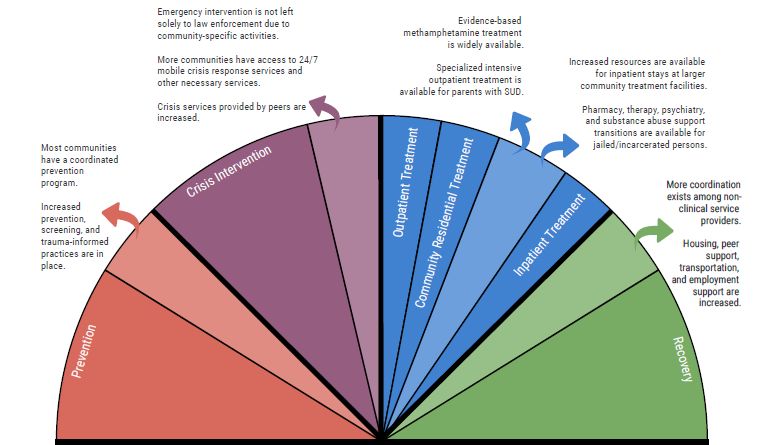
GOVERNOR’S HEART INITIATIVE

    HEART initiative: AFTER
Proposed Demonstration and Waiver Implementation and
Background Submission of Public Comment
Waiver Requests Evaluation
Background On Section 1115 Waiver Authority
• Under Section 1115 of the federal Social Security Act, the Secretary of
Health and Human Services has authority to approve a state’s requests
to waive compliance with provisions of federal Medicaid law.
• An 1115 Waiver must be:
An experimental, pilot or demonstration project;
Likely to assist in promoting the objectives of the Medicaid program;
Budget neutral to the federal government; and
Limited in duration to the extent and period necessary to carry out
the demonstration.
• States must provide a public process for notice and comment on
proposed demonstration applications and extensions.
4
Source: Social Security Act (SSA) § 1115.Proposed Demonstration and Waiver Implementation and
Background Submission of Public Comment
Waiver Requests Evaluation
Addressing Care Management
DPHHS is interested in designing a comprehensive care coordination approach
embedded at the provider level that reflects the needs of Medicaid members with
behavioral health needs and is tied to aspects of implementing the HEART Initiative.
Features of Care Coordination
• Team based, person centered
Medicaid members with behavioral health needs are
approach to improve the overall
mostly served now through Targeted Case
health of enrollees across physical,
Management (TCM).
behavioral health, long-term
• Targeted populations include services and supports, pharmacy
and other needs
• Youth with severe emotional disturbances;
• Youth and adults with substance use • Includes:
disorders; and o Conducting a needs
assessment;
• Adults with severe disabling mental illness. o Development of a care plan;
o Care coordination;
• TCM provides services to assist members in o Ongoing reassessment and
gaining access to needed medical, social, 5
consultation; and
educational, and other services. o Transitional care
management.Proposed Demonstration and Waiver Implementation and
Background Submission of Public Comment
Waiver Requests Evaluation
Addressing Care Management cont’d
DPHHS is exploring several options, which can be used separately or in combination, for
how comprehensive care management could be delivered to address the needs of
Medicaid members across the state with behavioral health needs.
Care Management Agency that DPHHS contracts with on a
statewide basis to deliver care management.
Primary Care Based Care Management where primary care
practices, including rural health centers and federally qualified
health centers, that have experience with and treat Medicaid
members with behavioral health needs provide care
management.
Bundled Care Management payment added to specialty
behavioral health treatment services. As an example, residential 6
SUD services would include a care management payment.Proposed Demonstration and Waiver Implementation and
Background Submission of Public Comment
Waiver Requests Evaluation
HEART Section 1115 Demonstration
DPHHS is seeking a federal waiver to implement HEART initiatives over a five-year
period from January 2022* through December 2026.
• DPHHS is seeking authority through this Demonstration to authorize:
o Evidence-based stimulant use disorder treatment models, including contingency
management;
o Tenancy supports;
o Services for justice-involved population 30-days pre-release; and
o Reimbursement for short-term residential and inpatient stays in IMDs
• DPHHS intends to add the following services to its Medicaid State Plan:
o SUD Clinically Managed Population Specific High Intensity Residential (ASAM 3.3) for
adults only;
o SUD Clinically Managed Residential Withdrawal Management (ASAM 3.2-WM) for adults
only;
o Home visiting services for pregnant and parenting people; and
o Mobile crisis response services.
• DPHHS also intends to expand allowable provider types to deliver SUD services. 7
• The Section 1115 demonstration application is the draft application. A final application will be
submitted to CMS after the 60 days public notice period.
*Pre-release services for justice-involved populations will begin in January 2023Proposed Demonstration and Waiver Implementation and
Background Submission of Public Comment
Waiver Requests Evaluation
Evidence-based Stimulant Use Disorder
Treatment Models
DPHHS is seeking authority to provide evidence-based stimulant use disorder,
including contingency management to expand access to treatment for Medicaid
members with stimulant disorder and address the rise in stimulant and
methamphetamine-related deaths, hospitalizations and emergency department visits
throughout the state.
Demonstration Proposal
• Overview. This Demonstration will expand and pilot TRUST, a comprehensive outpatient
treatment model that combines evidence-based interventions including contingency
management, motivational interviewing, community reinforcement, exercise and cognitive
behavioral therapy
Contingency management allows individuals in treatment to earn small motivational
incentives for meeting treatment goals (e.g., negative urine drug screens)
Contingency management is the only treatment that has demonstrated robust
outcomes for individuals with stimulant disorder, including reduction or cessation of 8
drug use and longer retention in treatment
• Eligibility. Medicaid members ages 18 and older with stimulant use disorder (e.g., cocaine,
methamphetamine and similar drugs)Proposed Demonstration and Waiver Implementation and
Background Submission of Public Comment
Waiver Requests Evaluation
Tenancy Support Services
Tenancy Supports will help people with SMI/SUD who are experiencing housing
instability or homelessness to find and keep stable housing.
Demonstration Proposal
Overview. This Demonstration will provide coverage for a tenancy support services pilot program, which will
include pre-tenancy supports and tenancy sustaining services to support an individual’s ability to prepare for
and transition to housing, as well as assist individuals in maintaining services once housing is secured (see
next slide for more details).
Eligibility. Medicaid members aged 18 and older with at least one of the following needs-based criteria and at
least one risk factor.
o Needs-based criteria: o Risk factors:
• SMI diagnostic criteria, and/or • At risk of homelessness;
• SUD • Homelessness;
• History of frequent or lengthy stays in an institutional
setting, institution-like setting, assisted living facility, or
residential setting;
• Frequent ED visits or hospitalizations;
9
• History of involvement with the criminal justice system; or
• Frequent turnover or loss of housing as a result of
behavioral health symptoms.Proposed Demonstration and Waiver Implementation and
Background Submission of Public Comment
Waiver Requests Evaluation
Tenancy Support Services cont’d
Tenancy Supports will help DPHHS better connect people with SMI/SUD who are more
likely to face housing instability and homelessness to, and maintain them, in housing.
Demonstration Proposal
Covered Services:
o Pre-tenancy Supports. Activities to support an individual’s ability to prepare for and transition to housing, such as:
• Completion of person-centered screening and assessment to identify housing preferences and barriers
related to successful tenancy;
• Development of an individualized housing support plan based on the assessment;
• Development of an individualized housing support crisis plan;
• Housing search services including assisting with rent subsidy, collecting required documentation for housing
application, and assistance with searching for housing; and
• Move-in support services such as assisting individuals in identifying resources to cover expenses related to
move-in (e.g., security deposits and move-in costs) and with the move (e.g., ensuring housing unit is safe
and ready for move-in).
10Proposed Demonstration and Waiver Implementation and
Background Submission of Public Comment
Waiver Requests Evaluation
Tenancy Support Services cont’d
Tenancy Supports will help DPHHS better connect people with SMI/SUD who are more
likely to face housing instability and homelessness to, and maintain them, in housing.
Demonstration Proposal
Covered Services:
o Tenancy Supports. Services to assist individuals in maintaining services once housing is secured, such as:
• Relationship building with the property management and neighbors through education and training on the
roles, rights and responsibilities of the tenant and landlord and assistance resolving disputes with landlords
and/or neighbors;
• Assistance with the housing recertification process;
• Coordinating with the member to review, update and modify their housing support, including the
development of a rehousing plan, as appropriate, and crisis plans;
• Advocacy and linkage with community resources to prevent eviction;
• Early identification and intervention for behaviors jeopardizing housing;
• Assistance with credit repair activities and skill building;
• Housing stabilization services; and
• Continued training and tenancy and household management.
11Proposed Demonstration and Waiver Implementation and
Background Submission of Public Comment
Waiver Requests Evaluation
Medicaid Benefits for Inmates in State Prisons in
the 30 Days Prior to Release
Justice-involved individuals experience disproportionately higher rates of physical and behavioral
health diagnoses and than people who have never been incarcerated. DPHHS is seeking coverage
of limited benefits pre-release to connect individuals leaving prisons who are particularly
vulnerable to poorer health outcomes.
Demonstration Proposal
Overview. Provide targeted Medicaid services to eligible justice-involved populations 30
days pre-release from State prisons, including
• In-reach care management services;
• Limited community-based clinical consultation services provided in person or via
telehealth;
• 30-day supply of medication for reentry to community; and
• Coverage of certain medications for chronic conditions.
Eligibility. Eligible Medicaid members ages 18 and older incarcerated in a state prison 12
with SUD and/or SMIProposed Demonstration and Waiver Implementation and
Background Submission of Public Comment
Waiver Requests Evaluation
Waiver of the Institutions of Mental Disease
(IMD) Exclusion
DPHHS is seeking federal authority to reimburse for short-term acute inpatient and residential
stays at institutions for mental disease (IMD) for individuals diagnosed with SUD, SMI, or SED, to
expand access to community-based settings, improve the quality of residential and inpatient care,
reduce time spent on waitlists, and to ensure Montanans can access the right level of care at the
right time.
Demonstration Proposal
• Waving the IMD exclusion will enable Montana to reinvest state savings into
expanding and improving community based behavioral health continuum, which it is
required to do as a condition of approval, including the following activities:
• Improve linkages to community-based care following stays in acute care
settings
• Ensure a continuum of care is available to address more chronic, on-going
mental health and SUD care needs of beneficiaries with SMI, SUD, SED;
• Provide a full array of crisis stabilization services and access to critical levels of
SUD care; and 13
• Engage beneficiaries with SMI or SED in treatment as soon as possibleProposed Demonstration and Waiver Implementation and
Background Submission of Public Comment
Waiver Requests Evaluation
SUD and SMI/SED Demonstrations Implementation Plan
In accordance with CMS requirements, DPHHS will describe its approach and project
implementation plan for meeting SUD and SMI/SED specific milestones.
SUD Milestones MH Milestones
1. Access to Critical Levels of Care for OUD and Other 1. Ensuring Quality of Care in Psychiatric
SUDs
Hospitals and Residential Settings
2. Use of Evidence-Based, SUD-specific Patient
Placement Criteria 2. Improving Care Coordination and Transitions
3. Use of Nationally Recognized SUD-Specific Program to Community-Based Care
Standards to Set Provider Qualifications for 3. Increasing Access to Continuum of Care
Residential Treatment Facilities Including Crisis Stabilization
4. Sufficient Provider Capacity at Critical Levels of
Care including for Medication Assisted Treatment 4. Earlier Identification and Engagement in
for OUD Treatment Including Through Increased
5. Implementation of Comprehensive Treatment and
Integration
Prevention Strategies to Address Opioid Abuse and
OUD, including development of a SUD Health
Information Technology (HIT) plan Other requirements:
6. Improved Care Coordination and Transitions • Financing Plan
between Levels of Care 14
• Health IT PlanHOW CAN YOU HELP?
Support the IMD Assessment Medication
Exclusion Waiver and referral to Assisted
Written public substance use Treatment in
comment period disorder the ED
7/9/21-9/7/21
treatment
servicesProposed Demonstration and Waiver Implementation and
Background Submission of Public Comment
Waiver Requests Evaluation
Ways To Provide Public Comments
Submit public comments by email, regular mail, or in-person
until midnight on September 7.
A hard copy of the draft waiver application and public notice documents are available
at the DPHHS Director’s Office, 111 North Sanders St, Room 301, Helena, MT.
By Phone (406) 444-2584
By Email dphhscomments@mt.gov
Medicaid HEART Waiver
Director’s Office
By Regular Mail
PO Box 4210
Helena, MT 59604-4210
In Person Public Hearings 16QUESTIONS?
You can also read


