Hijacking food systems: technofix takeover at the FSS - Communiqué #118 - ETC Group
←
→
Page content transcription
If your browser does not render page correctly, please read the page content below
Hijacking food systems:
technofix takeover at the FSS

       Communiqué #118
          July 2021
The cards depicted on this page and on p19 are
                                                                                                                                                  CONTENTS
                                                       from ETC Group’s new card game,
                                                       “Disruption!: a battle for the future of food”.
                                                                                                                Summary                                                                    4
                                                       To find out more about the game please visit our
                                                       website: www.etcgroup.org                                Introduction5

                                                                                                                FSS food governance grab via “multi-stakeholderism”                        8

                                                                                                                FSS backs corporate control of food and will
                                                                                                                undermine the Committee on World Food Security (CFS)                      10

                                                                                                                A summit to destroy food sovereignty                                      14

                                                                                                                FSS pitfalls: what to watch out for “inside” the summit                   16

                                                                                                                Digitalisation tsunami looms over food systems                            20

                                                                                                                FSS invitations to engage: a poisoned chalice?                            21

                                                                                                                A damaging “new normal”? Virtual decision-making                          22

                                                                                                                A wrap-around approach: other corporate tentacles                         23
Acknowledgments                                                                                                 pushing and pulling in the same direction as the FSS

We gratefully acknowledge the support of Rosa Luxemburg Stiftung-Manila. This publication is sponsored          The Summit we DO want                                                     25
by the Rosa Luxemburg Stiftung with funds of the Federal Ministry for Economic Cooperation and Devel-
opment of the Federal Republic of Germany. This publication or parts of it can be used by others for free         Box 1: At-a-glance summary                                               6
as long as they provide a proper reference to the original publication. The content of the publication is the     Box 2: What’s on the FSS Agenda?                                         7
sole responsibility of ETC Group and does not necessarily reflect the position of RLS. We also thank Bread        Box 3: What is “multi-stakeholderism” and what’s wrong with it?          9
for the World, Misereor, CS Fund, 11th Hour Project and AgroEcology Fund for their support for our work           Box 4: Know some of the key actors behind the UN Food System Summit     12
on corporate concentration in food systems.                                                                       Box 5: FSS “story” led from London?                                     15
                                                                                                                  Box 6: Food Sovereignty, 2007 Nyéléni Forum Declaration                 16
Illustrations                                                                                                     Box 7: FSS “Breakthrough solutions” blitz distracts from need for more
Front cover: Becky Green, @spacenomadsketches; this page,                                                       		       transformative approaches                                        17
@isabellemorgan_illustration & CharleyHallArt.com; p15 and p19, CharleyHallArt.com                                Box 8: How and why “NBS” infected intergovernmental fora                18
                                                                                                                  Box 9: A corporate dream combo: Digital Ag combined with offsetting     20
French and Spanish translations of this report are forthcoming and will be available on our website:              Box 10: The wrong summit: The summit we need v the summit planned       26
www.etcgroup.org

23 July 2021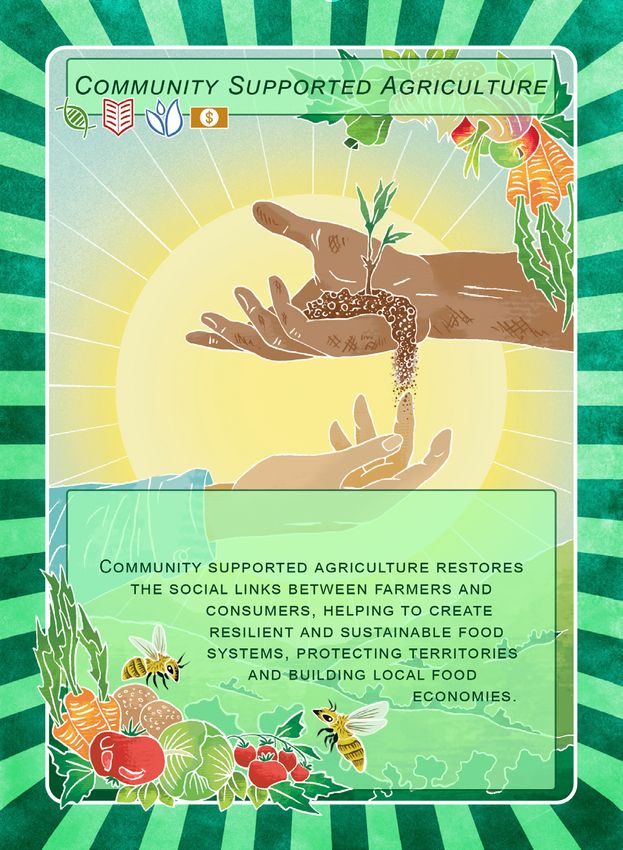
Hijacking food systems: technofix takeover at the FSS July 2021 www.etcgroup.org July 2021 www.etcgroup.org Hijacking food systems: technofix takeover at the FSS
Summary has caused multiple climate and ecological
crises. They obfuscate the impact that empire, Introduction simply broken – it is actively damaging. It uses
75 percent of the world’s agricultural land,
The Food Systems Summit (FSS) scheduled colonialism and racism, and more recently consumes at least 80 percent of freshwater
neoliberal globalisation, have had and are still In 2020, we analysed2 three separate inter-
to be held in New York City in the fall of governmental initiatives that we believe could and is responsible for at least 90 percent of
2021 is the wrong kind of summit. It is not having on local and Indigenous food cultures greenhouse gas emissions from agriculture.4
around the world. The myths side-step the converge to radically change the multilater-
about changing food systems, but about al agricultural system in favour of corporate
spinning a story that props up and expands fact that it is peasant farmers and smallholders Furthermore, despite what the food industry
that feed 70 percent of the world’s people. interests:
the industrial food chain at the expense of would have us believe, this “food chain” is not
other food systems. And they ignore the known impact that the the entire food system. In fact, the FSS’s “bro-
industrialised, homogenised food production • the proposed Food Systems Summit (FSS)
• the then-impending consolidation of the ken food system” narrative obscures the real-
The FSS’s proponents argue that the “food system is having on people’s health. A de- ity of food production for most of the world.
tailed analysis also shows that the FSS synthe- international agricultural research system into
system” is broken, that population growth “One CGIAR” ETC Group estimates that only the equivalent
sis papers are not as progressive as they claim
and climate change mean that we will not
to be.1 • the planned creation of an International Plat- of 30 percent of the global population is fed
be able to feed everyone, and that only new form for Digital Food and Agriculture (original- primarily by the industrial food chain while the
technological developments can save us. But
The FSS’s backers have no intention to change ly proposed as an International Digital Council remaining 70 percent obtain their food pri-
this is a story that has been carefully construct- for Food and Agriculture) marily from local smallholder food webs. The
ed by those who stand to profit from it – it the economic system at the root of current cri- FAO goes further and suggests that more than
ses. Their intention is to entrench and expand 80 percent of the world’s food is produced by
is intended to enable the expansion of the We forecast that “the Summit provides the
it. The potential impacts of this trend could
framework; CGIAR is the delivery system; and family farmers and their networks. The indus-
5
corporate-controlled industrial form of food
production. be severe and irreversible. In particular the trial food chain is actively breaking this peas-
digitalisation of agriculture across the world Big Data is the product.” In 2021, even after
all the upheaval caused by the pandemic, ant food web. By talking of simply “fixing” the
could rapidly erase traditional knowledge
The summit is designed to create a specific
about food production, thereby eliminating these processes are underway, and we can al- food chain, the FSS threatens to undermine
political moment when that narrative can be ready see this prediction coming true. In fact, these more important functioning food sys-
food sovereignty, and the independence and
significantly advanced – it is a stage on which
agency of farmers, smallholders, fisherfolk and we see these three processes marching rapidly tems, whilst propping up the real broken and
corporations and supporting philanthropists
Indigenous people. This in turn could drive forwards, potentially hijacking global food sys- irresponsible industrial food system.
can present themselves as heroes who can tems, even while the pandemic continues to
provide “game-changing” solutions that will a process of agricultural de-skilling and ag- The “food system” that most people involved
gravate rural-urban migration and associated turn people’s lives upside-down. Collectively,
“end hunger and malnutrition.” Miraculous these processes are strengthening corporate in food and farming recognise and respect
promises are being made about the benefits societal woes. The colonisation of the oceans supports diverse approaches to producing,
also spells trouble for the world’s marine eco- interests and control over food and agricul-
of advancing intentionally vague concepts like ture, especially through new corporate-con- processing and distributing food, includ-
“precision agriculture” and the “digital fron- systems, as well as its fisherfolk. ing traditional systems. However, the FSS
trolled digitally-based technologies that will
tier”, “nature-positive production”, “climate further marginalise peasants, smallholders, is clearly and very deliberately steering the
Instead of this summit’s attempt to hijack
smart agriculture”, the “blue economy”, and
global food systems, we need an entirely Indigenous peoples, artisanal fishers and local world away from this approach and towards
“de-risking” and “re-routing” farming and producers. a further intensification of the industrial food
different summit. A genuine summit would chain. The architects of the FSS have exploit-
rural livelihoods.
challenge the industrial food system’s impact ed their growing political and financial influ-
on food, health, climate and biodiversity and When the big bosses of food transnational
The underlying purpose of this summit, which companies like Unilever3 talk about fixing the ence within the United Nations to undermine
have, at its very core and foundation, the multilateral decision-making and supplant it
will not create policies or global agreements “broken food system”, it raises questions
interests and meaningful participation of the with what they call “multi-stakeholder global
directly, is to establish parameters defining the about which food system they are actually
peasants, smallholders, pastoralists, fishers,
path that governments will choose to priori-
Indigenous peoples and urban gardeners talking about and who benefits from repairing governance” – which is in fact a cover for the
tise, promote and finance in the future – and
that feed the overwhelming majority of the it. The “broken food system” should refer spe- advancement of the interests of transnational
what and who they will reject. cifically to the industrial food chain, that part corporations.
planet’s population. Its outcomes should be
integrated into and help shape the delibera- of the global food system under the control
Careful analysis shows that the myths that the of corporate interests that depends heavily on
tions of the UN’s Committee on Food Security,
FSS architects have fabricated completely chemical and fossil fuel inputs, promotes crop
which is already tasked with addressing the
ignore fundamental elements of the real world uniformity, and produces food mainly for the
concerns the FSS purports to resolve, and has
that we currently live in. They intentionally commercial market in developed countries
well-established mechanisms concerning the
distract attention from the hard fact that it is and the upper and middle classes in develop-
participation of rights-holders and their rights
this same mechanistic cultural approach that ing countries. The industrial food chain is not
to self-organise.
4 5
Hijacking food systems: technofix takeover at the FSS                   July 2021 www.etcgroup.org        July 2021 www.etcgroup.org          Hijacking food systems: technofix takeover at the FSS


Box 1: At-a-glance summary                              peoples through generations of sharing,            As described in our last communiqué, the FSS         mit is now scheduled for some time in the fall
                                                        exchanges and utilisation. At this moment          would originally have been the culmination           of 2021, with the UNFCCC COP-26 climate
Narratives and false solutions                          of deepening climate crisis and biodiversity       of several rounds of interlinked negotiations        summit planned for November 2021, and the
The global pandemic has provided a useful               collapse, we cannot afford to be fooled into       relating to events and summits that were also        CBD’s COP-15 likely to be deferred until 2022.
cover for a planned “subtle hijack” of global           allowing critically important systems that feed    originally scheduled for 2020. But as with the
food systems and related institutions. This is          us to be wrongly characterised and captured        FSS, timetables have been scrambled, and             Taking all this together, it has become appar-
being led by transnational agribusiness cor-            by corporations, merely to advance their           most of these processes have been extended           ent that something highly significant is afoot
porations, who are increasingly linking up with         self-interest.                                     to 2021 and on to 2022, due to the COVID-19          in global food system governance, and this
Tech Titans. Corporate-orchestrated coalitions                                                             pandemic.                                            “something” very definitely favours the agen-
are representing their interests and lobbying           Actors                                                                                                  da of big donors, Big Ag and Big Data giants
on their behalf at the forefront, inventing plau-       Agribusiness, Big Data corporations, financial     They include COP-26 of the UN Framework              such as Amazon and Microsoft, who are mov-
sible narratives that imply – wrongly – that the        speculators                                        Convention on Climate Change (UNFCCC)                ing aggressively into food, as well as other
route they propose is the only way forward.             Farmers’ movements, civil society                  which will be held in Glasgow in the UK, and         Davos Forum players.
                                                        UN bureaucracy, governments                        COP-15 of the UN Convention on Biologi-
Key to the narrative being pushed through               Big donors that are pushing the industrial ag-     cal Diversity (CBD), to be held in Kunming in        Furthermore, it is probably not a coincidence
the FSS and related processes is the idea               ricultural model                                   China, as well as the soon-to-be-established         that this emerging alignment of global play-
that the food system is completely “broken”                                                                International Platform for Digital Food and          ers is stepping into climate and food systems
and needs to be fixed – with the aid of hero-           Fora                                               Agriculture (to be hosted by FAO and original-       governance spaces at precisely the moment
ic corporate prescriptions and technologies.            Food Systems Summit (FSS): preparatory sum-        ly proposed by the German government), and           in time when the UN and related multilateral
There are indeed problems that need to be               mit 26-28 July 2021 in Rome; and the actual        the reform of the global agricultural research       food and agriculture institutions are at their
addressed, but this false narrative completely          summit in New York (perhaps in September           system through the consolidation of different        weakest. This is the result of a convergence of
ignores key questions about who is respon-              around the 76th session of the UN General          parts of the Consultative Group of Interna-          resource limitations, assault from rising author-
sible for existing processes that damage the            Assembly).                                         tional Agricultural Research (CGIAR) under           itarian regimes, internal weaknesses within UN
climate and environment, as well as human                                                                  pressure from the Bill and Melinda Gates             institutions, and a continuing and marked dis-
rights and people’s wellbeing. The FSS narra-           Actions                                            Foundation and the Rockefeller Foundation.           orientation resulting from the unprecedented
tive effectively turns a blind eye to the indus-        Popular movements and civil society need to        At the time of writing the Food Systems Sum-         shift to virtual negotiating mode in multilateral
trial food chain’s devastating impacts to date.         understand the deep implications of the new                                                             processes.
                                                        corporate biotech and digital (and bio-digital)
The focus needs to be squarely on the in-               agenda in food and agriculture, and the fact
dustrial food chain as the villain, in need of          that the FSS is planned as a means of estab-
critical examination – including in light of its        lishing a framework to advance that agenda.        Box 2: What’s on the FSS agenda?                     ... and what’s missing?
role in causing pandemics. But the funda-               We also need to understand and deconstruct
mental transformation that is required cannot           the false narratives that are being used to        •     Climate change as market opportunity           •      Food Sovereignty
be shaped by the hands of those responsible             promote it. We reaffirm the key role of territo-   •     “Nature positive” solutions/production         •      Human rights
for this harm in the first place. Nor should we         rial food systems built from the bottom up by
                                                                                                           •     Biotechnology                                  •      Indigenous sovereignty and rights
allow these culprits to increase their control          the people who already feed the majority of
                                                        the global population. They are responsible        •     Digitalisation of food and agriculture
over food systems, using the same mindset as                                                                                                                    •      Land rights
                                                        for the agricultural biodiversity that provides    •     Synthetic protein/meat
before to develop and deploy new technolog-                                                                                                                     •      Racial justice
ical tools to extract more resources and reap           the basis for the world’s food, maintaining the    •     Other “Fourth Industrial Revolution”
ever more financial rewards for their share-            health of people and the planet and prevent-             technologies, such as BECCS                    •      Countering repression and displace
holders.                                                ing further climate chaos. We need to reaf-                                                                    ment of peasants, Indigenous peoples
                                                                                                                 (bioenergy with carbon capture and
                                                        firm food sovereignty and diverse rural-urban                                                                  and marginalised communities
                                                                                                                 storage)
What’s at stake?                                        peasant agroecological systems which collec-                                                            •      Impact of corporate concentration on
                                                        tively constitute the pathway towards attaining    •     Institutionalising corporate involvement
Pursuing the corporate-sanctioned FSS agen-                                                                      in and influence over policy making on                food systems
da would result in further negative impacts on          food sovereignty and people’s right to define
                                                        their own food systems. We reject the pro-               food and agriculture
food sovereignty and agricultural biodiversity
                                                        posed profit-driven, digitally-based corporate     •     “Building back better” in terms of neo
in farmers’ fields, and rapidly erode knowl-
                                                        takeover of global food systems.                         liberal economic recovery from the
edge systems that have been developed by
                                                                                                                 COVID-19 pandemic
peasants, local communities and Indigenous

                                                    6                                                                                                       7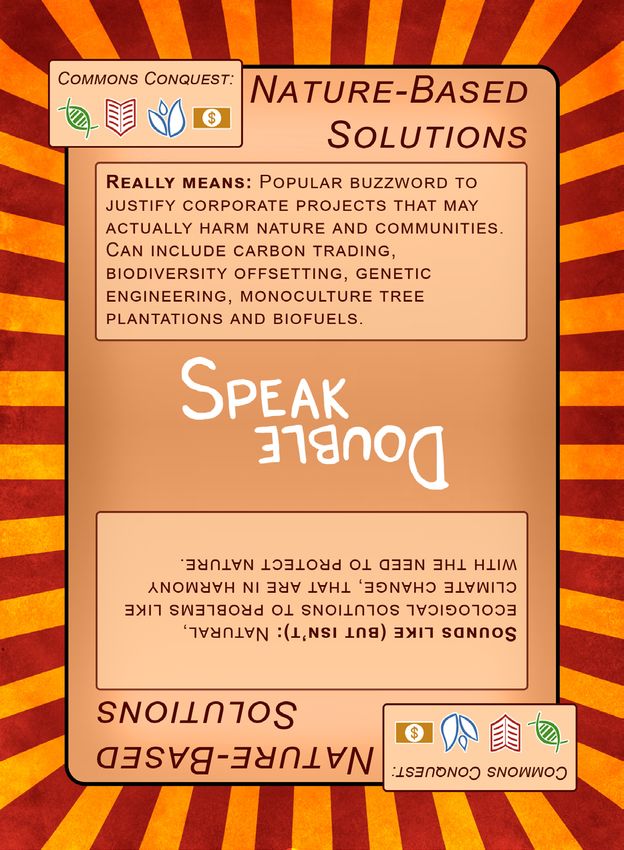
Hijacking food systems: technofix takeover at the FSS                  July 2021 www.etcgroup.org          July 2021 www.etcgroup.org            Hijacking food systems: technofix takeover at the FSS


Whether these trends are a coordinated coup            Unlike its predecessors, however, the proposal       state. Yet there is no doubting the influence           is underpinned by the fact that a year before
directed at the climate, health, biodiversity          to hold the FSS did not come from any UN             it has managed to build within the UN or the            the announcement of the FSS, the WEF was
and food governance nexus or just a cor-               member state – and where it did come from is         fact that many member states seem to con-               among five collaborators behind the Food
porate-friendly confluence of interests and            the subject of some controversy. The “official”      sider it prestigious to be invited to the WEF’s         Systems Dialogues13 process that held region-
opportunism, the outcome is the same: A                backstory is that it was conceived by the UN         annual winter carnival in Davos.                        al and international dialogues on food issues
tremendous amount of money, political will             Secretary-General António Guterres, in con-                                                                  amongst policy makers and stakeholders in
and public relations energy is currently flowing       versations with the leadership of the Rome-          Despite being shameless about its own lead-             the food systems. This dialogue process has
into a set of linked governance initiatives that       based food agencies7 during the session of           ership being made up of a small number of               been used as a template for the design of the
will facilitate corporate interests and control,       the High-Level Political Forum on Sustainable        mega-corporations, the WEF has consistently             FSS process.
as well as distracting from changes needed to          Development (HLPF) in July 2019.8 It was             promoted the multi-stakeholder approach
produce genuine improvements in food sys-              officially announced by Guterres in his World        to global governance as a valid alternative             Guterres’s subsequent announcement, in
tems.                                                  Food Day address on 16 October 2019.9                approach not just to advising governments,              December 2019, that Agnes Kalibata would
                                                                                                            but to international cooperation itself. This           serve as the Special Envoy for the 2021 Food
                                                       Curiously, however, a full month before the
FSS food governance grab                               HLPF, on 12 June 2019, the UK’s David Na-            Box 3: What is “multi-stakeholderism” and what’s wrong with it?
via “multi-stakeholderism”                             barro, a high-level UN bureaucrat (see Box
                                                       4 below), made an announcement at the                Multistakeholderism is a relatively new process         Now, the FSS seems intent on taking mul-
Much of the outcry by civil society groups             annual EAT Conference in Stockholm that a            that has appeared in policy-making processes            ti-stakeholderism to a new and even more
against the proposed summit has railed                 World Food Systems Summit would be held in           in the last 30 years. It started to take hold at        disturbing level, using it as a route to enable
against something called “multi-stakeholder-           2021 – which he referred to as a “secret”.10 In      the UN in the aftermath of the 1992 UN Con-             increased corporate involvement in govern-
ism”6 – adopted by the FSS to replace “multi-          addition to this, an anonymous concept paper         ference on Environment and Development                  ance processes. The previous approaches
lateralism”. To those outside UN governance            about the proposed Summit was then circulat-         (also known as the Earth Summit) in Rio de              – focused on multi-stakeholder representa-
processes these two similar-sounding words             ed in some circles on 18 June 2019.                  Janeiro, with the recognition of nine “ma-              tion and participation, are vastly different to
may sound arcane and opaque – yet they are                                                                  jor groups”.14 However, these nine divisions            the governance system represented by mul-
used to describe two very different philoso-           If the official version is to be believed, regard-   shifted the focus away from and blurred the             ti-stakeholderism that aims to govern global
phies concerning how to structure and imple-           less of the illogical sequence of events, the        relative status of key rights holder groups that        problems in lieu of democratic decision-mak-
ment global governance processes and deter-            summit is purely an initiative of UN bureau-         defend rights and public commons – such as              ing by governments within UN processes.15
mine in whose interests they will function.            crats – with no involvement from UN member           women, peasants, workers and youth. These
                                                       states. This means that it is not a product of       groups are now lumped together with many                The multi-stakeholderism approach that is
In United Nations parlance, a “summit” is a            multilateralism. It contravenes a core princi-       other groups, including those stakeholders              underpinning the FSS and related processes,
gathering of heads of UN member states to              ple of multilateralism within the UN, which is       that focus on for-profit interests, such as busi-       cannot and should not supplant or displace
deliberate and decide issues that have global          based on the principle of “one country, one          ness.                                                   multilateralism in global policy making.
importance, charting future steps and paths            vote” and recognises that each member state,
that every country commits to contribute to.           regardless of economic power, has the right          Furthermore, even though this approach sup-             Flawed as many of them are, most govern-
Conventionally, in the “multilateral” system           to participate in all decisions and be treated       posedly gathers all those involved in an issue          ments still have the duty of acting in people’s
proposals to convene a UN summit originate             equally.                                             at the same table, it actually favours the more         best interests and can ultimately be held
from a member state, a group of member                                                                      powerful actors and groups, since it complete-          accountable to the people. Corporations and
states or a regional or political grouping, and        Another anomaly in the official account is that      ly fails to recognise power imbalances, une-            their powerful forums are entirely different:
this has been the case with food summits over          a Memorandum of Understanding (MoU) es-              qual playing fields and conflicts of interests.         they are only accountable to their sharehold-
the past 25 years. The tasks of facilitating           tablishing a Strategic Partnership Framework                                                                 ers and are generally obliged to act to protect
deliberations among countries and enabling             between the Office of the UN Secretary-Gen-          Nevertheless, over the past 25 years “mul-              their shareholders’ interests. With so much
the agreed processes generally rests with UN           eral and the World Economic Forum (WEF), a           ti-stakeholder” participation has become a              at stake, civil society and social movements,
agencies responsible for specific develop-             global business organisation, was signed on          mainstay in UN processes, with the Major                including representatives of food producers
ment areas – so, for example, FAO would be             13 June 2019, also just ahead of the HLPF.11         Groups advocating for positions, lobbying               and consumers, need to act urgently to pre-
responsible for organising a summit related            While the MoU is not binding and did not             intergovernmental bodies and governments                vent governments allowing a UN-sanctioned
to food and agriculture. The food summits of           specifically cover food systems or agricul-          to adopt these positions, and providing their           corporate takeover of the global governance
1996, 2002 and 2009, although not free from            ture, rumours persist that it was the WEF that       expertise in intergovernmental processes and            of food systems.
controversies and corporate influence, were            pushed the idea of a WFSS to the UN Secre-           deliberations that contribute to decision-mak-
all proposed by member states and organised            tary-General.12 The WEF is not a UN member           ing by governments.
by FAO.
                                                   8                                                                                                            9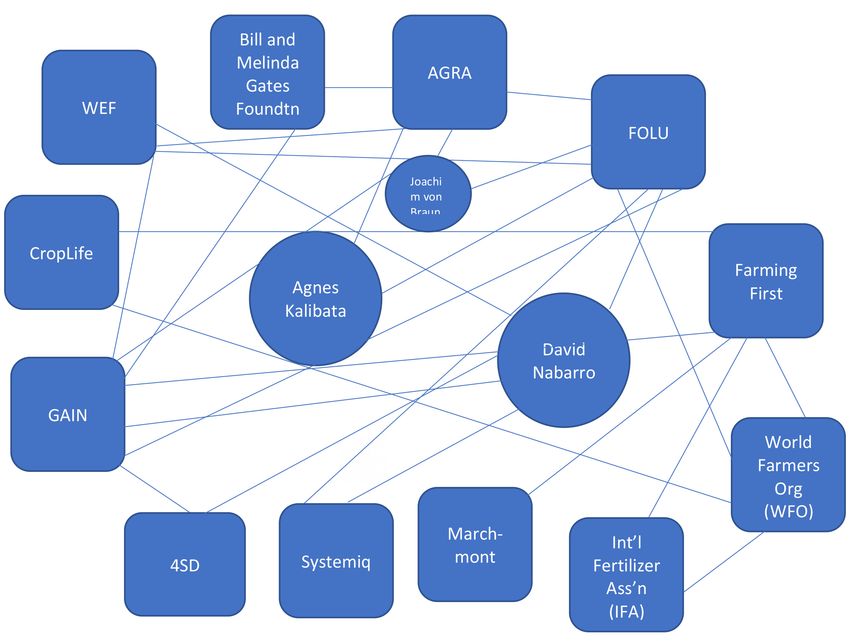
Hijacking food systems: technofix takeover at the FSS                     July 2021 www.etcgroup.org        July 2021 www.etcgroup.org           Hijacking food systems: technofix takeover at the FSS


Systems Summit16 confirmed widespread                     There is already clear evidence that this is       could fully dislodge the HLPE and knowledge            of a new science-policy interface for food
doubts about the provenance of the sum-                   happening. The FSS, for example, has es-           structures of the CFS. Their briefing describes        systems.20 In an open letter, they explicitly
mit. Dr. Kalibata has been the President of               tablished a Scientific Group whose mandate         the FSS Scientific Group as an “early exper-           observed that the proposition will reinvent the
the Alliance for a Green Revolution in Africa             very much overlaps with the role of the CFS        iment” for a proposed new science-policy               wheel and could result in the duplication and
(AGRA) since 2014, and AGRA was created                   High Level Panel of Experts (HLPE). Howev-         interface. It observes that this gives consid-         further fragmentation of global food policy
and has been mainly funded by the Bill and                er, these two groupings are very different in      erable cause for concern as it “falls short in         governance.
Melinda Gates Foundation, which has played                nature. Whilst their mandates might overlap,       several respects: it is non-transparent; is im-
an active role in trying to industrialise the food        their characteristics and membership are           balanced in its composition and biased in its          They might have gone on to mention that the
and agriculture landscape of Africa. Sources              quite different. For example, the HLPE does        perspectives and sources of knowledge; is              FSS is not just reinventing the wheel, but the
say that Dr. Kalibata was suggested to the UN             not restrict its own definition of its role as a   un-reflexive about the relationships between           entire cart, in terms of controlling the overar-
Secretary-General by the Gates and Rockefel-              “scientific” body – it recognises the different    food systems and society; and is pursuing a            ching narrative, agenda and levers of power
ler foundations in an effort to shape the FSS             kinds of knowledge needed for governing            business-oriented ‘technology and innovation’          relating to food and agriculture.
process and outcomes.                                     food systems.                                      agenda.”19

Whether the FSS is a unilateral brainchild of             But the FSS Scientific Group has a deliberately    Furthermore, in May 2021 members of the
UN bureaucrats or has been imposed at the                 narrow focus, prioritising technocratic exper-     HLPE themselves challenged the FSS’s antici-
behest of the World Economic Forum, it de-                tise. Considered as key to the structure of the    pated recommendation for the establishment
parts sharply from the tradition set by previous          FSS, the Scientific Group is composed of em-
world food summits, that developed genu-                  inent academics and thinkers from both the
inely intergovernmental decisions influenced              North and the South tasked to ensure that the                             The FSS “clique”: interlocking interests
by grassroots organisations and civil society             science that underpins the summit is “robust,
through inclusive and participatory processes             broad and independent” to inform the rec-
that agreed to promote the realisation of the             ommendations and “clarify the level of ambi-
right to adequate food for all.                           tion and commitments that emerge from the
                                                          summit process.” The skewed composition of

FSS backs corporate control
                                                          the FSS Scientific Group, only two or three of
                                                          whom have a background in social sciences
of food and will undermine                                (with not a single one from the humanities), is

the Committee on World
                                                          a good predictor of the nature of advice the
                                                          group will dispense.18
Food Security (CFS)
                                                          This attempt to shove aside the CFS’s exist-
In the aftermath of the global food crisis in             ing expertise structures could have lasting
October 2009, UN member states unanimous-                 impacts, beyond the lifetime of the summit
ly agreed to reform the Committee on World                itself. The architects of the FSS seem to be
Food Security (CFS), originally established in            dreaming of a type of streamlined technocrat-
1974, to ensure that it is the “foremost in-              ic governance of food systems in which Big
clusive international and intergovernmental               Data and scientific expertise provide techno-
platform for all stakeholders to work together            cratic prescriptions for the global food system,
to ensure food security and nutrition for all.”17         which can be swiftly implemented without
                                                          having to take account of messy political, cul-
But the CFS’s mandate to address the chal-                tural, human rights or socio-economic factors.
lenges and potential threats to global food
security is now being undermined by the FSS.              In a recent briefing note the International Pan-
Instead of building on the decade of legiti-              el of Experts on Sustainable Food Systems (IP-
macy that the CFS has won amongst diverse                 ES-Food) similarly warned that a small group
constituents and stakeholders, including gov-             of proponents are attempting to use the FSS
ernments, the FSS is attempting to establish              as a launch pad for a new global expert panel
its own alternative replacement structure.                on food described as an “IPCC for Food” that

                                                     10                                                                                                        11
Hijacking food systems: technofix takeover at the FSS July 2021 www.etcgroup.org July 2021 www.etcgroup.org Hijacking food systems: technofix takeover at the FSS
Box 4: Know some of the key actors of the private sector on policy making, and human rights,36 tax evasion,37 and ecological The Food and Land Use Coalition (FOLU)
behind the UN Food Systems Summit proposing technological solutions instead of damage.38 In its last annual meeting, which was established in 2017 by the fertiliser com-
focusing on structural causes of malnutrition.28 took place in 2020, the WEF had 3,000 partic- pany Yara and the multinational Unilever, two
Agnes Kalibata has been appointed as the ipants from all over the world, including pow- of the worst polluters within the food and
UN Secretary-General’s Special Envoy to the UN Secretary General António Guterres, erful political leaders like Donald Trump, Han agriculture sector. It was later handed over
2021 Food Systems Summit to “lead” and a former prime minister of Portugal, became Zheng, Angela Merkel, and representatives to SYSTEMIQ to manage.46 The core part-
“guide” the FSS process in cooperation with the ninth Secretary-General (UNSG) of the UN from international organisations including An- ners of FOLU are AGRA, EAT, Global Alliance
Rome-based agencies. However, Dr. Kalibata in 2017. In his first year as UNSG, Guterres tonio Guterres, Kristalina Georgieva, Christine for Improved Nutrition (GAIN), International
has a clear conflict of interest.21 Since 2014, developed his policy agenda on frontier tech- Lagarde39 and many others. They gathered to Institute for Applied Systems Analysis (IIASA),
Dr. Kalibata has been serving as the President nologies and convened a high-level panel on discuss “stakeholder capitalism” as present- Sustainable Development Solutions Network
of the Alliance for a Green Revolution in Africa digital cooperation co-chaired by Alibaba’s ed in the “Davos Manifesto”.40 The influence (SDSN), SYSTEMIQ, the World Business Coun-
(AGRA), an organisation that represents and Jack Ma and Microsoft’s Melinda Gates, which of WEF is evident in the WEF-UN strategic cil for Sustainable Development (WBCSD),
promotes agribusiness interests in the African came out with recommendations that advance partnership agreement which has been crit- the World Farmers’ Organisation (WFO)
continent,22 which was founded and so-far pri- multi-stakeholder governance in the digital icised by many civil society organisations on and World Resources Institute (WRI). Their
marily funded by the Bill and Melinda Gates sphere. Guterres also presided over the UN- the grounds that it would provide convenient funders currently include the Gordon and
Foundation. However, a researcher following WEF29 partnership which contributed to the access for corporate interests within the UN, Betty Moore Foundation, the MAVA Foun-
AGRA closely has observed that it needs to growing corporate takeover of the UN. and because it reduces the transparency and dation, Norway’s International Climate and
replenish its financing and will be using the impartial nature of the UN.41 Sean de Cleene, Forest Initiative (NICFI) and the UK Depart-
summit as an opportunity to fundraise. This Joachim Von Braun, the Chair of the Food a member of the WEF’s Executive Committee ment for International Development (DFID).
has been widely challenged by civil society or- System Summit’s Scientific Group, is the Direc- and head of WEF’s Future of Food, is a former FOLU advocates for precision farming, gene
ganisations.23 Dr. Kalibata also sits on various tor of the Center for Development Research Vice-President of AGRA and former Vice-Pres- editing, Nature-based Solutions47 and other
company-linked boards, councils and commis- (ZEF), Bonn University. From 2002-2009, he ident of Global Initiatives, Strategy and Busi- market-based technofixes to complex histor-
sions including the Global Agenda Council of held the position of the Director-General of ness Development with fertiliser giant Yara. ical and political problems, which are backed
the World Economic Forum (WEF), the Food the International Food Policy Research Insti- by big corporate interests and reinforce the
and Land Use (FOLU) Coalition, the Architec- tute (IFPRI), a CGIAR research centre.30 One Alliance for a Green Revolution in Africa unequal relationships embedded in our food
ture for REDD+ Transactions (ART), and the of the largest funders of CGIAR is the Bill and (AGRA) was established in 2006 with funding systems.
International Fertilizer Development Corpora- Melinda Gates Foundation and one of the from the Bill and Melinda Gates Foundation
tion (IFDC).24 latest developments in CGIAR’s structure has and the Rockefeller Foundation.42 Since then, Farming First, which describes itself as a
been the centralisation of its different centres it has also received funds from the US, the global coalition for sustainable agricultural de-
David Nabarro is a key architect of the FSS. into one entity, a move pushed by the Bill and UK and other countries including Germany. velopment, includes supporters from industry
He is an international development specialist Melinda Gates Foundation, the World Bank, AGRA’s plan was to introduce a Green Revolu- associations Croplife, the International Fer-
who has held various positions at the World and the US and UK governments.31 tion in Africa by using high-yield commercial tilizer Association (IFA) and the International
Health Organization and at the UN headquar- Dr. von Braun is a member of the Board of seeds, synthetic fertilisers and pesticides to Seed Federation (ISF), and coalitions like the
ters. He is very close to business and industry, the Alliance for the Green Revolution in Africa address food security and nutrition in poor Global Alliance for Improved Nutrition (GAIN)
and advises the World Business Council for (AGRA). small-farming households. There is ample ev- and the World Farmers’ Organization (WFO).48
Sustainable Development (WBCSD) on food idence that AGRA has failed to reach a large It is housed by Marchmont Communications,
systems issues.25 He also plays key roles in a Even though the World Economic Forum number of smallholder farmers, and in fact a boutique PR Firm based in London who also
number of other corporate coalitions and en- (WEF) proclaims itself to be a multi-stake- the AGRA period has witnessed an increase in handle official communications for the UNFSS
tities actively involved in the FSS, namely 4SD holder platform “committed to improving the number of undernourished people in the secretariat.
(Skills, Systems and Synergies for Sustainable the state of the world,”32 its membership and focus countries.43 As well as Dr. Kalibata’s role
Development),26 FOLU (Food and Land Use board33 are overwhelmingly representative of as President of AGRA (see above), the Chief 4SD is a Geneva-based social enterprise to
Coalition) and SYSTEMIQ (a small but influen- and promote corporate interests: It is made of Staff of Dr. Kalibata as Special Envoy, Adam provide tools to policy makers to achieve the
tial London-based business consultancy that up of the largest 1,000 global corporations Gerstenmier, also serves as the Chief for In- 2030 sustainable development goals. It was
formed and hosts FOLU).27 Based at Imperial plus other partners.34 For example, board ternational Relations and Strategy for AGRA. established by David Nabarro who serves as
College London, he was designated by the members include Mukesh Ambani, Chair- Gerstenmier was a former Managing Director its Strategic Director.49 4SD developed and
UN Secretary-General to lead the Scaling Up man of Reliance and the richest man in India; of the African Green Revolution Forum44 and provides support to the three-tiered dialogue
Nutrition (SUN) Movement, which, much like Laurence D Fink, CEO of Blackrock; and Mark former Chief of Staff of the Bill and Melinda approach of the FSS, comprised of Global
the UNFSS, was criticised for its top-down, Schneider, CEO of Nestlé.35 The above-named Gates Foundation.45 Summit Dialogues, Member State Dialogues
elitist leadership, increasing the influence corporations are notorious for their record in and Independent Dialogues. The FSS admits
12 13Hijacking food systems: technofix takeover at the FSS July 2021 www.etcgroup.org July 2021 www.etcgroup.org Hijacking food systems: technofix takeover at the FSS
that the design for the Food Systems Sum- ‘Vertumnus’, on the left, was painted by Guiseppe Arcimboldo in
1591, and is a portrait of Holy Roman Emperor Rudolf II.
mit Dialogues was explicitly inspired by the It was used as the cover of the first print edition of the
Food Systems Dialogue spearheaded by WEF, International Treaty on Plant Genetic Resources for Food and Ag-
FOLU, WBCSD, EAT and GAIN in 2018.50 riculture, adopted in 2001. Twenty years later, the UK, led by Boris
Johnson, is helping to spin a story that props up and expands the
industrial food chain at the expense of other food systems.
The Rockefeller Foundation was established Illustration on right, Charley Hall, based on an idea from ETC Group
in 1913 to use John D Rockefeller’s oil profits
to gain a stronghold in international health,
medicine, education, social sciences, agricul-
ture and natural sciences.51 The Green Revo-
lution has historical links with the Rockefeller A summit to
destroy food sovereignty
Foundation which contributed funding for it
in Mexico and India. In 2006, the Foundation
published “Africa’s Turn: A New Green Revo-
lution for the 21st Century” which highlighted What is a global food summit for? The first
the “inefficiency” of African farms, and pro- food summit in 1996 was driven by public
posed, as it has always done, high-yielding pressure to address the gross moral profan-
varieties of seeds and improved fertilisers.52 ity that is hunger and to enshrine the right
The Rockefeller Foundation has always been to food as demanded by civil society. The
behind efforts to introduce Green Revolution 2008 Food Summit was convened to deal
technologies to address hunger, irrespective with the food price crisis and spiraling hunger
of the well-known failure of this approach caused by using grain production for indus-
including its adverse ecological and social trial agrofuels instead of food. But the FSS
impacts. has broadened and shifted the focus, locat- Box 5: FSS ‘story’ led from London? multi-stakeholder partnerships.61 SYSTEMIQ
ing it within the 17 Sustainable Development spearheaded the creation of the Food and
The Bill and Melinda Gates Foundation Goals (SDGs). While the second SDG does There is another key player behind the FSS Land Use Coalition (FOLU),62 and runs FOLU’s
(BMGF) is a philanthrocapitalist53 foundation call for zero hunger and sustainable food scenes: London. Certainly, the key architect of website, hosting its office.63
established in 2000, which is well known for systems, this wider “smorgasbord” approach the FSS, David Nabarro, counts London as
its attempts to gain influence over health and ranging across the SDGs opens a door for his political base. He works with Imperial Col- London-based private PR firm Marchmont
agriculture sectors,54 among others, by pro- decision-makers to lose the previous food lege and as Senior Advisor with the high-pow- Communications is charged with packaging
viding financial support for them. It has been summits’ concentrated focus by creating a ered London-based “think tank” SYSTEMIQ, the FSS image and narrative. Marchmont
pointed out that the Foundation does not range of de-politicised technocratic options which is in turn led by two giants of the UK hosts the secretariat of Farming First64 and
address the unequal power structures that and easy-to-manipulate indicators supposedly establishment, Lord Turner (who headed the its clients have included CGIAR centres, the
have led to widespread poverty and inequality addressing diverse global problems. UK Confederation of British Industry) and Sir World Bank Group, and Croplife,65 the lobby
but reinforces the economic and technological David King (former UK government Chief Sci- group of the crop biotechnology and agro-
dependence of developing countries on the The use of the term “food systems” also entific Adviser). chemical industry. Marchmont’s owner, former
United States and Europe.55 marks an important shift away from previ- CEO and current Director, Michael Hoevel is
ous food summits and one that civil society SYSTEMIQ was established by two former identified as Coordinator of Farming First.66
Bill Gates is also known for striving to ensure needs to be careful of. While progressive food executives of McKinsey management in 2016
continued corporate profit-making through movements have long advocated for a “food and was certified as a B Corporation in 2018.59 London is also relevant more broadly: it sup-
the use of international patents, and refusing systems” approach to addressing the inter- It is dedicated to accelerating delivery of the ports the narrative tying together the climate,
to support alternative public health policies – related problems of health, hunger, rights, Paris Agreement and UN Sustainable De- biodiversity and food summits around the
thus he opposed the lifting of COVID-19 vac- ecology, economy, inequity and more, it is velopment Goals by “transforming markets, idea of ‘Nature-based Solutions’ or ‘Natural
cine patents to facilitate global vaccination.56 troubling that the application of a technocrat- business models, and asset classes in land Climate Solutions’.67 Boris Johnson’s govern-
Also known as the largest private farmland ically-oriented “food systems” lens in the FSS use, clean energy and materials.”60 Like all the ment seems set on re-establishing London as
owner in the US,57 Bill Gates has been behind has displaced food security and hunger as the other actors leading the Summit, the models a global hub for speculation on carbon, biodi-
efforts to centralise the CGIAR and gain con- defining moral focus of debates and deci- it proposes to address the climate crisis rely versity and food assets and reviving the for-
trol over seed supply. sion-making about food systems.58 heavily on corporate-backed market-based tunes of its post-Brexit financial sector around
solutions and an unquestioning approach to profitable green technology and finance.68
14 15Hijacking food systems: technofix takeover at the FSS July 2021 www.etcgroup.org July 2021 www.etcgroup.org Hijacking food systems: technofix takeover at the FSS
Corporations intent on furthering their busi- Box 6: Food Sovereignty: all; shifting to sustainable consumption pat- Nature-based Solutions” (or NBS) is a term
ness interests are also piggy-backing on cur- 2007 Nyéléni Forum Declaration69 terns; boosting nature-positive production; taken straight from climate change and bio-
rent crises. For example, the FSS website and advancing equitable livelihoods; and building diversity discourse to describe technical and
“about” pages spotlight climate change and Food sovereignty is the right of peoples resilience to vulnerabilities, shocks and market-based interventions in “natural infra-
pandemics as key drivers underpinning the to healthy and culturally appropriate food stresses – may all sound like desirable out- structure” that supposedly helps to mitigate
need for their “breakthrough solutions”. produced through ecologically sound and comes, but they are not likely to lead to the environmental damage. Classic examples of
In this way, the underlying narrative project- sustainable methods, and their right to de- changes they describe since the FSS is making “Nature-based Solutions” include financialis-
ed is that current food system problems are fine their own food and agriculture systems. no attempt to explore the underlying system- ing forest carbon to subsidise forest protec-
rooted in newer external shocks, which ena- It puts the aspirations and needs of those ic challenges or identify truly transformative tion (so called REDD – Reducing Emissions
bles the deeper structural problems of neoco- who produce, distribute and consume food systemic alternatives. from Degradation and Deforestation). In early
lonialism, power relations between North and at the heart of food systems and policies 2019 and 2020, big conservation organisa-
South, an unequal global trading regime, cor- rather than the demands of markets and Instead, they have opened the floor to brain- tions and corporate lobby groups such as
porate concentration and structural inequality corporations. It defends the interests and storming numerous glitzy “breakthrough FOLU accelerated such talk, with a view to
to be ignored. inclusion of the next generation. It offers a solutions” that might gain better traction with linking the NBS concept to agriculture and
strategy to resist and dismantle the current investors (and governments seeking to replace food, and tying climate, biodiversity and food
In addition, and perhaps unsurprisingly, the corporate trade and food regime, and direc- public expenditure with private investment). governance and market mechanisms together,
FSS fails to draw attention to the fact that tions for food, farming, pastoral and fisher- The underlying assumption of this approach for offsetting purposes (see Box 8 below).
the industrial food system is the single larg- ies systems determined by local producers is that the “fix” needed for our broken system
est factor driving both climate change and and users. Food sovereignty prioritises local can be provided with a hail of technological Since a key architect of the FSS, David Na-
pandemics. Instead, a glossy focus on imple- and national economies and markets and silver bullets that will somehow get us through barro, also led the NBS track in the UN Sec-
menting technical fixes and meeting indicator empowers peasant and family farmer-driven pandemics and the climate change crisis. The retary-General’s 2019 Climate Summit, it
targets linked to technical goals is promoted agriculture, artisanal-fishing, pastoralist-led FSS is not looking for a fundamental rebal- is perhaps unsurprising that the framing of
as a way to “nudge” our food systems back to grazing, and food production, distribution ancing of power, governance, economics or “Nature-based Solutions” for food and agri-
a supposedly “perfect” scorecard – something and consumption based on environmental, worldview. culture began to emerge throughout 2020, as
that big business and governments alike can social and economic sustainability. Food negotiations on climate, biodiversity and food
collaborate on without facing uncomfortable sovereignty promotes transparent trade that New-but-still-neoliberal lingo: Food move- summits were targeted simultaneously.
questions. This is the antithesis of food sover- guarantees just incomes to all peoples as ments have also had to navigate terminology However, it is important to flag up the fact
eignty. well as the rights of consumers to control that is new to food policy discussions – includ- that “Nature-based Solutions” has no
their food and nutrition. It ensures that the ing terms such as “Nature-based Solutions”
rights to use and manage lands, territories, and “nature positive production”.
FSS pitfalls: what to watch waters, seeds, livestock and biodiversity are
out for “inside” the summit
in the hands of those of us who produce
food. Food sovereignty implies new social Box 7: FSS “breakthrough solutions” blitz distracts from need for more
relations free of oppression and inequality transformative approaches
While many progressive food movements and between men and women, peoples, racial
civil society have turned their back on the cha- groups, social and economic classes and By mid-July 2021, the FSS website was claim- corporations that have already helped to
rade that is the FSS, some groups have cho- generations. ing that they had received over 2,000 ideas wreck the planet are described as “nature
sen to “go inside” the process in the hope of for “game-changing solutions” that had been positive” and tagged as “game-changing
securing greater international policy support synthesised into more than 50 “solutions clus- solutions” in Action Track documents. For
for more transformative, sustainable and eq- ters”.70 The lists of submissions received were example, the US Soybean Export Council,
uitable policy visions relating to food. Those This conjoining of “broken systems”, “disrup- mostly from governments and research institu- which supports genetically modified soy pro-
who have done so have to face two unusual tion” and “breakthrough” solutions is a pic- tions in the North, industry lobby groups and duction,71 proposes “Boosting nature positive
challenges arising out of the WEF-inspired ture-perfect example of FSS adherence to the a wide array of corporations from across the production in US soy industries.”72 Other pro-
framing of the FSS. corporate logic, values and language of the industrial food chain under the umbrellas of posals from corporate giants include “Sustain-
neoliberal crowd clustered around the World lobby groups such as CropLife, Farming First, able Beef Initiatives” from Tyson Foods, “De-
Policy-making-as-business pitches: The archi- Economic Forum. the Food and Land Use Coalition (FOLU) and forestation-free supply chains” from Nestlé
tects of the FSS complete their “broken food the World Business Council for Sustainable and “Creation of land use footprint for specific
system as victim” narrative with a pitch for The FSS’s five different “Action Tracks” – en- Development (WBCSD). Self-serving proposi- produce” from Bayer.73
heroic “game-changing solutions”. suring access to safe and nutritious food for tions from industry lobby groups and
16 17Hijacking food systems: technofix takeover at the FSS July 2021 www.etcgroup.org July 2021 www.etcgroup.org Hijacking food systems: technofix takeover at the FSS
Box 8: How and why “NBS” infected intergovernmental fora defined meaning in a food systems context. But – and it’s a big but – agroecology is men-
This means it can be – and is being – used tioned on a “scale-neutral” basis, which effec-
The term “Nature-based Solutions” (or NBS) for Ecosystem Services” (PES). These are ripe to reference absolutely any generally posi- tively means that giant agribusiness farms can
was first hatched in the early 2000s in World for fraud74 and have so many loopholes that tive sounding idea. This makes it perfect for adopt “agroecology”. In addition, peasant
Bank reports on “natural infrastructure”. It national and corporate actors can even claim greenwashing corporate projects. The FSS has and Indigenous agriculture is listed as a sep-
was then incubated in European Union en- credits by leaving just 10 percent of a forest compounded this conveniently hazy language arate category that can be “protected” like
vironmental policy circles, before emerging uncut or by replanting with monoculture plan- by coining another so far undefined term “na- exhibits in a museum, but it is not considered
fully-fledged into climate and biodiversity tations that generate additional business.75 ture positive production” – an umbrella-type as the path that will lead the world away from
governance discussions in recent years. The term incorporating all types of agriculture hunger and other food- and agriculture-relat-
promotion of “Nature-based Solutions” has The CBD’s COP-15 summit, now likely to be and food production that make green or na- ed crises.
also been prominent in the International held in Kunming in China in 2022, is intended ture-based claims – however unsubstantiated.
Union for the Conservation of Nature (IUCN), to establish a Post2020 Global Biodiversity Other “positive production” terms – agroe- It is also important to note the elevation of
which has been developing a standard for Framework. Big conservation NGOs and most cological, organic, regenerative, sustainable – similar-sounding language about “regener-
verification of what constitutes an NBS. industrial countries have used their muscle to are all being squeezed in wherever possible to ative agriculture”, both in the FSS and more
migrate the concept of NBS from the climate make the FSS outcomes seem more palatable. generally by corporate lobby groups. This
For climate policymakers, NBS has come to discussions, aiming to insert it as a key part of This does not mean they will be part of a truly concept arose largely out of the Global North,
signify technical and market-based initiatives the post2020 biodiversity agreement – again transformative process, rather that they are and it has a narrow focus on soil health, which
that focus on “enhancing” nature to increase with an eye to aligning carbon markets with part of the window-dressing. many large food corporations – such as Gen-
its capacity to act as a carbon sink or as a potential new markets in payments for biodi- eral Mills, Pepsico and Nestlé – feel comforta-
means of mitigating climate change. For versity conservation. So far this has been met Other linguistic tricks being used to fend ble adopting and making commitments to, as
example, this could include paying for plan- with much resistance from Southern dele- off challenges to the corporate agenda: The it will not entail major changes to their damag-
tations or wetland conservation or replanting gates, Indigenous peoples and civil society, question of what broader vision the FSS of- ing industries. In fact, the term “regenerative
mangroves, and potentially displacing tra- but the term has nevertheless found its way fers food and agriculture has – eventually and agriculture” is now used so indiscriminately by
ditional communities in the process – rather into the text of the draft decisions. unsurprisingly – become a contested battle- some corporations that sometimes it even re-
than trying to transform energy, transport or ground, internally as well as externally. fers to agriculture based on the continued use
built infrastructure to be more energy effi- The third of the three major summits is of of agrochemicals and GMOs in monoculture
cient. NBS is thus generally used to reference course the FSS (even though it may now Significantly, the current leading vision from cropping combined with livestock production.
superficial nature-based technofixes to the actually happen before the others). Following food movements, which is gaining support at
climate crisis. The UNFCCC’s COP-26 climate negotiations in all three summits shows that FAO – the agroecology/ecological agriculture
summit, to be held in Glasgow, UK, in Novem- the parallel emergence of “NBS language” pathway – was not even mentioned in the
ber, has the establishment of rules to govern in negotiations about food and agriculture original agenda of the FSS. Similarly, there
a new generation of global carbon markets governance (also now referred to as “nature was no reference to it when the summit was
(under the negotiation around Article 6 of positive production” as described above) has announced by the UN Secretary-General in
the Paris Agreement) high on its agenda. Big been enthusiastically promoted by big con- October 2019. Rather, the original concept
Northern conservation organisations see a servation NGOs but resisted by longstanding paper for the summit tagged “precision ag-
huge potential financial windfall for their own food justice and food sovereignty movements. riculture” and genetic engineering as impor-
conservation projects if those projects can be tant tools for addressing future food security,
included as “Nature-based Solutions” whose The latter movements observe that NBS pro- whilst making a hazy reference to “traditional”
carbon-sequestration could supposedly be posals in food and agriculture are particularly systems.
verified (e.g. through IUCN-agreed standards) linked to attempts to turn agricultural soils
and then traded on global carbon markets. and production systems into new sources of After unrelenting critique from peasants’
potentially tradeable, and therefore profitable, movement and civil society, and diligent
The NBS approach then spread to biodiversity carbon credits, at the expense of peasants lobbying from those who chose to go “in-
conservation policy discussions and negoti- and smallholders who will be further margin- side”, agroecology is now mentioned in FSS
ations. The poster child for “Nature-based alised. Combined with “precision agriculture” processes. For example, the term “agroeco-
Solutions” was the World Bank’s controversial (the digitalisation of food and agriculture), logy” now features prominently in Track 3 as
REDD/REDD+ (Reducing Emissions from De- the potential for new and profitable markets, an action area that took up 34 pages out of its
forestation and Degradation) set of programs, which increase commercial power and influ- Synthesis Wave’s 144 pages with 12 proposed
which financialise conservation activities by ence while promoting yet more land-grab- actions.76
offering carbon credits or other “Payments bing, is immense.
18 19You can also read


