How to do business for good: integrating ethical practices into ecommerce - Redbox Digital
←
→
Page content transcription
If your browser does not render page correctly, please read the page content below

EBOOK

How to do
business
for good:
integrating ethical practices
into ecommerce

                                1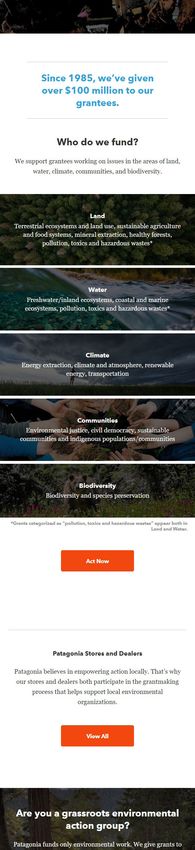
Focusing on the moral
principles that govern
a person’s behavior or
activity should be in
every brand’s DNA.
2 Integrating ethical practices into ecommerce | ebook   3
Why ecommerce brands                                                                        What do consumers say?

                                                                                            92% 89%
should be focusing on ethics
Ecommerce brands today have an opportunity to take the lead on ethical
issues. Because consumers are becoming increasingly concerned about the
climate emergency. And they’re right to. From bushfires to flash floods, the                of millennial consumers are more likely to buy                         of people care personally about protecting
                                                                                                   products from ethical companies                                                 the planet
climate is trying to tell us something is very wrong.

                                                                                            83% 92%
There are challenges ahead. And brands are facing up to them with
inspiring efforts.

Why?
1. The earth’s resources aren’t infinite.

2. Consumers are becoming more mindful. They expect the brands they shop with to
  embrace ethical practices. Having an opinion isn’t enough. Brands are expected to rally
                                                                                              would always pick a brand that has a better                                  of consumers are trying to live
  behind consumer values.
                                                                                                       record of sustainability                                                  more sustainably

Consumers are people who care about:

      The
     planet
                               Fair
                              trade
                                               Decent pay and
                                              working conditions
                                                                           People in
                                                                             need
                                                                                            90% 70%
                                                                                            agree that brands have a responsibility to take
                                                                                                   care of the planet and its people
                                                                                                                                                                 of people are willing to pay more for products
                                                                                                                                                                and services if they protect the environment and
Morals define the very essence of human behavior, which is what drives consumers to                                                                                      don’t infringe on human rights
act. Since brands are party to consumers’ actions, they have an equal – even greater –
responsibility to counter the environmental or social impact of their activities.

                                                                                            Sources:
                                                                                            https://www.warc.com/newsandopinion/news/mindful_consumers_expect_brand_sustainability/41085
                                                                                            https://www.wordstream.com/blog/ws/2017/09/20/ethical-marketing

4 Integrating ethical practices into ecommerce | ebook                                                                                                                                                             5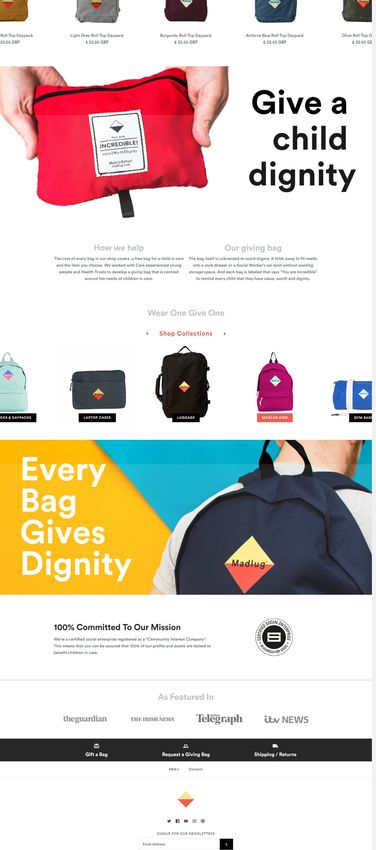
Overcoming the challenges                                                                                  How do brands ‘do’ ethical commerce?

The barriers to sustainability come in all shapes and sizes. Brands are often unable
to scale sustainable activities at the expense of their bottom line. Is it more profitable
to ignore the environmental and social effects of cheaper materials, labor, and supply
and production alternatives? Maybe. It’s definitely easier. But there are alternatives                              Active charity              Sustainable and ethically                 Good working          Fair price and
                                                                                                                         work                       sourced products                        conditions       promotion (antitrust)
brands can look at. And customers will punish the brands that don’t put their ethical
values first.

What if a brand has good intentions but doesn’t act?

What a brand wants to do versus what a brand can do is like any other business strategy. There needs                  Fair trade                       Zero waste or                  Equal opportunities      Corporate social
to be a reality check. But that doesn’t mean long-term goals are unattainable. Brands need to make a                  practices                           pollution                           at work        responsibility (CSR)
sustainability or charity wish list, and then tick the milestones off one by one.

It’s all comes down to product image. Where does your product come from, how is it made, and by
whom? How is it packaged and distributed? These are the questions that need good answers. But
what can a brand – given its capacity – do for people in need? Whether it’s donating profits or paying
employees to volunteer, all good deeds reflect well on the brand. They add value that money can’t buy.
Quality and price may be sticking points with consumers, but brand image – and the end product’s impact
for good – carries weight in every market.                                                                 But…, and it’s a big but

Just think about how organic foods have taken off, or online gourmet shops have been milking the vegan     It’s not just about brands doing ‘their’ bit. While consumers are mindful about sustainability, they are struggling to
cheese craze.                                                                                              make informed decisions. Another area where brands need to make headway.

                                                                                                           Around 86% of consumers, according to a report by New Sustainability*, say there isn’t enough information on
                                                                                                           product packing for them to gauge how sustainable they are. And while intentions are good, people often fail to
Brands need to scale their sustainability activities                                                       put them into practice. The same study highlighted that out the 89% of people who say they recycle at home, only
                                                                                                           52% always do. Plus, of the 85% who avoid single-use plastics, just 20% do so all of the time.
Having the capacity to trade as a sustainable business takes time and work. There’s a growing demand
from everyday consumers for retailers to raise sustainability from niche to market. They need to take      Consumers’ intentions and actions don’t always add up, and the reasons behind this are somewhat due to a lack
it beyond a trend to standard practice. The first thing to recognize is that helping the environment and   of information and direction from businesses. Brands have a duty to educate their customers on the day-to-day
contributing to meaningful causes, while trading as a business, is not a bottleneck. It’s a challenge.     things that matter. As it stands, one action could undo another, tenfold. And consumers are none the wiser. For
And one that can be overcome. Retailers have an important role to play in promoting the sustainability     instance, someone might use a bag for life when food shopping; but what does that mean when they run the
of products to all consumers. Ethical products shouldn’t be viewed as luxury nice-to-haves, but rather     dishwasher half-empty or use the tumble dryer several times a week?
affordable must-haves that empower customers beyond a single purchase.

                                                                                                           Sources:
                                                                                                           * https://intelligence.wundermanthompson.com/trend-reports/the-new-sustainability-regeneration/

6 Integrating ethical practices into ecommerce | ebook                                                                                                                                                                               7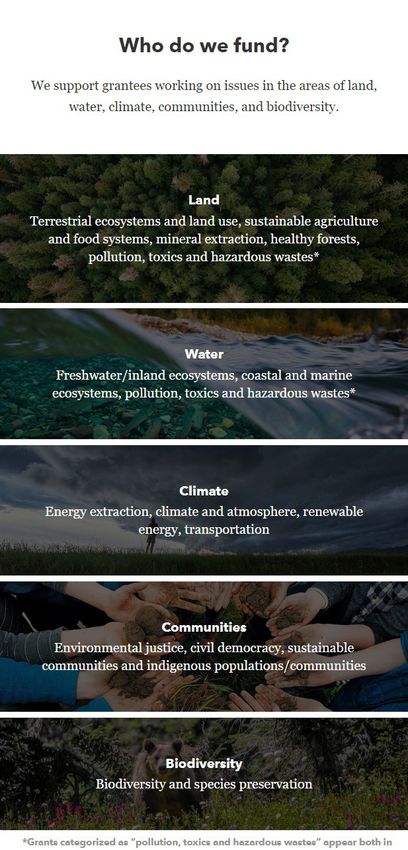
Ethical
champions
in business
A look at who’s leading the
charge on ethics
We’ve highlighted six ways you – as an online business – can help make
a difference. Each example is paired with an inspirational brand use case.

8 Integrating ethical practices into ecommerce | ebook                       9
ETHICAL CHAMPIONS IN BUSINESS

Contributing to a
                                                                                                                         At the end of 2019, the company announced it
                                                                                                                         was moving away from the one-for-one model
                                                                                                                         to something more flexible. It will still give away
                                                                                                                         shoes and glasses, but have a ‘giving team’ who

meaningful cause                                                                                                         will be tasked with distributing a third of the
                                                                                                                         company’s profits to good causes.

                                                                                                                         Amy Smith, Chief Giving Officer, said, “..We
                                                                                                                         spent the last year asking ourselves some tough
Shoe brand TOMS has so far given away 95 million pairs of shoes to disadvantaged                                         questions. Mainly, ‘Are we applying the power of
children across the globe.                                                                                               every TOMS purchase in the most impactful way
                                                                                                                         possible?’ After several months of research…we
                                                                                                                         knew it was time to evolve our giving. We made
In 2006, founder Blake Mycoskie –
                                                                                                                         the decision to decouple our impact from the
alongside friends and interns – turned his
                                                                                                                         one-to-one model we pioneered, and to expand
one-bed apartment in California into a shoe                                                                              our giving portfolio to include impact grants. This
company that would ultimately help lives.                                                                                way, we can support organizations working to
                                                                                                                         address some of today’s most pressing issues.”
It famously began as a one-for-one giving
model. Buy one pair of shoes and the
company gave another pair away. It has
gone on to see almost 100 million children
benefit.

This model expanded into providing sight                                           To date, digital retailer TOMS has:
restorations (including eyeglasses) and
clean water.

                                                                                   Given away 95+                        Provided 722,000+
                                                                                   million pairs of shoes                weeks of safe water

                                                                                   Committed $6.5           205 giving
                                                                                   million in impact grants partners

                                                                                   Provided 780,000+                     Given to 85
                                                                                   sight restorations                    countries

10 Integrating ethical practices into ecommerce | ebook                                                                                                                        11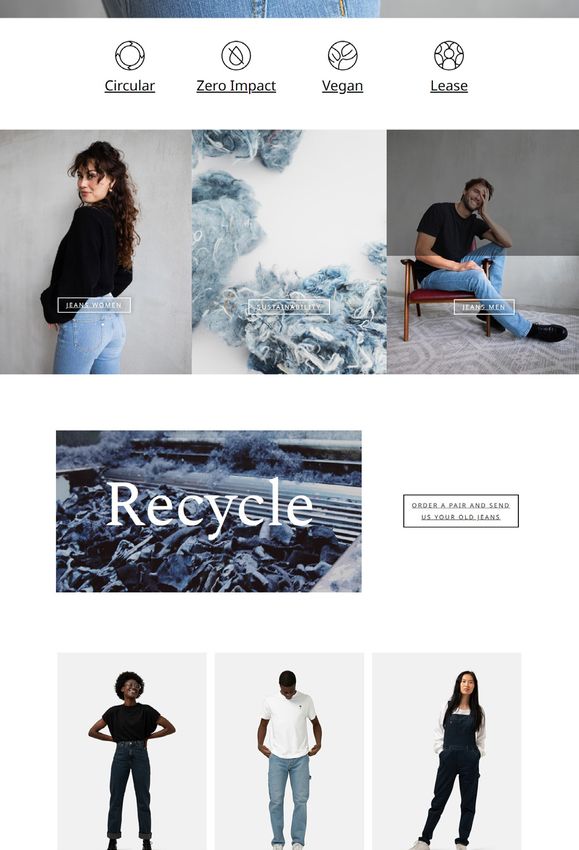
ETHICAL CHAMPIONS IN BUSINESS

Inspire giving during
                                                                                       For several years the company shut down its website on Black Friday in a stand against the sales
                                                                                       weekend, which it felt contributed to the environmental problems caused by consumerism. Everlane then
                                                                                       set up the Black Friday Fund, donating all money made on Black Friday to different causes, including
                                                                                       providing for the workers at the factories it uses for its garments in countries such as Vietnam.

consumer holidays                                                                      For 2019, they partnered with Oceana – an ocean conservation project pushing for a plastic ban in some
                                                                                       US states. Everlane donated $10 from every order on Black Friday until they reached its goal of $300,000.

                                                                                       The UK is its fastest-growing                                  Black Friday Funday
Ecommerce apparel brand Everlane has set up a Black Friday Fund to collect money for   market since international                                     launched in 2014 – now
different charities on one of the biggest consumer sales days of the year.
                                                                                       shipping launched in 2018.                                     raised over $1m.
Already having a global reputation for
transparency and sustainability, the
company spends months finding the best                                                 Everlane funded the removal                                    2019 saw $10 from every
factories around the world and gives them
compliance audits to evaluate factors                                                  of 20,000 pounds of plastic                                    order go to its ocean
like fair wages and acceptable hours and
working environment. The brand also
                                                                                       from US coastlines in 2018.                                    conservation project.
breaks down the cost of how much each
garment costs, to ensure consumers know
exactly what their money is going on.                                                  Pledging to remove all virgin                                 In an interview with the Financial Times, Founder
                                                                                                                                                     Michael Preysman said, “The question for all other
                                                                                       plastics from Everlane’s                                      leadership out there is: what side of history do you
                                                                                                                                                     want to be on? What impact do you want to have
                                                                                       supply chain by 2021 – its                                    on our planet? We can all look on and ignore the
                                                                                                                                                     issue and focus on profits,” he says. “But we have
                                                                                       nylon and polyester-based                                     a fundamental belief that you can be ethical and
                                                                                                                                                     profitable. And we have a responsibility to manage
                                                                                       materials are now made from                                   how much [stuff] people need.”

                                                                                       recycled water bottles.

12 Integrating ethical practices into ecommerce | ebook                                                                                                                                                     13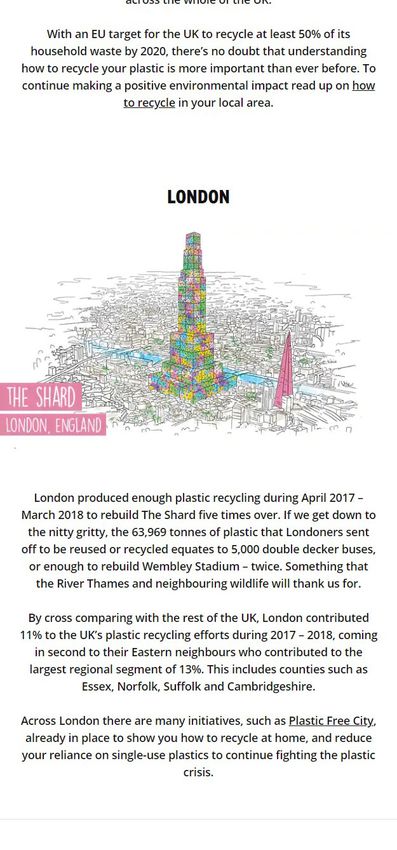
ETHICAL CHAMPIONS IN BUSINESS

                                                          The cost of every bag for the                                       The bag is unbranded to
Make customers feel                                       customer covers a free bag                                          avoid stigma and folds

compassion                                                for a child in care.                                                away neatly.

                                                          Each bag is labelled with the                                       As of July 2019, Madlug had
                                                          words “You are incredible”, to                                      given away over 5,000 bags.
                                                          remind every child they have
Digital retailer Madlug helps
consumers ‘give dignity’ to                               value, worth, and dignity.
children in care.

Bag brand Madlug was founded in 2015
                                                          Separate social enterprise
by Dave Linton, a youth worker who was
heartbroken to find out most children in                  schemes are also in place.
care transport their belongings from care
home to care home in a bin bag, as health
trusts and local authorities don’t provide
suitcases.

With more than 90,000 children in care in
the UK and Ireland, Madlug provides one
bag for a child in care with every purchase.
The company’s Jerry Bottle social
enterprise scheme also gives 100% of its
profits to fund water projects in India
and Tanzania.

                                                          Dave told the Guardian, “It’s amazing how little the public knows of the
                                                          realities these children are facing every day”, he says. “We’re trying to
                                                          be a cool lifestyle brand, and then saying, ‘Listen to the story behind it.’”

14 Integrating ethical practices into ecommerce | ebook                                                                                                        15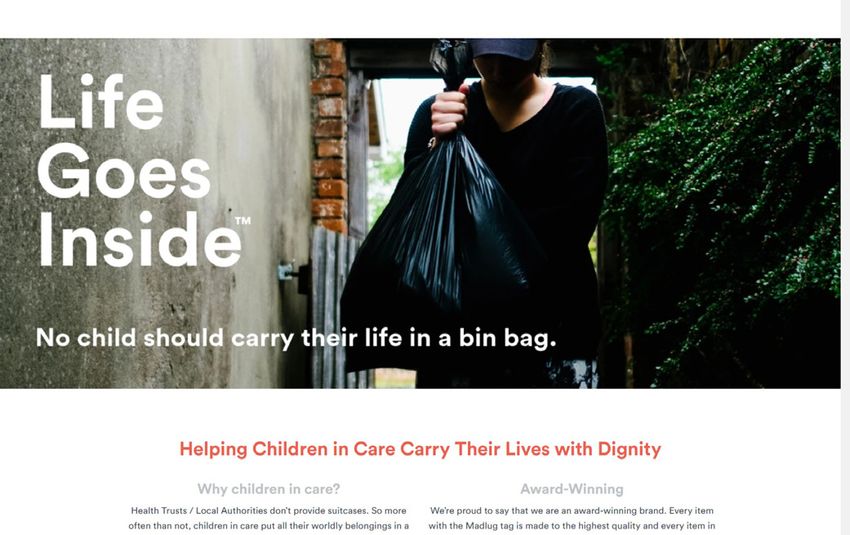
ETHICAL CHAMPIONS IN BUSINESS

Communicate transparency                                                                                            Patagonia works to implement and inspire solutions to tackle
                                                                                                                    the environmental crisis. They empower global action, locally.

within the brand
                                                                                                                    Patagonia Action Works, for example, connects individuals to
                                                                                                                    organizations working on environmental issues in the same
                                                                                                                    community.

                                                                                                                    The campaign helps fund grantees working on everything from
                                                                                                                    land, water, and climate to communities and biodiversity.

Clothing retailer Patagonia has built up a lasting reputation for brand authenticity.                               When Patagonia bought Patagonia
The brand is as transparent as water, tirelessly championing its beliefs and aligning                               Remember when former Patagonia CEO donated 1 million acres
its marketing activities with core values on the environment.                                                       of South America to Chile for national park designation? Their
                                                                                                                    customers do, because conservation of that scale – three times
We all remember the famous ‘Don’t buy this jacket’ Black Friday ad campaign. And on the same day in 2016 when the   the size of Los Angeles – sticks out like a sore thumb.
brand donated 100% of sales to environmental grassroots.

Patagonia was one of the first brands to address the issue of consumerism and do it head on. Since then, they’ve
been making a real difference.

The Common Threads Initiative, for instance – which includes ‘Worn Wear’, selling reused and recrafted Patagonia
gear – was designed to lighten the brand’s environmental footprint. Companywide, everyone recognizes that people
needs to consume less. Businesses need to make fewer things but of higher quality, while customers need to think
twice before they buy.

Why?
                                                                                                                    Kristine Tompkins, former Patagonia CEO, said “Like most
Because everything Patagonia makes takes something
                                                                                                                    big ideas, to achieve them there must be partners who share
from the planet they can’t give back. Whether that’s
                                                                                                                    the vision, those who can imagine a place or time a hundred
greenhouse gases, scrap, or water wastage. So, asking
                                                                                                                    years from now and do what is necessary to create something
customers to buy less on Black Friday – which no other
                                                                                                                    spectacular, something that will withstand the test of time.”
brand dared to do – made sense. Consumers may
accuse Patagonia of hypocrisy – after all, they are a
business trying to make money. But that doesn’t mean
they can’t educate customers to make more sustainable
purchasing decisions, or reduce their carbon footprint by
selling useful, multifunctional, and long-lasting garments.

Not to mention Patagonia’s self-imposed tax –
1% for the planet – donated to protect and
restore natural environments.

16 Integrating ethical practices into ecommerce | ebook                                                                                                                              17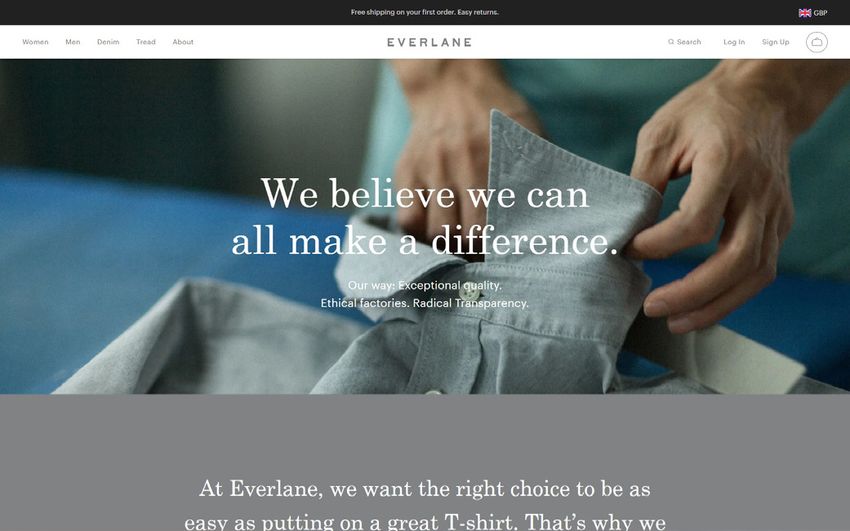
ETHICAL CHAMPIONS IN BUSINESS

Showcase ethical sourcing
                                                                                                                       The Body Shop takes its green mission global with Community
                                                                                                                       Trade recycled plastic. Since 1987, the brand has been fighting
                                                                                                                       for people and the planet: sourcing sustainable suppliers across
                                                                                                                       20 countries, the finest fair-trade ingredients, plus the traditional

and production                                                                                                         skills that benefit local communities. The brand’s decision to
                                                                                                                       engage in ethical conversation and educate its audiences on the
                                                                                                                       plastic crisis has spread awareness, responsibility, and action.

                                                                                                                       The Body Shop supports waste pickers in India who call
                                                                                                                       themselves Green Force. The brand buys waste plastic from
                                                                                                                       these people at a fair price to convert into products. This gives
In recent years The Body Shop has revived the spirit of its founder Anita Roddick,                                     waste pickers in India a fair price and better sanitary conditions.

with environmental and community-minded initiatives designed to put it back in the
vanguard of ethical business.

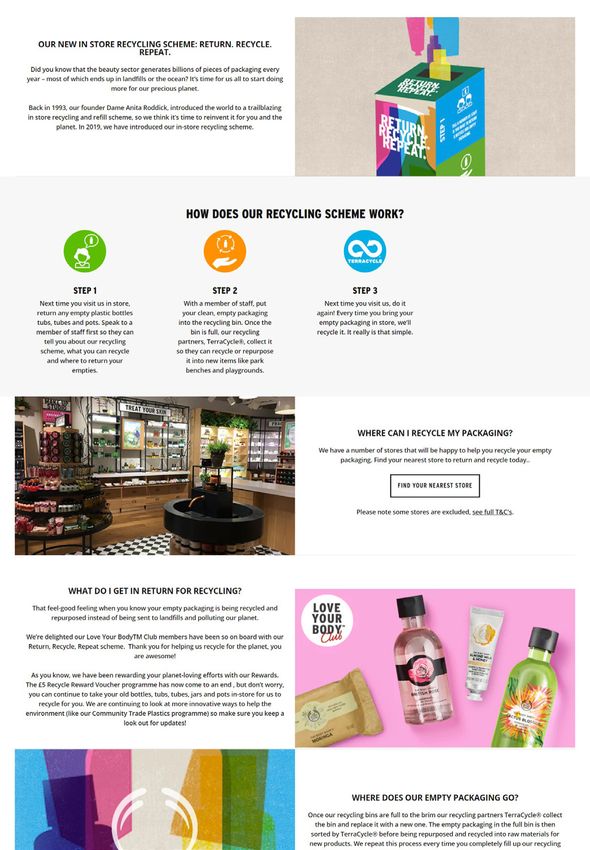
Tapping into growing consumer concern about the impact of single-use plastics on the environment, The Body
Shop has brought back its recycle-and-refill scheme. Customers can get money off their next purchase in return for
recycling their empties, which will be repurposed for the planet by partner TerraCycle. The idea is for customers to
have a memorable and fun experience in store, plus it encourages them to come up with ways they can help their
local communities. #ReturnRecycleRepeat.

For every five bottles/tubs/tubes/pots returned,
customers will be rewarded with a £5 voucher. So,
it’s at the cost of the planet as well as customers if
they don’t recycle. Shoppers can even recycle other
branded plastics, but don’t qualify for the voucher.

This sustainability initiative is only part of wider
efforts across the business. For instance, most
materials in stores are upcycled, including till
points rescued from landfill and stools made using
reclaimed steel and recycled wood.

The Body Shop perfectly sums up the scale of its
plastic on its website. Through compelling stats,
content, and imagery, customers can see how their
recycled plastic waste weights up to famous UK
landmarks – from 24 Blackpool Towers and 212
Angels of the North, to building the Shard five
times over.

18 Integrating ethical practices into ecommerce | ebook                                                                                                                                        19
ETHICAL CHAMPIONS IN BUSINESS
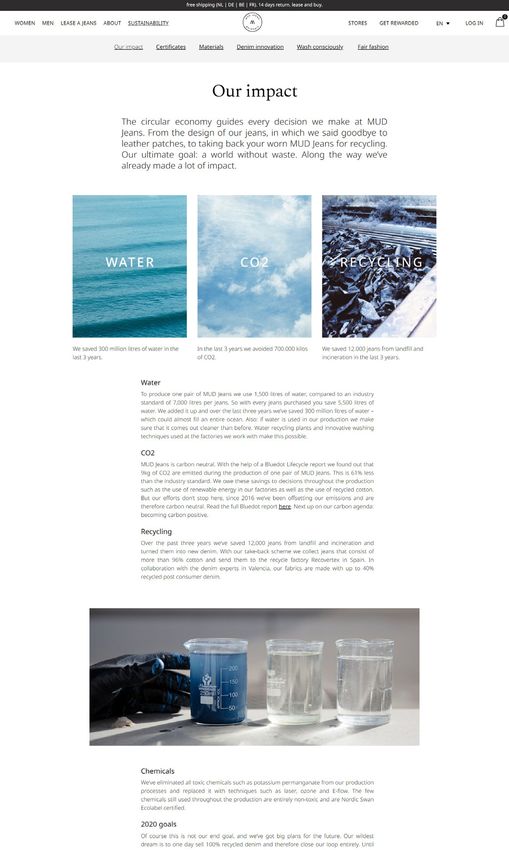
Be authentic: show that In the last 3 years MUD
Jeans has:
your 4Ps are fair Saved 200 million litres
of water
Avoided 700,000 kilos
‘It’s time to rethink what we consume and how we produce.’ of CO2
MUD Jeans says it how it is: fashion is a dirty business. Jeans are notoriously bad for
the environment. People on average buy two billion pairs of jeans a year. That’s a lot of
jeans. And only 1% of materials used to produce clothing is recycled into new clothing. Saved 12,000 jeans
from landfill and
MUD Jeans wants to do things differently. The brand challenges process, not concept. How? By extracting the
incineration
maximum value from every pair of jeans they make.
Why lease? MUD Jeans couldn’t have said it better: “In a linear economy, a pair of jeans is made, sold, worn, and
burned as trash or discarded to landfill where they end up polluting the environment. The end.”
How does it work?
In 2013 the brand introduced its pioneering Leas
A Jeans system. You can rent a pair of jeans
for a monthly fee. When they’re worn out, or if
customers would like a new pair, they can be
returned. They’re then recycled into new items.
Consumers therefore use rather than own their
jeans, in an attempt to abate fast fashion and
promote a circular economy.
20 Integrating ethical practices into ecommerce | ebook 21Doing business for good: the emerging brand paradigm The rise of the conscious consumer means that brands have to walk the talk. And it’s not about brands making bold promises they can’t keep. It’s about identifying pockets of opportunity where they can make a difference. Because not every business can donate 100% of their Black Friday sales to good causes. Nor does every brand have 1 million acres of land to give away for conservation. But every brand can start trading in a more sustainable way. Whether it’s supporting an important cause or curbing CO2 emissions, consumers are pleading with brands to address their climate concerns and act fast. Viewing ecommerce as a transaction between consumer and brand is a mistake. It’s a human experience that goes beyond the tangible product. We all feel something when we buy. But consumerism, in its current form, is killing the planet. It’s up to businesses to heed the warning, take more responsibility, and work towards a sustainable future. 22 Integrating ethical practices into ecommerce | ebook
dotdigital is a leader in omnichannel marketing automation technology.
dotdigital’s Engagement Cloud is the platform of choice for businesses
seeking to engage customers across all touchpoints.
The platform’s features empower 4,000+ brands across 150 countries to acquire, convert, and
retain customers. Users can connect customer data, surface powerful insights, and automate
intelligent messages across email, SMS, social, and more.

dotdigital is a global company with over 350 employees, serving companies of all sizes and in all
verticals for over 20 years.

Redbox is a digital commerce and design consultancy and one of the
top Magento partners globally.
The company builds exceptional ecommerce experiences for many well-known B2B and B2C
brands including Nespresso, Fortnum & Mason, Paperchase, AXA and Screwfix.

The company is headquartered in London, with offices in Dubai, Mauritius, Sydney, Auckland
and Modena.
Get in touch with our team in one of
                  our offices around the world.
AUSTRALIA              UK                         USA                         REST OF THE WORLD

Sydney                 London                     New York                    South Africa
Level 4,               No.1 London Bridge         333 7th Avenue, Floor 18,   Floor number 6, Suite 602
213 Clarence Street,   London                     New York                    No. 2, 76 Regent Road
Sydney, 2000           SE1 9BG                    NY 10001                    The Point Centre,
+61 2 9137 0487        +44 (0)20 8662 2762        +1-212-971-9408             Sea Point
                                                                              Cape Town 8060
Melbourne              East Croydon               Los Angeles                 +27 79 517 6357
Unit 107,              20th Floor, No 1 Croydon   12655 W Jefferson Blvd,
25 Gipps Street,       12-16 Addiscombe Road      Unit 04-152, Los Angeles    Belarus
Collingwood,           Croydon                    CA 90066                    Suite 433
VIC 30660              CR0 0XT                    1-212-971-9408              2 Talbukhina Street
+61 3 9081 6910        +44 (0)20 8662 2762                                    Minsk
                                                                              +375 17 336 69 69
                       Manchester
                       10th Floor, St James
                       Tower, Charlotte Street
                       Manchester, M1 4DZ
                       +44 (0)161 618 1070
You can also read


