HUMAN RIGHTS IN A PANDEMIC - A HUMAN RIGHTS ANALYSIS OF THE IRISH GOVERNMENT'S RESPONSE TO COVID-19 - Irish Council for Civil ...
←
→
Page content transcription
If your browser does not render page correctly, please read the page content below
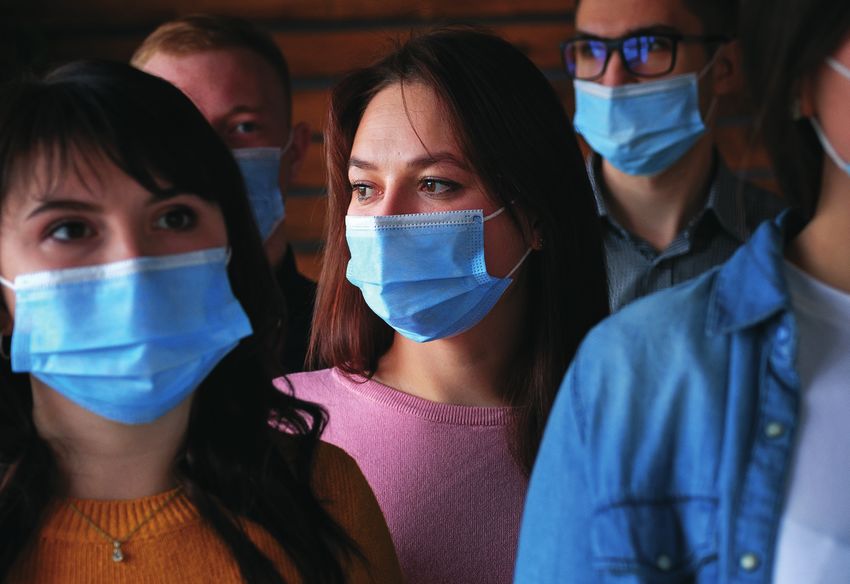
HUMAN RIGHTS
IN A PANDEMIC
      A HUMAN RIGHTS ANALYSIS OF THE
IRISH GOVERNMENT’S RESPONSE TO COVID-19

Human Rights
                 in a Pandemic
                   A HUMAN RIGHTS ANALYSIS
                  OF THE IRISH GOVERNMENT’S
                    RESPONSE TO COVID-19

                                   Doireann Ansbro
                                   Elizabeth Carthy
                                      Olga Cronin
                             Gemma McLoughlin-Burke

                                       MAY 2021

ICCL wishes to acknowledge and thank The Community Foundation for Ireland for their support.
      This report is funded by a Community Foundation for Ireland Donor Advised Grant.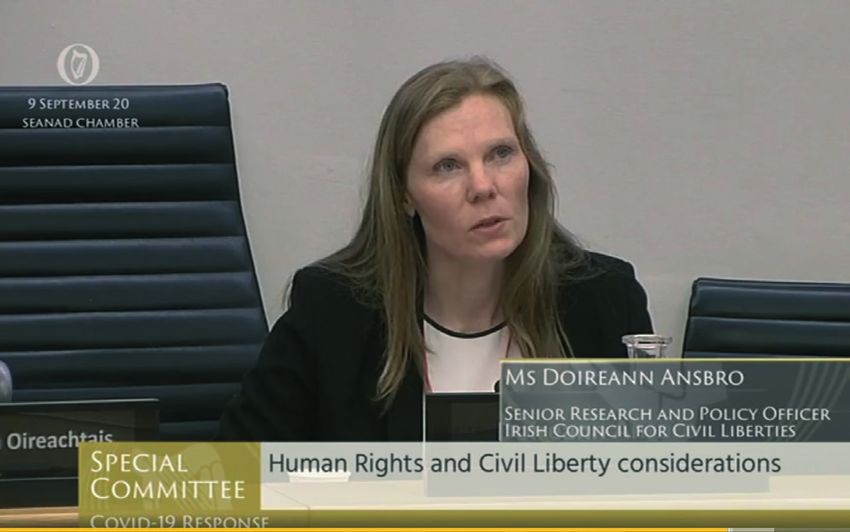
Foreword

W
           e are emerging from the deepest crisis in        the Gardaí into the regulation of ordinary life. This
           living memory, which has had and continues       unprecedented situation has given us a glimpse into
           to have a profound effect on Irish society       the experience of other regions of the world where
and on the wider world. The emergence of Covid-19           police checkpoints, curfews and criminalisation of
as a dangerous and highly contagious disease has            community activity are commonplace. At ICCL,
caused widespread disruption to all aspects of our          we believe that this experience has also made us
society. Many people have lost their lives and many         appreciate how precious our civil liberties are – the
families have been bereaved. Our healthcare and             ability to move freely about our country without
social services have been strained to breaking point –      ‘reasonable excuse’ and without restrictions as to who
and, in some countries, beyond. Huge sections of our        we might meet now means a great deal more to us all.
economy have been shut down with deep impacts on
                                                            It is important to recognise that, in many respects, our
income, public services, and quality of life.
                                                            society and our State have shown their best qualities
Human rights provide a framework to protect people,         over the past year. The Irish people have accepted short
even in the most difficult of times. That framework         term suspension of their rights as an act of solidarity
helps us to see who needs most support, and when.           to protect the most vulnerable in our community. The
In emergencies, human rights tell us which individual       vast majority of people have supported the public
rights can be restricted to protect the rights of society   health effort because they trust our State structures
at large. They guide us in deciding how long those          and, in general, they understand and trust the
restrictions can last, and how severe they can be.          information that they have been presented with by
                                                            Government. State supports have sustained those
The duty of the State to protect our rights to life         who have lost their jobs. Our public services and
and health has been the primary focus of national           public servants have gone to extraordinary lengths to
authorities. As well as demanding drastic economic          protect us. Healthcare workers, Gardaí, and essential
and administrative efforts, this duty has also led to       workers have done trojan work. Our community and
severe restrictions on a wide range of other rights.        voluntary organisations have sheltered and stood up
We have all been confined to our homes for extended         for those most affected.
periods of time. We have been prohibited under
threat of criminal sanctions from meeting family or         But our democracy has been strained. While the
friends, from working together, and from participating      Government and Oireachtas did not move to entirely
in essential elements of community life.                    suspend rights (as some other States did), the Minister
                                                            for Health was given incredibly broad powers to
We must continually remember just how far reaching          restrict human rights. In particular, the two Ministers
these restrictions have been. They go to the heart          over the pandemic period introduced an extraordinary
of our democratic society, bringing the State and           range of regulations criminalising aspects of daily life.

    "In this report, we set out our analysis of the pandemic response
    from a human rights perspective. From the outset, ICCL recognised
    that all aspects of our human rights would be impacted by the disease
    and by the State’s response."

2                                   HUMAN RIGHTS IN A PANDEMIC A REPORT BY THE IRISH COUNCIL FOR CIVIL LIBERTIES
An Garda Síochána deserve credit for the moderation might have been mitigated if different approaches had
and common sense by which they have applied these been taken; if there had been wider consultation with
powers in general, and the Policing Authority also rights holders; and stronger systems of democratic
must be commended for holding them to account in oversight of Government action. It is clear to ICCL
the policing of the various regulations. that Covid-19 has also exposed deep structural
inequalities in our society and these must be tackled
Nevertheless, the precedent of policing public
head on as a fundamental task in our recovery. It is
health measures with fines and criminal convictions
essential that we learn from the challenges and build
is of enormous significance to our democracy and
on the resilience that has emerged to strengthen our
deserves careful analysis and scrutiny.
democracy, guard our rights and ensure equality and
In this report, we set out our analysis of the pandemic fairness for everyone into the future. The blueprint is
response from a human rights perspective. From already there. It’s in human rights.
the outset, ICCL recognised that all aspects of our
human rights would be impacted by the disease and
by the State’s response. We immediately engaged
with Government, the Oireachtas, and all relevant
Liam Herrick
stakeholders to make the case for strong human
Executive Director
rights protections at every stage of the response.
ICCL
We believed then, and we believe now, that strong
protection of human rights is essential to an effective
public health effort. We made recommendations on
the content of laws and regulations. We made the
case publicly for the protection of rights whenever
new restrictions were contemplated. We advised State
agencies on how to safeguard privacy within measures
such as the Covid Tracker App. We persistently called
for transparency and democratic accountability over
these restrictions.
We present this analysis now to inform an essential
review of the legal and policy framework for this
emergency, and to identify how we might respond
more effectively to any future crisis. Our view is that
some of the more significant impacts on human rights
Acknowledgments
The authors of this report are ICCL staff members. We wish to thank our colleagues Sinéad Nolan
and Luna Lara Liboni for their review and helpful comments and suggestions. We also thank ICCL’s
many colleagues across civil society for their work on the issues covered in the report, which we
have drawn on throughout.
HUMAN RIGHTS IN A PANDEMIC A REPORT BY THE IRISH COUNCIL FOR CIVIL LIBERTIES 3Contents
EXECUTIVE SUMMARY 06
INTRODUCTION 09
SECTION 1: THE IRISH COVID-19 RESPONSE I: LAW AND ENFORCEMENT 11
1. Legal Framework 13
1.1 Human rights in an emergency 14
(i) Human Rights Principles guiding ICCL’s work 14
(ii) Permissible Limitations or Derogations? 15
1.2 National legal response to Covid-19 16
(i) The First Emergency Health Act 16
(ii) Other Primary Legislation in response to Covid-19 17
(iii) Regulations made under the Emergency Legislation 18
(iv) Need for evidence-based and transparent decision making 19
1.3 Recommendations 21
2. Impact of the Covid-19 response on the justice system 23
2.1 Impact of restrictions on access to a lawyer 24
2.2 Impact of restrictions on criminal court hearings 24
2.3 Recommendations 26
3. Role of An Garda Síochána in the Covid-19 response 27
3.1 Reform and Community Policing 28
3.2 Enforcement powers 28
(i) Introduction of enforcement powers 29
(ii) Exercise of enforcement powers and coercive practices 32
3.3 Policing practices of concern from a human rights perspective 33
(i) Use of spit hoods 34
(ii) Need for further data on policing 35
3.4 Recommendations 36
SECTION 2: THE IRISH COVID-19 RESPONSE II: IMPACT ON RIGHTS 37
4. Impact of Covid-19 response on the right to protest 39
4.1 Legal framework – Right to protest 40
4.2 Impact of the restrictions on the right to protest 40
4.3 Recommendations 43
5. Impact of Covid-19 response on events and gatherings 45
5.1 Legal framework – Right to religious freedom and right to respect for private
and family life 46
5.2 Impact of restrictions on religious events and gatherings 46
5.3 Restrictions on other events 48
5.4 Recommendations 48
4 HUMAN RIGHTS IN A PANDEMIC A REPORT BY THE IRISH COUNCIL FOR CIVIL LIBERTIES6. Impact of Covid-19 response on the right to free movement 49
6.1 Legal framework- Right to free movement 50
6.2 Impact of the restrictions on the right to free movement 50
6.3 Recommendations 51
7. Impact of Covid-19 response on the right to liberty 53
7.1 Legal framework – Right to liberty 54
7.2 Impact of the Covid-19 response on the right to liberty 54
(i) Detention on mental health grounds 54
(ii) Mandatory hotel quarantine 55
7.3 Recommendations 58
8. Impact of Covid-19 response on the right to privacy and data protection 59
8.1 Legal framework – Right to privacy and data protection 60
8.2 Impact of tracking technologies on the right to privacy and data protection 60
(i) CovidTracker app 60
(ii) Covid-19 Pandemic Unemployment Payments and airport checks 61
(iii) Covid-19 passports/certificates 62
8.3 Recommendations 63
SECTION 3: THE IRISH COVID-19 RESPONSE III: IMPACT OF COVID-19
AND RESTRICTIONS ON AT-RISK COMMUNITIES AND GROUPS 65
9. Impact of Covid-19 and restrictions on the right to equality and at-risk groups 67
9.1 Legal framework – Right to equality and non-discrimination 68
9.2 Need to address the disproportionate impact of Covid-19 and Covid-19 regulations 68
9.3 Brief examination of the disproportionate impact on different groups 70
(i) Age 70
(ii) Gender 72
(iii) Race and Ethnicity 73
(iv) People with disabilities 74
(v) Migrant status 74
(vi) Sexual Orientation and Gender Identity 75
9.4 Recommendations 76
10. Conclusion and All Recommendations 79
CONCLUSION 80
ALL RECOMMENDATIONS: 81
HUMAN RIGHTS IN A PANDEMIC A REPORT BY THE IRISH COUNCIL FOR CIVIL LIBERTIES 5Executive Summary
W
hen the Taoiseach announced the first rights-based approach to the Covid-19 response
country wide shut down on 12 March 2020 from March 2020. This report summarises the work
as an attempt to combat the transmission we have done, analyses particular rights issues, and
of Covid-19, the Irish Council for Civil Liberties (ICCL) makes recommendations to Government and to other
immediately identified the need for a public health relevant public actors. Our rights analysis is informed
response that incorporated fundamental human by Ireland’s human rights obligations under the Irish
rights and rule of law principles. Constitution, the European Convention on Human
Rights (ECHR) and the range of international human
Human rights are designed to protect and to empower
rights treaties that Ireland has ratified.
people. In emergencies, some individual rights can
be limited to protect other rights, including the right The report focuses on the key areas we monitored
to life and the right to health. The human rights law and campaigned on over the past fifteen months: the
framework recognised explicitly that protecting public Emergency Legislation and the making of regulations;
health is a valid reason for placing limits on individual the policing response; the impact of Covid-19
rights. restrictions on fundamental rights, such as the right to
protest and the right to privacy; and the effect of both
However, the same framework requires that every
Covid-19 and the restrictions on at-risk communities.
restriction a Government imposes to protect public
We identify several problematic developments such
health must meet certain tests: it must have a
as continually expanding police powers and the
legislative basis; respond to an evidence-based need;
use of spit hoods as part of the Garda response.
be in pursuit of a legitimate aim; and every restriction
We summarise the work we did to ensure that new
must be the most minimal possible to meet that
measures that would infringe on rights, from the Covid
aim. Restrictions imposed in an emergency must be
Tracker App to vaccine passports, were rigorously
temporary.
interrogated from a rights perspective. We identify
Ensuring interferences with rights are proportionate where we think the Government could have better
requires a careful balancing of numerous factors: protected our rights. We make recommendations
scientific evidence and analysis of the nature of for immediate action and for what measures should
the threat to public health; careful analysis of what be taken to ensure a better human rights compliant
measures are needed to respond appropriately to response in any future emergencies.
that threat; what impact these measures will have on
The report is not a comprehensive analysis of all human
rights and how to keep interferences with rights to a
rights issues in the Government’s response. Other
minimum; and how best to protect the most at risk
issues such as rights in prisons, the right to education,
and prevent discrimination.
or the need for a comprehensive analysis of the impact
ICCL has monitored and campaigned for a human of Covid-19 and restrictions on particular groups are
"Human rights are designed to protect and to empower people. In
emergencies, some individual rights can be limited to protect other
rights, like the right to life and the right to health. But every restriction a
Government imposes to protect public health must meet certain tests."
6 HUMAN RIGHTS IN A PANDEMIC A REPORT BY THE IRISH COUNCIL FOR CIVIL LIBERTIESbeyond the scope of this report. We identify the work highlighting Garda investigations into protest
of partner organisations who have produced in-depth organisers, threats of prosecution, and a failure by
and important reports on some of these issues. Government to provide clarity around what was and
was not permitted. This led to inconsistent policing,
In the first section, we outline six principles we
a chilling effect on protest, and ongoing confusion
believe should be taken into account when restricting
about whether protests are allowed under the public
rights in an emergency. We analyse the central
health restrictions. We repeat our call for small,
piece of Emergency Legislation that permitted all
pandemic-safe protests to be explicitly provided for
subsequent regulations that restricted rights – the
in the Covid-19 regulations.
Health (Preservation and Protection and Other
Measures in the Public Interest) Act 2020- in light of We examine the impact of the restrictions on a number
these principles. We identify specific ways it should of other rights too, including the right to manifest
be amended if it is renewed again on 9 June 2021. religion or belief, the right to private and family life,
We recommend a rigorous Oireachtas review before and the right to privacy. We consider that the blanket
renewal with sufficient time for robust debate. We ban under the highest restrictions on all gatherings
identify areas for improvement in the drafting of may have been disproportionate. We recommend that
emergency regulations, including better scrutiny, all households should have been permitted to pair
clearer communication and more transparency in with another household when restrictions were at their
decision-making. low to moderate levels. We address freedom of liberty
and movement, questioning whether restrictions on
We address how access to justice has been affected
movement were always proportionate, and criticising
by the pandemic, calling for more resources to
the lack of clarity in Government communication.
address the backlog in cases. We explore the
expanded policing powers given to An Garda We address the controversy around the proposed
Síochána, documenting what we consider an over introduction of ‘Covid passports’, emphasising that
reliance on criminal justice to ensure compliance with the use of domestic passports to access goods
public health guidelines where better communication and services would have been discriminatory and
and supports may have been more effective, in line disproportionately infringed rights to private and
with research from behavioural psychologists. We call family life. On the introduction of mandatory hotel
for better data collection on the use of new police quarantine (MHQ), given that it constitutes a form of
powers. We reiterate our concern that spit hoods State detention, we explore what would be required
may constitute inhuman or degrading treatment or to ensure that such quarantine constitutes a necessary
punishment and we call for an immediate end to their and proportionate interference with the right to liberty.
use. We identify a failure in the review and appeal process,
as well as problematic and potentially arbitrary and
In the second section, we examine several rights
discriminatory approaches to identifying what States
in focus such as the right to protest. Over the past
are on the MHQ list. We call for an end to the system
year we repeatedly called for an exception to the
as soon as possible.
general restrictions on public gatherings for small,
pandemic-safe protests that comply with public We summarise the work we did calling for
health guidelines. We argue that the right to protest Government to ensure the tech response to the
takes on an even greater importance in a democracy pandemic conformed with human rights principles of
during a time when decisions are being made that necessity and proportionality and we repeat our call
have such a huge impact on lives and livelihoods. for proof that the technology introduced, including
We express concern at the criminalisation of protest, the Covid Tracker App, is effective. Without proof
HUMAN RIGHTS IN A PANDEMIC A REPORT BY THE IRISH COUNCIL FOR CIVIL LIBERTIES 7of effectiveness, we argue that such technology rights compliant response from Government to
cannot be a proportionate interference with our similar emergencies in the future. We address
rights to privacy and data protection. We examine recommendations to Government, An Garda
the controversial cutting of social welfare payments in Síochána, the Courts Services, the Data Protection
the summer of 2020. We identify as yet unanswered Commissioner and the Director of Public Prosecutions.
questions about who authorised the inspections in
Looking to the future, ICCL looks forward to a time
Dublin Airport or the cuts to social welfare and we
when society can come back together in full enjoyment
call for answers and accountability.
of our human rights. We echo the global call for
It is clear that both Covid-19 and the restrictions Governments to ‘build back better’ where structural
have affected some communities more than others. inequalities are addressed, and entrenched societal
People living in congregated settings such as in problems are solved. We have seen how existing
Direct Provision Centres, Traveller halting sites and inequalities were exacerbated during the pandemic
prisons have been more at risk than others. The and how, when some are at risk, we are all at risk. The
number of outbreaks and devastating death toll in pandemic has shown us how interconnected we are
Nursing Homes has been a national and international nationally and internationally and how reliant we are
scandal. Older people have been cocooned and cut on each other for our health and wellbeing. As we
off from family and key supports. Women have borne restore the rights and freedoms restricted during the
much of the care burden, lost jobs and, constituting pandemic, we must restore them on an equal basis
the majority of healthcare workers, have been more for everyone.
exposed to the virus. Domestic violence has risen. We
examine the impact of Covid-19 on a number of at-
risk communities and make recommendations on how
these groups could be better protected in future.
The final section summarises our recommendations
addressing both short term actions necessary to
protect human rights now, and long term actions
that we believe could ensure a more robust human
"The pandemic has shown us how interconnected we are nationally
and internationally and how reliant we are on each other for our health
and wellbeing. As we restore the rights and freedoms restricted during
the pandemic, we must restore them on an equal basis for everyone."
8 HUMAN RIGHTS IN A PANDEMIC A REPORT BY THE IRISH COUNCIL FOR CIVIL LIBERTIESIntroduction
T
he Irish Council for Civil Liberties (ICCL) has of the emergency. We have repeatedly called for
been monitoring the Government’s response to an approach informed by fundamental human
the outbreak of Covid-19 in Ireland since March rights principles including prioritising protection
2020. We recognised the grave threat Covid-19 and support for those most at-risk and ensuring no
poses to the right to life and the right to health and measure could lead to discrimination. We have also
understood the need for a comprehensive public called for a human rights impact assessment of both
health response that would include necessary and Covid-19 and the restrictions to inform all legal and
proportionate restrictions on the exercise of other policy responses.
rights, given the highly contagious nature of the
A human rights-based approach to the pandemic
disease and the urgent need to stem its transmission.
has been called for by a range of other actors too.
ICCL believes that a human rights framework provides Early in the pandemic, the World Health Organisation
protection for everyone at all times. It ensures that (WHO) Director stated that: “All countries must strike
every action the Government takes responds to a real a fine balance between protecting health, minimizing
need and that measures taken to protect the right to economic and social disruption, and respecting
life and public health don’t go too far in restricting human rights"1. The United Nations Secretary-
other rights to the extent that they lose their General and the UN High Commissioner for Human
essence. Human rights require that the protection Rights have urged States to conform with human
of vulnerable populations is prioritised, particularly rights law and standards throughout the pandemic.2
during emergencies. For these reasons, it’s vital that The Trinity College Dublin (TCD) Covid-19 Law and
the Government applies a rights-based framework in Human Rights Observatory has been a consistent
its response. source of detailed legal analysis on the impact of
the pandemic response on constitutional rights.3 The
ICCL has consistently campaigned for a human rights-
Irish Human Rights and Equality Commission has also
based approach to all restrictions on rights during the
made important contributions on key issues, most
pandemic, calling for a demonstration by Government
significantly through its recent report on Ireland’s
that each restriction was prescribed by law, necessary
emergency powers during the pandemic, produced
in a democratic society, and proportionate to a
in conjunction with the TCD Observatory.4
legitimate aim; as well as time bound to the duration
"A human rights framework provides protection for everyone at all
times. It ensures that every action the Government takes responds to a
real need and that measures taken to protect the right to life and public
health don’t go too far in restricting other rights."
1
WHO Director General, Media Briefing, 11 March 2020.
2
UN Secretary-General, We are all in this together: UNSG delivers policy brief on Covid-19 and human rights, 23 April 2020, and see Statement
by Michelle Bachelet, UN High Commissioner for Human Rights on Human Rights Impact of Covid-19, 45th Session of the Human Rights
Council, September 2020 and see range of work at https://www.ohchr.org/EN/NewsEvents/Pages/COVID-19.aspx.
3
See Trinity College Dublin, Covid-19 Law and Human Rights Observatory.
4
Conor Casey, Oran Doyle, David Kenny and Donna Lyons, Ireland’s Emergency Powers during the Covid-19 Pandemic, Report prepared for The
Irish Human Rights and Equality Commission by The COVID-19 Law and Human Rights Observatory, (Hereinafter IHREC, Ireland’s Emergency
Powers during the Covid-19 Pandemic).
HUMAN RIGHTS IN A PANDEMIC A REPORT BY THE IRISH COUNCIL FOR CIVIL LIBERTIES 9This report examines the Government’s response the impact of Covid-19 restrictions on some key
to the pandemic through a human rights lens from human rights, including the right to protest, the right
March 2020 up to May 2021. Our analysis is informed to liberty, the right to privacy, and the impact of both
by Ireland’s human rights obligations under the Irish Covid-19 and restrictions on at-risk communities.
Constitution, the European Convention for Human
Rights (ECHR), and international human rights treaties. We make recommendations for immediate action and
we make recommendations on what measures should
The report is limited in scope and should not be be taken to ensure a better human rights compliant
considered a comprehensive analysis of all human response in future emergencies.
rights impacted by Covid-19 or the Government’s
response. In general, we have focused on issues that We hope the report contributes to a broader review
are in line with our ongoing work such as policing, of the Government’s response to Covid-19 and that
protest and privacy. Other issues such as rights it assists in informing a greater focus on protecting
in prisons and the right to education are, while human rights in future emergencies.
of equal importance, beyond the scope of this
report. While we identify key rights issues affecting
some communities and groups, the report does not
provide a comprehensive analysis of the impact of
Covid-19 and restrictions on particular groups. We
identify the work of other civil society organisations
who have produced important reports on some of
these issues.
The report is divided into two main parts. Part
1 highlights and discusses the legal framework
underpinning the Covid-19 response and policing
responses in the Covid-19 pandemic. Part 2 examines
"We have repeatedly called for an approach informed by fundamental
human rights principles including prioritising protection and support
for those most at-risk and ensuring no measure could lead to
discrimination."
10 HUMAN RIGHTS IN A PANDEMIC A REPORT BY THE IRISH COUNCIL FOR CIVIL LIBERTIESSECTION 1 The Irish Covid-19 Response I: Law and Enforcement This part sets out and analyses the human rights and legal framework underpinning the Irish Covid-19 response. It then examines the impact of Covid-19 restrictions on the justice system and explores the role of An Garda Síochána in enforcing Covid-19 restrictions.
1
                             LEGAL
                          FRAMEWORK
                                Human Rights in a Pandemic
                                      A HUMAN RIGHTS ANALYSIS OF THE
                                IRISH GOVERNMENT’S RESPONSE TO COVID-19

HUMAN RIGHTS IN A PANDEMIC A REPORT BY THE IRISH COUNCIL FOR CIVIL LIBERTIES   13
1. Legal Framework PRINCIPLE 2: Legislation should be subject to
scrutiny, consultation and oversight by Parliament
1.1 Human rights in an emergency Parliamentary scrutiny by the Oireachtas is an essential
There are two ways States can lawfully restrict rights protective mechanism against abuse of executive
in an emergency. The first is to make a declaration power in a democracy. Laws should be scrutinised,
of derogation – or exemption – from specific rights, debated and approved by Parliament. Where
as provided for in international treaties, including the measures are developed in a robust and transparent
European Convention on Human Rights (ECHR). This is manner, they are more likely to withstand challenge
not possible for all rights. For example, the prohibition and they are more likely to retain public trust.
of torture and cruel, inhuman or degrading treatment PRINCIPLE 3: Legislation should be demonstrably
and the rule that there shall be no punishment without compatible with human rights law.
law are absolute and non-derogable, meaning that no
limits can be placed upon them, even in emergency Legislation should be compatible with all of Ireland’s
contexts.5 human rights obligations under international human
rights law, including the European Convention
The second is to limit rights within the permitted
on Human Rights. Section 42 of the Human Rights
framework of human rights law. This requires
and Equality Commission Act 2014 places a clear
Government to take only those measures that are
obligation on Government to equality and human
necessary, proportionate and consistent with their
rights proof legislation, meaning it must be scrutinised
national and international legal obligations.6 This is
in terms of its impact on civil, political, economic,
discussed in detail below.
social and cultural rights.10
The Irish Constitution provides that constitutional
PRINCIPLE 4: Law must be clear, precise and
human rights norms may be limited in the event of
accessible and must be communicated clearly
an emergency caused by a war or armed rebellion.7
to the public.
Absent these circumstances, the Irish Courts have
made clear that all restrictions on Constitutional rights A fundamental rule of law principle is that laws must
must be proportionate.8 be clear, precise and accessible. People must know
what behaviour is legal and what is not legal and
(i) Human Rights Principles guiding therefore must be able to access laws in good time
ICCL’s work before they are in force. Where criminal sanctions
Human rights law and ordinary rule of law principles are concerned, the obligation on the State to set out
place further requirements on Government when clearly the nature of any legal obligations is greater.
providing for limitations on rights in law. We consider, This requires the publishing of laws before they enter
based on well-established human rights and rule of law into force, clear communication of their content, and
principles, that the Government’s approach to restricting clear drafting.
rights in an emergency should always incorporate the PRINCIPLE 5: Evolving responses to the
following six principles. We have used these principles emergency must be demonstrably connected
to inform our analysis throughout this report. to evidence of effectiveness and need.
PRINCIPLE 1: Without a derogation, rights can be
Laws and policies should be drafted on the basis of
limited but not suspended
demonstrable need rooted in high quality evidence.
The State must either make a declaration of derogation Data collection to inform decision-making is a key
(where possible) or ensure that all limits on qualified human rights principle. Government should conduct
rights conform with the human rights framework. This a human rights impact assessment of all restrictions
requires Government to take only those measures on rights to ensure laws and policies respond to real
that are necessary, proportionate and consistent with needs, discrimination is avoided, and differential
their national and international legal obligations.9 impacts are minimised and mitigated by key supports.
5
European Court of Human Rights, Guide on Article 15 ECHR, April 2020
6
See report of the Special Rapporteur on the Promotion and Protection of Human Rights and Fundamental Freedoms while Countering Terrorism,
HRC A/HRC/37/52, March 2018
7
Constitution of Ireland, Article 28.
8
This test emanated first from the case of Heaney v. Ireland [1994] 3 IR 593.
9
See report of the Special Rapporteur on the Promotion and Protection of Human Rights and Fundamental Freedoms while Countering Terrorism,
HRC A/HRC/37/52, March 2018.
10
IHREC, Guidance Note on Covid-19 and the Public Sector Equality and Human Rights Duty.
14 HUMAN RIGHTS IN A PANDEMIC A REPORT BY THE IRISH COUNCIL FOR CIVIL LIBERTIESPRINCIPLE 6: Access to justice and accountability the life of the nation”. In Lawless v. Ireland,13 the
must be maintained. European Commission on Human Rights defined a
“public emergency” as “a situation of exceptional and
Access to justice is a key check on Government power
imminent danger or crisis affecting the general public,
and takes on a special importance during a period of
as distinct from particular groups, and constituting a
significant and extensive human rights interferences.
Government must ensure access to the Courts is threat to the organised life of the community which
protected to the greatest extent possible. composes [the] State in question.”14 In the Greek
Case15, the Commission identified four characteristics
(ii) Permissible Limitations or of a “public emergency” under Article 15 of the
Derogations? European Convention: it must be actual or imminent;
This sub-section describes Principle 1 in more detail, its effects must involve the whole nation; the
examining the permissible limitations to human rights continuance of the organised life of the community
under the Constitution and human rights law in an must be threatened; and the crisis or danger must
emergency. be exceptional, in that the normal measures or
restrictions, permitted by the Convention for the
Irish Constitution: All legislation in Ireland must be maintenance of public safety, health and order, are
compatible with the rights protected by the Irish plainly inadequate.
Constitution unless an official emergency is declared.
The Constitution allows for an official emergency to The UN Human Rights Committee has made it clear
be declared only in times of war or armed rebellion that derogations should only be invoked to the
“for the purpose of securing the public safety and International Covenant on Civil and Political Rights,
the preservation of the State”.11 The Constitution (ICCPR) where a State cannot obtain its objectives
therefore does not empower the Government to within the existing limitations foreseen by the
suspend constitutional rights during a public health Convention in each article.16
emergency. Some commentators have argued that the correct
Absent a State of emergency, the Irish Courts approach to limiting rights during the pandemic would
require restrictions on constitutional rights to meet have been to make a declaration of derogation.17
four criteria. Restrictions must meet an important Given the exceptional and temporary nature of
objective that is pressing and substantial in a free derogations, they argue that a short, sharp suspension
and democratic society; the means must be rationally is better than long term and ongoing limitations.
connected to the aim; the interference must impair A small number of other States derogated from a
rights as little as possible; and the interference must number of rights for a limited period of time during
be proportionate.12 the Covid-19 pandemic.18 The Irish Government,
however, did not make a declaration of derogation
Human rights law: International human rights law, for any rights during the Covid-19 pandemic.
including the ECHR, cannot be suspended in times
of emergency unless a declaration of derogation ICCL considers that a declaration of derogation at the
relating to a specific right is made. Certain rights such outset of the pandemic would not necessarily have
as the right to life and the right not to be subjected been appropriate for any rights given the unknown
to torture or inhuman or degrading treatment or nature of the virus, in particular in terms of how long
punishment can never be derogated from. limitations on rights would have to be in place. In
keeping with the fourth limb of the EHCR test above
Article 15 of the ECHR provides for derogations in for derogations, normal restrictions permitted by
“time of war or other public emergency threatening the ECHR for the maintenance of public health were
11
Constitution of Ireland, Article 28.3.3.
12
This test emanated first from the case of Heaney v. Ireland [1994] 3 IR 593.
13
See European Court of Human Rights, Lawless v. Ireland, application No. 332/57 (A/3), judgment of 1 July 1961, affirmed in A and Others v. the
United Kingdom, Application No. 3455/05, judgment of 19 February 2009, para. 176.
14
See Lawless v. Ireland, para. 90.
15
See European Commission of Human Rights, The Greek Case, application Nos. 3321–3323 and 3344/67, Report of the Commission (1969).
16
General comment No. 29 (2001) on derogations from provisions of the Covenant during a State of emergency, para. 5. See also CCPR/C/128/2,
para. 2(c).
17
See for example Alan Greene, Emergency Powers in a Time of Pandemic, Bristol University Press, 2020
18
See Derogations by States Parties, Laws on the Right of Assembly Worldwide, a repository of legal information managed by the University of
Pretoria.
HUMAN RIGHTS IN A PANDEMIC A REPORT BY THE IRISH COUNCIL FOR CIVIL LIBERTIES 15likely sufficient to meet Government’s need to impose (i) The First Emergency Health Act
measures to fight transmission of Covid-19.
The Health (Preservation and Protection and Other
As the Irish Government did not declare a state of Emergency Measures in the Public Interest) Act 2020,
emergency or make a declaration of derogation, all amending the Health Act 1947, (the Emergency
restrictions on rights that can be limited (known as Legislation) is the bedrock legislation that most
‘qualified rights’) had to meet the requirements of subsequent regulations restricting rights were, and
ordinary human rights law. This means each restriction continue to be, based on. It was debated in the
had to be provided for by law, had to be necessary Oireachtas between 18 and 20 March 2020 and signed
in a democratic society to meet a pressing need into law on 20 March 2020. The Act grants the Minister
and had to be proportionate to a legitimate aim. for Health the power to make legal regulations
The Office of the UN High Commissioner for Human restricting people’s movement, travel, gatherings and
Rights issued a guidance note to governments on events as well as “any other measures that the Minister
the Covid-19 response in April 2020 which clarified considers necessary in order to prevent, limit, minimise
that in addition to that three-limb test, “all limitations or slow the spread of Covid-19”.21 It also expands
the right of medical officers to detain those who are
should be interpreted strictly and in favour of the
a “potential source of infection”, and removed some
right at issue. No limitation can be applied in an
safeguards for those detained on that basis. The same
arbitrary manner…[T]he authorities have the burden
Act provides for various social welfare measures, which
of justifying restrictions upon rights”19
we briefly examine in the chapter on equality.
The UN Special Rapporteur on protecting human
ICCL did not oppose the Emergency Legislation.
rights and fundamental freedoms while countering
Placing restrictions on rights on a legal footing is
terrorism has emphasised the importance of
required to meet the first criteria of the human rights
protecting the essence of rights even when limiting framework- ensuring restrictions are ‘prescribed by
them, saying: law’. We understood that the urgency of the situation,
“Limitations are prudent measures designed to in addition to the many unknowns about the virus or
protect [the public good] and the rights of others how it would spread, required immediate action to
without undermining essential human rights that protect the rights to life and health.
provide the foundation for a dignity-based society.”20 However, ICCL made a comprehensive submission22
to members of the Oireachtas once the first draft of
Whether some Government measures went too far
the Emergency Health Bill was published on 18 March
in placing limits on fundamental rights during the
2020 outlining some key concerns with the draft
pandemic is arguable and is discussed throughout
Bill. We published a briefing note23 on the human
this report.
rights implications of the law and we campaigned
for Government to use the human rights framework
1.2 National legal response to Covid-19 in its response.24 We called for a clear human rights
Principle 2 above provides that laws should test to be included in the making of all regulations,
be scrutinised, debated and approved by our better safeguards for people who may be detained,
representatives. This principle arguably takes on consultation with relevant stakeholders, oversight
an even greater importance during a pandemic by Parliament and a sunset clause to ensure the
where public trust in Government is vital to ensure legislation would not apply beyond the emergency.
compliance with public health advice. Principle 3 We noted the power conferred on the Minister to
provides that legislation should be demonstrably create new criminal offences and the expansion of
compatible with human rights law. This section garda powers of arrest; and we called for any law
examines the emergency legislation passed by creating new criminal offences to be drafted clearly
Government in response to Covid-19 in light of these and narrowly and for overbroad discretionary police
two principles. powers to be avoided.
19
Emergency Measures and Covid-19: Guidance Note, Office of the UN High Commissioner for Human Rights, April 2020.
20
Report of the Special Rapporteur on the Promotion and Protection of Human Rights and Fundamental Freedoms while Countering Terrorism, HRC
A/HRC/37/52, March 2018.
21
s.31A(1)(h).
22
ICCL Submission on the Health (Preservation and Protection and other Emergency Measures in the Public Interest) Bill 2020, March 18, 2020.
23
ICCL Briefing on Covid-19 Emergency Legislation, March 2020.
24
See eg Doireann Ansbro, Our human rights cannot be sacrificed in fight against Covid-19, Irish Examiner, 23 March 2021.
16 HUMAN RIGHTS IN A PANDEMIC A REPORT BY THE IRISH COUNCIL FOR CIVIL LIBERTIESThe fact that the legislation was rushed through both 202129 was introduced, which provided for fixed
houses of the Oireachtas in three days prevented penalty notices (fines) for breaches of many of
proper in-depth scrutiny of the Bill. A number of TDs the restrictions. This Act significantly changed the
and Senators proposed amendments addressing enforcement landscape given that prior to this Act,
some of ICCL’s concerns but when they were rejected a person could only be punished for breaching the
by Government, they stated that they would not push Covid-19 restrictions after a decision by the DPP to
for them given the urgency of the situation.25 pursue the case and a criminal trial.
One amendment was proposed by government These issues are considered in more detail in the
- a sunset clause of 9 November 2020, which ICCL section below on policing.
welcomed.26 As that date approached, ICCL called for
If Government intends to renew the Emergency
a proper parliamentary debate, in- depth scrutiny of
Legislation we call for the following amendments
the law and an opportunity to improve the legislation
to better meet principles 2 and 3 outlined above
based on lessons from the previous eight months.
– that law must be subject to scrutiny and must be
The date for renewal offered the Oireachtas the
compatible with human rights:
opportunity to reopen some of the issues that were
put aside during the debate in March. However, ICCL • Need for a meaningful proportionality test: A
was disappointed to learn two weeks before the requirement that Government would carry out a
date for renewal that the legislation was due to be meaningful proportionality test when restricting
debated for 45 minutes. Following advocacy by ICCL rights, including by ensuring all limits on rights
and others underlining the importance of sufficient were the least restrictive possible to achieve the
time for debate this was extended, but ultimately aim of protecting public health.
only lasted two hours.27 We call on Government to • Better Consultation: A requirement for
ensure meaningful, robust Oireachtas debate, as well consultation with the Irish Human Rights and
as a review of the use of powers within emergency Equality Commission whenever regulations are
legislation every time renewal is proposed. To disallow made that severely impact rights.
sufficient debate after a significant period of learning • Better Scrutiny: A requirement that the
would undermine a key pillar of our democracy Oireachtas has pre-legislative scrutiny over each
– Oireachtas scrutiny of law, as well as the need to set of regulations unless the particular exigency
ensure law responds appropriately to proven need. of the public health situation requires an urgent
response.
(ii) Other Primary Legislation in response • Oireachtas Approval: The Oireachtas should be
to Covid-19 required to approve regulations within a certain
period of time.
Other primary legislation introduced by the
• Non-discrimination clauses:
Government expanded Garda powers further in a
- A non-discrimination clause in s.31A(2) of the
variety of ways. The Criminal Justice (Enforcement
Health Act 1947, as amended by s.10 of the
Powers) (Covid-19) Act 202028 allowed for the
Emergency Legislation. This section lists the
inspection of premises without a warrant, and closure
factors that the Minister must have regard to
of premises orders by Gardaí. ICCL expressed concern
when taking measures to prevent the spread of
at the wide discretion afforded to Gardaí under the
the virus.
Act and questioned the feasibility and necessity of the
- A similar non-discrimination clause in s.11 which
Act, given the provisions relating to some premises
amends the Public Health Act 1947 with the
appeared impossible to enforce, such as the so called
introduction of s.38A. This section gives broad
‘pub grub regulations’ requiring people to order a
powers to medical officers to detain individuals.
meal costing a minimum of €9 when ordering drinks
Section 38A(2) lists factors a health worker must
in a pub. We also expressed concern that the powers
have regard to when making a decision to detain
of inspection and intervention afforded to An Garda
an individual and non-discrimination would be
Síochána may affect community relations. We echoed
an appropriate factor to add.
these concerns when the Health (Amendment) Act
25
See for example https://www.kildarestreet.com/debates/?id=2020-03-19a.89&s=preservation+and+protection+and+other+emergency+measur
es+2020-03-18..2020-03-20
26
See ICCL, Monitoring Human Rights during the Pandemic, Update 1, 13-20 March 2020.
27
Jack Horgan Jones, Extra Day to Dáil debate on extending State’s powers during pandemic, The Irish Times, 20 October 2020.
28
Criminal Justice (Enforcement Powers) (Covid-19) Act 2020.
29
Health (Amendment) Act 2021.
HUMAN RIGHTS IN A PANDEMIC A REPORT BY THE IRISH COUNCIL FOR CIVIL LIBERTIES 17• Limits on Broad Powers: In the first weeks of the pandemic, it was
- Section 31A(1)(h) of the Health Act 1947, as understandable that regulations would be drafted
amended by s.10 of the Emergency Legislation, and published quickly to ensure Government could
gives the Minister for Health the power to make respond to the uncertain and worsening public health
regulations that allow him to take “any other situation. However, as the pandemic wore on, ICCL
measures that the Minister considers necessary in considers that the process for drafting, publishing,
order to prevent, limit, minimise or slow the spread and communicating the content of regulations could
of Covid-19”. The creation of this broad power have been much improved. In our submission to the
requires explicit limitations such as a requirement Oireachtas in September 2020, we noted that there
to be ‘urgent, necessary and proportionate’. was a general sense of confusion around what was in
- Section 31A(1)(j) provides that the Minister may each set of regulations and we called for much greater
make regulations on “such additional, incidental, clarity. We note the observation in the Irish Human
consequential or supplemental matters as the Rights and Equality Commission (IHREC) report on
Minister considers necessary or expedient for the the exercise of the Covid-19 emergency powers that:
purposes of giving full effect to the regulations.”
“The Government’s making and presentation of
The word “expedient” should be removed as
regulations raises serious rule of law concerns.
this creates too low a threshold for the passing of
Regulations have applied retroactively, are frequently
measures that so significantly infringe on rights.
not published for several days after they are made,
Expediency can never be a factor that alone can
are misleadingly described in official communications,
be used to justify rights infringements.
and are inadequately distinguished from public health
• Regular review: A requirement for a substantive
advice.”32
review of the exercise of emergency powers
both by the Minister for Health and by An Garda We support IHREC’s strong recommendation that
Síochána should be included. the Government “should at all times and in all
• Human Rights Impact Assessment: A requirement communications maintain a clear distinction between
to carry out a human rights impact assessment measures that are legally obligatory and public health
should be included. advice. In particular, the Government should not
present public health advice as if it were criminally
(iii) Regulations made under the enforceable.”33
Emergency Legislation
We recognise that in the last few months there has
The fourth principle above requires that laws must be been a marked improvement in publishing new
clear, precise and accessible. regulations before they come into force but the issues
Since the Minister for Health signed the first set of of prior scrutiny, consultation, and better, targeted
regulations made under the Emergency Legislation communication of their contents remain unresolved.
in April 2020, ICCL has monitored and analysed key We also support the recommendation made in
provisions that infringed rights.30 In particular we called October 2020 by the Special Oireachtas Committee
for proportionate sanctions, including the removal of on Covid-19 Response that:
criminal penalties for the exercise of rights and for “All sectoral committees should review the relevant
an explicit exception to the regulations on events Covid-19 legislation which is regulating activity in
involving the safe exercise of the right to protest. their sectors and every proposal to extend regulations
after 9 November 2020 should require approval by
We called for better processes including the Houses of the Oireachtas or the relevant joint
greater transparency in decision-making; better committee.”34
consultation with key stakeholders; Oireachtas
Penal Provisions: The Emergency Legislation created
scrutiny; publication of regulations before they
the power for the Minister to make regulations
took on the force of law; and better and clearer
restricting the rights to freedom of movement,
messaging to the public.31
assembly and association. The legislation gave the
30
ICCL, Monitoring Rights During the Pandemic, https://www.iccl.ie/iccl-monitoring-rights-during-the-pandemic/.
31
Jack Power, Civil liberties group concerned at how Covid-19 laws being drawn up, 29 August 2020, https://www.irishtimes.com/news/ireland/
irish-news/civil-liberties-group-concerned-at-how-covid-19-laws-being-drawn-up-1.4342090
32
IHREC, Ireland’s Emergency Powers during the Covid-19 pandemic) February 2021. P.104
33
IHREC, Ireland’s Emergency Powers during the Covid-19 pandemic) February 2021. P.104
34
Houses of the Oireachtas, Special Committee on Covid-19 Response, Final Report, 6 October 2020.
18 HUMAN RIGHTS IN A PANDEMIC A REPORT BY THE IRISH COUNCIL FOR CIVIL LIBERTIESMinister the power to classify particular restrictions compliance with public health guidelines was through
as ‘penal provisions’. Any penal provision could positive reinforcement of messaging, targeted
attract up to six months in prison or a €2,500 fine communication and the provision of key supports or
following prosecution.35 Subsequent regulations and “capability, opportunity and motivation.”37 In light
primary legislation have created the power for Gardaí of this research, ICCL has consistently called on the
to impose on-the-spot fines for breach of Covid-19 Government to use criminal law in a sparing manner
Regulations.36 This is explored in more depth in the and only where clear public health advice grounded
policing section later in this report. in scientific medical evidence is communicated
effectively and efforts to ensure compliance through
ICCL voiced concerns from the outset that enforcement
consent have demonstrably failed. We see this as a
of public health guidance should be primarily
key area of improvement for the future.
education and advice- based. We understand that
at the very beginning of the crisis – when there was Affected Areas and end dates: The primary
great uncertainty and anxiety about how the disease legislation gave the Minister the power to designate a
would affect the country and protecting lives was particular geographic area as an ‘affected area’ where
paramount – ensuring the population’s behaviour there was “sustained transmission” of the virus.38
through enforceable rules appeared necessary. Regulations under the Act cannot impose restrictions
However, ICCL considered that 6 months in prison in an area unless it is designated as an affected area.
and a €2,500 fine were disproportionate criminal The Minister chose to designate the whole country as
sanctions for breaching rules requiring people to i) an ‘affected area’ so each set of regulations applied
stay at home and ii) not to move outside 2km from to the entire country. Except for a brief period during
their home. We highlighted the following principles summer 2020, this remained the case even as it
that should always apply to the creation of criminal became clear that the numbers affected by the virus
sanctions: were very different in different regions of the country.
ICCL considers the potential to designate different
i. Criminal sanctions should always be a measure of
areas of the country as an ‘affected area’ is a tool that
last resort.
can be used to respond in a more targeted manner
ii. New criminal offences must be drafted clearly to the behaviour of the virus and may assist with
and narrowly to ensure they are easily understood ensuring restrictions are proportionate.
and not subject to overbroad discretionary police
The fact that each set of regulations had a specific
powers.
time frame was positive. However, communication
ii. Where alternative enforcement measures can about the end date of some regulations was lacking
be appropriately implemented they should be and certain regulations were extended without
considered before criminal sanctions. proper advance notice. There has been consistent
and obvious confusion among the public about what
The first ten days of the policing operation that regulations were in force and when.
sought to enforce the guidelines were done without
regulations underpinning the public health advice. (iv) Need for evidence-based and
It is significant that An Garda Síochána reported transparent decision making
widespread compliance with the restrictions before
Laws and policies should be developed on the basis of
criminal penalties were introduced. ICCL considers
demonstrable need rooted in high quality evidence.
that this suggests criminal sanctions are not necessary
Research and data collection are vital to provide the
to ensure the general population follows public health
evidence that must inform decision making. This
guidelines when their content and rationale are clearly
is a key human rights principle. The public must
communicated.
have confidence that decisions are being made in a
During 2020, we noted behavioural science research considered manner and are grounded in strong and
that strongly suggested the best way of ensuring clear processes.
35
Health Act 1947, s.31A(12).
36
Health Act 1947, s. 31A(6C).
37
NUI Galway global Covid-19 study finds strong link between health messaging and behaviour, NUIG News and Events Page, 5 October 2020.
Claire O’Connell, Encouraging health behaviours to tackle the pandemic, The Irish Times, 28 May 2020; Pete Lunn, Much of what we think about
Covid-19 is wrong. We need to change the conversation, The Irish Times, 10 October 2020; Molly Byrne, Behaviour is best Covid-19 vaccine
available, The Irish Times, 26 October 2020.
38
Section 31B, Health Act 1947 as amended by s.10 of the Health (Preservation and Protection and Other Emergency Measures in the Public
Interest) Act 2020.
HUMAN RIGHTS IN A PANDEMIC A REPORT BY THE IRISH COUNCIL FOR CIVIL LIBERTIES 19Critically, we believe that there must be clear lines
ICCL has repeatedly called on Government to
of separation between NPHET’s formal advice to
conduct a human rights impact assessment of
Government, the medical science upon which they are
all restrictions on rights to ensure laws and
basing that advice, the Government’s interpretation of
policies respond to real needs, discrimination is
that advice (including where it is accepting or rejecting
avoided, and differential impacts are minimised
that advice); and guidelines or legal requirements
and mitigated by key supports.39
which Government chooses to introduce on foot of
that advice, which are then demonstrated to be in line
ICCL expressed concern on a number of occasions with the State’s human rights obligations.
that there was a lack of transparency in relation to
the processes and grounds for the decisions that led We note that IHREC has highlighted that the Public
to the different levels of restrictions on rights.40 ICCL Sector Equality and Human Rights Duty applies
supports the essential work of NPHET and we believe to all public sector actors, including the HSE, the
it is vital to ensure that its actual and perceived Department of Health, the Chief Medical Officer
independence and integrity as an expert advisory and NPHET.42 This means there is a clear duty on
body is protected. We believe that the composition all of these actors to promote equality, combat
and procedures of any expert body advising the discrimination and protect the human rights of
Government must ensure a full range of public health all those who use their services.43 In the context of
and social perspectives and must be adequately Covid-19, IHREC has stated that in order to fulfil this
resourced. duty, public bodies must:
In our submission to the Oireachtas Covid Committee “carry out an assessment of the equality and human
in September 2020, we highlighted the need for rights issues relevant to their function and purpose;
more transparency as well as the approach in develop policies, plans and actions to address
other jurisdictions where a range of experts sat on these issues; and report annually on progress and
Government’s health advisory boards during the achievements. As public bodies move towards
pandemic.41 We believe that the composition of recovery and longer term planning, this provides an
NPHET could be improved by adding a broader range important framework to systematically consider and
of experts such as mental health experts, sociologists reflect the particular needs of staff and service users
and a human rights expert who can give a broader at risk of inequality, discrimination or disproportionate
view on the impact of restrictions on public health impact, and helps to mitigate and avoid unintended
and on rights. consequences.”44
At least some NPHET meetings should be held in ICCL would welcome a public commitment to fulfilling
public. The Government should also ensure that this duty from all relevant public bodies in the context
NPHET has sufficient resources to support its work, of decision making that leads to restrictions on rights.
transparency of its decision making, and broader
composition.
"Laws and policies should be developed on the basis of demonstrable
need rooted in high quality evidence. Research and data collection are
vital to provide the evidence that must inform decision making. This is
a key human rights principle."
39
ICCL, Monitoring Rights During the Pandemic, Update 21 1-7 August 2020.
40
See for example ICCL, Submission to Oireachtas Covid-19 Committee, September 2020.
41
ICCL, Submission to Oireachtas Covid-19 Committee, September 2020.
42
IHREC, Covid-19 and the Exercise of Emergency Powers, p.18.
43
See IHREC, Implementing the Public Sector Equality and Human Rights Duty, March 2019.
44
IHREC, Guidance Note on Covid-19 and the Public Sector Equality and Human Rights Duty.
20 HUMAN RIGHTS IN A PANDEMIC A REPORT BY THE IRISH COUNCIL FOR CIVIL LIBERTIESYou can also read


