Humber Bridge Board - Hull City Council
←
→
Page content transcription
If your browser does not render page correctly, please read the page content below
Humber Bridge
                                                 Board
                                                 Kevin Moore
                                                 Chief Executive and Clerk to the Board
                                                 Ferriby Road, Hessle, HU13 0JG
                                                 Fax. (01482) 640838
                                                 Text phone (01482) 647161

                                                 Contact:             Louise Hawkins
                                                 Telephone:           (01482) 613410
                                                 Fax:                 (01482) 614804
                                                 Email:               Louise.Hawkins@hullcc.gov.uk
                                                 Text phone:          (01482) 300349
                                                 Date:                Friday, 09 February 2018

Dear Sir/Madam,

Humber Bridge Board

The next meeting of the Humber Bridge Board will be held at 10:00 on Friday, 16
February 2018 in Humber Bridge Board Administration Building.

The Agenda for the meeting is attached and reports are enclosed where relevant.

Please Note: It is likely that the public, (including the Press) will be excluded from the
meeting during discussions of exempt items since they involve the possible
disclosure of exempt information as described in the provisions of the Board’s
standing orders.

Yours faithfully,

Louise Hawkins
Democratic Services Officer
on behalf of the Clerk to the Board

                                      Page 1 of 66
Humber Bridge Board

To:   Directors of Humber Bridge Board: (e-mailed unless otherwise stated)
      Councillor Sean Chaytor, Hull City Council (hard copy)
      Councillor Chris Matthews, East Riding of Yorkshire Council (hard copy)
      Councillor Richard Hannigan, North Lincolnshire Council
      Councillor Matthew Patrick, North East Lincolnshire Council
      Lord C Haskins, Chair Humber LEP (hard copy)
      Mr Charlie Spencer OBE, Humber LEP

      Deputy Directors of the Humber Bridge Board: (e-mailed unless otherwise stated)
      Councillor Stephen Brady, Hull City Council
      Councillor Stephen Parnaby OBE, East Riding of Yorkshire Council
      Councillor Rob Waltham, North Lincolnshire Council
      Councillor Peter Wheatley, North East Lincolnshire Council
      Mr Kishor Tailor, Chief Executive Humber LEP
      Mr Richard Kendall, Humber LEP

      Officers: (e-mailed unless otherwise stated)
      Kevin Moore, Chief Executive, Humber Bridge Board
      Peter Dearing, Legal Services, Hull City Council (hard copy)
      Louise Hawkins, Democratic Services Officer, Hull City Council (hard copy (x3))
      Bill Prest, Commercial and Project Lawyer, Hull City Council
      Tony Barker, Communications Manager, Humber Bridge Board
      Andrew Arundel, Head of Infrastructure, Humber Bridge Board

      For Information: (e-mailed)
      Matt Jukes, Chief Executive, Hull City Council
      Caroline Lacey, Chief Executive, East Riding of Yorkshire Council
      Denise Hyde, Chief Executive, North Lincolnshire Council
      Rob Walsh, Chief Executive, North East Lincolnshire Council
      Di Baxter, PA to the Chief Executive, Humber Bridge Board

                                              Page 2 of 66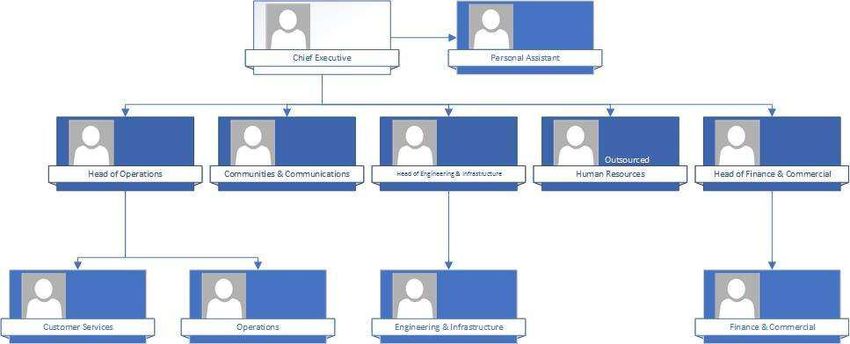
Humber Bridge Board

                                     AGENDA

                        10:00 on Friday, 16 February 2018

                  Humber Bridge Board Administration Building

                                    AGENDA
PROCEDURAL ITEMS

1   Apologies
    To receive apologies for those Directors who are unable to attend
    the meeting.

2   Declarations of Interest
    To remind Directors of the need to record the existence and nature
    of and personal and prejudicial interest in items on the agenda in
    accordance with the Director Code of Conduct as set out in
    Schedule 2 to the Board's Standing Orders.

3   Minutes of the meeting held on 15 December 2017                      5 - 12
    Details

NON-EXEMPT ITEMS

4   Standing Orders
    To approve the amendment in the Standing Orders relating to the
    appointment of the Treasurer and Deputy Treasurer.

5   Business Update                                                      13 - 14
    To receive an update from the Chief Executive.

6   Strategic Plan 2018-2021                                             15 - 40
    To approve the Strategic Plan for 2018-2021.

7   Items to be Raised at the Next Meeting (non-exempt)
    To raise any matters of non exempt business.

EXEMPT ITEMS
                                 Page 3 of 66
8    Humber Bridge Board Management Tasks 2018-19
     Report circulated to Directors separately.

9    Monthly Management Accounts and Traffic Volume                            41 - 60
     Details

10   Budget Report

        •   Information relating to the financial or business affairs of any
            particular person (including the authority holding that
            information);

11   Health and Safety                                                         61 - 66
     To review current progress.

12   Capital Projects Board - Report to follow
     To note the actions of the Capital Projects Board.

13   Operations Department Review
     Report to be circulated at the meeting.

14   Human Resource Matters - Pension Issue
     Report to be circulated at the meeting.

15   Masterplan Tender

        •   Information relating to the financial or business affairs of any
            particular person (including the authority holding that
            information);

16   Items to be Raised at the Next Meeting (exempt)
     To raise any matters of exempt business.

                                    Page 4 of 66
Item No 3

                           HUMBER BRIDGE BOARD

                           MINUTES 15 DECEMBER 2017

 PRESENT

 Councillor Matthew Patrick (North East Lincolnshire Council) (in the Chair)
 Councillor Sean Chaytor (Hull City Council)
 Charlie Spencer OBE (Humber LEP)
 Lord Haskins (Humber LEP)

 IN ATTENDANCE

 Kevin Moore (KM) (Chief Executive)
 Bill Prest (Legal Services, Hull City Council)
 Andrew Arundel (AA) (Head of Infrastructure, Humber Bridge Board)
 Tony Barker (Communications Manager, Humber Bridge Board)
 Andy Dalby (AD) (Interim Head of Finance, Humber Bridge Board)
 Louise Hawkins (Democratic Services, Hull City Council)
 Sergeant Taylor (Humberside Police)
 Alison Lenton (Human Resources Officer, Hull City Council)

 APOLOGIES

 Councillor Richard Hannigan (North Lincolnshire Council)
 Councillor Chris Matthews (East Riding of Yorkshire Council)

Minute    Report     Business                                                         Action by
 No.       No.
 297                 DECLARATIONS OF INTEREST

                     Councillor Chaytor declared a personal interest in minute
                     166 insofar as he was a Director of Kingstown Works
                     Limited.

 298                 MINUTES OF THE BOARD MEETING HELD ON 27
                     OCTOBER 2017

                     The Chief Executive informed the Board that Andy Dalby
                     had been offered the full time post of Head of Finance and
                     Commercial. It was intended that he would be appointed
                     on 1 January 2018. The Head of Finance and Commercial
                     would have responsibility as Treasurer to the Board.

                     It was noted that the management structure and Standing
                     Orders would need to be amended to reflect the changes
                     as currently the Chief Executive was the Treasurer to the
                     Board.

                                          Page
                                           1 5 of 66
Item No 3

            Agreed –

               a.That the Minutes of the Meeting of the Board, held on
                  27 October 2017, having been printed and
                  circulated with the amendment to minute 282 to
                  reflect Charlie Spencer as a representative of the
                  Humber LEP;

               b.That the standing orders be amended, and submitted      (b – c) KM
                  to the next meeting of the Board for approval, to
                  reflect the appointment of a Head of Finance and
                  Commercial who would act as Treasurer to the
                  Board and that the Chief Executive would act as
                  Deputy Treasurer to the Board from 2 January 2018,
                  and

               c. That the Management Structure be amended to
                   reflect the appointment of a full time Head of
                   Finance and Commercial.

299   156   MONTHLY MANAGEMENT ACCOUNTS

            The Interim Head of Finance submitted a report which
            provided the Board with an update on traffic flows and
            income during October 2017.

            The Board was informed that October had been a very
            good month as traffic volume had increased by 7% from
            the previous year. Overall income had been good over the
            past six months as there had been between five and six
            thousand extra commercial vehicles a month crossing the
            bridge. It had been noted that the increase in traffic
            volumes was beginning to slow down.

            Income was generally lower during December as there was
            less traffic on Christmas and Boxing Day and the threat of
            bad weather deterred drivers from travelling.

            There had been a slight overspend in the Maintenance
            Department due to the continued hire of an Impact
            Protection Vehicle.

            Directors of the Board noted that there appeared to be a
            degree of fluctuation across the accounts. The Interim
            Head of Finance explained that money had been moved
            around to ensure the Board had properly reflective budgets
            which would provide comparable figures for next year.

            A discussion took place around Service Level Agreements
            and whether there were any opportunities to work with
            other organisations to gain best value for money for the
                                Page
                                  2 6 of 66
Item No 3

             Board.

             Agreed – that the report be noted.

300   157    PARTNERSHIP BETWEEN HUMBERSIDE POLICE AND
             THE HUMBER BRIDGE

             The Chief Executive submitted a report which outlined the
             work that had been undertaken in developing a strong
             working relationship between the Board and Humberside
             Police.

             Sergeant Taylor, Humberside Police, explained that
             trespassing could be a major issue for the Board and the
             police could not pursue prosecution unless a public order
             offence had been committed. In cases where a public
             order offence had not been committed the Board would
             have to use its own by-laws to prosecute offenders.

             The Chief Executive reported that the Board had done all it
             could to put in place physical barriers to prevent
             trespassing. The CCTV coverage around the Bridge was
             very good and new signage had been erected which made
             it clear trespassers would be prosecuted.

             Board members queried whether the Bridge was classified
             as a strategic infrastructure which would give the Police
             powers to prosecute trespassing on the Bridge.

             A discussion took place around road traffic safety and the
             level of congestion in the approaches to the Bridge in
             particularly the roundabouts. Sergeant Taylor explained
             that he was not responsible for road traffic issues.
             However, he would refer the issues to his colleagues.

             Directors went on to discuss the issue of suicide attempts
             at the Bridge. The Police respond as quickly as they can.
             Staff at the Bridge and Police Officers had been trained to
             deal with incidents and regular meetings took place with
             key partners.

             Agreed –

                a.That the report be noted, and

               b. That clarification is sought around the Bridge’s          (b) AA
                  status as a strategic infrastructure.
301    158   BUSINESS UPDATE

             The Chief Executive submitted a report which provided the
             Board with an update on work undertaken and activities
                                Page
                                  3 7 of 66
Item No 3

            since the last Board meeting.

            The Board was informed that a meeting had taken place
            with North Lincolnshire and East Riding of Yorkshire
            Councils and Historic England in relation to future plans for
            the Bridge and the surrounding land. The meeting had
            been very positive with Historic England encouraging the
            opening up of listed buildings to members of the public.

            Directors suggested that there could be people who wished
            to have a tour of the Bridge which could help to raise its
            profile.

            Agreed –

               a.That the report be noted, and

               b.That requests for tours of the Bridge be referred to       ALL
                the Chief Executive for approval.

302   159   ITEMS OF BUSINESS TO BE RAISED AT THE NEXT
            MEETING (NON-EXEMPT)

            No items were raised.

303         EXCLUSION OF THE PRESS AND PUBLIC

            Agreed – That in accordance with the provisions of the
            Board’s Standing Orders 1.11 and 1.12 the public
            (including the press) be excluded from the meeting for the
            following items of business, minutes 304 to 311 as the
            reports and appendices contained information relating to
            the financial and business affairs of the Board and others.

304   160   PROPOSED HUMBER BRIDGE MASTERPLAN

            The Chief Executive submitted a report which provided the
            Board with an update on the Strategic Masterplan.

            The Board was informed that the proposed Masterplan
            reflected the presentations that had been provided to the
            Board previously. It was not intended that the proposals
            outlined within the Masterplan were set in stone but it
            would provide parameters to work within. An architectural
            masterplan was now required which would bring in
            expertise to develop the experience in more detail and a
            Business Plan would be required.

            A discussion took place around the economic and social
            impacts of the masterplan and that the Board’s role in the
            development of the local economy needed to be clearly
                               Page
                                 4 8 of 66
Item No 3
defined within the Masterplan.
Agreed –
a.That the contents of the report be noted;
b.That the Board adopts the Masterplan with the (b-d) KM
inclusion of the Board’s role as set out on the Humber
Bridge Act 2013;
c. That the Board approves the implementation of the
Strategic Masterplan by the Chief Executive;
d.That subject to Board approval the Masterplan
becomes a public document, and
e.Board Directors will be consulted as this work
develops.
305 161 APPOINTMENT OF EXTERNAL AUDITOR
The Chief Executive submitted a report which informed the
Board of the proposal to appoint an external auditor for the
Board.
Agreed – that Mazars be appointed as the Board’s
External Auditor for 2017/18.
306 162 SERVICE LEVEL AGREEMENTS
The Chief Executive submitted a report which informed the
Board of a review of Service Level Agreements (SLA).
The Board was provided with the following updates below
in relation to the current SLAs for services provided to the
Board.
Payroll - There had been issues around the deadlines for
submission of information which had led to overpayments.
If the service was brought in house the Board would have
more flexibility and would have greater control over
reporting.
Legal Services - There had been issues around debt
collection for violations and it was suggested that an
organisation with more expertise in this area be sought.
Human Resources – The SLA needed to be formalised. It
was suggested that the service be brought in house with
additional support being bought in when required through
Page
5 9 of 66Item No 3
an SLA.
Internal Audit – There was no formal agreement in place
and it was suggested that some of the work be brought in
house after seeking advice from the external auditor.
A discussion took place around the possibility of accessing
a Shared Services arrangement for services such as Fleet
Vehicles.
Agreed – that an update on the progress of current AD
Service Level Agreements be provided at a future meeting
of the Board.
307 163 HEALTH AND SAFETY
The Head of Infrastructure submitted a report which
updated the Board on progress and the status of Health,
Safety and Welfare at the Humber Bridge Board.
Agreed – that the report be noted.
308 164 CAPITAL PROJECTS BOARD
The Chair of the Capital Projects Board submitted the
notes of the Capital Projects Board meetings which took
place on 5 December and 17 October 2017 for the Board
to note.
The Head of Infrastructure reported that a plan was
required to ensure that projects ran smoothly and different
contractors were not trying to work on the Bridge at the
same time.
Charlie Spencer asked for details regarding the proposal to
paint the Bridge and requested to see a copy of the
independent report the Board had commissioned. KM
informed him that on the advice of Legal Services, Hull City
Council, that due to a potential conflict of interest, and
perception of unfair commercial advantage, he could not
see the report. This was confirmed by Bill Prest of Hull
Legal Services. KM informed Charlie Spencer that the
Chair would be writing to him with regard to this.
Communication was taking place around the work that was
currently taking place on the Bridge and its impact on traffic
flows. The Communications Manager explained that the
Board had over 10,000 followers on social media and
regular press releases were issued.
Page
6 10 of 66Item No 3
A discussion took place around the need to review
proposed major capital projects to ensure they were
properly prioritised.
Agreed –
a. That the action notes of the Capital Project Board
meetings which took place on 5 December and 17
October 2017 be noted;
b. That a review of capital project schemes takes place
and is reported to the Board on a priority basis. (b) AA
309 165 SECURITY UPDATE
The Head of Infrastructure submitted a report which
provided an update to the Board on works that had been
undertaken in relation to security at the Bridge.
The Board was informed that all action points were being
progressed.
Agreed – that the report be noted.
310 166 MAINTENANCE DEPARTMENT REVIEW
(Councillor Chaytor declared a personal interest in the item
that follows below insofar as he was a Director of
Kingstown Works Limited.)
The Head of Infrastructure submitted a report of the
conclusions of the review of the Maintenance Department.
Agreed – to progress as outlined in the report.
311 167 HUMAN RESOURCES ISSUE
Alison Lenton attended the meeting to present a report
submitted by Jacqui Blesic (City Human Resources
Manager, Hull City Council) which addressed issues
relating to the terms and conditions of the Chief Executive
post.
Agreed – that the bonus element be removed from the Chair/City HR
terms and conditions of the Chief Executive post and a Manager
spot salary be agreed between the Chair of the Board and (HCC)
the Chief Executive.
Page
7 11 of 66Item No 3
312 168 ITEMS TO BE RAISED AT THE NEXT MEETING
(EXEMPT)
No exempt items were raised to be considered at the next
meeting of the Board.
Page
8 12 of 66Item No 5
HUMBER BRIDGE BOARD
Report to: The Humber Bridge Board
16 February 2018
BUSINESS UPDATE
________________________________________________________________
REPORT OF THE CHIEF EXECUTIVE
I am very pleased that we now have a very strong senior management team in place, as follows:-
Andrew Arundel, Head of Engineering & Infrastructure – started 2 October 2017
Andy Dalby, Head of Finance & Commercial – started 1 January 2018
Fay Baker, Head of Operations – started 1 January 2018
We can now push forward with the major development and improvement of the business.
Grimsby-based Culture House has been appointed the project manager for our new Hidden Histories
of the Humber Bridge Project. This followed 16 applications for the role to manage the social history
initiative, supported by our first Heritage Lottery Fund grant. They start work in February 2018.
We have received seven very high quality tenders for the development of the second phase of the
Strategic Masterplan for the development of the visitor experience on site. Selection interviews will
take place on 12 and 13 February.
I met with Stephen Willis, Chief Finance Officer and Professor Phil Leigh, Director of Business
Engagement & Enterprise, Hull University regarding potential partnership working.
We are very pleased that action by the Board has led to Magistrates in Hull fining Ryan Taylor for
climbing the Humber Bridge without permission.
Taylor was part of a group of men who scaled the safety barrier at the Barton end of the Bridge in
May last year, and illegally walked up the cables to the top of the south tower.
In a hearing held on Friday 12 January 2018, Hull Magistrates fined Taylor £400 and ordered him to
pay £125 costs for breaching the Humber Bridge’s byelaws.
Communications Update
The #YourBridge Photography Competition launched with some 24 entries for the January challenge
– sunrise. The February competition has attracted 22 entries from the public for Mist and the
Humber Bridge. The idea is to invite photographs from the public, judged by staff and then to appear
Page 13 of 66on our Facebook banner for each month. The March theme will be Nature and the Bridge. With 12
images, we plan to publish a charity calendar for 2019.
Press releases issued this period:
• Roadworks Resume on the Bridge
• Ryan Taylor court case
• Photography Competition February Theme
• Roly Chafer Tribute
• World Health and Safety President Visits
• Pitch 200 Competition with Institute of Civil Engineers
There has been media coverage on ITV Yorkshire Calendar and The Times (Ryan Taylor case), Estuary
TV, KCFM, BBC Radio Humberside, Scunthorpe Telegraph, Beverley FM and Hull Daily Mail.
We have joined the North Lincolnshire Place Marketing Board Ambassadors Programme after
participating in the launch event in January 2018.
We are supporting initiatives to develop education packages around the Bridge. This has involved
meetings and discussions with teachers from the STEM Learning initiative around the Humber and
North Lindsey College.
A campaign to educate drivers about high-sided vehicles is to be launched shortly. We are working
on this with The PR Company, with support from Humberside Police.
We have been liaising with The PR Company as well about the contribution that Communications/PR
should make towards the Board’s business continuity plans.
Discussions are underway with website agencies to redesign the Humber Bridge and HumberTAG
websites.
Facebook follower numbers have reached 11,076.
Since 6th December, we have 13 complaints listed to which we have responded:
5 – safety ramps
5 – about speeding motorists or speed limits
1 – pot holes
1 – High-sided vehicles
1 – Cycling issues
Customer Services respond to on average 9 email complaints per day. These are regarding violation
charges relating to using the open road without a tag in their vehicle, for various reasons. For
example, changed vehicles without informing the customer service team, new to the area, forgot to
top up their tag account.
Page 14 of 66HUMBER BRIDGE
STRATEGIC PLAN
1 APRIL 2018 - 31 MARCH 2021
Page 15 of 66Contents PAGE
1. Executive Summary 2
2. Strategic Overview 3-8
3. Mission Statement 9 - 11
4. Strategic Objectives 12 – 17
5. Staffing 18 - 20
6. Finance 21 - 24
7. The Future 25
Page 16
1 of 661. Executive Summary
The Humber Bridge has been a highly successful toll bridge and a key part of the transport
infrastructure of the Humber region, since it opened in 1981. From 1981 to 1998 the Humber Bridge
was the longest single span bridge in the world, making it a global icon of British engineering
achievement. It remains the longest bridge in the world that you can cycle and walk across. It is a
bridge that can be enjoyed at leisure, not purely as the quickest route across the Humber Estuary.
Our aim over the next three years is to build on this success. We are ‘creating the best bridge
experience in the world’.
The Humber Bridge will offer the best bridge experience in the world to all our customers, whether
crossing the Bridge by motorised vehicles, bicycles and on foot, or visiting the Bridge as a tourist
attraction.
We will continue to ensure and improve a safe and sustainable crossing for all our users. We will also
aim to enable visitors to explore the Humber Bridge as a world-class visitor attraction.
Our strategic objectives for 2018 to 2021 are to:
1. Improve the experience of customers, while maintaining the tolls at current prices
2. Maximise and diversify our income and minimise our expenditure
3. Develop a world class visitor experience
This Strategic Plan is structured as follows. Section 2 provides a Strategic Overview. Section 3 is the
new Mission Statement of the Bridge. Section 4 details the three key Strategic Objectives for 2018-
21. Section 5 outlines the staff required to achieve our objectives. Section 6 provides the financial
information and targets. Section 7 looks to the future, beyond 2021.
Page 17
2 of 662. Strategic Overview
2.1 Background
For centuries the Humber Estuary was a barrier to trade and development between the two banks.
Local interests campaigned for over a hundred years for the construction of a bridge or tunnel
across. There were ferries across the Estuary, but the route by road involved going to Goole, which is
29 miles from Hull and 53 miles from Grimsby.
Approval for the construction of a suspension bridge was granted in 1959 with the passing of the
Humber Bridge Act and the creation of the Humber Bridge Board, although it was not until 1972 that
work finally began. The reasons why a suspension bridge was chosen were twofold. First, the
Humber Estuary has a shifting bed and the navigable channel along which ships can travel is always
changing. Therefore, a suspension bridge with no support piers in mid-stream would not obstruct
the estuary. Second, because of the geology and topography of the area, the cost of constructing a
tunnel would have been excessive.
Work on the construction took eight years, during which time upwards of one thousand workers
were employed at times of peak activity. Traffic first crossed the bridge on 24th June 1981 and on
17th July 1981 Her Majesty the Queen performed the formal opening ceremony. The Bridge
provided an opportunity for the Humber region to realise its potential in commercial and industrial
development. The journey from Hull to Grimsby, for example, was reduced from 82 miles to 42.
The Bridge has saved many millions of vehicle miles and valuable hours of drivers' and passengers'
time - an important factor not only for the drivers and operators of commercial vehicles but also for
tourists who would have had to travel around the estuary to reach destinations in the region. The
Bridge has also made a significant environmental contribution in reducing vehicle emissions.
The Humber Bridge Board is a statutory body, established by the 1959 Humber Bridge Act, and
amended through subsequent legislation. This also includes the statutory roles of Highway and
Traffic Authority. The Humber Bridge Act in 1959 followed the promotion of a parliamentary bill by
the then Kingston upon Hull Corporation. This provided for the creation of the Humber Bridge Board
(“the Board”) with the powers to: construct and afterwards operate and maintain the bridge and
approach roads; to acquire the necessary land; and to borrow such sums as necessary to build the
bridge and take tolls from vehicle users. The tolls are used to operate the Bridge, ensure it is
maintained in a safe and serviceable condition and to repay the debt of the funding borrowed to
construct it.
The Humber Bridge was built at a time of very high inflation (up to 26% p.a.) and so the Bridge
opened with a much higher than planned debt. The cost of the bridge increased from the original
estimate of £28 million to £98 million, so by the time the Bridge opened in 1981, interest charges
incurred during the construction period meant the Board had a debt of £151 million.
The debt continued to rise, due to further borrowing to meet the subsequent interest charges,
reaching £439 million in 1992. By 2012 the debt had fallen to £332 million, largely due to the
considerable grants received from the Government during that period. In March 2012 the
Government agreed to write off a further £150 million of the debt to the Department of Transport
(DFT), reducing it to £182 million, and to charge a fixed interest rate of 4.25% for the remaining life
of the loan, in return for which the Board and the four local authorities agreed to :
Page 18
3 of 66(1) A reduction in the toll for cars from £3.00 to £1.50 and significant reductions in the tolls for
the other classes of vehicle.
(2) A radical reform of the Bridge Board to bring in new expertise and give it a sharper
commercial focus, so that costs are controlled and opportunities to bring in new revenue are seized.
(3) The local authorities taking on full responsibility for the remaining lower level of debt, and
sharing it out much more broadly and realistically between them.
The Humber Bridge Act 2013 came into force on 15 January 2014. This enabled amongst other
things:
• The two observers from the private sector to become full directors of the Board.
• The Board to promote the economic development of the Humber area.
• The Board to provide economic, social, cultural and environmental benefits to the residents
of and visitors to the area.
• The Board to carry over any net deficit for up to two years which, if it cannot be made good,
is recoverable from the four constituent local authorities in equal proportions.
• The Board to exercise a new general borrowing power for any relevant purpose.
• The Board to amend tolls but to undertake consultation with the Secretary of State, users
and the local population if a proposed increase is more than inflation as measured by the
retail prices index.
On 1 April 2015 the Board took out a Public Works Loans Board (PWLB) loan of £166.6m at a fixed
interest rate of 2.54% for a period of 23 years and repaid the Department for Transport debt.
Repayments of the PWLB loan in the year totalled £7.243m thus bringing the loan outstanding at 31
March 2018 to £144m.
In November 2015 the bridge tolling system underwent its largest change since opening, with the
introduction of the UKs first hybrid tolling system. The new system enabled bridge users with a pre-
paid ‘HumberTAG’ account to cross the bridge without stopping at the toll plaza by using the open
road tolling lanes. Recognising that many bridge users would like a choice of payment methods, the
toll plaza was kept open, enabling users to continue to pay their toll by cash, chip and pin and
contactless at the booths.
2.2 Strategic Importance of the Bridge
The Humber Bridge makes a significant contribution to the economy of the Humber region,
providing the only direct link across the Humber for public, private and commercial vehicles and
provides significant access links for pedestrians and cyclists. It also provides vital access to health,
education and leisure services. 10 million vehicles, 300,000 pedestrians and 50,000 cyclists cross
each year.
The Humber is one of England’s three major estuaries, along with the Thames and the Severn. River
water from the land of 20 per cent of England drains out through the Humber Estuary into the North
Sea.
Page 19
4 of 662.3 The Legal Position
2.3.1 Legislation prior to 2013
The Humber Bridge Act 1959 established the Humber Bridge Board and conferred powers on it to
construct and maintain a bridge across the river Humber, together with approach roads and other
works.
Further provision was made in relation to the Board and the proposed bridge, in particular to enable
financing for the construction of the bridge, by the 1971 and 1973 Humber Bridge Acts.
The Board agreed with the Secretary of State as part of revised financial arrangements in 2012 that
the Board should be re-constituted and that certain other changes should be sought to the Humber
Bridge Acts 1959 to 1973.
2.3.2 Humber Bridge Act 2013
The Humber Bridge Act 2013 amended the Constitution as follows:-
“Constitution of Board
1. The Board is to consist of six directors to be appointed as follows:-
(a) One director by the East Riding of Yorkshire Council;
(b) One director by Kingston upon Hull City Council;
(c) One director by North Lincolnshire Council;
(d) One director by North East Lincolnshire Council; and
(e) Two directors appointed by the directors of the Board for the time being appointed by
the constituent authorities, the appointments being made from amongst persons
nominated for this purpose by the Humber Local Enterprise Partnership (LEP) or such
body or bodies as the Secretary of State may from time to time by order made by
statutory instrument substitute as the nominating body.
Each director appointed under subsection (1) (e) must be a person who appears to the
directors appointing that director to have special knowledge or experience of the operation
of commerce in the whole or some part of the area of the constituent authorities.
General Powers
The General Powers of the Board were amended as follows:-
(1) Subject to the other provisions of the Humber Bridge Acts 1959 to 2013, the Board may:
(a) do anything which appears to the Board to be necessary or desirable for the purpose
of, or in connection with the maintenance, operation management, improvement,
repair and renewal of the bridge;
(b) promote, or participate with others in the promotion of the economic development
of the Humber area; and
Page 20
5 of 66(c) do any other thing (including the provision of facilities and the carrying on of any
business) which in the opinion of the Board can usefully be undertaken by the Board
by virtue of the Board’s functions in relation to the bridge and which, in the opinion
of the Board, is likely to provide economic, social, cultural or environmental benefits
to all or some of the population of, or visitors to, the Humber areas.
(2) In exercising the powers of this section, the Board must have regard to the desirability of
minimising in the longer term the level of tolls to be levied in respect of vehicles passing
over or on the bridge.”
2.4 The Assets
The core service is delivered via a specially designed suspension bridge which addressed the difficult
and differing geological challenges of the site. The design incorporated the latest technologies of the
day and a masterpiece of civil engineering. It was developed out of a design used for the Severn
Bridge. With appropriate maintenance, the Humber Bridge has an anticipated service life of 120
years.
The importance of the Humber Bridge as a structure was recognised in July 2017 when it was
awarded Grade I listed status by Historic England, which is the public body that looks after England's
historic environment. The Humber Bridge is the longest listed structure in England.
Historic England champions and protects historic places, helping people understand, value and care
for them. Listing is the term given to the practice of listing buildings, scheduling monuments,
registering parks, gardens and battlefields and protecting wreck sites. Grade I buildings are of
exceptional interest, only 2.5 per cent of listed buildings are Grade I. Listing allows Historic England
to highlight what is significant about a building or site, and helps to make sure that any future
changes to it do not result in the loss of its significance.
In addition there are approach roads and bridges to the suspension bridge and c. 14 hectares of
land, which includes parking.
Page 21
6 of 662.5 The Board
The six Board members at present are:-
NAME ORGANISATION
Councillor Chris Matthews East Riding of Yorkshire Council
(Chair)
Councillor Richard Hannigan North Lincolnshire Council
Councillor Sean Chaytor Hull City Council
Councillor Matthew Patrick North East Lincolnshire Council
(Deputy Chair)
Lord Chris Haskins Humber LEP
Mr Charlie Spencer OBE Humber LEP
2.6 Stakeholders
The key stakeholders of the Humber Bridge are:
The Secretary of State for Transport, HM Government
To whom, as a Statutory Authority, the Bridge is accountable under the 1950 and 2013 Humber
Bridge Acts.
The four local authorities
East Riding of Yorkshire Council, Kingston upon Hull City Council, North Lincolnshire Council and
North East Lincolnshire Council, which equally between them have full responsibility for the Board’s
debt. Each Council has the nomination right for one of the six Board directors of the Bridge.
Humber Local Enterprise Partnership (LEP)
The Humber LEP is a key partner, as we share the LEP’s objective ‘to maximise the potential offered
by the Humber Estuary, leading the Humber to become a renowned national and international
centre for renewable energy and an area whose economy is resilient and competitive’. The LEP has
nomination rights for two of the Board’s six directors.
All the Bridge’s customers and users
Whether in motor vehicles, on bicycles or on foot, or simply sightseeing at the Bridge.
Other Stakeholders
A wide range of other stakeholders are important to the Bridge. The staff at the Humber Bridge are
key to our success and the trade unions which represent our staff also have a very valuable role to
play. We could not achieve what we do without the range of contractors who provide services to us.
Our partnership with SICE is vital to the success of our tolling system. Hessle and Barton Town
Councils are crucial in ensuring we have excellent relationships with local residents and businesses.
We work very closely with a range of organisations to ensure the safety of our users, including:
Humberside Police; Humberside Fire and Rescue Service; Humber Rescue; Highways England;
Ambulance Service; National Counter Terrorism Policing; Safer Roads Humber; HM Coastguard;
Humber Local Resilience Forum; East Riding of Yorkshire and North Lincolnshire Councils’ Highways
Departments; Hull and East Yorkshire Mind; Hull & East Riding and Scunthorpe Samaritans.
Page 22
7 of 66We work very effectively with Associated British Ports, which controls and operates the Humber
Estuary, including shipping passing under the Humber Bridge. We assist and facilitate a number of
universities with research projects at and relating to the Bridge, including the University of
Cambridge and the University of Hull.
We benefit greatly from our links with a number of professional organisations, including: The
Institution of Civil Engineers (ICE); The Institution of Occupational Safety and Health (IOSH);
Constructing Excellence Yorkshire; and Humber and we are active members of the Bridge Managers
& Owners Forum, the Toll Tunnels & Bridges group and the International Cable Supported Bridge
Operators’ Association.
Now that the Bridge is Grade I listed, Historic England is a key and highly valued partner. In
developing our visitor experience on site, we are already working closely with a number of
organisations, including: the Humber Bridge Country Park and Tourist information Centre; other
local cultural attractions, such as Hull City Museums, the Ropewalk in Barton-upon-Humber; Hull
2017 UK City of Culture; Welcome to Yorkshire; and VHEY (Visit Hull & East Yorkshire).
We are very grateful to the Heritage Lottery Fund for awarding us a grant of £65,700 in October
2017 so that the stories of people whose lives have been shaped by the Humber Bridge can be
captured. Thanks to National Lottery players ‘Hidden Histories of the Humber Bridge’ will focus on
and share the impact of building the iconic structure and its place within communities across the
Humber region. The ultimate goal is to create an online archive, which will be fully accessible.
Page 23
8 of 663. Humber Bridge: Mission Statement
We are:
‘Creating the best bridge experience in the world’
The Humber Bridge will offer the best bridge experience in the world to all our customers, whether
crossing the Bridge by motorised vehicles, bicycles and on foot, or visiting the Bridge as a tourist
attraction.
What are we?
The Humber Bridge is:
• a vital part of regional and national transport infrastructure
• the longest single span bridge in the world you can walk or cycle across
• a unique engineering triumph
• the major landmark and icon of the region
• the key economic connector for the Humber region
What do we do?
• Ensure safe and sustainable crossing - by motorised vehicles, bicycles, and on foot
What will we also do?
• Enable visitors to explore the Humber Bridge as a world-class visitor attraction
Who do we do it for?
• Road users, pedestrians, cyclists, leisure visitors
• The Bridge is inclusive; it is available to all, regardless of age, ability, background or other
factor or characteristic which might limit a person’s access to our services
Why do we do it?
• To promote economic development through shortened journey times and workforce
mobility
• To enhance social, cultural and community development – bringing the north and south of
the estuary together
• To provide a unique visitor experience, which will give economic and social benefits to the
region
Page 24
9 of 66How do we aim to do it?
• Excellent maintenance and improvement of the Bridge and associated infrastructure
• Outstanding operations, customer service and management in all we do
• Developing an excellent visitor experience on site
• Partnership working with our stakeholders
• Sharing best practice with other major bridge owners and operators
• Constant innovation and improvement
Where do we do it?
At the heart of the Humber region, but also forming part of one of the major north-south routes for
the UK.
When?
The Bridge is operational 365 days a year, 24 hours a day.
How is it paid for?
Income received from tolls and other sources provide the funding to ensure the continued operation
and maintenance of the Bridge and that all debt repayments are met. The Board has a debt to repay,
which dates back to the initial costs in building the Bridge.
Who are we?
The Humber Bridge Board is a statutory body, established by the 1959 Humber Bridge Act and
amended through subsequent legislation.
The Board consists of six directors appointed as follows:
• one director by the East Riding of Yorkshire Council;
• one director by Kingston upon Hull City Council;
• one director by North Lincolnshire Council;
• one director by North East Lincolnshire Council; and
• two directors nominated by the Humber Local Enterprise Partnership
The Board employs a team of about 90 staff, led by a Chief Executive.
The Humber Bridge Board is a Highway and Traffic Authority.
Page 25
10 of 66Core Values
Our core values are:
S Safety
Safety is our first priority
The safety of our staff and customers is paramount.
C Customers
Our customers come first
All that we do is aimed to meet the needs of our customers, including our local
communities.
M Money
Generating a surplus to improve what we do
Our surplus income is reinvested in the services we offer to our customers.
P People
Everything is thanks to our people
We can only achieve our goals through the work of our dedicated staff team.
R Region
Keeping the region moving
The Bridge has a vital role in the economic development of the Humber region and
beyond.
Page 26
11 of 664. Strategic Objectives
We will continue to operate as effectively as possible in all that we do, constantly seeking to make
improvements and efficiencies. This includes undertaking the agreed minor and major maintenance
programmes.
Beyond this we have three key strategic objectives for 2018 to 2021:
1. Improve the experience of customers, while freezing the tolls
2. Maximise and diversify our income and minimise our expenditure
3. Develop a world class visitor experience
4.1 Improve the experience of customers, while maintaining tolls at current levels
We aim to continually improve the expertise of our customers, while freezing the tolls. In doing so,
we will contribute to the economic growth of the Humber region. We aim to:
• Maintain commuter traffic during peak hours
• Develop key customer account management
• Improve the online customer interface
During the next three years, and particularly in 2018/19, there will be some unavoidable disruption
to traffic on the Bridge from time to time, due to essential maintenance works. This will include
contraflows, reducing traffic to one lane each way. Such works will as far as possible be undertaken
outside of the peak hours, and restricted to evenings and weekends.
We will be enhancing our service to our commercial customers which hold a number of TAG
accounts with us. For all our TAG customers, we will be improving the online customer interface.
The targets in the financial year 2018-19 for these are:
• Maintain commuter traffic during peak hours. TARGET: to have two lanes and three booths
open each way 98% of the time.
• Develop key customer account management. TARGET: 31 March 2019.
• Improve on line customer interface. TARGET: improved website and app launched 31 March
2019.
We will achieve the targets in 2018/19 as follows:
• Carry out planned works outside peak hours
• Improve driver behaviour with targeted campaigns
• Undertake a feasibility study into the next generation tolling system
• Review, monitor and update the existing tolling system to improve customer experience
• Commission and launch a new website and app for our customers
• Enhance the Humber Tag experience for customers
• Revise the brand of the Humber Bridge Board to reflect the new mission statement
Page 27
12 of 664.2 Maximise and diversify income and minimise expenditure
We will minimise expenditure, driving cost control and efficiencies across the business. We will
maximise our existing main income source, the tolls, and diversify our income by developing new
income streams. In doing so, we will further contribute to the economic development of the Humber
region.
We aim to:
• Minimise expenditure, driving cost control and efficiencies
• Ensure all major maintenance targets are completed on time and on budget
• Maximise toll income
• Develop new income streams
In 2018/19 we will achieve this by:
• Enforcing strong cost control
• Maximising partnership working with stakeholders, including shared services, to drive cost
savings
• Enhancements to the 'HumberTAG' Violation/Enforcement process to deliver efficiencies
and increase revenue
• Research- informed marketing and PR activity to grow private and commercial vehicle use
• Maximise commercial opportunities on the estate, not included in ‘3. Develop a world class
visitor experience’ – see below.
Potential commercial options for the estate we will consider and or further develop include:
• External advertising screens
• Solar power on site
• Car park charges
• Use of bridge by third parties e.g. broadband connections, radio transmission etc
• Sponsorship/naming rights
• Events on site (not related to the Bridge as a visitor experience in itself, as in section 4.3
below)
The targets in the financial year 2018/19 are:
• Minimise expenditure (TARGET £0.15m)
• Major Maintenance (TARGET : on time, on budget)
• Maximise toll income (TARGET £19.7m)
• Develop new income streams (TARGET £0.1m)
Page 28
13 of 664.3 Develop a world class visitor experience
The Board has been exploring how the Humber Bridge might become a major visitor experience and
in 2017 commissioned a Strategic Masterplan, undertaken by visitor attraction experts Fourth
Street.
The study was commissioned by the Humber Bridge Board to assess: the need for a visitor attraction
at the Humber Bridge in the first instance; what that attraction might be; and how best to deliver
and manage it. The Strategic Masterplan builds on the wealth of information collected and analysed
through previous studies commissioned by the Humber Bridge Board, as well as its constituent local
authorities. It is intended to serve as a brief for downstream design work, as well as to inform and
add substance to detailed business plans for individual projects as they come forward.
The ultimate aims expressed by the brief called for a visitor experience that is:
• World class and compelling
• Commercially viable and sustainable in the long term
• Based on robust market intelligence
• Sympathetic to the site’s environment, history and heritage
• Complementary to the plans of neighbours and local stakeholders
• Deliverable in the short term, with opportunity to grow and adapt over time
As an engineering and architectural icon of international renown, the Humber Bridge is already one
of the region’s most popular visitor destinations and its most readily identifiable landmark. As such,
the question of whether the Board should develop it as an attraction has – in a sense – been
rendered moot by the very fact that it is already seen and experienced that way by residents, their
friends and families, and tourists. The substance of the Strategic Masterplan is therefore about
crystallising an opportunity that already exists rather than creating a whole new destination.
We have developed a set of destination development principles that should underpin any physical
design or business model. These are summarised as follows:
• Focus on programming over product, which is to say that it is best to think about the
Humber Bridge and its wider estate and environment as a platform on which to stream a
constantly changing and evolving programme of events, exhibitions and activities. It should
seek to deliver ‘things to do’ as much as it provides ‘things to see’.
• Develop the product incrementally over time, which not only mitigates financial risk and
exposure, but also provides for more product renewal in what is largely a ‘static’ and
unchanging market that relies on a high proportion of repeat visits.
• Accepting that the Humber Bridge has a rich variety of stories to tell and experiences to offer
– spanning subjects like history, economics, geography, science & technology, engineering &
architecture – the plan recognises that effective ‘storytelling’ does not imply the need for a
museum. There are other, better ways to tell these stories and engage people in these
stories.
Page 29
14 of 66• To the extent that if any new buildings or structures are required, then they should embody
architecture and design of the highest standard, which is consistent with examples set by
the Bridge itself. The Humber Bridge, now a Grade I listed structure, is itself an iconic
landmark. There is no need to ‘over invest’ in architecture that will, at best, amplify or, at
worst, steal focus from what is already an internationally known landmark.
• Finally, the Masterplan is predicated on an understanding of both the tangible and
measurable economic benefits of destinations (new tourists, longer stays, more spend) as
well as the arguably even more important intangible benefits. The latter include the
‘signalling’ effect that thoughtfully conceived visitor destinations can have on the way that a
place is perceived. Any new visitor experience at the Humber Bridge should be mindful of its
ability to shape the way that people – be they tourists, residents, businesses or investors –
think about the region, its people and its values.
These principles are used to inform a conceptual approach to the improvement and expansion of the
Humber Bridge as a visitor experience. The ambitious vison for the project is as follows:
“The Humber Bridge is a local icon and landmark, immediately identifiable and awe-inspiring for its
history, grandeur, scale and setting. The Humber Bridge visitor experience will set the global
standard for the use and interpretation of major infrastructure as a tourism, cultural, educational
and economic asset. The Humber Bridge will be a platform that invites all local stakeholders – from
councils and communities, schools, colleges and universities, to artists and individuals – to
participate in the co-curation of a programme that celebrates and communicates the region’s
strengths as a place to live, a place to visit, a place to work and a place to invest.”
This vision is supported by a more specific set of objectives:
• Improve the experience for people that are already visiting
• Provide new and compelling reasons for people to visit
• Create a physical platform and a corporate culture that encourages regular change, renewal
and experimentation
• Provide opportunities for community, corporate, academic, civic and public sector
organisations to partner with the Board in the delivery of new product and programmes
• Develop incrementally as a visitor destination that is financially viable, operationally
competent and environmentally sustainable
• Crucially, the Humber Bridge will use the visitor experience as a mechanism to advance the
economic and inward investment agendas of the region
The resulting product will be rich and diverse, encompassing active experiences in the landscape,
events and activities, arts programming, and exhibitions of varying type and scale. To ground these
in a consistent and unifying ‘theme’, there will be a focus on ‘engineering’. While other destinations
have focussed on design, at one end of the STEM spectrum or more generally on sciences, at the
other end, no destination has emerged as the definitive, authoritative voice for engineering. That
the Humber Bridge is so easily identified as a standout example of innovative British engineering,
combined with the fact that so much of the current inward investment strategy for the region is
based on its strengths in chemical, environmental renewables, mechanical and civil engineering and
modular construction makes this a compelling prospect that should be further explored. This would
Page 30
15 of 66take as its definition of engineering that of Professor David Blockley, Emeritus Professor of Civil
Engineering, University of Bristol, that is ‘The art, science and craft of changing a dream into a reality
through conception, feasibility, design, manufacture or construction to operation of something that
fulfils a human need’ (Engineering: A Very Short Introduction, Oxford University Press, 2012).
This conceptual approach has been developed into a more specific set of potential products that will
define the visitor experience. These include:
• A programmable, digital art experience for the Bridge
• Offering an ‘accessible’ experience into one or both of the anchorages
• Something to mark the ‘moment’ in the middle of the Bridge
• Some mechanism to get people to the top of the towers, even if limited to premium ‘hard
tours’ – at least in the first instance
• A regular or recurring Humber Bridge festival
• Extreme or adrenaline sports and activities on and around the Bridge
• Infrastructure to allow boating experiences (e.g. slips and pontoons)
• A visitor centre to provide for both core functions (e.g. exhibition, orientation, and learning
spaces) and ancillary, commercial activity (e.g. retail, F&B, conferencing, workspace, etc.)
In keeping with the suggested incremental approach to destination development, it is not
recommended that the Humber Bridge Board attempt to introduce too many new products too
quickly. We have therefore proposed a potential sequencing and phasing of this product
development over time. This is as follows for 2018-2021:
• Bridge Lighting/Digital – the ‘Humber Lights’ project – provided funding is secured by Hull
2017 UK City of Culture
• Timetabled “hard hat” tours and open days
• Interpretation along the Bridge and environs
• Small scale arts programming
• Explore partnership opportunities with schools, colleges and institutions
• Pilot projects, pop-ups and third party events
• Initial Visitor Centre (possibly temporary structure), including retail, food and beverage and
exhibition facilities
• Expanded Visitor Centre
• Bridge Tours
The Strategic Masterplan recognises that none of this work should interfere or distract from the
Humber Bridge Board’s core business of managing and maintaining a piece of critical transport and
communications infrastructure. Accordingly, the suggested business model is one that minimises
risk through a cautious, market-led, incremental approach where the Board creates the space,
platform and opportunity for product to be delivered by operational partners and a carefully curated
set of tenants.
Through this strategic approach the Bridge will have a high quality visitor experience offer in place
for its 40th anniversary in June 2021.
Page 31
16 of 66The next step will build on the Strategic Masterplan through the development of a detailed
Masterplan. This will identify the visitor offers which are commercially viable and attractive either
by:
1. Partnership deal with commercial partners
2. Return on investment (ROI) for investment directly by the Humber Bridge
3. A clear return on investment through the attraction of investment by other partners i.e. in
the creation of a visitor centre
The targets for 2018/19 are:
• Complete the Masterplan
TARGET : Completed by 30 June 2018
• Develop “hard hat” tours and open days for local community groups and schools,
and general visitors
TARGET : Completed by 30 September 2018
• Improve signage and visual interpretation around the site (e.g. identification of the
‘midpoint’ of the Bridge)
TARGET : Completed by 31 December 2018
• Seek and secure commercial partners for business opportunities identified in the
Masterplan
TARGET : Completed by 31 March 2019
Page 32
17 of 665. Staffing
To achieve its objectives, the Humber Bridge currently employs c. 95 staff, which equates to a full-
time equivalent (FTE) of 90. This staff number will significantly increase as the Bridge is developed as
a major tourist attraction, but these additional costs will be fully met by the surplus generated from
the visitor experience.
5.1 Senior Management Team
The Humber Bridge has a senior management team of four, as follows:
• Chief Executive
• Head of Engineering and Infrastructure
• Head of Finance and Commercial
• Head of Operations and Customer Services
Chief Executive
The staff team is led by Chief Executive Dr Kevin Moore. Kevin Moore joined the Humber Bridge
Board on 1 February 2017 as the Board’s first Chief Executive. His role is to lead the operation and
development of the Bridge, including developing the Bridge as a visitor attraction.
Kevin is highly experienced in leading and developing major museums and visitor attractions. He was
previously the founding Director of the National Football Museum. The Museum, in the centre of
Manchester, attracts over 500,000 visitors each year. Previously he was a Lecturer in Museums
Studies at the University of Leicester. Kevin is a Visiting Fellow at three universities, a Board Member
of the Silverstone Heritage Trust and a Panel Member of the Designation Scheme of Arts Council
England.
Head of Engineering and Infrastructure
Andrew Arundel has 27 years’ experience of working in the civil engineering industry, with over 7
years in a senior role, including 4 years as a Regional Board Director for a £50m per annum business
and over two years as Interim Head of Infrastructure at the Humber Bridge.
Andrew was appointed Head of Infrastructure in October 2017 and brings to the bridge a rounded
experience and knowledge of the industry, having worked in local government, for a main contractor
and national consultant. Andrew has been responsible for numerous bridge engineering projects
during his working life, including the award winning A161 Dutch River Swing Bridge, the £120m
M1/M62 Lofthouse Interchange improvements and was previously responsible for the East Riding of
Yorkshire Council’s bridge stock of over 500 structures with an asset value of c. £300m. Andrew is a
member of several professional organisations, including the Chartered Institution of Highways &
Transportation, Institution of Civil Engineers, Institution of Occupational Safety and Health and is
currently the Chair of the Constructing Excellence Yorkshire & Humber Club.
Head of Finance and Commercial
Andy Dalby joined the Bridge in June 2017 as the Interim Head of Finance. He was appointed to the
new role of Head of Finance and Commercial in January 2018. He is a FACCA qualified Finance
Director with extensive Board-level experience and a track record of embedding robust financial
governance across an organisation to protect cash flow and profitability. Andy has over 30 years’
Page 33
18 of 66You can also read


