IED and BREF Revision - Paper Week Seminar: The BREF - Your permit to operate Krystyna Panek-Gondek
←
→
Page content transcription
If your browser does not render page correctly, please read the page content below
IED and BREF Revision

Paper Week
Seminar: The BREF – Your permit to operate

Krystyna Panek-Gondek
ENV.C3 Industrial Emission, Air Quality
and Noise Unit
14.11.2012
Outline of the presentation

• IED: key features

• Role of BAT, BREF/BAT conclusions

• Pulp and Paper (PP) BREF revision:
  objectives and state of play

                                       2
The legal framework concerning industrial
     emissions in the European Union
 IPPC Directive 2008/1/EC

Large Combustion Plants                                      European
(LCP) Directive 2001/80/EC                                   Pollutant
                                                             Release and
   Waste Incineration                                        Transfer
   Directive 2000/76/EC                                      Register
                                                             (E-PRTR)
Directive on the limitation
                                                             Regulation
of emissions of VOC from
                                                             166/2006
solvents 1999/13/EC
   Directives related to the
   titanium dioxide industry
   78/176, 82/883 and 92/112
                               Industrial Emissions Directive (IED)
                                            2010/75/EU

                                                                      3
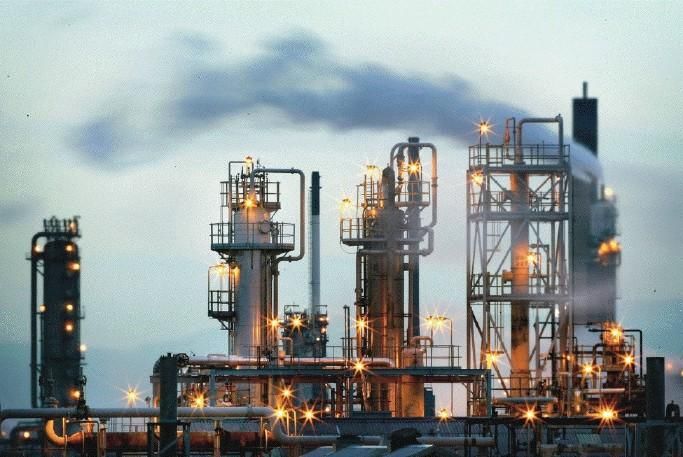
                                                                           3
IED: why?

• Merging of 7 existing Directives
• Strengthening of BAT and role of the
  BREFs
• Strengthened provisions on inspections,
  review of permit conditions and reporting
  on compliance
• Extended scope and provisions on soil &
  groundwater protection
• New minimum ELVs for LCP bringing them
  in line with BAT
                                              4
BAT based
Structure of IED                                        permit
                                                      conditions
 •   Ch. I: Common provisions
 •   Ch. II: Provisions for all activities listed in Annex I

 •   Ch. III: Special provisions for combustion plants [> 50
     MW]
 •   Ch. IV: Special provisions for waste (co-)incineration
     plants
 •   Ch. V: Special provisions for installations and activities
     using organic solvents
 •   Ch. VI: Special provisions for installations producing TiO2

 •   Ch. VII: Committee, transitional and final provisions
 •   Annexes
                       Sectoral « minimum »
                        requirements incl.
                       emission limit values                       5
                                                                       5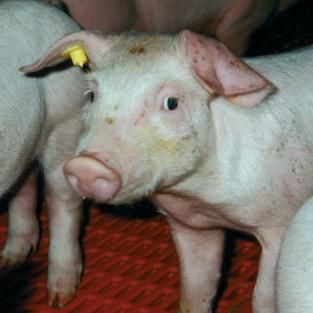
Scope of IED
Some 50,000 installations across EU
Annex I: mostly as IPPCD + a few additional activities
Large variety of industrial/agro-industrial activities

   Energy industries…
  Mineral industries…
   Metal industries…
  Chemical industries…
   Waste management…
  Intensive livestock …
                                                         6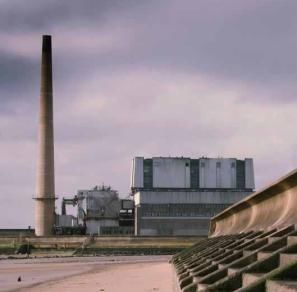
What are the essential IED requirements?

• Prevention of pollution and, if not feasible, reduction

• Permit is required for operating the installation

• Permit needs to contain permit conditions including
  emission limit values (ELVs) for all relevant
  pollutants, which are to be based on the use of the
  best available techniques (BAT)

• Access to information and public participation

                                                        7
Setting permit conditions under IED
• Art. 12: Permit application
• Non-exhaustive list of elements to be included
• Art. 14: Permit conditions
• Shall at least include ELV, soil/groundwater, waste, monitoring,
reporting, other than normal operating conditions, ...
• BAT conclusions shall be the reference
• Competent authority may set stricter permit conditions than those
achievable by BAT and MS may set rules for this
• Art. 15: Emission limit values (or equivalent)
• Shall be based on BAT, without prescribing the use of any technique or
specific technology (Art. 15(2))
• Shall ensure emissions do not exceed BAT-AEL (Art. 15(3)), except
where justified derogation (Art. 15(4))
• Art. 16: Monitoring
• Shall be based on BAT conclusions
8BAT =
Best Available Techniques
most effective developed on a scale to the technology
in achieving a be implemented in the used and the
high general relevant industrial way the
level of sector, under installation is
protection of economically and designed, built,
the technically viable maintained,
environment conditions, advantages operated and
as a whole balanced against costs decommissioned
9BAT reference document (BREF)
• Document resulting from the exchange of
information under IED Art 13(1)
• A driver towards improved environmental
performance across EU
• Limitations due to time constraints: priority for
high level of accuracy over completeness
• Adopted by Commission under IPPC Dir
Published by Commission (EIPPCB) under IED
• Publicly available on internet (EIPPCB website)
10BAT conclusions
= part of BREF laying down conclusions on:
BATs, their description, information to
assess their applicability, emission levels
associated with BAT, monitoring,
consumption levels, and, where
appropriate, relevant site remediation
measures
11emission levels associated with the best
available techniques (BAT AEL)
• range of emission levels obtained under
normal operating conditions using a BAT
or a combination of BATs, as described in
‘BAT conclusions’
• expressed as an average over a given
period of time, under specified reference
conditions
12Process steps for elaborating
BREF/BAT conclusions
• Technical work by stakeholders TWG (MS,
Industry, env. NGOs experts) lead by European
IPPC Bureau (JRC, Sevilla)
draft BREF and BAT conclusions
• Opinion of IED Art 13 Forum on draft BREF
• Vote on BAT conclusions by IED Committee
• Adoption of Commission Implementing Decision
establishing BAT conclusion (publication in OJ in
all EU languages)
• Publication of full BREF on EIPPCB website
13BAT information exchange
“Sevilla Process”
BREF
with BAT conclusions 14Technical work under TWG
• BAT conclusions are established through an
interactive process involving the following steps:
• Review current performance with respect to
key relevant environmental issues
• Identify techniques used to achieve best
current performance
• Examine economic and technical conditions
under which the techniques are applicable
• Check against criteria of Annex III if
technique meets definition of BAT
15IED Forum (art. 13)
• Expert group (established by COM Decision)
• MS, Industry, NGOs and COM
• Provide its opinion on the practical arrangements for the
exchange of information and in particular:
a) the rules of procedure of the forum
b) the work programme for the exchange of information
c) guidance on the collection of data
d) guidance on the drawing up of BREFs and on their quality
assurance incl. suitability of their content and format
• Provide its opinion on the proposed content of BREFs
• Search for consensual solutions
• Opinion is to be made publicly available
• Opinion is to be taken into account by COM when proposing
decisions on BAT conclusions to be adopted via Art. 75 Committee
16IED Committee (art. 75)
• Comprised of MS representatives
• Operates under examination procedure set out in
Regulation 182/2011
Involved in adoption of key documents:
• Certain guidance under Article 13(3)(c) and (d)
guidance on collection of data
guidance on the drawing up of BREFs and on their quality assurance incl.
suitability of their content and format.
• BAT conclusions under Article 13(4)
• Implementing rules for LCP under Article 41
Determination of start-up and shut-down periods
Transitional National Plan rules
• Type, format, frequency of reporting by MS under Art. 72
17IED strengthens role of
BAT in permitting
BAT conclusions from BREF shall be
the reference for setting all the permit
conditions Art 14(3)
Permits must contain emission limit values
(ELVs) set by the competent authority
ensuring that emissions do not exceed
BAT emission levels (BAT AELs) Art 15(3)
Derogation from BAT AELs is only
allowed in specific and justified cases
(costs >> benefits) Art 15(4)
18Article 15(4) derogations
• Possible only in specific cases and if the costs are
disproportionately higher than environmental benefits
due to
• the geographical location of the installation
• local environmental conditions
• the technical characteristics of the installation concerned.
• Member States need to make public information on
application of derogations
• ELVs shall not exceed the ELVs set out in the Annexes,
where applicable
• Environmental Quality Standards not to be
jeopardised
• MS need to inform Commission as part of IED
implementation report (Art. 72 IED) 19
19Reconsidering / updating permit
conditions (Art. 21)
• Within four years of publication of decisions on BAT
conclusions in accordance with Article 13(5) relating to
the main activity of an installation, the competent authority
shall ensure that:
(a) all the permit conditions for the installation concerned are
reconsidered and, if necessary, updated to ensure compliance with
this Directive;
(b) the installation complies with those permit conditions.
• The reconsideration shall take into account all the new or
updated BAT conclusions applicable to the installation and
adopted since the permit was granted or last reconsidered.
20IED Timeline
7/1/2013 7/7/2015
6/1/2011 7/1/2014 1/1/2016
Entry into force of IED
Member States fully transpose the IED.
The Directive applies to all new installations from this date onwards.
All existing installations previously subject to IPPC, WI, SE and TiO2 Directives must meet
the requirements of the IED.
Existing LCP do not yet need to meet new ELVs (Ch. III, Annex V).
Existing installations operating newly prescribed activities (e.g. waste installations, wood
based panels, wood preservation) must meet the requirements of the IED.
Existing LCP must meet the requirements set out in Chapter III and Annex V
2111 BREFs are currently being worked upon • Cement, Lime and Magnesium Oxide (CLM) conversion into BAT conclusions • Tanning of Hides and Skins (TAN) BREF • Common Waste Water and Waste Gas (CWW) BREF • Production of Chlor-alkali (CAK) BREF • Production of Pulp, Paper and Board (PP) BREF • Refining of mineral oil and gas (REF) BREF • Non-Ferrous Metals (NFM) BREF • Intensive Rearing of Poultry and Pigs (IRPP) BREF • Large Volume Organic Chemicals (LVOC) BREF • Large Combustion Plants (LCP) BREF • Wood Based Panels (WBP) BREF 1 BREF is on-hold • Ferrous Metal Processing (FMP) BREF Also: JRC Reference Report on Monitoring (ROM)
Current stage of BREF elaboration and review

                   TWG
               kick-off meeting
                                LCP, LVOC, WBP
                 Draft 1 (D1)
                                 NFM, IRPP
                 Draft 2 (D2)*
                                 CAK, CWW, REF, PP
             Final TWG meeting
                                                           • Forum opinion on BREF
                                             BREF
                  Final draft                              • Adopt. of ‘BAT conclusions’
                                                            through Article 75 committee
                                                BAT
                                                                               BAT
* Optional                                   conclusions
                                                             TAN, CLM       conclusion
                                                                                     s
BAT reference document (BREF)
for Pulp and Paper Industry
•First version adopted by EUROPEAN COMMISSION
JOINT RESEARCH CENTRE
Institute for Prospective Technological Studies
Commission in 2001
Sustainable Production and Consumption Unit
European IPPC Bureau
•Revision is ongoing:
foreseen to be finalised in Draft BAT conclusions
2013 for the
•Aim: update the Production of Pulp and Paper
document and elaborate
revised BAT conclusions, Draft October 2012
including emission levels
associated with BAT
(BAT-AEL)
http://eippcb.jrc.es/reference/BREF/ppm_bref_1201.pdf 24Remaining steps
• EIPPCB is preparing final TWG meeting
• take note of all stakeholder concerns (1500 comments)
• Background Paper to be issued beforehand
• Final meeting of PP BREF TWG: early 2013
• strive for consensus on content and conclusions
• Final draft following outcome of final TWG meeting
• BREF submitted to IED Article 13 Forum for its opinion
(consensual/non-consensual views)
• BAT conclusions submitted to Art 75 Committee for formal
opinion (via vote)
• Commission to adopt and publish Commission Implementing
Decision on BAT conclusions
25For more information…
• DG ENV industrial emissions website
http://ec.europa.eu/environment/air/pollutants/stationary
/index.htm
• European IPPC Bureau (BREFs)
http://eippcb.jrc.ec.europa.eu/reference/
• Contacts in DG ENV in case of further questions:
Filip François (filip.francois@ec.europa.eu)
Krystyna Panek-Gondek
(krystyna.panek-gondek@ec.europa.eu)
26THANK YOU
FOR YOUR
ATTENTION
27You can also read


