ImpEE What do engineers need to learn about sustainable development? - THE PROJECT
←
→
Page content transcription
If your browser does not render page correctly, please read the page content below
ImpEE
                    THE

                                        PROJECT

                          EDUCATION
                          ENGINEERING
                          IMPROVING
What do engineers need to learn about sustainable development?
Engineering Sustainable Development aims to
        balance the three elements:
                               • Economic: what things cost - and
                                how to make a business out of
                    Sustainable providing infrastructure, goods or
                    Development services
    Environmental
                               • Environmental: what impact
                                those things have on nature and
                                the earth’s support systems - which
 Economic    Social             are finite

                               • Social: how those things serve
                                the needs and quality of life of
                                people and their communities
The current world view - relative importance?

    Environment
   (“technology
     can fix it”)

                         Economy
                    (“inevitable laws”)

       Society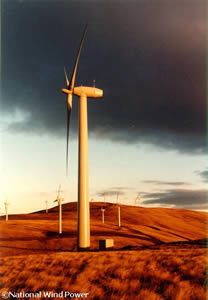
But this is what we all ultimately
    depend on for life - so...
Engineers provide the interfaces...
• Becoming
sustainable
Products requires leaders
who recognise this
world view, and
act accordingly.
Economy
- invented! • Therefore -
engineers can’t be
neutral - we are
Society either making
things better, or
Infrastructure
Environment worse
- ‘inevitable’Engineers’ designs have a critical
sustainability impact:
• “by the time the design for most human artefacts is
completed….80-90% of their life-cycle economic and
ecological costs have already been made inevitable”
• Or, in design:
“All the really important mistakes are made on the
first day”
“Natural Capitalism” - 1999
So: to lead sustainable development, engineers
must think differently - use a different design
mentality - from that first day• Over the last 50 years, ‘development’ - comprising
engineering projects, and products - has benefited
large numbers of people, world wide……………but:
• The way we have been doing our development is
often “unsustainable” - in social and environmental
terms
• This leads to real fears about the security and quality
of life that my children, and grandchildren - and yours
- and the world’s - can expect
“We do not inherit the earth from our
ancestors - we borrow it from our children”
(Anon – Native American Indian)Sustainable Development is
the journey towards Sustainability
Global Society in Sustainable
A Future
Development
2005: Unsustainable Sustainable Society
inequality, much poverty left; basic needs and life quality
threat of decreasing quality of provided; tolerable inequality;
life living within the Earth’s limitsWhat should engineers be doing about it?
• Choosing Technology
• Understanding the
environment
• Appreciating the social
challenges in making it
happenWe need new challenges - redefine engineering
culture away from “Building things”
The 19th (& 20th?) The 21st Century
Century Engineer Engineer
I built all I didn’t need
to build
this! anything new!
Visible construction, at great public Providing and Refurbishing the
expense, to meet society’s wants minimum to meet society’s needsA huge new technical challenge:
- energy and materials efficiency
We can drive materials efficiency:
•“600 tonnes of material are used to make 60 tonnes of
product of which 6 tonnes are in use 6 months later”
(Lord Sainsbury, Minister for Science and Industry)
We can drive energy efficiency:
• “The whole economy is less than 10% as energy-
efficient as the laws of physics permit”
(From “Natural Capitalism” 1999)Which of these is worth more of an
engineer’s purpose, energy & interest?
“Video toothbrush”
In development by
Panasonic, this electric
toothbrush has a miniature
video camera mounted
beside the bristles to allow
the user to see on a
monitor the ‘40%’ of debris
they normally miss.”
Rachel Battilana - refugee
(TYNKYN - EC 11/01) tent linings - 2001 Young
Engineer of the YearChoosing what you are engineering for
- engineers can’t be neutral
Not So Not So
Luxury OK
Good Good
ip
sh Not So
Affluence
Quality Good r
Maybe
e
a d Good
Le
Needs Brilliant! Good Maybe
No Net Impact In-Between High Impact
ImpactA new approach
• Sustainable development is NOT about
doing things we are doing now, but
doing them “less bad”.
• It IS about designing and producing
products we need for a growing and
prosperous society that are actually
good.
Bernard Bulkin, Chair of the Sustainable Development CommissionThe environment is unknowably complex. We need a
“paradigm shift” in how we think about it...
Mechanistic World Systemic, Complex World
Newtonian Mechanics Chaos and Complexity Theory
Independant, linear, cause Interconnected, feedback loops
and effect
Predictable outcomes Uncertainty; patterns within disorder
Arrogance over nature Humility, within nature
So - technology can remove Maybe, but not affordably, nor with
“natural” limits predictable outcomes
Hence - narrow, blinkered, Hence, analyse systems holistically;
technical solutions understand feedback loops; apply the
“Precautionary Principle”Consultation - Society’s Changing Expectations
High
“Trust Me”
Tre
nd
“Tell Me”
Trust
“Show Me”
“Involve ME”
Low
Low High
Transparency‘Social’ components can help deliver
sustainable solutions
Local community ownership:
• 70% local co-operative ownership seems
to be the key to Denmark’s success in
avoiding ‘NIMBY’ for
wind farms - ~ 10% of Danish power
• UK, wind farms are almost entirely
private corporation owned, and overall
market penetration is less than 0.15%
Is there any connection?Engineers need to learn to engage better with
communities, to implement the complex solutions
that sustainability needs
Technical Complexity:
We are developing the GIS, data handling and modelling to deal with
geography, physics, chemistry ,and even with the uncertainties of biology
Social Complexity:
Now we also need to engage with the community, and develop the
capability to consult, facilitate and agree on the complex solutions.
This needs new engineering skillsWhat do you think?
- do you agree, or not?
• Should engineers be concerned with the ‘purpose’
and social dimensions of technology application?
• Is all this soft ‘society’ stuff not a proper subject for
‘real’, scientific engineers?
• How well do we really need to understand the
environment?
• Can we extend our professional ‘ethic’ to include the
environmental and social consequences?
• Can engineers take a lead in ESD – and would this
encourage more young people to be engineers?‘The Engineer of the 21st Century’
- some of the outputs:
• “Individual engineers should understand their personal ethics and
values and those of their employers if they are to recognise those of
others and influence change.”
• “Our vision is of an engineer who demonstrates through everyday
practice:
• an demonstrates of what sustainability means
• the demonstrates to work towards this aim
• demonstrates that relate to their wider social, environmental and
economic responsibilities
• and encourages and enables others to learn and demonstrates”Conclusion…? • So: we are not (yet) educating our engineering graduates to deal with the key issue of the 21st Century
Engineers can invent a sustainable
             future?

 “We are all part of the continuum of humanity and life.
 We will have lived our brief span and either helped or
 hurt that continuum and the earth that sustains all life.
            It’s that simple.Which will it be?”
          Ray Anderson, Interface Carpets - to other CEOs

   “The best way to predict the future, is to invent it”
                    Alan Kay, Apple Computer
© University of Cambridge, 2006
This material was produced as a part of the
ImpEE Project at the University of Cambridge. It
may be reproduced, modified and used freely for
educational purposes.
ImpEE is based at the Department of Engineering at the
University of Cambridge and is funded by the CMI Institute.You can also read


