IN THIS ISSUE: FIRE! MODELS OF CARE UPDATE MEET OUR CLINICAL CODERS - Nelson Marlborough Health
←
→
Page content transcription
If your browser does not render page correctly, please read the page content below
A quarterly magazine for Nelson Marlborough Health staff   March 2019

IN THIS ISSUE:
• FIRE!
• MODELS OF CARE UPDATE
• MEET OUR CLINICAL CODERS
CE UPDATE
—
It is a few months into the year          many more experienced disrupted
and I am immensely proud of how           routines. Nonetheless, people still
staff have excelled in maintaining        managed to come in to work and
continuity of healthcare services         perform their duties. This issue
during extraordinary circumstances        of Connections includes a feature
recently – wildfires, industrial          article on pages 13, 14 and 15
action and a large influx of visitors     reflecting some of these stories.
to the region.                                 The fires happened in February
    Our community was awed by the         2018 – one year after cyclone Gita
amazing response by firefighters          and ex-cyclone Fehi wrought havoc
tackling the Pigeon Valley fire; we can   in the Nelson Tasman region.
also be extremely proud of the health     Emergencies like these test our
response during the biggest rural fire    preparedness to respond and cope.
in New Zealand for 60 years.                   In the midst of the fires we
    Our Incident Management Team          had substantial industrial action.
quickly joined the multi-agency           At the time of writing, in mid-
response to assess and care for           March, this continues. We should
people affected by the fire, to provide   not underestimate the extent of
and disseminate public health advice      the contingency planning work               there were medical services onsite at
and link with the Nelson Tasman Civil     required to ensure the safe provision       the festival. This helped to reduce the
Defence Emergency Management              of care for our community when              effect on Nelson Hospital ED and the
team.                                     workforce groups strike. I want to          Medical and Injury Centre. Read more
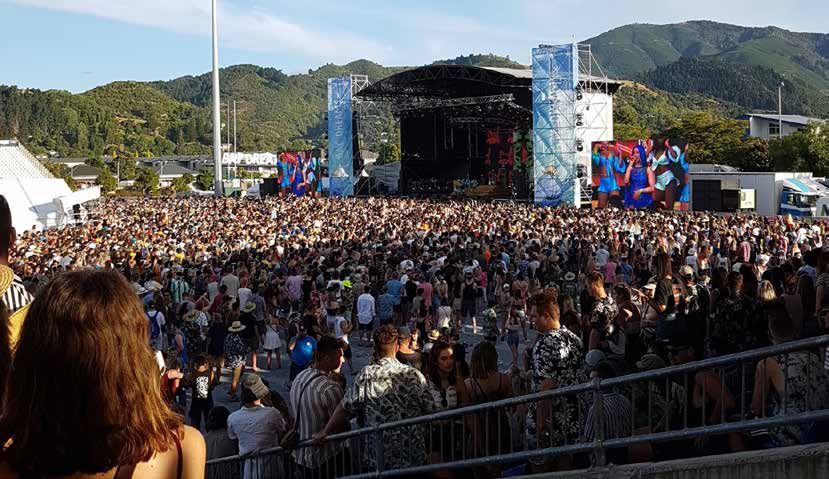
    There was a phenomenal effort by      thank everyone who helped with the          about Bay Dreams on page 11.
many people, for nearly three weeks.      planning and who stepped up to                  To summarise, the skill, dedication
We evacuated people and cared             cover gaps in the rosters.                  and teamwork shown by staff during
for them in safer accommodation,               Then there was Bay Dreams – the        these major events crammed into a
minimised barriers to accessing           biggest music festival in the South         comparatively short space of time are
primary and psychosocial healthcare       Island that brought 20,000 people           an absolute credit to our organisation
and issued essential public health        together under blazing hot sun for a        and a fine example of living to our
advice about drinking water and           full day and into the next.                 values.
smoke exposure.                                Robust preventative planning and
    Several staff and patients were       collaboration with primary health,          Peter Bramley,
directly affected by the fires and        the Red Cross and St John meant             Chief Executive

BOARD TALK
                                          The fires provided an excellent             help to ensure our health system
                                          illustration of how prepared the            continues to work well in the

—
                                          health system is to respond – our           future. Take a look at the project
                                          front line response, primary care           update on page 7.
This summer our health system             services and participation in               Thank you again for all you do.
not only withstood the usual influx       emergency operations management.
of visitors to the region but also        Health professionals were there to          Jenny Black
coped with the impact of major            care for vulnerable people, keep            Chair, Nelson Marlborough District
fires, industrial action and large        communities safe and help people            Health Board
events.                                   get the help they needed.
I reiterate CE Peter Bramley’s            Thank you. I appreciate many of you
admiration and thanks to everyone         spent extra time being involved in
involved in the response, recovery        this.
and contingency planning necessary        Your response was a true reflection
to continue to look after each other      of our vision: All people live well, get
and deliver health services to our        well, stay well. Kaiao te tini, ka ora te
affected communities.                     mano, ka noho ora te nuinga.
Thankfully these types of emergencies     The Board gives lots of energy and
don’t happen often, although              focus to transformation initiatives
there was only one year between           which will set us up for the future.
the cyclones of 2018 and fires this       The Models of Care programme is
summer.                                   an example of an initiative that will

FRONT COVER: A scene from the ground during the February 2019 Nelson wildfires. Cover photo credit NZDF

2
INFECTION PREVENTION IS EVERYBODY’S
                                                                                          Above: Kittie McIntosh, Lesley Delahunty, Mary
                                                                                          Bezant and Liz Runnals from the paediatric ward
                                                                                          at Wairau celebrate their excellent hand hygiene

BUSINESS                                                                                  compliance results.

—                                                                                         international phenomenon. Any idea
HE WAKA EKE NOA - WE ARE ALL IN THIS BOAT TOGETHER                                        why this might be?
                                                                                              And just in case you’ve forgotten,
By Iona Bichan, Clinical Nurse Specialist Infection Prevention                            the five moments of hand hygiene
                                                                                          are:

                                                                                          1. before touching a patient
We continue to achieve good hand           afternoon for leading the way locally          2. before a procedure
hygiene rates. In the National Hand        with 96.7 per cent compliance.                 3. after a procedure or body fluid
Hygiene Audit period ending in                 Why is the national target only               exposure risk
October 2018, Nelson Marlborough           80 per cent? This figure is based on           4. after touching a patient
Health complied with the ‘five             international research that shows it’s         5. after touching a patient’s
moments of hand hygiene’ 84.6 per          an achievable target, and one that                surroundings.
cent of the time, which is pretty          is effective against the spread of
level with the national average of         infection.                                         Auditors are now collecting data
84.9 per cent.                                 It is interesting to note that high-       for the next period. Give them a smile
   The paediatric ward at Wairau           dependency areas tend to have                  and a wave as you rub the alcohol off
Hospital were rewarded with an             lower compliance rates. This is an             your hands!

           o n Yo u                                                                    I am now making great pr
                                                                                       – and walked around a fo ogress
   Go   od                                                         ve
                                                                                       track yesterday.        rest
                                We are extremely for tunate to ha n.                   (Medical Unit, Nelso
                                                                                                             n)
                                such a wonderful hospital in Ne lso
                                                                                       I spent 3 nights in Ward 10
                                (Letter to the Editor)
                                                                                      found every nurse involved and
                                 I witnessed a team of people held                    care to be caring, helpful in my
                                 together by mutual admiration,                       professional (even when I and
                                                                                                                 threw
                                 integrity and respect.                               up on the floor).
                                                                                      (Ward 10, Nelson)
                                 (HDU Wairau Hospital)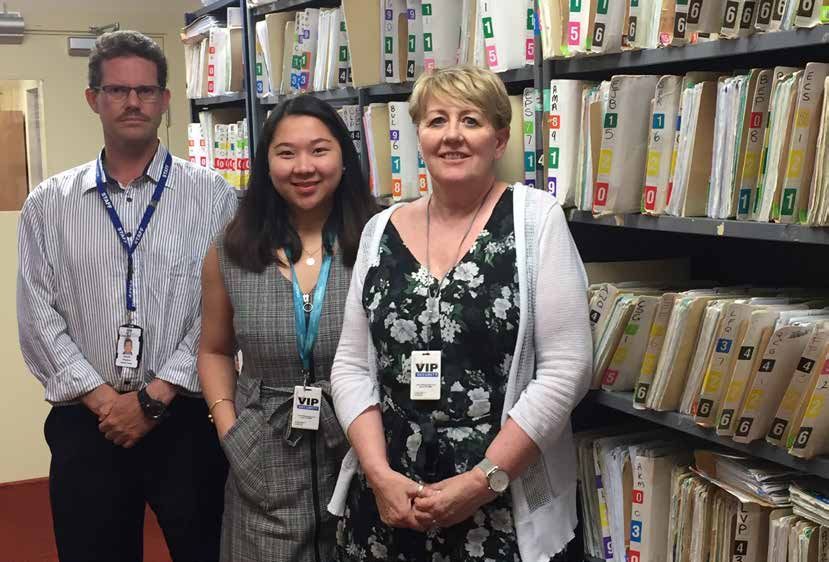
BOUQUETS

                                                                               Left: AT&R physiotherapy assistant
                                                                               Kate Brockelsby, with the new sensory
                                                                               dog and cat toys.

                                                                               Below: Some of the toys purchased to
                                                                               give to children who came to ED on
                                                                               Christmas Day.

GRATEFUL FOR GRANTS
—
                                                                                          WHO SAID
Each year the Nelson volunteer-run       •   ICCU: $175 for a whiteboard
hospital shop uses a chunk of its        •   Occupational therapy: $340 for a
profits to buy items that benefit
and comfort our patients and staff.
                                         •
                                             sound amplifier
                                             Occupational therapy: $218 for
                                                                                          CHRISTMAS DAY IN
                                                                                          ED CAN’T BE FUN?
   In 2018 the shop approved 21
                                             weights and toys
requests and allocated $12,000 in
grants.                                  •    Cardiac Cath lab: $320 for a
   While shop proceeds are not used
to buy essential hospital equipment,     •
                                             ‘Megaboom’
                                              AT&R: $313 for a ‘sensory dog
                                                                                          —
you can see from the list below how          and cat’                                     There’s nothing like a whoopee
the purchases make a big difference      •    Radiology: $700 worth of garden             cushion or a chomping dinosaur
to people’s hospital experience.             vouchers                                     to make a child smile, even if they
   The shop is run by Dick Watson                                                         are in ED.
                                         •   Speech and language” $760 for an
and his team of 13 fabulous                                                                   The Nelson Hospital Sports and
                                             iPad and cover
volunteers. Show your support for the                                                     Social Club Committee, on behalf
shop by ‘liking’ their Facebook page     •   Medical unit: $1500 for sensory
                                                                                          of its members, responded to a
(search for ‘Nelson volunteer hospital       toys and DVD player
                                                                                          request from ED to purchase gifts
shop’).                                  •   Medical unit: $200 for easy-use              for children unfortunate enough to
                                             cutlery sets                                 present to ED at Christmas.
The 2018 recipients were:                •   Oral health unit: $150 for toys                  A 6 year-old being treated for
                                         •   Endoscopy services: $525 for an              a painful injury after jamming his
•   Nursing/midwifery: $500 for                                                           finger in a garage door was given
                                             anatomical model
    ‘Perfect Petzz’                                                                       a present by a registered nurse. “I
                                         •   Paediatric outpatients: $150 for
•   Ward 10: $400 for a folding bed                                                       gave him a whoopee cushion as a
                                             treat toys
•   Child development services: $360                                                      present. His face was classic when
                                         •   Mental health unit: $310 for                 he opened it not knowing what it
    for mirror toys
                                             weighted cat and dog toys                    was, until his mum showed him and
•   Child development services: $1725
                                         •   Needs assessment coordination                then he became very excited.”
    for toys and equipment
                                             service: $400 for general aids
•   Child development services: $2500
                                         •   Ward 9: $250 for games
    for equipment and furniture
•   ICCU: $100 for a radio

4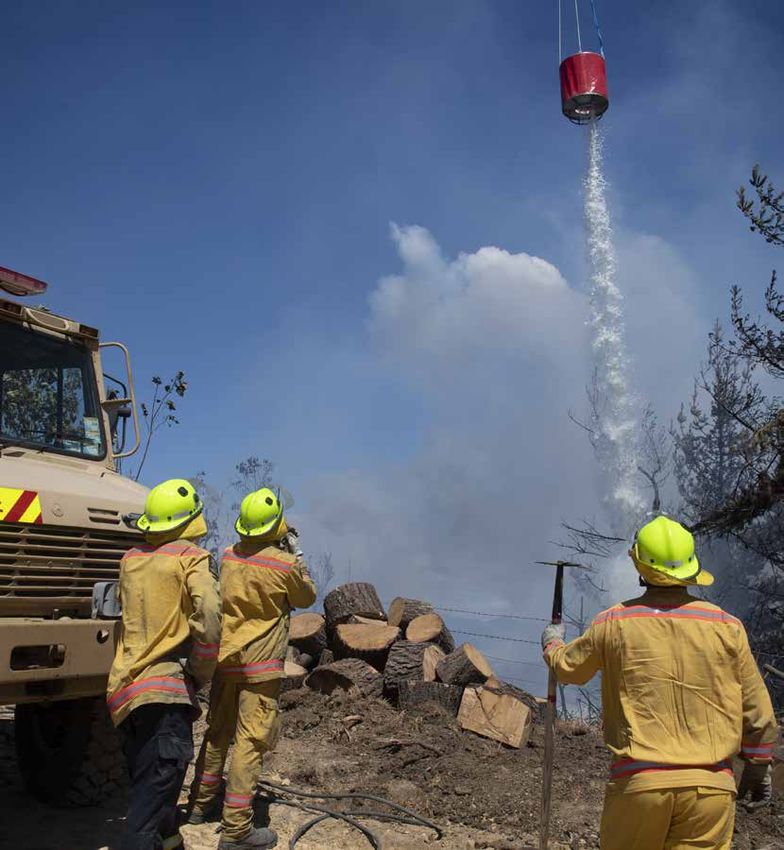
IT’S ALL IN THE CODES
—
It’s a job that requires meticulous     is increasing.
attention to detail, a methodical            “When we go through patient        Above: From left, Nelson Hospital clinical coders
approach, lots of patience and…         records we read everything – we         Damian Chapman, Charlene Timbol-Dela Cruz and
patients.                               look at lab results, read radiology     Christine Santana (team leader). Absent: Michael
                                                                                Neems (Wairau)
    Clinical coders read through        reports, note any co-morbidities
patient discharge records cover to      and health history,” Christine says.
assign codes to disease, injuries       “We are a bit like detectives and we
or medical procedures using a           pick up on any complications that
classification system.                  occur during a hospital stay.”
                                             The coding team in Nelson all
                                                                                Clinical coding
    Everything has a code and there
are strict standards on how and         have different backgrounds but          is a specialised
when codes can be allocated.            clinical experience is an advantage.
    The coded files are then sent            Christine was a nuclear medicine   skill that requires
to the Ministry of Health which
uses the information for research,
                                        technician, which involved the use
                                        of radioactive isotopes for imaging.
                                                                                knowledge of
planning, quality, safety and           However, after a long break she         medical terminology,
funding decisions. The deadline         retrained as a coder. “My mother
for getting the coded files to the      was a coder and she loved it so I       anatomy, physiology,
Ministry is 21 days after discharge.    thought I would have a go.”
    Team leader Christine Santana            Charlene Timbol-Dela Cruz is a     disease processes
has three full-time coders based
in Nelson and one part-time coder
                                        trained nurse from the Philippines.
                                        She was a coder in Singapore
                                                                                and analytical skills.
in Wairau. She says the small team      before coming to New Zealand
coded 33,000 sets of notes last year.   three years ago. She enjoys using
    “In Nelson Hospital we process      her nursing background in her           Management Association of
more than 2000 patient discharges       coding role, and staying informed       Australia and currently there’s
a month, and about 600 in Wairau,”      about medical advances.                 a big shortage of coders. The
she says.                                    Damian Chapman began his           self-directed training starts with
    Clinical coding is a specialised    career in coding in 2015 after          learning medical terminology and
skill that requires knowledge of        working in sport. He says coding is     introductory coding over a six to
medical terminology, anatomy,           like a puzzle and he enjoys piecing     12 month period. To progress to
physiology, disease processes and       it together.                            intermediate and advanced levels
analytical skills. There are more            Clinical coding training is        a coder must already be working in
than 24,000 codes and the number        through the Health Information          the field.
                                                                                                                                5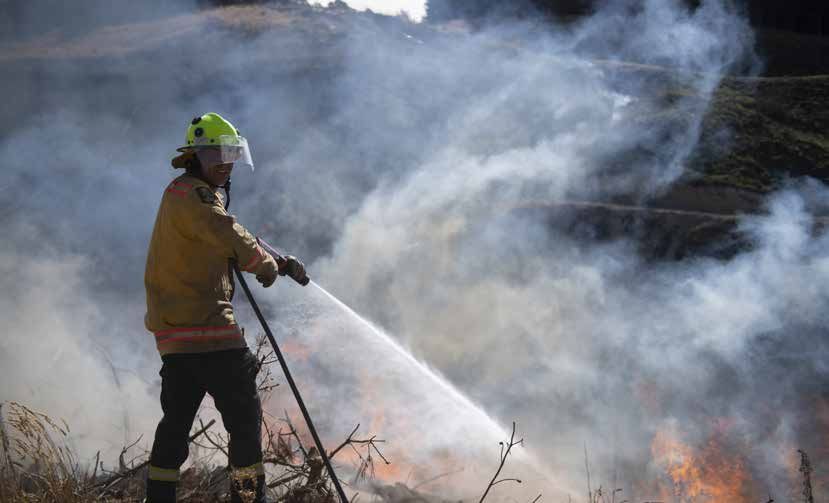
The first issue of Connections was published
in February 2007. The editor at that time was
former Communications Manager Katherine
Rock, and writing the stories was outsourced to
Nelson Media Agency contractor, Jane Horder.
In 2015 Jane joined the staff of NMH as a
communications officer and continues to edit
and compile Connections.
    In this segment we will look back at some
of the stories and people who have featured in
past issues of Connections.
    The cover story for the first issue was about
Nelson Hospital’s cardiology department being
able to offer coronary angioplasty, the first regional
hospital in New Zealand to do so.
    Here is the story and photo from the February
2007 issue.

ISSUE 1 FEBRUARY 2007

6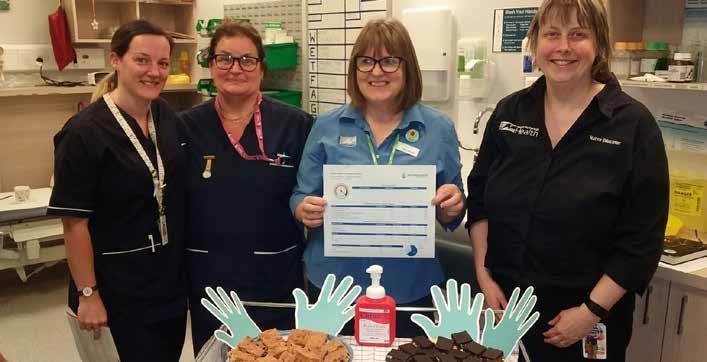
THE MODELS OF CARE PROGRAMME:
SHAPING HEALTHCARE SERVICES FOR THE FUTURE
Personal
Healthcare
National Healthcare Healthy Eating
South Health
of-the- care Exercise
Top- Being Safe
ty Heal Technology
mun i thcar
Com e Non-smoking
Advice
Ad
Refe vic
rral e e s
s vic rral
Ad Refe
Community
Healthcare
Your G.P.
Referrals
People and their Dentist
Whanau Community Health
Maori Health
Pharmacy
Physio
Nurse
Re Refe
fe rral
rr s
al
He
a lt on
s Top of
cy h Pr nti the south
en omotio reve
er
g n and Illness P Healthcare
Em
Re
fe Nelson Hospital
rr
al Wairau Hospital
s
Golden Bay Hospital
Manuka Street
Murchison
NAtional
Healthcare
Starship Hospital
Specialist Hospital
Services
National Women’s
Hospital
As the population of the Nelson Marlborough changes initiatives. The Clinical Working Group prioritised these
so does the regions health care requirements. People initiatives based on the greatest positive impact and using
are living longer with more complex needs, there assessment criteria that aligned with the MOC design
is a growing prevalence of long term conditions, requirements, with particular emphasis on delivering
and health inequality is increasing. With advances in improved outcomes to vulnerable populations. When this
healthcare and technology we have an opportunity to first set of initiatives commence the programme will move
innovate and improve healthcare services and ensure into the implementation stage.
they are fit for the future. At the February Nelson Marlborough District Health
The multi-year Models of Care Programme was Board (the Board) meeting, Board Chair Jenny Black
established to achieve this. The programme, started in heartily supported the programme. “We see a great
2018, is progressing a proactive, integrated health system opportunity to create positive, meaningful change to the
that empowers people to have greater control of their region’s healthcare,” Jenny said.
health and that strives for equitable outcomes for all The Board have asked the programme team to develop
members of our community. in-depth proposals and budgets for the first set of
The programme contributes to the Primary and initiatives ready for the Board to consider in March.
Community Health Strategy 2017, written with wide-
spread input from health professionals and the How can you contribute towards change?
community.
As part of the bigger picture, the programme will also In addition to the major Models of Care Programme
inform the proposed redevelopment of Nelson Hospital. initiatives, there will be seed funding available for smaller
Any changes to Nelson Hospital’s configuration need to projects. To find out more about this funding check out
align with future healthcare needs. the website:
www.nmdhb.govt.nz/the-models-of-care-programme/
The steps to transformational change Everyone who works in health has a part to play in
helping these initiatives succeed, by embracing new ways
The Models of Care Programme includes both of working and advocating for change. This is the start of
large-scale projects driving system-wide change and an exciting 5-7 year period of transformative change for
to niche projects addressing specific areas. These the region’s healthcare system.
initiatives, combined with the quality improvement For more information and to stay up to date with
projects and other positive changes that are continually Models of Care news, check the NMH website and
underway across our health system, will amount to larger, updates in Connections magazine, the Staff Weekly
transformational change. e-newsletter, and look out for the new Fit for Future
In 2018 the Models of Care Programme team newsletter that will be coming soon.
conducted extensive workshops that generated almost 40 www.nmdhb.govt.nz/the-models-of-care-programme/
7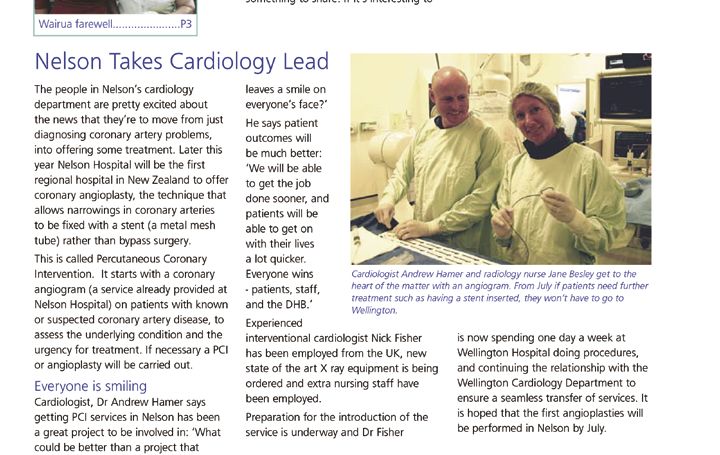
Above (from left): Rosco Williams, Usha
                                                                                Sankaran, Nicoline de Veer, Jeanette King,
                                                                                Jan Mitchell and Kristine Marriott.

INTRODUCING THE HEALTH,
                                                              USHA SANKARAN
SAFETY AND WELLBEING TEAM                                     Health Safety & Wellbeing
                                                              Manager
—                                                             Usha oversees the health and safety work
                                                              programme and ensures the organisation has
If you have a health and safety issue then always raise       a robust health, safety and wellbeing strategic
this with your manager in the first instance.                 plan.
    That’s one of the key messages the Health, Safety and       I experienced first-hand what it was like to be
Wellbeing team want to promote across the organisation.         off work following a serious workplace injury
Their role is to guide, support and provide advice to           – the lack of mobility and the social isolation.
managers on minimising harm and assisting staff to return
to work after injury or illness.                                This experience confirmed my preference for
    They also support our health and safety reps and            injury prevention and not injury management.
look into matters raised through the health and safety          I’ve worked as a health and safety specialist
committee meetings.                                             for 14 years across various large and complex
    Staff are encouraged to use the online Safety 1st           government organisations.
platform to record incidents resulting in injury, health        I aim to change the perception that health
and safety risks, near misses and any pain or discomfort.       and safety is a boring tick box exercise
That way, the team can see what is happening across our         and to strengthen health and safety
workplaces.                                                     communication and involvement at all levels.
    They say that everyone at NMH has a part to play by
identifying health and safety risks and working within your     As a self-confessed townie I am trying to
teams to find solutions, following safe work procedures         transition to a more outdoorsy lifestyle –
and wearing any personal protective equipment (PPE)             minus any lycra if I can help it.
supplied for your work.
8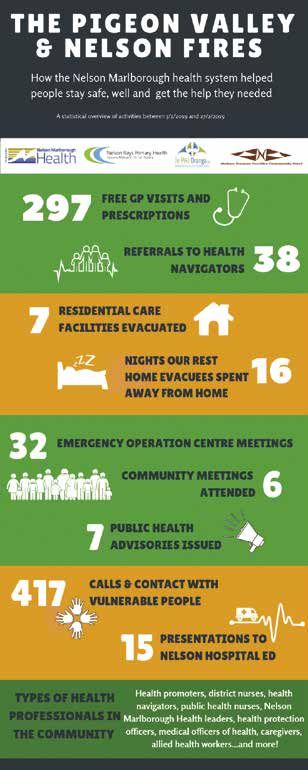
MEET THE TEAM:

  JAN MITCHELL                                            JEANETTE KING,
  Nurse Coordinator                                       Physiotherapist and ‘minimal
                                                          lift’ trainer
  Jan works with staff who have
  sustained an injury or illness, and         their       Jeanette’s clinical expertise is in the
  managers, to return to the workplace in a safe and      prevention, assessment and management
  sustainable way.                                        of musculoskeletal conditions and injuries,
    I am a registered nurse and have a Master’s           including workplace assessments, return to work
    degree (applied) in nursing. I worked in the          management, exercise prescription and self-
    emergency department at Nelson Hospital for           management strategies.
    27 years before joining the Health, Safety and         I have a special interest in workplace health,
    Wellbeing team in 2014.                                ergonomics, and manual handling. I enjoy
    I have a strong interest in promoting health and       optimising the fit between what people
    injury prevention and enjoy the one-on-one             do, how they work, and their physical
    time with staff during our regular health check        environment.
    sessions. The mature workforce and how we              I am actively involved in professional
    support older staff is another interest area.          development and the local branch of
    The best part of my job is seeing people               Physiotherapy New Zealand.
    transition back to work following a health             I addition to my role at NMH I also work
    challenge and watching their confidence grow.          in a private physiotherapy clinic. I enjoy
    As a weekend warrior I love getting out on my          gardening, walking in the hills with our Border
    bike, fishing and walking in the hills – especially    Collie, tramping, and cycling.
    when I see other NMH staff doing the same!

  KRISTINE MARRIOTT                                       ROSCO WILLIAMS
  Health, Safety and Wellbeing                            Health, Safety and Wellbeing
  Advisor                                                 Officer (facilities)

  Kristine maintains and develops a successful            Rosco oversees and continually
  worker participation system and supports health         improves the contractor safety management
  and safety reps, committees and managers.               system in the facilities department, and
    I have a psychopaedic nursing, management             supports the development of safe systems of
    and quality improvement background. I’ve              work.
    always had an interest in health and safety,           I started working in the mining industry
    especially making it relevant in the workplace.        undertaking confined spaces management
    I joined the team in August 2018 and look              and atmospheric gas monitoring testing.
    forward to engaging managers and reps in               This opened my eyes to risk management
    promoting a positive, supportive, and safe             of work and the importance of planning.
    place in which to work.                                I returned to New Zealand four years ago
                                                           to assist in the rebuild of Christchurch as a
                                                           health and safety consultant and to provide
                                                           advice and systems development.
                                                           In my current role no two days are the
  NICOLINE DE VEER                                         same and I get to educate, inspire and
  Health, Safety and Wellbeing                             assist people.
  Administrator

  Nicoline supports team members and
  health and safety reps.
   I organise meetings and training and assist
   with the management of work injury claims. I
   also assist with recruitment. Prior to this role
   I was office manager for a physiotherapist
   practice for six years.

                                                                                                             9
WALK A
MILE IN MY
SHOES
—

To ‘walk a mile in
someone else’s shoes’
means to experience
what that other person has experienced. The
expression is often used to encourage someone
to consider another person’s situation before
judging them.                                                Above: Debbie Hampson bikes to work every day.

   In this new segment of Connections staff talk
about what it is like to walk in their shoes.

Trudy Pearson, ophthalmology department

                                                             ON YA BIKE AOTEAROA
secretary at Wairau Hospital

                                                             —
    We are in a transitional phase at the moment.
We have a new clinical nurse specialist, and two
new ophthalmologists and an orthoptist are in the
pipeline.                                                    During February the Aotearoa Bike Challenge
    I came from the Referral Centre and there has            encouraged people to get their workmates on their
been a lot to learn but I like that. I really like working   bikes for just 10 minutes or more.
on SI PICS – it is more work but the results and                  Nelson cardiopulmonary technologist Debbie
reporting are better.                                        Hampson was told about the challenge by her
    My day is pretty varied; booking clinics and             colleague Jo Beth Lancaster and decided to register.
theatre lists, juggling ESPIs, typing dictation, going            For Debbie that was about the only real challenge
to meetings, and dealing with patient enquiries. We          involved.
have also been updating processes and clearing up                 “I have been riding my bike from Tahunanui to work
data, which has taken a lot of time!                         for over nine years now, so for the challenge I just had
     I have worked alongside Jenny Ineson quite a bit        to log my rides every day,” she says.
over the past nine years, in OPD and in the Referral              Debbie says she finds the 16 kilometre return trip a
Centre. I really enjoy working with Jenny and I think        no-brainer.
we complement each other well.                                    “I do it to keep fit as I tend to be a chunky chick
    I love the support of my co-workers. I feel we are       if I don’t exercise; it also leaves a car park free at the
a pretty proactive, and collegial bunch. We have an          hospital for someone else.”
amazing team leader, Rachael Lane. She lets us run                She says riding around Rocks road is ‘soul food’ and
with our work but she is always there for us and gets        if there’s a head wind she goes home via the Beatson
the best results from everyone.                              Road cycle track.
    I like to know what is going on in the hospital –             “Once you get in to the habit it is easy,” says
any new initiatives and things that are happening. I         Debbie. “You just feel so much better, as by the time
think you have to look at the bigger picture. You get        you have biked home you have wound down and
more job satisfaction when you know where you fit in         forgotten about work, and you have done your exercise
the bigger picture. We are all here to optimise the          for the day.”
patient journey – that’s my motto.                                IT projects clinical lead Lisa Livingstone saw the
    I enjoy being part of the hospital community. I          Aotearoa Challenge as a way to get herself motivated
am on the social committee and try and get other             and back to biking after a long time off the saddle.
enthused about our events.                                        Lisa clocked up 109 kilometres during the
    The biggest challenge I have in my role is lack of       challenge, which she reckons isn’t much but she plans
capacity to meet the increasingly growing needs of           to continue biking to work as much as possible.
the department, and the community. Too few clinics,               “What I liked about the challenge was seeing
not enough staff cover, and limited space for clinics.       all the other staff on site that were getting out and
    When I am not at work I just love being at home;         biking,” says Lisa. “One of my colleagues said due to
out pottering in the garden with my Labrador and             the challenge she had got back on her bike for the first
cat. Or with my Mum, my sons, and grandchildren.             time in years and that has to be positive.”
    I am a purple dot under the DOTS                              There was a good turnout from Nelson Marlborough
communication model. Anyone who knows me,                    Health for the Aotearoa Challenge this year with 33
knows I am very ‘purple’.                                    riders completing a total of 4699 kilometres.

10
Left top (from left): Holly (Medical Student), Ashleigh Faber (RN
Golden Bay Community Health (GBCH)) , Cathy Rooney (RN GBCH),
Linzi Birmingham (RN/GM GBCH) and Emergency Manager Pete Kara.
Left bottom: Behind the scenes at Bay Dreams. They came, had a
PULLING OFF THE BIGGEST
great time, and we were ready to help them when they needed it.
PARTY OF THE YEAR The role of alcohol licencing
— Public health promoter Carol McIntosh says the
conditions that were placed on the alcohol licence
contributed to a successful event.
On 4 January 2018 20,000 people piled into Nelson The Nelson City Council, Police and our Public Health
for the inaugural, and successful, Bay Dreams musical Service all had matters in opposition to the alcohol
festival. licence, she says. “These concerns were taken to a six hour
The young crowd were mostly from outside of Nelson hearing with the District Licensing Committee prior to the
and were treated to a cloud-free 22 degree day with very festival.”
little shade available at the outdoor venue. This opposition resulted in conditions being placed on
The potential for sunburn and sunstroke, alcohol or the licence relating to food, the types of alcohol sold and
drug-related illness and medical events or injuries called the length of time that alcohol was for sale.
for robust preventative planning. “I was pleased that our insistence on there being no
Emergency Manager Pete Kara was behind much of caffeinated drinks mixed with alcohol for sale, earlier
the health services planning and implementation on the closing times for the post-event party and additional
day. After analysing the potential for harm and adverse food trucks formed part of the conditions of the alcohol
effects on Nelson Hospital’s ED and the Medical and Injury licenses.”
Centre, NMH formally requested that the event organisers The Council as landowner also restricted all alcohol
contract St John to provide on-site medical services. sales to be no more than five per cent in strength. On the
NMH then assembled a collaborative Nelson Bays day, volunteers gave out more than 55,000 cups of water.
Primary Health and Red Cross medical team to work Carol says the three agencies spent a lot of time
alongside St John staff. ensuring that the event alcohol management plan was
comprehensive and that the organisers were committed to
Pete reports that: following it.
• 420 people were triaged and treated by ambulance All alcohol and drug-related presentations to ED from
staff on-site Bay Dreams were referred to Nelson Bays Primary Health
Organisation’s alcohol and drug service for follow up.
• 80 people were given additional medical support from
More than 4000 drivers were breath tested by the
the nursing team
police impairment teams over the festival weekend; six
• 100 people were given basic first aid by Red Cross people were arrested for minor drunk and disorderly
volunteers behaviour.
• an estimated 40 presentations to either ED or the after- Carol says that the Bay Dreams planning is a great
hours medical care were avoided example of agency collaboration to minimise harm.
11‘COMING AND GOING’ STORIES
CHANGING OF THE GUARD IN ICT:
FAREWELL TERRY, HELLO DAN.
—
In December 2018 Terry Kemp wrapped up his career at
Nelson Marlborough Health after 26 years.
Connections featured Terry’s silver anniversary in the March
2018 issue, and in this issue we mark his retirement. There was
cake and speeches and Terry graciously handed over the mantel
of ICT Manager to Dan Coe.
Below (from left): Julian Kinraid, Bernd Wachter, Vitaliy Veremyuk, Matt Downer, Terry
Kemp, Andrew Cunningham, Chris Charles, Kent Robertson, Matt Clementson and
Dan Coe.
NO FUSS RETIREMENT
FOR FRANCES
—
If registered nurse Frances
Barnes had had her way she
would have slipped out the
door after her final shift with
no goodbyes, fanfare or fuss.
Fran’s colleagues in the
special care baby unit (SCBU)
recognised the significance of
her retirement however and
planned a celebration to mark the
milestone.
Fran’s nursing career began in
Southland in 1966. From then she
only took time away from work to
COMMISSIONS AND
raise her children, and mourn the
death of husband Barney.
In maternity and SCBU roles,
Fran shared her considerable
FAREWELLS IN THE
experience and expertise for
caring for new-born babies with
HOSPITAL CHAPLAINCY
colleagues and the whanau she —
worked alongside.
Maureen Higgs, Maree Arps Welcome aboard to the new
and others agree that Fran was volunteer chaplaincy assistants at
one of those amazing nurses who Nelson Hospital.
was always reliable. They’ll miss Bernice Froud, Heather Mackie
her willingness to lend a hand, and Barbara Nichols completed their
and her ready laugh. training and ward experience and
Fran is looking forward to were commissioned by Rev’d Henk
spending more time with her Lups into the chaplaincy team.
family overseas, in her garden At the commissioning service at Nelson Hospital’s chapel the
and with her Scottish dancing team acknowledged Carol, Dawn, Justin and Brian, Rev’d Nigel
group. Whinney and the very Rev’d (Uncle) Andy Joseph who retired in 2018.
Above: Colleagues recently celebrated Above: Bernice Froud, Heather Mackie and Barbara Nichols were recently commissioned as
Frances Barnes’ retirement. Nelson Hospital volunteer chaplaincy assistants.
12THE WILDFIRES OF 2019
—
The 2019 wildfires in the Nelson and
Tasman region started on 5 February
and one month later were still burning
underground in places.
The Wikipedia entry for the fires describes
the main Pigeon Valley fire as New Zealand’s
largest since 1955, and NZ’s largest aerial
firefight involving 22 helicopters. 3000 people
evacuated their homes.
For people in the region, the evacuations
and flow-on effects tested resources, resilience
and tolerance for stress and anxiety.
For the regional health system, the fires
tested emergency plans, responses and
preparedness to take the health lead in
a multi-agency Civil Defence Emergency
Management response.
The vignettes on this page describe some
of the ways Nelson Marlborough Health,
Nelson Bays Primary Health Organisation,
the Red Cross, St John, Te Piki Oranga,
the Pasifika Community Trust and the Rural
Support Trust worked together to help people
stay safe, supported and connected to
healthcare services and information.
AN EMERGENCY EVACUATION TOO CLOSE FOR COMFORT –
FOR VULNERABLE CLIENTS KENT’S STORY
The Walter’s Bluff fire started in “The rear of our section is toast
central Nelson on 9 February, at – I mean, literally toasted! It’s
the same time as Fire Emergency astonishing just how close the fire
New Zealand (FENZ) crews were came without actually getting the
fighting the Pigeon Valley fire in dwelling.”
the Tasman region. This is how NMH infrastructure
While FENZ redeployed teams to engineer and Iwa Rd resident Kent
Walter’s Bluff, Karen Bailey ensured Robertson described the Walter’s Bluff
residents and staff from five Disability fire. Kent was home that day and told
Support Service (DSS) homes and a the Nelson Mail that the flames came
child respite residential facility in the right up to his house before he fled.
region were safely evacuated. Here is how Kent described
Karen, a DSS manager, says that the situation to the Nelson Mail
the fire started 400 metres from one (abridged):
DSS house. “I came around the corner of the
“Support workers on shift did house where I’d been working and
an outstanding job in ensuring then I could see the flames – the noise
that everyone evacuated with their was popping and cracking the wood.
medication and other essentials such “We have an emergency go-kit, but
as special diets quickly, and then I didn’t have time to get it, I just ran
stayed on to see that everyone was away, it appeared that close.” Top: From left, support worker Karissa
Wilkes & clients relaxing after their
well taken care of,” Karen says. Kent said within 20 minutes many
emergency evacuation
Clients were evacuated to DSS helicopters and fire trucks arrived, with
headquarters at Packham St, enjoying the helicopters dumping water directly Bottom: Kent’s house is circled in red,
a fish and chip dinner before getting on one of the houses to save it. showing its proximity to the Walter’s
the all-clear to return home at 9pm Bluff fire
that night.
13THE WILDFIRES OF 2019
—
SETTLING IN FOR THE LONG HAUL AT CIVIL
DEFENCE HEADQUARTERS
When a state emergency is declared, the national Civil
Defence Emergency Management response kicks in and
an emergency operations centre (EOC) is established.
In this case, Fire Emergency NZ were the lead agency
based at the Nelson Tasman Civil Defence EOC in
Richmond. GM Mental Health, Disability Support Services and Addictions Services
At its peak, the EOC operated 24 hours a day and was Jane Kinsey at a community meeting in her psychosocial support role. She is
a second home to close to 100 people assigned roles photographed here with NZ Sign Language translator Paul Palmer.
under the NZ Coordinated Incident Management System
(CIMS) structure.
They included national experts from the Ministry of
Primary Industries, NZ Police, Defence Force, and other
agencies to lead specific responses.
To manage the health response:
• NMH established a separate EOC at Nelson
Hospital to: Oversee the health response, support
affected NMH employees, maintain essential lines of
communication to the Civil Defence EOC and produce
public information
• NMH Emergency Response Manager Pete Kara took up
the main health liaison role between the two EOCs.
• NMH leaders attended EOC briefings and presented at
community meetings
• The Nelson Marlborough Public Health Service
established an incident management team to offer
expert advice and services, eg drinking water safety.
Director of Nursing and Midwifery Pamela Kiesanowski (in the white blouse) in
her role as health incident controller at a Civil Defence briefing.
A briefing at the Nelson Tasman Civil Defence EOC: At the far right,
Prime Minister Jacinda Adern.
14Emergency Response Manager Pete Kara put in an astounding 196 Bella Clark on the Spirit of Adventure during a well-deserved outing organised by
hours in the Richmond EOC, over 20 days. Pete Kara for 10 firefighters.
EOC operated
24 hours a
day and was a
second home
to close to 100
people.
Windows marked at Wakefield Rest Home by Wakefield Health Centre
Civil Defence during the evacuation
EVACUATE, NOW BOOTS AND ALL FOR BELLA 16 NIGHTS AWAY FROM HOME
How do you evacuate a general By day, Bella Clark is a referral On Waitangi Day, 6 February,
practice and pharmacy while co-ordinator with the NMH Needs the NMH EOC team decided to
continuing to provide essential Assessment Service. Bella is also evacuate Wakefield Rest Home,
services to enrolled patients and a Rural Fire Association volunteer, as a precautionary measure
customers? meaning that she is on stand-by at recommended by the Fire Chief.
This was the position the Nelson all times for fire emergencies. It was a good move; residents and
Bays Primary Health Organisation When the call came from Fire staff underwent a planned evacuation
(NBPHO) had to deal with when the Emergency New Zealand (FENZ), rather than an emergency evacuation.
call came for Wakefield residents to Bella leapt into action – not on the It was only the next evening that
evacuate. fire ground this time, but into logistics Wakefield residents were told to
NBPHO advisor Yvonne Youngman and resources roles. prepare to evacuate, and had to do so
says that Wakefield Health Centre was “There were four FENZ sectors hours later.
relocated to the Richmond community working on the ground, requiring It was 16 nights before residents
health hub (281 Queen St) on 11 Feb. complex and intensive logistical could return to Wakefield from their
“They were set up with oversight. I was tracking and ordering alternative accommodation at Jack
telephones and computer access supplies such as personal protective Inglis Friendship Hospital in Motueka,
to their MedTech database by 9am. equipment, supplying people with other rest homes and with family
This meant that they were able to machinery and vehicles and making members. This was because the
communicate with their patients that sure they were getting enough food,” instruction to remain prepared to
morning, complete prescriptions and Bella says. evacuate at an hour’s notice remained
certificates and book more urgent While part of her was wishing in place for many days once the
appointments for patients to see their she was out there fighting fire, Bella cordons were lifted – an impractical
usual doctor or nurse at the Queen St didn’t have too much time to dwell and unsafe requirement for rest home
clinic rooms,” Yvonne says. on that. residents.
Wakefield Pharmacy also “This is my 25th year as a During that time NMH Needs
evacuated, with pharmacist Doug volunteer and this is the biggest fire Assessment Coordination Service
Chapman relocating to McGlashen I’ve ever encountered. Manager Simone Newsham and her
Pharmacy in Richmond to continue “I used every bit of my CIMS team maintained close contact with all
service. training and was right in the thick of parties, making sure that families had
Yvonne says that the successful it so could see just how well all the the equipment they needed to care for
relocations allowed continuity of care agencies gelled. They just got on with their loved ones at home, and that all
for Wakefield patients. the job – wonderful to see.” medications were continued.
15You can also read


