India Votes 2019 General Elections Analysis
←
→
Page content transcription
If your browser does not render page correctly, please read the page content below
India Votes 2019
General Elections Analysis
                                                                                                          Volume IV, May 2019

   Chase India shares its post-elections analysis, as part of the fourth volume of its General Elections 2019 analysis
   series.

   The Bharatiya Janata Party (BJP)-led National Democratic Alliance (NDA) achieved an overwhelming mandate
   in the watershed 2019 Lok Sabha election. This makes the incumbent government the first-ever non-Congress party
   to be re-elected in India’s electoral history. As predicted by the exit polls, the BJP made unprecedented inroads into
   the Trinamool Congress (TMC)-ruled West Bengal, TRS’s bastion Telangana, and managed to thwart the
   threats from the Samajwadi Party (SP)-Bahujan Samajwadi Party alliance in Uttar Pradesh. The saffron
   wave swept through the Hindu heartland and won massive gains in Odisha, Maharashtra and Karnataka. Only
   Kerala, Andhra Pradesh and Tamil Nadu remained impregnable for the party. Interestingly, though, despite
   the emphatic mandate, of 64% of the lower house seats, NDA will require at least a year and a half to secure a
   majority in the upper house of the parliament.

   BJP recorded the highest vote share in any Lok Sabha
   election since the party was (re)formed in 1980.

   The dominant victory of the BJP and its allies suggests
   that the era of coalitions determining the balance of
   power at the Centre has decisively come to an end.
   Apart from governments' successful schemes like
   Ujjwala, Saubhagya, PM Kisan, PM Awas and Swach
   Bharat targeted towards socio-economically weaker
   sections of the society, the emphatic victory can largely
   be attributed to the nationalistic fervour leveraged by
   the BJP in the aftermath of the geopolitical skirmish
   with Pakistan and lack of a united anti-BJP front and
   BJP President Amit Shah's outreach strategy at
   grassroots level.

   2019 Vs. 2014
   The BJP improved its tally to 303 from the 282
   achieved in 2014. The BJP-led coalition — with the
   Shiv Sena, the Janata Dal (United), the Shiromani Akali
   Dal, the All India Anna Dravida Munnetra Kazhagam,
   among others — won a cumulative vote share of
   nearly 45%, which is higher than what the NDA got in
   2014 — 38%.

   The Congress managed around 22% of the votes
   counted, a marginal improvement of a little over 2%.

                                                                                                                                1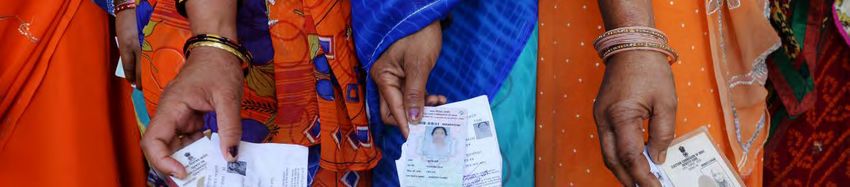
In many states, the BJP has polled more than 50% of the
voteshare
First time in electoral history that a party has been voted back
to power with a full majority and a double-digit gain in
voting percentage
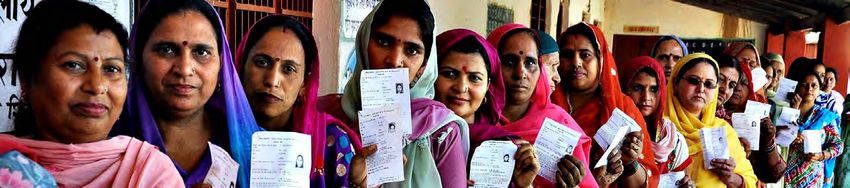
Women voters outnumbered men in 13 states and union
territories.
State Dynamics
Uttar Pradesh
The SP-BSP alliance that was widely expected to mount a
serious challenge to BJP didn’t end up producing the
expected result. Of the 80 seats in Uttar Pradesh, BJP and its
allies won 64 seats while the SP-BSP alliance managed to
secure 15 seats. UPA Chairperson Sonia Gandhi managed to
secure the only INC seat in the state; INC President Rahul
Gandhi lost the family stronghold of Amethi to BJP’s Smriti
Irani. This is the second time in the family’s history that a
Nehru-Gandhi family candidate has lost an election.
Preliminary analyses reveal that the inability of the INC to
form a pre-poll alliance with BSP-SP may have fractured the
vote and worked to BJP’s advantage in over 20 seats in the
state.
Maharashtra
Despite the tense relations between NDA alliance partners,
BJP and Shiv Sena, the opposition failed to create a
substantial front and make any gains in the state. The BJP
and Shiv Sena held their tally at 23 and 18, respectively,
while the UPA alliance reduced by one seat and is now at
five seats. The All India Majlis-E-Ittehadul Muslimeen (AIMIM)
party led by Asaduddin Owaisi made inroads into the state,
winning the Aurangabad seat. The issue of national security
and the state government’s projection of its achievements
on the infrastructure development appear to have been of
key importance to the voters. These coupled with the clean
image of the incumbent Chief Minister and his strong
performance over the past five years seemed to have
swayed voter choices.
2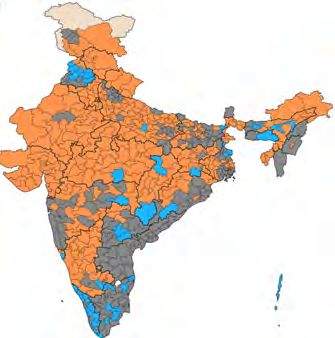
West Bengal

West Bengal threw up some surprising results that
have shocked political pundits. For the past five years,
the BJP has been attempting to make inroads into the
state but has been largely unsuccessful in capturing
seats, though their vote percentage has been slowly
increasing. In this election, the CPI(M) has been wiped
off what was a left bastion for over three decades. The
BJP has positioned itself as a credible challenger to the
TMC after winning 18 of the 42 seats. TMC saw a drop
in their tally from 34 to 22 seats in this election.

Bihar

The BJP-led NDA won 39 out of the 40 seats in the
state, while the Mahagatbandhan only managed to
secure a single seat. Chief Minister Nitish Kumar’s
decision to rejoin the NDA in 2017 and the caste
arithmetic of the alliance seems to have struck the
right chord.

Tamil Nadu

The UPA has won 37 of Tamil Nadu’s 38 Lok Sabha
seats. BJP’s decision to bring AIADMK into the NDA
seemed to have backfired as the party managed to
secure only a single seat in the election. The state has
seen major political upheaval in the past five years as
the stalwarts of the opposing parties, J Jayalalithaa
(AIADMK) and M Karunanidhi (DMK), passed away. In
this election, M K Stalin, the son of M Karunanidhi, has
proven himself not only been the undisputed
successor of his father, but also positioned the party as
the expected winner of the next assembly polls. The
AIADMK that has been marred by infighting over the
last few years has shown the necessity of a strong
leader to helm the party.

                                                            3
Madhya Pradesh

    The gains made in the assembly elections barely six
    months ago have clearly had no bearing on the results
    of these elections. While the INC managed to scrape an
    alliance in December, it has been unequivocally
    trounced in these elections. BJP made a strong
    comeback and is sweeping all but one of the 29
    constituencies. Nakul Kamal Nath, son of Chief Minister
    Kamal Nath, is the only non-BJP candidate who won.
    The most surprising loss in this state is that of
    Jyotiraditya Scindia, who lost the seat of Guna that has
    been in the Scindia family since the 1970s.

    Karnataka

    While the exit polls predicted that the BJP would end
    up with at least 18 seats, it has ended up with 25 of the
    states 28 seats. While the JDS-INC alliance theoretically
    should have increased the vote-share of contesting
    candidates, the tenuous alliance and the constant
    outbursts of the Chief Minister H D Kumaraswamy may
    have influenced voter decisions. Given the fragility of
    the existing alliance and the Lok Sabha result, the
    stability of the coalition government is likely to be
    tested in the coming months.

    Gujarat

    As expected, the BJP won all the 26 constituencies in
    Gujarat, which is Prime Minister Narendra Modi and BJP
    President Amit Shah’s home turf to the start of polling,
    the BJP gave a massive boost to its prospects in the
    state by announcing the candidature of Amit Shah.
    Amit Shah won the Gandhinagar seat with a margin of
    over 5.5 lakh votes (42% margin).

4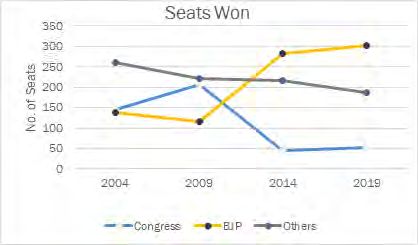
Rajasthan

    Rajasthan and Madhya Pradesh have seen a similar
    trend in the past year. While the INC has formed the
    government in both states, with near single majority,
    they have been effectively booted out of the state in
    these elections. For the second time in a row, the NDA
    swept all 25 seats in the state. The incumbent Chief
    Minister Ashok Gehlot’s son Vaibhav Gehlot was
    defeated in Jodhpur.

    Andhra Pradesh

    Andhra Pradesh saw simultaneous polls for the Lok
    Sabha and Vidhan Sabha this election. The state
    rejected national parties for regional players in both
    these elections. Y S Jagan Mohan Reddy-led YSR
    Congress Party has swept both the elections and is
    expected to be sworn in as Chief Minister. YSRCP has
    won 22 of 25 Lok Sabha seats in Andhra Pradesh,
    leaving the Chandrababu Naidu-led TDP with only
    three seats. The TDP was humiliated further as
    outgoing Chief Minister Chandrababu Naidu’s son Nara
    Lokesh lost his Vidhan Sabha seat.

    Odisha

    Odisha, too, saw simultaneous elections to the Lok
    Sabha and Vidhan Sabha. In the Lok Sabha election, the
    Navin Patnaik-led BJD, the regional power that has
    controlled the state since 2000, won 12 seats, while the
    BJP made inroads into the state increasing its total one
    seat in 2014 to eight seats in this election. According to
    BJD insiders, four strategies that helped the party
    counter the Modi wave were the image of the Chief
    Minister Navin Pattnaik, women voters, social welfare
    schemes and the comprehensive farmer financial
    benefit scheme Kalia. The state has seen a number of
    former and sitting MLAs and MPs jump ship from the
    BJD to the BJP and vice-versa in the last five years.

    Kerala

    INC-led United Democratic Front (UDF) registered a
    remarkable victory with wins in 19 of the 20
    parliamentary constituencies. Rahul Gandhi himself has
    won by a large margin from Wayanad. UDF has gained
    from a massive support from the minority segments,
    particularly the Muslim community. The Left
    Democratic (LDF) has only managed to secure a single
    seat in the state and has seen a sharp decline in its
    vote-share.
8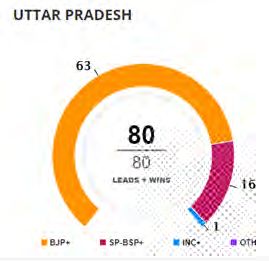
Telangana

The BJP made inroads into India’s youngest state,
Telangana, winning four of the 17 seats in the state.
The Telangana Rashtra Samiti (TRS), which
spearheaded the formation of the state in 2014 and
has ruled it since, has won nine seats and its ally,
AIMIM, has won one seat. The INC has shown a
comparatively strong performance, winning three
seats in the state. While the TRS managed to secure its
position, the Chief Minister K Chandrasekhar Rao’s
(KCR) daughter K Kavitha lost her seat from Nizamabad
after over 170 farmers decided to contest against her
to protest the agricultural policies of the state
government. The result in the state and across the
country has also dashed KCR’s hopes of playing a
critical role in a Third Front.

                                                          9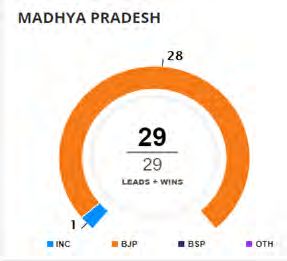
Focus Area, Economic Policy                                 Other focus areas for the government are likely to be:
     Implications                                                Jobs crisis: We will likely see an increased focus on
                                                                 rural spending and handouts aimed at supporting
     Economy                                                     small and medium-sized enterprises (SMEs) to create
                                                                 jobs in medium to long term. It will also have to find
     Medium- to Long-Term Outlook: Positive                      ways of filling out the large government vacancies at a
                                                                 faster pace once the government takes charge as an
       • In the short term, the strong election outcome          immediate and short-term solution.
         should support sentiment in favour of India and
         lead to a fillip in FDI and investment. But the         Rural and farm distress: The government is likely to
         focus is likely to shift back to the government's       liberalize the rigid agricultural policies around the
         reform agenda, once the dust settles.                   APMC act and could ask BJP-governed states to
                                                                 implement it. Extending markets to farmers including
       • Second consecutive term for the Modi                    through further strengthening of the eNAM (electronic
         government with a strong mandate will augur             national agriculture market) initiative could be on the
         well for the economy. Sensex and NIFTY                  cards.
         endorsed Narendra Modi’s second term by
         surging up 1400 points and 400 points,                  Measured liberalization: The government is likely
         respectively, after the exit polls had indicated a      to continue its push on the FDI. Notably the BJP
         landslide win for the BJP.                              manifesto retained its aspiration of taking India’s Ease
                                                                 of Doing Business Banking into the top 50. That said,
       • There was a sharp uptrend in equities, and the          protectionist intervention of its key ally, Rashtriya
         market capitalisation of BSE-listed companies           Swayamsevak Sangh (RSS), is still likely to keep some
         jumped by 5.33 lakh crore a day after the poll          reforms, such as further opening of multi-brand retail,
         predictions were revealed.                              at bay.

       • Now free from electoral compulsions, the                Ease of Doing Business: India’s position has
         government will be able to focus on fiscal              improved by 65 places in the Ease of Doing Business
         consolidation, key reforms in the public banking        ranking, from 142 in 2014 to 77 in 2019. The
         sector, infrastructure spending, FDI focus and          government would likely aim to break into top 50 into
         increasing the share of private investments in          the Ease of Doing Business in the next two years.
         the economy.                                            Easing compliance for obtaining construction permits,
                                                                 improving the functioning of commercial courts, better
                                                                 enforcement of contracts and protection of minority
       • The Reserve Bank’s outlook towards the
                                                                 shareholders rights will likely be the focus area for the
         inflationary pressure would guide the monetary
                                                                 government.
         policy.

     Policy outlook                                              Infrastructure and Industry: Infrastructure will
                                                                 remain an important area of focus for the new
       • Policy continuity will be a stabilizing factor in the   government, which is set to continue the strong
         economy.                                                performance by the roads and transport sector. The
                                                                 government has already fast-tracked many stalled and
       • Government may also introduce stalled reforms           ongoing projects. Expansion of Metro Rail in tier-two
         like the Land Acquisition Bill, which was met with      cities across India may become a priority. The
         a strong resistance from opposition. Modi will          government is likely to expedite the New Industrial
         likely continue efforts aimed at streamlining the       Policy to implement industry-specific reforms, may
         2017 Goods and Services Tax (GST), while                recommend tax sops, ease in labour laws to incentivize
         continuing to empower the Insolvency and                big ticket manufacturing units. There might also be
         Bankruptcy Code (IBC) regime to tame the $150           revival of certain sub-components of the Make in India
         billion debt accumulated by the banking sector.         policy especially around local sourcing.
         Managing the ongoing stress in NBFC sector is
         going to be a challenge, but the government will
         probably have no option but to handle this on a
         priority.
10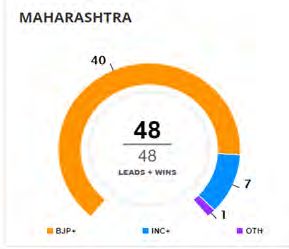
Foreign policy: A reset in India-Pakistan ties is likely   Retail and e-commerce: A National Traders’ Welfare
after heightened tensions for the past six months,         Board will be set up, and a National Policy for Retail
although the Modi government wouldn’t want to look         Trade will also be announced. While the impact of this
too eager to respond to Islamabad’s overtures. India’s     policy on the e-commerce sector will have to be
relationship with China can strengthen in the light of     ascertained, the developments are in line with the push
the Sino-US trade war. The ongoing trade war between       to promote domestic retailers over foreign
the US and China will help India tap export                counterparts. There will be greater push from the
opportunities in both the countries in areas such as       government to finalize the ‘Draft National e-Commerce
garments, agriculture, automobile and machinery.           Policy,’ especially on the data aspects.
Despite the ongoing tug-of-war between India and the
US on the tariff front, Trump has publicly highlighted     The Personal Data Protection Bill would be the priority
his bond with Modi and the two countries have held         as privacy and data protection are a key concern area.
talks on bilateral cooperation in defence, counter-        The Ministry of Electronics and Information Technology
terrorism, and energy and coordination on regional         is working on the final version of the bill and will look
and global issues.                                         to make compliance easier for industry and addressing
                                                           concerns of law enforcement agencies.
Health: Reforming medical education, providing
health cover to the poor or getting the unregulated        Competition law reforms: The BJP government
healthcare professionals under the ambit of                under its previous regime constituted a nine-member
regulations and setting quality standards. Streamlining    Competition Law Review Committee. The objective
of flagship schemes like Ayushman Bharat, ‘Pradhan         was to revamp the Competition Act 2002 and enable
Mantri Jeevan Jyoti Bima Yojana’ and ‘Pradhan Mantri       the regulator to better deal with competition issues in
Suraksha Bima Yojana’ is on the cards.                     the digital economy. Amendments to the Act to
                                                           expand the role of the regulator with focus on digital
Supporting MSME’s: The government has proposed             economy sector are in pipeline.
a multi-pronged approach for reviving the micro-,
small and medium-sized enterprise sector. In addition      Implications for the Healthcare and
to the existing credit guarantee scheme, efforts to        Pharmaceutical Sector
improve MSMEs’ access to technology and to make
them more competitive are likely to intensify.             India remains committed to the achievement of the
                                                           Sustainable Development Goals (SDGs), and one of the
Sectoral Impact                                            key pillars where the government’s efforts have been
                                                           focused in the past five years has been healthcare.
Implications for the Information and Technology
Sector                                                     Some of the key focus areas for governance have been
                                                           listed below:
Digital taxation: A new framework is expected to be
created to regulate and get a fair share of taxes from     Ayushman Bharat or Pradhan Mantri Jan Arogya
revenues generated by digital economy companies.           Yojana (PMJAY): The government’s landmark
Strong measures are likely to be introduced that           initiative launched in 2018 is envisaged as the world’s
realign the profits and taxes.                             largest health insurance programme, targeting a total
                                                           of 10 crore families. Another objective of the initiative
Ease of Doing Business: Amendment of the                   was the operationalisation of 1.53 lakh health and
Companies Act is expected to incentivize compliance        wellness centres to provide primary healthcare. While
with law and ease of doing business. Finalisation of the   the number of enlisted beneficiaries is slowly
new industrial policy, to emphasize on improving the       increasing, on-ground implementation challenges still
competitiveness of manufacturing and services, is also     exist. Hospitals remain unhappy with the low
expected. Promotion and empowerment of MSMEs               reimbursement rates being offered under the scheme,
will also be a strong feature of the policy.               and quality and availability of empanelled hospitals
                                                           remain a challenge. However, universal health
                                                           coverage is expected to remain a strong priority and
                                                           the existing issues will need to be ironed out.

                                                                                                                       11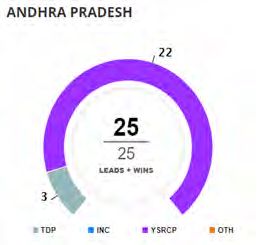
Public health infrastructure: Quality of Primary             ones aimed at building competitive ecosystem for
     Health Centres (PHCs) and Community Health Centres           domestic players in the sector. While the global
     (CHCs) needs significant improvement to ensure               industry has raised concerns about the need for level
     quality healthcare, and reduce reliance on private           playing field, it is likely that upcoming policies will
     healthcare providers. For Ayushman Bharat’s successful       favour domestic players.
     implementation, public health infrastructure will need
     expansion, quality improvement and access to basic           Technology in healthcare: Increased emphasis is
     facilities.                                                  expected on integration of technology for effective,
                                                                  efficient delivery of healthcare services. AI and
     Private-sector participation in healthcare: The              telemedicine are likely to be priority focus areas, as are
     government is likely to count on support from the            digitisation of medical health records, creation of
     private sector for strengthening public health               medical device registries, and even faster delivery of
     infrastructure. Already, with initiatives such as            medicines, blood, etc., using new-age tools such as
     Ayushman Bharat (hospitals) and Aspirational District        drones.
     Programme, an increasing number of corporates are
     getting involved in improving healthcare quality and         Sustainable manufacturing: With the government
     availability. This form of PPP is likely to grow, as the     returning to power, environmental policies and
     government aims to fortify its healthcare spends with        regulations that are in the pipeline or approval stage
     CSR funds of private players.                                are likely to remain unhindered.

     Price control and trade margins: The past couple             Implications for the Food & Beverage Sector
     of years has seen more drugs and medical devices
     being brought under price control, and for devices like      As the government returns to power, no major change
     stents and implants, prices have been slashed                is expected in their position. Focus on farmer welfare is
     significantly. Affordability is expected to remain high on   expected to continue, and other regulations in the
     the government’s agenda, and while this will be good         pipeline are expected to proceed unhindered.
     for consumers, it is likely to negatively impact the
     industry. Already, international players have raised         Labelling and packaging regulations: With the
     concerns about viability in view of decreasing profits.      government returning to power, policies and
     The trade margin regulations are also expected to be         regulations in the pipeline or approval stage are likely
     finalised soon, which may further cut profits for            to remain unhindered.
     importers.
                                                                  Plastic waste management: Globally, India has
     Jan Aushadhi/generic drugs: With a view on                   shown commitment towards reducing plastic waste.
     increasing access and affordability of medicines, focus      Plans to eliminate single-use plastic are expected to
     on the Jan Aushadhi scheme is expected to continue.          continue, as is the emphasis on Extended Producers
     However, concerns pertaining to quality and adherence        Responsibility. However, there is also a need for the
     to manufacturing standards have been raised globally         government to strengthen infrastructure to manage
     (including concerns about non-compliance to FDA              collected waste and efforts in this area can be
     standards) and the government may take measures to           expected.
     address these. In the earlier term, NITI Aayog had been
     working on the use of blockchain to track medicines to       ‘Demeritization’ of SSBs: With non-communicable
     prevent counterfeiting.                                      diseases (NCDs) and public health continuing to
                                                                  remain a priority, no respite is expected for the SSB
     Procurement policies and medical device                      (sugar-sweetened beverage) category in terms of
     standards: The NDA’s return to power with a clear            perception, labelling, taxation, etc.
     majority will further fuel nationalistic tendencies in
     policy-making, especially focussed on enabling               GST simplification: The government is likely to
     domestic players. This was reflected in the last year of     further simplify the GST process. While there has been
     the governance as well, wherein the government               some discussion on rate rationalisation and
     Iooked at finalizing draft policies and formulating new      consolidation of certain tax brackets, there is no clarity
                                                                  on how this will progress.

12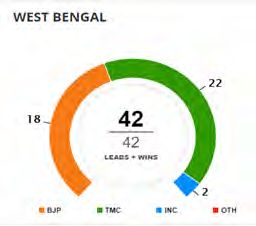
Water management: The government stated that it             Market access for farmers: While rural distress
intends to create a unified Ministry of Water to            hasn’t impacted Modi government’s performance in
approach the matter of water management                     this general election, the past few years have seen
holistically and launch a scheme to ensure piped            increased farmer distress, requiring a dire need to find
water for every household by 2024. The Groundwater          sustainable solutions such as engaging more farmers
Management Rules are also expected to be prioritized.       on the electronic National Agriculture Market (eNAM)
If the drought situation continues unabated, it can be      platform to extend market access.
expected that water for agricultural use will be
prioritized and water-intensive industries could face       Further strengthening of the eNAM initiative could be
shortages. In addition, in drought-prone states, high       on the cards.
cess could be imposed on water for industrial use.
                                                            Crop insurance under the Pradhan Mantri Fasal
Implications for Agriculture and Food Processing            Yojana: In 2016, the insurance scheme was replaced
Sector                                                      to rapidly increase enrolment, with a target to cover
                                                            50% of the cropped area. However, coverage
Agriculture sector continues to be backbone for the         numbers have only fallen in the last two years, and
economic growth of our fast-growing democracy;              therefore, there will be an increased focus by the
however, under the NDA regime the already-stressed          government to successfully implement this scheme
agriculture sector witnessed further crisis and distress.   across states.
The sector grew at only 2.5% annually under the Modi
rule, compared with 3.6% in the last decade under the       Ethanol-blended fuel: For the benefit of sugarcane
Congress-led UPA.                                           farmers, the government will likely remain committed
                                                            to its plan sourcing ethanol for fuel from sugar
The food processing sector, among the few that              industry.
serves as a vital link between the agriculture and
industrial segments of the economy, is a sunrise sector     Increased public spending: The continued low
that has gained prominence in the last few years.           priority accorded to public spending on agriculture
While considerable push has been given to the               has resulted in severe gaps in the implementation of
industry’s growth under the first-term of the NDA           multiple schemes. In the interim budget, agriculture
government, a thrust to this sector is of critical          sector received a 144% rise in allocation, taking the
importance to improve the value of agricultural             share of the ministry to 5.2% in the union budget. The
produce ensure remunerative prices to farmers, and at       government, now free from electoral compulsion, will
the same time create favourable demand for Indian           be looking at focusing on proper implementation of
agricultural products in the global market.                 schemes such Pradhan Mantri Kisan Yojana and
                                                            Rashtriya Krishi Vikas Yojana, the flagship programme
As the government returns to power, increased focus         for the agriculture sector, and more flexibility for
is expected on the areas outlined below:                    states to adopt interventions needed to address local
                                                            concerns.
Agriculture Produce and Marketing Committee
Act: The reform of agricultural markets is a long           Address farmer welfare: After the state elections
pending policy issue in India. In light of the changing     last year, Congress announced loan waivers for the
global and local markets, the government is likely to       farmers in Rajasthan, Chhattisgarh and Madhya
liberalize the rigid agricultural policies around the       Pradesh. With the NDA government back in power in
APMC act and could ask the BJP-governed states to           General Elections, there is no expectation of a national
implement it.                                               programme of implementing farm loan waivers. The
                                                            government will focus on easier access to credit.

                                                                                                                       13
Implications for the Alco-Bev Sector Focus areas: The NDA 2.0 is expected to make
tourism a special focus in the services sector with a
With the NDA’s return to power with a clear majority, view to integrate many other allied services. There
the following are the implications for the sector. would be increased spending on upgrading of facilities
around the UNESCO heritage sites. The government is
Imposition of prohibition: The first term of the expected to adopt a holistic approach towards
NDA government witnessed states adopting liquor development of these sites by integrating transport
ban as a means to promote health and social well- connection, heritage conservation, hotels, restaurants,
being, women safety, or simply as an electoral agenda entertainment and other services.
to woo the voters in state elections, without looking at
the economic feasibility of such measures as alcohol is Increased infra spending: The government would
the largest contributor to state exchequer and under focus on increased infrastructure spending to develop
the exclusive power of the state governments. While the potential of coastal tourism, tourism on Island
Chhattisgarh promised to implement a state-wide territories and in the North Eastern states. Building of
liquor ban after the state election last year, no religious tourist circuits may also be expedited.
concrete steps have been announced to implement
the ban. In the general elections, with YSR’s victory in Implications for the Defence and Infrastructure
Andhra Pradesh (in both the General and Assembly Sectors
Elections), it becomes a crucial state to engage with.
YSR Congress had promised liquor ban in three phases Defence procurement is slated to see major reforms
in their manifesto. However, as per our sources, the and capacity expansion with a focus on indigenisation.
party leader recognises the important of revenue from In its pre-election manifesto, the BJP has promised to
the industry for development measures in the state strengthen the armed forces by speeding up the
and is not expected to aggressively pursue the poll purchases of outstanding defence-related equipment
promise. and take focused steps to strengthen the strike
capability of the armed forces. A strong majority in Lok
Labelling and packaging regulations: With the Sabha will enable the BJP to move with a greater
government returning to power, policies and momentum in this direction. The key focus areas are
regulations that are in the pipeline or approval stage expected to be:
are likely to remain unhindered.
Increased defence capital acquisitions: An
GST simplification: To get economic growth back acceleration of defence capital acquisition driven by
on track, the government is likely to further simplify the significant readiness gap in the military is expected
the GST process. Internal discussions have taken place after elections.
about easing compliance, consolidation of rate
structures and the tax net to be widened to include Increased role for private industry: The Modi
items such as petroleum, real estate, tobacco and government’s push to increase the role of private
industry in defence through changes like the ‘Strategic
liquor under the purview of GST gradually. However,
Partnership’ model appeared to stall over the last year,
there is lack of clarity on how this will progress.
but now there is an opportunity to accelerate the
reform agenda.
Implications for the Tourism Sector
Increased push for efficiency of the DPSUs:
Political scenario: The Minister of State for Tourism, Relatedly, the MoD may now push for greater
Mr K.J Alphons, was among the few ministers in the divestment and outsourcing within the DPSUs.
Modi government who lost his seat in the Lok Sabha.
However, he would continue to retain his Rajya Sabha
Infrastructure: Infrastructure will remain an
seat till 2023. It remains to be seen if Mr Alphons
important area of focus for the new government,
retains his position as Minister of State Tourism.
which is set to continue the strong performance by
the roads and transport sector. The government has
already fast-tracked many stalled and ongoing
projects. Expansion of Metro Rail in tier-two cities
across India may become a priority.
14Implications for the Aviation Sector Energy: There will be a policy continuity in India’s
oil and gas sector over the coming years.
Considering that the incumbent government will Reducing energy import dependence has been a
want to return to some of the unfinished agenda, a key objective of the Modi government, but
successful privatisation of Air India is up on the achieving the target of 10% reduction in three
cards. The chorus for inclusion of jet fuel under GST years is thought to be infeasible by most
has been on the rise lately, and the government will industry watchers. According to Fitch, India may
be poised to move positively on this taxation seek to attract the foreign investment to push
reform. Also, the government is likely to fast-track through developments across the oil and gas
the second metro airport projects, taking on the industry. Another prominent effort of Modi has
promise of 100 new airports in the course of next been to push clean energy sources like natural
five years. gas, biofuels and renewables. Continued focus
will drive greater traction in these areas.
Implications for Manufacturing, Automobile
and Energy Sector The government will continue to work on
improving electricity access building on the
Manufacturing: BJP now can set in motion their much-touted achievements in rural electrification.
dream of converting India into a global Here attention will rightly be on ensuring the
manufacturing hub through improving ease of right mix of sources and ensuring financial
doing business, strengthening Companies Act and health of the state utilities. Particularly, building on
bringing in a new industrial policy with special the International Solar Alliance where Modi is at the
focus on MSMEs. The party has already promised to forefront is a stated intention. The BJP manifesto
invest in creating clusters/networks. Incentives and also talks of encouraging localized solar farming
public procurement may be used for this purpose. at a massive scale and bio-gas generation. Both are
Boosting manufacturing sector to create jobs in the tools for additional income in agrarian communities.
country has been a focus area of the BJP, and they
may tweak things to continue to bolster this aspect. State assembly elections
As a result, local component necessity
requirements may be tinkered with.
Andhra Pradesh
Automobiles: EV space will certainly heat up as
Voting for the Andhra Pradesh state elections took
this may be one area where Modi will seek to leave
a legacy. The existing focus on phased place on April 11, along with elections to the Centre.
manufacturing plan is expected to continue. Over 79.64% polling was recorded in the state.
According to news reported by Reuters, NITI Aayog A total of 3,13,33,631 electors cast their votes for
may propose a plan for electrifying most 2,118 candidates across 175 Assembly Seats.
motorbikes and scooters within the next six to
eight years. There is also a possibility of increased In the last election, Telegu Desam Party (TDP),
subsidies for electric three-wheelers. Some analysts headed by Chandrababu Naidu, was allied with
opine that Modi government’s sops to rural BJP and together they won 106 seats, of which
populace may leave enough money in the hands of only four were won by BJP. The YSR Congress Party
these consumers for purchase of tractors and two- (YSRCP), headed by Jagan Mohan Reddy, came a
wheelers. Such outcomes will boost the distance second with 67 seats. In March 2018, TDP
automobile sector. severed its ties with the BJP and walked out of the
NDA with the Centre not acceding to its
demand on special category status for AP. The
entrant of a new party, Jana Sena Party (JSP)
founded by actor Pawan Kalyan, has changed the
voting mix.
15In the state elections, the YSRCP has comprehensively While its seat total has marginally reduced in this
won the mandate of the people with 151 of 175 seats. election, the BJD has still managed to hold on to a
The TDP has been reduced to 23 seats, while the JSP similar vote-share across the state. The INC has seen its
has won one seat in the state. Note that while in 2014 vote-share drop from 32 to 15% of the vote, which has
YSRCP and TDP had almost similar vote-shares of 45% resulted in a decrease of six seats, while the BJP has
each across the state, there has been a divergence in increased its vote-share from 18 to 32% of vote, which
this election. The JSP has received about 5-6% of the has translated to an increase of 11 seats for the party.
votes, and has likely cut into TDP’s electoral banks,
reducing to 39.1%. At the same time, the YSRCP has In the past decade, the BJD has only extended outside
managed to increase their vote-share to close to 50%. support to governments at the Centre, and the stance
of the current government is unlikely to change. During
The election result is a terrible blow for Chandrababu the elections, Naveen Patnaik had expressed his
Naidu, who was looking to spearhead an effort to forge willingness to support any party that would push for
an anti-BJP front. His hopes have been shattered as the Central aid in the cyclone-affected state.
party has not only performed poorly at the Centre but
been decimated in the state. Sikkim
The YSRCP has not aligned with either party in the pre- Since its entry into the Indian Union, Sikkim has always
poll phase, and based on the Lok Sabha results is likely elected a regional party to form the government. The
to remain neutral while ensuring good relations with incumbent Chief Minister, Pawan Kumar Chamling, has
the Centre to try to push for special considerations for ruled the state consecutively for 25 years, making him
the state. the longest running Chief Minister in Indian history. His
party, the Sikkim Democratic Front (SDF), has won the
Odishaa 1994, 1999, 2004, 2009 and 2014 Sikkim Legislative
Assembly elections.
The Odisha Assembly has 147 seats. The elections for
these seats were conducted across the first four phases In the last election, the SDF won 22 of the 32 seats in
in April. In the current election, 146 seats are being the state assembly. The primary opposition in the state
contested and one will be contested later. is the Sikkim Krantikari Morcha (SKM), led by a former
SDF-leader Prem Singh Tamang alias P.S. Golay, which
Odisha has traditionally been a stronghold of the Biju won the remaining 10 seats.
Janata Dal (BJD), and the incumbent Chief Minister
Naveen Patnaik has ruled the state since the party’s first While Sikkim has traditionally seen a single-party
assembly election in March 2000. After today’s result, winning the state with a thumping majority, this
Naveen Patnaik will rule the state for a fifth-straight election has proved to be neck-in-neck, not only in
term. terms of vote-share but also in terms of seats. The SKM
has won the state with 17 of the 32 seats, while SDF has
In the 2014 elections, the BJD won 117 seats followed won 15 seats. The BJP and INC have not been able to
by INC with 26, BJP with 10, and others with four seats. make any in-roads into the state. Interestingly, while the
This year, the BJD has once again held onto the seat SKM has won the battle, it has a marginally lower vote-
despite a major attempt by the BJP to displace their share than the SDF.
position. In the past five years, BJP has made inroads
into the state in the Municipal Corporation and
Panchayat elections.
8Given the tenuous arithmetic and the larger vote-share,
it will be interesting to see what happens in the state
over the next five years. In the last five years, while the
SDF won 22 of the seats, by the end of its term it had
29 MLAs after defections. The party is likely to attempt
to splinter the incumbent once again. For now,
though, the SKM will control the state with P.S. Golay
likely to become the Chief Minister.
Arunachal Pradesh
Since 1980, Indian National Congress has won every
election in the state and won the last election in 2014
with 42 out of 60 seats in the state.
The Chief Pema Khandu was sworn in as an INC
candidate; however, in September 2016 he and a major
portion of the party defected to the People’s Party of
Arunachal, an ally of the BJP.
Three months later, they defected again to join the BJP,
making Pema Khandu the Chief Minister from BJP.
While the exact seat-sharing has not been announced,
what is clear is that the BJP is going to form the
government in the state. The party has already won 37
seats alone, and with alliance partners won 49 of the 54
constituencies. The alliance has captured more than
75% of the vote-share of the state.
9About Chase India Disclaimer
Chase India is India’s leading public policy research and Chase Avian Communications Private Limited
advisory firm with growing practices in healthcare, food (referred to as “Chase India”), nor any agency
and beverage, technology, sustainable environment, thereof, nor any of their employees, nor any of their
and climate change. The firm provides advisory services contractors, subcontractors or their employees,
to organisations for mitigating business risk through makes any warranty, express or implied, or assumes
insight-based policy advocacy campaigns. any legal liability or responsibility for the accuracy,
completeness, or any third party’s use or the
‘Chase Dialogue’ is the flagship policy discussion results of such use of any information, apparatus,
platform that brings together experts from the field product, or process disclosed, or represents that
of technology, health, sustainability, environment and its use would not infringe privately owned rights.
climate change to discuss issues of pressing concern. Reference herein to any specific organization,
The team at Chase India comprises experts with commercial product, process or service by trade
extensive experience spanning across regulatory and name, trademark, manufacturer or otherwise, does
industry bodies, government organisations, academia, not necessarily constitute or imply its endorsement,
and media, in roles engaged at various levels of public recommendation or favouring by the Organizer
policy. Chase India is a WE Communications Group or any agency thereof or its contractors or
company. subcontractors. The views and opinions expressed
herein do not necessarily state or reflect those of
Chase India or any agency thereof.
Contact:
Manash K Neog
Executive Vice President & Co-founder
D: + 91 11 4662 5516
M: + 91 9811307549
E: manash@chase-india.com
16You can also read


