INSS SPEAKER SERIES MODERATED BY - National Defense University Press
←
→
Page content transcription
If your browser does not render page correctly, please read the page content below
MODERATED BY
            INSS SENIOR FELLOW MICHAEL MIKLAUCIC

INSS
SPEAKER
SERIES
PRESENTED BY
THE NATIONAL DEFENSE UNIVERSITY

2020-2021

NATIONAL DEFENSE
   UNIVERSITY
   INSS SPEAKER SERIES                                        PAGE 01

     THE NATIONAL SECURITY
    ENVIRONMENT IS CHANGING

 The global order is undergoing tectonic shifts. With these shifts come
       extraordinary dangers, as well as opportunities. Great power
    competition, hybrid and gray zone conflict, weaponization of new
  technologies, terrorism and fragile states, climate change, and global
    pandemics: These are among the issues that the National Defense
    University’s flagship journal of national and international security,
    PRISM, tracks. This speaker series, initiated in May 2020, presents
diverse perspectives on these vital issues for 21st century security from
     thought leaders in the policymaking, practitioner, and academic
communities. The series weaves together three related lines of effort; 1)
    Geoeconomics, 2) Great Power Competition, and 3) Innovation and
                     Emerging, Disruptive Technologies.
 The INSS Speaker Series supports NDU faculty in their efforts to adapt
   instruction and curriculum to the rapidly evolving national security
environment, and enhance the educational experience of the NDU Class
                                of 2020/21.
MAY 6, 2020                                                                        PAGE 02

      THE GEO-
      ECONOMIC
      DIMENSION OF
      GREAT POWER
      COMPETITION
       with Carolyn Bartholomew
       and
       William Overholt

    What are the fundamentals of geoeconomics, and what drives
    geoeconomic competitions? In this seminar, Ms. Bartholomew
   explains the overlap between national security and economics,
 particularly with regard to China's growing economic strength. Mr.
  Overholt demonstrates how great power competition, particularly
 between the U.S. and China, centers around economics. In addition,
 Bartholomew and Overholt discuss 5G, the impact of COVID-19, and
                   China's state-owned enterprises.

Carolyn Bartholomew is chairman of the                   William Overholt is a Senior Research Fellow at
Congressional U.S.-China Economic and Security           the Harvard Kennedy School of Government’ s
Review Commission. Bartholomew has served as             Mossavar-Rahmani Center for Business and
counsel, legislative director and chief of staff to      Government and Principal of AsiaStrat LLC, a
current House Speaker Nancy Pelosi and as a              consulting firm. Overholt’ s research and consulting
professional staff member on the House Permanent         work focuses on Asian development, politics,
Select Committee on Intelligence. Bartholomew’ s         economics, business strategy and investment
expertise is in U.S.-China relations, including trade,   strategy. He previously served as Director of the
human rights and the proliferation of weapons of         RAND Corp’ s Center for Asia Pacific Policy, the
mass destruction. She has also worked on the             Head of Strategy and Economics at Nomura
establishment and funding of global AIDS programs        International and as Director of Hudson Research
and the promotion of human rights and                    Services at the Hudson Institute. He is the author
democratization in countries around the world.           and co-author of nine books.
AUG. 19, 2020                                                                 PAGE 03

                                                           GEOECONOMICS
                                                                 AND THE
                                                               EMERGING
                                                            WORLD ORDER
                                                                with Dr. Joseph E. Stiglitz

How does the changing global economy impact U.S. national security?
 What is the future of globalization and trade? In this seminar, Nobel
     Prize-winner Dr. Joseph E. Stiglitz emphasizes the economic
 dimension of national power. Stiglitz calls for trust and cooperation
    with international partners, but notes that growing inequality
diminishes respect for the U.S. economy. Stigilitz discusses the factors
 of a strong national economy, sustainability, resilience, competition
           with China, and international trade agreements.

  Joseph Stiglitz is professor at Columbia University and a leading economic expert and public policy
  analyst. He received the Nobel Prize in Economics in 2001 for his work on markets with asymmetric
  information. Stiglitz formerly served as senior vice president and chief economist of the World Bank
  and as the chairman of the Council of Economic Advisors under the Clinton administration. In 2011,
       Stiglitz was named one of the 100 most influential people in the world by Time magazine.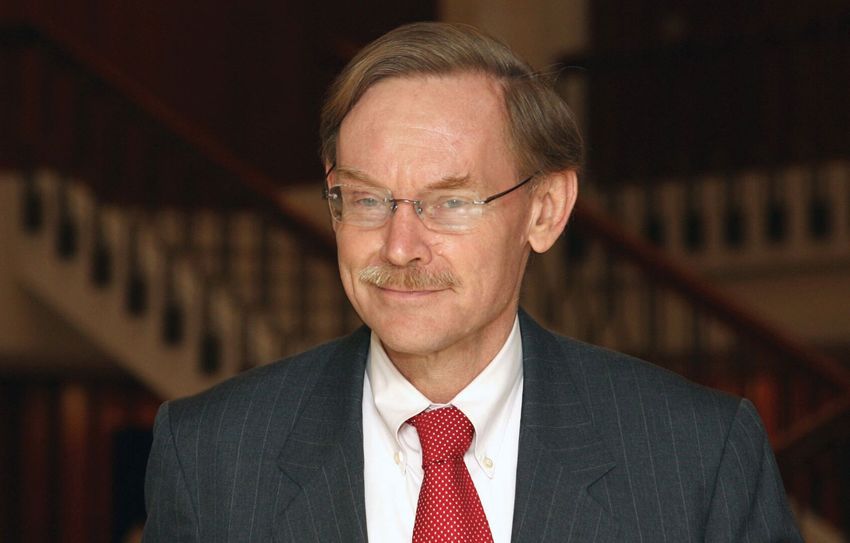
SEPT. 23, 2020                                                                PAGE 04

     THE POWER
     OF THE
     U.S. DOLLAR
      with Jacob J. Lew

  What benefits does holding the world's reserve currency grant the
 U.S.? How will increased economic diversification in other countries
  impact the U.S.'s global financial role? In this session, Jacob J. Lew
looks at the dollar as a tool for U.S. national security. Lew analyzes the
  use, effectiveness, and strategic effect of sanctions regimes in Iran,
Russia, Venezuela, and North Korea and considers the future of global
                                currencies.

   Jacob J. Lew was the Secretary of the Treasury in the Obama administration. He also served as
 Obama’ s White House Chief of Staff, the Director of the Office of Management and Budget under the
     Obama and Clinton administrations, and the Deputy Secretary of State for Management and
 Resources in the Obama administration. As Special Assistant to President Clinton, he helped design
  Americorps. He has also worked as the executive vice president and chief operating officer at New
 York University and managing director and chief operating officer at two Citigroup business units.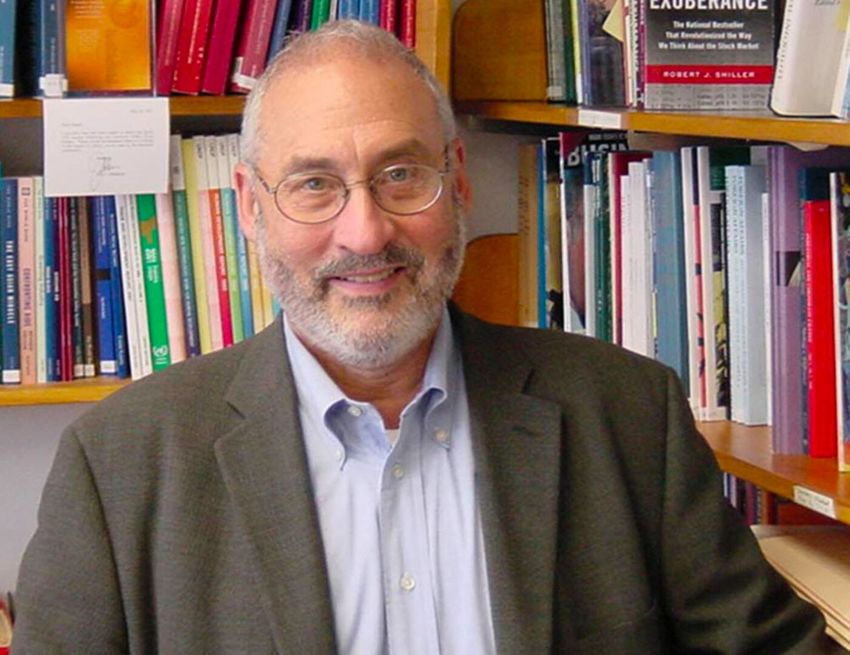
OCT. 15, 2020                                                                                           PAGE 05

                                                                             AMERICA AND
                                                                             THE WORLD: A
                                                                           HISTORY OF U.S.
                                                                           DIPLOMACY AND
                                                                           FOREIGN POLICY
                                                                                            with Robert Zoellick
                                                                                                               &
                                                                                                 David Petraeus

      What lessons can American diplomatic history teach modern
policymakers? In this session, General (Ret.) David joins Robert Zoellick
 to discuss Zoellick's new book. From Benjamin Franklin's negotiations
  in Paris to William Seward's Civil War diplomacy to Vannevar Bush's
  incorporation of science and technology into foreign policy, Zoellick
explores different ideas in American foreign policy. In addition, Zoellick
and Petraeus answer questions regarding diplomacy with China today.

 Robert Zoellick is the former president of the                     General (Ret.) David Petraeus is a former U.S. Army
 World Bank, nominated by President George W.                       general. In the Army, he served as commander of the

 Bush. Under his presidency, during which the                       NATO International Security Assistance Force and
                                                                    commander of the U.S. Forces Afghanistan. Petraeus
 2008-2009 global financial crisis struck. Under the
                                                                    previously served as Commander of U.S. Central
 Bush administration, Zoellick also served as the
                                                                    Command and Commanding General of the Multi-
 Deputy Secretary of State and the U.S. Trade
                                                                    National Force – Iraq. After his army service, Petraeus
 Representative.
                                                                    was Director of the CIA. Currently, Petraeus is a Visiting
                                                                    Fellow at Yale University’s Jackson Institute and Co-
 He is currently a Senior Fellow at Harvard’ s Belfer C h a i r m a n o f t h e G l o b a l A d v i s o r y C o u n c i l a t t h e
 Center for Science and International Affairs.        Woodrow Wilson Center for International Scholars.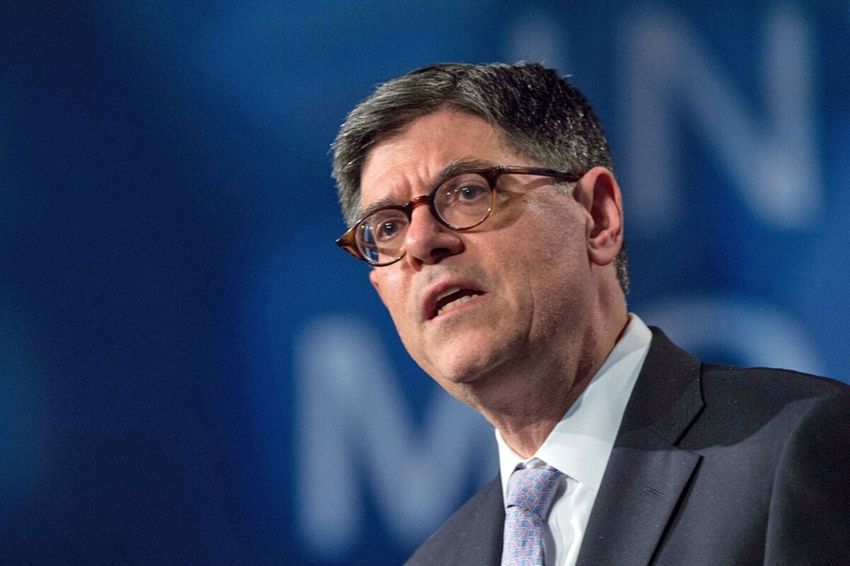
NOV. 18, 2020                                                                    PAGE 06

     AMERICAN
     BUSINESSES
     AND GREAT
     POWER
     COMPETITION
     with Joseph Votel

    What role can American businesses play in promoting national
security? How can the government apply private sector best practices
 and lessons to national security? In this session, General Votel draws
    on lessons from the Cold War to illustrate the responsibility of
  American businesses to support government strategies during this
time of great power competition. Votel also discusses the importance
     of dialogue between the government and the private sector.

   General Joseph Votel is a retired four-star general from the United States Army. He served as
 Commander of U.S. Central Command and Commander of the U.S. Special Operations Command and
  the Joint Special Operations Command. Today, Votel is President and CEO of Business Executives
  for National Security, a nonprofit for business executives to offer expertise to the U.S. national
                                        security community.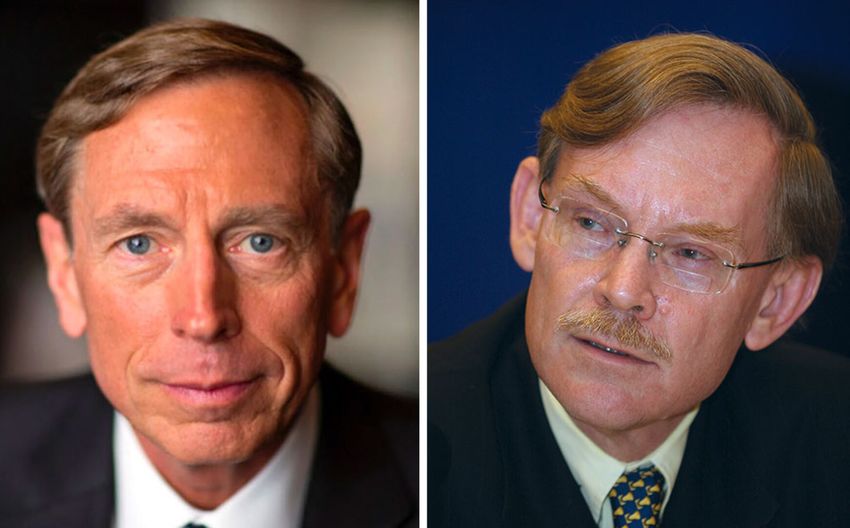
Jan. 12, 2021                                                                   PAGE 07

      ECONOMICS,
      DIPLOMACY,
      AND
      GREAT POWER
      COMPETITION
       with Robert Zoellick

  What themes and trends define the U.S.-China relationship? In this
     session, Zoellick draws on history to explore the evolution of
 competition between the U.S. and China. Looking at the present-day
    relationship, Zoellick considers perceptions of China and offers
recommendations for U.S. policy towards China. Zoellick also discusses
          Chinese globalization and China's defensive mindset.

 Robert Zoellick is the former president of the World Bank, nominated by President George W. Bush.
   Under his presidency, during which the 2008-2009 global financial crisis struck, the World Bank
  increased financial commitments to help countries respond to both the financial crisis and a world
  food crisis. Zoellick also increased Bank capital and voting power of developing countries. Under
  the Bush administration, Zoellick also served as the Deputy Secretary of State and the U.S. Trade
                                            Representative.

   He is currently a Senior Fellow at Harvard’ s Belfer Center for Science and International Affairs.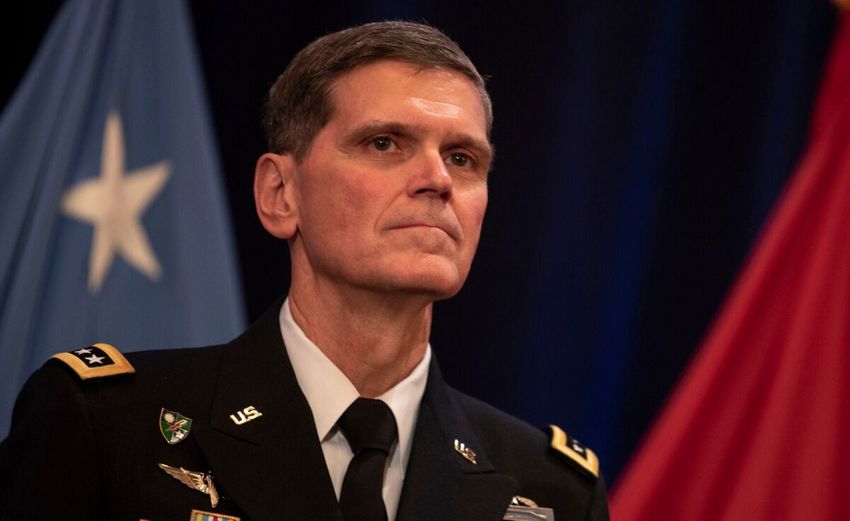
FEB. 17, 2021                                                                   PAGE 08

      GEOECONOMICS
      AND
      GREAT POWER
      COMPETITION
      with David Petraeus

    How should the U.S. use international norms and institutions to
  compete better with China? In this seminar, General (Ret.) Petraeus
    argues that the competition between the U.S. and China focuses
  around governmental and international systems. Petraeus discusses
increasing international cooperation, the relationship between the U.S.
   government and national technology firms, and foreign economic
                    activity in developing countries.

  General (Ret.) David Petraeus is a former U.S. Army general. In the Army, he served as commander
 of the NATO International Security Assistance Force and commander of the U.S. Forces Afghanistan.
 Petraeus previously served as Commander of U.S. Central Command and Commanding General of the
   Multi-National Force – Iraq. After his army service, Petraeus was Director of the CIA. Currently,
    Petraeus is a Visiting Fellow at Yale University’ s Jackson Institute, Co-Chairman of the Global
 Advisory Council at the Woodrow Wilson Center for International Scholars, Senior Vice President of
           the Royal United Services Institute and a member of the Trilateral Commission.
FEB. 18, 2021 PAGE 09
THE UNITED
STATES, CHINA,
AND TAIWAN: A
STRATEGY TO
PREVENT WAR
with Robert D. Blackwill
and
Philip Zelikow
What are the U.S.'s strategic objectives and national interests in
Taiwan? In this discussion, led by NDU CEO and President James
Schmeling, Robert Blackwill and Philip Zelikow consider policy
prescriptions for the U.S. relationships with both Taiwan and China.
Blackwill and Zelikow explore the history of these relationships,
potential future scenarios and confrontations, and the strategic
options available to the U.S.
Robert D. Blackwill is the Henry A. Kissinger senior Philip Zelikow is the White Burkett Miller Professor
fellow for U.S. foreign policy at the Council on of History. He has also served at all levels of
Foreign Relations (CFR) and the Diller–von American government, including as an elected
Furstenberg Family Foundation Distinguished member of a town school board. He began his
Scholar at the Henry A. Kissinger Center for Global professional career as a trial and appellate lawyer in
Affairs at Johns Hopkins. Previously, he served as Texas, including work for the Texas Court of
deputy assistant to the president and deputy Criminal Appeals. After returning to graduate school
national security advisor for strategic planning and then teaching for the Navy, he j oined the Foreign
under President George W. Bush. Blackwill went to Service and served as a career diplomat, posted
the National Security Council (NSC) after serving as overseas and in Washington, including service on the
the U.S. ambassador to India from 2001 to 2003. In NSC staff for President George H.W. Bush. His Ph.D.
2016 he became the first U.S. Ambassador to India is from Tufts University' s Fletcher School.
since John Kenneth Galbraith to receive the Padma
Bhushan Award from the government of India .FEB. 24, 2021 PAGE 10
INNOVATING
FOR
NATIONAL
SECURITY
with Michael Brown
Where does technology fit into the U.S.'s national security strategy?
What will be the future of technological competition with China? In
this seminar, Michael Brown considers China's advantage in
technologies such as 5G, semiconductors, and facial recognition.
Brown also discusses "economic colonialism," and China, explains the
role of the Defense Innovation Unit in federal defense acquisition, and
offers suggestions to drive technological innovation in the U.S.
Mr. Michael Brown is the Director of the Defense Innovation Unit (DIU) at the U.S. Department of
Defense. DIU, established in 2015 Previously, Michael served two years (2016-2018) as a White House
Presidential Innovation Fellow at DoD. Through August of 2016, Michael was the CEO of Symantec
Corporation, the global leader in cybersecurity and the world’ s 10th largest software company with
revenues of $4 billion and more than 10,000 employees worldwide. Michael served as a member of
Symantec’ s Board since its merger with Veritas in 2005. Michael is the former Chairman & CEO of
Quantum Corporation (1995-2003), a leader in the computer storage industry. After leaving
Quantum, Michael served as Chairman of EqualLogic, a storage array company. Dell acquired
EqualLogic in 2008 for $1.4 billion, the largest all-cash deal for a venture-backed company up to
that time.
Michael received his BA degree in economics from Harvard University in 1980 and his MBA degree
from Stanford University in 1984.MARCH 17, 2021 PAGE 11
THE ROLE OF
EUROPE IN THE
NEW GREAT
POWER
COMPETITION
with Federica Mogherini
How does cooperation with the EU and NATO advantage the U.S. in
competition with China? In this seminar, Federica Mogherini
emphasizes the importance of cooperation with Europe on mutal
security and economic challenges, including Russian interference in
Eastern Europe, conflict in the Middle East, climate change, and ending
the COVID-19 pandemic. Mogherini also discusses potential areas of
competition between the U.S. and Europe.
Federica Mogherini has served as the Rector of the College of Europe since September 2020 and
has co-chaired the United Nations High Level Panel on Internal Displacement since January 2020.
She previously served as the High Representative of the European Union for Foreign Affairs and
Security Policy and Vice-President of the European Commission, from 2014 to 2019.
Federica Mogherini is a Fellow of the Harvard Kennedy School. She is also a member of the Board of
Trustees of the International Crisis Group, Fellow of the German Marshall Fund, member of the
Group of Eminent Persons of the Preparatory Commission for the Comprehensive Nuclear Test Ban
Treaty Organization, member of the European Leadership Network for Multilateral Nuclear
Disarmament and Non-Proliferation, and member of the Board of Directors of the Italian Institute
for Foreign Affairs (IAI). She has a degree in Political Science from the University of Rome “La
Sapienza”.MARCH 17, 2021 PAGE 12
RECTOR
FEDERICA
MOGHERINI:
REPRISE
with Federica Mogherini
Rejoining NDU after technical difficulties, Federica Mogherini takes
questions from her previous seminar. In this session, Mogherini
discusses global democratization and populism, common and divergent
interests between the U.S. and Europe, confronting Russia, and EU
coordination with NATO and the Arctic Council.
Federica Mogherini has served as the Rector of the College of Europe since September 2020 and
has co-chaired the United Nations High Level Panel on Internal Displacement since January 2020.
She previously served as the High Representative of the European Union for Foreign Affairs and
Security Policy and Vice-President of the European Commission, from 2014 to 2019.
Federica Mogherini is a Fellow of the Harvard Kennedy School. She is also a member of the Board of
Trustees of the International Crisis Group, Fellow of the German Marshall Fund, member of the
Group of Eminent Persons of the Preparatory Commission for the Comprehensive Nuclear Test Ban
Treaty Organization, member of the European Leadership Network for Multilateral Nuclear
Disarmament and Non-Proliferation, and member of the Board of Directors of the Italian Institute
for Foreign Affairs (IAI). She has a degree in Political Science from the University of Rome “La
Sapienza”.APRIL 18, 2021 PAGE 13
GEOECONOMICS
REVISITED
with Dr. Edward Luttwak
The national security community primarily looks at great power
competition with China through a military lens. The greater threat to
US interests and influence, however, is arguably economic in nature.
China’s growing economic influence threatens to displace not only U.S.
and allied economic interests, but the liberal, rules-based world order.
Dr. Edward Luttwak has served as a consultant to the Office of the Secretary of Defense, the
National Security Council, the U.S. Department of State, the U. S. Army, Navy, and Air Force, and a
number of allied governments as well as international corporations and financial institutions. He is
a frequent lecturer at universities and military colleges in the United States and abroad and has
testified before several congressional committees and presidential commissions.APRIL 20, 2021 PAGE 1 4
INNOVATION
AMONGST ALLIES
NOW - GREATER
THAN THE SUM OF
THE PARTS
featuring a panel of experts
Allies and international networks are central to innovation, as
illustrated by cutting-edge research in AI by Google’s UK-based
pioneering AI unit DeepMind or by scientific networks to tackle
COVID-19. But even amongst the most established alliances, such as
the “Five Eyes” community, effective collaboration requires
understanding that each partner has distinct—as well as shared—
national interests and perspectives. This panel brings together leading
UK and US voices with deep expertise in science and innovation
related to national security to ask how such allies can collaborate—as
they have so effectively before—to provide the networks needed to
meet global challenges now.
P an el is t s in cl u de :
• P r o fes sor A nth on y Fin ke ls t ein, C h ie f Sc ien t if ic A d vis e r f or N a tio n a l S e c u rit y , U K
• M s. Cla ir e H a n co ck, De pu ty Ch ief S c i e n ti fi c A d v ise r f o r N a t io na l S e c ur ity , U K
• D r. T im o th y G ra ys o n, Dir ec to r , S t ra teg ic T ec h n o l ogy O ffic e a t D A R P A , U S
Moderated by:
• D r . N ic h o la s W ri gh t, In t ell ig e nt Bi olo gy , G eor ge t ow n Un iv e rsi ty M e d i ca l C en te r, U n ive rsi t y C o l le g e
L on do n , a n d N e w A me ric aAPRIL 23, 2021 PAGE 15
WHAT DOES
CHINA WANT?
with Lieutenant General
H.R. McMaster (retired)
Despite bipartisan consensus on China’s threat to US national security
interests, different views persist on how to meet the challenge of
contemporary great power competition and China’s view of the future
world order. LTG (Ret.) H. R. McMaster will discuss great power
competition and the threat China poses to U.S. national security.
Dr. H. R. McMaster is the Fouad and Michelle Aj ami Senior Fellow at the Hoover Institution,
Stanford University. He is also the Bernard and Susan Liautaud Fellow at the Freeman Spogli
Institute and lecturer at Stanford University’ s Graduate School of Business. He was the 26th
assistant to the president for National Security Affairs. Upon graduation from the United States
Military Academy in 1984, McMaster served as a commissioned officer in the United States Army for
thirty-four years before retiring as a Lieutenant General in June 2018.MAY 18, 2021 PAGE 16
THE UNITED
STATES, CHINA,
AND RUSSIA: AN
INNOVATION NET
ASSESSMENT
featuring a panel of experts
U.S. strategy for global competition and cooperation in innovation
cannot be charted without considering innovation in China and Russia,
as well as the relationships between these three actors. Here, we bring
together world-leading experts to examine each of these three
innovators—the U.S., Russia, and China—and to place them in context.
The U.S. faces a global challenge with capable competitors that is both
a marathon and a sprint, and U.S. strategy must mitigate its (inevitable)
relative weaknesses and harness its (significant) relative strengths.
Panelists include:
· Dr. James Mulvenon, Director, Intelligence Integration, Intelligence Solutions Group
· Dr. Robert Atkinson, President, Information Technology and Innovation Foundation
· Dr. Walter Hudson, COL, US Army (Ret.); Associate Professor, Eisenhower School, National
Defense University; Global Fellow, Wilson Center
· Dr. Loren Graham, Professor Emeritus of the History of Science, Massachusetts Institute of
Technology & Harvard UniversityMAY 19, 2021 PAGE 17
THEIR SILENT
INTENTIONS
with Kevin Mandia
The United States and its allies have recently come under relentless
attacks in cyber space. While some of these attacks have been
relatively harmless, some have been seriously consequential, and their
potential to harm U.S. national security interests is growing. While
cyberattacks are difficult to trace and attribute some retaliatory action
must be taken as least to demonstrate credible deterrence. Kevin
Mandia, the CEO of FireEye—one of the world’s leading cybersecurity
companies—refutes the argument that these attacks are benign, and
that rather they signal our adversaries’ “silent intentions.” FireEye was
the firm that detected the recent “SolarWinds” hack and warned the
U.S. government.
Kevin Mandia has served as FireEye Chief Executive Officer since June 2016 and was appointed to
the company’ s Board of Directors in February 2016. He was previously President of FireEye from
February 2015 until June 2016. Kevin j oined FireEye as Senior Vice President and Chief Operating
Officer in December 2013, when FireEye acquired Mandiant, the company he founded in 2004.MAY 27, 2021 PAGE 18
INDUSTRIAL
POLICY
DEBATE
with Dr. Robert Atkinson
and John Thornhill
The concept of industrial policy has been neuralgic in the United
States for quite some time. In recent years economic orthodoxy—along
with many Americans and a substantial majority of members of
Congress—has argued that ”the market” is the best mechanism to spur
innovation. Our strategic competitors—China in particular—uses state
subsidies, restrictive and unfair trade practices, intellectual property
theft, and abundant state research resources to catalyze technological
innovation, and are threatening American security and economic
interests. America has not always been adverse to industrial policy, and
some are arguing for a new approach to industrial and innovation
policy.
· Dr. Robert Atkinson, President, Information, Technology and Innovation Foundation
· John Thornhill, Innovation Editor at the Financial TimesJUNE 22, 2021 PAGE 19
HOW TO
ENGAGE WITH
CHINA
featuring a panel of experts
Although consensus appears to have been reached in the United States
on the adversarial nature of our relationship with China, opinions on
how to engage—or disengage—with China are diverse. Secretary of
State Antony Blinken says the U.S. – China relationship will be
“competitive when it should be, collaborative when it can be and
adversarial when it must be.” Is that a viable approach, or is it naïve?
Panelists include:
· Dr. Anna Ashton, Vice President, Government Affairs, US-China Business Council
· Ms. Rachel Odell, Research Fellow in the East Asia Program at the Quincy Institute
· Dr. Kori Schake, Director of Foreign and Defense Policy Studies at the American Enterprise
InstituteJULY 14, 2021 PAGE 20
THE THREE-
BODY PROBLEM;
THE U.S., CHINA,
AND RUSSIA
with Michele Flournoy
The Cold War was the first time in over a century that the United
States faced a truly existential threat, the threat of all-out, strategic,
nuclear war. The strategic response designed to avoid such a
catastrophe was mutual assured destruction, a deliberate reciprocal
deterrence. Today the United States faces two near peer competitors,
Russia and China. In this strategic triangle each needs one of the
others to deter the third, resulting in a constant state of dynamic
tension. The challenge for the United States is to counter China
without driving it toward Russia, and to counter Russia without driving
it toward China.
Michèle Flournoy is Co-Founder and Managing Partner of WestExec Advisors, and former Co-
Founder and Chief Executive Officer of the Center for a New American Security (CNAS), where she
currently serves on the board. Michèle served as the Under Secretary of Defense for Policy from
February 2009 to February 2012. In 2017, she co-founded WestExec Advisors, a strategic advisory
firm.AUGUST 2021 PAGE 21
AI WILL
CHANGE
WAR
with General John
Allen (retired) and
Amir Hussein
Artificial Intelligence (AI) could lead to “Hyperwar”—a type of conflict
and competition so automated that it would collapse the decision
action loop, eventually minimizing human control over most decisions.
America’s challenge is to encourage the organizational transformation
necessary to adopt safer, more explainable AI systems to maintain our
competitive edge, now that the technical transformation is at our
doorstep.
· John R. Allen is the president of the Brookings Institution, a retired United States Marine Corps
four-star general, and former commander of the NATO International Security Assistance Force and
U.S. Forces – Afghanistan (USFOR-A)
·Amir Husain is a Pakistani-American artificial intelligence entrepreneur, founder of the Austin-
based company, SparkCognition, and author of the book, The Sentient MachineSEPTEMBER 7, 2021 PAGE 22
SHAREHOLDER
VERSUS
STAKEHOLDER:
CORPORATE
NATIONAL SECURITY
RESPONSIBILITY
with Dr. Paul Krugman
As the economic competition between the United States and China
intensifies companies find themselves caught in the crossfire. Western
companies hesitate to offend China and possibly lose access to China’s
“super-large market.” They are accused of having “corporate
Stockholm Syndrome.” At the same time, they must be careful of
crossing the national security redlines imposed primarily by the United
States. Milton Friedman argued that a company’s only responsibility is
to its shareholders. Recently companies have accepted that they have
certain social responsibilities; do they also have national security
responsibilities?
Dr. Paul Krugman is an American economist who is the Distinguished Professor of Economics at the
Graduate Center of the City University of New York, and a columnist for The New York Times. Dr.
Krugman is is the recipient of the 2008 Nobel Prize in Economics.OCTOBER 7, 2021 PAGE 23
CLASH OF
CIVILIZATIONS?
with Dr. Niall Ferguson
When Samuel Huntington described the “clash of civilizations”
in 1993, he was criticized for reinforcing a self-fulfilling
prophecy. Today we face a tectonic global clash, but not
necessarily of the type Huntington foresaw; clashing are two
conflicting visions of the future global order. One, championed
by autocratic states like China and Russia, advocates a return to
“a 19th-century global order where great powers rule over their
own distinct spheres of influence.” The world’s democracies
want an order based on the international rule of law, democratic
governance, and individual rights. How this clash evolves will be
the story of the 21st century.
Niall Ferguson is the Milbank Family Senior Fellow at the Hoover Institution, Stanford University,
and a senior faculty fellow of the Belfer Center for Science and International Affairs at Harvard. He
is also a visiting professor at Tsinghua University, Beij ing.NOVEMBER 2021 PAGE 2 4
DEVELOPMENT
IN GREAT
POWER
COMPETITION
with Samantha Power
The Belt and Road Initiative is China’s ambitious flagship effort to
reshape and redefine the global order using infrastructure,
economic development, finance, and its overall economic power to
serve Chinese national interests. If successful this will replace the
development paradigm dominated by the Bretton Woods
institutions, and displace the United States from its previous
dominant position as a foreign aid provider. The U.S. Agency for
International Development leads U.S. economic and political
development efforts and must rise to meet this challenge.
Samantha Jane Power is an American academic, diplomat and government official who is currently
serving as the Administrator of the United States Agency for International Development. She
previously served as the 28th United States Ambassador to the United Nations from 2013 to 2017.DECEMBER 7, 2021 PAGE 2 5
THE EMPIRE
VERSUS THE
FEDERATION
with Kevin Rudd
The China challenge has impact far beyond the United States.
Australia—a member of the Five Eyes coalition and a stout ally of
the United States—stood against Chinese trade, intellectual
property, and human rights abuses. Australia led the global
insistence on an objective investigation of the origins of the
COVID-19 virus. In retaliation China imposed diverse economic
sanctions against Australia and threatened more. China has also
interfered in the Australian political system. A major challenge for
the world’s democracies is “will they stand united in meeting the
China challenge?”
Kevin Michael Rudd AC is an Australian Labor Party politician who was the 26th Prime Minister of
Australia, serving twice, from December 2007 to June 2010 and again from June 2013 to September
2013. He is currently the President of the Asia Society.JANUARY 2022 PAGE 2 6
SHAREHOLDERS
VERSUS
STAKEHOLDERS;
CORPORATE
NATIONAL
SECURITY
RESPONSIBILITY
To be confirmed
The Nobel Prize winning economist Milton Friedman famously
argued that the only responsibility of a business is to its owners—or
shareholders. Yet companies operate within an environment that
rests on much broader vested interests and values than those of
their shareholders alone. Today companies acknowledge limited
social responsibility; but are reluctant to jeopardize potential
revenue and profit as a cost of meeting those responsibilities. This
is especially true today of the profit potential of the “super-large”
Chinese market. How should companies balance U.S. national
security concerns which impact all of their stakeholders and the
primarily profit concerns of their shareholders? When and how
should the government intervene in corporate activity. At what
point and how might the Defense Production Act be invokedYou can also read


