BROKEN GROUP ISLANDS 2021 PADDLER'S PREPARATION GUIDE
←
→
Page content transcription
If your browser does not render page correctly, please read the page content below
BROKEN GROUP ISLANDS 2021 PADDLER’S PREPARATION GUIDE COVID-19 and the Broken Group Islands for 2021 Pacific Rim National Park Reserve is currently in discussions with Tseshaht First Nations, Hupaasatḥ First Nation and Toquaht Nation about the 2021 season for the Broken Group Is- lands. First Nation communities are among the most vulnerable to COVID-19. Indigenous people not only work as Beachkeepers in the Broken Group Islands - providing support and cultural infor- mation to visitors - they are also present on the land for cultural, ceremonial, or harvesting pur- poses. Through shared decision-making with the nations we will ensure that the health and safety of all Canadians, visitors and Parks Canada team members remain our priority. Reservations for 2021 – at this time no decision has been made on whether the Broken Group Islands will open in 2021. Reservations for the 2021 Broken Group Islands visitor season will open on April 7, 2021 at 8:00 am (PDT), as opposed to January, to allow additional time to monitor the pandemic and make any necessary changes. Please check our website and follow up on Facebook and Twitter (@PacificRimNPR) for updated information. Planning for COVID-19 cautionary measures - when planning for your 2021 trip in the Broken Group Islands remember to practice proper hygiene as directed by health authorities and be self-sufficient by bringing your own clean-trip kit including hand sanitizer, garbage bags, gloves and masks when recommended by health authorities. Backed by the Insular Mountain Range of Vancouver Island and facing the open Pacific Ocean, Pacific Rim National Park Reserve (Pacific Rim NPR) represents and protects both the near shore waters and the coastal lowland forests of Canada’s west coast. Pacific Rim NPR is composed of three distinct areas; Long Beach, the West Coast Trail (WCT), and the Broken Group Islands (BGI). The BGI in Barkley Sound is an outstanding example of a marine archipelago comprising a stunning maze of channels, sheltered bays, shell beaches, densely forested islands, exposed reefs and bare, wind-swept rocks. The Broken Group Islands are only accessible by boat. Balancing protection, education and recreational use of our national parks is a responsibility not only of Parks Canada and our partners, but also of national park reserve visitors. This preparation guide is intended to help you prepare for a safe and enjoyable visit while supporting the sustainability of our special heritage places for future generations.
2
FIRST NATIONS
The traditional territories of several Nuu-chah-
nulth First Nations encompass the Broken
Group Islands. The islands contain many
sites of spiritual and cultural significance for
the Tseshaht and Hupaasatḥ First Nations.
Disturbing, destroying or removing natural and
cultural artifacts is strictly prohibited without
prior written permission or licences.
There are first nation reserve lands on Effingham,
Nettle, and Keith Islands. Day visitors are only
welcome at the reserve lands on Keith Island.
(Please note this may change in 2021 due
to COVID-19. Please check with Pacific Rim
National Park Reserve before you go to Keith
Island). For Effingham and Nettle Island reserve
lands written permission from the appropriate
First Nation is required prior to landing. Boaters
are asked to refrain from tying up to the wharfs
on Nettle Island.
CLIMATIC INFLUENCE
The BGI enjoys a moderate maritime climate of
cool foggy summers and mild wet winters with an
average annual precipitation of 330 centimetres
(130 inches). This climate encourages an
abundance of life both in the water and on the
land. The mild climate also encourages the lush
growth of temperate rainforest dominated by
coniferous tree species such as Sitka spruce,
western hemlock and western red cedar.
Pacific Rim National Park Reserve of Canada - Broken Group Islands Paddler’s Preparation Guide 2021
3

    PREPARATION INFORMATION

Is your group ready for a trip to the BGI? Long           •   read weather patterns and signs, obtain and
known as the “Graveyard of the Pacific”, this area            interpret up-to-date marine weather forecast;
abounds with potential hazards. Though marine             •   assess water hazards that vary with tide, sea
navigation techniques and tools have improved                 state and weather;
since the title was bestowed, the area’s hazards          •   interpret tide tables;
remain. Trip preparation is a crucial element of          •   competently handle your boat if caught in
any visit to the BGI. Your ability to recognize and           adverse conditions (some crossings may take
evaluate hazards is key to determining the risk               3 or more hours and weather conditions can
you and your group are taking. To have a safe                 change in a matter of minutes);
experience, your party’s knowledge, skills and            •   perform a group rescue and self-rescue;
equipment must meet or exceed the challenges of           •   camp in prolonged windy and rainy
this environment.                                             conditions;
                                                          •   call for help; and
You and your group must be able to:                       •   administer first aid.
•    plot a course by chart and compass;
•    pilot your vessel(s) safely in fog;

    CUSTODIAL GROUPS

Groups that are affiliated with an institution, and       Please contact the national park reserve staff
have at least one person below the age of majority        prior to arrival for information and appropriate
who is not accompanied by his/her parent or               permits.
guardian, have special considerations when
kayaking and/or canoeing in Pacific Rim’s marine
waters. These groups are required to obtain in
advance, and carry with them, a restricted activity
permit issued by Pacific Rim National Park Reserve.

    BEACHKEEPERS

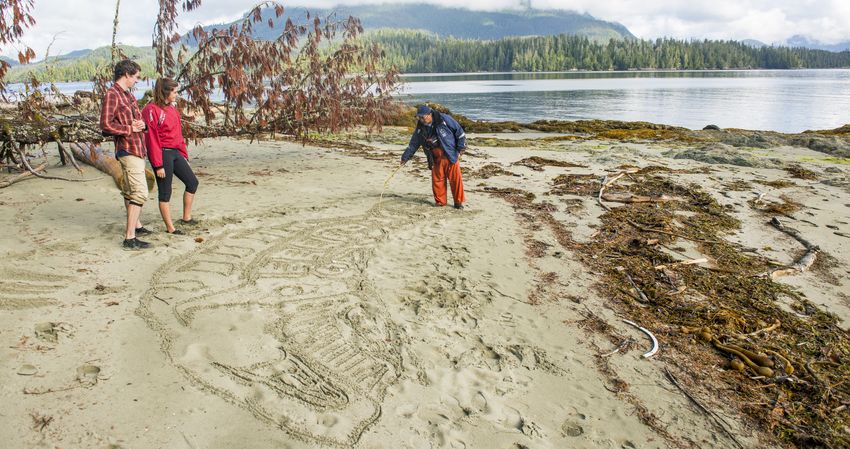
The BGI is patrolled by the Tseshaht
Beachkeepers throughout the summer months
to monitor their traditional territory, maintain
camping areas, provide information and cultural
interpretation services, check permits, and assist
Parks Canada staff.
Note: Due to weather, COVID-19 protocols,
and/or operational concerns, the Broken Group
Islands, or portions of it, may not be accessible
to the public.

      Pacific Rim National Park Reserve of Canada - Broken Group Islands Paddler’s Preparation Guide 2021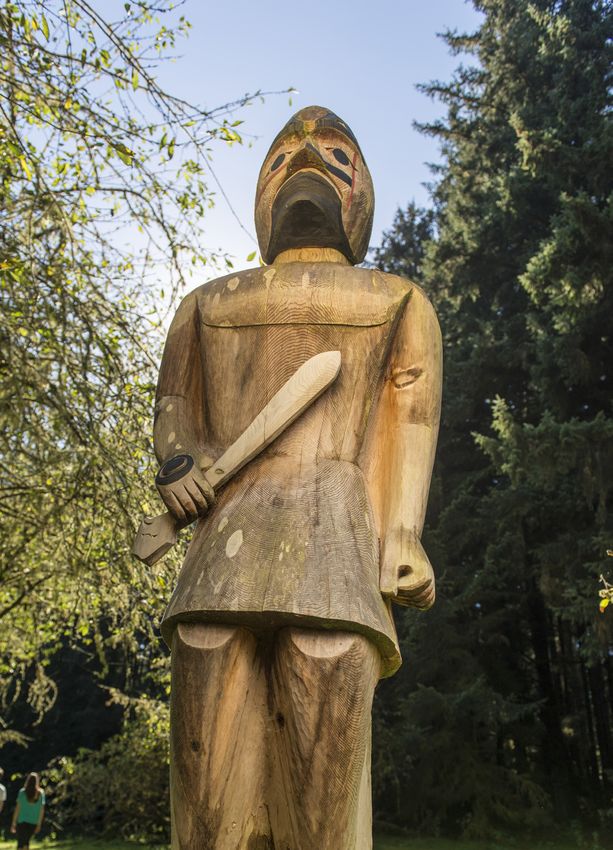
4

  ACCESS

The Broken Group Islands are only                        Commercial companies must have a valid
accessible by boat.                                      Pacific Rim NPR business licence if operating in
                                                         the BGI. Carefully select a company that meets
Road Access to launch points:                            the needs of your group. Visit our website or
Paddlers can park and launch kayaks from the             contact Parks Canada for a list of commercial
Toquaht Nation’s Secret Beach Campground and             operators that hold valid Parks Canada business
Kayak Launch. For more information regarding             licences. See pages 12-13 for contact details.
fees and directions please refer to the Secret
Beach Campground and Kayak
Launch contact information on
page 12.
Drop off by marine transport:
Transport companies with valid
Pacific Rim NPR business licenses
are permitted to drop clients off
throughout the BGI (Drop offs are
not allowed at designated islands/
camping areas).
With permission from the Tseshaht
First Nation Beachkeepers, Keith
Island has a dock, outhouse and
sheltered area to facilitate drop offs
and pick ups. (Please note that this
may not be available in 2021 due to
COVID-19 protocols.)
See pages 12-13 for Beachkeeper
and marine transport companies’
contact information.
Lady Rose Marine Services Limited
carries paddlers and their boats on
a scheduled basis to the protected
waters just north of the BGI. See
page 12 for their contact details.
Kayak rentals are available from
operators based in the nearby
communities, but paddling
from Bamfield or Ucluelet is
not recommended due to the
exposed passages of Imperial Eagle
and Loudon Channels.

     Pacific Rim National Park Reserve of Canada - Broken Group Islands Paddler’s Preparation Guide 2021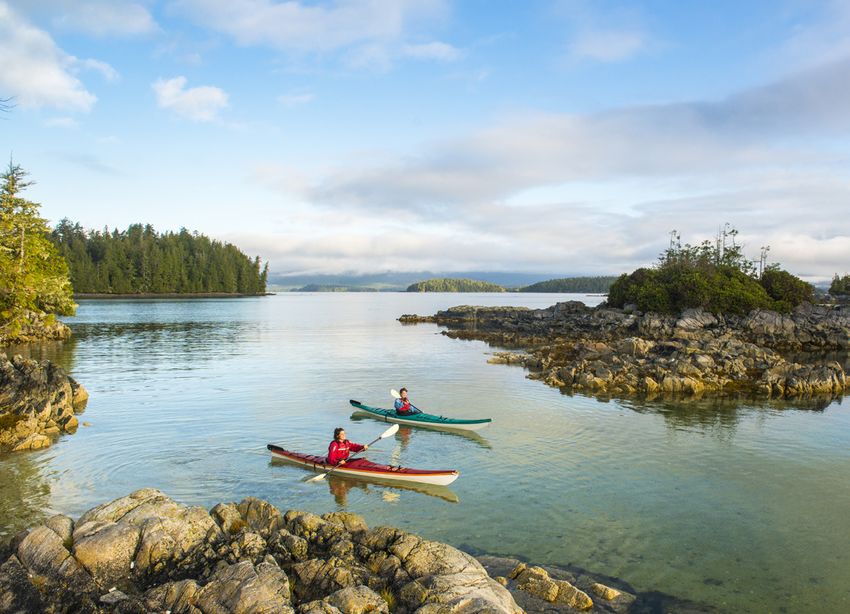
5

  NATIONAL PARK ENTRY PASS

All visitors to Pacific Rim NPR are required to          Pacific Rim National Park annual entry passes
have a valid National Park Entry Pass at all times       can be purchased at any Pacific Rim NPR facility,
while they are visiting the national park reserve.       they can be purchased online at http://www.
Youth (17 years of age and younger) receive free         commandesparcs-parksorders.ca/webapp/wcs/
entry into all of Parks Canada’s places but still        stores/servlet/en/parksb2c/single-location-pass
require a National Park Entry Pass. This means           or from Secret Beach Campground and Kayak
that in addition to requiring a valid Broken Group       Launch, Alberni Valley Chamber of Commerce,
Islands Backcountry Camping Permit, all visitors         Tourism Ucluelet, or Tourism Tofino.
18 years of age and older are also required to
purchase a valid National Park Entry Pass.               Parks Canada annual discovery passes can be
                                                         purchased at any Pacific Rim NPR facility or
The revenue from national park entry fees                they can be purchased online at http://www.
remains within the Coastal BC Field Unit                 commandesparcs-parksorders.ca/webapp/wcs/
to support the services and facilities that all          stores/servlet/en/parksb2c/discovery-pass.
visitors enjoy (including campsite facilities and
amenities, visitor safety, signs, programs, etc.).       Commercial Groups/Tours must purchase their
The Broken Group Islands Backcountry Camping             national park entry passes through the Parks
Permits do not include the national park entry           Canada Commercial Sales Office (see your
fees, so you need to have a valid camping permit         business licence application for more details).
and a valid National Park Entry Pass at all times.       Anyone mooring overnight in the BGI (in Pacific
Pacific Rim National Park daily entry passes can         Rim National Park Reserve waters) requires a
be purchased at any Pacific Rim NPR facility             valid National Park Entry Pass.
or from Secret Beach Campground and Kayak                Boating day users also require a valid National
Launch, Alberni Valley Chamber of Commerce,              Park Entry Pass when in the marine waters of
Tourism Ucluelet, Tourism Tofino or the                  Pacific Rim NPR.
Wickanninish Inn.

    Pacific Rim National Park Reserve of Canada - Broken Group Islands Paddler’s Preparation Guide 2021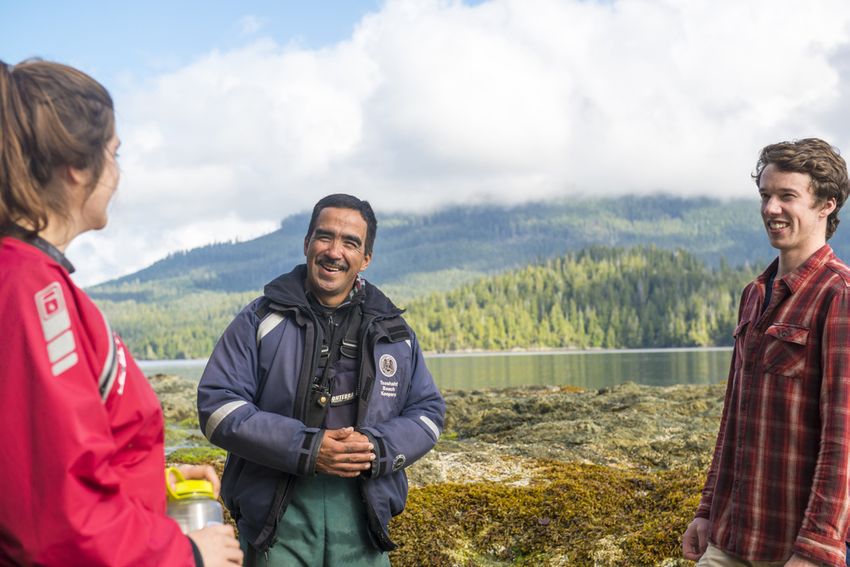
6

    CAMPING

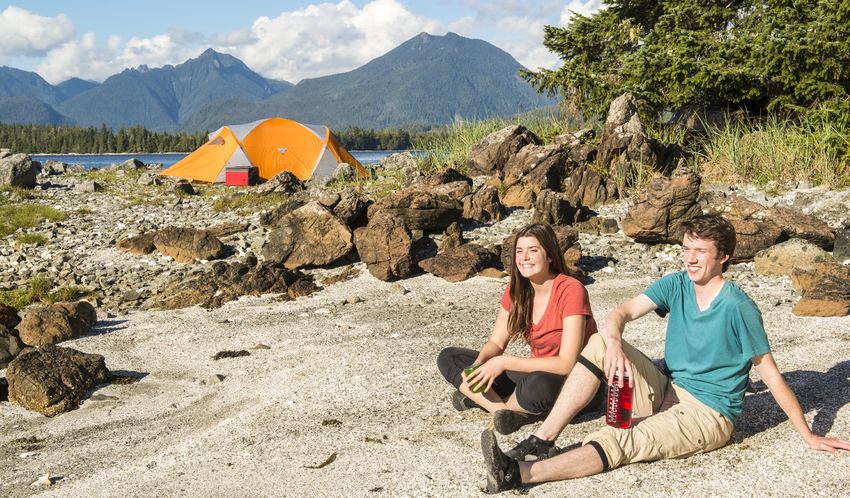
Camping in the High Season                                 Reservations are available beginning on April
                                                           7, 2021 at 8 a.m. PDT. Payment can be made by
Peak visitation occurs in the BGI from July                VISA, MasterCard, or American Express.
through August. Campers arriving in this period
can expect to share camping areas with many                When making a reservation, have the
other visitors. To avoid peak season crowds,               following ready:
try camping between May and June, or in
September.                                                 •   Preferred camping dates – first choice and
                                                               alternate date
Camping Regulations
                                                           •   Preferred camping locations – preferred and
•   Camping in the BGI must be within the                      alternate islands
    designated camping areas on Hand, Turret,
    Gibraltar, Willis, Dodd, Clarke, and Gilbert           •   Point of access location; where you will begin
    Islands. Check your chart for their exact                  paddling from
    locations.                                             •   Number of campers in your group (maximum
•   Maximum stay in the BGI is 14 days.                        group size is 12)

•   Maximum stay at any one camping area is 4              •   Email address to send confirmation and
    nights.                                                    information to

•   Maximum group size is 12. Groups larger                •   Means of payment: Visa, MasterCard or
    than 12 people must split into smaller groups              American Express
    and occupy designated campsites on different           Cancellation Policy:
    islands. This applies to private, commercial,
    and non-profit groups.                                 Reservation Fee: is non-refundable.

•   Dogs are not permitted in the Broken Group             BGI Backcountry Camping Permit:
    Islands, unless they are service pets. Pets can
                                                           If you cancel a backcountry reservation at least 3
    disturb wildlife, interfere with other visitors’
                                                           days prior to your scheduled day of arrival: you
    enjoyment of the area and can introduce
                                                           will receive a full refund less the original non-
    disease to island wildlife.
                                                           refundable reservation fee and the cancellation
•   All National park regulations are enforced.            fee.

Backcountry Camping Permits and Fees                       If you cancel a reservation less than 3 days prior
                                                           to your scheduled day of arrival, but before
Anyone camping in the BGI must have a                      2:00 p.m. on your scheduled day of arrival: you
backcountry camping permit. Backcountry                    will receive a full refund less the original non-
camping permits are $10.02 per person per night            refundable reservation fee, the cancellation fee,
from May through September.                                plus the fees for the first night of backcountry
Backcountry camping permits are only available             camping.
through the Parks Canada Reservation System.               Consider the Needs of other Campers
No spaces will be available for stand-by                   •   This is a wilderness setting: loud noise,
(first come first serve).                                      generators, stereos or air compressors are not
To reserve call 1-877-RESERVE or visit www.                    allowed.
reservation.pc.gc.ca                                       •   Leave space between you and your neighbour.
     Pacific Rim National Park Reserve of Canada - Broken Group Islands Paddler’s Preparation Guide 2021
7
• Cook away from neighbouring tents. • Leave all vegetation as you find it. A rare
lichen, the seaside centipede lichen, has been
• Tent Pads: For fairness to all guests, when found in the BGI. Breaking lower branches
making your reservation please select the from trees could have a devastating impact on
exact number of “Tent Pads” on your booking the species.
for the exact number of tents that you will be
bringing. Technically, there are no “tent pads” • Store food and garbage securely, either inside
in the BGI but this terminology is used to kayak hatches or in rodent and crow-proof
determine how many tents you will be using at containers. You are living with wildlife in the
each campsite. islands.
Your Impacts on the Environment • Pack out all garbage. There is no garbage pick-
up in the BGI.
Parks Canada strives to manage activities
within the national park reserve to protect • Use composting outhouses for bodily waste
the natural and cultural heritage of the area. only. They are not compost piles for food
Your appropriate, respectful behaviour (low scraps.
impact camping) will not only lead to a safe and
rewarding experience but will also contribute to • Do not dig trenches around tents and when
a healthy, functioning ecosystem. Parks Canada, leaving, replace rocks that have been used to
First Nations and visitors’ collective actions will secure tent pegs.
ultimately ensure that future generations can • Use a camp stove rather than a fire for
appreciate and enjoy this special place. When you cooking.
leave a camping area, ensure the area is in at least
as pristine a condition, or better, as when you • Keep fires to a minimum, always below high
found it. tideline, and never in the forest. Do not burn
wood any thicker than your wrist and ensure
Tips: the fire has burned out completely before
• Use biodegradable soap. you leave the area. Never abandon a fire:
smouldering fires have ignited, burning the
• Use ropes (not nails) to hang tarps etc. ancient rainforest.
• Remove all ropes. Disassemble primitive • Assess the area for dangerous trees before
furniture and structures before departing. setting up camp.
Campground
Hardening and
Rehabilitation
Parks Canada performs
restoration work to
protect exposed shell
middens, bare roots
and mineral soils on the
campground islands.
Please respect any
fencing or signage you
may encounter.
Pacific Rim National Park Reserve of Canada - Broken Group Islands Paddler’s Preparation Guide 20218
HAZARDS AND REGULATIONS
To help you maximise the enjoyment and Hypothermia: Hypothermia is the lowering
safety of your trip below are some hazards and of the core body temperature below a safe
responsibilities your entire party should be aware level causing the body to lose the ability to
of before setting out: generate heat and is a major killer of outdoor
recreationists. Boaters beware; body heat is
Weather: Strong winds can funnel through lost 25 times faster in water than in air. The
channels. Winds tend to rise in the late morning maximum survival time in 10ºC water is 2-3
and drop in the evening. Travel through Loudon hours. The water temperature in Barkley Sound
and Imperial Eagle Channel by kayak, canoe ranges from 7-15ºC. Know how to prevent,
and small craft is not recommended. During identify and treat hypothermia.
fair weather, winds blow predictably from
the west and northwest. Winds are from the Stinging plants and insects are present on the
southeast just before and during adverse weather. islands.
However, there are always exceptions to wind
and weather patterns. Wind-generated waves, Group Travel: The following represent best
especially those influenced by currents, can practices for group travel:
make for extremely rough or hazardous paddling • Travel in a group of three or more boats to
and small craft handling. Boaters should plan facilitate rescue and emergency response.
on moderate to severe chop in Coaster Channel Self-rescue may be the difference between life
during the middle of the day, particularly when and death.
it is hot and sunny. It is recommended to travel
through Coaster Channel when winds are light • Be prepared for a capsized or damaged boat;
(generally early morning). Heavy wind, rain, fog, more importantly, avoid situations that may
and strong tidal currents here can be extremely be hazardous.
dangerous. Knowledge of navigation, boat
• Stay within normal talking distance of one
handling, wilderness survival, weather patterns
another and follow shorelines where possible.
and signs, is essential for travel and camping in
the area. • Know the abilities (mental and physical)
of each member of your group and plan
Sea State: Large ocean swell (long distance
accordingly.
ocean-generated waves), steep chop (local wind-
generated waves), tidal currents, cold water; all • Travel at the speed of the slowest group
pose potential problems for boaters. member.
Seascape: A maze of islands, islets, reefs, • Regularly assess the condition of group
submerged rocks, and surge channels can members.
be difficult to navigate at any time, but are
particularly dangerous in ocean swell or limited • Alcohol, wilderness settings, and water
visibility. transport do not mix.
Marine Traffic: Kayaks, sailboats and • Personal hygiene while camping can be
motorboats all use the BGI. Motorized vessels challenging; wash hands frequently.
often cannot see paddlers nor are they visible on
Freshwater: Freshwater sources are unreliable
radar. Know your responsibilities. All marine
in Barkley Sound; bring all the potable water your
traffic is subject to marine collision regulation.
group requires. We recommend 4-6 litres per
Contact The Boating Safety Info Line for details.
person, per day.
See Other Services for their contact information.
Pacific Rim National Park Reserve of Canada - Broken Group Islands Paddler’s Preparation Guide 20219
LIVING WITH WILDLIFE
Viewing wildlife while in the BGI is exciting. neutral idle, if safe to do so, when within 400
Please remember that you have responsibilities metres of a killer whale.
as well as opportunities when you encounter
wildlife. Vessels include boats, kayaks, paddleboards and
any other pleasure craft. All vessel operators need
Bare Campsite Program: leave no food to be aware when boating around killer whales.
items or other attractants, such as food
packaging, toothpaste, soap, dish rags/ Please stay informed on updated rules.
scrubbers and pots/pans unattended. More information about protecting Canada’s
Scavenging animals such as crows, deer, rodents, endangered whales can be found here:
raccoons and even wolves are efficient and
creative scavengers. Secure food and other Department of Fisheries and Oceans
attractants in tightly closed containers
Transport Canada
when not in immediate use.
Sea lions, seals and whales are frequently
Black bears, wolves and cougars are in
sighted. There are established guidelines for
the BGI. To avoid a dangerous encounter with
viewing marine wildlife, these guidelines require
wildlife stay alert and watch for signs of
boaters, including kayakers, to keep a minimum
recent activity. Keep these points in mind:
distance from all marine wildlife. For federal
• Keep children close to you. guidelines referring to marine mammal viewing,
contact the Department of Fisheries and Oceans
• If you encounter a predator: (DFO) (see contact section).
• Face the animal and retreat slowly, giving Note: sea lions are known to carry a disease
them an avenue of escape. called leptospirosis that can be transferred to
• Do not run or play dead. humans. Accordingly, never touch a marine
• If the animal does not leave or approaches, mammal, dead or alive.
try to scare it away by appearing big and
aggressive: shout, wave a stick/paddle or
throw rocks.
• In the unlikely event of an attack fight
back; target the eyes and nose; and report
to Parks Canada.
Southern Resident killer whales are
critically endangered. By adopting good practices
when you navigate through the national park
reserve, you contribute to protection efforts. Your
compliance with regulations is vital!
• Vessel operators are required to remain a
minimum of 400 metres from all killer whales
in B.C. and the Pacific Ocean.
• Vessel operators are also asked to reduce
their speed to less than 7 knots when they are
within 1000 metres of a killer whale, and turn
off their echo sounders and turn engines to
Pacific Rim National Park Reserve of Canada - Broken Group Islands Paddler’s Preparation Guide 202110
MARINE HARVESTING IN PACIFIC RIM NPR
Are you thinking of catching or harvesting finfish, Naturally occurring toxins such as Paralytic
shellfish or other marine creatures? Please Shellfish Poisoning (PSP) - or “red tide” - have
note that the national park reserve is a been found in the shellfish in Barkley Sound
voluntary no-harvest zone. The national (e.g. clams, oysters and scallops). When humans
park reserve was established to protect the consume contaminated shellfish, symptoms
diversity of life in this area for present and future can vary from a mild tingling of the lips and
generations. With your help, Parks Canada tongue, to paralysis and death. Shellfish harvest
can protect both the marine and the terrestrial openings and closures are based on rigorous
environment. monitoring procedures by DFO (see contact
section).
Harvest limits are reduced within PRNPR. If you
are harvesting you must carry the appropriate Boating near caves and cliffs impacts nesting
licenses (Tidal Waters Sports Fishing Licence) seabirds and is hazardous. Stay well away from
and follow the DFO regulations and closures. these features. Regulations prohibit entry into
caves.
As of August 14th, 2002, DFO permanently
closed a large section of the BGI to fin-fishing.
This area is now a Rockfish Conservation Area
(RCA). Consult DFO for details of this closure.
TRIP PLAN
File a trip plan before you leave for the BGI
backcountry, with a reliable person and upon
completion of your trip, inform your contact that
you are out of the backcountry.
A trip plan should be in writing and include:
• The number and names of people in your
group;
• Trip length in days;
• Arrival and departure times and dates;
• Specific route plans;
• Camping plans;
• Tent: number, make/model/colour of tent;
• If applicable, vehicle licence #, make/model/
colour and parking location;
• If applicable, the make and colour of each
vessel.
Pacific Rim National Park Reserve of Canada - Broken Group Islands Paddler’s Preparation Guide 202111
EQUIPMENT
Regulated equipment: • Potable water
• Stove, fuel and cooking kit
See Canada Coast Guard Safe Boating Guide or • Food
contact Office of Boating Safety for equipment • Knife
that must be carried on board your vessel. • Rope, shock cords
Recommended equipment: • Tent with waterproof fly and floor
• Sleeping bag and insulation pad
• Hydrographic (nautical) charts #3670 and • Waterproof bags
#3671 and a waterproof chart bag • Flashlight
• Canadian Tide and Current Tables (refer to • Toiletries (hand sanitizer, sun- and lip-
Tofino tables) screens)
• GPS with chart plotter and tide table • Sunglasses
• Watch • Airtight container for garbage
• Licenced marine VHF Radio • Toilet paper
• Compass • Camera
• Cellular phone (check with your carrier for • Spare paddle
coverage) • Air horn (for scaring wildlife away)
• First aid kit • Pepper spray
• Survival kit (e.g. waterproof matches, knife, • Clothing; choose materials that maintain
emergency food, flares and blanket) warmth when wet, dry quickly, can be layered
• Equipment repair kit (wool or polypropylene)
• Personal Flotation Device (PFD) and whistle • Durable rain gear (test it beforehand)
• Self-rescue aids, paddle floats, towlines • Warm hat and gloves
• Paddling gloves, hat • Footwear
• Wetsuit • Towels
Pacific Rim National Park Reserve of Canada - Broken Group Islands Paddler’s Preparation Guide 202112
PACIFIC RIM NATIONAL PARK RESERVE
Pacific Rim National Park Reserve 2040 Pacific Rim Highway
Administration Office P.O. Box 280, Ucluelet, BC V0R 3A0
250-726-3500 (year-round)
Pacific Rim National Park Reserve (24 hours)
Resource Conservation & 1-877-852-3100 (toll-free) or
Park Warden Office 1-250-726-3604
Parks Canada Information 2791 Pacific Rim Highway
Pacific Rim Visitor Centre 250-726-4212
Open daily May to September
Parks Canada Email: pc.pacrim.info.pc@canada.ca
Parks Canada Website: www.pc.gc.ca/pacificrim
Pacific Rim National Park Reserve - www.pc.gc.ca/en/pn-np/bc/pacificrim/activ/activ13#bgi
Licensed Operators List for BGI:
TRANSPORTATION (subject to change)
Lady Rose Marine Services 1-800-663-7192 or 250-723-8313 (April 1 - Sept 30)
(Passenger Ferry) www.ladyrosemarine.com
(Port Alberni to Bamfield passenger ferry)
BC Ferries 1-888-223-3779 or 250-386-3431 (international)
*BCF on cell www.bcferries.com
(Vancouver, Victoria, Nanaimo)
ACCOMMODATION (subject to change)
Secret Beach Campground and Kayak 250-726-8349
Launch - Toquaht Nation www.secretbeach.ca
secretbeach@toquaht.ca
Bamfield Chamber of Commerce 250-728-3006
Bamfield Centennial Park & Campground info@bamfieldchamber.com
and Information Center www.bamfieldchamber.com
Pacific Rim National Park Reserve of Canada - Broken Group Islands Paddler’s Preparation Guide 202113
OTHER USEFUL REFERENCES (subject to change)
Beachkeepers, Tseshaht First Nation 1-250-266-0620
Alberni Valley Chamber of Commerce 2533 Port Alberni Hwy.
Port Alberni, BC V9Y 8P2
250-724-6535
www.albernichamber.ca jennifer@albernichamber.ca
Nuu-chah-nulth First Nations 1-877-677-1131 or 250-724-5757
Tribal Council www.nuuchahnulth.org
Bamfield Chamber of Commerce 250-728-3006
info@bamfieldchamber.com
www.bamfieldchamber.com
Fisheries and Oceans Canada Port Alberni Office - 250-720-4440
Pacific Region Fishing and Paralytic Shellfish Poisoning Information
Port Alberni Office 24 hour line [sub area 23 (8)]
604-666-2828 or 1-866-431-3474
www.dfo-mpo.gc.ca
Transport Canada Office of Boating 1-866-995-9737
Safety www.tc.gc.ca/eng/marinesafety/debs-obs-menu-1362.htm
Pacific Rim National Park Reserve of Canada - Broken Group Islands Paddler’s Preparation Guide 2021You can also read


