Wellington Dog Policy - ADOPTED 2016 - Wellington City Council
←
→
Page content transcription
If your browser does not render page correctly, please read the page content below
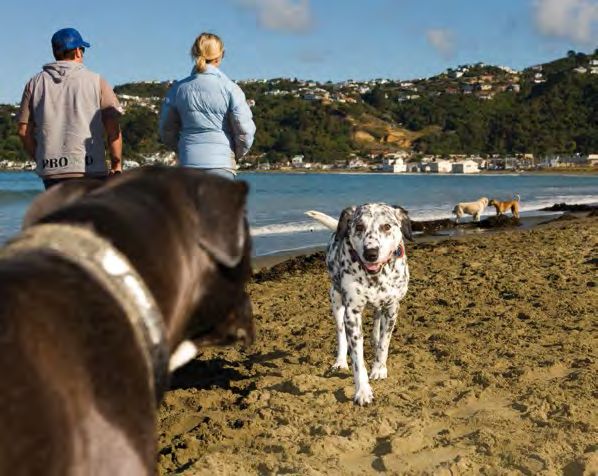
Wellington
Dog Policy
ADOPTED 2016
Contents

1.         INTRODUCTION .................................................................................................................................................................................................................... 4

2.         PURPOSE ............................................................................................................................................................................................................................................. 5

3.         DEFINITIONS .............................................................................................................................................................................................................................. 6

4. RESPONSIBILITIES ...........................................................................................................................................................................................................7

           4.1 Responsibilities of the Council........................................................................................................................................................7

           4.2 Responsibilities of Dog Owners .....................................................................................................................................................7

5.         ACCESS TO PUBLIC PLACES ............................................................................................................................................................................ 8

           5.1               Designated public places..................................................................................................................................................................... 8

           5.2               Controlled public places....................................................................................................................................................................... 8

           5.3               Exercise areas ......................................................................................................................................................................................................... 8

           5.3.1 Criteria to determine exercise areas............................................................................................................................... 8

           5.3.2 Criteria to determine if a designated exercise
                 area is suitable for fencing ............................................................................................................................................................... 8

           5.4               Prohibited places............................................................................................................................................................................................... 9

           5.4.1 Right of access to a prohibited place .............................................................................................................................. 9

           5.4.2 Seal colony restrictions ........................................................................................................................................................................ 9

           5.5               Unattended dogs ............................................................................................................................................................................................... 9

           5.6               Exemptions ................................................................................................................................................................................................................. 9

           5.7               Classifcation of areas under other legislation ............................................................................................. 9

6. REGISTRATION, FEES AND EXPENDITURE .................................................................................................................. 10

           6.1               Registration ............................................................................................................................................................................................................ 10

           6.2               Fees ....................................................................................................................................................................................................................................... 10

           6.2.1 Registration fees ............................................................................................................................................................................................ 10

           6.2.2 Other fees ................................................................................................................................................................................................................... 10

           6.3               Dog revenue and expenditure                                                                        .............................................................................................................................................   10

7.         MICROCHIPPING DOGS ........................................................................................................................................................................................11

8. ACTIVELY PROMOTING RESPONSIBLE DOG OWNERSHIP ................................................................ 12

           8.1               Responsible Dog Owner status.............................................................................................................................................. 12

           8.1.1 Criteria for Responsible Dog Owner status...................................................................................................... 12

           8.1.2 Cancellation of Responsible Dog Owner status ....................................................................................... 12

9. EDUCATION ................................................................................................................................................................................................................................ 13

           9.1               Dog obedience .................................................................................................................................................................................................... 13

2                                      Wellington City Council | Dog Policy 2016
10. MINIMISING NUISANCE ..................................................................................................................................................................................... 14

           10.1 Nuisance....................................................................................................................................................................................................................... 14

           10.2 Abatement of nuisance ...................................................................................................................................................................... 14

           10.3 Barking dogs ......................................................................................................................................................................................................... 14

11. MENACING AND DANGEROUS DOGS .......................................................................................................................................... 15

           11.1              Classifcation as a menacing dog ....................................................................................................................................... 15

           11.2              Neutering of menacing dogs ..................................................................................................................................................... 15

           11.3              Dangerous dogs ................................................................................................................................................................................................ 15

12. ENFORCEMENT...................................................................................................................................................................................................................16

           12.1              Impounding and seizing ..................................................................................................................................................................16

           12.2 Impounding fees ............................................................................................................................................................................................16

           12.3 Infringement notices ..............................................................................................................................................................................16

           12.4 Prosecution ..............................................................................................................................................................................................................16

           12.5 Probationary owners...............................................................................................................................................................................16

           12.6 Disqualifcation of ownership ................................................................................................................................................ 17

13. BYLAWS .............................................................................................................................................................................................................................................18

           13.1              Notice to abate dog nuisance....................................................................................................................................................18

           13.2 Restriction on diseased dogs or dogs on heat.............................................................................................18

           13.3 Fouling of public places .....................................................................................................................................................................18

           13.4 Dogs in public places ...............................................................................................................................................................................18

           13.5 Council permission required for more
                than three dogs .................................................................................................................................................................................................19

APPENDIX A: .........................................................................................................................................................................................................................................20

Table 1: Exercise Areas ..........................................................................................................................................................................................................20

Table 2: Beach Exercise Areas ...................................................................................................................................................................................22

Table 3: Beach Exercise Areas (Specifed Time) ........................................................................................................................22

Table 4: Beach Areas Restricted During Summer ..................................................................................................................22

Table 5: Prohibited Public Places .........................................................................................................................................................................23

Table 6: Prohibited Place (Specifed Time) ........................................................................................................................................ 24

APPENDIX B: Maps ..................................................................................................................................................................................................................... 24

APPENDIX C: Ofences under the Dog Control Act 1996 ...........................................................................................25

APPENDIX D: Infringement ofences under the
Dog Control Act 1996 .................................................................................................................................................................................................................27

                                                                                                                                                                                                                 Wellington City Council | Dog Policy 2016   3
1                                Introduction

The Dog Control Act 1996 referred to as ‘the Act’,
requires the Council to develop a policy on dog
control. The Dog Policy specifes:
• the nature and application of any bylaws made to
  give legal powers to implement the Dog Policy and
  determine what is considered to be an ofence
• public places where dogs will be controlled
  on a leash, prohibited or allowed of leash
  (exercise areas)
• whether dogs classifed as menacing must be
  neutered and the criteria used to decide whether
  to neuter
• fees and expenditure
• education programmes (for dogs and owners)
• when owners may be classifed as probationary
  owners or disqualifed from owning dogs
• infringements set by the Dog Control Act 1996.
The Council recognises that the majority of dog
owners in Wellington are responsible and that most
interaction between dogs and the public is positive.

This policy aims to achieve a balance between the
control of dogs and recognition of the community
health benefts of dog ownership. The policy will
be implemented in conjunction with the Wellington
Consolidated Bylaw 2008 – Part Two: Animals.

4            Wellington Consolidated Bylaw 2008 | Dog Policy 2016

2                            Purpose

• To ensure that the owners of dogs comply with
  their obligations under the Act, that dogs are
  well cared for and Wellingtonians are able to
  enjoy dog ownership.
• To prevent any potential danger caused by dogs
  to the public, wildlife and natural habitats.
• To minimise the risk of distress and nuisance
  caused by dogs to the public, wildlife and natural
  habitats.
• To actively promote the responsible ownership
  of dogs.
• To provide for the reasonable exercise and
  recreational needs of dogs and their owners.

                                                       Wellington Consolidated Bylaw 2008 | Dog Policy 2016   5
3 Defnitions
Central area means the area zoned “central area” the occupier of the place is lawfully entitled to exclude
Council’s operative District Plan. or eject any person from that place; and includes
any aircraft, hovercraft, ship or ferry or other vessel,
Dangerous dog means any dog classifed as dangerous
train, or vehicle carrying or available to carry
by the Council under section 31 or 33ED of the Act.
passengers for reward.
Disability assist dog means a dog trained (or in
Roaming dog means any dog that is found in any
training) to assist a person with a disability as defned
public place or on any land or premises other than that
under the Act, including any guide dog, hearing ear
occupied by the owner and is unaccompanied by their
dog, or companion dog.
owner.
Domestic animal means any animal (including a bird
Stock means any animal that is kept within a fence or
or reptile) kept as a domestic pet; any working dog;
enclosure for domestic or farming purposes.
any other animal kept by any person for recreational
purposes or for the purposes of that person’s Under control a dog can be kept under control by a
occupation or employment. person by physically limiting its movements, or by
using direct commands.
Infringement ofence has the meaning given to it in
section 65(1) of the Act. Working dog means any dog that works for the
Government, the Police, is a disability assist dog, or is
Menacing dog means any dog classifed as menacing
part of commercial activity.
under sections 33A or 33C or 33ED of the Act.
Neutered dog means a dog that has been spayed or
castrated; and does not include a dog that has been
vasectomised.
Nuisance refers to the dictionary defnition (a person,
thing, or circumstance causing trouble or annoyance;
anything harmful or ofensive to the community or a
member of it and for which a legal remedy exists) or
to a statutory nuisance as defned in Section 29 of the
Health Act 1956.
Owner has the meaning as defned under the Act
including every person who owns a dog; or has a dog
in his or her possession, or the parent or guardian of a
person under the age of 16 years who owns a dog.
Probationary owner means any owner classifed as
probationary under section 21 of the Act.
Protected wildlife means any animal for the time
being absolutely or partially protected under the
Wildlife Act 1953, and has the same meaning as
defned under the Act.
Public place means a place that, at any material time,
is open to or is being used by the public, whether free
or on payment of a charge, and whether any owner or
6 Wellington City Council | Dog Policy 20164 Responsibilities
4.1 Responsibilities of the Council • ensure their dog does not cause any public nuisance
Dog owners have a responsibility to provide for their • ensure that the dog is registered with the Council,
dog’s welfare. To support dog owners and the welfare and that the Council is notifed of any change of
of dogs in Wellington, the Council will: address or ownership of the dog
• provide dogs and their owners with a reasonable • ensure that the dog is kept under control at all times
level of access to public places, however this will be or confned in such a manner it cannot freely leave
balanced with the need to protect public safety and its premises
to minimise distress and nuisance to the public at • ensures that the dog has adequate physical well-
large. being through acceptable nutrition, environmental,
• provide designated exercise areas enabling dog health and behavioural stimulus, and adequate
owners to exercise their dogs of-leash provided the mental well-being
dogs are kept under control at all times • take all reasonable steps to ensure that the dog does
• consider restricting or prohibiting dog access to not cause a nuisance to any other person, whether
public places where the likelihood of confict exists by persistent and loud barking or howling or by any
between dogs and the public, while considering other means
existing and previous use of the area • take all reasonable steps to ensure that the dog does
• restrict or prohibit dog access to public places where not injure, endanger, intimidate, or otherwise cause
the likelihood of confict exists between dogs and distress to any person
wildlife • take all reasonable steps to ensure that the dog does
• actively encourage responsible dog ownership not injure, endanger, or cause distress to any stock,
through the promotion of the Responsible Dog poultry, domestic animal, or protected wildlife:
Owner (RDO) status • take all reasonable steps to ensure that the dog does
• promote public safety, responsible dog ownership not damage or endanger any property belonging to
and provisions of the Act and the Council’s Dog any other person
Policy through education programmes for dog • comply with the Act, and any regulations and
owners and the public bylaws made under the Act.
• encourage the use of approved education and
obedience courses for dogs.
When dogs have not received proper care and
attention the Council will ensure that the appropriate
action is taken and may:
• issue a warning or infringement notice
• prosecute where it considers the ofence or the
efects of the ofence are signifcant.
4.2 Responsibilities of Dog Owners
The responsibilities of dog owners are to:
• immediately pick up the faeces of their dog if it
defecates in a public place. Failing to pick up dog
faeces and properly dispose of it could result in a
$300 infringement
Wellington City Council | Dog Policy 2016 75 Access to public places
5.1 Designated public places of-leash before 10am and after 7pm in summer (from
Under the Act, councils can designate public places 1 December until 1 March the consecutive year) and
where dogs are prohibited or allowed on or of-leash. of-leash at all times in winter.
These areas are enforced using the related bylaws. Dogs can exercise and socialise of-leash in these
Designated public places are classifed as follows: areas as long as they remain under the control of their
owner. In an exercise area, dogs must be verbally
• Controlled public places – dogs are allowed on a
under direct control.
leash
• Exercise areas – dogs can exercise and socialise A list of all exercise areas is provided in Appendix A.
of-leash Maps of all exercise areas are provided in Appendix B.
• Prohibited places – dogs are not allowed in these Dog exercise areas may be considered for other
areas at any time uses over time. This intends to allow for continued
Dogs must be under the control of their owner at improvement in the quality of the areas available
all times on or of-leash. A list of exercise areas and for dogs and other park users, and to allow for the
prohibited places are attached in Appendix A. protection of wildlife. If this occurs, the existing
and previous use of the area will be considered.
Wellington City has the additional classifcations of:
Consultation will take place before any decisions are
• Beach exercise areas – beach areas where dogs can made and, where possible, compensatory areas will
exercise of-leash. be provided.
• Beach areas restricted during summer – dogs are
prohibited from these areas from 10am to 7pm every 5.3.1 Criteria to determine exercise areas
day during summer (from 1 December until 1 March
The criteria used to determine exercise areas for
the consecutive year). These areas are classed as
dogs include:
controlled public places where dogs can be on-leash
before 10am and after 7pm in summer and on-leash • the area is not used extensively for sporting or other
at all times in winter. purposes
• Exercise area (specifed times) – dogs are allowed • the area is of signifcant size and has appropriate
of-leash before 10am and after 7pm in summer access
(from 1 December until 1 March the consecutive • there are sufcient sight lines
year) and of-leash at all times in winter. • the area is well bounded from adjacent areas
• Prohibited place (specifed time) – where dogs are • no potential risk to other groups.
prohibited during the times specifed. • new areas must be made safe, where appropriate,
if they are adjacent to a road
5.2 Controlled public places • the potential risk to wildlife
Dogs must be on-leash and under the control of their
owners at all times in public places, unless in an 5.3.2 Criteria to determine if a designated exercise
exercise area or exercise area (specifed times). area is suitable for fencing
The criteria that may used to determine if an exercise
areas is suitable for fencing includes:
5.3 Exercise areas
• that the area is a suitable size
The Council provides designated of-leash exercise
areas and beach exercise areas across the city. The • its location and proximity to other exercise areas
city also has exercise areas where dogs are allowed • parking and accessibility
8 Wellington City Council | Dog Policy 20165.4 Prohibited places Disability assist dog exemptions require written
authorisation from the appropriate organisation.
Dogs will be restricted or prohibited in places that are
used frequently by the public and areas where there Working dogs will also be exempt from the restrictions
is the presence of signifcant wildlife and/or wildlife specifed, if they are working at the time.
habitat.
Prohibited places are listed in Appendix A, Table 5.7 Classifcation of areas under
5. The city also has areas that are classifed as other legislation
“Prohibited places (specifed times)” where dogs are
Access for dogs can be controlled by other legislation,
prohibited during the times specifed. These places are
for example the:
listed in Appendix A, Table 6.
• Conservation Act 1987 – “controlled dog areas” and
“open dog areas”
5.4.1 Right of access to a prohibited place
• National Parks Act 1980 – “national park”
Dog owners are allowed:
At present there are no areas in Wellington City that
• to move through a play area specifcally to move
are classifed according to these provisions.
from one side to the other if there is no alternative
route but they cannot stop with their dog in the
play area
• access to Wellington International Airport if they
intend to transport their dog
• to access the side-line of a sportsfeld, if the marked
sports surface is not in use.
5.4.2 Seal colony restrictions
Areas where seals congregate and “haul out” in the
area of Sinclair Head and on the south coast will be
classed as prohibited public places.
5.5 Unattended dogs
Dogs are not allowed to be left unattended in any public
place, including the Central Area of the city. Dog must
be on-lead and with their owners at all times.
Dogs under the control of their owner may stop in
public places, including the Central Area of the city.
5.6 Exemptions
Disability assist dogs are exempt from all public
place restrictions specifed in this policy. They do
not need to be on-leash in controlled or prohibited
public places.
Wellington City Council | Dog Policy 2016 96 Registration,
fees and expenditure
6.1 Registration • collection or delivery of a dog on behalf of an owner
The maintenance of a dog registration system is both a • euthanasia of a dog at the owner’s written request
statutory requirement and an essential component of • replacement registration tags
the efcient running of a dog control service.
• Responsible Dog Owner status (this includes site
Information will be provided to dog owners and inspection fees).
potential owners about their obligation to register Fees are set and advertised before the beginning of
their dog. each registration year. The registration year runs from
1 July to 30 June the consecutive year.
Registration will be monitored and the following
action taken against owners who fail to register
their dog: 6.3 Dog revenue and expenditure
• issuing of a warning or infringement notice The Council recovers approximately 75 percent of
• impounding of unregistered dogs (Note: all dogs the total cost associated with dog control through
will be required to be registered before they are registration and control fees, and enforcement.
released from the shelter). Residential rates are used to meet the approximate
remaining 25 percent of dog-related costs. The exact
6.2 Fees spilt is set in the Revenue and Finance Policy in the
Annual Plan process.
6.2.1 Registration fees The Council may seek appropriate sponsorship
Registration fees are due on 1 July each year. to ofset its capital or operating costs. A report on
There are penalties for late dog registration. revenue, expenditure and activities undertaken is
within the Council’s annual dog control report.
Dog registration fees are set by Council resolution
in accordance with the Revenue and Financing Policy. Funds generated from dog registration fees are used
They are consulted on through the Annual Plan or to provide: facilities and maintenance of dog exercise
Long-term Plan. When appropriate, this consultation areas; signs and advertising about dog bylaws;
may also cover levels of service. education programmes and campaigns for schools;
community groups and businesses; dog control
A full registration fee must be paid for dogs that have
including law enforcement and attending
not been neutered. A discounted dog registration fee
to complaints and incidents; administering the
is available for owners who:
shelter at Moa Point; and administering the dog
• hold Responsible Dog Owner status control programme.
• have a neutered dog
• have a working dog(s).
There is no registration fee for disability assist dogs.
6.2.2 Other fees
Fees are also charged by the Council for:
• dogs who have been impounded (impounding fees
and daily sustenance fees)
• permission to keep more than three dogs (in urban
premises not rural)
10 Wellington City Council | Dog Policy 20167 Microchipping dogs
Owners must provide permanent identifcation Where microchipping has not occurred the
of their dog (other than a working dog) by arranging Council may:
for the dog to be implanted with an approved
• issue a warning or an infringement notice
microchip when the dog is:
• prosecute the owner
• registered for the frst time on or after 1 July 2006
• if the dog has been impounded, microchip the
• classifed as dangerous or menacing on or after 1
dog and recover the costs from the owner or
December 2003
person taking possession of the dog.
• impounded and not registered
The Council requires a copy of the implantation
• registered and impounded twice. certifcate at the time of registration.
Wellington Consolidated Bylaw 2008 | Dog Policy 2016 118 Actively promoting
responsible dog ownership
8.1 Responsible Dog Owner status • been the subject of a substantiated public
complaint in the last year
The Council encourages responsible dog ownership
through the promotion of its Responsible Dog Owner • been classifed as a Probationary or Disqualifed
(RDO) status. The Council will actively encourage dog owner, or
owners to achieve RDO status, with the goal of having • received a conviction under the Animal Welfare
40 percent of owners registered as RDO by 2019. Act 1999;
d) The area of the property that the dog has free
Dog owners can apply for RDO status if they meet the
access to a fully enclosed containment area (not
criteria listed at 8.1.1. Once RDO status is obtained
necessarily a fully fenced garden/yard)
owners receive a discount on their annual registration
fee. Unless cancelled for one of the reasons set out at e) Any outside kennels must be weatherproof and
8.1.2, an owner can retain their RDO status for as long hygienic
as they require it. An application and payment of the prescribed fee
must be made to Council, and approved before the
Additional payment for RDO status will only occur if:
benefts of the RDO status can be gained.
a) the owner moves house and requires another site
inspection
8.1.2 Cancellation of Responsible
b) the owner’s RDO status is cancelled for reasons Dog Owner status
detailed.
An owner’s Responsible Dog Owner status will
Note: Responsible dog owners still require permission be cancelled if the owner:
from the Council to keep more than three dogs.
a) Is convicted of an ofence under the Act. The owner
An owner’s RDO status can be held in suspension will never be permitted to be reinstated as a RDO.
for up to 24 months if the owner is travelling away b) Is issued with an infringement notice. The owner will
from Wellington or their dog dies. Responsible Dog not be permitted to be reinstated as a RDO for a year.
Owner status will only be reinstated if the owner still c) Has their dog impounded. The owner will not be
lives at the same property or until the new property permitted to be reinstated as a RDO for a year.
has been approved.
d) Has one substantiated complaint. The owner
will not be permitted to be reinstated as a RDO
8.1.1. Criteria for Responsible Dog Owner status for a year.
To be classifed as a Responsible Dog Owner the e) Fails to pay dog registration fees by the 31 July
following criteria must be met: penalty deadline. Registration fees are due on 1 July
a) The owner must comply with the Council bylaw each year but an owner will lose their RDO status
requirements as they relate to dogs (e.g. dogs must if they fail to pay their registration fee by 31 July.
be under control at all times, owners must remove If this occurs, the owner will not be permitted to
their dog’s faeces in public places); be reinstated as a RDO until after one registration
payment is made by the due date.
b) The owner must provide the Council with a pass
certifcate for an approved Responsible Dog Owner If the owner moves from the approved property, then
Education and Obedience course; the owner will not be permitted to be reinstated as a
RDO until the new property is approved by the Council.
c) The owner must not have:
• received a conviction under the Act The Council will ofer an education programme free of
• received an infringement notice in the last year
• had a dog impounded in the last year
12 Wellington City Council | Dog Policy 20169 Education
charge to promote public safety and responsible dog
ownership as defned under Act and the Council’s
Dog Policy. The programme will include:
• presentations to schools on dog behaviour
and safety
• educational materials to dog owners on dog
welfare, dog control problems and their avoidance,
dog safety, the handling of dogs and the rights of
the general public.
Media publicity will be used to promote public
awareness of the:
• responsibilities of dog owners, including:
- that dogs must be on-leash at all times, unless at a
designated of-leash exercise area
- failing to pick up dog faeces and improperly
disposing of them can lead to a $300 fne
• responsibilities of Council
• need to ask permission from owners before
members of the public approach unknown dogs
• Council’s Dog Policy and related bylaws.
A copy of the Council’s Dog Policy and related bylaws
will also be available to every dog owner through
the Council website. These publications will also be
available in hard copy on request.
9.1 Dog obedience
The Council will encourage the use of approved
education and obedience courses by promoting them
as a criterion to attain Responsible Dog Owner status
and for probationary owners. A list of Wellington dog
trainers will be provided on the Council website.
Wellington City Council | Dog Policy 2016 1310 Minimising nuisance
10.1 Nuisance If the notice is not complied with, the Council may
Nuisance caused by dogs can include: issue an infringement notice to the owner. If the
nuisance notice is not complied with and further
• barking dogs
complaints have been received, a Dog Control Ofcer
• dog faeces may remove the dog from the land or premises.
• roaming dogs.
In managing nuisance caused by dogs the
Council will:
• educate owners about major nuisances associated
with the ownership of dogs and how to avoid them
• require owners to take steps considered necessary
to abate dog nuisance such as removing faeces left
by their dog in public places and properly disposing
of them
• provide appropriate deterrents against non-
compliance with dog control laws by issuing warning
or infringement notices, prosecuting where the
ofence or the efects of the ofence are signifcant,
impounding roaming or unregistered dogs
• control the number of dogs kept on a property
• provide incentives such as Responsible Dog Owner
status to encourage responsible dog ownership.
10.2 Abatement of nuisance
Where a complaint has been received and a Dog
Control Ofcer considers that a nuisance exists the
ofcer may issue the owner with a notice requiring
the owner to stop the nuisance. These notices will be
issued pursuant to the Wellington Consolidated Bylaw
2008: Part 2 – Animals.
10.3 Barking Dogs
Where a dog is considered to be causing a nuisance
through persistent and loud barking or howling a Dog
Control Ofcer may issue the owner of the dog with a
notice requiring the owner to make such reasonable
provisions to stop the nuisance.
The owner of the dog has 7 days to either comply with
the notice or object to the Council about the content
of the notice. The process for objections is set out in
section 55 of the Act.
14 Wellington City Council | Dog Policy 201611 Menacing and dangerous dogs
11.1 Classifcation as a menacing dog • the territorial authority has reasonable grounds to
believe the dog constitutes a threat to the safety
The Council may classify a dog as menacing if the dog:
of any person, stock, poultry, domestic animal or
poses a threat to any person, stock, poultry, domestic
protected wildlife based on sworn evidence that the
animal, or protected wildlife because of:
dog has shown aggressive behaviour on one or more
• any observed or reported behaviour of the dog; or occasions; or
• any characteristics typically associated with a • the owner admits in writing that the dog constitutes
prohibited dog breed or type. a threat to the safety of any person, stock, poultry,
The process for objecting to a dog’s classifcation as domestic or protected wildlife animal.
a menacing dog is set out in sections 33B and 33D of The process for objecting to a dog’s classifcation as a
the Act. dangerous dog is set out in section 31 of the Act.
The Council must classify dogs as menacing if they As set out in sections 32, 32A and 36A of the Act, a dog
wholly or predominantly belong to the breeds of dogs that is classifed as dangerous:
listed in Schedule 4 to the Act.
• must be kept within a securely fenced portion of the
As set out in sections 33E, 33EA and 36A of the Act, owner’s property (note: dog-free access to at least
a dog that is classifed as menacing: one door of the property must be available)
• must be muzzled and on-leash in any public place • must be muzzled and on-leash in any public place
• must be microchipped within 2 months of • must be neutered within 1 month after receipt of a
classifcation notice of classifcation
• maintains its status as a menacing dog no matter • must be microchipped within 2 months of
where it lives in New Zealand. classifcation
• is subject to a higher registration fee
11.2 Neutering of menacing dogs • must not be disposed of to any other person without
the written consent of the Council
Under sections 33E and 33EB of the Act when a dog
is classifed as menacing the Council will order the • maintains its status as a dangerous dog no matter
owner to have the dog neutered, unless the owner where it lives in New Zealand.
provides a certifcate from a vet that the dog is not
in a ft condition to be neutered. The Council has a
discretion to waive the requirement for neutering on a
case by case basis. It will consider the likelihood of the
dog posing a threat in public and whether neutering is
likely to curb the menacing behaviour when requiring
a dog to be neutered.
11.3 Dangerous Dogs
As set out in section 31 of the Act, the Council must
classify a dog as dangerous where:
• an owner of the dog has been convicted of a
specifed ofence;
Wellington City Council | Dog Policy 2016 1512 Enforcement
12.1 Impounding and seizing Fine amounts are set in the Act and range from $100 to
$750. The Council has no discretion to alter these fees.
The Act sets out certain provisions for the impounding
of dogs. Where any dog is found at large in a public Once a fne has been issued the recipient has 28 days
place in contravention of a bylaw or on any property to pay it. After this period of time a reminder notice
other than the owners’ (without the consent of the is issued. Twenty-eight days after issue of a reminder
owner/occupier in question) it may be impounded. notice the infringement can be fled with the court.
The court can then serve proceedings to recover any
Where any dog is impounded and the owner is known,
outstanding fnes and any additional costs incurred.
the Council will make all attempts to contact the
owner. The owner then has 7 days to recover the dog The use of infringement notices is considered an
from the pound. efcient method of enforcement and allows the
Council to fulfl its objectives under this policy. The
Where the owner of the dog is unknown the Council
Council may consider issuing an infringement notice
must keep the dog for 7 days. If the dog is not claimed,
rather than referring an ofence to the court. As part of
after this time the dog may be disposed of (eg a new
this system the Council may issue warning notices for
owner found) or destroyed as the Council sees ft.
particular infringement ofences.
Where the owner of a dog does not comply with
registration or microchipping requirements or
12.4 Prosecution
the requirements of a menacing or dangerous dog
classifcation the dog(s) may be seized and impounded. Where an ofence is considered to be serious and
The dog may also be seized and impounded if not sufcient evidence exists, the Council will consider
under proper control or it has attacked. prosecuting an ofender. This includes situations
where a dog has:
All registration requirements, fees and pound fees
• caused signifcant damage to property
must be paid and the dog microchipped before a dog
will be released from the pound. • caused signifcant damage or injury to any person
or animal
• caused severe distress
12.2 Impounding fees
• caused danger, distress or nuisance to any person
Under section 68 of the Act the Council can set fees or the community on a number of occasions.
for the impounding of dogs. Fees are set for seizure,
Situations for which a person can be prosecuted are
sustenance, and the destruction of a dog. These fees
defned in the Act and are set out in Appendix C.
can be varied for registered and unregistered dogs
and may be graduated for repeated impounding of the
same dog. 12.5 Probationary owners
Impounding fees are listed on the Council’s website. When an owner is convicted of an ofence under
the Act (or other Act specifed in section 21 of the
12.3 Infringement notices Act) or has committed three infringement ofences
not related to a single incident within a continuous
The Act empowers Dog Control Ofcers to issue
24-month period, the Council will classify that owner
infringement notices that impose fne on the recipient.
as a probationary owner for a period of 24 months. The
Infringement notices can only be issued for particular
24-month period will start from either the date of the
ofences (called infringement ofences) as listed in
ofence or the date of the third infringement ofence.
Appendix D.
16 Wellington City Council | Dog Policy 2016The probationary classifcation has the following
efects within 14 days of being classifed as a
probationary owner:
• the owner is not allowed to own any dogs other than
those that were owned at the time the classifcation
was made
• the owner must dispose of any unregistered dogs.
A probationary owner has the right to object to the
classifcation. The Act sets out a number of matters
whereby the 24-month probationary period can be
reduced. In considering an objection the Council will
have regard to:
• the circumstances and nature of the ofence(s)
• the competence of the person in terms of
responsible dog ownership
• any steps taken by the person to prevent further
ofences
• the matters advanced in support of the objection
and any other relevant matters.
The Council will encourage all owners classed as
probationary to undertake approved dog education
and obedience courses.
12.6 Disqualifcation of ownership
Any owner convicted of an ofence under the Act
(or other Acts specifed in section 25 of the Act), or
who has committed three infringement ofences not
related to the same event within 24 months, can be
immediately disqualifed from owning or possessing
any dog.
A probationary owner who is convicted of a further
ofence, or receives three further infringement
notices, can be disqualifed from owning a dog.
It is not necessary for an owner to be classifed as a
probationary owner before being disqualifed.
The disqualifed owner must dispose of all dogs they
own within 14 days of being notifed of the decision.
Disqualifed owners cannot own any more dogs for up
to 5 years. A disqualifed owner has the right to object
to the classifcation.
Wellington City Council | Dog Policy 2016 1713 Bylaws
Under the Act the Council is required to create if the dog defecates in a public place or on land or
bylaws to give efect to the Dog policy. The Act lists premises other than that occupied by the owner.
the particular matters for which bylaws can be made.
Bylaws relating to this policy are contained in the 13.4 Dogs in public places
Wellington Consolidated Bylaw 2008 – Part Two:
The bylaw identifes that the Council may, by publicly
Animals.
notifed resolution, declare any additional public place to
The purpose of the Wellington Consolidated be one of the following classifcations and may impose
Bylaw 2008 – Part Two: Animals is to specify the prohibitions and restrictions in respect of that area:
requirements for the keeping of animals (including • controlled public place
dogs) in order to protect the public from nuisance,
• exercise area
maintain and promote public health and safety, and
• exercise area (specifed times)
safeguard the welfare of animals. The following are
in that bylaw. • beach exercise area
• beach area (restricted during summer)
Breaching the bylaw could result in a result in a $300
infringement under the Dog Control Act. • prohibited public place
• prohibited place (specifed times).
Tables listing these areas are attached in Appendix A.
13.1 Notice to abate dog nuisance
Where a Dog Control Ofcer considers that any dog Any working dog that is working at the time may enter
or the keeping of any dog has become a nuisance, any public place of-leash if required.
injurious or hazardous to the health, property or
safety of any member of the public, an ofcer may in
writing require the owner to:
• reduce the number of dogs kept on a premises
• construct, alter, reconstruct or improve the kennels
or other buildings used to house or contain the dog
or dogs
• take such action as an ofcer deems necessary to
minimise or remove the likelihood of nuisance, or
injury or hazard to health, property, or safety to any
member of the public.
13.2 Restriction on diseased dogs or
dogs on heat
A dog is not allowed to enter or be in a public place
when it is infected with an infectious disease, or it is
a bitch in season.
13.3 Fouling of public places
The owner or handler of the dog will immediately
remove and properly dispose of their dog’s faeces
18 Wellington City Council | Dog Policy 201613.5 Council permission required for • restrictions as to the purpose for which such dogs
more than three dogs may be kept
• provision for hygiene, control, confnement and
The bylaw requires that any household (other than in
regular inspection
the rural area) that keeps more than three dogs in total
on the property must obtain prior Council permission • provision for the protection of other persons or
to do so. Permission will be required for more than property from being afected in any way by the dogs
three dogs over the age of 3 months, whether or not • provision for emergencies, including food, muzzles,
the dogs are registered or the owner/occupier is the leads for all dogs, and carriers.
registered owner of the dogs. On application, dog owners will have to pay the
The Council will have the right to impose terms and associated fee for permission to keep more than three
conditions on the granting of permission, including: dogs on a property.
• specifying the number of dogs that may be kept at Any person who faces an infringement or prosecution
any one time under the Animal Welfare Act 1999 will have any
permission to keep more than three dogs revoked.
• specifying the duration of the permission
Wellington Consolidated Bylaw 2008 | Dog Policy 2016 19Appendix A:
Schedules of public place classifcations
Table 1: Exercise areas
Dogs must be under control of their owners at all times but can exercise and socialise of-leash in these areas.
Exercise Area Location of exercise area
Alexander Road West Alexandra Road
Ataturk Memorial Eastern Walkway, grass valley on left arm of walkway heading north from the Memorial
Arthur Carman Park Collins Avenue, Linden
Bann Street Orchy Cres/Bann St, Island Bay – Hill top between Orchy Cres and Bann St
Cashmere Park Onslow Road, Khandallah
Charles Plimmer Park Palliser Road/Majoribanks Street, Mt Victoria – area above petanque to Palliser Rd entrance
Chelmsford Reserve Chelmsford Street, Ngaio
Churton Park Reserve Halswater Drive, Churton Park – southern side of Halswater Drive up to sports feld area
Clif Gaskin Reserve Makara Road, Makara Village
Cummings Park Ottawa Road, Ngaio – area to east of stream in central part of reserve
Dorrie Leslie Park Queens Drive, Lyall Bay – open space along coast north from Arthurs Nose to residential area
Duncan Park Linden Avenue, Tawa – area between stream and Nathan Street
Edward Wilson Churton Drive, Churton Park – hill slopes to Middleton Road
Ellice Street Quarry Ellice Street, Mt Victoria
Finnimore Terrace Walking track from Finnimore Terrace down the 4WD track to the grassed areas above MacAlister Park.
Replacing the area on corner of Liardet and Balfour Street.
Flinders Park Flinders Place, Johnsonville – area to south of carpark
Grasslees Reserve Main Road, Tawa – western side of stream to Main Rd
Hataitai Park Ruahine Street/Alexandra Road Hataitai – open area along Ruahine Street from badminton hall to park
entrance. Open area from Alexandra Road to behind badminton hall
Ian Galloway Park Curtis Street, Northland – bottom area adjacent to BMX track and skateboard ramp
Izard Park Wilton Road, Wilton – area north and east of play equipment
Karori Park Karori Road, Karori – area north of sports felds
Khandallah Park Entrance of Sirsi Crescent including the grassed areas above the reservoir and the track to the gate
below Mt Kaukau.
Kowhai Park Mitchell Street, Brooklyn
Liardet and Balfour Street Corner Berhampore
Lower portion of Treasure Island/ Evans Bay Parade, Hataitai
Kainui Road Reserve
(land opposite Cog Park)
20 Wellington City Council | Dog Policy 2016Exercise Area Location of exercise area
Macalister Park Adelaide Road, Berhampore – area south of sports feld area
Maupuia Walkway (Old Prison Road) Maupuia Road/Akaroa Drive, Maupuia – open walkway accessed from Maupui Road and Akaroa Drive
Meekswood Reserve Ohariu Road, Johnsonville – Ohariu Road side of reserve up to crest of hill
Monaghan Road Reserve Monaghan Road, Karori
Mt Albert Mt Albert Road, Melrose – hill areas behind hockey stadium and Chinese Sports and Cultural Centre
Newtown Park Russell Terrace – pine plantation at top end of Newtown Park
Odell Reserve Punjab Street, Khandallah – area up to reservoir
Ohiro Park (aka Tanera Park) Ohiro Road, Brooklyn – open area on ridge
Owen Street Lower terrace on southern end of Owen Street
Polhill Aro Street, Aro Valley - grassed entrance area to Polhill reserve
Reef Street Reef Street/The Esplanade, Island Bay – corner opposite Shorland Park
Seton Nossiter Mark Avenue, Paparangi/Newlands – valley foor, not including the Mark Avenue access path, up to the
stream crossing adjacent to the Paparangi School boundary and the titoki grove
Silverstream Road Reserve Silverstream Road, Crofton Downs – part of Huntleigh Park, area south of play area
Sinclair Park Houghton Valley Road, Melrose – terraced areas in park down from Houghton Valley School excluding
bottom feld
Spenmoor Street Park Spenmoor Street, Newlands
Stebbings Dam Stebbings Dam detention dam area at Westchester Drive, Churton Park.
Tawa Tawa Reserve (Prestons Gully) Murchison Road, Happy Valley
Taylor Park Taylor Terrace, Tawa – southern area of park behind badminton hall
Te Ahumairangi (Tinakori) Slopes Wadestown Raod, Thorndon – hill slopes from summit to Wadestown Road
The Terrace The Terrace behind numbers 230–242, grassed area above motorway entrance to Terrace Tunnel
Top of Te Ahumairangi Weld Street, Wadestown – open areas along summit
(Tinakori Hill)
Trellisick Park Kaiwharawhara Road (bottom of Ngaio Gorge) to Waikowhai Street (by Crofton Downs Railway Station),
Ngaio
Tukanae Street Reserve Tukanae Street, Strathmore– reserve accessed from Tukanae Street
Vice Regal North Coromandel Street
Waihinahina Park in Memory Ladbrook Drive, Newlands – large fat area to the south on right-hand side of car park
of Dennis Duggan
Willowbank Park Main Road, Tawa – area north of Scout hall and area on eastern side of stream
Worser Bay/Awa Road intersection Awa Road, Seatoun – corner of Awa Road and Marine Parade opposite Worser Bay Beach
Wrights Hill Wrights Hill Road, Karori – parade ground area
Wellington City Council | Dog Policy 2016 21Table 2: Beach Exercise Areas
Beach areas where dogs must be under control of their owner at all times but can exercise of-leash.
Beach Exercise Area Location of exercise area
Houghton Bay Beach Houghton Bay and Elsdon Point
Island Bay Beach From the pier to the western end of the beach
Kio Bay Beach Evans Bay Parade
Little Karaka Bay Evans Bay Parade
Lyall Bay Beach From the steps in the seawall, opposite no. 30 Lyall Parade (200 metres from the eastern side of the
children’s playground) to the airport end of the beach
Makara Beach Makara Beach Foreshore & Reserves
Weka Bay Beach Evans Bay Parade
Table 3: Exercise Areas (Specifed times)
Dogs must be under control of their owner at all times but can exercise of-leash in these areas in the
specifed times.
Exercise Areas (Specifed Times) Specifed time Location of exercise area
Kaiwharawhara Park 1 November to 31 January only. Prohibited Hutt Rd, Kaiwharawhara
the rest of the year.
Oriental Bay Beach 1 May till 31 October. Prohibited the rest Oriental Parade, Oriental Bay. Does not
of the year. include Freyberg Beach
Seatoun Beach Prohibited from 10am – 7pm every day Marine Parade, Seatoun. Area north of
during summer. pier prohibited to dogs.
Of leash before 10am and after 7pm.
All the time during winter.
Worser Bay Beach Prohibited from 10am – 7pm every day Marine Parade, Seatoun.
during summer.
Of-leash before 10am and after 7pm.
All the time during winter.
Table 4: Beach areas restricted during summer
These areas are classed as controlled public places where dogs can be on-leash before 10am and after 7pm
in summer (from 1 December until 1 March the consecutive year) and on-leash at all times in winter. Dogs
are prohibited from these areas from 10am to 7pm every day during summer (from 1 December until 1 March
the consecutive year).
Beach Areas Restricted During Summer Location of exercise area
Churchill Park Marine Parade, Seatoun.
Hataitai Beach Esplanade Reserve – 393 Evans Bay Parade
22 Wellington City Council | Dog Policy 2016Table 5: Prohibited Public Places
Dogs are prohibited from these public places at all times.
Prohibited Public Place Exemptions Location of area
Areas of Children’s Play Equipment Exemption to move through a play area on
leash specifcally to move from one side to the
other if there is no alternative route but they
cannot stop with their dog in the play area.
Balaena Beach Evans Bay Parade, Roseneath
Freyberg Beach Oriental Parade, Oriental Bay.
Island Bay Beach Prohibited from the east of the breakwater/
pier. Dunnes in western
end of beach are prohibited.
Karori Wildlife Sanctuary (Zealandia) Waiapu Rd, Karori
Lyall Bay Beach From the steps in the seawall, opposite no.
30 Lyall Parade (200 metres from the eastern
side of the children’s playground) to the
western side of the beach.
Palmer Head Wahine Park to Tarakena Bay (penguin nests)
Princess Bay Beach Te Raekaihau Point and Princess Bay
Scorching Bay Beach Massey Road, Karaka Bays
Seal Colony Restrictions The area of Sinclair Head and seal
‘haul out’ areas along the South Coast.
Sinclair Head and South Coast
‘haul out’ areas
Seatoun Beach Area north of the Pier prohibited to dogs.
Sports felds: Marked sports surfaces Dogs are allowed to access sports felds
and artifcial sports surfaces on-leash, but only if the feld is not being
used for sports. Dogs are prohibited in
artifcial sports surfaces.
Tapu te Ranga Island Island Bay
Tarakena Bay Beach Dogs are allowed on-leash on the To Moa Pt including Hue Te Taka – boat
coastal track between Palmer Head launching ramp and protected area.
and Moa Point.
Wellington International Airport Exemption if need to access to Wellington Rongotai
International Airport if owner intends to
transport dog.
Wellington Zoo Daniell Street, Newtown
Wellington City Council | Dog Policy 2016 23You can also read


