Investor Presentation 2019 - Glacier Capital
←
→
Page content transcription
If your browser does not render page correctly, please read the page content below

Investor Presentation 2019

Overview

                                    Decision under uncertainty

                                    My view on decision
                                    making in Financial
                                    Markets?

                                    How do I make investment
                                    decisions?
Glaciers are DANGEROUS
                                    What is my working
                                    method?

                                    What are the Risks?

                                    What structure do I use?
Decision under Uncertainty I

                                      Real Estate Market
                  Seller: Ask Price                                   Buyer: Bid Price

                                                                                   Price on
                                                                                   demand
Risks:                                Influence on price:
•   Liquidity                         •   Demand / Offer
•   Volatility                        •   Location
•   Solvability                       •   Property Condition
                                      •   Infrastructure
                                      •   Housing Market Conditions
                                      •   Interest
                                      •   Politics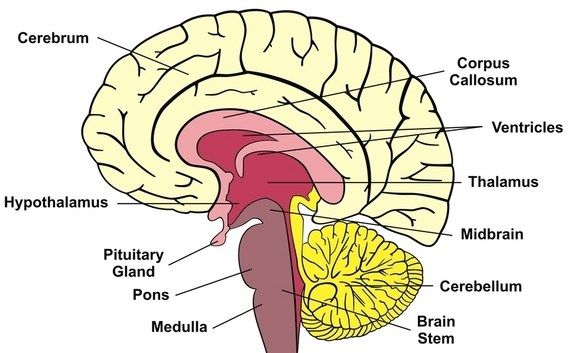
Decision under Uncertainty II

                                                                   ASSET
                 ASK PRICES                                                            BID PRICES
                Persons with all kinds of                                             Persons with all kinds of
                knowledge, experience,                                                knowledge, experience,
                intelligence, professions                                             intelligence, professions

Multiple times a day buyers and sellers agree on a price for the same asset       Risks are mostly the same
                  Prices are based on:                                            •   Liquidity
                                                                                  •   Volatility
                             News (new information)
                                                                                  •   Solvability
                             Prior price movements
                             Changes in individual behavioral
                             (amines, hormones…)
                             Unknown factors

                                      The difference to real estate markets is that you notice the
                                      direct impact on the price from
                                      •     Asset related news
                                      •     Interest rate change
                                      •     Political decisions
                                      Even if in the long run many factors have the same effect on
                                      Real Estate or Financial assets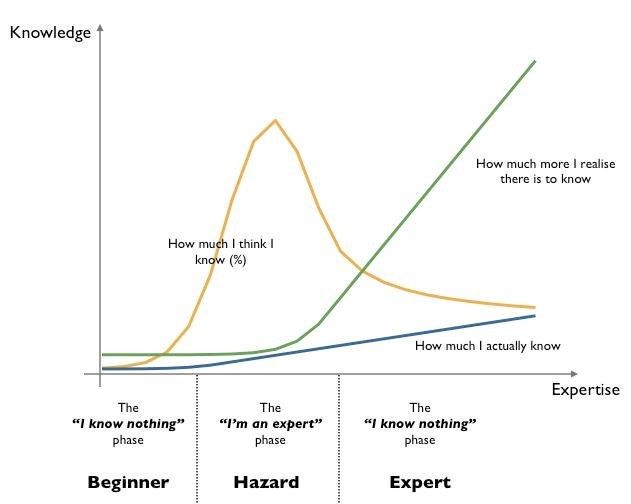
Decision under Uncertainty III

What is the value of:            There are many non quantifiable aspects for companies and buildings
   A building?                   The main quantitative method is to calculate the Net Present Value of an asset
   A company?
   Your grandfather’s watch?

                                           However this method is very imprecise because of the
                                           many subjective variables
                                                   What are the future Cash Flows?
                                                   How far can I determine them in the future?
                                                   What is the discount rate?

  It is mainly about forecasting the future of the following parameters
           Interest
           Regulations
           Product evolution
           Competition

       Small discrepancies between expected outcome and real outcome have huge effects on NPV
       There are as many opinions about price as there are market participants
       A seller mainly has a different opinion than a buyer on the price
Decision under Uncertainty IV

             Portfolio Theory                Efficient Market Theory

          Markowitz Nobel Prize 1990         Fama Prix Nobel 2013

       Sharpe Ra=rf+beta(E(Rm)-Rf) Capem

Glaciers are DANGEROUS
               Behavorial Finance              Theory of Reflexivity

     Daniel Kahneman Nobel Price 2002
                                                George Soros
             Thaler Nobel Price 2017
My view on Decision Making in Financial Markets I
       X= A                          +B               +C                    +D      +E          + UNKNOWS

      a1 a2 a3 b1 b2 b3 c1 c2                                c3 d1 d2 d3 e1 e2             e3

aa1 aa2 aa3                                                                          ee1 ee2 ee3

                                                                                          Do I know the existence of this
                                                                                          variable?
                                                                                          What is the causal link between this
             New Innovation          High Inflation    Bankruptcy of competition
                                                                                          variable and X?
                                                                                          What is the probability and
         Merger
                                                                                          intensity of this variable to change?
                              Brexit Non-Brexit
  Natural catastrophe
                                                                                   Analyzing the past has its limitations given
                      Death of CEO                                                 that we do not know the probability of
  Interest                                                                         past events
                                                                                   For one event to happen many others did
                  Deflation                                                        not happen
                                China world leader?                                We can consider them as being
 New competition                                      Japan world leader?          randomness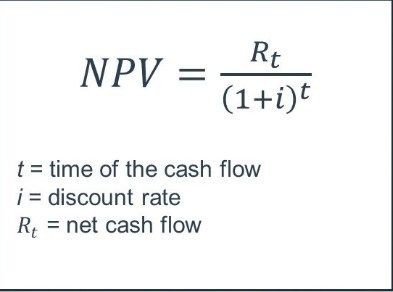
My view on Decision Making in Financial Markets II
Extreme complexity of financial markets
    Non linearity: Small changes in known or unknown variables can
    have a huge effect on outcome (Lorenz: Chaos theory)                   There are many known and
    It is very difficult to forecast any variable (for example e1)               unknown factors
    It is impossible to understand what news is directly or indirectly      that influence asset prices.
    relevant and might influence a given asset
    It is very difficult to understand the possible short term, mid          Investment Performance
    term and long-term effects of the news                                is dependent on geopolitical,
Furthermore, prices can also move due to                                        macro economical,
    Investor behavior                                                     company level, technical and
    Prior price changes
    Unknown factors                                                            psychological factors.
Finally
    Even more important than forecasting, the effect of news on a
    certain asset is forecasting the reaction of market participants to
    certain news (Keynes Beauty Contest)

However
   Forecasting is more than saying Yes/No/Maybe
   It is about probability and outcome nuances
   The relation subjective probability/outcome/cost is determinant
My view on Decision Making in Financial Markets III

Some facts about our brains
  Because of functional MRTs, brain science improved very fast during the last years
  The brain is modular: different parts for different things having their origin in different times. However, none works
  without the other
  The brain consumes about 20% of the energy for 1.4 KG (heuristics…)
  Only a small amount (around 10%) of the information that enters your brain through the different senses enter
  your consciousness
  Our actions, beliefs, biases are all driven by networks in our brain to which we do not have conscious access
  The unconscious brain is all the time at work, but we are typically unaware of it (walking, talking in mother tongue
  vs other language, etc)

  Decision making is profoundly affected by emotions. Emotions drive actions
         The feedback of your body (emotions) gives you a summary to avoid that you get stuck in a trade off battle.
         Choices have a different emotional value (take the crème brulé with parmesan cheese on top)
         Dopamine helps you in updating your forecasts (correcting your errors)
         Think about your past holidays (experienced vs remembered happiness, shorting a stock)
  We do not really understand the origin of our choices. We might take a different decision simply because we are
  holding something warm or cold in our hand
  We can practice new skills so that they become physically hardwired and sink below our level of consciousness. We
  can take faster choices with less energy
My view on Decision Making in Financial Markets IV

How does our Brain process all this information?

                                                   3 Options

Price increases                              Price stays stable                             Price decreases
   How much?                                     During what period?                            How much?
   During what period?                                                                          During what period?
                                                 Do Nothing
   Buy                                                                                          Sell

             It is sheer impossible to compound all these factors and to make a trade off between the option of
             buying/selling/doing nothing
                   We do not know the future
             We cannot travel into the future, but our brain can simulate different outcomes and generate an idea of
             how the future might be
             The brain produces rewards in different scenarios
             Those are based on past experiences and our current model of how the world works

             In the end, we do not know why we finally made the decision for a certain option because it
             happened in our subconsciousness
             Our subconsciousness produces insights (connections, coincidences, contradictions)
             Decision making is profoundly affected by emotions. Emotions drive actions. Without, it is
             like having a car with a steering wheel but no power.
             The feedback from your body gives you a summary of what to avoid so you don’t get stuck
             in a trade off battle
             Decisions are unique. We are not rational beings, meaning we take different decisions in the
             same situation
My view on Decision Making in Financial Markets V
The result is mostly randomness (Luck; Bad Luck)
Sellers Decision
Buyers Decision S= X (good product)+X1 (balance
B= X (good product) sheet) + X2 (competition) + X3
(supplier) + Xn
Buyer is right on the price even if wrong on the value, the opposite is true for the seller
Was he lucky? Can we say that I consider Luck as being
it is based on his subjective relative to the
subconsciousness? variables taking into
→ Outcome bias consideration
Do both have the same risk factors if volatility is the same?
This risk cannot be measured by quantitative past volatility, but by qualitative analyses of the
decision-making process
Remember that financial markets are “Fortune favors the
very complex, and that Efficient prepared mind”
Market Theory holds in most cases Louis PasteurOverview: Making Investment Decisions I
Circle of investment possibilities
Event X is happening in n
years
If Event X happens, then Event Y
Event X is is not happening
NOT For every transaction there is a
happening If event X is counterparty that is
in n years Price of company NOT
X will be higher happening
Forecasting
Company X will be than x in n years in n years Considering best Trade
able to pay back than it will Off between Return
amount Y in n Price of not happen (objective) and Risk
years company Y will in n + y (subjective)
be between x years
and y in n years
There are many possibilities to
Price of take financial advantage of a
company Y will forecast
be lower than y
in n years
We can decide on which
variable we want to bet by
hedging the others (interest,
market risk…)Central Hypothesis: Making Investment Decisions II
Central Hypothesis (forecast of the market)
Find situations where you have a central hypothesis that is different to the market’s story and that is a sufficient
condition for a certain price change
The central hypothesis of the potential counterparty is
Based on wrong factors
Based on not enough/too many factors
Based too much on emotions
I can formulate a different central hypothesis
That is not composed of many conditions, but one sufficient condition
The probability of my central hypothesis happening must be estimable
The occurrence of the central hypothesis must have a large price effect
I understand what might happen if I am wrong
The sufficient condition needs to offer a fair risk/return trade
I focus my research on
• Understanding the central hypothesis of the potential counterparty
• WHY I believe the counterparty is wrong
• I do not focus on information that I believe is obvious for the counterparty (balance sheet;
P/L…)Conscious Forecasting: Making Investment Decisions III
What investments?
Who will be the next US Who will be the US president in 25
president? years?
Is the value of Tesla going to
Is Tesla going to be bankrupt within
be superior to $5 billion in 5
five years? (low probability, high
years? (high probability, low
outcome)
outcome)
How will the Luxembourg
Real Estate market evaluate Will China be the leading economy
in the next 5 years? of the world in 20 years?
• The important factor is not the probability of your forecast, but the price you get
for your forecast relative to outcome and probability (cost or risk)
• A 1% probability bet can be more interesting than a 99% probability bet, for
example, in option markets (option buyer against option seller)Forecasting: Making Investment Decisions IV
Fermi style questioning
Break the main question down into smaller questions
The objective is to distinguish between the knowable and
pure guesswork
Should I invest in Tesla?
Should I buy • What is the bankruptcy probability of
Luxembourg Real Estate? new car manufacturers?
• What is the probability of a second
Google?
• What is the probability that the
company survives a recession?
• What is the probability of a recession?
What are the necessary conditions of Even buying an ETF is a bet on
a positive evolution for Luxembourg inflation and/or productivity increase
Real Estate? and/or population increase
Start with an outside view where you can consider an objective comparable base rate
probabilityConscious Forecasting: Making Investment decisions V
Continue with the inside view: Guesswork
What is the probability that Tesla is a $100 billion company with less than x profit?
What is the probability that Tesla makes x amount of profit during the next 3 years?
Why do we have high net immigration? (highest in Europe)
Why do other countries have net emigration?
What happens if interest increases by 1%?
What variable can change this?
Use Assumptions
Tesla is the leading car manufacturer of the world
How does that world look like? (competition, etc.)
Electrical cars represent 50% of new sales
What are the necessary conditions for this?
Real Estate doubles again over 10 years
Can people afford a 100% increase in rent?
How does a world look like with 1% higher interest?
Consider different perspectives
What do other investors say?
What do experts say?
Consider evidence that goes against your idea
Write a memo that doesn’t agree with your idea (assuming my idea is wrong)Hunting for Insights: Making Investment Decisions VI
Subconscious Mind
Research is very time and energy consuming, both sources that are limited
We want to avoid being biased by having an opinion and searching for confirming information to
avoid giving up that opinion
However, we do not want to implement too many rules because our objective is to have insights
Our subconscious is an association machine built to detect anomalies, connection, coincidences,
contradictions
Different types of insights
In case of connection insights, we get a piece of information
that gives us a new idea. This connects to memorized
information and we might see a new way to combine different
kinds of information
In case of coincidences, we might not understand a causal
relationship between variables at the beginning, but after
getting more and more details we might be able to see a new
pattern
In case of contradictions, our skeptical mind helps us find a
situation that we consider impossible (for example market cap
vs business). It helps us put alternative facts in front, different
than those observed by the marketObjective: Making Investment Decisions VII
Objective = Increase Insights (Ideas) and Reduce Errors
It is very important to have a flexible mind, to be able to retrieve from our beliefs (Tesla, Luxembourg Real Estate
market. etc)
It is important to be curious and keep a playful mind, imaging scenarios at times
Guidelines are better than rules in an uncertain world
Some brain features are genetic, but the most important is experience
Cumulating information is one major factor
I always have my circle of investment possibilities in mind
I want to train my mind to know what I am looking for
However most insights are not “expert” insights but just help us with life in a fast-changing uncertain
world
Mr. Daniel Kahneman got a Nobel Prize for demonstrating that we
make predicable errors called heuristics, which lead to biases
It is very energy consuming to avoid these heuristics (in fact energy
consumption is probably the main reason why they exist)
We are not able to avoid them in daily life and could not live
without themAvoiding biased decisions: Making Investment Decisions X
Reduce Errors
• Investors believe understanding the past is done by focusing on events that have happened, but not
on events that haven’t happen
Illusion • By ignoring many factors we often underestimate how much luck was needed for something to
happen or for something else that did not happen
• An extraordinary good or bad quarter, a successful product may be sometimes more the result of
of luck than improving business or knowhow
Understanding • Upcoming companies are compared to Amazon or Google by leaving out the factor of luck, which
those two companies had (early sale for Google and AWS for AMZN)
• The difference is that in contrary to a business improvement, luck is more volatile and tends to Illusion
revert to the long-term mean
Try to exploit overreactions based on events that can be qualified as luck of skill
• By judging probabilities, investors often focus on the similarities between cause and effect by
neglecting the base rate of the probability
Base rate • It might be more representative that markets rose because of a tweet made by the President of the
United States, but it is often not the most important factor and not a sufficient condition
Do not
• Investors overweigh information that seems more obvious (new medicine, new product) by under overestimate
Neglect weighing the base rate probability, as to say the overall situation and the effect of this news on that
overall situation of the company
your ability
to forecast
Avoid complex situation; focus on sufficient conditions that are probable compared to
the ability of
• Investors tend to overweigh information that is readily available and be intuitive to information the other
that is less salient and more abstract market
Availibility • What is important is not the date of the information, but the intensity and duration of its effect participants
Be contrarian to price movements based on news with short term effects
• Regret does not only make investors feel miserable, but it influences decision making
• The attempt to avoid future regret is an important factor that guides financial markets
Regret • Contrarian strategies can cause a lot of regret during a long period
Stick to your rules, don’t get emotionalKnowledge: Making Investment Decisions IV
Knowledge
Once I find such an inconsistency, contradiction or connection I analyze if I might have the knowledge that helps me
to be able to raise such a statement. This is conscious work
Why did a person take your counter position?
Try to find situations where you have special knowledge or find correlations with other situations you experienced
Remember the objective is to increase the known variables in your decision-making equation and to base your
decision on unknown factors the least amount as possible and more on if there was good luck or bad luck
“A STRATEGY is a plan of
action designed to achieve a
long term gain”
“The more you know the more you
know you don’t know”
AristotleKnowledge Pyramid Making Investment Decisions V
5
I divided my knowledge about a company on a scale of 1 to 5 in order to:
4
Be able to quantify and qualify knowledge
Improve the decision-making process (increase rationality)
3
Improve productivity 2
Avoid taking decisions influenced by over or under confidence
Reduce regret feeling 1
LEVEL 1:
I basically know nothing about the concerned company. I read an article about it, an analyses or just somebody told me about it,
but it triggered my interest
LEVEL 2:
I read at least one 10Q about the company and a few articles
LEVEL 3:
I read at least one 10Q and one 10K about the company, and several articles and I try to understand the central hypothesis
behind the valuation of company
LEVEL 4:
I read at least five 10Ks and 10Qs and several 8Ks. I understand the central hypothesis, the sector, the competition and
I keep a weekly diary about the company
LEVEL 5:
I can clearly argue why a company’s valuation might be different to the current market price, and I understand why
the potential counterparty might get it wrongUpdating: Making Investment Decisions XI
Extremely difficult task because it needs to be executed consciously and can cause stress
(cortisol)
Forecasts are not stable
I constantly get new information that helps me adapt my forecast if my initial forecast is not
accurate anymore
Just as for the initial forecast, I have to separate important signals from noise
Underreaction
Your risk being biased (anchor + confirmation bias)
I was price wrong on TESLA for nearly 2 years and only correct for about 3 months
Luxembourg Real Estate market increased over the long term, you made profits
and probably overestimated your knowledge and underestimated luck
Overreaction
Availability bias
Nothing in life is quite as important as you think it is while you are thinking about it
Dilution effect, think about Bayes’ theoremInvestment Process
Macro view:
Long/Short Equity
Where are we in
the cycle?
Helps a portfolio better adapt to economic cycles
Helps to find cheap insurances against market turmoil Follow up
I avoid self attribution bias Correlation of an
Risk on the long side might be increased because of by reading mostly analyses investment idea to
the insurances contradicting my central different macro scenarios
It is often easier to find a flaw that is a sufficient hypothesis
condition than a sufficient condition for a huge
success
Best buying opportunities rise when many investors
are forced to sell: Being able to buy when others sell
requires a good risk management
Position management Building a Portfolio
around central ideas to
Increase / decrease be conform to risk
position exposure
I try to exploit
return that is
insured by my
Glaciers always remind me that risk is conviction positions
constantly present and that you might
be blinded by the beauty of the current
momentStructure
Management Company
Luxembourg based S.A R.L.
Glacier Capital Luxemburgish management
Luxembourgish shareholders
CSSF registered
Fund
Investment Luxembourg based
vehicle Limited Partnership
Luxembourg Company Law
applies
Limited Partner 1 Limited Partner 2
Shareholder of a Luxembourg
based company
Protected by Luxembourg
company law
Limited Liability
More Shareholder than
InvestorInvestor type / Objectives In General Minimum Investment €125,000 (by law) Investor Type Well Informed Investment Horizon 7 years Redemption Period 20 days anytime Objectives Benchmark 50% S&P500 / 50% EUROSTOXX 600 Investment Return Min 33% of Benchmark Investment Risk Max 20% of Benchmark Fees Management Fee 0.5% Performance Fee 20% Hurdle Rate 5% Entry/Exit Fee 0%
Step Plan

         • Signature of subscription agreement
         • Handover of book including Limited Partnership
1 Step     agreement and Privat Placement Memorandum

         • Transfer of Capital
2 Step

         • Monthly performance (if requested)
         • Detailed Quarterly update
3 Step
Key Person
Theoretical background Summary
Master in Wealth Management (2018) I started investing in financial assets in 1994. During the
University Luxembourg following years up to 2000 I generated my best
performance ever. I bought stocks in companies I just knew
Real Estate Promoter (2011)
the name off and let profits run while putting a strict stop
Luxembourg School of Commerce
loss order under my positions. Without any knowledge I
Avocat à la Cour (2008) followed a momentum strategy, in probably the best
environment for momentum strategies. The more risk I took
Final Luxembourgish Bar Exam
the better I was off. After a few large losses in early 2000 I
Magister Legum (LL.M.) in Tax Law (2007) closed my portfolio with a loss of around 40% for that year
but an overall profit for the years 1994 to 2000. Was this Marc DAUBENFELD
Univesrität zu Koeln (Germany)
decision based on intuition? Probably not because my
Master in Law (2004) intuition did not have enough information to take those Birth Place : Luxembourg
Université Robert Schuman (Strasbourg - France) important steps. It was purely luck. Nationality : Luxembourgish
Master in Economics (2002) To conclude, there are many strategies that work very good for a long time and have good risk
to return ratios (Sharpe f.ex). The timing to get out of those strategies is very difficult. This Is
University Louis Pasteur (Strasbourg - France)
the reason why I don’t apply any strategy that could cause large losses in any statistical relevant
case. Rare outcome might not happen during years or even generations but if they happen it is
very difficult to come back.
Practical background Luck or bad luck plays a big part in the world of
investing in financial markets because an investor
Lawyer needs to make only a handful of good decisions and
avoid making one bad decision to outperform the
Management (OTIS / General Technic) market over his lifetime. I try to reduce the factor
luck in my decision-making process by sticking to my
Financial (Real Estate Promoter) rules and feeding my intuition with a lot of
information by doing my own research so that it
Financial Markets might help me to make sometimes the difference
with less prepared minds.Why “ Glacier ” Capital?
Glaciers save INFORMATION Helps you to analyze the little piece of time we are in and how little we know (black swan events)
dating millions Our statistical models lack important information
of years back We don’t know as much as we think we know, we overestimate ourselves
Glacier Capital’s structure is transparent
Ice is TRANSPARENT
Preparation is important, however, Risk still prevails
Glaciers are DANGEROUS Positive experiences should not provoke lack of preparation (adrenaline, testosterone…)
On our short-term time horizon size is decreasing
The SIZE of Glaciers On the overall time horizon there are fluctuations on size
are decreasing Many “specialists” have contrarian opinions
Stay away from subjects that might not find a true answer (unpredictable)About us
Investable Universe U.S. and Europe Fund Information
FUND TYPE
Positions Equities/Options/Bonds Alternative Investment Fund
FUND STRUCTURE
Limited Partnership
Long/Short Exposure [0 100]% / [0 50]% REGULATION
CSSF Registered (Article 3 Law of
12/07/2013)
Net Exposure [-50 70]% REDEMPTION PERIOD
20 calendar days
LOCATION
Luxembourg
Portfolio Weights Max 15% per position
Investor Type Key words Fees
- Minimum Investment €125,000 High alignement - Management Fee: 0.5%
- Well informed Investor Transparence - Performance Fee: 20%
- Long term Horizon Personalised - Current Hurdle Rate: 5%
- Seeking Alterntive Investments - Entry Fee: 0%
Luxembourg - Exit Fee: 0%Contact us:
+352 661 WEALTH (932 584)
info@glaciercapital.lu / daubenfeld@glaciercapital.lu
/ www.glaciercapital.luYou can also read


