IOM BURUNDI NE WSLET TER - MARCH-APRIL 2019 - International Organization for Migration
←
→
Page content transcription
If your browser does not render page correctly, please read the page content below
IOM BURUNDI
 N E WS L E T TER
MARCH-APRIL 2019
FROM THE CHIEF                                                      TRANSITION AND RECOVERY
OF MISSION’S DESK                                        COMMUNITY DIALOGUES HELD TO IDENTIFY
Welcome to the March-April 2019 edition of the           UPCOMING QUICK IMPACT PROJECTS
IOM Burundi newsletter. This edition’s highlights
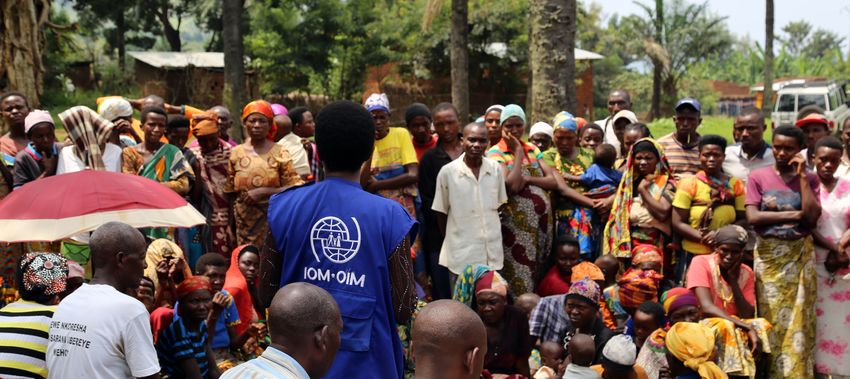
                                                         IOM’s reintegration activities are improving the ability of host com-
include IOM’s efforts to strengthen public health
                                                         munities to absorb a large number of internally displaced persons &
emergency preparedness and response in Burundi
                                                         returning refugees from Tanzania by creating platforms for dialogue,
and the DRC, the donation of IT equipment and            strengthening existing basic service infrastructure, and providing op-
solar power systems at border posts with Tanzania,       portunities for short-term employment and job training. IOM con-
reintegration and protection initiatives for returnees   ducted 30 community dialogues in March 2019, which created an open
from Tanzania, the launch of “Rungika” remittance        exchange to collectively determine Quick Impact Projects (QIPs) that
service and the construction of a playground for         will increase the capacity of host communities to absorb returnees
Congolese refugee children, among others.                from Tanzania, as well as Internally Displaced Persons (IDPs).

Though Burundi’s last rainy season draws to a close,     Nearly 9,400 people attended the preliminary sessions and more than
its effects continue to be felt by thousands of peo-     1,600 people were included in the in-depth dialogues in Makamba,
ple whose homes were damaged or destroyed due            Muyinga, Rutana and Ruyigi provinces, 60% of whom were women.
to heavy winds, rain and landslides. IOM’s Displace-     Community members were able to determine and prioritize projects
ment Tracking Matrix (DTM) recorded 124,578 in-          that address their needs through a participatory and bottom-up ap-
ternally displaced persons in Burundi as of March        proach. Each dialogue included women, youth, returnees, IDPs, host
2019, 75% of whom were displaced due to natu-            communities, community leaders, elderly and people with disabilities.
ral disasters, and tracked 29 emergency events in        The most important communal needs identified for the communities
March and April alone.                                   according to the dialogue results, are:
As part of an ongoing effort to strengthen collabora-
                                                               roads/bridges           water sources            schools
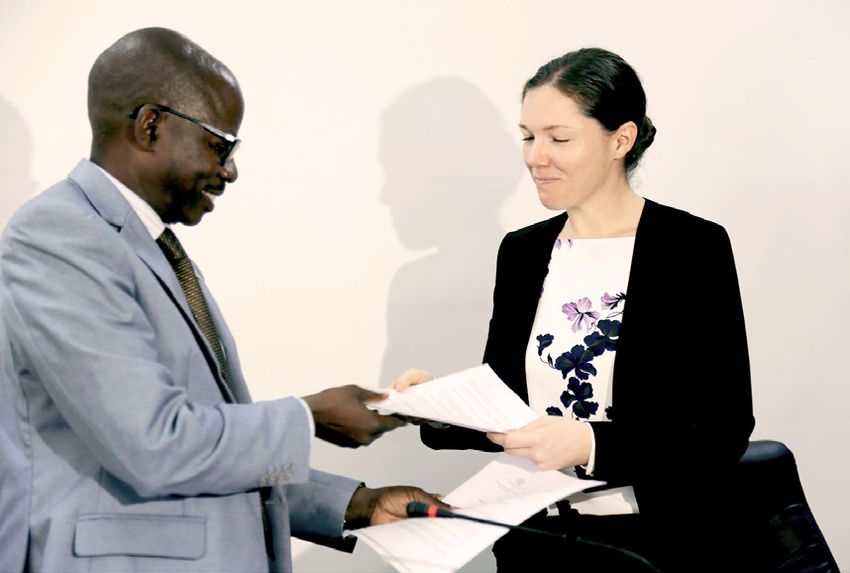
tion in the domain of labour mobility, IOM Burundi
and the Ministry of Public Services, Labour and Em-
ployment recently signed a cooperation agreement               market places              playgrounds/football fields
which outlines IOM’s engagement in programmes
contributing to the management of labour mobili-
                                                               soil conservation to              rehabilitation of fishing-
ty – both for Burundian nationals seeking work op-
                                                               protect watersheds                related infrastructures
portunities abroad and for migrant workers within
Burundi. We are delighted to strengthen our rela-        For some of the projects identified by communities, comparative
tionship with the Ministry of Labour and look for-       engineering and cost studies must be undertaken to determine the
ward to continuing to provide support to migrant         most feasible QIP option. All studies will be finalized in May and the
workers both in Burundi and abroad.                      construction works on the 30 QIPs will begin in June 2019 using a
                                                         Cash-for-Work approach. These projects are supported by ECHO -
AJ Morgen, IOM Burundi Chief of Mission                  EU Civil Protection & Humanitarian Aid, DFID - UK Department for
                                                         International Development and German Humanitarian Assistance.

                                                                      IOM BURUNDI NEWSLETTER: MARCH - APRIL 2019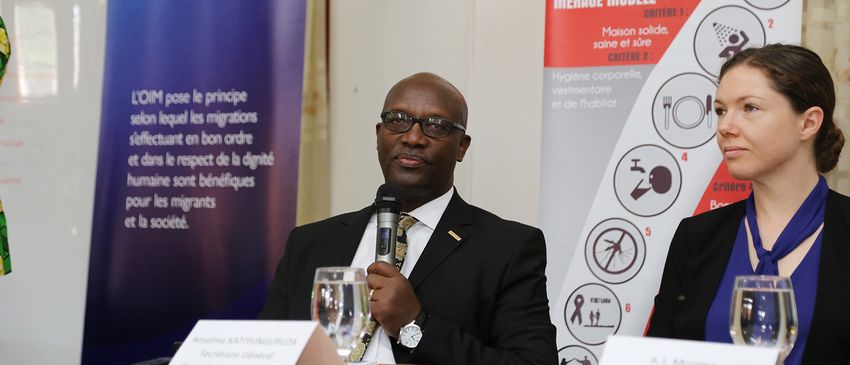
LABOUR MIGRATION AND HUMAN                                                      BURUNDI TO DEVELOP NATIONAL
             DEVELOPMENT                                                             LABOUR MIGRATION POLICY WITH
                                                                                     IOM SUPPORT
VALIDATION OF COMPARATIVE STUDY ON THE
FREE MOVEMENT OF WORKERS IN EAC                                                      IOM, through funding provided by the IOM De-
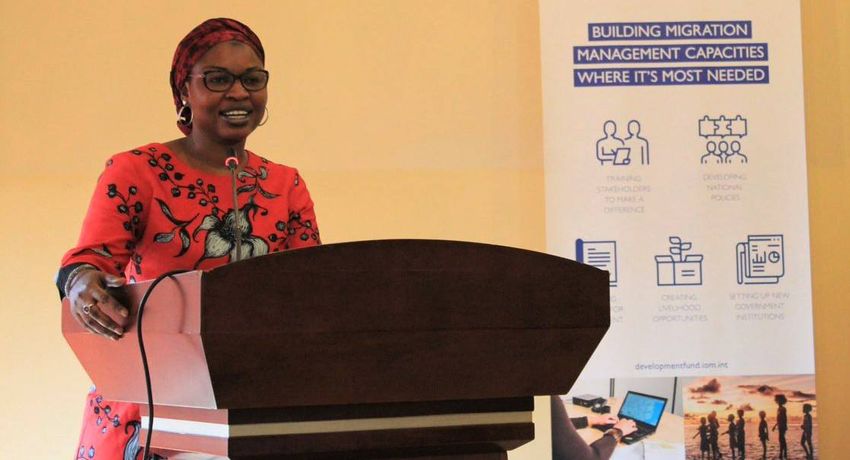
                                                                                     velopment Fund, is supporting the Government
                                                                                     of Burundi to develop a gender-sensitive Nation-
                                                                                     al Labour Migration Policy that aims to provide
                                                                                     longer-term protection and good governance for
                                                                                     migrant workers. Launched in April, the two-
                                                                                     year project will include an analysis of the labour
                                                                                     migration context in Burundi and data collec-
                                                                                     tion from major stakeholders, including migrant
                                                                                     workers’ associations, national institutions, trade
                                                                                     unions and employers’ associations. National au-
                                                                                     thorities will also benefit from technical assistance
                                                                                     on labour migration policy development and
                                                                                     techniques for negotiating bilateral labour agree-
                                                                                     ments. Combined, these actions will facilitate the
                                                                                     development of a National Labour Migration Poli-
Thanks to support from the IOM Development Fund, IOM launched                        cy that will help authorities, particularly the Minis-
the Comparative Study on the Free Movement of Workers in several                     try of Labour, to have an improved understanding
countries in the East African Community, including Burundi, Kenya,                   of the flows and dynamics of migrant workers.
Rwanda & Tanzania. The study examined the legal frameworks regulat-                  Furthermore, it is anticipated that the Ministry
ing migration & the systems for collecting, managing and sharing migra-              of Foreign Affairs will embark upon negotiations
tion data in these four countries. The recommendations in the study                  for bilateral agreements for Burundian male and
will enable EAC Member States to develop harmonized policies and                     female migrant workers with selected Gulf States
to fill existing gaps in data collection and availability, and support the           during the course of this project.
formulation of appropriate policies on the free movement of workers.

LAUNCH OF “RUNGIK A” REMITTANCE SERVICE
IOM officially launched the money transfer service “Rungika” in partnership
with the Burundi National Postal Service and the Universal Postal Union
(UPU). Rungika is now available in 144 post offices throughout Burundi and
provides affordable and secure money transfer even in rural areas. Its interna-
tional service, launched in November of last year, has already begun to facilitate
cost-efficient money transfer between the diaspora and the communities of
Burundi. This project was made possible thanks to support from the Belgian
government.

                     IMMIGRATION AND BORDER MANAGEMENT
TWO BORDER POSTS EQUIPPED WITH IT AND COMPLETE SOLAR POWER SYSTEMS
This March, IOM Burundi’s Immigration and Border Management team donated information technology equipment to
the Government of Burundi to improve humanitarian border management (HBM) involving significant migratory flows
between Burundi and Tanzania. IOM also rehabilitated electrical systems at Mugina and Gisuru border posts, in Makam-
ba and Ruyigi provinces respectively. The donated equipment includes two complete solar power systems, computers,
printers, uninterruptible power supplies to provide battery backup in case of power failure, and a one-year license
for antivirus software. With these donations, it is expected that officials manning these points of entry will provide
improved services to migrants and have increased capacity to manage population flows at the border, even in situations
of mass displacement. The participation of national and local authorities in the handover ceremonies demonstrated a
national implication and ownership for these activities.

The donation is part of a project jointly implemented by IOM, the United Nations Development Programme (UNDP),
and the UN Refugee Agency (UNHCR) to promote concrete cross-border, human rights-based, and multi-agency ap-
proaches to peacebuilding in border areas between Burundi and Tanzania. It is supported by the UN Peacebuilding
Fund. Upon closure of this project in late March, the three UN partners and stakeholders involved in the project met
in Bujumbura to present the main results and achievements.

                                                                        IOM BURUNDI NEWSLETTER: MARCH - APRIL 2019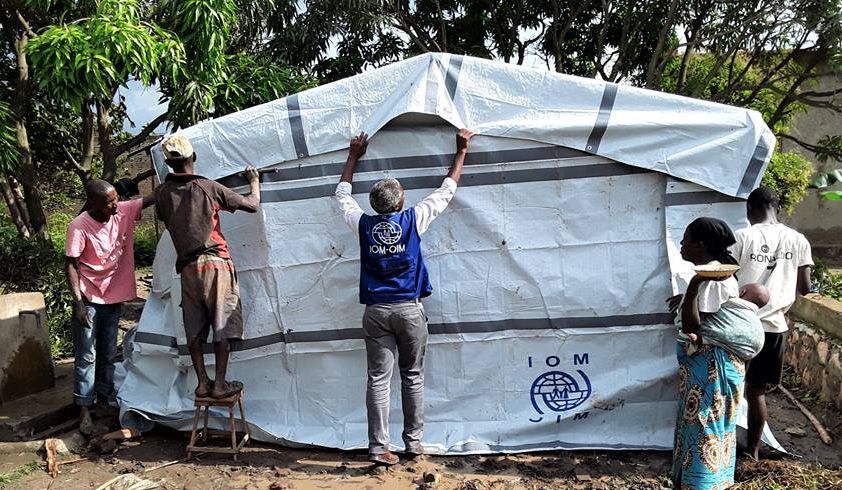
MIGRATION AND HEALTH
IOM STRENGTHENS EBOLA PREPAREDNESS IN BURUNDI                                         SUPPORTING PUBLIC HEALTH
In Burundi, IOM is part of the National Committee for the Fight against Ebola and     EMERGENCY PREPAREDNESS
was appointed as technical expert for the “surveillance” component. IOM was
also appointed by the Ministry of Health and the Fight Against AIDS the lead on
                                                                                      AND RESPONSE IN BURUNDI
Points of Entry together with WHO, as part of Burundi’s preparedness planning.        AND DRC
In April, staff from IOM Burundi’s MHD and Immigration & Border Management
team conducted a supervisory health assessment to identify existing gaps in Ebola
Virus Disease (EVD) preparedness with the Ministry of Health’s EVD taskforce
team at Kabonga Point of Entry (PoE) in Nyanza-lac, Rumonge.

IOM Burundi’s Chief of Mission and MHD colleagues also joined Burundi’s Min-
ister of Public Health, Dr. Thaddée Ndikumana, OCHA, UN Agencies (UNHCR,
UNICEF, WFP, WHO) & partners at Ruhwa border point in Cibitoke & other key
sites to assess the level of preparedness for an eventual Ebola outbreak.

IOM is also currently working in close conjunction with the Ministry of Health to
equip key Points of Entry with essential materials in Cibitoke, Bubanza, Bujumbura
Rural, and Rumonge, thanks to support from the Government of Japan. The pro-          As part of a Health and Humanitarian
curement plan will be finalized subject to site evaluations at all key PoE in these   Border Management project supported
provinces the week of 20 May 20. IOM’s counterparts for MVE Preparedness at           by the IOM Development Fund, IOM
the Ministry of Health will be encouraged to attend.                                  is supporting public health emergency
                                                                                      preparedness and response in Burundi
                                                                                      and the DRC. To date, 199 frontline
   INTERNATIONAL WOMEN’S DAY AT IOM BURUNDI                                           border officials, including border health
                                                                                      officials, have been trained on Health
                                                                                      and Border Management.

                                                                                      The training provided an excellent
                                                                                      opportunity for border officials from
                                                                                      Burundi and DRC to share best prac-
                                                                                      tices and discuss ways of reinforcing
                                                                                      cross-border cooperation between
                                                                                      the two countries in relation to pre-
                                                                                      paredness, response and control to
                                                                                      diseases of public health interest. To
                                                                                      complement this, basic equipment was
   On 8 March, International Women’s Day, the team at IOM Burun-
                                                                                      distributed to the Gatumba border
   di recognized the many achievements made by its staff both for
                                                                                      on Burundi side. Donated materials
   women, and by women, and called for an end to gender inequality
   in all its forms. To mark the occasion, a screening of “We Should                  included thermoflashes, personal pro-
   All Be Feminists” by Chimamanda Ngozi Adichie was held, followed                   tective equipment, examination tables,
   by discussions and refreshments. Thank you to all who made the                     stretchers, first aid kits and observa-
   event a success!                                                                   tion beds, among others.

                         MIGRANT PROTECTION AND ASSISTANCE
COMMUNITY FOCAL POINTS TRAINED ON TRANSVERSAL PROTECTION AND
COMMUNITY DIALOGUE
In March, IOM trained 50 community focal points in Rutana and Ruyigi provinces on “transversal protection” and “com-
munity dialogue,” in collaboration with the Red Cross. The training included practical exercises and games that allowed
them to identify cases of vulnerability in the community and the role of focal points in transversal protection. These
focal points will be directly involved in the execution of a project funded by ECHO that addresses the most urgent
reintegration needs of returning refugees from Tanzania, with a particular focus on protection concerns.

                                                                     IOM BURUNDI NEWSLETTER: MARCH - APRIL 2019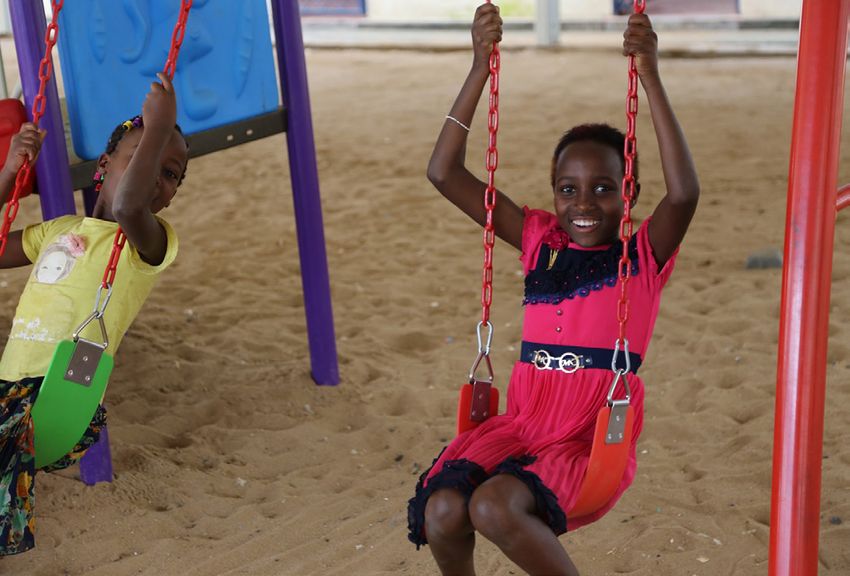
DISPLACEMENT TRACKING MATRIX (DTM)
DISPLACEMENT TRACKING MATRIX: IOM Burundi published the March DTM dashboard with the number of IDPs
by province, IDP provinces of origin, periods of displacement, accommodation types of IDPs, displacement reasons,
displacement trends and natural disaster displacements by province.

As of March 2019, The DTM recorded:

            124,578                                     75 %     of displacement                       5 % decrease
            Internally Displaced Persons                due to natural disasters                       in the number of IDPs

IOM staff conducted 18 visits (one in each province of Burundi) to provide technical assistance and training to the BRC in mobility
tracking of IDPs.
FLOW MONITORING: Flow Monitoring data highlights areas that are particularly prone to internal, cross-border and sub-regional
migration. This data is essential for providing a better understanding of the movements and evolving needs of populations in transit,
as well as the socio-economic, geographic and demographic characteristics of the migrants traveling through these points. Thanks
to support from DFID, IOM continued flow monitoring in Cankuzo, Muyinga, Ruyigi and Rutana provinces at 8 unofficial borders
crossings during the month of April. IOM published the October to February trend report presenting migration trends among
Burundian and Tanzanians along the shared border. IOM also published its third Flow Monitoring Report highlighting the details of
more than 36,000 observed movements, of which 83% are Burundian nationals.

DTM EMERGENCY EVENT TRACKING (EET/DTM): March’s emergencies included torrential rains, landslides and strong winds.
DTM tracked 21 emergency events and 4 emergency dashboards were published during the month of March. More than 3,190
people were displaced, 140 houses destroyed and 340 houses lost their roof. Torrential rains that occurred in Bujumbura
Rural province on 17 March were the most severe emergency observed by DTM in March.
April’s emergencies included torrential rains, strong winds and a landslide displacing more than 600 people within the first 24
hours of the event. More than 2,000 people were affected, over 42 houses were destroyed and 322 homes were
damaged in emergency events. DTM tracked 8 emergency events and published 4 emergency dashboards during the
month of April. This was made possible thanks to support from DFID, Central Emergency Response Fund (CERF), Office of U.S.
Foreign Disaster Assistance (OFDA) and the Swiss Agency for Development and Cooperation (SDC).

                                               NFI/SHELTER/WASH
SUPPORTING VICTIMS OF EMER- 4-DAY NFI/SHELTER WORKSHOP HELD IN BUJUMBURA
GENCY EVENTS IN BUTERERE    WITH THE LUXEMBOURG AND BURUNDI RED CROSS
                                                      In collaboration with the Luxembourg and Burundi Red Cross, the workshop
                                                      “From Emergency to Durable: Revision of Shelter and Non-food Items (NFI) in
                                                      Burundi” took place the second week of April with a participation of 47 people
                                                      from the local and national authorities, local and international NGOs and UN
                                                      Agencies. During the workshop, presentations were given on NFI support and
                                                      emergency, transitional and durable shelter for those affected by natural disas-
                                                      ters. Thematic workshops on topics such as gender and inclusion, land tenure
                                                      systems, cash transfer assistance, disaster risk reduction, shelter monitoring and
                                                      maintenance, and site planning were also held. These presentations gave rise to
Burundi’s last rainy season was particularly de-      recommendations that will harmonize the methods and national standards used
structive for Buterere in Bujumbura Mairie prov-      by the NFI/Shelter sector partners in Burundi. The outcomes of the workshop
ince. Floods and torrential rains left many hous-     will be officially shared by the Ministry of Human Rights, Social Affairs and Gen-
es heavily damaged or destroyed. As part of its       der in June 2019.
emergency response funded by the Government
of Germany and the Government of Japan, IOM
Burundi has been able to assist the most vulnera-
ble households in the area with the construction
of 70 emergency shelters, the construction/rep-
aration of 70 latrines, the distribution of 70 non-
food item (NFI) kits complemented by hygiene
items, the provision of 70 shelter repair kits and
20 emergency shelters. Repairing works were
carried out by committees of shelter recipients,
supported by local masons.

                                                                        IOM BURUNDI NEWSLETTER: MARCH - APRIL 2019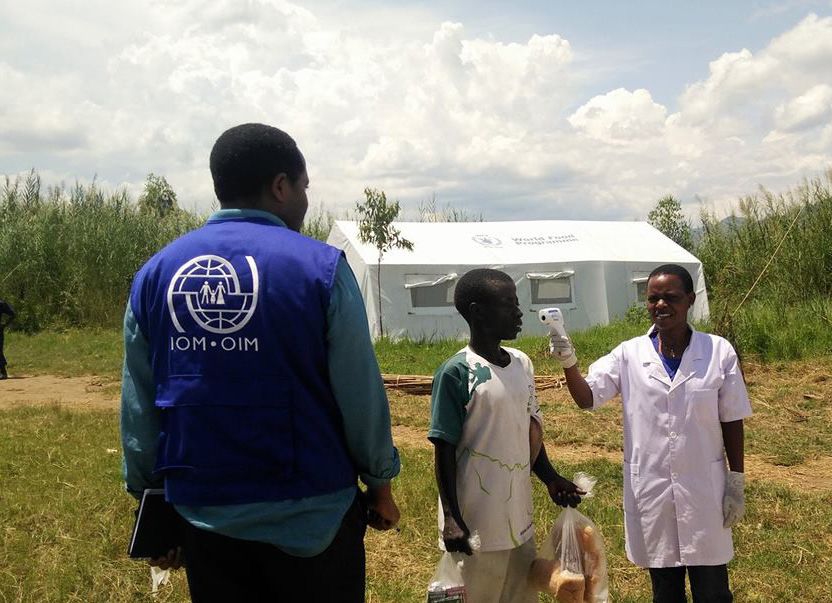
RESETTLEMENT AND MIGRATION HEALTH ASSESSMENT CENTER
                                                              RESETTLEMENT
                                                              In March and April, the USCIS team conducted adjudication
                                                              interviews at IOM’s Transit Center (TC) in Bujumbura. Over
                                                              1,200 refugees under the United States Refugee Admission
                                                              Program (USRAP) were interviewed. Additionally, the TC
                                                              hosted 614 departing Congolese refugees who went through
                                                              surveillance (PDMS) before flying to their new countries.

                                                              IOM Burundi’s resettlement team cares about the dignity
                                                              and well-being of refugees. To that end, entertainment at the
                                                              transit center has been improved: a playground for refugee
                                                              children as well as additional new games for adult refugees
                                                              were finalized and are now fully operational.

MIGRATION HEALTH ASSESSMENT CENTER (MHAC)
During March and April, a total of 1,221 health assessments were carried out for Congolese refugees (97%) and migrants (3%)
in Burundi, 50% of whom are women, who will be resettled to third countries. 92% of the refugee screenings were carried
out through USRAP.

MHAC staff in Bujumbura are working closely with Burundi’s National Programme for the Fight against Tuberculosis (PNLT).
National counterparts visited the MHAC in April and were impressed with IOM’s capacity to carry out latent Tuberculosis (TB)
testing using IGRA screening, as well as pulmonary TB investigations using Genexpert tests and the use of digital x-ray technology
to immediately review chest x-ray images for the early detection of TB.

IOM supported the resettlement of 665 refugees during March and April:

                                                    12
                                8
                             departures
                                                 departures

          581
        departures

                                                                                                72
                                                                                             departures

                                          For more information please contact:

                                IOM Burundi Project Development and Support Unit

                                            Email: IOMBurundiPDSU@iom.int

                                              www.iom.int/countries/burundi

                                               IOMBurundi         @IOMBurundi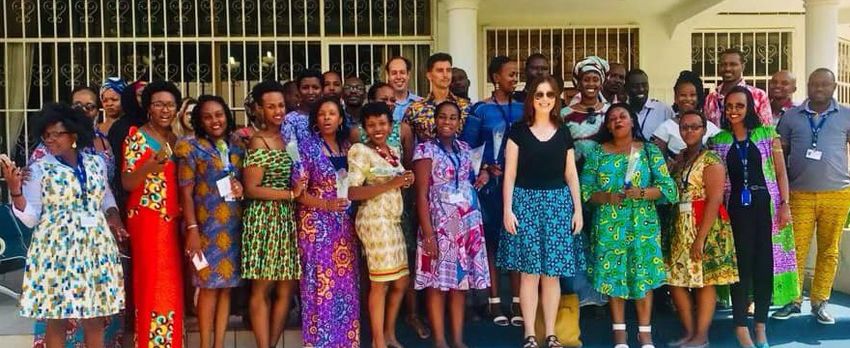
You can also read


