Irsee Natural Product Symposium - PROGRAMME AND SPEAKER PROFILES 24-25 February 2021 Online Conference - Dechema
←
→
Page content transcription
If your browser does not render page correctly, please read the page content below
PROGRAMME AND SPEAKER PROFILES

                                                      24-25 February 2021
                                                      Online Conference

                                                      Irsee Natural Product Symposium
                                                      www.dechema.de/Irsee2021
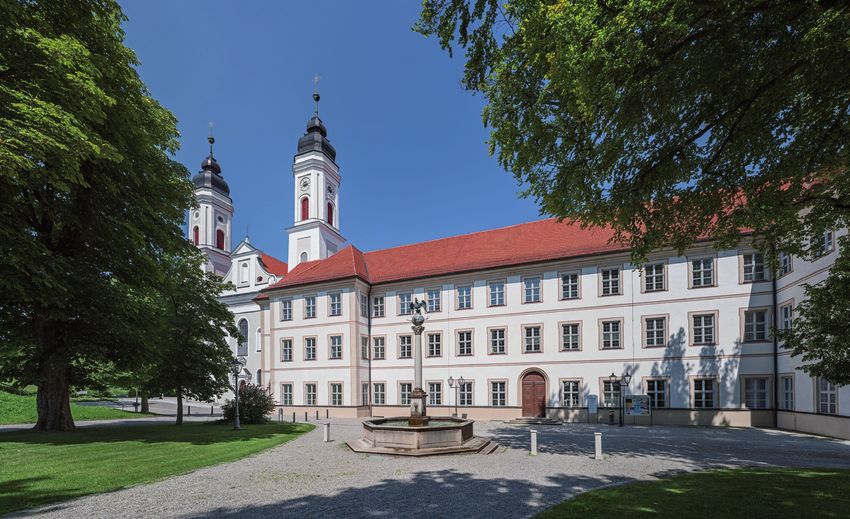
© Kloster Irsee, Schwäbisches Bildungszentrum Irsee

SUPPORTED BY
PROGRAMME                                                                                                            PROGRAMME

                                     Wednesday, 24 February 2021                                                                                            Thursday, 25 February 2021
    The times are displayed in Central European Time/ UTC+01:00; Amsterdam, Berlin, Bern, Rom, Stockholm, Wien           The times are displayed in Central European Time/ UTC+01:00; Amsterdam, Berlin, Bern, Rom, Stockholm, Wien

                                    Session "Renata/ Crawford/ PhD award"                                                                              Session "Sorek/ Shen/ Young Scientist award"
                                                   Session Chair: Ingo Hartung I Merck Healthcare KGaA, Darmstadt                Session Chair: Christian Hertweck I Leibniz Institute for Natural Product Research and Infection Biology, Jena
                                                                             Price Award: Jörn Piel I ETH Zurich/ CH                                                                                    Price Award: Jörn Piel I ETH Zurich/ CH
    14:00   Welcome and Introduction                                                                                     14:00     Welcome and Introduction

    14:10   Biocatalytic Strategies for Streamlining Access to Complex Natural Products                                  14:10    Antiviral compounds produced by bacteria
            Hans Renata I Scripps Research Institute Florida, Jupiter I USA                                                       Rotem Sorek I Weizmann Institue of Science, Rehovot I Israel

    14:55   Metabolism at the Human-Microbe Interface                                                                    14:55    Natural Product Biosynthesis as Inspiration for Chemistry and Biology
            Jason M. Crawford I Yale University, West Haven I USA                                                                 Ben Shen I Scripps Research Institute Florida, Jupiter I USA

    15:40   -PhD award lecture-                                                                                          15:40    -Young Scientist award lecture-
            Pseudomonas-Derived Secondary Metabolites in Predator-Prey Interactions                                               What symbiotic microbes can teach us about natural product chemistry and
            Martin Klapper I Leibniz Institute for Natural Product Research and Infection Biology -                               ecological complexity – A personal review!
            Hans Knöll Institute (HKI), Jena I Germany                                                                            Christine Beemelmanns I Leibniz Institute for Natural Product Research and Infection
                                                                                                                                  Biology - Hans Knöll Institute (HKI), Jena I Germany
    16:00    Break
                                                                                                                         16:15    Break

                                            Session "Gerwick/ Sattely"
                                                                                                                                                                    Session "Tang/ Reismen"
                                                                     Session Chair: Dietrich Ober I University of Kiel
    16:15    Introduction                                                                                                                                                        Session Chair: Andreas Kirschning I University of Hannover
                                                                                                                         16:30     Introduction
    16:20   Artificial Intelligence Based Tools to Enhance Natural Products Research
            William Gerwick I Scripps Institution of Oceanography, San Diego I USA                                       16:35    Chemistry and Biology of Fungal Natural Products
                                                                                                                                  Yi Tang I University of California, Los Angeles I USA
    17:05   Discovery and Engineering of Plant Natural Products for Plant and Human Health
            Elizabeth Sattely I Stanford University & HHMI, Stanford I USA                                               17:20    Necessity is the Mother of Invention: Natural Products and the Chemistry they Inspire
                                                                                                                                  Sarah E. Reisman I California Institute of Technology, Pasadena I USA
    17:50    Short Break
                                                                                                                         18:05     Short Break

                                           Meet the Speakers-Session
                                                                                                                                                                   Meet the Speakers-Session
    18:00     Meet the Speakers-Session* (1hr)
                                                                                                                         18:15      Meet the Speakers-Session*(1hr)

                                                                                                                           *Meet the Speakers-Session
                                                                                                                          At the end of the lecture day you will have the possibility to further engage with the speakers
                                                                                                                          during a "Meet the Speakers-Session". The session will take place in Zoom Meetings, so that
                                                                                                                          you may also use your audio and video. It is not necessary to download the Zoom app, but for
                                                                                                                          the best use we hardly reccommend to do so.

    Programme as of 10 February 2021. Speakers, titles and times are subject to change.                                   Please note that each Meet the Speakers-Session is limited in participant numbers.

1                                                                                                                                                                                                                                                 2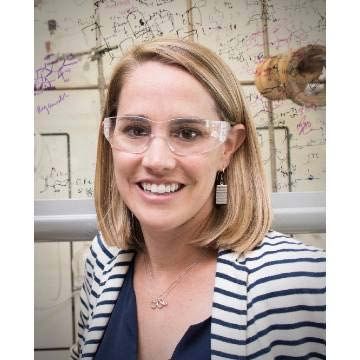
SPEAKERS SPEAKERS
Jason M. Crawford I Yale University, West Haven I USA Ben Shen I Scripps Research Institute Florida, Jupiter I USA
Jason Crawford carried out his doctoral studies at the Johns Hopkins University with Ben received B.Sc. from Hangzhou University, M.S. from the Chinese Academy of Sciences,
Craig Townsend and his postdoctoral studies at Harvard Medical School with Jon Ph.D. from Oregon State University, all in chemistry, and carried out postdoctoral research
Clardy. Jason joined Yale University in 2012 and is now the Maxine F. Singer Associate in Mol. Biology and Biochemistry at University of Wisconsin-Madison. Ben served on the
Professor of Chemistry and of Microbial Pathogenesis and Director of the Chemical faculty at University of California, Davis (1995-2001) and University of Wisconsin-Madison
Biology Institute. (2001-2010) before joining The Scripps Research Institute in 2011. Currently, Ben is
Professor of Chemistry and Molecular Medicine and serves as Chair, Department of
Chemistry, Florida Campus, and Director, Natural Products Discovery Center at Scripps
Research. Current research in the Shen Lab concerns natural product biosynthesis in
actinobacteria and development of enabling technologies to mine actinobacteria genomes
William Gerwick I Scripps Institution of Oceanography, San Diego I USA for natural products and drug discovery.
Bill Gerwick’s research focuses on the bioactive natural products of marine algae and Rotem Sorek I Weizmann Institue of Science, Rehovot I Israel
cyanobacteria, their application in biomedicine, and their biosynthesis using
genomic approaches. He earned a BS degree in Biochemistry at UC Davis, a PhD in
Prof. Rotem Sorek completed his PhD at Tel Aviv University (2006) followed by a postdoc at
Oceanography/Marine Chemistry at Scripps/UCSD, and did postdoctoral work in
the Lawrence Berkeley labs (2008). His lab at the Weizmann Institute studies the
biosynthesis at U Connecticut. He spent 21 years as Professor at Oregon State
interactions between bacteria and the viruses that infect them. His studies found that
University in the College of Pharmacy. In 2005, he returned to his PhD institution at
important components of the human innate immune system have originated from bacterial
Scripps/UCSD, and holds the position of Distinguished Professor of Oceanography
defense systems that protect from phages. Sorek also discovered that phages can use
and Pharmaceutical Sciences. He has served as president of the American Society of
small-molecule communication in order to coordinate their infection dynamics. Sorek is a
Pharmacognosy, is a Society Fellow of the American Society of Pharmacognosy and
fellow of the American Academy of Microbiology, the European Academy of Microbiology
the American Association for the Advancement of Science. His research group has
and EMBO.
published over 500 scientific papers and holds more than 20 US patents.
Elizabeth Sattely I Stanford University & HHMI, Stanford I USA
Sarah E. Reisman I California Institute of Technology, Pasadena I USA
Elizabeth Sattely is an Associate Professor in the Department of Chemical Engineering at
Sarah E. Reisman earned a BA in Chemistry from Connecticut College in 2001, and Stanford, an HHMI Investigator, and a Stanford ChEM-H Faculty Fellow. Dr. Sattely
her PhD in chemistry from Yale University in 2006, under the direction of Prof. John completed her graduate training at Boston College in organic chemistry and her
L. Wood. From 2006–2008, Sarah worked as an NIH fellow with Prof. Eric Jacobsen at postdoctoral studies in biochemistry at Harvard Medical School where she studied natural
Harvard University, and then joined the faculty at the California Institute of product biosynthesis in bacteria. Inspired by the centrality of plants and plant-derived
Technology where she is now the Bren Professor of Chemistry and a Heritage molecules in human diet and medicine, the Sattely laboratory is focused on the chemistry
Medical Research Institute Investigator. Her laboratory seeks to discover, develop, of model plants, crop plants, and medicinal plants. A major goal in the group is to
and study new chemical reactions within the context of natural product total accelerate the discovery and engineering of plant metabolic pathways to make molecules
synthesis. critical to human and plant health. Accomplishments from the Sattely lab include mapping
the biosynthetic routes to clinically used drugs from medicinal plants and elucidating new
mechanisms by which crop plants use chemistry to cope with environmental stress. Work
Hans Renata I Scripps Research Institute Florida, Jupiter I USA from the Sattely group has been recognized by an NIH New Innovator Award, a DOE Early
Career Award, an HHMI-Simons Faculty Scholar Award, a DARPA Young Investigator Award,
Hans Renata received his B.A. degree from Columbia University in 2008 and earned and an AAAS Mason Award for Women in the Chemical Sciences.
his PhD from The Scripps Research Institute in 2013 under the guidance of Prof. Phil
S. Baran. After postdoctoral studies with Prof. Frances H. Arnold at Caltech, he
Yi Tang I University of California, Los Angeles I USA
began his independent career at The Scripps Research Institute in 2016. His
research focuses on synthetic and biosynthetic studies of natural products and Yi Tang received his undergraduate degree in Chemical Engineering and Material Science
biocatalytic reaction developments. from Penn State University. He received his Ph.D. in Chemical Engineering from California
Institute of Technology under the guidance of Prof. David A. Tirrell. After NIH postdoctoral
training in Chemical Biology from Prof. Chaitan Khosla at Stanford University, he started
his independent career at University of California Los Angeles in 2004. He is currently a
professor at the Department of Chemical and Biomolecular Engineering at UCLA, and holds
joint appointments in the Department of Chemistry and Biochemistry; and Department of
Bioengineering. His awards include the ACS Arthur C. Cope Scholar Award (2012), the EPA
Presidential Green Chemistry Challenge Award (2012), NIH DP1 Director Pioneer Award
(2012) and the ACS Eli Lilly Award in Biological Chemistry (2014).
3 4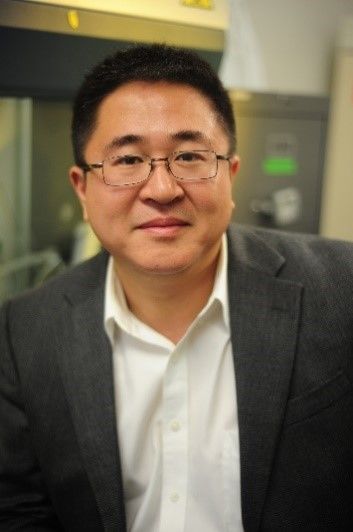
AWARDEES AND ORGANISER

Young Scientist Awardee
Christine Beemelmanns I Leibniz Institute for Natural Product Research and Infection Biology, Jena

                    Dr. Beemelmanns studied Chemistry at the RWTH Aachen. She then went to Japan for a one
                    year research stay in the group of Prof. Sodeoka at RIKEN. Back in Germany she worked at
                    the FU Berlin with Prof. Reißig and received her PhD in Organic Chemistry. She then worked
                    another six month in Japan at the University of Tokyo under the supervision of Prof K.
                    Suzuki and joined shortly afterwards the group of Prof. Clardy at Harvard Medical School
                    (Boston) in 2011. End of 2013, she received an offer from the Hans-Knöll Institute (HKI) to
                    establish a Leibniz Junior Research Group in the field of Natural Products Chemistry and
                    Chemical Biology.

PhD Awardee
Martin Klapper I Leibniz Institute for Natural Product Research and Infection Biology, Jena

                    Martin Klapper studied Chemistry (B. Sc.) and Chemical Biology (M. Sc.) at the Friedrich
                    Schiller University Jena, Germany. He obtained his Ph.D. in the Junior Research Group
                    Chemistry of Microbial Communication under the guidance of Dr. Pierre Stallforth at the
                    Leibniz Institute for Natural Product Research and Infection Biology, Hans Knöll Institute,
                    Jena. Since January 2020 he is a postdoctoral researcher in the Department of
                    Paleobiotechnology at the same institute. For his doctoral esearch, he was funded by a
                    Hoechst Doktorandenstipendium (Aventis foundation), and received the medac Research
                    Award and the Faculty PhD prize. His postdoctoral work is supported with an Add-on
                    Fellowship for Interdisciplinary Life Science by the Joachim Herz Foundation.

ORGANISING COMMITTEE
Heike Brötz-Oesterhelt I University of Tuebingen
Ingo Hartung I Merck Healthcare KGaA, Darmstadt
Christian Hertweck I Leibniz Institute for Natural Product Research and Infection Biology –
Hans Knöll Institute (HKI), Jena
Andreas Kirschning I University of Hannover
Rolf Müller I Helmholtz Centre for Infection Research, Saarbruecken
Dietrich Ober I University of Kiel
Jörn Piel I ETH Zurich/ CH (chairman)
Karsten Schuerrle I DECHEMA e.V., Frankfurt/ Main
Eckard Thines I Johannes Gutenberg University Mainz

ORGANISER
DECHEMA
Gesellschaft für Chemische Technik und Biotechnologie e.V.
Theodor-Heuss-Allee 25
60486 Frankfurt am Main
www.dechema.de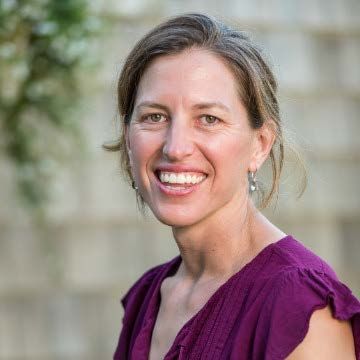
You can also read


