Is an 'insect apocalypse' happening? How would we know? - Phys.org
←
→
Page content transcription
If your browser does not render page correctly, please read the page content below
Is an 'insect apocalypse' happening? How
would we know?
29 April 2019, by Brian Lovett

                                                          increasingly inhospitable to some insects – but
                                                           nightmarish conditions for one may be heaven to
                                                           another.

                                                          Put another way, there is no perfect environment
                                                          for all insects. And human impacts on the
                                                          environment, like climate change and land
                                                          development, very well may hurt beneficial insects
                                                          and help harmful ones.

                                                          Insect declines

Is this dragonfly thriving, or just hanging on? Credit:   Around the world, entomologists are looking
Chris Luczkow/Flickr, CC BY                               wistfully into empty nets, and car owners are
                                                          increasingly unsettled by their pristine windshields.
                                                          It does not take decades of data collection and a
                                                          degree to notice that in a human lifetime, our
Insects scuttle, chew and fly through the world           teeming world teems less.
around us. Humans rely on them to pollinate
plants, prey on insects that we don't get along with, The first study to set off alarms was published in
and to be movers and shakers for Earth's              2017 by entomologists in Germany, who reported
ecosystems. It's hard to imagine a world without      that over 27 years the biomass of flying insects in
insects.                                              their traps had declined by 75%. Another study
                                                      from the Luquillo Long Term Ecological Research
That's why news reports in recent months warning program site in the Puerto Rican rainforest
of an "insect apocalypse" sparked widespread          reproduced an insect survey from the 1970s. It
alarm. These articles, which were based on long- found that the biomass of arthropods – a large
term insect collections and a review of past          group of organisms that includes insects – had
studies, suggested that people alive today will       declined 10- to 60-fold in that time, and that lizards,
witness the indiscriminate extinction of insect-kind. frogs and birds that ate arthropods had also
                                                      declined.
I study fungi that can be used to control harmful
insects, such as pests that damage crops and          Underscoring this theme, in April 2019 two scholars
mosquitoes that transmit malaria. In my world,        published a review that synthesized over 70 reports
reports of mass insect die-offs are big news. But     of insect decline from around the world, and
while there clearly is reason to be concerned about predicted mass insect extinctions within a human
certain insects, such as the endangered rusty         lifetime. They took a alarmist tone, and have been
patched bumble bee or the American burying            widely criticized for exaggerating their conclusions
beetle, in my view it isn't yet possible to predict a and selecting studies to review with the word
looming insect apocalypse.                            "decline."

More than 1 million insects have been discovered          Nonetheless, these researchers had no trouble
and named, but many millions have yet to be               finding studies to include in their review. Many
described. It's undeniable that Earth is becoming         scientists are currently analyzing the roles that

                                                                                                         1/3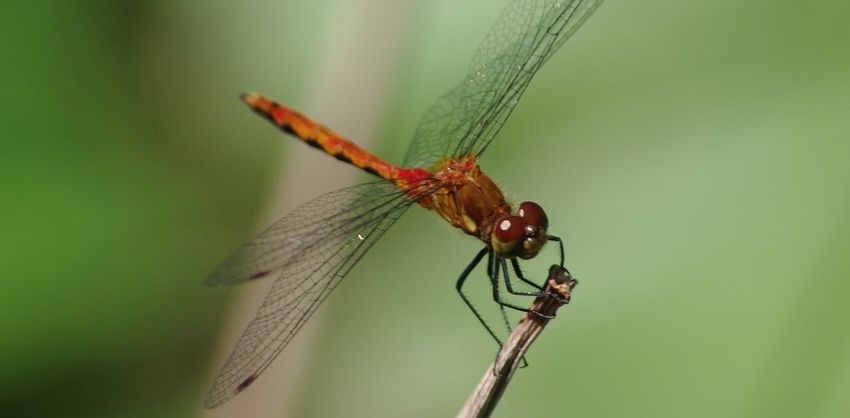
climate change, land use, chemical pesticides and CC BY
 other factors have played in reported declines in
 many insect species.

The end is not near                                       That love extends to human impacts on the land.
                                                          Insects that flutter from flower to flower won't be
These discussions are important, but they don't           happy when developers bulldoze a meadow and
mean an insect apocalypse is under way.                   scatter tires around, but human-biting mosquitoes
Predicting insect decline is hard to do without a lot     will be buzzing with excitement.
of effort and data.
                                                          What else is out there?
To predict an apocalypse, entomologists worldwide
will need to conduct careful large-scale studies that Entomologists are uniformly concerned about the
involve collecting, identifying and counting many      fate of insects in today's changing world. But I
different insects. There are very few insects for      believe the responsible approach is to push back
which scientists have enough data now to reliably on fire-and-brimstone rhetoric until detailed, large-
predict how many individuals there will be from year scale studies are completed. Until then, these same
to year, let alone confidently chart a decline in each gaps in our knowledge also make it hard to rule out
species. Most of the insects for which this            that significant declines in diverse insects are
information exists are species that are important for happening. These gaps must be filled to illuminate
agricultural or human health, such as managed          challenges that insects face, from the inconvenient
honey bees or mosquitoes.                              to the apocalyptic.

And human actions are shifting balances between           When the majority of insects remain to be
insect species. As an example, the mosquitoes that        described, it's hard to value them. But here's one
are best at spreading pathogens that cause                example: Insecticide use in pear groves in China's
disease have evolved to thrive near us.                   Sichuan Province has caused such a decline in
Entomologists call them anthropophilic, which             native pollinators that beekeepers will not lend their
means they love people.                                   bees to these orchards. These farmers are forced
                                                          to pollinate their trees by hand – an expensive and
                                                          time-consuming process if you aren't an insect.

                                                          Similarly, native natural enemies played invisible
                                                          roles in slowing the spread of the invasive brown
                                                          marmorated stink bug when it was introduced into
                                                          Pennsylvania in the 1990s. They included wasps
                                                          that lay their eggs inside of stink bug eggs, and
                                                          predatory insects and spiders that eat stink bugs
                                                          eggs for breakfast.

                                                          Pollination and predation are just the start. Some
                                                          insects could be sources of new drugs or traditional
                                                          dyes, while others inspire artists or just provide little
                                                          moments of inimitable beauty.

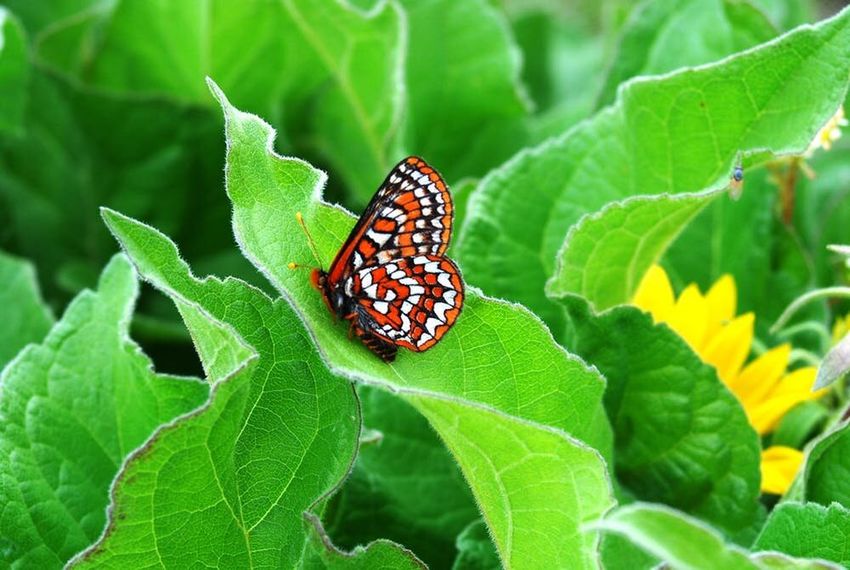
The Taylor’s checkerspot butterfly, once found
                                                          With so many unanswered questions, it's clear that
throughout grasslands in the Pacific Northwest, was       there is a need for more funding for biodiversity
listed as endangered in 2013. The main cause is habitat   research. It is no coincidence that recent studies
loss, driven by development, tree encroachment and        reporting massive insect declines came from a
spread of invasive plants. Credit: USFWS/Ted Thomas,      Long-Term Ecological Research center that is

                                                                                                           2/3
publicly funded through the National Science
                                   Foundation and from a carefully curated collection
                                   made and maintained by entomologists.

                                   This kind of work requires money, bold foresight
                                   and dedication to science over long periods of time.
                                   But it can produce insights into how our world is
                                   changing – and that knowledge will help us prepare
                                   for the future.

                                   This article is republished from The Conversation
                                   under a Creative Commons license. Read the
                                   original article.

                                    Provided by The Conversation
                                   APA citation: Is an 'insect apocalypse' happening? How would we know? (2019, April 29) retrieved 12
                                   May 2019 from https://phys.org/news/2019-04-insect-apocalypse.html

                                   This document is subject to copyright. Apart from any fair dealing for the purpose of private study or research, no
                                   part may be reproduced without the written permission. The content is provided for information purposes only.

                                                                                                                                                3/3

Powered by TCPDF (www.tcpdf.org)
You can also read


