January 19, 2023

NAPCO Webinar Series
←
→
Page content transcription
If your browser does not render page correctly, please read the page content below

January 19, 2023 NAPCO Webinar Series

Presenters

                                        Paula Hannaford-Ago (Moderator)
                                        Director, Center for Jury Studies
                                        National Center for State Courts

                                         Hon, Glenn A. Grant
                              Director, Administrative Office
                                 New Jersey Judicial Branch

             Michelle C. Goodman
             Staff Attorney
             Indiana Office of Court Services

                                                                            2
Agenda
1. Key Findings from the National Center Study
2. Indiana Master Jury List Process
3. New Jersey Master Jury List Process
4. Important Policy Questions for Court Leaders…
Is a uniform statewide approach best?
What types of support should trial court
leaders seek from state AOCs?
How can trial courts ensure they receive
accurate, timely source list data?
What should court leaders know and do in
negotiating MOUs for source list data?
How best should courts eliminate duplicate
records which taint master jury list accuracy?
5. Q & A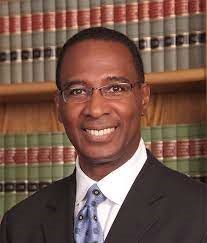
Inclusive
Characteristics
of an Effective
Master Jury List
                   Representative

                   Accurate
Juror Source Lists in Three States
Registered Licensed State Income
Voters Drivers/ID Tax Filers
Cardholders
Missouri X X
New Jersey X X X
Tennessee XPercent of Counties by Inclusiveness Rates
Missouri New Jersey Tennessee
Inclusiveness Voters Drivers / Voters Drivers / ID Income Drivers / ID
ID Cards Cards Tax Cards
Less than 85% 42% 6% 52% 0% 71% 2%
85% to 100% 49% 31% 48% 10% 29% 5%
100% to 110% 8% 42% 0% 24% 0% 20%
More than 110% 2% 21% 0% 66% 0% 73%Shadows (Unrecognized Duplicates)
Ghosts (Stale Records)

                  Missouri                    New Jersey              Tennessee
Updated     Voters    Drivers / ID   Voters   Drivers / ID   Income   Drivers / ID
Addresses                Cards                   Cards         Tax       Cards

12 months    6%           7%          6%          5%          5%          5%

18 months    8%           9%          7%          6%          9%          6%

48 months   11%          10%          9%          9%          11%        10%
Comparative Disparities for Blacks /
African Americans
Missouri New Jersey Tennessee
Master Jury List Voters Drivers / ID State Income Master Jury List
Cardholders Tax
Less than -50% 2% 0% 0% 0% 9%
-50% to -20% 3% 0% 5% 0% 7%
-20% to 20% 83% 100% 90% 100% 69%
20% to 50% 7% 0% 5% 0% 11%
More than 50% 5% 0% 0% 0% 3%Missouri :
• Positive correlation with Hispanic
New Jersey:
Impact of over- • State Income Tax and Voters: Positive
inclusiveness on correlation with Black / African American
representation • Drivers: Positive correlation with Whites
Tennessee:
• Positive correlation with Black / African
American
• Negative correlation with WhitesIndiana’s Master Jury List Project Michelle Goodman, Staff Attorney Indiana Office of Court Services
• Indiana has 92 counties

  About   • Majority of our counties use a two-step
            notice/summons process
Indiana   • The rest use a one-step process
            notice/summons process
Master Jury List Process
• Current source lists and how we got here
• New requirements in 2003 for jury pool source lists
• Role of Jury Committee of the Judicial Conference of Indiana and
Indiana Office of Court Technology
• Collaboration with data source providers in Executive Branch
• Current source lists – Bureau of Motor Vehicles and Department
of RevenueMaster Jury List Process
• List processing overview
• Knowing your source data
• Cleaning/matching data
• USPS CASS process
• Communication with local court jury administrators –
feedback process
• Project web page:
https://www.in.gov/courts/admin/tech/jury-pool/Ongoing Improvements to New Jersey Jury List Title of Presentation Subtitle May 24, 2023 January 2019
Overview
   Part 1: Transition to In-House Jury Management System

   Part 2: Current Process for Creation & Maintenance of Single
   Jury List

   Part 3: Addition of Sources & Enhanced NCOA Process

   Part 4: Direct Collection of Voluntary Juror Demographic
   Information

New Jersey Judiciary
                                                                  16
New In-House Jury System
New Jersey is currently shifting from a vendor-based system to
an in-house jury system.
Our in-house system will continue to provide an integrated
system for a summoned juror to qualify online, request
deferrals and excusals, and send and receive messages with the
courts.
New Jersey Judiciary
17New In-House Jury System
The new in-house system also will be much more secure –
including with encryption of private data.
This will enable direct collection of juror demographic
information in a way that maintains confidentiality.
It will also support cross-referencing with other Judiciary
systems to confirm the accuracy of juror addresses as part of
the annual sort-merge to create the single list.
New Jersey Judiciary
18Recommendations
Courts should ensure system integrity, whether using a vendor-
based or in-house system.
There is no single model that works for all courts.
Any option should be cost-appropriate taking into
consideration the population, technological resources, and
funds available.
New Jersey Judiciary
19Current New Jersey Process
New Jersey already uses a detailed algorithm to prioritize the
most reliable and up-to-date record for the jury list.
The iterative process also identifies and eliminates duplicates,
erring on the side of inclusion to avoid inadvertent removal of
an eligible juror.
The list is created annually with interim updates through the
National Change of Address (NCOA) registry.
New Jersey Judiciary
20Upcoming Enhancements
In addition to records of licensed drivers, registered voters, and
filers of state taxes, New Jersey will be adding a new list --
records from the Department of Labor -- to ensure inclusion of
prospective jurors not represented on the other lists.
We are also exploring higher quality NCOA options to improve
the updates between creation of the annual lists.
New Jersey Judiciary
21Recommendations
Courts should work closely and on an ongoing basis with
records custodians to ensure the most current data available.
Efforts should be made to formalize the data fields included in
those records so that the creation and update of the single list
yields the best outcome.
Maintenance of the list should be an ongoing process, not just
something to address once per year.
New Jersey Judiciary
22Recommendations
Whether using a vendor or in-house system, try to cross-check
against the death index to avoid summoning decedents.
One benefit of an in-house system is the ability to investigate
and remedy errors when identified.
Select the right NCOA option for your court system.
New Jersey Judiciary
23Collection of Demographic Information
In 2021, the New Jersey Supreme Court convened a Judicial
Conference on Jury Selection.
The Court in July 2022 authorized a package of reforms to
improve the jury selection process, including to improve
representativeness and reduce the effects of discrimination and
bias at all phases.
New Jersey Judiciary
24Collection of Demographic Information
A central reform is the direct collection of voluntary juror
information as to race and ethnicity (using Census categories),
as well as gender (using the State’s categories of male, female,
and non-binary/undesignated).
New Jersey has started to collect this data at the point of juror
qualification.
We are in the process of sharing aggregate demographic
information for jury pools.
New Jersey Judiciary
25Recommendations
Collect at the point of qualification (to capture as many jurors
as possible).
Decide in advance how information will be maintained
confidentially and when/how it will be shared.
New Jersey Judiciary
26Overall -- Recommendations
Buy-in and support of highest leadership – Chief Judicial and
Administrative Officer for the State or County – is the best way
to improve jury processes.
The assembly of the single jury list is critical to ensuring the
representativeness of jury pools and engaging all segments of
the community.
New Jersey Judiciary
27You can also read


