Jewellery Studies The Journal of The Society of Jewellery Historians 2021/2
←
→
Page content transcription
If your browser does not render page correctly, please read the page content below

ISSN 2754-1460

Jewellery Studies
The Journal of The Society of Jewellery Historians

                      2021/2
Jewellery Studies — the Journal of The Society of Jewellery Historians                                                                      2021/2. Gorelik

                                          Published by the Society of Jewellery Historians

                                                                           The Society of

                                                                           JEW ELLERY
                                                                           HISTOR IA NS

 The Society of Jewellery Historians is a Registered Charity: No.1151393, and a company limited by guarantee, No. 7032947, registered in England.
 The logo of the Society is the copyright of the Society and shall not be used if the Work is republished in any way other than as an unaltered pdf of
                                                                         the Work in this Publication.

   The Society was formed in 1977 with the aim of stimulating the growing international interest in jewellery of all ages and cultures by publishing
     new research and by bringing together those interested in the subject, whether in a professional or private capacity. The membership includes
 archaeologists, museum specialists, collectors, art historians, dealers, gemmologists, practising jewellers and designers, scientists and conservators.

      The Society runs a programme of lectures from September to June, inviting speakers from different disciplines and many parts of the world.
    The lectures are usually held in London at the Society of Antiquaries, Burlington House, Piccadilly, London W1V OHS, and are made available
afterwards on the Society’s website. In addition, the Society arranges a variety of other occasional events including international symposia on aspects
                          of the history and technology of jewellery, study visits to museums, and private views of special exhibitions.

 For full details visit the Society’s website at: www.societyofjewelleryhistorians.ac.uk or write to: The Membership Secretary, The Society of Jewellery
                                               Historians, Scientific Research, The British Museum, London WC1B 3DG

                                                                                                                                                           1
Jewellery Studies — the Journal of The Society of Jewellery Historians                                                                               2021/2. Gorelik

                                          Jewellery Studies
                                                                             2021/2

                                                                         Editor: Susan La Niece

                 Jewellery Studies is the Journal of the Society of Jewellery Historians, and is the leading academic journal on the subject.
            Articles cover all aspects of jewellery from antiquity to the present day, and include related material from archives, technical data,
            gemmology and new discoveries on collections and designers. All papers published in Jewellery Studies are subject to peer review.

               Jewellery Studies was published in hard copy form from 1977 to 2012, and has been an electronic publication since 2015.
                   Articles published from December 2020 (2020/3) are Open Access. A full list of all articles published and information
              on how to access them is available on the Society’s website at: www.societyofjewelleryhistorians.ac.uk/js_online and /js_printed

                  Articles from all issues of Jewellery Studies are available free of charge to members as pdf downloads from the website.
                 Members, non-members and libraries can buy the hard copy volumes 2 to 12 online or from the Membership Secretary at
                                         membership@societyofjewelleryhistorians.ac.uk (with discount for SJH members).

                                        The Editor welcomes contributions of unpublished material on current research into
                                        all topics of jewellery history. See the Notes for Contributors at the end of this paper.
                                     Please email suggestions for articles to the Editor at js@societyofjewelleryhistorians.ac.uk

      Jewellery Studies is designed by Doug Barned www.design-is.co.uk and published online in digital pdf format by The Society of Jewellery Historians.

           The views expressed by authors in their articles published in Jewellery Studies are those of the contributors and not necessarily to be taken
              as those of the Editor or The Society of Jewellery Historians. It must be appreciated that some papers may represent work in progress.

 © The Author retains the copyright in this article but has granted the Society of Jewellery Historians an irrevocable worldwide, royalty-free licence to publish
     this article in printed and electronic format and to include the article in electronic document-delivery services and databases. This article may only be
    reproduced in whole. The individual images or other elements cannot be used separately or in other contexts without any further necessary consents and
permissions being obtained. The Author(s) have warranted that they have made every possible effort to obtain any necessary copyright permission in respect of
 images. If, however, there are any image copyright queries, then please contact the Author directly or via the Society, at js@societyofjewelleryhistorians.ac.uk.

                                                                                                                                                                     2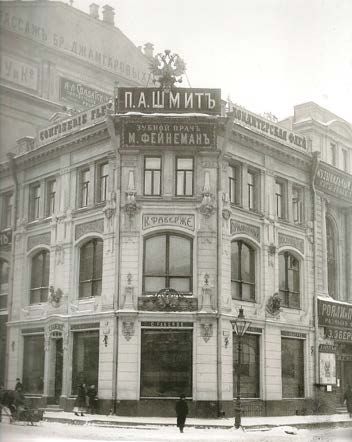
Jewellery Studies — the Journal of The Society of Jewellery Historians                                                      2021/2. Gorelik

                   Old friends and partners:
          Allan Bowe as an associate of Carl Fabergé

                                                 https://www.societyofjewelleryhistorians.ac.uk/JSO_2021_2.pdf

                                BORIS GORELIK is Senior Research Fellow at the Centre for Southern African Studies
                                of the Institute for African Studies (Russian Academy of Sciences). Born in Sverdlovsk,
                                USSR, he received his MA in linguistics from the Moscow State University. In 2004, he
                                was awarded the Candidate of Sciences degree in history from the Institute for African
                                     Studies for his research into the history of Russian emigration to South Africa.

                                An author of three books and dozens of academic and public scholarship articles, Gorelik
                                specialises in the history of Russian-South African contacts and Russian perceptions of
                                South Africa. His previous contribution to a Society of Jewellery Historians’ publication
                                       was ‘The Cullinan Diamond and its true story’ (Jewellery Studies, 2015).

                                                                         boris.gorelik@inafr.ru

                                                                             Front cover:

             Allan Bowe, Fabergé’s business partner and manager of the Moscow shop. His portrait is in the Fabergé enamelled
                gold frame presented to him in 1895, with a dedicatory plaque (fig 1), when the Fabergé shop was relocated
                    from San-Galli Passage. The McFerrin Foundation, Houston. Photograph courtesy of Wartski, London.

                                                                                                                                          3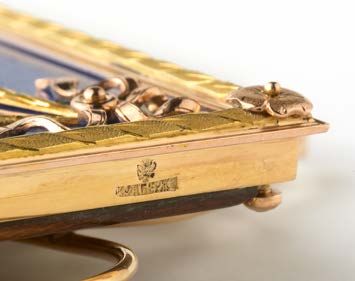
Jewellery Studies — the Journal of The Society of Jewellery Historians                                                           2021/2. Gorelik

                      Old friends and partners:
             Allan Bowe as an associate of Carl Fabergé

                                                                         BORIS GORELIK

Although the history of the House of Fabergé has been                               With the help of his younger brothers, Bowe founded
thoroughly researched, and many lavishly illustrated                                   and co-owned the first domestic branches of the
volumes of a popular or academic nature have                                              company outside Saint Petersburg as well as the
been dedicated to the emergence, development                                                London branch which served as the centre of the
and phenomenal success of that company,                                                        Fabergé export operations. ‘My partner Allan
some aspects require further exploration.                                                         Andreyevich Bo, being my helper and main
One of them is the contribution of                                                                   organiser’, wrote Fabergé referring to
British immigrants in Russia to                                                                          Bowe by his Russian name, ‘has
the establishment of the firm’s                                                                             acquitted himself well during
international reputation and                                                                                   the fourteen years of his
to the development of its                                                                                          managing my business
domestic production                                                                                                 at the Moscow factory
and distribution.                                                                                                   and the branches in
   The    foremost     of                                                                                           Moscow and Odessa.’
those expatriates was                                                                                            (Skurlov 2007: 216). This
Allan Bowe, a South African-                                                                                 brief comment suggests the
born entrepreneur who worked                                                                              importance of Bowe’s role while
in partnership with Carl Fabergé                                                                       the House of Fabergé grew to be the
from the 1880s to the 1900s (fig 1).                                                               largest and best-known Russian jeweller,

Figure 1:
A Fabergé photograph frame presented in 1895 to Allan Bowe, Fabergé’s business partner and manager of the Moscow shop. The gold frame with
a dedicatory plaque and the names of his colleagues on the rim of the frame commemorates the relocation of the Fabergé shop from San-Galli
Passage. The inscription on the plaque reads: Многоуважаемому Аллану Андреевичу Бо в память открытия нового магазина на Кузнецком
мосту д. Купеческого общества 29 октября 1895 (To the much-esteemed Allan Andreevitch Bowe in memory of the opening of the new shop in
Kuznetsky Most, Merchant Society Building 29th October 1895). The McFerrin Foundation, Houston. Photograph courtesy of Wartski, London.

                                                                                                                                               4
Jewellery Studies — the Journal of The Society of Jewellery Historians                                                        2021/2. Gorelik

however the contribution of Bowe and other British expatriates           most important export (Smalberger 1969). Most residents
to the company’s development is worthy of further academic               were not English-speaking settlers but creolised descendants
investigation. Allan Bowe’s great-granddaughter noted that he            of Khoisan peoples, who spoke languages that originated in
and other members of his extended family he brought into the             Africa. In that arid and sparsely populated region, which could
business were ‘scarcely mentioned beyond the bare facts’ even in         only be reached after a weeklong journey from Cape Town,
comprehensive works on the history of the company (Bonus 2010:           Henry was appointed District Surgeon (Langham-Carter 1970).
31–2). Perhaps Bowe’s reputation in the eyes of researchers was             Allan Bowe spent his childhood and adolescence in
tarnished by the fact that his collaboration with the House of           Springbokfontein (now Springbok), a miners’ village which had
Fabergé ended in a complete rupture, with Carl Fabergé accusing          been founded shortly before the family’s arrival. His younger
his former partner of betrayal.                                          brothers, Charles Frederick (1861–1946) and John Arthur
   Apart from the genealogical data discovered by the South African      (1863–1944), were born there; they became his colleagues
researcher Langham-Carter, no published material had thrown              and associates in his business ventures in Russia and Great
light on the life of Allan Bowe until Wendy Bonus produced her           Britain. Allan’s father travelled across his vast district,
biography of the man and his family based, among other sources,          attending to the sick and the dying. He often visited the new
on family lore and his daughter’s writings (Bonus 2010; Langham-         village that had emerged next to the small Dutch Reformed
Carter 1969 and 1970). In the 2010s, British and Russian                 church, forty-four miles south of Springbok. His patients and
scholars traced the emergence and development of the conflict            their families named it Bowesdorp (the Afrikaans for ‘Bowe’s
between Bowe and Fabergé using their correspondence as well as           village’) as a tribute to their doctor (Langham-Carter 1970).
the Englishman’s letters to his brother (1905–1909) in which he          The settlement has since disappeared, but the name can still
expressed his opinions about his collaboration with the company          be found on maps of Namaqualand.
and the subsequent rupture without inhibition (Fabergé et al.               Henry Bowe resigned in 1868, and the family moved to Cape
2012; McCarthy 2017). These materials had been discovered at             Town but within a few years both parents died of tuberculosis.
the Russian State Archives of Ancient Acts (RGADA), which holds          Having inherited a few shares, some furniture and roughly
mostly documents from a much earlier period.                             £25 each, Allan and his siblings were left without a livelihood
   This article attempts to contribute to the understanding of           (Gundry 2015; Langham-Carter 1969). Their uncles and
Bowe’s role in the House of Fabergé business and its international       aunts in the Cape could not afford to support the six orphans
expansion, the nature of his relations and eventual conflict with        so Allan with his brothers and sisters left for England to be
Carl Fabergé. The research for this article is based on the primary      taken care of by their relatives in Devon, and it is thought
sources found in the RGADA as well as on genealogical studies            that the boys were sent to a boarding school (Gundry 2015).
and ego-documents (memoirs and correspondence) of the Bowe               At twenty-two, Allan Bowe applied for a passport and went to
family, company histories of Fabergé and W.A. Bolin, and the             live with other family members in Switzerland (Bonus 2010:
data obtained directly from historians of the Bowe, Fabergé and          14; Gundry 2015) where he learned German, the language in
Shanks families.                                                         which he later communicated with Carl Fabergé.

Early years                                                              Shanks & Bolin
Henry Allan Talbot Bowe (1856–1939), known in Russia                     From the 1880s, Bowe lived in Russia. He was hired by his great-
as ‘Allan Andreyevich Bo’, grew up in a family of English                uncle, James Steuart Shanks whose family owned a flourishing
immigrants in the Cape Colony, which belonged to the British             coach-making business in London (Bonus 2010: 15). A graduate
Empire. His father, Henry, originally from Bloomsbury, was a             of Leiden University, Shanks was involved in Moscow trade for
member of the Royal College of Surgeons. He had worked as a              thirty years in partnership with Henrik Conrad Bolin, a brother
medical doctor in Australia before joining his elder brothers in         of a Russian court jeweller. Their business prospered: apart from
the Cape in the mid-1850s (Gundry 2015). The rich gold and               their Magasin Anglais (English Shop) in Kuznetsky Most, an
diamond deposits in southern Africa had not been discovered,             upscale shopping street, they owned large houses in prestigious
so the region was not yet an important destination for migrants          areas of the city.
from Europe but it was said that Allan’s parents emigrated                 The firm’s archives have not survived, and no documentation
there because their ill health required a favourable climate             of Allan Bowe’s work for Shanks & Bolin has been found. No
(Bonus 2010: 10–11).                                                     stories of that period have been preserved in the Bowe family
  Henry with his wife and daughter settled on a rented farm in           lore either, however, judging by the nature of Allan Bowe’s
Caledon, seventy miles east of Cape Town where Allan, their              subsequent collaboration with Carl Fabergé, he was involved
eldest son, was born on 2 December 1856 (Langham-Carter                  in the production and distribution of goods under the Shanks
1970). Henry did not seem to have made a decent living in                & Bolin brand.
Caledon but his experience in healthcare allowed him to get                In the official register of the largest business owners in
a position in Namaqualand, a mining area at the northern                 Moscow, Shanks & Bolin were listed as traders in textile fabrics
frontier where copper ore made up the Cape Colony’s second               and fashion accessories, which implies that production and sale

                                                                                                                                            5
Jewellery Studies — the Journal of The Society of Jewellery Historians 2021/2. Gorelik
of jewellery and silver items was not the firm’s main activity In 1890 a Fabergé production facility was opened in Bolshoy
(Spravochnaya kniga 1886). Kiselny Lane, Moscow, although its expansion and modernisation
Members of the Bolin family in Saint Petersburg specialised took another four years (Faberzhe et al. 1997: 141; Sorokin
in tiaras, diadems and other jewelled ornaments, including the 2006). The four-storey factory became the largest of its kind
Russian Imperial wedding crown. Meanwhile, H.C. Bolin in Moscow, in Russia. The most prestigious and labour-intensive projects
Russia’s silversmithing centre, focused on accessories, tableware continued to be carried out in the capital by highly qualified
and other articles from sterling silver. H.C. Bolin commissioned goldsmiths and lapidaries, however sterling silver articles were
Moscow workshops to craft silver pieces in significant volumes to produced on a larger scale and more efficiently at the Moscow
fill the needs of Shanks & Bolin as well as his brother’s business factory, therefore the profitability of the Moscow branch was
in the capital (Bonus 2010: 66) and also to embellish imported on a par with that of the Saint Petersburg business (Muntyan
European ceramic, faience, porcelain, crystal and etched glass 2006a: 138). The Fabergé factory produced sterling silver items
tableware with silver mounts. Surviving Shanks & Bolin articles of a superior aesthetic value. ‘The predominantly traditional
are characterised by their ‘high quality, originality of designs and Russian style distinguished the Moscow products from the ones
distinctively artistic style’ (Muntyan 2001:104). made in Petersburg’, recounted the company’s senior master
craftsman. ‘Those were mostly bratinas [wine bowls], zhbans
[mugs], kovshes [drinking vessels], caskets, decorative vases,
Fabergé’s business partner etc. [...] Apart from such works, the Moscow factory produced
a large amount of silver cutlery of a quality that matched the
Allan Bowe had been living in Russia for several years at the best foreign-made articles. […] Church silverware, both utensils
time of his first negotiations with Carl Fabergé. According to a and icons, played a significant part in the output. Many of these
family story, the meeting took place on a train from Moscow to works, thanks to their artistic merit, were even exported and drew
Paris in 1886 (Bonus 2010: 1–2). Being ten years older than orders from abroad.’ (Faberzhe et al. 1997: 19, 21–22).
Bowe, Carl Fabergé had been involved in his family business for In Kuznetsky Most, Bowe and Fabergé opened a shop with
two decades. His firm already had a warrant of appointment as several Englishmen on the staff, including Allan’s brothers
a purveyor of gold, silver and diamond articles to the Russian Charles and Arthur (fig 2). As if in defiance of Bowe’s great-uncle
Imperial Court and the first jewelled Easter egg, the House of
Fabergé trademark, had been crafted a year before Carl Fabergé’s
meeting with Allan Bowe.
Bowe apparently had not received formal training in jewellery
crafts, however, he seemed to know the Russian market well
enough to be able to organise distribution of Fabergé products in
Moscow, the country’s second most populous city. He had worked
for an established Moscow company which had close connections
with local silversmiths and such experience could prove useful
to Fabergé. In 1887, Carl Fabergé established a Moscow branch
of his company in partnership with Allan Bowe. Since the owner
of the firm resided in the capital, Bowe oversaw all aspects of
the Moscow business: from production and sales to raw material
acquisition, property insurance and lease agreements (Neizvestnyi
Faberzhe 2003). Bowe’s role was to be the House of Fabergé’s
main representative outside the capital, Saint Petersburg, and as
a native speaker of English, he could also negotiate in London for
purchases of South African diamonds and British sterling silver,
considered the best in the world at the time.1
While in Saint Petersburg the workload was distributed among
different Fabergé workshops, in Moscow under Bowe production
was centralised, though the company employed about the same
number of employees as in the capital. Bowe sometimes chose
and hired his staff personally. ‘You are under nobody but myself,
so that there is no possibility of being bullied by any overseer & c.’,
he assured a British artist whom he invited to design jewellery
in Moscow (Von Solodkoff 1989). In the 1900s, his jewellery
designers worked from eight to ten hours a day in a room above Figure 2:
the Fabergé shop. The Fabergé shop in Moscow, 1903. From the personal collection of
Tatiana Fabergé, France. Photograph courtesy of Valentin Skurlov, Russia.
1 V.V. Skurlov, email communication, 11 August 2020.
6Jewellery Studies — the Journal of The Society of Jewellery Historians 2021/2. Gorelik
and former employer, Shanks, the Fabergé
shop was located nearly opposite Magasin
Anglais. Shortly after Bowe went into
business with Fabergé, H.C. Bolin had
died. Shanks started his own company,
selling, among other things, silver goods
which bore his new hallmark, ‘Shanks
& Co’, but were produced by the same
suppliers (Muntyan 2001:107–108).2
During the two decades of collaboration
with Allan Bowe, Carl Fabergé’s company
became the largest jewellery manufacturer
in Russia. Its staff grew from a few dozen to
nearly five hundred people between 1882
and 1896 (Faberzhe et al. 1997: 141).
Bowe travelled to various cities in the Russian
Empire offering Fabergé products and in
1900, he launched an Odessa branch in
partnership with Fabergé. Exports of Fabergé
products began in the last decades of the
Figure 3:
nineteenth century because of the company’s
A silver tray (26in/66cm wide) with an enamelled portrait of Bowe commemorating
success in the domestic market as well as at the fifth anniversary of the Fabergé factory in Moscow (1895). The Russian
exhibitions in Europe. In recognition of the inscription reads, ‘To the esteemed Allan Andreyevich Bo from his deeply
outstanding quality and creativity of his work, grateful employees’. Photograph courtesy of Wendy Bonus, Canada.
Carl Fabergé was appointed court jeweller to
the Swedish king and awarded the French
Legion of Honour (Ukazatel deistvuyushchikh v Imperii… 1905). Fabergé et al. 2012: 529). Among the early clients were the future
From the 1900s, the House of Fabergé was actively developing its King George V, Queen Alexandra, and Alice Keppel, the favourite of
export business and its first international branch was established in Edward VII. Fabergé pieces, particularly objets de fantaisie, became
the United Kingdom in 1903. The British aristocracy was familiar the ‘social currency’ of British high society as delightful, desirable
with Fabergé creations because of the close relations between the and convenient presents that could not compromise the recipient
royal families in London and Saint Petersburg. Queen Victoria first (McCarthy 2017: 15, 17).
purchased Fabergé jewellery in 1897 and Queen Alexandra was a In 1905, the Moscow branch suffered heavy losses because of
collector since the 1880s, when she received a Fabergé piece as the social and political unrest in Russia. The Fabergé workers joined
a present from her sister, wife of the Russian tsar Alexander III. the jewellery industry strike, and new orders could not be completed
From London the firm liaised with clients in Europe and around the on time.3 Eventually, Bowe and Fabergé had to close their Moscow
world, dispatching orders to Indian maharajas, the King of Siam and factory and cut staff. Meanwhile, the relations between Allan Bowe
American tycoons. and Carl Fabergé’s sons deteriorated. Agathon Fabergé wished to
The Bowe brothers had been bringing Fabergé jewellery and other establish full control over the Moscow branch: ‘[Petersburg] is trying
articles to London even before the opening of the branch. The first to get hold of us seriously, & while I was away, acted as if the place
manager was Allan’s brother, Arthur, who had worked in Moscow belonged to them!’ Bowe wrote to his brother in London. ‘Of course
and sold the company’s products elsewhere in Russia. Allan and there is a limit to all things, and a rupture might happen at any
Arthur Bowe ran the British business on their own because Carl time, so we must get to be independent as soon as we can!’4 In the
Fabergé did not visit London in the early 1900s. The first Fabergé end, Bowe offered his share in the Fabergé business in Russia to
shop in London was opened at 415 Oxford Street. By early 1906, it the owner of the firm who agreed to purchase his stake. ‘I will pass
had relocated to 32 Old Burlington Street. The shop was probably on all of my business to my sons soon, and I do not think that you
registered in the name of Arthur Bowe, but the business belonged to will work well together’, he told Allan (McCarthy 2017: 29). Both
Carl Fabergé and Allan Bowe in equal shares (McCarthy 2017: 25–6; partners intended to part ‘like old friends & gentlemen’5 (fig 3). In
March 1906, they signed a deed of separation.
2 The jewellery division was taken over by the Moscow and the Saint
Petersburg branches of the Bolin family, who continued to produce silver 3 Allan Bowe — Arthur Bowe, 21 October 1905. Russian State Archives
articles and opened a shop under their own brand, also in Kuznetsky of Ancient Acts (hereafter RGADA): f. 1468, op. 2, d. 515, p 4.
Most. The Bolin firm in the capital still purveyed jewellery for the Russian 4 Allan Bowe — Arthur Bowe, 6 February 1906.
court, but the amalgamation with the Moscow firm did not prevent it RGADA: f. 1468, op. 2, d. 515, p 7 rev.
from losing ground to the House of Fabergé, which surpassed it in terms 5 Allan Bowe — Arthur Bowe, 4 February 1906.
of production volume and, probably, sales (Ribbing et al. 2000: 58). RGADA: f. 1468, op. 2, d. 515, p 10.
7Jewellery Studies — the Journal of The Society of Jewellery Historians 2021/2. Gorelik
In those turbulent times for the firm and for the country, Bowe still believed that Fabergé would not have bought
Bowe’s employees in Moscow presented to him a farewell the London business, but he admitted that he could have
message in calligraphic handwriting, decorated in a neo-Russian underestimated the capabilities of his former partner:
style. This document had pride of place in Bowe’s house for the
rest of his life. ‘Thanks to you, the financial situation for us and ‘If it might have been true, then of course it is to be
other workers improved, because your example in raising wages regretted that he did not get it. I should have lost [sic!]
was followed in other factories’, wrote the former workers of the less money & would have kept on good terms with an old
Fabergé factory. ‘Strict and exacting as regards to the execution friend! He refuses to take back the goods we returned
of your orders, you were also always fair. Saddened by having to from London & will no doubt do many other things to me
part with you, we will always remember everything that you did in the same line. Well, this cannot be helped, I imagine.
for us, and, as an expression of our deep gratitude, we are saying I’ll live without his friendship! Still a rupture like this is
our Russian spasibo6 for everything.’7 to be regretted.’12
Bowe did not feel that the deal with Lacloche Frères was
Rift with Fabergé profitable enough for him. Besides, the winding up of his affairs
with Fabergé caused him much distress. ‘Fabergé has thought fit
Once Bowe and Fabergé terminated their partnership, the to offer me 7000 for the London returned goods (instead of 9300
Moscow and the Odessa branches were taken over by the House of odd)!’ Bowe complained to his brother. ‘It is a disgraceful act on
Fabergé, while Allan Bowe became the sole owner of the London his part, but I have accepted it to finish the matter […] I have
shop.8 Bowe expected to remain the Fabergé representative: lost 1/3 of my capital & am now living on my capital; I have a lot
his British customers were told that he had bought the London of expenses here in getting into the new house, can’t sell my old
business and that ‘anything & everything passing from F[abergé] house, etc, etc, so that economy is absolutely necessary!’13
to London’ would be channelled through him.9 His letterhead and His troubles continued when Carl Fabergé filed a lawsuit against
shop sign still bore the name ‘C Fabergé’. Lacloche Frères the same year. The jeweller alleged that Bowe
However, with the disruptions in supplies caused by the unrest had no title to the Fabergé brand, which meant, among other
and industrial action in Russia Bowe was unable to replenish things, that the new owner of the London business trading under
his stock and fulfil obligations to his customers. Knowing that that name had no right to its goodwill. According to Fabergé, at
Carl Fabergé was experiencing financial difficulties, Bowe sold the dissolution of his partnership with Bowe, the British branch
his London business to Lacloche Frères in July 1906. Bowe ceased to exist, and thus the brand name reverted to the Russian
made this deal with direct competitors of the Russian firm company. Bowe had to defend the rights that he had assigned to
without Fabergé’s knowledge. Together with the shop, Bowe his French buyer. If Fabergé won the case, Lacloche Frères could
handed over to Lacloche Frères the Fabergé designs, models demand compensation from Bowe for losses that they sustained
and reference books that remained at the London office and in the action taken by the Russian company.
which Carl Fabergé regarded as his own property.10 The ‘former After two years of litigation, Fabergé and Lacloche Frères
old friend and partner’ accused Bowe of betrayal. ‘Instead of reached a compromise and settled the case out of court in late
making a sale offer to me, the creator of the goods that you sell, 1908.14 The new owner of the London business refrained from
I was sold by you in the true sense of the word’ wrote Fabergé. trading under the Fabergé name, and the Russian jeweller opened
‘This kind of action is so outrageous that I, for my part, feel a new shop at 48 Dover Street and, later, at 173 New Bond
obliged to disregard you and to declare once and for all that I Street. Henry Charles Bainbridge, who had been hired on the
sever all relations with you. I therefore do not intend to answer recommendation of Allan Bowe’s niece stayed loyal to Fabergé
your letter and request you never to make an appearance on my and oversaw the firm’s affairs in Britain together with the owner’s
firm’s premises in the future.’11 youngest son, Nicholas. The British upper classes continued to
favour the House of Fabergé. The London branch functioned until
the February Revolution in Russia (1917), when its stock was
6 Thank you (Russian). purchased by Lacloche Frères.
7 A photo of this document is provided by W Bonus,
Allan Bowe’s great-granddaughter.
8 Allan Bowe — Arthur Bowe, 6 March 1906. RGADA: f. 1468,
op. 2, d. 515, p 11; Adolphus Tooth — Allan Bowe, 22
October 1908. RGADA: f. 1468, op. 2, d. 507, p 13.
9 Allan Bowe — Arthur Bowe, 10 March 1906.
RGADA: f. 1468, op. 2, d. 515, p 14. 12 Allan Bowe — Arthur Bowe, 14 July 1906.
10 V.V. Skurlov, email communication, 11 August 2020. Also RGADA: f. 1468, op. 2, d. 515, p 15.
see Allan Bowe — Arthur Bowe, 21 October 1905. RGADA: 13 Allan Bowe — Arthur Bowe, 12 August 1906.
f. 1468, op. 2, d. 515, p 4; Allan Bowe — Arthur Bowe, RGADA: f. 1468, op. 2, d. 515, p 22.
February (?) 1906. RGADA: f. 1468, op. 2, d. 515, p 26. 14 Adolphus Tooth — Allan Bowe, 16 December 1908 and 1
11 The German original is reproduced in Fabergé et al. 2012: 529. February 1909. RGADA: f. 1468, op. 2, d. 507, pp 15–16.
8Jewellery Studies — the Journal of The Society of Jewellery Historians 2021/2. Gorelik
Later years in Russia and England
In 1906, Bowe’s anxiety over the rift with Fabergé led to a funny: England is my country and I love it very, very much and
nervous breakdown. Having been ‘much shaken by these would do anything for it’, she confessed in her diary, ‘In the
disagreeables’, as he admitted in a letter to his brother, he abstract I don’t even love Russia very much and yet Russia—
retired to the English countryside. However, it did not restore Moscow—is home for me and it’s for Russia I get homesick
his peace of mind. On his doctors’ advice, Bowe returned to and not for England’ (Bonus 2010: 91–2).
Russia with his family and went into business again, trading Bowe visited Russia twice more. In 1916, he took a trip to
in gemstones from his office in central Moscow, at the corner Moscow and Odessa on business, possibly in connection with
of Bolshaya Dmitrovka Street and Stoleshnikov Lane (Bonus his investments in Russian companies. In early 1917, before
2010: 46–7). A few years later, he started selling antiques and the Bolsheviks came to power, he visited Russia for the last
assorted jewellery in his shop in Kuznetsky Most. From 1913, time, accompanying British Labour MPs as their guide and
his business was located just a block away from the Fabergé interpreter, he was appalled and distressed by the squalor in
shop, which he had established decades before (Faberzheet al. wartime Moscow. Later he travelled to Turkey and Cyprus where
1997: 116; Muntyan 2000: 162). he helped Russian Civil War refugees to sell their jewellery so
Once his health improved, he started taking interest in that they could afford to move to western Europe. Among his
the expatriate British community of Moscow. Bowe sat on clients was Grand Duchess Maria Pavlovna, daughter-in-law of
a committee for upgrading of the cemetery for Protestants Alexander II (Bonus 2010: 106–7). Under the new communist
and Catholics (the present Vvedenskoye Cemetery). He was regime his Russian investments became worthless. Bowe filed
elected vice-president of the British Sports Club, a major a claim against the Soviet government to recover the value of
sports organisation in the city. He was also a member of the his nationalised property in Russia, but a compensation was
Zamoskvoretsky Sports Club, an English-Russian football club only paid to his heirs in the 1990s (Bonus 2010: 109–10).
which had the best-maintained pitch in Moscow (Savin 2016). After the death of his wife in 1922, Allan Bowe resided in
Clacton, a seaside town east of London,
in a bungalow that his son-in-law bought
for him. He called it dacha, the Russian
for ‘holiday home’. Bowe lived on his
state old-age pension, supplemented
by selling some of the gemstones and
jewellery that he had brought from
Russia. He died in 1939, having outlived
Carl Fabergé by almost two decades.
Even in his reduced circumstances,
Bowe did not part with souvenirs of
Russia. Apart from the farewell message
from the Fabergé factory workers, he
kept the large silver tray presented to
him by the House of Fabergé staff in
Moscow, as well as a silver mantel clock
and Russian-style silver articles, which
he had received for his wedding.
Bowe never revisited the land of his
birth, South Africa, which was outside
Figure 4: the sphere of his business interests,
Bowe family’s house in Moscow. Photograph courtesy of Wendy Bonus, Canada. although his family stayed in contact
with their relatives there.15 When he had
operated the London branch of Fabergé
the family of Sir Julius Wernher, who
With the outbreak of the First World War, the demand controlled dozens of diamond and gold mining companies
for gemstones in Russia fell, and Bowe’s financial position in South Africa, had been an important client. Another
deteriorated. In the spring of 1915, the family emigrated to connection to South Africa in the same period was Countess of
Britain settling in Redhill, Surrey. Allan’s wife, Emma, a native Dudley, wife of the Colonel Commander of the Worcestershire
of Russia from a family of Anglo-French descent, could not
get used to living in England, which was a foreign country to 15 See Allan Bowe — Arthur Bowe, 14 July 1906.
her. Allan’s daughter also missed her native land. ‘It is rather RGADA: f. 1468, op. 2, d. 515, p 15.
9Jewellery Studies — the Journal of The Society of Jewellery Historians 2021/2. Gorelik
Yeomanry, who commissioned the House of Fabergé to produce
a jewelled and enamelled pear blossom in chased gold, with
nephrite leaves, standing in a rock crystal pot to commemorate
the regiment’s service in the Second Boer War (Munn 2015;
Trevelyan 1991). The blossom was the emblem of the Queen’s
Own Worcestershire Hussars;
Allan Bowe spent nearly half his life in Russia: first as an
employee of Shanks & Bolin, then as a partner of Carl Fabergé
and, eventually, as an independent trader in gemstones.
Bowe assisted Fabergé to develop the House of Fabergé into
the leading firm specialising in jewellery and silverware in
Russia. As an equal partner, and efficient and progressive
manager, Allan Bowe aided Carl Fabergé in establishing the
largest jewellery and silverware factory in the country and
oversaw the production in Moscow. Bowe also helped to open
foreign markets for the company by setting up the London
branch to channel the Fabergé exports.
Unlike Carl Fabergé, Bowe did not set himself lofty aims,
such as advancement of Russian jewellery art. Motivated
largely by economic considerations, Bowe promptly sold
his Fabergé business in London when the Russian company
faced financial difficulties, without giving his former partner
a chance to make an offer. Carl Fabergé, who managed to
reclaim his brand name in Britain only after a long and costly
litigation, felt betrayed by Bowe. From artistic direction to
development of business strategies, Fabergé’s contribution to
their joint business , was far more significant than Bowe’s.
Nevertheless, the commercial success of the House of Fabergé
in Russia and abroad from the 1880s to the 1900s cannot be
ascribed only to the ‘the exquisite artistic taste and amazing
energy of Carl Fabergé’ (Muntyan 2006b: 19). It should also
be attributed to the business acumen of his partner, British
immigrant Allan Bowe.
Acknowledgements
I am grateful to Valentin Skurlov (Russia), Wendy Bonus
(Canada) and Guy Roberts (United Kingdom) for their comments,
corrections and suggestions, and to Katherine Purcell and Kieran
McCarthy of Wartski, London, for the colour images.
10Jewellery Studies — the Journal of The Society of Jewellery Historians 2021/2. Gorelik
Bibliography
Bonus, W. 2010. The Fabergé Connection: A Memoir of the Muntyan, T. 2006b. ‘Ucheniy i obrazovanniy yuvelir’ (An able
Bowe Family. New York; Bloomington: iUniverse. and learned jeweller). Faberzhe. Yuvelir Romanovykh (Fabergé.
A Jeweller to the Romanovs). Moscow: АrtHronika, pp. 17–27.
Fabergé, T.F. Kohler, E.-A. and Skurlov, V.V. 2012. Fabergé:
A Comprehensive Reference Book. Genève: Éditions Slatkine. Neizvestnyi Faberzhe. Proekty i izdeliya firmy Faberzhe iz
muzeinykh i chastnykh kollektsii (Unknown Fabergé. Fabergé
Faberzhe, T.F. Gorynya, A.S. and Skurlov, V.V. 1997. Faberzhe i Designs and Items from Museums and Private Collections).
peterburgskie yuveliry: Sbornik memuarov, statei, arkhivnykh Moscow: Moskovskaya shkola akvareli Sergeya Andriyaki; Russkii
dokumentov po istorii russkogo yuvelirnogo iskusstva (Fabergé antikvariat, 2003, p. 7.
and Saint Petersburg Jewellers. A Collection of Memoirs, Essays
and Archival Documents on the History of Russian Jewellery Art). Ribbing, M. Muntyan, T., Skurlov, V. and Zavadskaya, L. 2000.
Saint Petersburg: Neva. Dragotsennosti & serebro. V.A. Bolin — 200 let (Jewellery &
Silver. V.A. Bolin – 200 Years). Vesteros: V.A. Bolin.
Gundry, M. 2015. ‘Henry Allan Talbot Bowe and the Fabergé
connection’. Familia: Quarterly Journal of the Genealogical Savin A. V. 2016. Moskva futbolnaya. Polnaya istoriya v
Society of South Africa, 52/3, pp. 43–52. litsakh, sobytiyakh, tsifrakh i faktakh (A Football Moscow. A
Comprehensive History in Biographies, Events, Data and Facts).
Langham-Carter, R.R. 1969. ‘The mystery of Allan Bowe, Moscow: Sport, p.32.
jeweller’. Quarterly Bulletin of the South African Library, 23/4,
pp. 118–21. Skurlov, V. 2007. ‘Odesskoe otdelenie firmy Karl Faberzhe’ (The
Odessa Branch of the Firm Carl Fabergé). Deribasovskaya—
Langham-Carter, R.R. 1970. ‘Some light on the mystery of Allan Rishelyevskaya: Odesskiy almanakh (Deribasovskaya-
Bowe’. Quarterly Bulletin of the South African Library, 24/4, Rishalyevskaya: An Odessa Almanac), 28, pp. 213–22.
pp. 255–7.
Smalberger, J.M. 1969. ‘Aspects of the History of Copper Mining
McCarthy, K. 2017. Fabergé in London: The British Branch of the in Namaqualand’. Unpublished master’s thesis. University of
Imperial Russian Goldsmith. Woodbridge, Suffolk: ACC Art Books. Cape Town, p. 96.
Munn, G.C. 2015. Wartski: The First One Hundred and Fifty Sorokin, V. 2006. Po Moskve istoricheskoi (Through the Historic
Years. Woodbridge: Antique Collectors’ Club, pp. 194–5. Moscow). Moscow: Izdatelskii Dom TONChU, p. 174.
Muntyan, T. N. 2000. Faberzhe. Velikie yuveliry Rossii. Spravochnaya kniga o litsah, poluchivshih na 1886 god
Sokrovishcha Oruzheinoi palaty (Fabergé. Great Jewellers of kupecheskiye i promisloviye svidetelstva po 1-y i 2-y gildiyam v
Russia. Treasures of the Armoury). Moscow: Krasnaya ploshchad. Moskve (A Directory of the Holders of Merchant and Manufacturer
Certificates of the 1st and the 2nd Guilds for the Year 1886 in
Muntyan, T. 2001. ‘Shanks, Bolin i Linke. Moskovskie imena’ Moscow). Moscow, 1886, pp. 83, 271.
(Shanks, Bolin and Linke. Moscow Personalities). Bolin v Rossii.
Pridvornyi yuvelir kontsa XIX–nachala XX vekov. Katalog Trevelyan, R. 1991. Grand Dukes and Diamonds: The Wernhers
vystavki v Muzeyakh Moskovskogo Kremlya (Bolin in Russia. of Luton Hoo. London: Secker & Warburg, p. 212.
A Court Jeweller of the Late 19th–early 20th Centuries. The
Catalogue of an Exhibition at the Moscow Kremlin). Moscow: Ukazatel deistvuyushchikh v Imperii aktsionernykh predpriyatii
Novyi Ermitazh-odin, pp. 103–10. i torgovykh domov (A Directory of the Joint-Stock Companies
and Trading Companies of the Russian Empire). 2nd edn. Vol. 2.
Muntyan, T. 2006a. ‘A vsyo Kuznetsky most i vechniye Saint Petersburg: E Vern, 1905, p. 280.
frantsuzy…’ (An able and learned jeweller). Faberzhe. Yuvelir
Romanovykh (Fabergé. A Jeweller to the Romanovs). Moscow: Von Solodkoff, A. 1989. Masterpieces from the House of
АrtHronika, pp. 130–40. Fabergé. New York: Harry N Abrams, p.153.
11Jewellery Studies — the Journal of The Society of Jewellery Historians 2021/2. Gorelik
Jewellery Studies Notes for contributors - revised version for 2021 onwards
Please go to www.societyofjewelleryhistorians.ac.uk/js_notes for more information
Jewellery Studies is the peer-reviewed academic journal of Society in Jewellery Studies, which gives you, the author, the
The Society of Jewellery Historians. The readers of Jewellery freedom to use and reuse the paper and/or the research pertaining
Studies come from a wide range of disciplines with an interest to it in any form. We do not charge authors for publication nor do
in the history of jewellery and gemstones. Jewellery Studies we pay a fee. Papers should be original research, submitted by
was published in hard copy form from 1977 to 2012, and has the author(s). If it, or any part of it, has previously been published
been an electronic publication since 2015, which facilitates in another language or format, or is being submitted to another
more rapid publication. Papers published from December 2020 publisher, please consult with the editor before sending.
(vol. 2020/3) are Open Access. Papers are appraised by at least two appropriate reviewers
The Editor welcomes contributions of unpublished research and are also subject to copy editing. The edited text, with any
(around 4000 – max. 8000 words); you do not have to be a editorial queries, will be returned to the author for approval, and
member of the Society. Under the terms of Open Access the author clarification where necessary, before publication. The Editor’s
retains the copyright in any paper accepted for publication by the decision is final.
Your paper should be written in English. If English is not your first Illustrations - There is no limit to the number of relevant illustrations.
language, your writing should be checked by a native speaker • Illustrations - submitted as high-resolution digital
before it is submitted for consideration. files (TIF, PNG or JPG format), ideally at a minimum
of 200dpi when at a size of 216mm wide, should
Papers should be submitted electronically as a doc text without be submitted by email or via a file transfer website.
formatting. They should include: Where appropriate and/or possible, clipping paths or
• Title and Author(s) name(s) alpha channels should be included in the file allowing
• Brief biography of author(s), relevant affiliations, for a transparent background around objects.
author’s email address (preferred but optional) • Captions for illustrations, must be listed at the end of the
• Abstract (c. 300 words) outlining the content text. Do not embed captions or illustrations in your text.
and stating its approach e.g. archival study/ Number illustrations consecutively, at the appropriate
practising jeweller/technical study place in the paper (fig. 1), (figs 2 and 3). Captions should
• Brief concluding paragraph(s) explain what the illustration shows, pointing out relevant
• Acknowledgements - where relevant details and include, as appropriate, maker, origin, date,
• Bibliography in alphabetical author order - at materials, dimensions, owner and accession or inventory
the end of the paper. [details on website] number, photographer. Copyright information is essential.
• Footnotes should only be used when essential to
avoid a break in the argument of the text. They should
be numbered in the text with a superscript numeral Contributors are responsible for obtaining permissions
directly after punctuation, e.g. …in Paris.¹ to use the images from the copyright holder, where
relevant, and for paying any reproduction fees.
Go to www.societyofjewelleryhistorians.ac.uk/js_notes for details of style
Papers should be sent to the Editor: js@societyofjewelleryhistorians.ac.uk
The Society of
JEW ELLERY
HISTOR IA NS
12You can also read


