FROM CHAOS TO CLARITY - E-COMMERCE: BUILDING TRUST IN A COMPLEX SALES LANDSCAPE - Genoa Black
←
→
Page content transcription
If your browser does not render page correctly, please read the page content below
July 2020
FROM CHAOS TO CLARITY

                                                      gb
E-COMMERCE: BUILDING TRUST
IN A COMPLEX SALES LANDSCAPE

Private and confidential © Genoa Black Ventures LLP
boom arrived (then disappeared) but virtual trading     (and vice versa) within an acceptable period has
                                                         aka ‘e-commerce’ became the next revolution.            facilitated international e-commerce.
INTRODUCTION                                             It has only been two short decades within which         The key barriers are, however, customs, tax,
It has been 40 years since                               there has been serious disruption, 9/11, the            language, currency, culture and trust.
                                                         financial crash and now COVID-19. All created
CompuServe unknowingly started                           chaos and from this came opportunities that were
the e-commerce revolution. Their                         exploited by a select few. But when you consider
offer was simple: computers for                          that this is still very much a fledgling scenario,
                                                         what’s next?
rent to businesses and consumers,
                                                         The arrival of email created a surge in international
transacted virtually void of face to                     business transactions for the simple reason that it
face contact. It was a risk.                             was quicker than postal mail. With business able to
                                                         be conducted quicker, the global economy lurched
You may not have heard of CompuServe, but you will       forward. But this was initially a 1-1 relationship.
know what they became – AOL and their catchy slogan
“You’ve Got Mail’. AOL then became Verizon Media
                                                         International e-commerce in a larger fashion
                                                         arrived via 2nd party operators such as Amazon,         “The rise of platforms
which today has revenues of £139bn, none of which
comes from e-commerce. So with a 20-year start
                                                         Alibaba and eBay, who offered ways for sellers
                                                         to reach international markets easily. This then
                                                                                                                 such as LinkedIn allowed
on Amazon, in a sector that has become the world’s
biggest, easiest and right now the only way to trade,
                                                         stimulated those, who do not or cannot trade via
                                                         these websites, to adapt or be negatively impacted
                                                                                                                 B2B businesses to
the first entrant missed the opportunity completely.
                                                         by not selling internationally.                         communicate, influence,
In 1994, Netscape Navigator was created as a web
browsing tool, becoming the primary web browser on
                                                         The rise of platforms such as LinkedIn allowed
                                                         B2B businesses to communicate, influence,
                                                                                                                 promote themselves and
the Windows platform. This was long before the rise
of the behemoth giant Google, and Microsoft had
                                                         promote themselves and sell, albeit indirectly
                                                         to a domestic and international audience.
                                                                                                                 sell, albeit indirectly to
the market to themselves. And again, failed to seize
the opportunity.                                         The opportunities, complications and barriers to        a domestic and
In the mid 90’s the internet was being discovered
                                                         e-commerce selling is the topic of this Chaos To
                                                         Clarity edition. E-commerce is complex but not
                                                                                                                 international audience.”
by both the general public and businesses, but it
                                                         insurmountable. In a nutshell the ease by which         Alan Kinloch
took until 1998 to develop security protocols, which
                                                         delivery companies such as DHL can pick up in
drove the increase in access online. With advances                                                               FOUNDING PARTNER
                                                         the UK and deliver to China or South America
in connection speed, security and reliability the .com

Private and confidential © Genoa Black Ventures LLP
THE RISE OF
VIRTUAL COMMERCE
At a corporate dinner in London there was a              Jack Ma was the founder of Alibaba, an
conversation going on between the head of one            e-commerce platform specifically designed
company and the UK head of a major global sports         to allow Chinese businesses to sell to the West.
brand. It centred around ordering baseball caps          There is more about Jack below, but as the
and a requirement to have them branded with his          baseball caps (and frankly all sports clothing)
company logo. The sports brand was happy to              are manufactured in China, Jack had a distinct
supply the caps and could have them delivered to         advantage as he knew all the manufacturers.
its retail store on Regent Street but wanted nothing     And in one instant the future of e-commerce
to do with the hassle of stitching in a logo; this was   was laid plain to both parties.
a hassle left to the customer to solve. A discussion
on the price of supply and delivery timescale began,
the lead-time was weeks. An individual called Jack
Ma was in the periphery of the conversation and
whilst listening intently he was also playing with his
phone. During the time it took the head of the sports
brand to think of a price, Jack Ma had sourced the
exact same cap (from the same company) and had
a quote from a clothing branding company who
would add in the logo. He undercut the price of
the caps and could deliver within a week. The only
thing that was missing was trust.
My friend had two options: wait longer and
pay more, but buy from a trusted source, or
pay less, get it quicker and take a leap of faith.
What would you do?

Private and confidential © Genoa Black Ventures LLP
LET’S CONSIDER
THE PIONEERS
The .com collapse in 2000 actually accelerated             What I’m referring to are people like Jack Ma and           Jeff Bezos founded Cadabra in 1994, shortly to
e-commerce. The bricks and mortar retailers who            Jeff Bezos, the founders of Alibaba and Amazon              be rebranded Amazon. As a Princeton Graduate in
were slow to react and who faced threats from              respectively, who, in the 90’s, both began to sell          computing science he had both the education and a
this new way to consume, realised the collapse             products online. They are the epiphany of what an           loan of $300k from his parents to begin his venture.
presented an opportunity to redefine how to sell           entrepreneur is, namely not letting barriers get in their   He predicted in Forbes that the internet would allow
their products. Safeway was one of the first to use        way and becoming hugely successful.                         him to overtake traditional retailers such as Borders
e-commerce to sell its products online.                                                                                Books and Barns and Noble.
                                                           Amazon, who beat Alibaba to the market by five
The issue was that customisation and localisation          years, was first. They started simply as a book
were not an option, and only the biggest brands            retailer, nothing more.
had the financial resources to build an expensive
e-commerce presence, such was the complexity of
coding this product and the short supply of coders
with the capability to do it.
The exception to this were ‘entrepreneurs’.
Now the word entrepreneur is much overused.
Anyone who sets up a business lays claim to
being an entrepreneur. There are self-proclaimed
entrepreneurial experts who speak with authority on
how to succeed, yet when you look into their own
ventures, their actual success is not reflected in their
opinions of their projected success.

                                                               A picture of Jeff Bezos in his garage with a
                                                                door for a desk and a spray painted logo.

Private and confidential © Genoa Black Ventures LLP
In 1997, he raised $54m and began to aggressively
acquire smaller competitors. In 2002, Amazon nearly
went bankrupt after he ventured away from his
core offering into ‘Amazon Web services’, a data
company. In 2013, Amazon was recognised as the
largest online shopping platform retailer in the world.
That year, it also secured a $600m contract with the
C.I.A to supply data.
Today in 2020, Amazon is on the cusp of capturing
50% of the entire USA retail market. And when
you consider that Apple only has 3.9% of the
e-commerce market, this is quite something. It is
impressive and also dangerous in equal measures.
Alibaba, despite being predominantly an Asian
platform, was actually created in San Francisco solely
to improve Chinese SME’s ability to transact outside
of Asia. It was initially only aimed at the B2B market.
Three years after its launch, Alibaba became
profitable. In 2014 its IPO was the largest in history.
Jack Ma applied 10 times to get into Harvard and          Jack Ma, Chairman of Alibaba Group Holding Ltd.
was rejected 10 times. This alone shows a certain
tenacity to overcome barriers, especially, as in 2017,
KPMG ranked him 3rd globally for tech innovation
impact and Fortune had him 2nd in the world’s
greatest leaders. Today, whist Amazon is technically
bigger, Alibaba operates in a bigger market and will
likely become the dominant global e-commerce
platform this decade.

Private and confidential © Genoa Black Ventures LLP
2017 – Cyber Monday sales exceed $6.5B

                                                                                                                                      2017 – Instagram shoppable posts are introduced

   E-COMMERCE                                                                                                                                        2014 – Jet.com launches

   TIMELINE                                                                                                                              2011 – Stripe launches            2014 – Apple Pay launches
                                                                                                                                                                           as a form of mobile payment

                                                                                                                                                           2011 – Facebook launches sponsered
                                                                                 2011 – Google Wallet launches as an online payment platform
                                                                                                                                                           stories as a form of early advertising

                                                              2009 – BigCommerce launches as an online storefront platform              2009 – Square Inc. is founded

                                                                                                                         2005 – Etsy, an online marketplace for handmade and vintage goods, launches
       2005 – Amazon launches Amazon Prime with expedited, flat-fee shipping for members

                                                       1999 – Alibaba.com launches               2000 – Google launches AdWords as an online search advertising tool

                                                                               1998 – PayPal launches as an online payment system
                    1995 – Amazon and eBay launch

1992 – Book Stacks Unlimited
launches as one of the first
online marketplaces for books                          1994 – Netscape launches Netscape Navigator, an early web browser, making it easier for users to browse online

                              1982 – Boston Computer Exchange launches as one of the first ecommerce platforms

                 1979 – Michael Aldrich invents electronic shopping

      1969 – The first major ecommerce company, CompuServe, is founded

 Private and confidential © Genoa Black Ventures LLP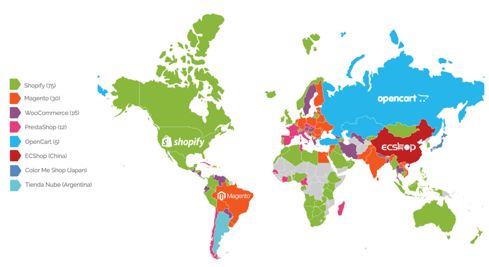
THE PRESENT

This worm has been slow in turning.                   With any business, regardless of size, now able to         reach your customers. The skill in doing this well is
                                                      have an online presence, the arrival of COVID-19           in how you articulate the value and worth of your
Consumers have embraced (through                      has only served to drive this consumption route            product so the conversation moves away from purely
choice or latterly force) B2C and C2C                 harder and faster, and those business who resisted         price based comparison against your rivals. The
                                                      venturing online, be that through intransigence,           trailblazers will stimulate others to enter this market.
platforms and are today more likely to                stupidity or fear, have been forced to at least
consume online than traditional bricks                seriously consider this or face firstly becoming
                                                                                                                 The simple fact that Amazon is in such rude health
                                                                                                                 will only serve to attract others who aim to be better,
and mortar high street routes.                        irrelevant or secondly bankrupt. The revolution is only
                                                                                                                 faster, cheaper and more trustworthy. Amazon has
                                                      beginning. It does not mean the complete death of
                                                                                                                 built a barrier to entry by sheer force of scale, but
                                                      the high street, but is does mean the high street will
                                                                                                                 Microsoft did not view Apple as a threat, nor did
                                                      need to adapt and do this quickly.
                                                                                                                 Kodak view digital photography in the same way.
                                                      People require stimulation; there are few who would
                                                                                                                 There are two basic routes to e-commerce. Sell via
                                                      relish staying indoors surfing all day long. Instead,
                                                                                                                 your own platform or sell via others. Within both of
                                                      the immediate capability now when we wake up is
                                                                                                                 these there are six distinct variations.
                                                      to reach for our phones/tablets. This shift in human
                                                      patterns has allowed businesses to target you both
                                                      subtlety and unsubtlety. People now surf. But people
                                                      will also return to physical interaction, be that on the
                                                      high street, shopping centre, whisky visitor centre
                                                      or small boutique. How they find you is now in the
                                                      realm of your e-commerce platform.
                                                      Being able to reach your audience is not ‘marketing’,
                                                      it’s the core of any business model. Marketing
                                                      is the way in which you reach your customers.
                                                      E-commerce is not an added extra way for you to
                                                      consider, it is now the fastest and cheapest way to

Private and confidential © Genoa Black Ventures LLP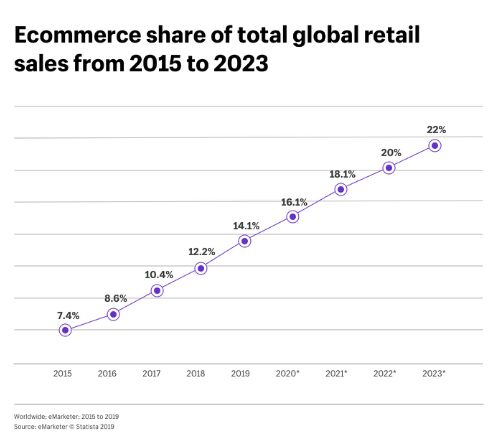
GENERALLY, THERE ARE                                                      1.   B2C – Business to Consumer (Apple, Amazon, M&S online, Go Compare)
                                                                            2.   B2B – Business to Business (IBM, BT, internet providers)
  SIX MAIN MODELS OF
                                                                            3.   C2C – Consumer to Consumer (eBay, Gumtree)
  E-COMMERCE THAT                                                           4.   C2C – Consumer to Business (freelance)
  BUSINESSES CAN BE                                                         5.   B2A – Business to Administration (more specialist such as accounts or legal documents)
  CATEGORISED INTO:                                                         6.   C2A – Consumer to Administration (as above, consultancy or online tax)

  Let’s look at each type of model in a bit more detail.

        1                                        2                                3                          4                                 5                             6
Business-to-Consumer (B2C)                 Business-to-Business (B2B)       Consumer-to-Consumer (C2C)    Consumer-to-Business (C2B)       Business-to-Administration    Consumer-to-Administration
B2C e-commerce                             Unlike B2C, B2B                  One of the earliest forms     C2B reverses the traditional     (B2A)                         (C2A)
encompasses transactions                   e-commerce relates to sales      of e-commerce is the C2C      e-commerce model (and            This model covers             Same idea here, but with
made between a business                    made between businesses,         e-commerce business           is what we commonly see          the transactions made         consumers selling online
and a consumer. This is                    such as a manufacturer           model. Consumer-to-           in crowdfunding individual       between online businesses     products or services to an
one of the most widely                     and a wholesaler or retailer.    consumer relates to the       projects). C2B means             and administrations.          administrator. C2A might
used sales models in the                   This type of e-commerce          sale of products or           Individual consumers make        An example would be           include things like online
e-commerce context.                        is not consumer-facing           services between, you         their products or services       the products and services     consulting for education,
When you buy shoes from                    and happens only between         guessed it, customers.        available for business buyers.   related to legal documents,   online tax preparation,
an online shoe retailer, it is             business entities. Most often,   This would include customer   An example of this would         social security, etc.         etc. Both B2A and C2A
a business-to-consumer                     business-to-business sales       to customer selling           be a business model like                                       are focused on increased
transaction.                               focus on raw materials or        relationships like those      iStock Photo, in which stock                                   efficiency within the
                                           products that are repackaged     seen on eBay or Amazon,       photos are available online                                    government via the support
                                           or combined before being         for example.                  for purchase directly from                                     of information technology.
                                           sold to customers.                                             different photographers.

Private and confidential © Genoa Black Ventures LLP
THE MOST-COMMON
INTERNATIONAL
E-COMMERCE ISSUES
1. LANGUAGE AND LOCALISATION 2. CONTENT AND CULTURAL PERCEPTIONS 3. TECHNICAL INFRASTRUCTURE AND SPEED
When operating in a single country, language Of course, language isn’t the only factor that Infrastructure within most developed countries
issues are few and far between. Even if you’re determines whether content resonates. is more or less uniform and, unless you opt
not a native speaker, the fact that you have a for a cheap solution, your visitors will enjoy
single language to master, means your attention Sometimes, even the best literal translations end
solid uptimes and loading speeds. When you
can be devoted to this task. With international up in embarrassing blunders, like when KFC’s
move overseas things change dramatically.
e-commerce, things get complicated as the motto — “Finger-lickin’ good” — was translated
If you rely on the same servers as a one-size-
need to provide consistent customer experiences in China to read: “We’ll eat your fingers off.” Or
fits-all solution, you’ll soon notice that certain
increases. When a prospect comes from China when Ford’s ad — “Every car has a high-quality
geographies have much slower access. The
or Germany, even if their browser is set to body” — ended up reading in Belgium: “Every
result is an inevitable drop in conversion rates.
English, they won’t necessarily grasp subtleties, car has a high-quality corpse.”
idioms, or colloquialisms. Worse, different groups of people have different
cultural standards and customs. What can be
75% want to buy products considered funny or casual in one culture may be
in their native language nonsensical or downright offensive to those from
different backgrounds. Do not give the OK hand
signal outside of western cultures.
59% rarely or never buy
from English only sites
67% prefer navigation and
content in their language
Private and confidential © Genoa Black Ventures LLPTHE MOST-COMMON
INTERNATIONAL
E-COMMERCE ISSUES cont.
4. CUSTOMER SUPPORT AND SERVICE 5. CURRENCY AND PAYMENT PREFERENCES
Depending on your products, customer support Converting prices into local currency is a fairly
can be a critical consideration. For example, if straightforward task that can be accomplished
you sell electronic equipment or anything that through your store’s theme, customer-facing
requires assembly, you may need to provide apps, or multiple storefronts.
both static instructions and live support in native
languages. Furthermore, you may need to
provide maintenance and service for the products prefer to shop and make
themselves. Observing how your FAQ pages
perform with customers in different languages,
92% purchases on sites that
price in their local currency
as well as search queries in your onsite
search, can uncover a lot about what support
33% purchase
different areas need. are likely to abandon a
if pricing is in
US dollars only
Private and confidential © Genoa Black Ventures LLPAccording to the latest publication from Meticulous The e-commerce platform Shopify estimates that
GROWTH PROJECTIONS Research, the global e-commerce market is expected
to grow at a CAGR of 11.1 percent from 2018 to
global retail e-commerce sales are projected to reach
$27 trillion in 2020. Meticulous Research report that
2025, reaching $24,265.12 billion by 2025. this can be attributed to factors including:
• Rising mobile and internet penetration
• Technological advances such as big data and
cloud-based e-commerce platforms
• Advanced shipping and payment options
• Rise in disposable incomes.
Private and confidential © Genoa Black Ventures LLPIS SHOPIFY ON TRACK TO TAKE
OVER THE WORLD?
GLOBAL VARIATIONS Across the globe differing cultures and regulatory barriers
plus the odd ‘moat’ protecting others from entry point,
IN E-COMMERCE highlight the needs and preferences across the world.
That said, Shopify is the only provider to be trending
in every continent, with particular strongholds in North
America, Africa, Australasia and Southeast Asia, giving
THE DOMINANCE OF OPEN SOURCE THE FAR EAST
them a route to global dominance. The reason behind
SYSTEMS IN EUROPE Shopify, Magento and WooCommerce are popular in this surge in popularity is that Shopify has traditionally
Europe’s obsession with open source platforms many regions of Asia (particularly in Southeast Asian operated with a mindset focused on the US and Canada
stems from stricter data regulations that apply in countries and India) but not so much in China or Japan. (which subsequently extended to other English-speaking
Europe compared to other parts of the world. This Both these sizable and important e-commerce countries), as well as countries where English was
coupled with privacy concerns are often front-of- markets are both ringfenced by giants that dominate widely spoken – something that Shopify themselves
mind for European retailers. For France, Spain and the landscape. This is especially notable in China – say was accidental. Marketing, support, and of course,
Italy, French e-commerce platform Prestashop is the largest e-commerce market in the world – where the product itself, were previously all only available in
the most widely searched-for platform. Built with 78% of the B2C e-commerce market is held by the English, and they put all their energy into fully serving
European requirements in mind, Prestashop offers two biggest operators (Alibaba and JD), and smaller this significant global market.
features such as compliance with EU regulations online stores are fairly uncommon. JD’s partnership This shows that a clearly defined strategy pays off and
and translations/multilingual features, which help to with social media and messaging app WeChat recent updates to the platform demonstrate that they’re
facilitate cross-border sales across the continent. last year also means that social shopping has ready to take on parts of the world that have been
This both answers a need and addresses the been made much more accessible to this market. a little harder to crack. In 2018, Shopify released the
complexities. In Germany and Eastern Europe, Additionally, shoppers in China enjoy high rates of platform in six additional languages: French, German,
Adobe-owned Magento seems to dominate search cross-border shopping. Spanish, Italian, Brazilian Portuguese, and Japanese.
results. Its popularity likely stems from their global They also expanded their Shopify Payments offering to
reputation of offering a robust solution that caters While this oligopoly applies to a lesser extent
in Japan, large marketplaces (e.g. Rakuten, more countries, allowing stores to offer local payment
to small and large retailers alike. Austria, Hungary, options to customers and are now adding an additional
Greece, Bosnia and Herzegovina, and Sweden Amazon Japan) account for 50% of the country’s
e-commerce sales. The remainder of the sales nine currencies worldwide (where they had previously
gravitate towards WooCommerce, a WordPress plug only supported USD). With their shifted focus on new
in that pushes itself as cost efficient and versatile for occur on fashion marketplaces, free market apps
and handmade product platforms. markets, could they realistically take over the world?
smaller SME’s. There seems to already be pockets of interest in Europe
and Latin America, and it’s clear that they’re aiming to
grow their presence in these regions even further.
Private and confidential © Genoa Black Ventures LLPTHE GLOBAL B2B OUTLOOK In 2019 the B2B e-commerce market overtook the B2C e-commerce market, but the West still lags behind the East in its adoption of businesses conducting business virtually. In 2018, China had 31% of global B2B e-commerce sales whereas the USA only had 11% and Europe 3%. The culture of face to face meetings reigns supreme in the West. Deals sealed by a handshake over lunch is the norm not the exception but COVID-19 could well smash this archaic presumption. An additional reason for this is that in the West where businesses did not see the value or need to invest in digital sales routes to market, businesses did not have a user friendly digital purchasing platform already in place. Therefore, European and USA companies are still in the early stages of their B2B e-commerce maturity curve. This is a damning statement of their blindness to this technology, but also shows that there is huge potential here. Private and confidential © Genoa Black Ventures LLP
DRIVEN BY CHANGING
CONSUMER BEHAVIOUR
With millennials and generation C super comfortable         internet users have bought products or goods online
with online interactions, the traditional business leader   via desktop, mobile, tablet or other online devices.
could well be holding the company back. It’s the
                                                            However, even though overall the global retail market
new generations who are now shaping the
                                                            is expected to top $27 trillion USD in 2020, growth
e-commerce landscape.
                                                            to date has slowed considerably versus the prior five
According to statistica.com 40% of e-commerce sales         years and is not expected to pick up through 2023.
in 2020 will happen on e-Marketplaces. The growth of        However, statistics being released during the COVID-19
these platforms such as Amazon, eBay, Rakuten and           crisis may reverse this trend. It is estimated that more
Alibaba is being driven by increasingly savvy shoppers,     than 2.1 billion shoppers are expected to purchase
decreasing reliance on bricks and mortar shops and          goods and services online worldwide by 2021.
the rise of online shopping on mobile devices.
                                                            Prior to the COVID-19 pandemic, consumer spending
More and more online shoppers are also buying
from foreign websites, meaning retailers in the UK
                                                            had slowed online reflecting economic uncertainty.
                                                            The global pandemic is affecting online sales during       “73 percent of B2B buyers
are adopting cross-border strategies to develop
their business internationally. By the end of 2020 it’s
                                                            lockdown but post exit from a COVID-19 lockdown,
                                                            it is conceivable that e-commerce will surge. In most
                                                                                                                       today are Millennials, who
estimated that 28% of European online retailers will sell
their products overseas, and 83% of European cross-
                                                            retail sectors, it is likely to become the dominant form
                                                            of business interaction in the coming years. We know
                                                                                                                       prefer buying online –
border shoppers will buy online from another European
country. This is something that needs to be considered
                                                            that the SARS epidemic in 2003 was a strong catalyst
                                                            in the explosion of e-commerce in China with both
                                                                                                                       this is a large part of why
for SMEs and, in particular, how fulfilment is managed      Alibaba and JD.com taking advantage of shop closures       B2B e-commerce growth
across borders.                                             and travel restrictions to become the powerhouses
Though the line between physical and digital
                                                            they are in China today. We believe that COVID-19 will     has occurred at such
commerce is blurring, the difference in growth
trajectories between retail and e-commerce is still
                                                            be no different and now is the time for businesses to
                                                            focus on it.                                               lightning speed.”
sizeable. Current statistics show that 40% of worldwide                                                                FORBES

Private and confidential © Genoa Black Ventures LLP
SEIZING OPPORTUNITIES
GENERAL BUSINESS BENEFITS E-COMMERCE OPPORTUNITIES optimising the customer experience with customer
segmentation and developing remarketing lists for
There are greater opportunities for suppliers and There are a huge number of opportunities in search ads, tailoring a website experience based
buyers to establish new trading partnerships, either e-commerce that need exploring. For example: on personas or distinct buying behaviours, and
within their supply chain or across supply chains. customising emails to consumer preferences; these
• Vertically integrated brands offering the full mix of
E-Marketplaces can provide greater transparency are all hard tactics to ignore and a big opportunity
raw materials from manufacture, to aftersales care
in the purchasing process since availability, prices for e-commerce businesses.
being a huge opportunity and a growing trend
and stock levels are all accessible in an open
environment. Time constraints or issues with different • Location independence ensuring that businesses Conversion rate optimisation is another great
office hours for international trade are removed as it can be located in one area, with customer opportunity. Often retailers focus on traffic generation
is possible to operate on a round-the-clock basis. service and fulfilment services elsewhere to allow and fail to see the potential of converting more
global flexibility on a shoestring buyers through optimisation.
BENEFITS FOR THE BUYER • The aggregation of niche products all under
Updated information on price and availability makes one e-commerce brand is an opportunity to
it easier to secure the best deal and e-Marketplaces capitalise on an audience desire to discover new
offer a convenient way to compare prices and products. This ensures they will keep returning to
products from a single source rather than spending your online store
time contacting each individual supplier. In addition,
• Niche retailers and small manufacturers can now
established e-Marketplaces provide a level of trust
compete on a global scale with e-commerce
for the buyer as they are dealing exclusively with
changing traditional distribution channels.
suppliers who are members.
There are big opportunities lying in customer
BENEFITS FOR THE SELLER relationship management and whole customer
lifecycle management, with successful businesses
Regular requests for quotations from both new
creating metrics around whole life customer value,
and current customers are possible. It provides
rather than just an immediate return. Building
an additional sales channel to market and to sell
customer loyalty into the e-commerce process is
products. E-Marketplaces can offer reduced marketing
an integral part of the customer experience, as is
costs when compared with other sales channels.
Private and confidential © Genoa Black Ventures LLPIMPROVING THE CUSTOMER a unique brand experience and even podcasting, THE FUTURE IS BRIGHT AND IS BEING
to set yourself apart in a crowded marketplace.
EXPERIENCE CAN ALSO BE ACHIEVED SHAPED BY THE FOLLOWING TRENDS
IN THE FOLLOWING WAYS: Businesses will need to navigate not only the IN 2020 AND BEYOND:
method of e-commerce available to them, but the
• Personalisation of both experience and products promotion and marketing that sits alongside to ARTIFICIAL INTELLIGENCE (AI) AND MACHINE LEARNING
is a brilliant opportunity to create unique ensure it is successful. The rise and implications of this technology is
experiences and products for consumers
staggering. The increasing ability of machines to
• Smarter merchandising through the tried and EMERGING THEMES learn and act intelligently will absolutely transform
tested methods of ‘customers who bought this, Cutting-edge digitally native brands are taking our world and be the driving force in e-commerce.
also bought…’ e-commerce to the next level, experimenting with AI can for example track shopping behaviours both
voice commerce, partnering with luxury Las Vegas online and in store. It can observe dwell time on
• Dynamic pricing and bundling is another way to
hotels on exclusive pop-ups, and testing augmented products and begin to build a pattern of individual
create a margin opportunity
reality-enabled online-to-offline (O2O) experiences. shopping behaviours. As this data builds it is
• E-commerce technology can also help to qualify conceivable that AI will direct consumers from one
big purchasing decisions, such as a car, with a With the rise of headless commerce (a separation
brand to another based on their influencers be that
mix of online and offline experiences. of the front end and back end of an e-commerce
price or style or functionality.
application) and progressive web applications (PWA),
With global sales tripling over the past four years the world is becoming a storefront as brands enable WEARABLES AND AUGMENTED HUMANS
from just under $1 trillion in 2016 to almost $3 commerce via smart mirrors, social media channels, What started with fitness trackers has now exploded
trillion in 2020, mobile commerce (or m-commerce) video games and live streams. into a whole industry of wearable technology
is another prospect, with the consideration of
When it comes to retail, what is closing down in the designed to improve human performance and help us
biometric security as an additional opportunity.
shopping centre is being reborn online, and what live healthier, safer, more efficient lives. In the future,
With social media customer acquisition, it has was born online is increasingly crossing over to the we may even see humans merge with technology to
never been easier to drive mass volume of sales physical world. create “augmented humans” or “transhumans.”
quickly and test the market to keep improving
AI AND PREDICTIVE ANALYTICS
conversion rates. Despite current lockdown
restrictions, eventually combining online and offline Artificial Intelligence technology can learn an
through pop up shops and other non-traditional individual’s habits and demographics using customer
retail environments will be an opportunity for data. An upcoming application of AI technology
e-commerce retailers. in e-commerce could be to perform ‘dynamic
personalisation ‘- where automated emails are
Inbound marketing opportunities include content
generated with content and subject lines determined
marketing to capitalise on specific niches and
entirely through the power of the AI system.
showcasing your personality, creating and leveraging
Private and confidential © Genoa Black Ventures LLPARTIFICIAL INTELLIGENCE WEBSITE WITH VOICE SEARCH many consumers. But especially so for millennials
Already a hot trend, voice search and voice who are assigning greater importance to personal
recognition is now impressively accurate. With experiences and emotion, rather than prioritising
around 95% accuracy rate and huge investments larger, more generic purchases like cars and homes.
from tech firms into voice-powered technology, SAME DAY DELIVERY
it’s already cemented itself firmly into the world of
Same day delivery will be the next expected added
technology. The next logical step is to integrate this
value offer. If one company doesn’t offer same-day
into the e-commerce landscape and website design.
delivery, then it’s an opportunity that their competitors
A website that generates its content based entirely will seriously look into taking advantage of. The trend
on what the visitor first searches for on the is growing as benefits are being realised. Increasing
homepage, whether by voice search or text entry basket value and increasing conversion rates are all
via keyboard, everything the user sees is chosen realistic benefits that same-day delivery could bring
and displayed by AI technology. If the user searched to an e-commerce site.
for “the best-looking white trainers”, the site would
automatically generate individualised, tailored content
around white trainers, and could incorporate newly
released styles, best sellers or what’s hot in the
footwear and fashion industries.
SUBSCRIPTION BASED BUSINESS MODELS
Subscription-based e-commerce businesses, such
as Dollar Shave Club, Birchbox and HelloFresh, have
gained a lot of attention in recent years and their
growing success is the reason for it. Disposable
incomes are higher for consumers in their twenties
than twenty years ago, but overall wealth is lower,
meaning this age group is making far less big one-
off purchases. In 2020 we expect to see a higher
number of subscription-based businesses than ever
before trying to take their own share of the success
it can provide. This is an e-commerce trend that’s
been steadily growing over recent years. The ease of
a monthly automated direct debit and the excitement
of a monthly product or service is enticing for
Private and confidential © Genoa Black Ventures LLPWHAT NOW?
Prior to COVID-19 consumer e-commerce spending With each week that passes you have choices and
had slowed online. This was as a result of actual each one will determine survival, failure, stay of
and anticipated economic uncertainty. But COVID-19 execution or growth and opportunity exploitation.
is now driving online sales during lockdown and Lockdown should not have meant slowdown unless
post exit from COVID-19 it is conceivable that your sector has been completely off limits such as
e-commerce will continue to surge. hospitality or travel.
We are almost at the end of Q2 2020. The world There is a recession coming and it will last years,
is being released from lockdown and there is a but first there will be a short lived economic bounce
balance between speed of release and economic as the world releases like a pressure cooker and
impact. We will not get this right and there will be embraces their need to consume openly again.
impact regardless.
It is now clear that certain business sectors will IF YOU FAIL TO ADAPT YOU WILL FAIL.
never be the same again. The impact of COVID-19
is now variable by business sector. For some
sectors change is not yet obvious and many might
remain close to the business model they were
before. Until of course one participant in this sector
recognises a competitive advantage that the new
world has created and implements change. This is
what e-commerce offers.
Private and confidential © Genoa Black Ventures LLPgb
We hope you have found this useful,
please contact us with any questions
or to receive further reports.
Genoa Black is the No1
Alan Kinloch, Founding Partner client rated company:
alan@genoablack.com For
For
B2B
B2B
research in the UK
strategy in the UK
For B2C research in Scotland
For B2C strategy in Scotland
The information presented in this publication has been drawn from
sources globally including The United Nations, Forbes, MIT, Harvard
Review, McKinsey, Bain and Company and other strategic thought
pieces including translations from Chinese economic publications.
Private and confidential © Genoa Black Ventures LLPYou can also read


