Jung's Red Book for Our Time: Searching for Soul under Postmodern Conditions - April 23-26, 2020 - International Association for Analytical Psychology
←
→
Page content transcription
If your browser does not render page correctly, please read the page content below

onlus

                        April 23–26, 2020

        Jung’s Red Book for Our Time:
Searching for Soul under Postmodern Conditions
        Eranos and Monte Verità, Ascona (Switzerland)
             www.eranosfoundation.org/redbook

           ISAPZURICH
April 23–26, 2020
 Jung’s Red Book for Our Time:
 Searching for Soul under Postmodern Conditions
  Eranos and Monte Verità, Ascona (Switzerland)

Jung’s Red Book for Our Time: Searching for Soul under Postmodern Conditions
What can we take from The Red Book for our times, individually and collectively? This is the question that will be
addressed by the speakers at this symposium of the Eranos Foundation. Without guidance by a grand-narrative or
collective myth, we now live in a historical phase of global volatility and deep uncertainty about the future. A similar
perception was in the air when C. G. Jung worked on his Red Book. In response, Jung embarked on an inner journey
and created a work that reflects his discovery of meaning in a personal myth, by the means of the individuation
process. His approach to the problems presented by the “spirit of the times” also has broad cultural significance. The
Red Book – as a precious link on the aurea catena – has potential for becoming a guide for people living under the
postmodern conditions of the 21st century. This will be explored by the speakers and participants in this symposium.

                                             Program Committee
                           Thomas Arzt, Riccardo Bernardini, Joseph Cambray, Murray Stein

                                        Including Presentations by

   Stephen Aizenstat · Thomas Arzt · Riccardo Bernardini · Paul Bishop · Joseph Cambray · Linda Carter · Al Collins ·
         Len Cruz · Thomas Fischer · Toshio Kawai · Romano Màdera · Christine Maillard · Frank N. McMillan III ·
                 Robert M. Mercurio · Elaine Molchanov · Lance S. Owens · Heyong Shen · Murray Stein

                                                   Promoted by
                                                                                         onlus

                                              With the Support of

                                                           ISAPZURICH

                                             In Collaboration with

                         info@eranosfoundation.org · www.eranosfoundation.org
Registration

Registration A – Includes lectures, local transfers by bus, welcome aperitif and welcome dinner at Monte Verità on
Thursday, 5 coffee breaks from Thursday to Saturday, 2 vegetarian lunches at Monte Verità on Friday and Saturday:
CHF 350

Registration B – Includes lectures, local transfers by bus, welcome aperitif and welcome dinner at Monte Verità on
Thursday, 5 coffee breaks from Thursday to Saturday, 2 vegetarian lunches and 2 dinners at Monte Verità on Friday
and Saturday: CHF 450

Registration C – Includes lectures, local transfers by bus, welcome aperitif and welcome dinner at Monte Verità on
Thursday, 6 coffee breaks from Thursday to Sunday, 2 vegetarian lunches and 2 dinners at Monte Verità on Friday
and Saturday, 1 lunch at Hotel Ascona on Sunday and 3 guided visits on Sunday: CHF 550

For registering, please, send an email to info@eranosfoundation.org. We will send you further information for the
payment and we would be delighted to be of any help for any organizational and logistic issues.

All lectures will be held in English, without translation.

                                                Accommodation

Hotel accommodation is not included in the registration fee. We suggest you plan your stay in Ascona near the Monte
Verità Congress Centre, where most of the activities will take place (www.monteverita.org). Before booking, in any
case, we invite you to confirm your registration to the congress by contacting the Eranos Foundation by email
(info@eranosfoundation.org): we will confirm your registration (the number of places available is limited), provide you
with bank references or PayPal address to use for registration, and allow you to choose the most suitable hotel for
your needs, through a specific online form made available by the Lake Maggiore Tourist Office (www.ascona-locar-
no.com). Please do not book any hotel before you have received confirmation of your congress registration from the
Eranos Foundation.

The proposing organizations decline all responsibility for any unforeseen events and accidents that may occur during
the congress. Each participant is invited to take out his/her own personal health and travel insurance.

For more organizational information, please, consult our webpage:
www.eranosfoundation.org/redbook

                                                      Program

Wednesday, April 22, 2020
        Arrivals

Thursday, April 23, 2020
       12:30-13:00: Walk or Bus Transfer from Hotels to Monte Verità
       13:00-14:00: Registrations at Monte Verità Congress Center
       14:00-14:30: Thomas Arzt, Riccardo Bernardini, Joseph Cambray, and Murray Stein: Welcome and
       Introductory Remarks
       14:30-15:15: Thomas Arzt (Dürckheim-Center, Germany): “Jung’s Red Book for Our Time – Searching for
       Soul under Postmodern Conditions: Motivations, Ideas, and Speculations”
Program

Thursday, April 23, 2020
     15:15-15:30: Discussion
     15:30-16:15: Murray Stein (ISAP, Switzerland): “Acts of Imagination: The Creation of the (Inner) World”
     16:15-16:30: Discussion
     16:30-17:00: Coffee Break
     17:00-17:45: Romano Màdera (University of Milano-Bicocca/AIPA, Italy): “The Future of the Spirit in The
     Red Book and in our Time”
     17:45-18:00: Discussion
     18:00-18:30: Aperitif and Free Time
     18:30-20:30: Welcome Dinner at Monte Verità Restaurant
     20:30-21:15: Stephen Aizenstat (Pacifica Graduate Institute/Dream Tending, USA): “My ‘Red Book’: A
     Personal Journey in the Emergent Imagination”
     21:15-21:30: Discussion
     21:30-22:00: Walk or Bus Transfer to Hotels

Friday, April 24, 2020
     08:00-08:30: Walk or Bus Transfer from Hotels to Monte Verità
     08:45-09:00: Organizational communications
     09:00-09:45: Thomas Fischer (Foundation of the Works of C. G. Jung, Switzerland): “Jung after the Publi-
     cation of The Red Book (A View from The Foundation of the Works of C. G. Jung)”
     09:45-10:00: Discussion
     10:00-10:45: Toshio Kawai (Kyoto University/AJAJ/IAAP, Japan): “Jung as Modern and Postmodern in his
     Red Book”
     10:45-11:00: Discussion
     11:00-11:30: Coffee Break
     11:30-12:15: Al Collins (Pacifica Graduate Institute, USA) and Elaine Molchanov (C. G. Jung Institute of
     Chicago, USA): “On Seeing, and Not Seeing, the Symbol: Greta Thunberg and The Red Book’s Virgin/Sophia
     Image”
     12:15-12:30: Discussion
     12:30-14:00: Lunch at Monte Verità Restaurant
     14:00-14:30: Free Time
     14:30-15:15: Joseph Cambray (Pacifica Graduate Institute, USA): “Trailblazing, a Red Book Pathway: From
     Synchronicity to the Oracular Field”
     15:15-15:30: Discussion
     15:30-16:15: Len Cruz (Asheville Jung Center, USA): “Ecstasy and Subjection: Re-membering Dionysus and
     Addiction Treatment”
     16:15-16:30: Discussion
     16:30-17:00: Coffee Break
     17:00-17:45: Robert Michael Mercurio (ARPA, Italy): “The Red Book and Our Contemporary Crises: Active
     Imagination, Mass Migration, and Climate Change”
     17:45-18:00: Discussion
     18:00-18:30: Free Time
     18:30-19:00: Walk or Bus Transfer to Hotels and Free Evening
Program

Saturday, April 25, 2020
     08:00-08:30: Walk or Bus Transfer from Hotels to Monte Verità
     08:45-09:00: Organizational communications
     09:00-09:45: Christine Maillard (CNRS/University of Strasbourg, France): “Death and the Dead: Ideas on a
     Figure of Thought in Jung’s Red Book”
     09:45-10:00: Discussion
     10:00-10:45: Heyong Shen (City University of Macau/CFAP, China): “C. G. Jung’s Red Book: The Spirit of the
     Depths and Knowledge of the Heart”
     10:45-11:00: Discussion
     11:00-11:30: Coffee Break
     11:30-12:15: Linda Carter (Pacifica Graduate Institute, USA): “Imitating Jung, Going the Full Circle: Pattern
     Resonance from Microcosmic Interactions to Macrocosmic Amplifications”
     12:15-12:30: Discussion
     12:30-14:00: Lunch at Monte Verità Restaurant
     14:00-14:30: Free Time
     14:30-15:15: Paul Bishop (University of Glasgow, United Kingdom): “The Red Book and Other Searchers for
     Soul: Jung, Klages, and T. W. Adorno”
     15:15-15:30: Discussion
     15:30-16:15: Frank N. McMillan III (The Jung Center, Houston/Pacifica Graduate Institute, USA): “Whom
     Shall I Send?: Postmodern Revelation and the New Reality in Jung’s Red Book”
     16:15-16:30: Discussion
     16:30-17:00: Coffee Break
     17:00-17:45: Lance Owens (The Gnosis Archive, USA): “The Alchemists’ Apprentice: Vision, Imagination, and
     Mysterium Coniunctionis”
     17:45-18:00: Discussion
     18:00-18:30: Thomas Arzt, Riccardo Bernardini, Joseph Cambray, and Murray Stein: Closing Remarks and
     Goodbye
     18:30-19:00: Walk or Bus Transfer to Hotels and Free Evening

Sunday, April 26, 2020
     08:00-08:30: Walk or Bus Transfer from Hotels to Monte Verità
     08:30-10:30: Guided Visit to Monte Verità, held by Nicoletta Mongini (Fondazione Monte Verità) (upon
     registration)
     10:30-11:00: Walk or Bus Transfer to Hotel Ascona
     11:00-11:30: Coffee Break
     11:30-12:30: Guided Visit to Luigi Pericle Archive, held by Greta and Andrea Biasca-Caroni (Archivio Luigi
     Pericle) (upon registration)
     12:30-14:00: Lunch at Hotel Ascona (upon registration)
     14:00-14:30: Bus Transfer to Eranos
     14:30-16:30: Guided Visit to to Eranos, held by Riccardo Bernardini (Eranos Foundation) (upon registration)
     16:30-17:00: Aperitif at Eranos
     17:00-17:30: Walk or Bus Transfer to Hotels and Departures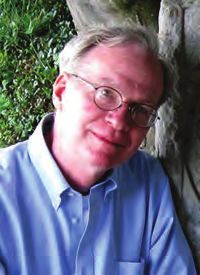
Lecturers

                    Stephen Aizenstat, Ph.D., is Chancellor, Founding President of Pacifica Graduate Institute, and
                    Ex-Officio Board of Trustees member. He is a professor of Depth Psychology with a Ph.D. in
                    Clinical Psychology, a licensed marriage and family therapist, and a credentialed public school
                    teacher and counselor. He has served as an organizational consultant to companies and
                    agencies worldwide, and teaches extensively. He has explored the potential of dreams through
                    depth psychology and his own research for more than 35 years. His Dream Tending methodol-
                    ogies extend traditional dreamwork to the vision of an animated world, where the living images
                    in dream are experienced as embodied and originating in both the psyche of nature and the
                    psyche of persons. His main book, Dream Tending, describes multiple applications of dream-
work in relation to health and healing, nightmares, the world’s dream, relationships, and the creative process. He
is a Founding Member of the Academy of Imaginal Arts and Sciences (Carpinteria, USA).

                  Thomas Arzt, Ph.D., studied Physics and Mathematics at Giessen University (Germany) and was
                  a Research Assistant at Princeton University (USA) with the special focus on atomic, nuclear,
                  and plasma physics. He works as an Initiatic Therapist at the “Schule für Initiatische Therapie”
                  of Karlfried Graf Dürckheim and Maria Hippius-Gräfin Dürckheim in Todtmoos-Rütte (Black
                  Forest, Germany) and has trained in the Training Program Continuing Education in Analytical
                  Psychology at the International School of Analytical Psychology (ISAP) in Zurich. Since 1999, he
                  is the President and Managing Director of Strategic Advisors for Transformation GmbH, an
                  international consulting company for simulation technology, complexity management, and
                  “Strategic Foresight under Deep Uncertainty” in Freiburg, Germany. Together with Murray Stein,
he serves as Editor of the Series Jung’s Red Book for Our Time: Searching for Soul under Postmodern Conditions.

                  Riccardo Bernardini, Ph.D., Psy.D., serves as Scientific Secretary of the Eranos Foundation
                  (Ascona, Switzerland). He is Secretary of the Professional Order of Psychologists of Piedmont
                  (Italy) and Founding President of the Institute of Analytical Psychology and Psychodrama
                  (IPAP), Postgraduate School of Psychotherapy, at the “Olivetti” University District (Ivrea, Italy).
                  He also teaches Dynamic Psychology at Turin University (Italy). He is a fellow of the Association
                  for Research in Analytical Psychology (ARPA, Turin, Italy), a member of the Board of the Fellow
                  Traveller Foundation (Lugano, Switzerland), and a Trustee of the Academy of Imaginal Arts and
                  Sciences (Carpinteria, USA). His writings include the critical edition of C.G. Jung’s The Solar
                  Myths and Opicinus de Canistris. Notes of the Seminar Given at Eranos in 1943 (edited with G.
P. Quaglino and A. Romano, 2014–2015).

                   Paul Bishop, Dr.Phil., studied at Magdalen College, Oxford and spent a year as Lady Julia
                   Henry Fellow at Harvard (1992-1993). He has published widely on Analytical Psychology and its
                   relation to German culture, including, Carl Jung (2014), Reading Goethe at Midlife: Ancient
                   Wisdom, German Classicism, and Jung (2011), Analytical Psychology and German Classical
                   Aesthetics: Goethe, Schiller, and Jung (2 vols., 2007-2008), On the Blissful Islands: With
                   Nietzsche & Jung in the Shadow of the Superman (2017), and most recently Ludwig Klages and
                   the Philosophy of Life: A Vitalist Toolkit (2018). He holds the William Jacks Chair in Modern
                   Languages at the University of Glasgow.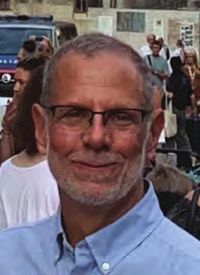
Lecturers

                  Joseph Cambray, Ph.D., is the President/CEO and Provost of Pacifica Graduate Institute. He is
                  Past-President of the International Association for Analytical Psychology (IAAP) and has
                  served as the U.S. Editor for The Journal of Analytical Psychology (JAP). He was a faculty
                  member at Harvard Medical School in the Department of Psychiatry at Massachusetts General
                  Hospital, Center for Psychoanalytic Studies, and former President of the C. G. Jung Institute of
                  Boston. He is a Jungian analyst now living in the Santa Barbara area of California. His numer-
                  ous publications include the book based on his Fay Lectures: Synchronicity: Nature and Psyche
                  in an Interconnected Universe and several edited volumes: one with Leslie Sawin, Research in
Analytical Psychology - Volume 1: Applications from Scientific, Historical, and (Cross)-Cultural Research, and an
earlier one with Linda Carter, Analytical Psychology: Contemporary Perspectives in Jungian Psychology.

                  Linda Carter, MSN, CS, is a Jungian analyst in private practice, Santa Barbara, California. She
                  holds the Chair of the “Art and Psyche” Working Group and was the US Editor-in Chief of The
                  Journal of Analytical Psychology (JAP), past Book Review Editor and present Film and Culture
                  Editor of the JAP. She is Co-editor of Analytical Psychology: Contemporary Perspectives in
                  Jungian Analysis, along with numerous articles and book chapters, and a member of the
                  Faculty of Pacifica Graduate Institute, Santa Barbara, California.

                  Al Collins, Ph.D., is a graduate of the University of Chicago with two doctorates from the
                  University of Texas at Austin (Indian Studies and Clinical Psychology). He has taught at Pacifica
                  Graduate Institute, Alaska Pacific University, Northwestern University, and the Union Institute.
                  He was formerly a Core Faculty member in East/West Psychology at the California Institute of
                  Integral Studies (CIIS). With Elaine Molchanov, he edited an issue of Spring: A Journal of Arche-
                  type and Culture on Jung and India. His work on cross-cultural depth psychology has been
                  presented in conference papers and published in journals and book chapters. He has lectured
                  on the archetype of the guru – including Jung’s guru, Philemon – and is developing a critical
theory of culture as symbol and story.

                  Len Cruz, M.D., is the Editor-in-Chief of Chiron Publications and co-founder of the Asheville
                  Jung Center. He holds graduate degrees in medicine and business. After 33 years of practicing
                  psychiatry and psychotherapy, he now focuses on treating substance use disorders and
                  explores how post-modern man’s search for transcendent experiences can easily descend into
                  addiction and how utilizing myth, rites, and rituals can help support patients seeking sobriety.
                  He co-authored or co-edited several books, including DSM-5 Insanely Simplified and A Clear
                  and Present Danger: Narcissism in the Era of Donald Trump. He currently serves as the Chief
                  Medical Officer of a 68-bed substance abuse hospital.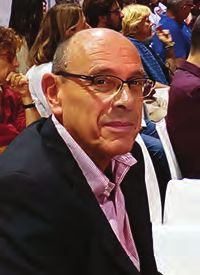
Lecturers

                   Thomas Fischer, Ph.D., studied history, political sciences, public and international law in Zurich
                   and Brussels, specializing in Cold War diplomatic history. He was a university lecturer and
                   researcher at academic institutes in Zurich, Beirut, Vienna, Helsinki, and Geneva, before
                   becoming director of the Foundation of the Works of C. G. Jung, Zurich, in 2013. Great-grand-
                   son of C. G. Jung and Emma Jung, he is a co-editor of The Art of C. G. Jung.

                   Toshio Kawai, Ph.D., is a Professor at the Kokoro Research Center, Kyoto University for Clinical
                   Psychology. He is President-elect of the International Association for Analytical Psychology (IAAP).
                   He was educated in clinical psychology at Kyoto University and in philosophical psychology at Zurich
                   University, where he received a Ph.D. in 1987. He obtained his diploma from the C.G. Jung-Institut in
                   Zurich in 1990. He has published articles and books and book chapters in English, German, and
                   Japanese. He has also been involved with psychological relief work after the 2011 earthquake. His
                   publications include “The 2011 Earthquake in Japan: Psychotherapeutic Interventions and Change
                   of Worldview”, “Big stories and small stories in the psychological relief work after the earthquake
disaster”, “Psychological Relief Work after the 11 March 2011 Earthquake in Japan: Jungian Perspectives and the
Shadow of Activism”, “Jung in the Japanese Academy”, and “Jungian Psychology in Japan: Between mythological
world and contemporary consciousness”.

                   Romano Màdera, Ph.D., studied philosophy and graduated at the University of Milan and
                   specialized in sociology at the School for Sociology in Milan. He was professor of Moral Philoso-
                   phy and Philosophical Practices at the University of Milano-Bicocca since 2001. He is a member
                   of the Italian Association for Analytical Psychology (AIPA) and the Analytical Laboratory of
                   Images (LAI), a professional association of sandplay analysts. He is the founder of the Open
                   Seminars of Philosophical Practices (University of Venice, University of Milano-Bicocca, and
                   other cities) and of the School of Philosophical Practices “Philo” in Milan. He also founded the
                   Society for Biographic Analysis Philosophically Oriented (SABOF). His writings include Identità e
feticismo (1977), Dio il mondo (1989), L’alchimia ribelle (1997), C.G. Jung. Biografia e teoria (1998), L’animale
visionario (1999), and La filosofia come stile di vita (with L. V. Tarca, 2003), translated into english as Philosophy
as Life Path. Introduction to Philosophical Practices (2007).

                   Christine Maillard, Docteur ès Lettres, is professor of German Studies and History of Ideas at
                   Strasbourg University and the director of the interdisciplinary institution “Maison interuniversi-
                   taire des Sciences de l’Homme – Alsace” (MISHA, CNRS/Strasbourg University). Her main
                   research fields include C. G. Jung’s work, the history of psychological theories, and the reception
                   of oriental cultures and religions (India, Persia, Japan) in German literature and culture from
                   the 18th to the 20th Century. She translated Jung’s Red Book into French (2011) and published
                   or co-published several books and numerous papers on Jung in French, German, and English.
                   Her works include Arts, sciences et psychologie: Autour du Livre Rouge de Carl Gustav Jung
                   (with V. Liard), Pour une réévaluation de l’œuvre de Carl Gustav Jung, Au coeur du Livre Rouge:
Les Sept Sermons aux Morts. Aux sources de la pensée de C.G. Jung. She is a Honorary Member of the Interna-
tional Association for Analytical Psychology (IAAP).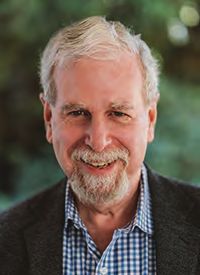
Lecturers

                  Robert Michael Mercurio completed his undergraduate studies in philosophy and then moved to
                  Rome for graduate studies in theology at the Gregorian University. He later completed a Master’s
                  degree in Management with a thesis project on the application of Jung’s typology to teaching
                  methods adopted in language schools. He subsequently enrolled in the C.G. Jung-Institut in Küsnacht,
                  where he took his diploma in Analytical Psychology. Previously a member of the Centro Italiano di
                  Psicologia Analitica (CIPA), he is presently member, training analyst, and President of the
                  Associazione per la Ricerca in Psicologia Analitica (ARPA). His interests include the practice of active
                  imagination, the interface between spirituality and psychology, and myth and fairy tale interpretation.

                  Frank N. McMillan III is an award-winning author, educator, and speaker and has taught Geog-
                  raphy at Texas A&M University at College Station, Texas A&M University at Corpus Christi, and
                  Del Mar College over the last thirty years. He trained at Yad Vashem’s International School for
                  Holocaust Studies in Jerusalem and in 2013 he was inducted into the International Association
                  for Analytical Psychology (IAAP) as an honorary member at the occasion of the XIX Internation-
                  al Congress held in Copenhagen. His novel, Cezanne Is Missing, has been taught in schools
                   across America and his book, The Young Healer, won the NAESP Foundation Book of the Year
                   Award and was a Mark Twain Readers’ Award finalist. In 2012, Texas A&M University Press
                   released his non-fiction work, Finding Jung, an exploration of one man's personal experience of
the objective psyche. Recently, he founded the Frank N. McMillan Jr. Institute for Jungian Studies at the Jung
Center in Houston, Texas. He currently serves on the Board of Trustees for Pacifica Graduate Institute in Santa
Barbara, California, and lives in Corpus Christi, Texas.

                  Elaine Molchanov, MSW, is a Jungian analyst and Siddha yogi. For forty years, she has prac-
                  ticed both disciplines, and is working on a book of memoir and theory that attempts to inte-
                  grate the two. Her preliminary work in this direction is published in the issue of Spring: A Jour-
                  nal of Archetype and Culture on Jung and India that she guest edited with Al Collins (2013).
                  Elaine is also a sandplay therapist and has published on the symbolism of the serpent in
                  Sandplay Studies. With Al Collins, she has lectured on Jung’s inner guru, Philemon, and on the
                  Indian idea of darshan, “seeing”, that names an analogue to Jung’s “transcendent function”
                  connecting the deep psyche to lived experience in the world.

                 Lance S. Owens, M.D., is a physician in clinical practice and an historian with focused interest in
                 C. G. Jung and Gnostic traditions. Since release of The Red Book: Liber Novus in 2009, he has
                 published several historical studies focused on the intimate relationship between Jung’s
                 collected writings and the visionary experiences recorded in the Red Book and the Black Book
                 journals. Among his major publications, “The Hermeneutics of Vision: C. G. Jung and Liber
                 Novus” (2010), “Jung and Aion: Time, Vision and a Wayfaring Man” (2011), and Jung in Love: The
                 Mysterium in Liber Novus (2015). He is the creator and managing editor of The Gnosis Archive,
                 the primary Internet archive of classical Gnostic sources, including the Nag Hammadi texts. du
                 Livre Rouge de Carl Gustav Jung (with V. Liard), Pour une réévaluation de l’œuvre de Carl
Gustav Jung, Au coeur du Livre Rouge: Les Sept Sermons aux Morts. Aux sources de la pensée de C.G. Jung. She
is a Honorary Member of the International Association for Analytical Psychology (IAAP).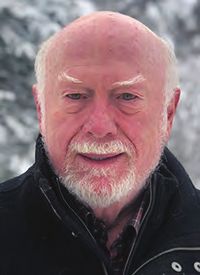
Lecturers

                 Heyong Shen, Ph.D., is a professor of Psychology at South China Normal University and the City
                 University of Macau. A Jungian analyst and sandplay therapist, he also is the founding presi-
                 dent of the Chinese Federation for Analytical Psychology and Sandplay Therapy, the main
                 organizer of the International Conference of Analytical Psychology and Chinese Culture
                 (1998–2015), a speaker of Eranos Conferences (1997/2007) for the Psychology of the Heart,
                 and a Fulbright scholar in Residence. He has published 60 papers and 12 books. He is the chief
                 editor for the Chinese translation of The Collected Works of C. G. Jung and The Chinese Journal
                 of Analytical Psychology. He and his group set up 70 workstations for psychological aids for
                 orphans and in earthquake zones in the mainland of China, through the project named, “The
Garden of the Heart & Soul”.

                  Murray Stein, Ph.D., studied as an undergraduate at Yale University (B.A. in English) and
                  attended graduate student at Yale Divinity School (M.Div.) and the University of Chicago (Ph.D.
                  in Religion and Psychological Studies). He trained as a Jungian psychoanalyst at the C.G.
                  Jung-Institut of Zurich. From 1976 to 2003, he was a training analyst at the C. G. Jung Institute
                  of Chicago, of which he was a founding member and President from 1980 to 1985. In 1989, he
                  joined the Executive Committee of the International Association for Analytical Psychology
                  (IAAP) as Honorary Secretary for Dr. Thomas Kirsch as President (1989–1995) and served as
                  President of the IAAP from 2001 to 2004. He was president of the International School of
                  Analytical Psychology (ISAP) in Zurich in 2008–2012 and is presently a training and supervising
analyst there. Among his major publications, In Midlife, Jung’s Map of the Soul, Minding the Self, Soul: Retrieval
and Treatment, Transformation: Emergence of the Self, and Outside, Inside and All Around.
You can also read


