Year 11 2021 Progression Routes - Learning - Loving - Living - Trinity Church of England ...
←
→
Page content transcription
If your browser does not render page correctly, please read the page content below

Year 11 2021 Progression Routes

          Learning - Loving - Living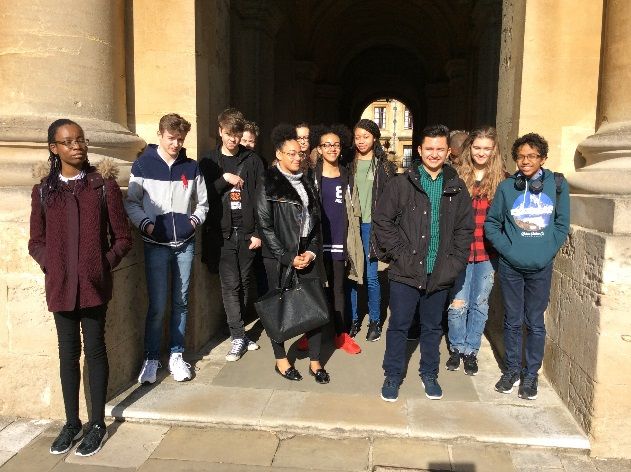
Year 11 2021 Progression Routes
Trinity aims to be a place where children and adults flourish within a strong Christian community,
achieving the very best educational standards and developing character and strength of personality.
Part of this vision is to ensure that after Trinity, all pupils’ progress to further education in an
environment where they can excel and achieve both personal and academic excellence.

The transition to further education is a period of great change for pupils. It is important that they
can make this change confidently and with the knowledge that they are fully aware of the variety of
choice and range of progression routes open to them.

This booklet aims to provide guidance for pupils starting the process of choosing the next steps in
their education. The Government Study Programmes ensures pupils stay in meaningful education
until the age of 18 and are emphasising the necessity to have passed GCSE at grade 4 in English and
Maths.

Some pupils will have a clear idea of what route they wish to take, be it on to Higher Education in
university, or into the workplace on apprenticeship schemes. For others there are still lots of
options to be considered. The following pages provide information on the next step in that journey.
There is information on further education routes and some guidance on how to apply for the college
or sixth form of choice.

Should you require any further advice then please do not hesitate to contact me at school.

Fidelma Hanlon
Assistant Headteacher
Director of Character Education
f.hanlon@trinity.lewisham.sch.uk

Table of contents

The Russell Group of Universities    Page 2     Grammar School Sixth Forms                 Page 11
What Sixth Forms have to offer       Page 3     Independent School Scholarships            Page 12
A Guide to Apprenticeships           Page 4     How to Apply to Sixth Form or FE           Page 13
A Guide to Traineeships              Page 6     Personal Statement                         Page 17
A Guide to T Levels                  Page 7     Explore your Future with Start             Page 19
Further Education Colleges           Page 8     Further Progression Information and        Page 20
                                                Links
Sixth Form Colleges                  Page 9     Sixth Form Surgery                         Page 21
School Sixth Forms                   Page 10

                                     Learning - Loving - Living
                                                                                                        1
The Russell Group of Universities
The Russell Group represents the 24 major research-intensive universities of the UK. These
institutions are vibrant and dynamic organisations, actively contributing to their local
communities and economies, yet influencing and achieving impact on a truly global scale.

The Russell group universities have produced a guide to post-16 study options: Informed
Choices: https://www.informedchoices.ac.uk/ This website gives clear guidance on the subject
choices you might need to choose in order to take up a particular degree course or degree
apprenticeship.

Russell Group

University of Birmingham
University of Bristol
University of Cambridge
Cardiff University
Durham University
University of Edinburgh
University of Exeter
University of Glasgow
Imperial College London
King's College London
University of Leeds
University of Liverpool
London School of Economics and Political Science
University of Manchester
Newcastle University
University of Nottingham
University of Oxford
Queen Mary, University of London
Queen's University Belfast
University of Sheffield
                                                           Trinity pupils on a trip to Oxford University
University of Southampton
University College London
University of Warwick                                   For more information on The Russell Group of
University of York                                      universities and to view their Informed
                                                        Choices booklet go to:

                                                        www.russellgroup.ac.uk/informed-choices

Proverbs 16:3 Commit your work to the Lord, and your plans will be established.
                                                                                                    2
Sixth Forms and Further Education Colleges –
What do they have to offer?
 There are a variety of progression routes to choose from for post 16. It is important to
 know what each has to offer and the kind of qualification you will receive at the end of your
 time there.
Further Education Colleges

These colleges provide a variety of options. Students can study A Levels or a vocational
equivalent; this could be an NVQ, City & Guilds Diploma or BTEC Level Diploma. Courses
available include studies in Sports, Construction and Technical Studies, Early Years, Health
and Social Care and Music. This type of college may be suitable for those who want a less
academic route to further study and qualifications.

Sixth Form Colleges

A more academic route than FE colleges, Sixth Form Colleges offer a range of As/A level
subjects, BTEC courses and GCSE resits. The Sixth Form College provides a more adult
experience than school sixth forms. There are often Advanced Graduate Programmes run
at these colleges to help students to go on to study at university level. Students need to be
self-regulating and have good independent learning skills in order to succeed at Sixth Form
College.

School Sixth Forms

School Sixth Forms are a good option for students who want an academic route and like the
structure of the secondary school system. Some will follow the International Baccalaureate
Programme of study which is highly regarded by universities. Students need to be self-
regulating and have good independent learning skills in order to succeed.

Grammar School Sixth Forms

These follow the selective system of the Kent Grammar Schools and are highly academic. As
part of the application process students may have to sit an entrance exam in addition to
achieving good grades in at least 6 GCSE full course subjects. This will nearly always include
a minimum of Grade 4 in English and maths and at least a Grade 6/7 in the subjects for study
at A level.

Scholarships to Independent Schools

Independent schools are fee paying schools and are always very academic. Most able pupils
can apply for scholarships or bursaries to attend such schools for sixth form.

                                                                                                3
A Guide to Apprenticeships
For those who are motivated to get started in the job market or looking for an alternative
to further or higher education, a modern apprenticeship is an excellent way of gaining
essential experience and a recognised qualification.

What is an apprenticeship?
   •   An apprenticeship is a real job where you learn, gain experience and get paid,
       combing practical training in a job with study.
   •   An apprentice is an employee with a contract of employment and holiday leave.
   •   It can take between one and six years to complete an apprenticeship depending on
       which one you choose, what level and previous experience.
   •   It's funded from contributions made by the government and the employer.

Why choose an apprenticeship?

   •   Learn and gain hands-on experience
   •   Get training for a specific job role
   •   Be on a career path with lots of future potential, by the end of an apprenticeship,
       you'll have the right skills and knowledge needed for your chosen career.
   •   Get paid. Salaries depend on the industry, location and type of apprenticeship. If
       you're aged 16 to 18 or in the first year of your apprenticeship, you're entitled to
       the apprentice rate, currently £4.15 - but many employers pay more than this.

Types of apprenticeships

 Type            Level       Equivalent educational level
 Intermediate    2           5 GCSE passes at grade A*– C or 9 – 4
 Advanced        3           2 A level passes/Level 3 Diploma/ International Baccalaureate
 Higher          4,5,6 & 7   Foundation degree and above
 Degree          6&7         Bachelor’s or master’s degree

Apprenticeships are available to anyone over the age of 16 and include elements of on the
job and off the job training, leading to industry recognised standards or qualifications. Some
apprenticeships also require an assessment at the end of the programme to assess the
apprentice`s ability and competence in their job role.

                                                                                                 4
Choosing an apprenticeship
It's important to do thorough research and make sure you find the perfect apprenticeship
for you.

Key things to investigate:

   •   What is the apprenticeship and job role – does it fit what you’re looking for?
   •   Find out about the employer – is it the type of company you want to work for?
   •   Find out about the training provider, college, or university where you could be
       studying.
   •   What qualifications, subjects, and grades are they looking for?
   •   What essential/desirable skills and experience do they ask for, and what qualities are
       they are looking for in applicants?
   •   Does the job require you to work in different locations, or would you need to move
       away from home for work?

Finding and applying for an apprenticeship

Once you find the right apprenticeship, you can start the application process. You'll need to
create a CV, make an application and maybe write a cover letter.

It's also a good idea to apply for a few apprenticeships at a time. That way you're increasing
your chances and not waiting for a response from one employer.

A good starting point to find your ideal apprenticeship is to visit the GOV.UK
apprenticeship website. For more information, to register your profile, search for vacancies
and apply for apprenticeships visit: https://www.apprenticeships.gov.uk/

                                                                                                 5
A Guide to Traineeships
Not all young people are prepared, confident or ready for work. Traineeships provide a
supported and informed environment to guide and move into an apprenticeship, workplace
or further study/training.

What is a Traineeship?

   •   A traineeship is a free skills development programme that includes a work
       placement. It can last from 6 weeks up to 1 year, though most traineeships last for
       less than 6 months.
   •   Traineeships help 16 to 24 year olds get ready for an apprenticeship.
   •   A traineeship is a training programme and isn’t a job. Employers are not required to
       pay you for the work placement.
   •   A traineeship gives training to prepare for the workplace, including CV writing and
       support to improve English, maths and digital skills if needed.
   •   Sector focused vocational learning to help prepare for an apprenticeship or job and
       recognition of learning.
   •   A high-quality work placement of at least 70 hours
   •   An interview for an apprenticeship or job if available, or an exit interview with
       written feedback.

You can search, register and apply for a traineeships in England with GOV.UK, visit:
https://www.gov.uk/find-traineeship

Or contact the National Careers Service for advice:
https://nationalcareers.service.gov.uk/

                                                                                              6
A Guide to T Levels
What are T Level?

  •   T Levels are a new qualification which follow GCSEs and are equivalent to 3 A levels.
  •   T Levels focus on vocational skills and can help students into skilled employment,
      higher study or apprenticeships.
  •   T Levels offer students a mixture of classroom learning and ‘on-the-job’ experience
      during an industry placement of at least 315 hours (approximately 45 days).
  •   T Level students spend 80% of the course in the classroom, learning the skills that
      employers need. The other 20% is a meaningful industry placement, where they put
      these skills into action.
  •   These 2 year courses have been developed in collaboration with employers and
      businesses so that the content meets the needs of industry and prepares students
      for work, further training or study.
  •   Started in September 2020, the first 3 T Levels are Design, Surveying and Planning for
      Construction, Digital Production, Design and Development and Education and Childcare.
      More T Levels start in the following years, covering everything from agriculture to
      catering and engineering to science.

      For more information, visit: https://www.tlevels.gov.uk/

                                                                                           7
Sixth Form and Further Education Information

 Further Education Colleges - Vocational Route
 Name of college                         Address and Website
 Lewisham Southwark College              Lewisham & Southwark,
                                         https://www.lscollege.ac.uk/
 City of Westminster College             Paddington and Maida Vale, W2 1NB
                                         https://www.cwc.ac.uk/
 London South East Colleges              Bromley, Bexley, Greenwich & Orpington
                                         www.lsec.ac.uk
 Hadlow College                          Hadlow, Medway, Shooters Hill & Mottingham
                                         https://www.hadlow.ac.uk/
 Westminster Kingsway College            Kings Cross, Westminster & Camden
                                         www.westking.ac.uk
 South Thames College                    Wandsworth, Tooting, Merton
                                         https://www.south-thames.ac.uk/
 Capel Manor College                     Crystal Palace Park, Mottingham, Regents Park
                                         https://www.capel.ac.uk/
 City Gateway                            Poplar, E14 2BE
                                         https://www.citygateway.org.uk/
 City and Islington College              Angel, Holloway Rd, Finsbury Park & Camden Rd
                                         https://www.candi.ac.uk/
 Rising Ballers College - Football       West London, W10 6RP
                                         https://www.risingballerscollege.co.uk/
For entry requirements please visit the relevant college website.

                                                                                         8
Sixth Form and Further Education Information

 Sixth Form Colleges – Vocational and Academic Route
 Name of college                              Address and Website
 Christ the King: Emmanuel 6th Form            Lewisham, London SE13 5GE
 College                                      https://www.ctkemmanuel.ac.uk/
 Christ the King : St Mary’s 6th Form         Sidcup, DA14 6BE
 College Sidcup                               https://www.ctkstmarys.ac.uk/
 Christ the King: Aquinas 6th Form            Brockley, SE4 2NL
 College                                      https://www.ctkaquinas.ac.uk/
 St Francis Xavier 6th Form College           Balham, SW12 8EN
                                              https://www.sfx.ac.uk/
 Shooters Hill 6th Form College               Red Lion Lane, SE18 4LD
                                              https://www.shootershill.ac.uk/
 ELAM: East London Arts and Music             Bromley By Bow, E3 3TA
                                              https://www.elam.co.uk/
 South Thames College Merton                  Morden, SM4 5QX
                                              www.south-thames.ac.uk/
 Royal Greenwich Trust School                 Greenwich, SE7 8LJ
                                              https://www.rgtrustschool.net/
 City and Islington College                   The Angel, EC1 7LA
                                              https://www.candi.ac.uk/
 John Ruskin College                          South Croydon CR2 8JJ
                                              https://www.johnruskin.ac.uk/
 Lambeth College                              Clapham, SW4 9BL
                                              https://www.lambethcollege.ac.uk/
 New City College                              Poplar, E14 0AF
                                              https://www.ncclondon.ac.uk/
 Newham Sixth Form College -                  Plaistow, E13 8SG
 NewVic                                       https://www.newvic.ac.uk/
 North Kent College                           Dartford, DA1 2JT
                                              https://www.northkent.ac.uk/
 Waterfront UTC                               Gillingham, ME4 4FQ
                                              https://www.waterfront-that.org.uk/
 Ravensbourne University London –             Greenwich Peninsula, SE10 0EW
 Further Education                            https://www.ravensbourne.ac.uk/
For entry requirements, please visit the relevant college website.

                                                                                    9
Sixth Form and Further Education Information
School Sixth Form – Academic Route
Name of School Location Website & Website
Haberdashers’ Aske’s Federation Greenwich, Bromley, Crayford & New Cross
Knights Academy https://www.habsfed.org.uk/
Prendergast School 6TH Form Brockley, SE4 1LE
https://www.prendergast-school.com/
Sedgehill School 6th Form Bellingham, SE6 3QW
http://www.sedgehillschool.co.uk/
SFH6 - The Sydenham & Forest Hill Forest Hill, SE26 4RD
6th Form http://www.sfh6.org/
The Ravensbourne School - Post 16 Bromley, BR2 9EH
https://www.ravensbourne.info/
Coopers School Chislehurst, BR7 5PS
http://www.coopersschool.com/
Thomas Tallis School – Post 16 Kidbrook, SE3 9PX
https://www.tallispost16.com/
Bishop Justus Church of England Bromley, BR2 8HZ
School 6th Form http://www.bishopjustus.bromley.sch.uk/
Ravens Wood School – Post 16 Bromley, BR 2
8HPhttps://www.ravenswood.bromley.sch.uk/
Bullers Wood School for Girls – 6th Chislehurst, BR7 5JL
Form http://www.bwsgirls.org/
Bexleyheath Academy 6th Form Bexleyheath DA6 7DA
https://sites.google.com/aetinet.org/bexleyheath-
academy/home
Eltham Hill 6th Form Eltham Hill, SE9 5EE
http://elthamhill.com/post16/
Harris 6th Form Beckenham, Bromley, Crystal Palace, East Dulwich,
Merton, Croydon, Purley, South Norwood
https://www.harrissixthform.org.uk/
The John Roan School 6th Form Blackheath, SE3 7UD
https://www.thejohnroanschool.org.uk/
King’s Maths School Lambeth, SE11 6NJ
https://www.kingsmathsschool.com/
Langley Park School for Boys 6TH Beckenham, BR3 3BP
Form http://www.lpsb.org.uk/
Stationers' Crown Woods Academy - Bexley, SE9 2PT
Arden 6th Form https://scwa.org.uk/
Hayes School 6th Form Bromley BR2 7DB
https://www.hayes.bromley.sch.uk/
For entry requirements, please visit the relevant school website.
10Sixth Form and Further Education Information
Grammar School Sixth Form – Highly Academic Route
Dartford Grammar School Dartford, DA1 2HW
https://www.dartfordgrammarschool.org.uk/
Townley Grammar 6TH Form Bexleyheath DA6 7AB
https://www.townleygrammar.org.uk/
St Olave’s Grammar School 6th Form Orpington, BR6 9SH
http://www.saintolaves.net/
Bexley Grammar School 6th Form Welling, DA16 2BL
https://www.bexleygs.co.uk/
Newstead Wood School 6th Form Orpington, BR6 9SA
https://www.newsteadwood.co.uk/
Chislehurst & Sidcup Grammar Sidcup, DA15 -9AG
School 6th Form https://www.csgrammar.com/
Wilmington Grammar School for Dartford, DA2 7DA
Boys 6th Form https://www.wgsb.org.uk/
Wilmington Grammar School for Dartford, DA2 7BB
Girls 6th Form https://www.gsgw.org.uk/
Beths Grammar School 6th Form Bexley, DA5 1NE
https://www.beths.bexley.sch.uk/
For entry requirements, please visit the relevant school website.
*Note that Grammar school open evenings tend to run in November, with an application form
closing date in early December. Please check each school’s website for specific dates and times.
11Sixth Form and Further Education Information
Independent School Sixth Forms – Scholarships
Name of school Address and Website
Lancing College Lancing, West Sussex. BN15 0RW
https://www.lancingcollege.co.uk/
City of London School - Boys Queen Victoria Street, London, EC4V 3AL
https://www.cityoflondonschool.org.uk/
City of London School - Girls Barbican, London, EC2Y 8BB
https://www.clsg.org.uk/
Ardingly College Haywards Heath, RH17 6SQ
https://www.ardingly.com/
Babington House School Chislehurst, BR7 5ES
https://www.babingtonhouse.com/
Colfe’s School Lee, SE12 8AW
https://www.colfes.com/
St Dunstan’s College Catford, SE6 4TY
https://www.stdunstans.org.uk/
For entry requirements, please visit the relevant school website.
Trinity has been building links with Independent Schools in order to provide our highest achieving
pupils with the opportunity to win Sixth Form scholarships at some of the country’s best
Independent schools. Pupils are required to sit an entrance exam and an interview in addition to
achieving exceptional grades at GCSE in order to be awarded the scholarships.
Pictured are some of our year 11 boys
who visited City of London School to
find out about scholarship applications.
12How to Apply for Sixth Form or
Further Education College
• Use the steps below to help find the best progression route for you.
• Choose to follow a path for the subjects you are interested in.
• Research as many colleges or sixth forms as you can and make sure to
visit them on their open evening.
• Take careful note of the closing date for applications.
Step 1 Choosing a College – Do your research!
You are lucky to live in London because you have such a variety of choice for Sixth Form.
You need to make informed choices so that you go to a college that suits you and where
you will be happy and successful. Think about the following to help you make these choices.
• Decide on where you are prepared to travel to: Lewisham, Greenwich, Bromley,
Kent, Central London etc.
• Do a Google or Start search of Sixth Form Colleges in that area if you don’t have a
name of a college.
• Go on to the college website and read about the college.
• Look to see if the college has a specialism e.g. in Performing Arts, Computing, Maths,
English etc.
• Find a college that suits the subjects you want to take. (It doesn’t necessarily have to
specialise in those subjects, but would be good if it did.)
• Find out the dates for Open Days and Open Evenings and visit the college.
• Download the college application form, or phone up for one.
Step 2 Filling out the college application form.
The application form is divided into sections. This is usually:
1. Factual information about you – name, address etc.
2. Additional support needs such as health needs.
3. Your Supporting Statement.
4. Examination subjects you are studying and predicted grades.
5. Sixth Form Course Choices
13Use the form below to help you keep track of Open Evenings and application
deadline dates for the schools and colleges you wish to apply to. Share this with
your family group leader and discuss the completion of your application forms
with them.
Name: ____________________________ Family Group: _____________
College Name Address and website Date of Open Application
Day/Evening closing date
1. Christ the Belmont Grove
King Lewisham
Emmanuel SE13 5GE
Sixth Form https://www.ctkemmanuel.ac.uk/
College
14Step 3 Filling in your Supporting Statement
This is a key part of your form as it is where you persuade the school or college that you
are a good student to have. To do this you need to help them get a picture of your
character and you as a learner. You will most likely be asked to write about the following:
Why have you chosen this college?
Refer back to the college website or prospectus.
Focus on what they say are their values e.g. honesty, integrity, mutual respect and
try to work some of these phrases into your Supporting Statement.
For example:
I see from your prospectus/website that you value……….. I feel this is important
because……..
Look at what the college says its ethos, strengths or specialism is and say how this
applies to you.
For example:
I see that at …………….. you specialise in/you have excellent facilities for/ you have an ethos
of ……………. I find this exciting because……
Why have you chosen this college?
What are your reasons for choosing your course or subjects?
Here you must show your passion for the subjects chosen and say how they will help you
move on to university and/or a chosen career path.
For example
What are your reasons for choosing your course or subjects?
I have chosen to study ……. because I am really interested in/ passionate about/ excited by
……………..
Here you must show your passion for the subjects chosen and say how they will help you move on to
university and/or
At university a chosen
I want career
to study/ path.to go on to be a……… These subjects will help me to achieve
I want
this.
15Personal profile/interests and achievements
This is your opportunity to promote yourself, show what makes you special and show what
attributes and skills you have to bring to the school or college. Include things such as:
• Any leadership roles you have held: Prefect, PLT, Student Council, Peer Mentor.
• Membership of clubs or teams: football club, athletics club, army cadets, police
cadets.
• Hobbies or interests and how this has helped you grow and develop as a person
e.g. sport, music, art.
• Travel or any trips you have been on.
• What you like to read and are currently reading. Perhaps share your favourite book.
• Any volunteer work you have done and what you learned from it.
• Any part-time job or work experience you have had.
What are your skills?
Work well under pressure Punctual Organised Proficient in ICT skills
Team worker Adaptable Good communication/interpersonal skills
Speak confidently Time management Good listening skills Managing workload
Work well to deadlines Independent learner Good research skills Leadership
What are your personal attributes?
Enthusiastic Friendly and outgoing Ambitious Reliable Calm
Conscientious Approachable Creative Understanding
Honest Good sense of humour Energetic Good listener
Practical
Fluent in (Foreign Language) Hardworking Dedicated
Resourceful Flexible Determined Resilient Responsible
Sample Sentences
My role as a school prefect shows that I am a strong leader.
I am someone who works well under pressure and therefore work well to deadlines.
I am a member of my local football team. I enjoy this because I like working as part of a team.
My part-time job has shown I am hard working & willing to learn new skills.
A strong sense of responsibility has been demonstrated through the extra-curricular activities that I am
involved in.
16Personal Statement
Personal Statement – Below are example paragraphs of the kind of things you might write
in your personal statement. I have used words and phrases from the booklet you were
previously given. Look through that and see which words or phrases apply to you and use
them to describe yourself in the manner and tone of the examples below.
Example 1: I am interested in attending your college as I can carry on my education in an
environment which values commitment and hard work. As a learner I like to push myself to
achieve to the best of my ability and I feel that your college will support me in continuing to
do this in my further education.
Example 2: I have chosen to study English, History and Sociology because I am interested in
pursuing a career in Law. I am passionate about English Literature and love to read as widely
as possible. I feel these subjects will help me develop my critical thinking skills and help me
to take a broader view of the world and the people in it. I want to continue my education at
university level once I have completed my further education.
Example 3: I have many skills which make me a good learner. I work well under pressure and
as a result I am able to manage my time well and keep to deadlines, always having my
homework and coursework in on time. I have good communication and interpersonal skills
which has resulted in me being part of the Pupil Leadership Team at Trinity. I have had the
opportunity to take a lead role in assemblies and have been part of the team to support staff
at Parent’s Evenings and Open Evenings where I was required to speak confidently and be an
ambassador for the school.
Example 4: I am an enthusiastic and reliable person; attributes which are called on regularly
in Army Cadets. I have been part of my Cadet group for the last two years. My unit finds
me to be resourceful and determined as I am often expected to take a lead role in activities.
I enjoy cadets as it offers a challenge beyond the academic challenge of school and I get the
opportunity to work with new people and learn new skills as well as take part in outdoor
adventure weekends which I find great fun and love the fact that we all have to work as a
team.
Example 5: For my work experience I spent a week in a local care home. I found this work
very rewarding and it proved to me that I want to pursue a career where I can do good for
people in need, which I think a Law career will allow me to do. My week in the care home
was hard work but I was determined to do the best I could and dedicated myself whole
heartedly to the tasks I was given. I was able to take instructions well and was flexible and
resilient despite the challenges I faced in the job.
Example 6: I am a member of my local football club. I enjoy this because I like working as
part of a team. We train twice a week and often have a game on Saturdays. This schedule
takes dedication, and I must organise my time so as to ensure I have time for homework
and study for my exams. As well as playing for the team I am involved in coaching younger
players and I enjoy the responsibility this gives me.
17Personal Statement
18Explore your future with Start
All year 11 students have access to Start, an innovative online careers resource used at Trinity.
What is Start?
Start is a free careers guidance platform for students and parents to help students prepare for and
make informed decisions at key moments of choice. Start contains a comprehensive source of careers
information personalised to every student. Start provides a structured programme of activities,
tailored to each Year Group to inform student decisions about study choices and future careers
options.
Use Start to:
• Explore post-16 options, related to your preferred learning style and future career aspirations.
• Search for places to learn linked to subject, qualification and location choices, including
apprenticeships.
• Help understand the application process and entry requirements for intended choices.
• Capture experiences and achievements to help stand out on paper and in person.
Start Key Features:
Modules Structured activities to guide students through the relevant content on
Start, at the right time and in good time.
Student Profile A starting point for students to access personalised content and
information as well as decision-support tools.
Employability An action plan for students to set future study and career goals to stay on
Action Plan track and raise aspirations.
Locker An online record of achievement for students to organise evidence for
future applications and presentation of their employability.
World of Work Content to spark an interest, dispel myths and stereotypes and help
students to understand work, industries and employers.
What to Study Information on qualifications to highlight entry requirements and the
multiple progression routes in to careers.
Where to learn Provider information to help students to identify suitable places to learn
linked to subject and qualification choices.
Employability Content to help students explore and understand the importance of skills
and prepare for work experience and future employment.
All students have been given a username and password to login to their own account and can
access Start anytime, on computers and compatible mobile and tablet devices. Please contact Mr
Morhen if you have misplaced your account details or create yourself a new Start account.
We encourage parents to use Start with your children at home to support their career learning and
decision making process. . Please do not login using your child's user details, instead register yourself,
creating your own username and password, simply visit https://www.startprofile.com/ and create your
own account.
19Progression Information
Lewisham Sixth Form and Further Education Schools list.
https://lewisham.gov.uk/myservices/education/14-19/16to-19-year-olds/sixth-
forms-in-schools
The International Baccalaureate programme is a programme of
study offered in many Sixth Forms. Find out about it here.
https://www.ibo.org/
The A Levels have changed over the past number of years. This Which?
article written in January 2018 has information on those changes and
what they mean for you.
https://university.which.co.uk/advice/a-level-choices/a-level-changes-
what-it-means-for-you
https://www.theuniguide.co.uk/about
And some advice on making A Level choices:
https://university.which.co.uk/advice/a-level-choices
Some information and advice from UCAS on A Levels:
https://www.ucas.com/further-education/post-16-
qualifications/qualifications-you-can-take/levels
Some information and advice on BTECs from UCAS:
https://www.ucas.com/further-education/post-16-qualifications/qualifications-you-can-take/btec-
diplomas
BTEC courses are an excellent alternative to A Levels. Find out more
about them here.
https://qualifications.pearson.com/en/about-us/qualification-
brands/btec.html?utm_source=btecinternational2015&utm_medium=Print&utm_campaign=INT_GE
N_01FEB2015_btecinternational2015
20Sixth Form Surgery
If you need additional help or support
with your sixth form applications see
Ms Hanlon
in The Atrium
at lunchtime on Fridays
21You can also read


