COURSE GUIDE 2020-2021 - Center for Advanced Learning
←
→
Page content transcription
If your browser does not render page correctly, please read the page content below
COURSE GUIDE 2020-2021
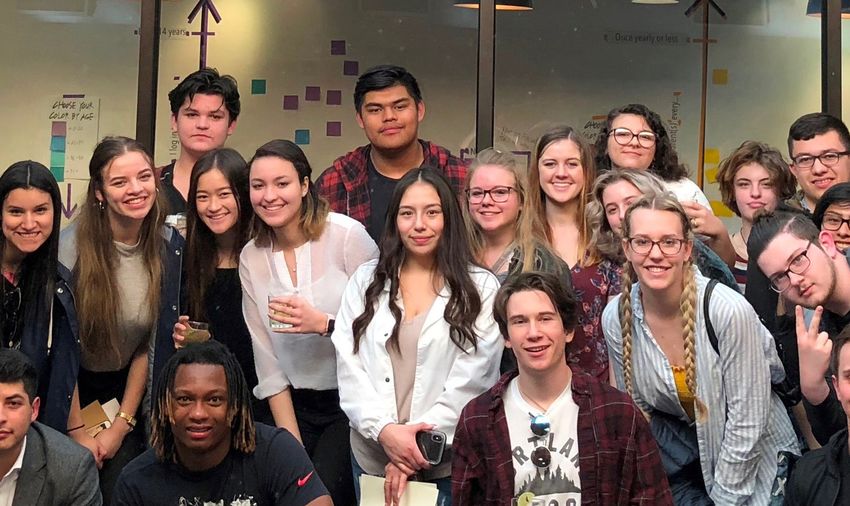
Welcome to CAL, the Center for Advanced Learning!

As a program that serves 11th and 12th graders from multiple school districts across the metro
area, CAL represents the full diversity of the Portland Metro area and welcomes you to join us! Our
programs, detailed here in the Course Guide, include:
ChangeLab (courses on small business entrepreneurship),
Computer Information Systems
Design To Fab Lab (apparel design),
Digital Media and Design
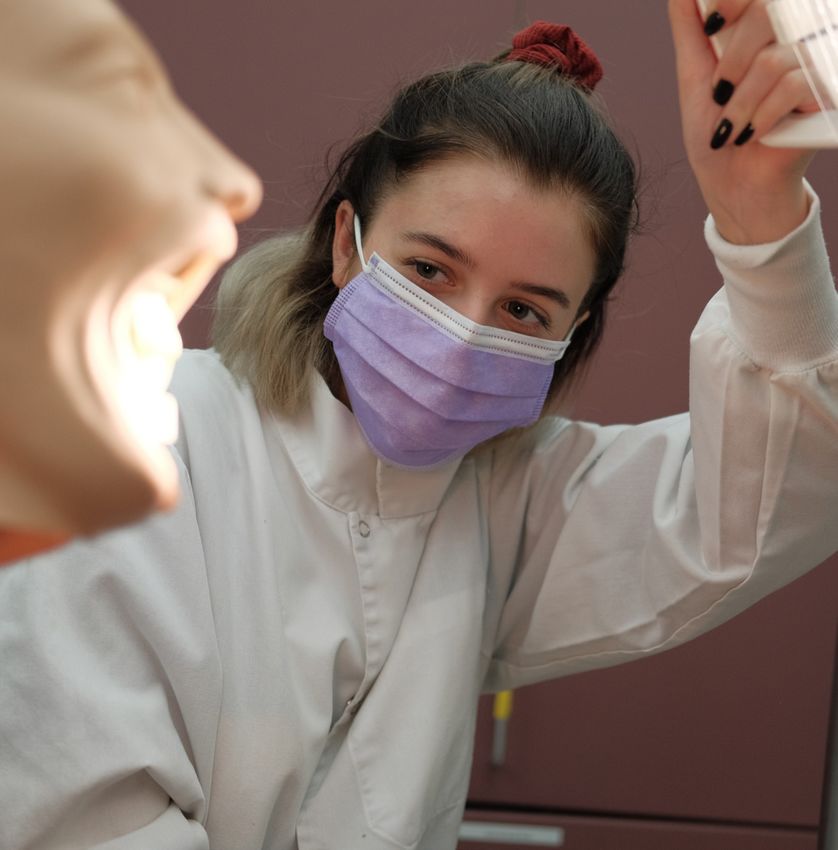
Health Sciences (medical and dental)
Manufacturing and Mechanical Engineering

Each of these programs serve a wide variety of student interests, including:
students with a beginning interest in these careers, or
students who love to learn through hands-on work, or
students who thrive in a smaller school community, or
students who are interested in a specific career in an area that CAL serves, or
students interested in earning college credits during high school.

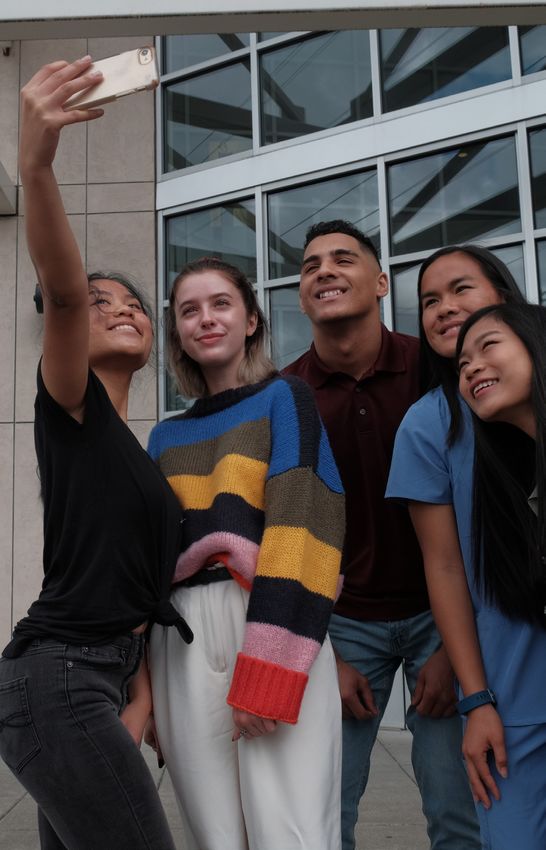
At CAL, we believe that our diversity is a sign of our strength as a community. We welcome students
to learn more about our cutting-edge programs, our fantastic and caring teaching staff, and our
commitment to providing an excellent education for all students.

As you learn more through this Course Guide and by visiting CAL, consider applying to CAL! We
would consider ourselves fortunate to be able to serve you alongside your home high school during
your final two years of high school.

Sincerely,

Steve Day
Director
FREQUENTLY ASKED QUESTIONS

How flexible is the CAL and home high school schedules?
The home high school counselors and CAL staff build a schedule that ensures each student’s graduation requirements are met, considers
after school activities, and AP Courses.

How many classes each year will I take at CAL?
Every CAL student takes four classes each year, including a required English class. Each CAL student will receive half (high school) credit for
semester-long classes or one (high school) credit for each successfully completed year-long class at CAL.

How much out of school work and homework will I have?
Each program requires specific homework that may be due before the next class or that week.

How many college credits can I achieve?
Depending upon your program and once registered through Mt. Hood Community College, a CAL student can achieve nearly 30 college
credits at the end of your two-year program for FREE! The average CAL student completes 10+ college credits each year at CAL.

How do the college credits transfer?
All incoming juniors schedule and take the College Placement Test at Mt. Hood Community College (MHCC). At that time, the student is giv-
en a student identification number. CAL students register for college credits in the Winter and Spring of both their junior and senior years.
There is NO fee for tuition! CAL students receive a transcript through MHCC and becomes a MHCC student!.

What are the transportation and lunch schedules?
The CAL Staff and the home high school create the free bus transportation schedule. Seniors who drive can purchase a CAL parking per-
mit for a fee. Lunch schedules are dependent upon the home high school schedule. Lunches are available for CAL students to purchase
between the end of the morning session to the start of the afternoon session. If a student receives free/reduced lunches at their home high
school, then they can sign up for free/reduced lunches at CAL.

Is there a dress code at CAL?
Yes. Across all program areas, professional, and business casual attire is preferred and in some case, required. All students should expect
visitors - government, business, etc., to visit CAL. Students are prepared to meet, greet, and present themselves as young professionals.

What is expected of me as a CAL student?
To follow professional guidelines of the workplace. CAL students are given the responsibility to manage their time, their work, and their
social life. CAL students have great pride, and it shows through how our community speaks about how well-prepared CAL students are for
career and college.
CHANGELAB
  Change Lab at CAL builds the next generation of entrepreneurs. Junior year will identify a problem and move it to solution by creating a
  real business. Local business leaders will serve as mentors through this process. Using local nonprofit partnerships, students gain business
  leadership with emphasis on social entrepreneurship. Students will develop a social action project that addresses a problem in the
  community with a viable solution.

             To build the next generation of entrepreneurs & change-makers.
           JUNIOR YEAR                                                                 SENIOR YEAR
   MARKETING                                                                  INVESTING 101+
   In an already noisy world, how do you stand-out?                           (0.5 math graduation requirements)
   Marketing shares our passions with the world and engages                   As an entrepreneur, how do you stop working for money and
   them, forming a partnership. Unleashing creativity, we explore             make money work for you?
   various marketing techniques within Guerrilla Marketing, Services          Hands-on investing with active vs. passive income, stocks, real-
   Marketing and Competitive Analysis                                         estate, cryptocurrencies, and economic trends allows wealth
   We value uniqueness & welcome challenges.                                  creation and strong financial management. It provides future
                                                                              freedom.
                                                                              Instead of floundering, we’re founding…we use dedication &
   LAUNCH LAB I & II                                                          passion to build as far as possible.
    (2 BLOCK COURSES)

   As the future innovators, creators & leaders, how do we stop
                                                                              CHANGE LAB I & II
                                                                              As entrepreneurs, how can we impact our world for social good?
   talking and start doing? How do we find what’s broken and fix it…
                                                                              Where there are problems, we see opportunities.
   using the latest entrepreneurial techniques in Design & Innovation?
                                                                              Using our previous entrepreneurship work, we challenge the
   We have one focus - students creating real businesses to address
                                                                              norm, take action, & make an impact as social entrepreneurs,
   real-world problems.
                                                                              partnering with community-based organizations to address some
   We are hands-on. We regularly leave the classroom to engage with
                                                                              of the largest problems we face.
   current business leaders.
                                                                              Becoming leaders, we enhance lives, improve communities,
   They are our field trip hosts, speakers, and mentors.
                                                                              and shape the future.
   Where there are defects, we see potential.

                                                                              SENIOR STUDIO
                                                                              As a lifelong entrepreneur, how does someone expand an
                                                                              empire…an organization that lasts generations?
                                                                              We focus on people, growth, leadership, project development, as
   +LDT (Lower Division Transfer College) Credits Eligible, 4 credits/        well as entry and exits strategies.
   class                                                                      We explore competitive advantages that place our companies far
   *CTE (Career Tech Education) Credits Eligible , 2 credits/class            ahead of the crowd.
   Credits are awarded at the completion of the two-year program.             Our goal is a lifetime of success.

   All course descriptions are subject to change.

                                                    ENGLISH+ - YEAR LONG
   Every CAL student participates in a full year English course both junior and senior year. Upon completion of the class, students receive
   credits necessary to meet the English requirements for their high school diploma. Students also have the option to apply for Lower Division
   college credits (LDT), transferable to many college or university programs. This course awards up to 8 college credits each year to those
   who register for the credits and pass the classes. College course offerings include: Intro to College Writing/ WR115 and Intro to Fiction/
   ENG104 (Junior Year); College Composition/WR121 and Critical Thinking/WR122 (Senior Year).

Email: admissions@calcharter.org Phone: (503) 667- 4978 Website: www.calcharter.org
      Center for Advanced Learning 1484 NW Civic Drive, Gresham, Oregon 97030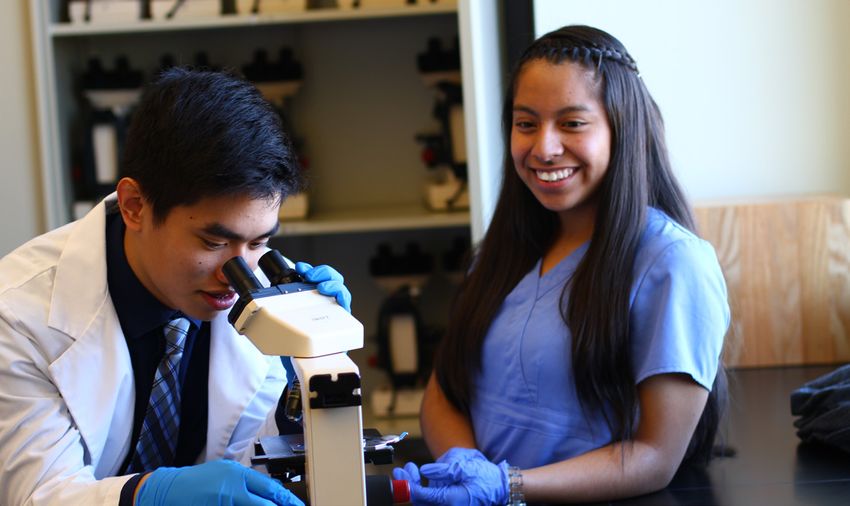
COMPUTER INFORMATION SYSTEMS
  Students will learn cyber security fundamentals, programming, and web programming . Students will use this knowledge to secure
  infrastructures and information through ethical hacking. Students will have opportunities to compete in different cybersecurity
  competitions. Students have the unique opportunity to participate in the CyberPatriot national competition, various capture the flag
  competitions, and participate in CAL’s security club.

  WEB PROGRAMMING- JUNIORS ONLY                                             PROGRAMMING I* - JUNIORS ONLY
  This course is designed to teach students how to interact with the
                                                                            Students will learn one programming language during the year.
  web dynamically. Students will learn how to build both basic and
                                                                            They will apply their coding skills to build a project during the
  advanced websites and applications using a wide range of tools.
                                                                            year.
  Students will learn how to build websites using HTML and CSS,
  will be introduced to web frameworks, and learn how to interact           CYBER SECURITY II* SENIORS ONLY
  with (and secure) web servers so that their work can be published         Students move into more advanced security topics and continue
  online.                                                                   to work in virtual lab environments. Additionally, students will
                                                                            collect ethical hacking tools in order to try and secure online web
  CLIENT-SIDE PROGRAMMING -                                                 apps by conducting penetration testing scenarios. At the end of
                                                                            the year, students pursue a summative project (of their choice) to
  SENIORS ONLY                                                              demonstrate their understanding over the two-year course.
  A year long course building on the skills learned in Web
  Programming I to enable multifunctional features to web projects.         PROGRAMMING II* - SENIORS ONLY
  The course focuses on the scripting language JavaScript which             Students will advance their programming skills by learning
  works hand-in-hand with HTML and CSS, and focuses on                      another language using mini-computers. The mini-computers will
  dynamically updating content, controlling multimedia and web              control electrical circuits with an emphasis on security.
  games, animating images and web security. Students will learn the
  syntax of the language and then the deeper skills to integrate all         Students have the unique opportunity to participate in the
  aspects of web design together to make their projects stronger.           CyberPatriot national competition, various capture the flag
                                                                            competitions, and participate in CAL’s security club.

  CYBER SECURITY I - JUNIORS ONLY
  In this class, students will receive instruction and lab assignments      *Career Tech Education (CTE) up to 14 credits are awarded at the
  focused on introductory concepts to Cyber Security. Students will         completion of the two- year program.
  learn how to use tools to secure their computers and networks,             +LDT (Lower Division Transfer College) Credits Eligible, 4 credits/
  forensic tools to determine an attack, the ethics of hacking, and         class
  legal issues of hacking.                                                   *CTE (Career Tech Education) Credits Eligible , 2 credits/class

                                                                            All course descriptions are subject to change.

                                                   ENGLISH+ - YEAR LONG
   Every CAL student participates in a full year English course both junior and senior year. Upon completion of the class, students receive
   credits necessary to meet the English requirements for their high school diploma. Students also have the option to apply for Lower Division
   college credits (LDT), transferable to many college or university programs. This course awards up to 8 college credits each year to those
   who register for the credits and pass the classes. College course offerings include: Intro to College Writing/ WR115 and Intro to Fiction/
   ENG104 (Junior Year); College Composition/WR121 and Critical Thinking/WR122 (Senior Year).

Email: admissions@calcharter.org Phone: (503) 667- 4978 Website: www.calcharter.org
      Center for Advanced Learning 1484 NW Civic Drive, Gresham, Oregon 97030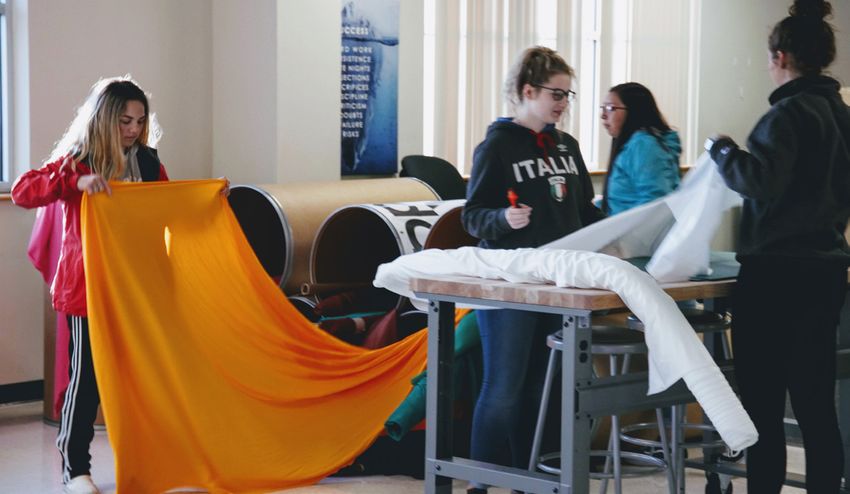
DESIGN TO FAB LAB
   Students will create and develop new fashion and gear products for the athletic apparel and shoe wear industry. Students will focus on
   market and consumer-driven design and will be professionally and academically ready for an internship or entry into a college program
   at Mt. Hood Community College, Pacific Northwest College of Art, or Oregon State University. Students will be literate in the business of
   athletic apparel, design, production, and marketing. Prototyping techniques and the overall design processes are key to design problem-
   solving and creative activities.

                          JUNIOR YEAR                                                                  SENIOR YEAR
   DESIGN AND DRAW
   The design component introduces research methods and conceptual               PRODUCT INNOVATION
   skills, to be used with the medium of fabric. The drawing portion             This course brings together all aspects of product innovation in
   focuses on the development of fashion sketching techniques,                   a single hands-on team project from ideation through product
   drawing from a model, technical flats and presentation to effectively         prototyping. Includes methodologies and procedures for material
   communicate the visual language of their design intentions. Students          selection, user-value design solutions (agile design) and access to
   develop research methods and learn the importance of concepts,                experts in the athletic apparel and shoe field.
   color and fabric stories.
                                                                                 SNEAKER BASICS
   HISTORY OF FORM AND FUNCTION                                                  Sneakers and athletic shoes are an everyday commodity. In this
                                                                                 course, students will handcraft a basic pair of constructed sneakers
   IN CLOTHING AND CULTURE                                                       and/or athletic shoe from start to finish. This includes beginning by
   This class will examine clothing as a social and cultural artifact, central   creating a basic pattern, cutting fabrics, sewing the upper, building a
   to the concepts of both individual and group identity. Students will          heel, and finishing the sole. The class will approach the requirements
   explore the production, consumption, use and meanings of clothing             of constructing a sneaker or athletic shoe through choice of material
   and adornment. Emphasis will be placed on function in context of              and how to utilize materials while laying out a pattern. Students
   society. Activities include visits to local exhibits and regional athletic    will work with basic tools for sneaker-making, including the use of
   companies. Course work will be comprised of group and independent             3D printers, laser cutters, and sergers. Students are expected to
   collaboration and presentations.                                              complete at least one pair of sneakers.

   BASIC MAKER TECHNIQUES
   This course will expose students to a variety of “making” practices           DESIGN 2 FAB LAB
   stemming from traditional apparel and shoe design practices.                  This lab is a dedicated time and space to the art and science of
   Students are expected to develop a personal project or enhance                building innovative designs and products for the athletic industry.
   apparel or shoe related skills. Clothing and shoe development, brand,
   soft -goods development, principles for creating 3- and 2-dimensional
   sketches and patterns as well as basic sewing skills will be covered          +LDT (Lower Division Transfer College) Credits available and credits
   throughout this course. Students will be encouraged to develop a              4/class
   better understanding of materials and construction techniques. In this        All course descriptions are subject to change.
   creative class students will construct specific products using a variety
   of fabrics, materials and equipment.

                                                        ENGLISH+ - YEAR LONG
   Every CAL student participates in a full year English course both junior and senior year. Upon completion of the class, students receive
   credits necessary to meet the English requirements for their high school diploma. Students also have the option to apply for Lower Division
   college credits (LDT), transferable to many college or university programs. This course awards up to 8 college credits each year to those who
   register for the credits and pass the classes. College course offerings include: Intro to College Writing/ WR115 and Intro to Fiction/ENG104
   (Junior Year); College Composition/WR121 and Critical Thinking/WR122 (Senior Year).

Email: admissions@calcharter.org Phone: (503) 667- 4978 Website: www.calcharter.org
      Center for Advanced Learning 1484 NW Civic Drive, Gresham, Oregon 97030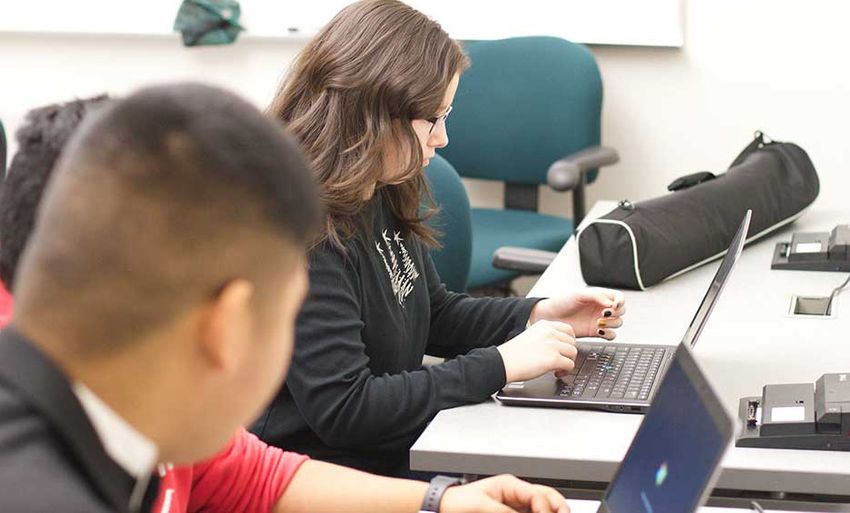
DIGITAL MEDIA AND DESIGN
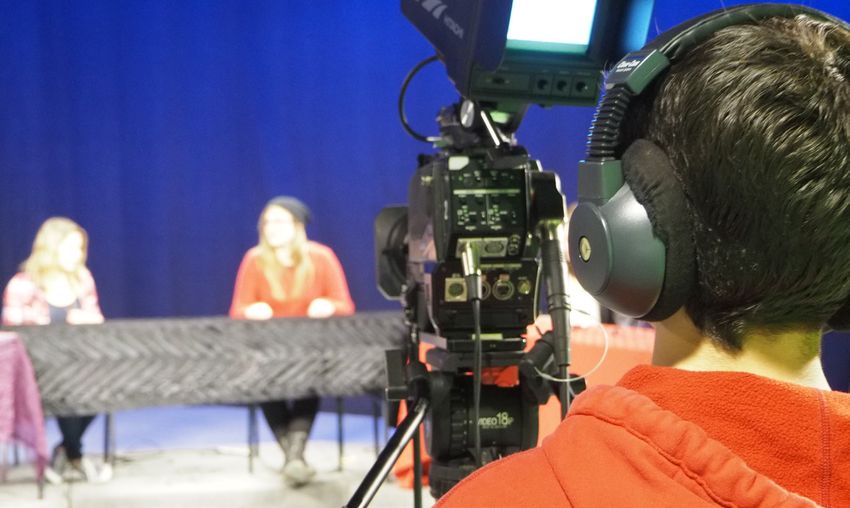
   Digital Media and Design students are future ready for the fast changing world of digital design. DMD offers courses in photography, video
   production, graphic design, digital illustration, web design, and advertising. If you like being creative and enjoy the challenge of working
   with clients then Digital Media and Design is for you. Students learn the design process and get the opportunity to work with real clients on
   advertising and marketing projects. Learning is hands on and engaging. Creative professionals get their start here.

    WEB DEVELOPMENT* - JUNIORS                                                    DIGITAL ART I & II+
                                                                                  This course focuses on digital illustration techniques using
    ONLY- One Semester                                                            Adobe Photoshop and Illustrator. Students will learn the
    In this course students will learn the basics of creating web pages           fundamentals of both web and print graphic types as they
    using HTML5 and CSS3, which is becoming the standard for                      complete challenges designed to foster their creativity and
    newer browsers and mobile computing. Students will be exposed                 their technical illustration skills. ate virtual environments, model
    to various scripting languages. During the year students will also            forms, understand, and apply color and sound to express ideas.
    use Web 2.0 tools and explore careers in web development and
    continuing education options.
                                                                                  DIGITAL VIDEO/VIDEO
    SENIOR PORTFOLIO* - SENIOR                                                    PRODUCTION*
                                                                                  This course offers hands-on training in the field of
    ONLY                                                                          broadcasting as well as narrative style. Students develop
    In this course, students will develop fundamental creative and                an understanding of concepts behind production. Students
    technical skills used in video and photography. Areas include                 participate at the MetroEast Community Media location for
    cinematography, lighting, sound recording, editing and more.                  training and production.
    Portfolio work - seniors only
                                                                                  DIGITAL PHOTOGRAPHY+
    ADVERTISING* ONE SEMESTER                                                     In this semester-long course, students will learn the basics of
    Students will focus on learning to create integrated advertising              using a DSLR camera. They will learn basic camera functions
    campaigns in both print and web for actual business clients.                  for action, close-up, portraits, product photography, and
    Conceptualizing, pitching, workflow, and industry standard                    studio lighting. Students will also learn image adjustment and
    processes and documentation are stressed.                                     manipulation as well as digital photography work-flow.

    GRAPHIC DESIGN* ONE SEMESTER                                                  MARKETING- JUNIORS ONLY- One
    In this course, students learn to create business cards, logos,
    posters, brochures, and other graphic design products common                  Semester
    to the industry. Students learn color theory, layout techniques, and          In this course students will learn the basics of marketing,
    how to create graphics and deliverables for print and web.                    marketing priniciples including traditional and digital marketing
                                                                                  methods.

                                                                                  + LDT ( Lower Division Transfer College) Credits Eligible, 4
                                                                                  credits/class
                                                                                  *CTE (Career Tech Education) Credit Eligible, 1-2 credits/class.

                                                                                  All course descriptions are subject to change.

                                                   ENGLISH+ - YEAR LONG
   Every CAL student participates in a full year English course both junior and senior year. Upon completion of the class, students receive
   credits necessary to meet the English requirements for their high school diploma. Students also have the option to apply for Lower
   Division college credits (LDT), transferable to many college or university programs. This course awards up to 8 college credits each year
   to those who register for the credits and pass the classes. College course offerings include: Intro to College Writing/ WR115 and Intro to
   Fiction/ENG104 (Junior Year); College Composition/WR121 and Critical Thinking/WR122 (Senior Year).

Email: admissions@calcharter.org Phone: (503) 667- 4978 Website: www.calcharter.org
      Center for Advanced Learning 1484 NW Civic Drive, Gresham, Oregon 97030
HEALTH SCIENCES
CAL Health Science program students gain the skills, technical knowledge, academic foundation, and real-world experiences they need
to prepare for high-demand, high-wage careers in healthcare. Students strengthen their skills for careers in the 21st century’s healthcare
industry. Some of the careers we explore involve working directly with people, while others involve research. Industry experiences for
students are varied and may be in hospitals, medical or dental offices. Students receive an education and training opportunities within the
world of Health Sciences using state-of-the-art, industry-grade equipment such as the Anatomage Table or participate in hands-on learning
using tools like Anatomy In Clay . Instructors assist learners in assessing their educational goals, interests, abilities, and skills to facilitate
students’ ambitions.
JUNIOR YEAR SENIOR YEAR
MEDICAL BIOLOGY ANATOMY & PHYSIOLOGY+
This year-long course explores the biological explanations of This college-level science course introduces the components of the
medical research and medical challenges. This course will look at basic human anatomy & physiology, including body organization,
each body system and analyze application of Biology in medical, cell structure and function, tissues and membranes, and the
health care, and laboratory diagnostics and treatments. Students integumentary, skeletal, muscular, nervous (with special senses) and
will engage in hands on labs including mouse dissection, fly endocrine systems. Elements of advanced biology and chemistry
breeding, urine analysis, basic surgical techniques, and more. courses, as they apply to a study of the human body, are included,
and lab experiences provide opportunities for students to explore
MEDICAL TERMINOLOGY* reading and lecture topics in greater depth. This course emphasizes
a hands-on approach to learning through labs and field trips.
This course is the study of medical terminology by body systems
with related word elements, disease processes, diagnostic tests, APPLICATIONS AND PRACTICES IN
procedures, and lab practicum. Basic elements of medical words
and abbreviations are studied so the student is proficient and HEALTH CARE II
able to analyze, define, and build medical terms that are most This course will provide an overview of ideas to conduct health
commonly used within the clinic/hospital environment. outreach and create community health programs. Students engage
in experiential learning in order to effectively prepare for working
with vulnerable populations, and specifically to enhance their ability
APPLICATIONS AND PRACTICES IN to build relationships and facilitate access. Students will leverage
HEALTH CARE technology, scholarship, and research in innovative ways to advance
the public good and to foster the development of citizen-scholars.
This course is designed to connect classroom instruction with
clinical skills. The students will engage in a variety of experiences MEDICAL TERMINOLOGY II*
in which they apply knowledge acquired through classroom This is the second course in the study of medical terminology
lecture, hands- on lab, scholarly research, community outreach, by body systems with related word elements, disease processes,
guest speakers and presentation in symposium format. Content diagnostic tests, procedures, and lab practicum. Basic elements
will include basic patient care, vital signs, legal and ethical issues, of medical words and abbreviations are studied so the student is
safety, etc. proficient and able to analyze, define, and build medical terms that
are most commonly used within the clinic/hospital environment.
+ LDT ( Lower Division Transfer College) Credits Eligible, 4 credits
*CTE (Career Tech Education) Credits Eligible , 3 credits/class All course descriptions are subject to change.
ENGLISH+ - YEAR LONG
Every CAL student participates in a full year English course both junior and senior year. Upon completion of the class, students receive
credits necessary to meet the English requirements for their high school diploma. Students also have the option to apply for Lower Division
college credits (LDT), transferable to many college or university programs. This course awards up to 8 college credits each year to those who
register for the credits and pass the classes. College course offerings include: Intro to College Writing/ WR115 and Intro to Fiction/ENG104
(Junior Year); College Composition/WR121 and Critical Thinking/WR122 (Senior Year).
Email: admissions@calcharter.org Phone: (503) 667- 4978 Website: www.calcharter.org
Center for Advanced Learning 1484 NW Civic Drive, Gresham, Oregon 97030MANUFACTURING AND MECHANICAL ENGINEERING
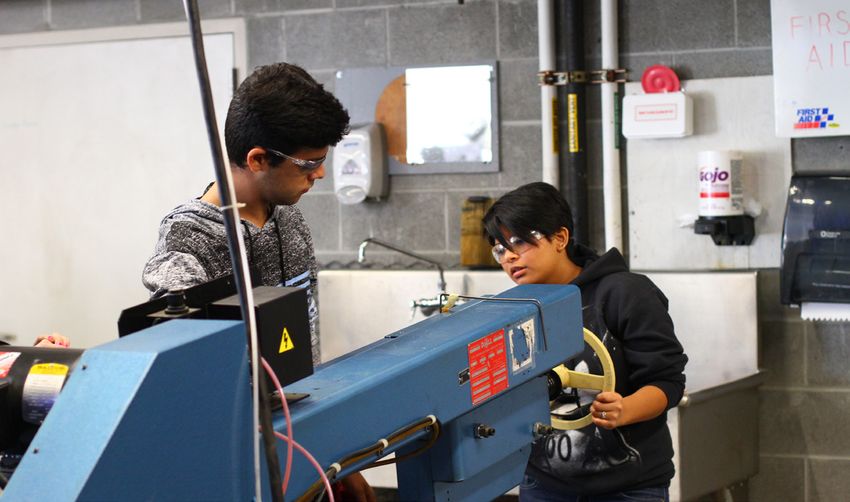
his program area is focused on engineering processes and prototyping (3D print & design) while working with metals! Like a Mechanical
Engineer, students learn how to think, design and produce solutions to problems. Students use SolidWorks (CAD) and move from applying
proper use of hand tools to welding, milling, machining, metals foundry, and rapid prototyping. Students complete work‐site learning
experiences in businesses over the course of the senior year. Partners include Boeing, Cascade Corporation, Precision Castparts, and Toyo
Tanso.
INTRODUCTION TO ENGINEERING+ CAD: COMPUTER -AIDED DESIGN II*
This course is an introduction to the engineering process. This This course will refresh the skills learned in the CAL junior year
course covers principals of design process, brainstorming, “CAD I” course concerning sketching, drawing standards, CAD
engineering documentation, project scheduling, and team building. drawing, and 3D solid modeling so ware. There will be an increased
Students
will will be introduced
have opportunities to many new
to experiment engineering
through hands-ontopics and
project. emphasis on learning and applying engineering problem-solving
skills and techniques to real world engineering and manufacturing
CAD: COMPUTER -AIDED DESIGN I projects using engineering computer so ware. In addition, senior
capstone projects will be accommodated and facilitated as much
This course will introduce the student to real world engineering
as possible into all coursework.
graphics. Subject material will include orthographic projection,
isometric drawing, sectioning, auxiliary views and dimensioning. MANUFACTURING LAB II^*
After the basics of technical drawing have been explored, CAD Seniors continue to increase skills, such as G Code and Foundry.
(computer aided design) will be taught using 3D CAD computer An emphasis is placed on applying skills in business setting.
programs. There will be an emphasis on engineering application Students have access to participating in work-site learning
of the skills acquired in the course to mechanical drawings and alongside engineers, project managers, and technicians. In teams
projects. or individually, students focus on senior projects that reinforce the
MANUFACTURING LAB I^ manufacturing process: from innovative idea to design to a finished
product. Students can access our program partners for coaching
This hands-on course covers the basic principles of manufacturing
through a procedure or receiving feedback on their work.
from conception through design to building a product. An
emphasis is placed on industrial professionalism and team building.
Topics include: lab safety, material and selection, hand tools, power SENIOR PORTFOLIO
tools, machine tools, welding, and fabrication. This course will This course will allow students to showfase their engineering and
benefit students interested in engineering and/or manufacturing. manufacturing skills with hands on projects that challenge their
Students can earn up to 2 National Institute of Metalworking Skills creativity, design skills, and manufacturing prowess.
(NIMS) credentials.
*Career Tech Education (CTE) up to 5 credits are awarded at the
completion of the two- year program.
^Indicates NIMS certification testing. up to 4 credentials.
+ LDT ( Lower Division Transfer College) Credits Eligible, 2-4
* credits/class.
All course descriptions are subject to change.
ENGLISH+ - YEAR LONG
Every CAL student participates in a full year English course both junior and senior year. Upon completion of the class, students receive
credits necessary to meet the English requirements for their high school diploma. Students also have the option to apply for Lower Division
college credits (LDT), transferable to many college or university programs. This course awards up to 8 college credits each year to those who
register for the credits and pass the classes. College course offerings include: Intro to College Writing/ WR115 and Intro to Fiction/ENG104
(Junior Year); College Composition/WR121 and Critical Thinking/WR122 (Senior Year).
Email: admissions@calcharter.org Phone: (503) 667- 4978 Website: www.calcharter.org
Center for Advanced Learning 1484 NW Civic Drive, Gresham, Oregon 97030CAL CORE VALUES
Challenge
The people of CAL value all types of thinkers and doers: those who can learn from each other; who enjoy
working in teams; who are up to the challenge to ask hard questions. We challenge one another to explore
& grow our knowledge beyond rote and compliant course work.
Creativity
Our minds are freethinking. Students come from different high schools, representing diverse neighbor-
hoods and families, so they learn to generate unique ideas from multiple perspectives.
Innovation
Creating solutions to problems requires collaboration. We work together to explore new ideas, experiment,
and persevere.
Relevance
Above all else, we’re dedicated to working on relevant, real-world challenges. We learn from industry pro-
fessionals in our program areas, apply knowledge as interns in real jobs, and activate our professional skills
relevant to today’s workplace.
MISSION
We inspire.
We empower.
We engage.
We are future ready.
VISION
Continuously innovating for thriving students, thriving schools, and
thriving communities.www.calcharter.org 1484 NW Civic Drive, Gresham, Oregon 97030 admissions@calcharter.org (503) 667- 4978
You can also read


