School Charter Strategic and Annual Plan for Our Lady of Victories School 2017 -20
←
→
Page content transcription
If your browser does not render page correctly, please read the page content below

       Analysis of variance reporting

       Analysis of variance reporting

                   We are a Catholic School that is Christ centered and lives Mercy values.

                     Our mission is to nurture faith, to grow community, and to achieve excellence.

                                             School Charter
                                      Strategic and Annual Plan for
                                      Our Lady of Victories School

                                                         2017 -20
                   Principals’ endorsement:
                   Board of Trustees’ endorsement:
                   Submission date to Ministry of Education: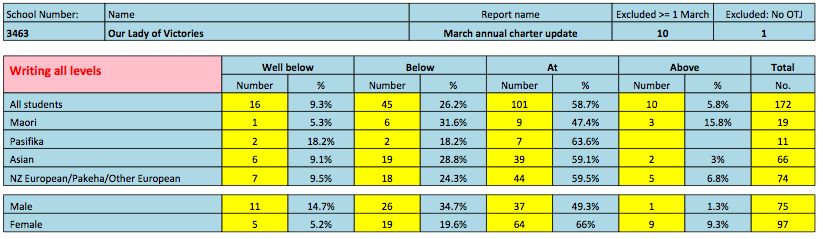
                                      Our Lady of Victories School 2017 -20
                                    Introductory Section - Strategic Intentions

       School Statement   We are a State Integrated decile 6 Catholic full-primary school situated in Sockburn, Christchurch.
                          We were opened in 1956 and were initially staffed by the Sisters of Mercy and became an integrated
                          State School in 1982.
                          We ended 2016 with a roll of 183 and have started 2016 with a roll of 178. We have a stable staff with
                          all teachers returning in 2017. Two of these are in fixed term positions that will become permanent in
                          2017. The acting DP was appointed permanently at the end of 2016 and the AP position is currently
                          being made permanent.
                          We provide a well-balanced curriculum designed to meet the spiritual, social, emotional, academic and
                          physical needs of our students.
                          The Catholic Character of our school ensures that the teachings of the Catholic Church are lived,
                          valued and respected. Our staff, students and parent community reflect these beliefs in their
                          relationships with others. We integrate a values programme to support the Catholic Character of our
                          school based on the values of the Mercy Sisters who founded the school.
                          Our school curriculum has a strong emphasis on pupils living our values and following our one school
                          rule; Respect God, others and the environment. We intend to review this as our professional
                          development focus for 2017.
                          Relationships with parents and the parish are valued and we promote this through involving parents in
                          liturgies, Masses, educational evenings and assemblies. We have an active Parent and Friends
                          Association in the school, and new parents are welcome in this group.
                          We were able to elect our own Board of Trustees in late 2016 after having a MOE appointed Board
                          since 2014.
                          We have a positive relationship with the Parish Priest and the parish community.
                          Teachers and students use the Teaching as Inquiry model to direct their planning, teaching, learning
                          and assessment.
                          All students will have the opportunity to reach their full potential through appropriate programmes, both
                          learning support and extension is provided. We increased our student leadership during 2016 by
                          selecting a Student Council and Head Students. We will further develop student opportunities for
                    leadership in 2017.
                    We implement restorative justice to manage student behaviour.

       Vision       We are a Catholic School that is Christ centred and lives Mercy Values. Our mission is to nurture faith,
                    to grow community and to achieve excellence.

       Values       We value our faith, learning and our community. This is demonstrated through the Mercy values of
                    Respect, Excellence, Service, Sustainability, and Social Justice.

       Principles   Christ Centred
                    The curriculum offered at OLV is a reflection of an inclusive Catholic view of the person and society. It
                    supports and enhances the faith life of students as a relationship with God the Father, through the Son
                    Jesus Christ, in the power of the Holy Spirit.

                    High Expectations
                    The Religious Education Curriculum, being the prime essential learning area of OLV Catholic
                    Curriculum, supports and empowers all students to learn and achieve personal excellence regardless
                    of their individual circumstances. It provides objectives and opportunities for children to experience,
                    learn and grow in faith and awareness of Catholic morality, taking into account their ability, background
                    and family situations.

                    Inclusion
                    OLV recognizes the growing diversity of cultures represented in its community. In particular we have a
                    growing Filipino community which currently is a little more than 30%.
                    OLV will ensure it provides fully inclusive education by developing confident children and confident
                    parents.
                    Confident children feel welcomed and supported by their school and the people in it. They are involved
                    in the life of the school and enjoy interacting with and learning alongside their peers. Confident
                    children learn and succeed because of the training and commitment of their teachers. They receive the
                    services and support they need because everyone expects they should. Confident parents are well
       informed about the education system, know it is fair and are sure about what they can expect from it.
       They know they are partners in their child’s education.

       They are an important member of the multi-agency team that supports their child at school and at
       home. We recognise the importance of reporting on their child’s progress in a way that they
       understand.
       Parents develop confidence in the system when it anticipates their child’s needs and is flexible in its
       approach.
        As a result of self-review and our growing diversity we have identified cultural inclusiveness as an area
       for development.

       Learning to Learn
       OLV seeks to make a difference. OLV Curriculum encourages all students to reflect on their own
       learning, progress and to learn how to learn in an inclusive environment. It establishes direction for
       teaching, learning and assessment to meet the needs of all students. Student agency is a key focus.
       Children must have an understanding of and ownership of their learning.
       It is open to signs of the time and reflective and fosters a quest for truth.

       Community Engagement
       OLV education in and for the community. OLV Curriculum has meaning for students that connects with
       their wider lives and engages the support of their family-whanau, parish and wider communities and
       encourages children to be committed to the truth of the Gospel, to share in it and to live the Gospel
       Values in their communities.

       Coherence
       The OLV Curriculum is cyclical in its framework, indicating specific areas to be covered in each area of
       schooling. It offers all students a broad education that makes links within and across learning areas,
       provides for coherent transition and opens up further pathways for learning.

       Future Focus
       The OLV Curriculum encourages all students to look at the future by exploring significant future focus
       issues. The curriculum develops the student’s awareness of social justice issues in light of the Catholic
       social teaching and promotes an attitude of respect and stewardship for the earth.
       Maori Dimensions     As New Zealand is a bi-cultural country bound by Treaty of Waitangi obligations, OLV will celebrate our
       and Cultural         cultural heritage by having procedures and practices that reflect New Zealand’s cultural diversity and
       Diversity            the unique position of Maori culture. In recognising the unique position of the Maori culture OLV will
                            take all reasonable steps to provide instruction in Tikanga Maori (Maori Culture) and Te Reo Maori.
                            (Maori Language)
                            Teaching staff will be encouraged and fully supported with professional development to extend their
                            current abilities in Te Reo. We will be active participants of the URLC Maori PD project.
                            The components of Tikanga Maori and Te Reo Maori will be integrated into all aspects of the school
                            curriculum, particularly our Religious Education Programme.
                            We will report to the BOT on Maori achievement.
                            The BOT and Principal will use a range of communication strategies to consult with the parents of the
                            students identified as Maori and achievement data of Maori students will be shared.
                            Our school’s cultural self-review will involve all stake holders: The BOT, teachers, students, Maori
                            parents, whanau and the wider community.

       Pasifika dimension   We believe Pasifika people have a particular set of demographics that distinguish them from other
                            ethnic groups in New Zealand and require a different approach for education policy and initiatives. In
                            primary education the focus is on increasing achievement in early literacy.
                            We will: Participate in the URC Pasifika PD.
                               • Extend the existing programmes if and as appropriate and provide in-school support and
                                   resources to further enhance inclusion of Pasifika within the child’s classroom.
                               • Provide opportunities for Pasifika students to communicate in a Pasifika language and also to
                                   learn more about their cultural identity and understandings.
                               • Involve Pasifika parents and caregivers in their child’s learning within the school. Invite students
                                   to allow their cultural backgrounds, where appropriate, to be a part of the classroom culture.
                               • Further enhance the home/school partnership to support the children’s learning.
       Special Needs        At Our Lady of Victories School we aim to recognise, respect and respond to the diverse needs of all
                            students and to align the teaching and learning experiences for all students with the New Zealand
                            Curriculum.
                            Learners with special education needs have the same rights, freedoms and responsibilities as people
                            of the same age who do not have special education needs.
                            The primary focus of special education is to meet the individual learning needs and developmental
                            needs of the learner.
                            Partnership between parents and education providers is essential in overcoming barriers to learning.
                            All special education resources are used in the most effective and efficient way possible, taking into
                            account parent choice and the needs of the learner.
                            A learner’s language and culture comprise a vital context for learning and development and must be
                            taken into consideration in planning programmes.
                            Learners with special education needs will have access to a seamless education from the time that
                            their needs are identified through to post-school options.
                            We will:
                            Ensure that effective and inclusive teaching practices are in place.
                            Ensure that resourcing is requested to support our student’s needs and that this is used to specifically
                            support these students in their learning.
                            Identify and provide possible adaptations to the curriculum and to the delivery of the programme.
                            Identify and provide additional or specialised equipment necessary.

       Catholic Character   OLV is committed to providing opportunities for learning, which are grounded in Gospel values, the
                            founding spirit of Catherine McAuley and the teachings of the Catholic Church, which affirm the dignity
                            and work of every human person. Mercy education is aimed at empowering students to achieve to
                            their full potential and in creating a more just and peaceful world. Mercy charism has a particular
                            concern for the poor, uneducated and disadvantaged in whatever cultural or social context it operates.
                                                       Baseline Data or School Context

       Student’s Learning   Programmes are designed to meet the needs of the students.
                            Pupils are encouraged to reflect on their learning and set goals to improve their own achievement.
                            Relevant assessment data is gathered and analysed.
                            The Special Needs programme is reviewed to ensure individual needs are met. Both learning support
                            and extension programmes are provided for students. All resourcing is used to benefit each students’
                            needs.
                            The National Standards will be used to report on student achievement and identify areas of need.
                            Professional development is focused on improving teaching and learning.
                            ELearning Strategic Plan will be implemented.
                            School wide professional development is aligned with the needs of the school, individuals and national
                            priorities.

       Student              Learning programmes are authentic and stimulating. This is evident through explicit and rigorous
       Engagement           planning and teaching. Student voice is used to capture this.
                            Teaching as Inquiry and the Inquiry process are used throughout the school.
                            ICT is incorporated as a learning tool.
                            ELearning Strategic Plan will be implemented.
                            The learning environment is attractive, stimulating and current.
                            Learning intentions are shared with the students.
                            Students know where they are currently at and what they need to do next. They will set achievable
                            learning goals and will be fully supported in achieving these.
                            Teachers will fully collaborate to ensure that all children are able to access the curriculum at their level
                            so that all can experience success.
       School             Behaviour expectations are clearly outlined and consistently applied within a restorative justice model.
       Organisation   and Staff are proactive in all situations, dealing with issues when and as they arise.
       Structures         Regular hazard management checks are carried out around the school.
                          A safe work environment is maintained and monitored.
                          Every effort is made to be a good employer as defined in the State Sector Act.
                          Recruitment procedures attract quality staff.
                          Staff are valued and supported with ongoing appraisal, training and development.
                          All regulatory and legislative requirements are complied with.
                          The resources of the school are well managed and support the strategic planning of the school.

       Review of Charter The BOT consulted all stake holders and from this the vision and strategic goals of OLV were
       and Consultation  collaboratively developed.
                         OLV will ensure effective communication with its community by maintaining and reviewing its
                         communication procedures and practices. These practices will include both formal and informal
                         opportunities and will cover all aspects of the school’s programmes.
                         Student achievement targets will be developed and shared with the community at the beginning of
                         each year. Results will be shared at parent meetings as well as through the school newsletters.
                         Pasifika and Maori community groups will be maintained and consulted with.
                                                         Strategic Section

                     Strategic Goals                                       Core Strategies for Achieving Goals
                                                                                       2017 – 2020

         Student’s       Each child reaches their full   Use the National Standards and standardised testing effectively to support
         Learning                 potential              improvement in student achievement. This will be closely monitored and
       NAG 1 & 2 & 3                                     reported to the BOT both mid and end of year particularly to identify areas
                                                         of need.
                                                         Programmes through pedagogy are designed to meet the individual needs
                                                         of the students. Teachers know students well and what is their next step.
                                                         Pupils are encouraged to reflect on their learning and set goals to improve
                                                         their own achievement.
                                                         Individual learning styles and cultural needs are identified and catered for.
                                                         Relevant assessment data is gathered and analysed.
                                                         The learning programme is reviewed to ensure that individual needs are
                                                         met.
                                                         A Special Needs Programme is in place.
                                                         Appraisal and professional development is focused on improving teaching
                                                         and learning.
                                                         School wide professional development is aligned with the needs of the
                                                         school, individuals and national priorities.
                                                         Home/school partnership is strong.
                                                         Parents are kept informed on student’s achievement, next learning steps
                                                         and how they can support learning at home.
                                                         Leadership opportunities will be provided for senior students.

          Catholic        Catholic/Mercy values          The Priest, Principal and DRS provide leadership and sound management
         Character      unite our school community.      in Religious Education.
       NAG 1 & 2 & 3                                    The Religious Education Programme is delivered using current pedagogy.
                                                        The school provides opportunities for regular RE professional
                                                        development and spiritual formation for staff.
                                                        School supports parents in their faith development.
                                                        RE assessment practices are reviewed and reported.
                                                        Staff work collaboratively for the good of their students and school
                                                        community.
                                                        School-wide behaviour programme is based on OLV’s Mercy values.
                                                        Mercy values to be visible throughout the school.

           Student      Each child reaches their full   Programmes are designed to meet the needs of students within current
       Engagement and            potential              pedagogy
          Transition                                    Pupils are encouraged to reflect on their learning and set goals to improve
        NAG 1 & 2 & 3                                   their own achievement.
                                                        Individual learning styles and cultural needs are identified and catered for.
                                                        Relevant assessment data is gathered and analysed to inform teaching
                                                        and learning.
                                                        The Special Needs programme is reviewed to ensure individual needs are
                                                        met and that resourcing is being fully utilised to meet the needs of these
                                                        students.
                                                        The National Standards will be used to report on student achievement and
                                                        identify areas of need.
                                                        Appraisal and Professional development is focused on improving teaching
                                                        and learning.
                                                        School wide professional development is aligned with the needs of the
                                                        individual, school and national priorities.
                                                        All teachers embrace and implement teaching as inquiry pedagogy.
                                                        Provide daily opportunities for student reflections on learning and teaching.
                                                        Use questioning strategies that make all students think and answer.
                                                        Ensure learners know why they are learning.
          School and       Each child reaches their full   Monitor the implementation of the Property Development Plan
          Finance &                 potential              Operate within annual grants through sound management of finances.
           Property                                        Implement 10 Year Property Plan.
            NAG 4                                          Continually upgrade and beautify environment.
                                                           Align fund-raising to strategic plan.

       Health and safety   Each child reaches their full   Maintain current safety audits and report monthly to BOT.
            NAG 5                   potential              Maintain regular hazard management checks.
                                                           Implement changes arising from safety audits.
                                                           Provide a safe work environment.
                                                           All regulatory and legislative requirements are complied with.

                                                           Staff to be proactive in all situations, dealing with issues when and as they
          Personnel         Each child reaches their       arise.
          NAG 3 & 5                 potential.             Make every effort to be a good employer as defined in the State Sector
                           Catholic/Mercy values unite     Act.
                             our school community          Ensure recruitment procedures attract quality staff.
                            Roll grows to sustainable      Ensure staff are valued and supported with ongoing appraisal, training and
                                     levels                development that promotes high level of performance.
                                                           Provide a safe work environment.
                                                           All regulatory and legislative requirements are complied with.
                                                           The resources of the school are well managed and support the strategic
                                                           planning of the school.
                                                           Complete EEO requirements annually.
       Community    Catholic/Mercy Values unite   Achieve Goals 1 and 2 and roll growth will occur.
       Engagement     our school community        Retain Year 7 students.
         NAG 2       Roll grows to sustainable    Ensure quality appointments and quality up to date staff.
                              levels              Continue to communicate progress with the BOT/Staff/Community
                                                  Website regularly maintained and first port for information. Maintain the
                                                  news section of the website, so that visitors gain a professional impression
                                                  of what we do. Classroom blogs on website.
                                                  Students engage with people outside the community in a variety of ways.
                                                  Strong relationships with local preschools to assist transition to school.
                                                  Comprehensive information offered to new entrant parents to ensure
                                                  smooth transition to school.
                                                  Ensure that all key marketing literature reinforces positive messages.
                                                  Ensure school newsletter/magazine provides a vehicle for promoting what
                                                  we do.
                                                  Actively cultivate links with key influencers in our community – newspaper,
                                                  editors/journalists, politicians, business figures, local dignitaries.
                                  Annual School Improvement Plan – SUMMARY

                  Domain                  Strategic Goal                                      Target
                                                                                            Short Report

              Students Learning     Each child reaches their full   Increase student achievement in all areas.
                                             potential              Review of School Curriculum and it’s delivery to be the focus
                                                                    for PD.
                                                                    Ensure all teachers understand and implement teaching as
                                                                    inquiry.
                                                                    The child is the focus of all planning, resourcing and delivery.
                                                                    They know where they are at currently and what they need to
                                                                    do next. They are fully involved in their learning.
                                                                    Individual learning styles and cultural needs are identified and
                                                                    met.
                                                                    Implement the outcomes of teaching as inquiry.
                                                                    Ensure professional discussions of assessment data to
                                                                    provide focus for future learning and resource accordingly.
                                                                    Consistency of assessment, planning, delivery and reporting
                                                                    is evident throughout the school.
                                                                    Parents are reported to in clear language on their child’s
                                                                    achievements, next learning steps and how they can help at
                                                                    home.
                                                                    Resourcing is a reflection of identified needs.
                                                                    Appraisal and Professional development is focussed on
                                                                    school and individual goals.
                                                                    Implementation of e-learning strategic plan
       Community Engagement   Roll grows to sustainable   An agreed vision of a preferred future.
                                       levels.            Success in Strategic goals 1 & 2.
                                                          Retain Year 7 students through high quality curriculum
                                                          delivery, communication/reporting to parents along with
                                                          opportunities and activities that challenge, engage and meet
                                                          the needs of these students. (Particular focus on boys)
                                                          Communicate regularly and effectively about school activities
                                                          and programmes.
                                                          Celebrate and inform about our successes.
                                                          Update and utilise school web site. All classes to have blogs.
                                                          School to be active in the parish.
                                                          Extend communication with Early Learning Centres.
                                                          Ensure we have a high quality professional staff who ensure
                                                          that the child is the centre of learning and that parents are
                                                          fully involved as partners.
                                                          Attract high quality new employees as required.
                                                          Utilise the talents and attitudes of the students to market the
                                                          school to the wider community.
                                                          Ensure that the students/staff and wider school community
                                                          give positive messages through their attitudes and
                                                          behaviours.
                                                          Implementation of e learning strategic plan.
                                         Numeracy Improvement Plan 2017- Domain: Learning
       Strategic Goals
       Enhancing student achievement in all areas so each child reaches their full potential.

       Annual Goal                                                      Annual Target
       To increase the number of students achieving at or above the     To increase the % of Pasifika to at and above the national
       National Standards in Mathematics and Statistics.                standard to 45%.
                                                                        To increase the % of Year 4 students working at the National
                                                                        Standard to 70%.
                                                                        To increase the % of Year 8 students working at or above the
                                                                        National Standards to 60%.
       Baseline data
       Analysis of school wide Mathematics data for the 2016 school year has indicated that 71% of all students are working at or
       above the National Standard in Mathematics.
       53% of Year 3 students are working at or above the National Standard in Mathematics.
       85% of Year 4 are working at or above the National Standard in Mathematics. This is an 18% increase from previous year.
       70% of Year 6 students are working at or above the National Standard in Mathematics.
       44%of Year 7 students are working at or above the National Standard in Mathematics.
       69% for Year 8 students are working at or above the National Standards in Mathematics. This is a 5% increase from the
       previous year.
       84% of Maori students are working at or above the National Standard in Mathematics. This is a 9% increase from the previous
       year.
       27% of Pasifika are working above the National Standard in Mathematics.
       3 students have moved from well below to below the national standards in Mathematics.
       Key Improvement Strategies
       What do we have to learn? What will we do? When? Who is responsible for ensuring this is done?
       When           What (examples) Consider goal clarity and                  Who            Indicators of Progress
                      communication; strategic resourcing; PLD; routines                        What will we see?
                      that need changing; assessment practices
                      Review 2016 end of year data for target groups and
       Term 1         identify priorities.                                       Lead           Baseline data analysed, target
                                                                                 Teachers       students identified.
                  School wide expectations will be continued around the   Lead
                  teaching of Mathematics. This will be monitored at      Teachers
                  team meetings and during observations of numeracy.

                  Plan programmes of work catering for needs that have    Lead teachers   Consistency in planning and
                  been identified, ensuring coverage across the 3         Teachers        practice across teams/school
                  domains.
                                                                                          Target students identified evidence
                  COL learning goals in numeracy focuses on Pasifikia                     of this in teaching.
                  students achievement. Staff will participate in
                  professional learning to assist here.

                                                                          Teachers        High quality planning
                  Numeracy will be taught in prime teaching slots for                     Differentiated teaching and learning
                  1hour a day 5 days a week.                                              Evidence in planning/e learning
                                                                                          evident
                  Frequent assessment. Both formative (ongoing) and                       Student and teacher modelling
                  (once a term) summative as per schedule                                 books

                                                                          Lead teachers
                  Frequent observations of teaching (at least once per                    Accurate assessment
                                                                          Teachers
                  term by Lead Teachers).

                  Planning and assessment moderating across the                           Students talking about mathematics
                                                                          Teachers
                  school by team leaders.                                                 Students engaged
       Term 2/3   Using a variety of assessment tools and methods to                      Rich tasks evident
                  assess the progress and moderate at both team and                       Student voice
                  staff meetings.

                                                                                          Teachers talking about effective
                                                                          Teachers        mathematics practices.
                  Staff meetings, observations, modelling, team
                  teaching.
                                                                                          Teachers using the Numeracy
                                                                          Lead teachers
                                                                                          Framework well.
                         Review 2016 end of year data for target groups and
              Term 1     identify priorities.                                    Lead            Baseline data analysed, target
                                                                                 Teachers        students identified.

                         School wide expectations will be continued around the   Lead
                         teaching of Mathematics. This will be monitored at      Teachers
                         team meetings and during observations of numeracy.

                         Plan programmes of work catering for needs that have    Lead teachers   Consistency in planning and
                         been identified, ensuring coverage across the 3         Teachers        practice across teams/school
                         domains.
                                                                                                 Target students identified evidence
                         COL learning goals in numeracy focuses on Pasifikia                     of this in teaching.
                         students achievement. Staff will participate in
                         professional learning to assist here.

                                                                                 Teachers        High quality planning
                         Numeracy will be taught in prime teaching slots for                     Differentiated teaching and learning
                         1hour a day 5 days a week.                                              Evidence in planning/e learning
                                                                                                 evident
                         Frequent assessment. Both formative (ongoing) and                       Student and teacher modelling
                         (once a term) summative as per schedule                                 books


                                                                        Lead teachers

                Frequent observations of teaching (at least once per                    Accurate assessment
                                                                                 Teachers

                term by Lead Teachers).


                         Planning and assessment moderating across the                           Students talking about mathematics
                                                                                 Teachers
                         school by team leaders.                                                 Students engaged
              Term 2/3   Using a variety of assessment tools and methods to                      Rich tasks evident
                         assess the progress and moderate at both team and                       Student voice
                         staff meetings.

                                                                                                 Teachers talking about effective
                                                                                 Teachers        mathematics practices.
                         Staff meetings, observations, modelling, team
                         teaching.
                                                                                                 Teachers using the Numeracy
                                                                                 Lead teachers
                                                                                                 Framework well.
                         Inform parents of progress, working with parents to     Teachers
                        Literacy – Reading 2017 - Improvement Plan - Domain: Learning
       Analysis of variance   reporting
Strategic Goals
Enhancing student achievement in all areas so each child reaches their full potential.
       Analysis of variance reporting
Annual Goal                                                        Annual Target
To increase the number of students achieving above the             To increase the percentage of all students working at the
National Standards in Reading.                                     National Standard to 90%.
                                                                   To increase the percentage of Year 8 students working at or
                                                                   above the National Standard to 85%.
                                                                   To increase the percentage of males reading at or above the
                                                                   National Standard to 85%.

Baseline data
Analysis of school wide Reading data for the 2016 school year has indicated that 84% of all students are working at or above the
National Standard in Reading.
82% of Pasifika students are working at or above the National Standard in Reading
90% of Maori students are working at or above the National Standard in Reading.

Key Improvement Strategies
What do we have to learn? What will we do? When? Who is responsible for ensuring this is done?
When             What (examples) Consider goal clarity and                   Who            Indicators of Progress
                 communication; strategic resourcing; PLD; routines that                    What will we see?
                 need changing; assessment practices
Term 1           Review the assessment data and determine target             Principal      Baseline data analysed, target
                 students at the national standard for reading.              Team leaders   students identified.

Term 1           Plan appropriate programmes to best meet the needs of       Teachers       High quality planning.
                 these students.                                             Team Leaders   E learning evident in both planning
                                                                                            and teaching.
                  Differentiated learning needs to be implement and evident Teachers      Explicit teaching of identified
                  in weekly and group planning.                                           strategies to enhance learning.
                                                                                          Evidence of student’s work.
       Ongoing    Cater for the learning needs of these students in the                   Students engaged.
                  classroom programme.                                     Teachers       Elearning evident to classroom
                                                                                          progamme.
                  Running records, work samples, formative assessment                     Students talking about their learning
                  data.                                                                   practices. Student voice.
                  Frequent assessment as per Assessment and Reporting                     Accurate assessment as per school
                  Schedule.                                                               wide literacy requirements.
                  Introduce e-AsTTLE – twice a year – Year 7 & 8.          Teachers

                  Frequent observations of teaching.

                  Monitor the progress of target students.

       Term 2     Collect interim results and analyses.                    Team Leaders   Reports to the BOT
       Mid Year   Ongoing formative and summative assessment collected.

                  Review progress at weekly team meetings.

                  Inform parents of progress, working with parents to
                  support the student’s learning.

                  e-asTTle, running records, ARBs, samples of work for
                  OTJ
                                                                           Team Leaders   Student voice.
       Term 4     Analyse end of year data to inform progress and plan     Principal
                  next steps.                                              Teachers
                  Report to the Board of Trustees on Progress.
       Monitoring How are we going – check student outcomes every term?
       Where are the gaps? What needs to change if this is not working?
       Ongoing evaluation and monitoring of focus groups at team level.
       Resourcing How much money and time is needed? Who will help us?
       Funding for resources.
Literacy – Writing 2017 - Improvement Plan - Domain: Learning
              Strategic Goals
              Enhancing student achievement in all areas so each child reaches their full potential.
              Annual Goal                                                          Annual Target
              To increase the number of students achieving at or above the         To increase the % of students working at or above the National
              National Standards in Writing                                        Standard in Writing to 75%.
                                                                                   To increase the % of males working at or above the National
                                                                                   Standard in Writing 70%.
                                                                                   To increase the % of students working at or above the National
                                                                                   Standard in Year 4 to 60%.
                                                                                   To increase the % of students working at or above the National
                                                                                   Standard in Year 5 to 70%.
                                                                                   To increase the % of Year 3 students working at or above the
                                                                                   National Standard to 70%.
                                                                                   To increase the % of Year 8 students working at or above the
                                                                                   National Standard in Writing to 70%.
              Baseline data
              65% of students are working at or above the National Standard in Writing.
              64% of Pasifika students are working at the National Standard in Writing. This is a 4% increase from the previous year.
              63% of Maori students are working at the National Standard in Writing.
              51% of males are working at or above the National Standard in Writing.
              Key Improvement Strategies
              What do we have to learn? What will we do? When? Who is responsible for ensuring this is done?
              When           What (examples) Consider goal clarity and                       Who            Indicators of Progress
                             communication; strategic resourcing; PLD; routines that                        What will we see?
                             need changing; assessment practices
              Term 1         Review 2016 End of year data for target group students          Teachers       Consistency in Literacy Pedagogy,
                             and identify priorities. These will be identified on teachers   Team Leaders   practice and programmes across the
                             Class Profiles.                                                                school.
                                                                                                            High quality planning.
              Term1          Plan programmes of work catering for needs that have                           Target groups.
                             been identified.                                                               Student and teacher modelling books.
                                                                                    Evidence of students work.
                        COL learning goals in writing focuses on boys. Staff will   Student engagement.
              Ongoing   participate in professional learning to assist here.        E-learning evident in classroom
                                                                                    progamme.
                        Differentiated learning needs to be implement and evident   Students talking about writing.
                        in weekly and group planning.                               Teachers talking about effective
                                                                                    literacy practices.
                        Cater for the learning needs of these students in the       Accurate assessment.
                        classroom programme.                                        Teachers moderating well.
                                                                                    Using e-asTTle (Y0-8) consistently.
                        Frequent observations of teaching.                          Student voice.
                                                                                    Regular reports to the BOT
                        Moderate both at team level and school wide once per        Moderating across the school.
                        term using e-assTTle.                                       Progress.

                        Monitor the progress of target students.

                        Collect interim results and analyse.

                        Ongoing formative and summative assessment collected.
              Term 2
                        Review progress at weekly team meetings.

                        Inform parents of progress, working with parents to
                        support the student’s learning.

                        Analyse mid of year data to inform progress and plan next
                        steps.
                        Report to the Board of Trustees on Progress.
                        Share data and expectations with staff.
                        Include discussion of data at team and staff meetings.
              Term 1    Review 2016 End of year data for target group students          Teachers       Consistency in Literacy Pedagogy,
                        and identify priorities. These will be identified on teachers   Team Leaders   practice and programmes across the
                        Class Profiles.                                                                school.
                                                                                                       High quality planning.
              Term1     Plan programmes of work catering for needs that have                           Target groups.
                        been identified.                                                               Student and teacher modelling books.
                                                                                                       Evidence of students work.
                        COL learning goals in writing focuses on boys. Staff will                      Student engagement.
              Ongoing   participate in professional learning to assist here.
                                                                                                       E-learning evident in classroom
                                                                                                       progamme.
                        Differentiated learning needs to be implement and evident                      Students talking about writing.
                        in weekly and group planning.
                                                                                                       Teachers talking about effective
                                                                                                       literacy practices.
                        Cater for the learning needs of these students in the                          Accurate assessment.
                        classroom programme.                                                           Teachers moderating well.
                                                                                                       Using e-asTTle (Y0-8) consistently.
                        Frequent observations of teaching.                                             Student voice.
                                                                                                       Regular reports to the BOT
                        Moderate both at team level and school wide once per                           Moderating across the school.
                        term using e-assTTle.
                                                                                                       Progress.

                        Monitor the progress of target students.

                        Collect interim results and analyse.

              Term 2    Ongoing formative and summative assessment collected.

                        Review progress at weekly team meetings.

                        Inform parents of progress, working with parents to
                        support the student’s learning.

                        Analyse mid of year data to inform progress and plan next
                        steps.
                        Report to the Board of Trustees on Progress.
              Analysis of variance reportingOur Lady of Victories School
                                                                     CURRICULUM ACTION PLAN 2017
             Objective    Current Position                       Targets                                                 Action                         End of Year                          Report
             Analysis of Carried
Religious Education      varianceout Review of reporting
                                               Catholic Consider suggestions of Catholic                      Carry out suggestions of Catholic    Report outcomes of reviews.         BOT December
! That the school helps to         Community Dimension.                  Community Review.                    Community Review.                    Make changes to any systems and     Diocese December
    fulfill the teaching mission   DRS has been in role for a year.      For DRS to prepare and deliver on    DRS to implement new systems as      procedures related to Catholic
    of the Church by living and    School has positive relationship      Action Plan related to role.         recommended or required.             Community and Pastoral Care
    teaching the values of         with parish team and parish           To maintain working relationship      Maintain positive communication     DRS to be proactive and confident
    Jesus Christ.                  community.                            and routines with Father Michael/    and relationship with Father         in role.
                                   Children are actively involved in     parish.                              Michael along with parish
                                   the Mass.                             Actively promote school and          community.
                                   Parts of Religious Education being    student involvement in the parish.   Ensure school and students are
                                   included in Inquiry.                  Review Pastoral Care Dimension.      involved in parish life.
                                   School attends Mass fortnightly       Teachers to study for RE 102         Carry out Pastoral Care Review led
                                   and Sunday Mass once a term.          qualification.                       by Principal/DRS.
                                   Most teachers gained qualification    Set annual Prayer and Religious      Carry out school wide review to
                                   in RE 101.                            Education targets.                   set annual targets in Prayer and
                                                                         Develop Annual Action Plan.          Religious Education.
                                                                                                              Compile and complete Annual
                                                                                                              Action Plan.

    Curriculum                     Curriculum document in place.         Update curriculum document and       To implement changes decided on       Curriculum updated and             BOT December.
    •   To review and              Mission and values agreed to.         format for learning areas review     as part of the contract to enhance    delivered in a high quality
        further develop the        Five Core Beliefs and actions         as part of MOE Contract.             teacher practice and student          fashion.
        OLV Curriculum.            agreed to.                            To ensure a focus on NZC             learning.
                                   Inquiry model in place.               Principles, Key Competencies and
                                   Teaching as inquiry pedagogy          teaching as inquiry to ensure high
                                   understood.                           quality curriculum delivery to
                                                                         enhance student learning.

    Assessment                     Have assessment policies and          To ensure we are implementing        Utilise agreed resources and          Self-Review undertaken by staff    BOT December
    ! To ensure our                procedures in place.                  our assessment policy and            assessment tools to focus learning    led by leadership team.
        assessment systems                                               procedures so as to improve          as per policy and procedures.
        and procedures are         eTap now used for assessment.         student achievement and learning     Ensure that these are used to
        imbedded so as to          This includes report format and       through focused assessment           assist to make OTJs for National
        improve student            National Standards reporting.                                              Standards.
        learning and                                                     To utilize eTap for reporting.
        achievement.               Teachers understand that                                                   To source advice on how to utilize
                                   assessment provides the               Continue to enhance teacher          eTap for planning and reporting.
                                   information for the next learning     assessment and knowledge
                                   step.                                 practice.                            Be clear on how to/ what to
                                                                                                               assess and analyze data. So
                                   Class Profiles give a clear picture   Develop coherence between             what? Move from individual/class
                                   of current position, needs and        assessment processes, practices       to whole groups/school to give
                                next step learning.                      and systems so that they promote       overall data for analysis.
                                                                         better learning.
                                Three way Learning Plan                                                        Continue development of evidence
                                Conferences are student led and          To review and further develop our     based learning for sustained
                                held twice yearly.                       OTJ practices to ensure accurate      improvement.
                                                                         judgments are made.
                                Report against nationally norm                                                 Report to parents so they clearly
                                tests.                                                                         know where their children are
                                                                                                               achieving against expectations.
                                OTJ’s practices in place for
                                National Standards.

Mathematics and Statistics
    •  To practice and          Variety of assessment tools are          Data to be collected and analyzed     Conduct modeling, observations,      Mathematics targets reported on.   BOT December
       embed systems and        utilized to gather data.                 to focus future teaching and          moderation and feedback sessions     Class Profiles reflect programme
       procedures in order                                               identify target groups.               to further develop teacher           needs.
       to shift teacher         School wide targets are                                                        practice.
       practice and improve     established to meet needs                Plan collaboratively for
       student                  indicated by these assessments           mathematics.                          Ensure all staff understand links    Mathematics and statistics
       achievement.             and to meet National Standards                                                 between NZ Curriculum, National      programmes altered as
                                requirements.                            Maintain ongoing assessment to        Standards and Mathematics and        necessary.
                                                                         determine next learning steps.        Statistics.
                                                                         Develop consistency in OTJs.
                                                                                                               Ensure all staff are understanding
                                                                                                               correct planning and assessment
                                                                                                               procedures in mathematics and
                                                                                                               statistics.

Literacy
                                Staff work effectively to gather         Whole staff collaborate together in   Steps to achieve this:               Improved teacher practice in all   BOT December
To develop and implement        data in order to identify needs for      professional learning sessions in     -unpack “The Literacy Learning       areas of literacy.
school wide systems and         all students in literacy.                order to develop a consistent         Progressions” and the Literacy
procedures in all areas of                                               approach to Reading and Writing       National Standards                   Collaborative practices in
literacy to ensure reflective   READING:                                 across the levels incorporating -                                          planning and assessment, data
teacher practice resulting in   84% of students achieving at or          improved teacher practice –           -review the OLV English              analysis and moderation well
improved student                above the National Standard in           planning, data gathering and          curriculum document with             established.
achievement.                    Reading.                                 analysis, teaching towards needs.     reference to the above
                                                                                                                                                    School wide systems established
                                WRITING:                                 Increased student motivation to       -review and implement                and utilized.
                                65% of students achieving at or          read and write                        collaborative planning practices
                                above the National Standard in                                                                                      Literacy targets developed,
                                Writing.                                 Maintenance of ongoing                maintain on going assessment         implemented and reported on.
                                                                         assessment to determine next          and moderation practices to
                                49% of boys are below National           learning steps to ensure              ensure consistent OTJs               Quality and consistent OTJs
                                Standard in Writing.                     consistent OTJs                                                            made.
                                                                                                               research, trial and evaluate
                                                                         Use of appropriate and                appropriate ICT and Web tools,       Use of appropriate and
                                                                         meaningful ICT and Web tools to       apps, hardware and software          meaningful ICT and Web tools is
                                                                         enhance student progress and          which could enhance literacy         in common practice across the
                                                                         interest.                             learning across the levels           school.

           29
Maori
                                                                                       Utilise Ka Hikitia and Tataiako          1. Organise hui with whanau.         Te reo and tikanga Maori             BOT December
       !            To provide              Kapa haka across the school.               (cultural competencies for                                                    programme completed and trialed
                    opportunities and                                                  teachers of Maori learners) to           2. Staff to work together as a       with sections evaluated for
                    experiences in Taha     Te Reo plan is included in                 enhance success of Maori as              team to explore and utilise          success.
                    Maori, from which       Curriculum Document.                       Maori.                                   Tataiako and Ka Hikitia.
                    children will gain an                                                                                                                            Staff have better understanding of
                    intrinsic               Part of URLC Maori PD                      Involvement in URLC PD.                  Contact other schools to find        success of Maori as Maori.
                    understanding about                                                                                         examples of progressions in te reo
                    the bicultural nature                                              School whanau engagement with            and tikanga Maori across all         Whanau community respond re
                    of Aotearoa.                                                       hui and consultations through the        levels.                              consultation and engagement.
                                                                                       year.
                                                                                                                                Curriculum leaders with local iwi,   Students have increased
                                                                                       Review progressions of school            our school whanau community,         knowledge through marae
                                                                                       wide te Reo and Tikanga Maori            kapa haka tutors and TRM (Maori      experience.
                                                                                       programme, aligned with                  Resource Teacher) as required,
                                                                                       resources in the school.                 will support staff to implement
                                                                                                                                regular te reo Maori sessions in
                                                                                       Implement a marae experience             class.
                                                                                       programme.
                                                                                                                                Undertake marae visit.
                                                                                       Ensure implementation of Te Reo
                                                                                       Plan.                                     Key resources to be used by staff
                                                                                                                                are :
                                                                                                                                Toku Reo
                                                                                                                                http://www.tokureo.maori.nz/inde
                                                                                                                                x.cfm/1,186,0,43,html
                                                                                                                                Ka Mau Te Wehi

                                                                                                                                http://www.tki.org.nz/r/language/
                                                                                                                                lls/wehi/index_e.html

ICT                                         ICT is integrated into teaching            To expand utilization of ICT in          To fully utilize ICT as a tool for   Review eLearningf Strategic Plan     BOT December
                                            and learning at all levels in the          teaching and learning to ensure          teaching and learning                and resources.
eLearning                                   school.                                    that it is a fully functional tool for   programmes. Provide PD for all
                                                                                       learning.                                staff to ensure this happens.

                                                                                       Update eLearning Strategic Plan          Upgrade eLearning strategic Plan.

                                                                                                                                To develop policies and
                                                                                                                                procedures for Bring Your Own
                                                                                                                                Device (BYOD).

             30
                                                       Resourcing Action Plan 2017
                                       What                            Who               When                   Resources         Completion

         School Maintenance – as per 10 Year Plan                 To be advised.     October                       $10000.00      November

         Purchase library books                                   Teacher/Libraria   Throughout year                              End 2017
                                                                  n                                     $2000.00
         To provide adequate ICTs                                 I.C.T. Leader      February -         I.C.T. Budget             December
         • Training for staff                                     Principal          December                  $21,000.00
         • Enhance Website
         • Fully utilise S.M.S.
         • Purchase and maintain hardware                                            March                                        April
         • Employ firm/person to carry out technical repairs                                            Capital Expenditure
         • iPads/Chrome Books                                                                           $15,000.00
         • Purchase Chrome Cast and large TVs.                                                          By way of grants.

         Continue Grounds Development                             Parents            February -                                   End 2017
         • Prune trees/shrubs – landscaping                       Students           December           $1500.00
         • Carry out project developed by children                Caretaker                             Volunteer labour
         • Maintain Student involvement

         Meet Treaty of Waitangi Obligations                      Prin/Teacher       At Learning Plan   Maori Budget              End 2017
                                                                  with               Conferences in     $3500.00
         •           Maintain consultation with Maori Community   responsibility for March/June
                                                                  Maori with
                                                                  support from
                                                                  advisors.

         Resource Staff Development as per Curriculum             Principal          February -         Staff Training and Dev.   End 2017
         Plan, Appraisal and teaching as inquiry.                                    December           $10,000.00
                                                                                                        Plus relief teaching

       31
32
You can also read


