Labour's Fiscal Plan POST PREFU REVISION - Interest.co.nz
←
→
Page content transcription
If your browser does not render page correctly, please read the page content below
labour.org.nz

  Labour's
Fiscal Plan
    POST PREFU REVISION

1
2
Contents

  4    Jacinda Ardern MP, Leader of the Opposition

  5    Grant Robertson MP, Finance Spokesperson

  6    BERL examination and analysis

  7    Major first term outputs and goals

  9    Budget Responsibility Rules

  14   Labour's new investments

                              3
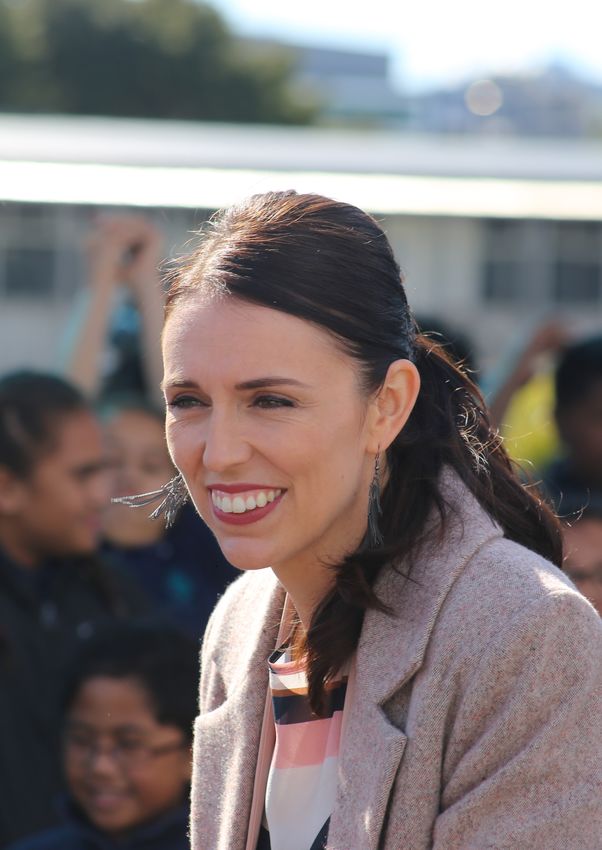
Jacinda Ardern MP
Leader of the Opposition
When it comes to the debate around the                        Fiscal Plan. Taken together, they are the foundation
Government’s accounts, you will find language                 on which we have built our wider programme of
like responsible, prudent and stable being used               investment. They highlight our belief in the fact that
interchangeably by political parties. Labour is               ‘shared prosperity’ can only be delivered alongside
committed to these principles, and to building                sound fiscal management.
a strong economy. We are committed to lifting
our productivity and wages, through investing in              This Fiscal Plan sets out Labour's vision for an
skills, research and development, innovation and              alternative government that will deliver the kinds of
opportunities in our regions.                                 positive change that New Zealanders can really feel.
                                                              By choosing to reject tax cuts, Labour can deliver
But building a strong economy is not enough to                $8bn more for health, $6bn more for education,
declare success. Success for Labour means ‘shared             and $5bn more for our most vulnerable families.
prosperity’. Success in our economy will only feel            Delivering our Budget Responsibility Rules means
real when all New Zealanders benefit from the                 we can reduce the housing and infrastructure
wealth that growth in the economy provides. It's              deficits that have developed over the past nine
why we will target child poverty – measuring our              years. By choosing to invest in New Zealanders and
economic success against reducing its incidence               the regions of New Zealand we can deliver a more
in New Zealand. It’s why we don’t accept that                 prosperous, productive, and positive future.
having 70,000 young people without employment,
education or training is normal or acceptable. It’s why       Let’s do this.
we won’t rest while 40,000 people are homeless
and children are doing their homework by torchlight
in the back of a car. It’s why we need to be an active
partner for growth in all regions of New Zealand –
ensuring that jobs and career opportunities exist
right across the country.

I believe that when we hold ourselves to account,
you can hold us to account. That is why we have
worked so hard to establish our two key fiscal policy
tools — the Budget Responsibility Rules, and this

    Success in our economy will only feel real when all New
    Zealanders benefit from the wealth that growth in the
    economy provides.

                                                          4
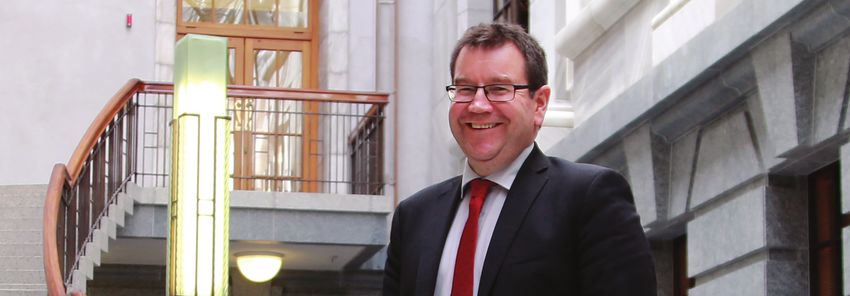
Grant Robertson MP
Labour Finance Spokesperson
Our Fiscal Plan shows New Zealanders that we will          Meeting our target under the Budget Responsibility
make the investments required to re-build our core         Rules to ensure government spending as a ratio to
public services, reduce inequality and poverty and         GDP is around 30% will reverse the declining trend
invest for the long term benefit of New Zealand, while     under National. It will mean that the health system, the
also responsibly managing our country’s finances.          education system, and the Police have the resources
The last nine years have seen a systematic under-          they need to do the jobs that New Zealanders expect
funding of core public and social services by the          of them.
National government. We need a fresh approach to           Our Budget Responsibility Rules also require that we
put people first. The Fiscal Plan confirms that we have    have a progressive, fair and balanced tax system. We
rejected National’s Budget tax cuts. This is the right     will establish a tax working group in government with
thing to do. Now is the time to give more support to       a mandate to get a better balance between how we
families, build houses and fund health and                 tax assets, wealth, income and consumption. In the
education properly.                                        meantime we are proposing changes that move in that
At the same time, we will restart contributions to the     direction. We will also stop multinational corporations
New Zealand Superannuation Fund. The National              from free-loading on New Zealand — taking the
Government has not put a single cent into the Fund         benefits of the physical and legal infrastructure as
since 2009. By saving now, we spread the cost of           well as our education and health systems without
the ageing population out over decades, rather than        appropriately contributing to the taxes that pay
leaving it to future taxpayers.                            for them.
Restarting contributions to the Super Fund is in keeping   In government we will ensure that the Budgets we
with our Budget Responsibility Rules. These five rules,    produce are not just narrow fiscal documents. We will
jointly announced in March with the Green Party, create    measure our success in how we improve the well-being
the fiscal framework within which we have made             of all New Zealanders, how we are reducing child
spending and revenue decisions. They ensure that           poverty and improving sustainability. We will always
a future Labour-led government will continue to post       remember that our fiscal plan is merely the means to
surpluses, allowing us to pay down the record debt         the end of supporting New Zealanders to have lives of
built up by the current Government.                        dignity, security and hope.
Labour is determined to build durable public services,
and that means ensuring that the Government’s
fiscal position is robust and able to withstand future
economic shocks.

Our fiscal plan is merely the means to the end of supporting New
Zealanders to have lives of dignity, security and hope.

                                                     5
BERL examination and analysis
BERL have examined, reviewed, and checked a Incorporated into the figures for the 5 fiscal years
range of calculations provided by the Labour Party (2017/18, 2018/19, 2019/20, 2020/21, and 2021/22)
concerning their policy plans. are
These costings have now been benchmarked • allowances for new operating spending of $0.9
against the August 2017 Pre-election Economic and billion, $0.8 billion, $0.9 billion, $1.5 billion, and
Fiscal Update (PREFU) and associated Fiscal Strategy $3.4 billion
Model (FSM) to determine the overall impact on the
• allowances for new capital spending of $0.3
Government’s fiscal situation.
billion, $1.4 billion, $2.2 billion, $2.6 billion, and
Particular attention has been paid to whether the $3.6 billion.
plans are consistent with the Budget Responsibility
Finance costs have been adjusted to account for
Rules (BRR) published by the Labour Party and the
the different debt tracks. The implied interest rate
Green Party; namely
on Government gross debt – as per the FSM – were
• Operating Balance before Gains and Losses assumed to apply to the different debt tracks.
(OBEGAL) in surplus across an economic cycle
In addition, as noted above, we have not changed
• net core Crown debt reduced to 20% of GDP the economic growth parameters assumed in the
within 5 years PREFU.
• core Crown spending is managed around a trend
of 30% of GDP.
Earlier analyses comparing the Labour Party plans to
the May Budget Economic and Fiscal Update (BEFU)
have been updated. We note that the differences
between the BEFU and PREFU accounts were not
large. In particular, operating spending allowances
in the PREFU over the 4 years 2017/18 to 2020/21 Findings
totalled $470m more than in the BEFU; while the
capital spending allowances totalled $398m less We find that the Labour Party policy plans and
than in the BEFU. costings are consistent with their stated Budget
Responsibility Rules and, in particular
Incorporating the policy plans listed in this document
– including additional and refined plans provided • The OBEGAL remains in surplus throughout
by the Labour Party since the PREFU release – and the period to 2022
assuming the economic parameters incorporated • Net Core Crown debt is reduced to 20% of
in the August 2017 PREFU (and its associated FSM), GDP by June 2022
results in the outcomes for these fiscal indicators as
illustrated below. Summary and detailed tables are • Core Crown expenses remain comfortably
provided in the body of this report. under 30% throughout the period to 2022.
"We find that the Labour Party policy plans and
costings are consistent with the stated Budget
Responsibility Rules" - BERL
66Major first term outputs and goals
In its first term, Labour will introduce policies These policies will see thousands more homes being
to make New Zealand an even better place built while removing speculative demand from the
market. Kiwi families will have a fair go at buying a place
to live… of their own. By the end of our first term, we expect
to see more families owning their own home and a
Labour’s plan will invest in making New Zealand a better significant reduction in homelessness, on the path to
place to live, work, visit, and do business. Our policies our target of making sure every Kiwi has a warm, dry,
will see major investments in housing, health, education, safe place to live.
police, and infrastructure, while creating more jobs and
lifting the incomes of families. These investments will be … addressing chronic underfunding of
made while running surpluses and paying down debt. health, education, and police…
… by tackling the housing crisis and restoring In the first term, the Labour Government will:
the Kiwi Dream of homeownership... • Reverse National’s health cuts and begin the
process of making up for the years of underfunding
In the first term, the Labour Government will: that have occurred. This extra funding will allow us
to invest in mental health services, reduce the cost
• Ease the housing shortage by building affordable of going to the doctor, carry out more operations,
homes and selling them at cost to first home provide the latest medicines, invest in Māori health
buyers, building state houses, and implementing initiatives including supporting Whānau Ora, and
modern rules around urban limits and density start the rebuild of Dunedin Hospital. By the end of
controls the four year forecast period, Labour will invest $8
• Crack down on speculators by banning overseas billion more in health than was proposed in PREFU
speculators from buying existing houses and 2017
tightening the tax rules speculators exploit • Work towards the goal of free education by making
• Increase our building capacity by investing in our tertiary education more affordable and tackling
young people, encouraging them into building school donations. We will fund schools and early
trades, and investing in modern manufacturing childhood education centres properly, so they can
techniques deliver world class education to our children. We
will introduce a School Leavers’ Toolkit to equip
• Improve the quality of housing by requiring all young people for adult life. By the end of the four
rentals to be fit to live in, and invest in insulation and year forecast period Labour will invest $6 billion
heating grants paid for by closing the speculators’ more in education than was proposed in PREFU
tax loophole 2017
• Increase Māori homeownership by establishing • Support Māori educational achievement through
a Māori Housing unit, reforming the Kāinga dedicated professional development programmes,
Whenua and Welcome Home Loans schemes, and and increased support for Te Reo Māori including
partnering with hapū, iwi and Māori organisations to dedicated scholarships to increase the number of
develop affordable and social housing. Te Reo Māori teachers
By the end of our first term, we expect to see more families owning
their own home and a significant reduction in homelessness.
7Major first term outputs and goals
Major first term outputs and goals
• Increase funding to Police to recruit 1,000 additional By the end of our first term, we expect to see
officers to make our communities safer. unemployment in New Zealand among the lowest in the
OECD, from the current position of 13th. The New Zealand
These policies will mean our public services are able to Superannuation Fund will be growing rapidly again and
give us the service we need, when we need it. By the end worth around $63 billion. The infrastructure projects to
of our first term, we will have more doctors and nurses get our cities moving will be underway. We will be making
in our hospitals, more teachers in our schools, better progress in cleaning up our water.
educated young people, and more police keeping our
streets safe. While these investments are being made, we will take a
breather on immigration until our cities can keep up with
… investing in infrastructure, our future, rapid population growth.
and jobs…
… and boosting incomes to families while
In the first term, the Labour Government will: helping those in need.
• Restart contributions to the New Zealand In the first term, the Labour Government will:
Superannuation Fund, as part of maintaining the
superannuation age at 65 • Boost wages by introducing Fair Pay Agreements,
increasing the minimum wage on the path to making
• Begin the construction of a light rail network in it two-thirds of the average wage, and paying the
Auckland, invest in passenger rail for Hamilton and living wage to core government employees, and —
Tauranga, and restart commuter rail in Christchurch as over time — contractors to government agencies
part of a nationwide increase in investment in modern
transport • Increase family incomes with higher Working For
Families payments and a Best Start payment to
• Introduce a clean water royalty on major commercial families with babies and toddlers
users of water to fund making our rivers and lakes
swimmable again • Help older New Zealanders and low-income families
stay warm and healthy in winter with a new Winter
• Boost growth and jobs through our Regional Energy Payment
Development Fund and R&D tax credits
• Reinstate the Independent Earner Tax Credit for single
• Establish a Tourism and Conservation Infrastructure low-income people.
Fund
By the end of our first term, we expect to see a significant
• Target reducing New Zealand’s unemployment to 4% increase in incomes, especially for working families and
by backing apprenticeships, getting young people those in need. This will help to reduce inequality and
off the dole and Ready for Work, investing in regional poverty and create a New Zealand where everyone
development opportunities that will create jobs, and shares in prosperity. Over the four year forecast period
creating employment through KiwiBuild and our Labour will spend an additional $5 billion lifting the
infrastructure programme. incomes of middle-income families and those in need.
By the end of our first term, we expect to see unemployment in
New Zealand among the lowest in the OECD.
8Budget Responsibility Rules
Labour's Fiscal Plan meets all of our Budget Responsibility Rules.
Rule 1: The Government will deliver a sustainable operating surplus across an
economic cycle.
An OBEGAL surplus indicates the Government is financially disciplined and building resilience to withstand and adapt
to unforeseen events. We expect to be in surplus every year unless there is a significant natural event or a major
economic shock or crisis. Our surpluses will exist once our policy objectives have been met, and we will not artificially
generate surpluses by underfunding key public services.
Labour’s Fiscal Plan projects OBEGAL surpluses throughout the forecast period. Higher investment in operating
expenditure in health, education, and police is offset by higher revenue from cancelling National’s tax cuts, closing the
speculators’ tax loophole, and reducing multinational tax avoidance. By running consistent surpluses, as the previous
Labour Government did, the Government will be able to reduce debt to sustainable levels.
Fiscal year ended June 2017/18 2018/19 2019/20 2020/21 2021/22
OBEGAL ($m)
PREFU 2,869 3,515 5,746 6,440 8,114
% of GDP 1.0 1.2 1.9 2.0 2.4
Labour policy plans 2,506 3,245 5,870 6,460 6,594
% of GDP 0.9 1.1 1.9 2.0 2.0
We will not artificially generate surpluses by underfunding key
public services.
9Budget Responsibility Rules
Rule 2: The Government will reduce the level of Net Core Crown Debt to 20% of GDP
within five years of taking office.
To give future generations more options, reducing government debt has to be a priority. By setting a target, provided
that economic conditions allow, we will be able to make responsible debt reductions and invest in housing and
infrastructure that strengthen our country and prepare us for future challenges.
Labour’s Fiscal Plan projects that, by running continued surpluses and not undertaking irresponsible tax cuts, Net
Core Crown debt will be 20% of GDP in 2021/22, five years after the 2017 election. This will give the Government the
fiscal space it needs to make much-needed investments in housing, health, education, and infrastructure. Getting
debt down will control the Crown’s interest costs of $10m a day, help to insulate New Zealand against economic
shocks, and make greater public service investment sustainable.
Fiscal year ended June 2017/18 2018/19 2019/20 2020/21 2021/22
Net core Crown debt ($m)
PREFU 62,239 63,714 61,978 60,807 56,197
% of GDP 22.0 21.5 20.0 18.8 16.7
Labour policy plans 65,102 67,846 68,087 67,812 67,552
% of GDP 23.0 22.9 21.9 21.0 20.0
To give future generations more options, reducing government
debt has to be a priority.
10Rule 3: The Government will prioritise investments to address the long-term financial
and sustainability challenges facing New Zealand.
The Government will prioritise responsible investments that enhance the long term wellbeing of New Zealanders -
such as restarting contributions to the Super Fund. In addition we will invest in infrastructure to support our growing
population, and reduce the long term fiscal and economic risks of climate change.
Labour’s Fiscal Plan projects that, by making measured increases to investment in housing, health, education,
and infrastructure, while not undertaking irresponsible tax cuts, enough fiscal headroom will be created to restart
contributions to the New Zealand Super Fund without compromising on the debt target. Restarting investment in the
NZ Super Fund will increase the size of the fund to over $63bn by 2022/23 and will help to keep superannuation at
65 sustainable.
Labour is also committed to delivering an all gasses, all sectors emissions trading scheme. Any positive revenues
generated by this scheme will be used to deliver a just transition to a low carbon economy.
Fiscal year 2017/18 2018/19 2019/20 2020/21 2022/23
ended June
NZS Fund
Contributions 500 1,000 1,500 2,200 2,500
($m)
The Government will prioritise responsible investments that
enhance the long term wellbeing of New Zealanders.
11Budget Responsibility Rules
Rule 4: The Government will take a prudent approach to ensure expenditure is phased,
controlled, and directed to maximise its benefits. The Government will maintain its
expenditure to within the recent historical range of spending to GDP ratio.
During the global financial crisis Core Crown spending rose to 34% of GDP. However, for the last 20 years, Core
Crown spending has been around 30% of GDP and we will manage our expenditure carefully to continue this trend.
Labour’s Fiscal Plan projects that government spending as a share of the economy will remain stable throughout the
forecast period at around 29%. This level of investment is higher than forecast in Budget 2017 and is made possible
by not cutting taxes, a slower debt repayment track and some additional revenue measures. Over the forecast period
Labour will invest $8bn more in health, $6bn more in education, and $5bn more in income assistance for families
(through Working for Families, Best Start, and the Winter Energy Payment) than projected in Budget 2017.
Fiscal year ended June 2017/18 2018/19 2019/20 2020/21 2021/22
Core Crown expenses ($m)
PREFU 80,985 83,673 86,121 89,464 92,178
% of GDP 28.7 28.2 27.7 27.7 27.3
Labour policy plans 81,934 86,144 88,227 91,785 96,071
% of GDP 29.0 29.0 28.4 28.4 28.5
For the last 20 years, Core Crown spending has been around 30% of
GDP. We will manage our expenditure carefully to continue this trend.
12Rule 5: The Government will ensure a progressive taxation system that is fair,
balanced, and promotes the long-term sustainability and productivity of the economy.
The Government will ensure a progressive taxation system that is fair, balanced, and promotes the long-term
sustainability and productivity of the economy.
Labour’s Fiscal Plan shows that the tax system will become more progressive and favourable to the productive
economy. By rejecting tax cuts that would give as much to the top 10% of income earners as the bottom 60%,
we have stopped the tax system becoming more regressive. Cracking down on property speculation makes the
housing market fairer and moves the incentives towards productive investments. Improving taxation of multinational
corporations ensures that they are paying their fair share for the public investments they benefit from.
We will establish a Tax Working Group in government. It will have a mandate to create a better balanced tax system,
including between assets, wealth, income and consumption. Labour is committed to delivering a tax system that is
fair, simple, and collected.
The figure below sets out the additional sources of revenue that the Labour Government intends to use over the
forecast period.
Labour is committed to delivering a tax system that is fair, simple,
and collected.
.
13Labour's new investments
Labour Party policy plans ($m) - additional to PREFU
Fiscal year ending June 2017/18 2018/19 2019/20 2020/21 2021/22
Families Package 1,155 1,156 1,204 1,255
Double refugee quota 25 50 50 52
Other welfare changes 56 56 56 58
Social security and welfare 1,236 1,262 1,310 1,365
Paying back National's underfunding 21 293 293 293 293
Delivering a Modern Health System 554 1,243 2,069 2,864
Health 21 846 1,535 2,361 3,157
Additional student financial support 139 273 274 275 275
Reforms to tertiary education 170 344 353 544 743
Increased funds for 100% qualified ECE centres 33 74 86 86
Careers advisory services 10 20 26 27
Delivering a Modern Education System 95 360 475 843
School Leavers ToolKit 25 50 50 50
Other education changes 106 144 129 134
Education 309 887 1,275 1,585 2,158
Extra police 40 41 42 43
Law and order 40 41 42 43
Extra IRD investigation staff 15 30 31 32 33
Core Government services 15 30 31 32 33
R & D tax credits 100 200 250 300
Regional investment 50 75 75 0
Ready for Work 60 60 60 60
Other changes 20 25 28 28
Economic and industrial services 230 360 413 388
Affordable Housing Authority set up 100 0 0 0 0
Tourism and Conservation Infrastructure Fund 75 75 75 75
Insulation Grants 30 60 90 120
Housing and community development* 100 105 135 165 195
Smaller expenditure commitments 50 150 150 150 150
Additional spending commitments 505 3,418 4,646 5,929 7,354
Additional contribution to NZS Fund 500 1,000 1,500 16 330
KiwiBuild 2,000 0 0 0 0
Additional capital spending commitments 2,500 1,000 1,500 16 330
Additional finance costs 33 146 181 285 470
Reverse National's Tax Cuts 486 1,896 1,895 1,976 1,976
Bright line and negative gearing changes 30 60 90 120
Multinational taxation 100 200 200 200 202
International Visitor Levy 75 75 75 75
Additional revenue 586 2,201 2,230 2,341 2,373
Operating allowance 913 835 879 1,472 3,429
* Not including expenditure delivered by Housing New Zealand Corporation for the delivery of new social housing.
1415
Labour's fiscal forecasts

                                                                  Labour Party policy plans ($m)
                                                       Forecast         Forecast           Forecast   Forecast   Forecast
Fiscal year ending June                                 2017/18         2018/19            2019/20    2020/21    2021/22

Revenue Including Labour’s changes
Taxation revenue                                         78,172          82,858             87,293    91,404     95,756
Other sovereign revenue                                  5,079           5,422              5,826      6,040      6,390
Total revenue levied through Sovereign power             83,251          88,280             93,119    97,444     102,146
Sales of goods and services                              17,523           18,191           18,800      19,202    20,370
Interest revenue and dividends                           3,772            3,921             4,142      4,361      4,207
Other revenue                                            3,780            3,871             3,926      3,975      4,269
Total revenue earned through operations                 25,075           25,983            26,868      27,538    28,845
Total revenue (excluding gains)                         108,326         114,263            119,987    124,982    130,992

Expenses including Labour’s investments (see
p.14)
Social security and welfare                              31,796         34,304             35,576     36,864      38,415
Health Expenditure                                       16,453          17,295             18,016     18,757     19,575
Education                                                15,093          15,797             16,230     16,757     17,243
Core government services*                                5,358           4,685              4,508      4,352      4,486
Law and order                                            4,435           4,577              4,631      4,673      4,686
Transport and communications                             9,778           10,083             10,191     11,120     11,422
Economic and industrial services                         8.062           8,733              9,122      9,214      9,629
Defence                                                  2,286            2,351             2,362      2,372      2,372
Heritage, culture and recreation                         2,327            2,351             2,356      2,364      2,460
Primary services                                         1,994            1,987             1,992      2,043      2,105
Housing and community development                        2,215            2,130              2,113     2,252      2,357
Environmental protection**                               1,025            937                994        996        996
GSF pension expenses                                      167              213               240        256        247
Other                                                     453              615               610        610        150
Finance costs                                            4,248           4,274              4,359      4,443      4,882
Operational allowance                                     913             835                879       1,472      3,429
Top-down expense adjustment                              -1,175           -570              -525       -500       -520
Total Crown expenses excluding losses                   105,428         110,597            113,657    118,046    123,934

Balances
Minority interest share of OBEGAL                         -392            -421              -460       -476       -463
OBEGAL (excluding minority interests)                    2,506           3,245              5,870      6,460      6,594

Net gains/losses on financial instruments                2,770           2,935              3,187      3,440      3,055
Net gains/losses on non-financial instruments             -177             -78               -27        -32         0
Less minority interest share of net gains/losses          -48              -19                -9         -9        -13
Total gains/losses                                       2,545           2,838               3,151     3,399      3,043
Net surplus/deficit frm associates & joint                206             245                281        299        298
ventures
Operating balance (excluding minority                    5,257           6,328              9,302      10,158     9,935
interests)

*This declines due to the impact of spending on Kaikoura and Canterbury earthquakes
** This declines due to changes in the revenue generated by the Emissions Trading Scheme

                                                                  16
Labour Party policy plans ($m)
Forecast Forecast Forecast Forecast Forecast
Fiscal year ending June 2017/18 2018/19 2019/20 2020/21 2021/22
Core Crown
Core Crown revenue 85,139 89,962 94,663 99,001 103,627
Core Crown expenses 81,934 86,144 88,227 91,785 96,071
Net surplus SoEs and Ces -699 -573 -566 -756 -962
OBEGAL (excluding minority interests) 2,506 3,245 5,870 6,460 6,594
Core Crown cash
Retained surpluses SoEs, CEs and NZS Fund; 1,955 1,722 1,801 2,243 3,025
and non-cash items and working capital
movements
Net Core Crown operating cash flow 4,461 4,967 7,671 8,703 9,619
NZS Fund contribution -500 -1,000 -1,500 -2,200 -2,500
Other capital items -8,180 -6,602 -6,439 -6,325 -7,053
Net Core Crown capital cash flow -8,680 -7,602 -7,939 -8,525 -9,553
Core Crown residual cash -4,219 -2,635 -268 178 66
Core Crown debt
Opening Core Crown net debt 60,560 65,102 67,846 68,087 67,812
Core Crown residual cash deficit 4,219 2,635 268 -178 -66
Valuation adjustments 323 110 -28 -97 -195
Closing Core Crown net debt 65,102 67,846 68,087 67,812 67,552
as a % of GDP
Core Crown expenses 29.0 29.0 28.4 28.4 28.5
OBEGAL 0.9 1.1 1.9 2.0 2.0
Closing Core Crown net debt 23.0 22.9 21.9 21.0 20.0
memo item: nominal GDP 282,626 296,548 310,543 323,240 337,085
Net capital expenditure activity
Net purchase of physical assets 3,676 2,648 2,313 1,980 2,181
Net advances 375 311 108 122 228
Net investments 2,773 2,440 2,073 1,588 1,310
Contribution to NZS Fund 500 1,000 1,500 2,200 2,500
KiwiBuild 2,000 0 0 0 0
Future new capital spending 346 1,353 2,185 2,635 3,612
Top-down capital adjustment -990 -150 -240 0 -276
Net capital spending* 8,680 7,602 7,939 8,525 9,553
*This table includes $10.1bn of unallocated capital expenditure over the period. This table also excludes any expenditure associated with any
future infrastructure bond financing. The exact way in which this will be accounted for on the balance sheet has yet to be determined.
17Authorised by Grant Robertson, Parliament Buildings, Wellington
18You can also read


