Let My Hair Be Me: An Investigation of Employee Authenticity and Organizational Appearance Policies Through the Lens of Black Women's Hair ...
←
→
Page content transcription
If your browser does not render page correctly, please read the page content below
ISSU E 1

Let My Hair Be Me:
           An Investigation of
           Employee Authenticity and
           Organizational Appearance
           Policies Through the Lens
           of Black Women’s Hair
           BY TINA OPIE

           Abstract: Appearance policies — formal or informal dress codes that set organizational
           expectations for how employees “should” appear at work (Pratt & Rafaeli, 1997; Society
           for Human Resource Management, 2016) are typically based on Eurocentric ideals of
           professionalism (Bell & Nkomo, 2003). Appearance policies are often enforced by well-
           intentioned managers striving to foster a professional workforce (Society for Human
           Resource Management, 2016), yet such policies may conflict with increasing organizational
           efforts to encourage employee authenticity. The current paper investigates how men,
           the primary decision-makers in the workplace, evaluate Black women’s Afrocentric hair

                                                                               KEYWORDS
                                                                               •   Black women’s hair
                                                                               •   appearance policies
                                                                               •   dress codes
                                                                               •   authenticity
Let My Hair Be Me: An Investigation of Employee Authenticity and Organizational Appearance Policies

                                                                                                      at work. The paper focuses on Black women because they are
                                                                                                      often at the bottom of the workplace hierarchy (Catalyst, 2016b)
                                                                                                      and are confronted with both gender and racial inequities. The
                                                                                                      paper focuses on hair because it is a visual display of identity (Opie
                                                                                                      & Phillips, 2015) and fashion (Barnard, 2014) that may reflect how
                                                                                                      individuals choose to express their authenticity (Opie & Freeman,
                                                                                                      2017). Further, hair is subjectively evaluated based on societal
                                                                                                      notions of professionalism, making Black women’s hair a helpful,
                                                                                                      intersectional lens through which to investigate the gendered and
                                                                                                      racialized bounds of workplace appearance.

                                                                                                      Organizations manage employee appearance using appearance
                                                                                                      policies — formal or informal dress codes that set organizational
                                                                                                      expectations for how employees “should” appear at work (Pratt
                                                                                                      & Rafaeli, 1997; Society for Human Resource Management, 2016).
                                                                                                      Typically based on Eurocentric ideals of professionalism (Bell &
                                                                                                      Nkomo, 2003), appearance policies are often enforced by well-
                                                                                                      intentioned managers striving to foster a professional workforce
                                                                                                      (Society for Human Resource Management, 2016). Given the
                                                                                                      taken-for-granted status of appearance policies, it is rare for
                                                                                                      organizations to have robust discussions about the necessity
                                                                                                      and possible negative consequences of these policies. This is
                                                                                                      unfortunate because conformity to appearance policies may
                                                                                                      have significant negative implications for employees’ workplace
                                                                                                      success, as employees who violate appearance policies may
                                                                                                      be reprimanded, reassigned, or terminated. Appearance
                                                                                                      policies are supported by the law (Caldwell, 1991) and leading
                                                                                                      human resource organizations provide guidance on how to
                                                                                                      control employee appearance (Society for Human Resource
                                                                                                      Management, 2016). Interestingly, although organizations may be
                                                                                                      working hard to control employee appearance, research illustrates
                                                                                                      that the concept of authenticity, also referred to as “bring your
Volume 1, Issue 1, Article 11 - 2018

                                                                                                      whole self to work,” has far-reaching benefits for organizations
                                                                                                      and employees. Specifically, when employees exercise individual
                                                                                                      agency by sharing aspects of their identity, organizational cultures
                                                                                                      may become more inclusive and organizations and individuals
                                                                                                      alike may benefit (Chraibi & Cukier, 2017).

                                                                                                                                                                          2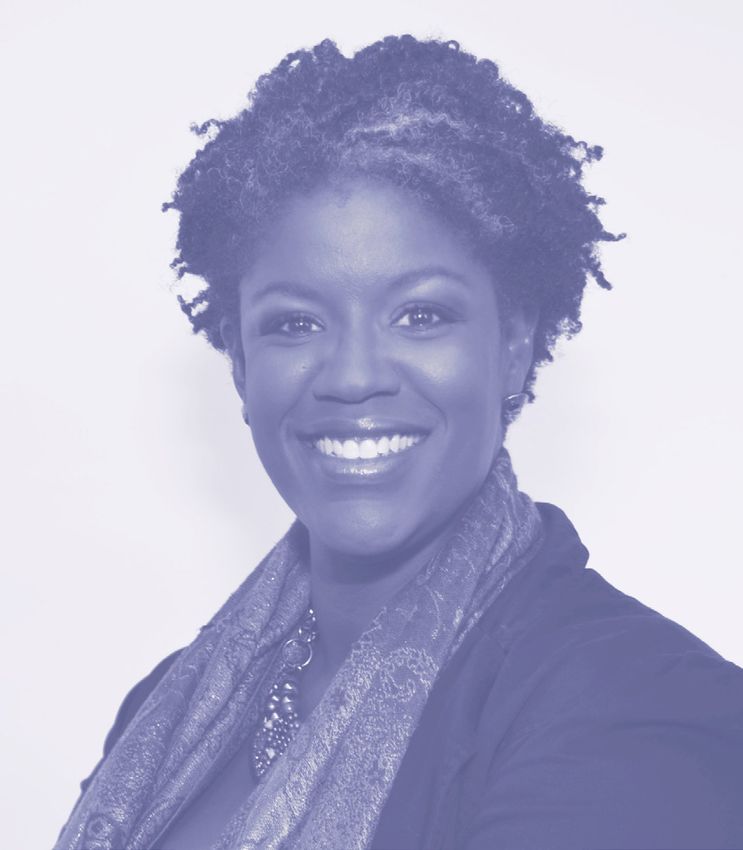
Let My Hair Be Me: An Investigation of Employee Authenticity and Organizational Appearance Policies

                                                                                                                           While appearance policies may help organizations in various
                                                                                                                       sectors and locales (e.g., businesses, hospitals, militaries, non-
                                                                                                                       profits, etc. around the globe) manage customer perceptions
                                                                                                                       and reinforce consistent organizational branding, such policies
                                                                                                                       may conflict with increasing organizational efforts to encourage
                                                                                                                       employee authenticity. Authenticity is a fundamental component
                                                                                                                       of human thriving (Kernis & Goldman, 2006) and is defined as
                                                                                                                       the “alignment between one’s internal experiences and external
                                                                                                                       expressions” (Roberts, Cha, Hewlin, & Settles, 2009, p. 3).

                                                                                                        Thus, employee authenticity refers to
                                                                                                      employees’ sense that, in the workplace,
                                                                                                       their internal experiences and external
                                                                                                      expressions are aligned. Appearance is a
                                                                                                      visual indicator of authenticity that may
                                                                                                        manifest in employees’ choices about
                                                                                                       how to dress, style their hair, whether
                                                                                                      or not to wear religious garb or to wear
                                                                                                                     makeup, etc.

                                                                                                                       Appearance choices are identity-relevant as they help to define
                                                                                                                       and distinguish cultural and subcultural groups (Keblusek &
                                                                                                                       Giles, 2017). Further, employee choice about appearance
Volume 1, Issue 1, Article 11 - 2018

                                                                                                                       may reflect personal effort to express unique aspects of the
                                                                                                                       self. Appearance policies may inhibit employee authenticity,
                                                                                                                       particularly disadvantaging employees with appearances that
                                                                                                                       deviate from Eurocentric (Bell & Nkomo, 2003; Rosette & Dumas,
                                                                                                                       2007), heteronormative, masculine norms (Barry, 2015). Inhibiting
                                                                                                                       employee authenticity may have negative consequences for
                                                                                                                       employees and organizations. Research indicates that employees

                                                                                                                                                                                       3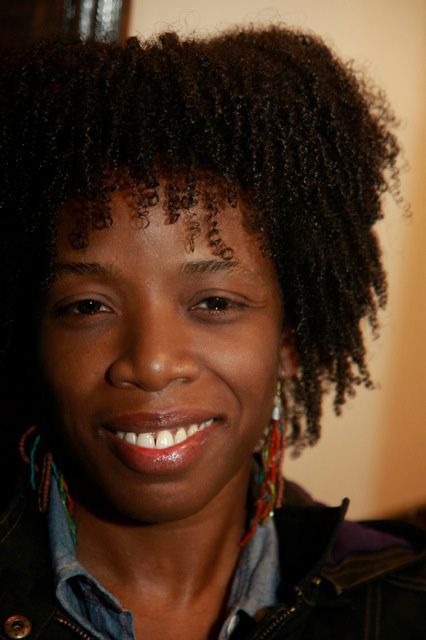
Let My Hair Be Me: An Investigation of Employee Authenticity and Organizational Appearance Policies

                                                                                                                      who involuntarily conform to organizational norms may experience
                                                                                                                      painful psychological distress and a sense of meaninglessness
                                                                                                                      (Erickson & Wharton, 1997; Hochschild, 2012). As time passes,
                                                                                                                      inauthenticity may contribute to emotional exhaustion, guilt, and
                                                                                                                      shame, and less desire to stay within an organization (Hewlin,
                                                                                                                      2009). Is it worth it to organizations to enforce appearance policies
                                                                                                                      given the negative consequences of employee inauthenticity?

                                                                                                                           A critical first step in this line of inquiry about appearance
                                                                                                                      policies and employee authenticity is to document current
                                                                                                                      attitudes about employee appearance that may deviate from
                                                                                                                      Eurocentric ideals of professionalism.

                                                                                                        The current paper investigates how
                                                                                                        men, the primary decision-makers in
                                                                                                      the workplace, evaluate Black women’s
                                                                                                             Afrocentric hair at work.
                                                                                                                      The paper focuses on women because despite progressing into
                                                                                                                      most fields of employment, earning Board seats, CEO posts,
                                                                                                                      and other top executive positions, women as a whole continue
                                                                                                                      to experience workplace inequities. The paper focuses on Black
                                                                                                                      women because they are often at the bottom of the workplace
                                                                                                                      hierarchy (Catalyst, 2016b) and are confronted with both gender
                                                                                                                      and racial inequities. The paper focuses on hair because it is a visual
                                                                                                                      display of identity (Opie & Phillips, 2015) and fashion (Barnard,
                                                                                                                      2014) that may reflect how individuals choose to express their
Volume 1, Issue 1, Article 11 - 2018

                                                                                                                      authenticity (Opie & Freeman, 2017). Further, hair is subjectively
                                                                                                                      evaluated based on societal notions of professionalism, making
                                                                                                                      Black women’s hair a helpful lens through which to investigate the
                                                                                                                      gendered and racialized bounds of workplace appearance.

                                                                                                                                                                                           4
Let My Hair Be Me: An Investigation of Employee Authenticity and Organizational Appearance Policies
Appearance Management in the
Workplace
The Society for Human Resource Management (SHRM), the world’s
largest professional society for human resource professionals,
has 285,000 members in more than 165 countries (Society for
Human Resource Management, n.d.). SHRM recommends that
organizations manage employee appearance, even providing a
detailed rationale for dress appearance policies:
Employers realize that impressions made on clients and
customers are important to the success of an organization.
Employees typically are the “face” of the company, and
employers are finding it increasingly advisable to control
that image. In the past, employers used dress and
appearance policies to help employees work comfortably
and safely while still projecting a professional image to
clients, customers and future employees. Employers over
the years also have used dress and appearance policies
to help create an employment brand. Some organizations
intentionally use dress to create a specific perception or
certain image as an employer. Dress codes help employers
fulfill these varying goals of comfort, professionalism,
safety, brand and image (Society for Human Resource
Management, 2016, Business Case section, para. 2)
SHRM notes that organizations must be careful that their
appearance policies do not discriminate based on protected
categories, such as gender or race (Society for Human Resource
Management, 2016, Legal Issues Section, Gender disparities and
Appearance and race paragraphs). For example, SHRM notes that
organizations can have grooming requirements that employees
be neat but organizations cannot prohibit employees from
Volume 1, Issue 1, Article 11 - 2018
wearing Afro hairstyles, because this hairstyle is considered to be
an immutable trait (i.e., not the result of choice) of Black people.
Yet, organizations can legally tell employees that they cannot
wear dreadlock hairstyles, because this hairstyle is considered to
be a mutable trait (i.e., the result of choice) (Finley, 2016; Opie &
Freeman, 2017). Further, organizations have been legally protected
when firing women who refuse to wear makeup (Harvard Law
5Let My Hair Be Me: An Investigation of Employee Authenticity and Organizational Appearance Policies
Review, 2006). Thus, while appearance policies ostensibly apply to
all employees, such policies may have unintended consequences
for members of historically underrepresented groups, such as
women and Black women.
Women and Appearance Management
in the Workplace
Women have constrained choice when it comes to creating a
workplace appearance that projects a “professional” image.
Specifically, gendered perceptions often tether women to
sexualized bodies, which are viewed as obstacles to a woman’s
career success (Entwistle, 2015). For example, as women began
entering the workforce in increasing numbers and started to
enter historically male-dominated employment fields, women
were advised to “power dress,” that is, to wear a uniform that
conveys authority and power, attributes associated with men and
masculinity (Entwistle, 1997). The notion of professional business
appearance as “uniform” helps to illuminate the role that business
appearance serves in the workplace. Specifically, uniforms help to
demarcate one group from another (i.e., business professionals
versus others), shift focus from individuals to the group represented
by the uniform, and provide a means to ensure conformity to the
group (Joseph & Alex, 1972).
Understanding business appearance as uniform elucidates
why, for example, women were advised to get the right haircut
or wear shorter hairstyles, as longer hair might appear too
messy or emphasize their femininity and thus undermine their
credibility in the workplace (Clift & Brazaitis, 2003; Moneypenny
& McGregor, 2013). Such appearance advice for women to mimic
men and deemphasize feminine traits was designed to increase
Volume 1, Issue 1, Article 11 - 2018
the perception that women possessed masculine attributes (e.g.,
competence, drive, etc.) so that women could minimize and
overcome negative gender stereotypes. In other words, women’s
business appearance uniform was constructed so that women
were more likely to be viewed as business professionals (i.e.,
demarcation), members of the professional class (i.e., shift focus
from women as individuals to women as part of the professional
6Let My Hair Be Me: An Investigation of Employee Authenticity and Organizational Appearance Policies
group), and as conforming to professional norms (i.e., conformity).
Yet, little consideration has been given to how the uniform of
contemporary business professionals came to be.
Outside of fashion studies, many people are unaware of the
origins of the most ubiquitous symbol of business professionalism:
the business suit. When asked, even management researchers and
practitioners in the field of diversity and inclusion were unable to
identify where the business suit originated (Opie, 2017, April).
The business suit originated in the European royal court in 1666.
Charles II introduced the three-piece suit as a symbol of restraint
in response to criticisms from religious and economic leaders that
the crown had lost its moral authority because of decadence,
effeminacy, and emphasis on the consumption of material goods
(Kuchta, 2002). Enter Beau Brummell in 1799, a British trendsetter
who ascended the social ladder by giving fashion advice to wealthy,
elite individuals. Brummell popularized more tailored, reserved
suits that were initially used as lounging attire. Eventually, the use
of lounging attire spread and evolved into expected workplace
attire. Despite the suit’s pervasiveness in contemporary times,
most scholars, practitioners, and managers are likely unaware of its
Eurocentric history. This brief case study of the suit illustrates how
cultural norms, specific to one country or region, have become
taken-for-granted indicators of professionalism (Opie & Freeman,
2017).
While women may don “uniforms,” such as the business suit,
to increase workplace success, research suggests that women
(and perhaps men) prefer to wear fashion that reflects personal
connections, identity, and achievement (Almila, 2015; see fig.
1). Further, women tend to touch and wear their clothing before
purchasing it to assess if the clothing is “them” and to consider
how others will judge the clothing (Derrington, 2009). Thus,
donning uniforms may come at a cost if women suppress how
Volume 1, Issue 1, Article 11 - 2018
they would prefer to dress and style themselves in order to obtain
workplace success (Hewlin, 2003, 2009).
7Volume 1, Issue 1, Article 11 - 2018 Let My Hair Be Me: An Investigation of Employee Authenticity and Organizational Appearance Policies
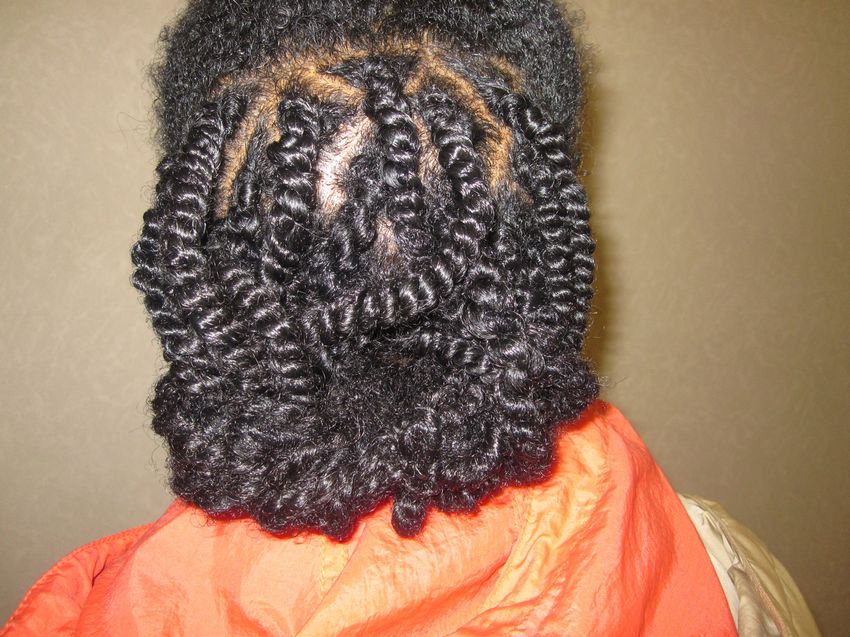
locks.
FIGURE 1
braids, afros, and
a variety of styles
Afro-textured hair
can be fashioned into
such as twists, updos,
8Let My Hair Be Me: An Investigation of Employee Authenticity and Organizational Appearance Policies
The Intersectional Experience of
Black Women and Appearance
Management in the Workplace
Black women contend with the aforementioned gender
constraints on appearance, as well as racialized constraints. Hair is
a helpful tool for examining the unique, intersectional challenges
confronted by Black women (Johnson, 2013). Hair is an important
though understudied element of the business uniform that is
full of symbolic meaning (Berry, 2008) and that has important
implications for identity and authenticity in the workplace. Because
of its mutable nature, how one decides to groom their hair may
communicate self-identity and values (Johnson, 2013), making hair
a key way to construct, preserve, and alter one’s identity (Opie &
Phillips, 2015; Sheane, 2012; Weitz, 2001).
Historically, Black hair was characterized as the antithesis of
Whiteness; that is, Black hair was portrayed as the antithesis of
what is good, proper, and beautiful (Thompson, 2009). In fact,
Black hair was sometimes not even called “hair” but “wool,”
likening it more to animal fur than human hair (Byrd & Tharps,
2001). Such conceptions dehumanized Black people, suggesting
that Black people were sub-human, more like animals than people
(Dash, 2006; Holmes, 2016).
Advertisements encouraged Black people to straighten
their hair so that they would be more socially accepted and
desired, perhaps even more humanized. Straight hair signified
collective progress and higher economic class. Black hair that was
straightened, conforming to Eurocentric norms of beauty, was
Volume 1, Issue 1, Article 11 - 2018
privileged over natural, kinky textured hair (Thompson, 2009). Hair
is second only to skin color in determining “Blackness” (Mercer,
1994). In the case of Black women in particular, Afrocentric or
9Let My Hair Be Me: An Investigation of Employee Authenticity and Organizational Appearance Policies
naturally textured1 hairstyles that reflect African heritage (Johnson,
2013) are often viewed as being in violation of workplace
appearance norms; and, therefore, labelled as unprofessional.
The message that Afrocentric hair is unprofessional or undesirable
is reinforced by advertising and cultural norms and reified by the
law, which allows employers to discriminate based on employee
hairstyle (Caldwell, 1991).
Contemporary media cases illustrate that hair remains a
policed domain for Black women. For example, a manager of
a New York branch of Banana Republic instructed an African-
American employee, 19-year-old Destiny Thompkins, that her
braided hairstyle violated the company’s dress code. Specifically,
Thompkins’ manager stated, “It is a little too urban and unkempt
for our look and image. We were wondering if you could take
them out.” Thompkins shared her experience on social media and
the news media picked up her story. Banana Republic launched an
investigation of the incident and the manager was subsequently
fired. An excerpt from the company’s statement noted, “Banana
Republic has zero tolerance for discrimination. This situation
was completely unacceptable, counter to our policies, and in no
way reflects our company’s beliefs and values” (Nelson, 2017).
Media outlets such as Essence Magazine, Teen Vogue, The
Atlantic, the BBC, NPR, and other popular outlets have discussed
the discrimination that Black women face based on their hairstyles
(e.g., see Bates, 2017; Dirshe, 2018; Honey, 2017; Sini, 2016;
Wilkinson, 2016). This landscape explains why Black women
are particularly susceptible to hair policing in the workplace,
experiencing pressure to conform to Eurocentric standards of hair
grooming (Opie & Phillips, 2015).
The process of attaining “beautiful” (i.e., Eurocentric) hair has
been described as violent as Black women may endure, among
other things, physical discomfort and a symbolic stripping away
of their African heritage when they chemically straighten their
hair (Oyedemi, 2016). Black people spend much time, energy, and
Volume 1, Issue 1, Article 11 - 2018
1
Naturally textured hair refers to women wearing their hair
in a chemically unaltered state that reveals its naturally wavy,
coily, or kinky texture. While some Black women have naturally
straight hair, textured hair characterizes the majority of Black
women (Mintel, 2016).
10Let My Hair Be Me: An Investigation of Employee Authenticity and Organizational Appearance Policies
money on their hair, as evidenced by the presence of multiple
barbershops and salons in Black neighborhoods (Mercer, 1994); as
well, Black people spend considerable expenditures on hair care
products and styling, with the Black haircare market estimated at
$2.5 billion (Mintel, 2017). Black people clearly give thought to
their hair and this makes it more difficult when Black employees
experience hair policing in the workplace. It is important to note
that I am not arguing that for Black women, natural hair = authentic
and Eurocentric hair = inauthentic.
At issue here is that Black women should
have the freedom to wear their hair
however they choose to, without fear of
negative consequence if they dare don
their natural tresses at work.
The case of Chastity Jones exemplifies the workplace
pressures and hair policing that Black women may endure as a
result of Eurocentric-biased appearance policies. In 2010, Jones
received a formal job offer from an insurance company. However,
the firm reneged on its employment offer when Jones would
not cut off her dreadlocks, a hairstyle the firm claimed violated
its appearance policies. Specifically, a human resources manager
complained that dreadlocks “tend to get messy” and therefore
violated the firm’s requirement that all employees convey “a
professional and businesslike image.” Jones filed suit against the
Volume 1, Issue 1, Article 11 - 2018
firm. Jones lost the lawsuit because the court ruled that while firms
cannot discriminate based on hair texture (an immutable trait that
employees do not choose), firms can legally discriminate based on
hairstyle (a mutable trait that employees can or cannot choose to
display). Thus, the organization’s appearance policies and the law
mutually support the attitude that certain Afrocentric hairstyles are
not acceptable (Opie & Freeman, 2017).
11Let My Hair Be Me: An Investigation of Employee Authenticity and Organizational Appearance Policies
In essence, Black women’s hair is
a contested domain, subject to
organizational policing. Further, such
policing is validated by appearance
policies, ostensibly designed to ensure a
professional workforce, and the law, which
supports organizational efforts to control
employee appearance.
The current study investigates lay attitudes about the
professionalism of women’s hair in the workplace. Specifically,
the study examines whether or not men have bias against Black
women’s Afrocentric hair (see fig. 2).
Volume 1, Issue 1, Article 11 - 2018
12Let My Hair Be Me: An Investigation of Employee Authenticity and Organizational Appearance Policies
Volume 1, Issue 1, Article 11 - 2018
FIGURE 2
Petra E. Lewis dons her versatile natural hair in the
workplace. Lewis is a professional ghost(writer),
ghostblogger, author, and entrepreneur: https://about.me/
pelewis#.
13Let My Hair Be Me: An Investigation of Employee Authenticity and Organizational Appearance Policies
Methods
Stimuli
The author and a professional Photoshop expert worked together
to select three images of White women and two images of Black
women from iStockPhoto, an online photography provider, to
facilitate the testing of actor effects. In all images, actors had a facial
position that was square to the camera, wore hairstyles that did
not obstruct the shoulders or the face, and donned a professional
suit that could be seen in the picture (see Opie & Phillips, 2015 for
further details on how stimuli were developed). There were no actor
effects, so images were collapsed across race condition. Further,
there were no differences between Afrocentric hairstyle (i.e., afro
or dreadlock hair) or between Eurocentric hairstyle (i.e., straight
or relaxed hair) conditions so hairstyle conditions were collapsed,
resulting in two hairstyle conditions: Afrocentric and Eurocentric.
Participants
Two hundred participants recruited via Amazon’s Mechanical
Turk (MTurk) completed the study. 187 participants passed both
the gender and race manipulation checks and data from these
individuals were used in the analyses2. Of the 187 participants
who passed the manipulation checks, 105 identified as women,
80 identified as men and 2 participants did not indicate their sex.
Participants had an average age of 35.42 years (Min = 19, Max = 71,
SD = 11.57). 97% of the participants indicated that they had work
experience. Participants self-identified as White (n = 153, 81.8%),
Black (n = 15, 8.0%), Latino (n = 9, 4.8%), Asian (n = 7, 3.7%), and
Other (n = 3, 1.6%). The survey was approximately five minutes
long and participants were paid $1.00 for their participation.
Volume 1, Issue 1, Article 11 - 2018
2
13 individuals failed to properly answer the manipulation
checks: 2 participants misidentified the target as a male; 11
participants recognized the target as being other than Black
or White. Results did not change when the full data set was
used.
14Let My Hair Be Me: An Investigation of Employee Authenticity and Organizational Appearance Policies
Procedure
After giving informed consent, participants randomly viewed one
of the stimuli and read: “People regularly read personalities just
from people’s faces. In this survey, you will see a head shot and
answer various questions about the person’s personality based on
their face.”
Measures
MANIPULATION CHECK
Participants were asked, “What is the race/ethnicity of the person
in this image? Please check the ONE that you think best matches.”
Participants could choose from the following options: African-
American/Black, Asian American, Latino(a), Caucasian/ European-
American, Native American, Middle Eastern, and Other.
PERCEPTIONS OF EMPLOYMENT CANDIDATE
To assess professionalism, we measured participants’ ratings of
the candidate’s professionalism by using a three-item scale: How
professional is this person; how likely is this person to succeed
in corporate America; and how powerful is this person? The
scale was reliable, α =.78. Participants also rated the targets on
creativity and attractiveness. All items were on a 1-point to 7-point
scale with higher scores indicating more of the relevant attributes.
WORK EXPERIENCE
Work experience was assessed by asking participants how many
years of work experience they have. This variable was entered as
Volume 1, Issue 1, Article 11 - 2018
a control because work experience may influence perceptions of
professionalism.
15Let My Hair Be Me: An Investigation of Employee Authenticity and Organizational Appearance Policies
Results
Using SPSS statistical software, a Participant Sex (Male, Female) by
Hairstyle (Eurocentric, Afrocentric) MANCOVA with participants’
years of work experience as a covariate on evaluation of
employment candidates yielded a significant main effect for
participant sex, such that, compared to females, males rated
employment candidates as less professional, F(1,185) = 5.3, p <
.04, ηp2 =.03; less creative, F(1,185) = 6.57, p < .01, ηp2 = .04; and
less attractive, F(1,185) = 11.13, p < .001, ηp2 = .06.
The model also yielded a significant main effect for hairstyle,
such that, as compared to employment candidates with
Eurocentric hairstyles, participants rated employment candidates
with Afrocentric hairstyles as less professional, F(1,185) = 30.5, pLet My Hair Be Me: An Investigation of Employee Authenticity and Organizational Appearance Policies
Study Discussion
Study results revealed a gender effect such that men, as compared
to women, more negatively judged Black women employment
candidates with Afrocentric hair. This gender effect did not emerge
for White or Black women employment candidates with Eurocentric
hair. The study findings suggest that Black women with Afrocentric
hair may be disadvantaged in an employment context if men are
making or influencing employment decisions.
General Discussion
Organizations often manage employee appearance so that
employees present a professional image to clients and contribute to
a positive organizational image. Yet, organizations may not consider
the fact that appearance policies emanate from the convergence of
cultural notions of professionalism and power dynamics (e.g., the
business suit’s origin in the European royal court in the seventeenth
century, later worn by members of the elite class). It is those
who are in power within a particular culture who define what is
professional, create appearance policies to support this definition,
and determine punishment for those who violate notions of
professionalism (Joseph & Alex, 1972). In this way, appearance
policies perpetuate extant power structures by rewarding those
who conform to biased appearance norms and disadvantaging
those who violate these norms. Given the increasingly diverse
workplace, culturally biased appearance policies may create
negative consequences for employees who deviate from cultural
appearance norms, or even for employees who conform to the
policies but do so involuntarily (Hewlin, 2003).
Volume 1, Issue 1, Article 11 - 2018
Appearance is a visible indicator of employee authenticity;
thus, it is advisable for organizations to consider how appearance
policies may thwart employee authenticity. Specifically, I
encourage organizational leaders to consider both the necessity
and the content of appearance policies. First, are appearance
17Let My Hair Be Me: An Investigation of Employee Authenticity and Organizational Appearance Policies
policies necessary? To answer this question, organizational
leaders can investigate the extent to which appearance policies
positively influence employees’ ability to perform their jobs.
This requires that organizations actively monitor employees
to determine if there is in fact a positive relationship between
appearance policy adherence and employee performance.
Further, how do employees, clients, and organizational cultures
fare in organizations with lax or no appearance policies? Overall,
organizational leaders are encouraged to actively engage with
their employees and clients to determine if the appearance
policies help employees and the firm.
Second, organizational leaders should consider the content
of appearance policies as elements of appearance policies may
negatively affect particular demographic groups (Opie, 2016). For
example, firms may require that female employees wear high heels;
however, this may be problematic because the appearance policy
only applies to women. Further, high heels may be dangerous as
they can cause physical harm, impede mobility, and hinder comfort
(Lee, Jeong, & Freivalds, 2001; Linder & Saltzman, 1998; Simonsen
et al., 2012). Or, firms may have appearance policies that require
“sleek” hair; however, such a policy would burden employees with
hair textures that are not naturally sleek. Additionally, procedures
used to obtain “sleek” hair (e.g., chemical relaxers) have been
found to have adverse effects (Shetty, Shetty, & Nair, 2013) and to
be associated with more severe medical ailments (Wise, Palmer,
Reich, Cozier, & Rosenberg, 2012). This may help to explain why an
increasing number of Black women are opting to wear their natural
hair (Mintel, 2017). This suggests that it is time for organizations
to broaden norms of professionalism to include natural hair. The
United States Army recently changed its appearance policies
to allow natural hairstyles (Rhodan, 2014), as well as beards and
turbans for religious reasons (Lopez, 2017). Hopefully, other
organizations will follow suit. Another example is that firms may
require all employees to wear formal business attire, without giving
much thought to the fact that larger sized employees may prefer
Volume 1, Issue 1, Article 11 - 2018
alternative professional attire because formal business suits may
be uncomfortable (Barry, 2015) given that contemporary suits are
based on historical designs tailored for the “normal” body (David,
2007). Thus, organizations are encouraged to actively monitor
whether or not the content of their appearance policies place
unfair burdens on, or even harm, employees who may deviate from
Eurocentric, masculine, heteronormative norms of professionalism.
18Let My Hair Be Me: An Investigation of Employee Authenticity and Organizational Appearance Policies
Overall, from a human resource management perspective, the
current research implores organizations to actively question their
appearance policies and examine whether or not such policies are
worth it.
Given that authenticity is positively
associated with enhanced commitment,
satisfaction, and creativity, is it worth
it for organizations to have appearance
policies that may thwart authenticity?
Further, organizations should be particularly sensitive to whether
or not their appearance policies discriminate against particular
groups of people. Finally, organizational leaders can model
authentic behaviour. Employees may feel more comfortable
expressing their authenticity via appearance if they, for example,
observe organizational leaders donning bolder dress that reflects
their authentic personalities (Opie & Freeman, 2017). Given the
current research findings, it may be helpful for organizational
leadership to provide educational materials about the benefit
of authenticity in the workplace and share insights about how
seemingly innocuous appearance policies may thwart authenticity,
thereby hindering employee engagement.
While this research is an important step in exploring employee
authenticity and appearance policies, it does have several
limitations. First, the study was a hypothetical hiring scenario that
may lack realism. However, the study results suggest that a mere
Volume 1, Issue 1, Article 11 - 2018
picture of an employment candidate is sufficient to generate
the effects of interest. Second, the study was not conducted in a
particular firm or industry, precluding the ability to examine the role
of context. Future research should consider how organizational
context may influence ratings of professionalism of individuals
who deviate from Eurocentric norms of professionalism. For
19Let My Hair Be Me: An Investigation of Employee Authenticity and Organizational Appearance Policies
example, it is possible that members of the “creative class” (e.g.,
fashion, marketing, advertising, the arts, etc.) may have broader
conceptions of professionalism and may even reward employees
who deviate from Eurocentric norms of professionalism. It is
expected that firms and industries that are more conservative (e.g.,
Wall Street) may be less accepting of employee appearances that
deviate from organizational norms.
In conclusion, organizations that encourage employee
authenticity and that desire to create diverse and inclusive
cultures may want to revisit their appearance policies. Globally,
men comprise the majority of decision-making positions in
organizations (Catalyst, 2016a, 2017), making the current study’s
findings particularly troublesome. If men are biased against
Afrocentric hairstyles, this does not bode well for Black women
who don Afrocentric hairstyles in the workplace. Further, if the
bias against Afrocentric hairstyles reflects a broader bias against
appearances that deviate from Eurocentric norms, the study
findings have implications for diverse employees, such as those
with different gender identities and sexual orientations (Warkander,
2014), religious backgrounds (King & Ahmad, 2010), or body sizes
(Almond, 2013).
To reiterate, the overarching argument of the current research
is not that authenticity has to be defined in a particular way (i.e.,
that for Black women, natural hair = authentic and Eurocentric
hair = inauthentic). Rather, the critical takeaway is that employee
authenticity is enhanced when employees are free to express
themselves via their appearance however they desire to express
themselves. Yet, employees who deviate from Eurocentric
norms of professionalism may feel compelled to suppress their
authentic identity expression to conform to organizational
appearance policies. Organizations must ask if they are willing to
cling to appearance policies, potentially suppressing employee
authenticity and losing valuable employees. Or, are employers
willing to examine their appearance policies to ensure that they
Volume 1, Issue 1, Article 11 - 2018
facilitate a diverse and inclusive workplace where all employees are
free to be authentic?
The fields of fashion studies and management studies alike
could benefit from future research that extends the current
conversation beyond Black women’s natural hair. Even within the
domain of hair, it is important to consider types of hair that have
20Let My Hair Be Me: An Investigation of Employee Authenticity and Organizational Appearance Policies
not yet been explored. Specifically, future research might examine
how organizational appearance policies regulate other hair types,
such as armpit hair, gray hair, and facial hair.
Beyond hair, future research could examine how organizational
appearance policies might thwart authentic identity expression
related to religion (e.g., discouraging certain kinds of religious
garb at work), weight (e.g., penalizing employees of larger body
size at work), or gender orientation (e.g., expecting employees
to dress in a way where their birth-assigned gender matches their
bodies and their personal identities).
The examination of organizational
appearance policies may be a fruitful
endeavor as scholars in fashion studies
and management strive to better
understand the relationship between
employee appearance and employee
authenticity in the workplace.
Finally, the current research encourages scholars and organizations
to consider how honest critique of organizational appearance
policies may facilitate employees’ authenticity and help
Volume 1, Issue 1, Article 11 - 2018
organizations achieve the many benefits of employee authenticity.
21Let My Hair Be Me: An Investigation of Employee Authenticity and Organizational Appearance Policies
References
Almila, A. (2015). Women, fashion, power. Fashion Theory, 19(4), 509-518.
Almond, K. (2013). Fashionably voluptuous: Repackaging the fuller-sized figure. Fashion Theory, 17(2), 197-222.
Barnard, M. (2014). Fashion theory: An introduction. New York, NY: Routledge.
Barry, B. (2015). The toxic lining of men’s fashion consumption: The omnipresent force of hegemonic masculinity.
Critical Studies in Men’s Fashion, 2(2&3).
Bates, K. G. (2017). New evidence shows there’s still bias against Black natural hair. NPR.org. Retrieved from
https://www.npr.org/sections/codeswitch/2017/02/06/512943035/new-evidence-shows-theres-still-bias-
against-black-natural-hair.
Bell, E., & Nkomo, S. M. (2003). Our separate ways: Black and White women and the struggle for professional
identity. Boston, MA: Harvard Business School Press.
Berry, E. R. (2008). The zombie commodity: Hair and the politics of its globalization. Postcolonial Studies, 11(1),
63-84.
Byrd, A. D., & Tharps, L. L. (2001). Hair story: Untangling the roots of Black hair in America. New York, NY: St.
Martin’s Press.
Caldwell, P. M. (1991). A hair piece: Perspectives on the intersection of race and gender. Duke Law Journal, 40(2),
365-396.
Catalyst. (2016a). Missing pieces report: The 2016 board diversity census of women and minorities on Fortune 500
Volume 1, Issue 1, Article 11 - 2018
boards. Retrieved from http://www.catalyst.org/knowledge/missing-pieces-report-2016-board-diversity-
census-women-and-minorities-fortune-500-boards.
Catalyst. (2016b). Women of color in the United States. Retrieved from http://www.catalyst.org/knowledge/
22Let My Hair Be Me: An Investigation of Employee Authenticity and Organizational Appearance Policies
women-color-united-states-0.
Catalyst. (2017). Pyramid: Women in S&P 500 companies. Retrieved from New York, NY: http://www.catalyst.org/
knowledge/women-sp-500-companies.
Chraibi, R., & Cukier, W. (2017). Muslim women in senior management positions in Canada. In J. Mahadevan &
C.-H. Mayer (Eds.), Muslim minorities, workplace diversity and reflexive HRM (pp. 162- 182). New York,
NY: Taylor and Francis.
Clift, E., & Brazaitis, T. (2003). Madam president: Women blazing the leadership trail. New York, NY: Routledge-
Taylor & Francis Group.
Dash, P. (2006). Black hair culture, politics and change. International Journal of Inclusive Education, 10(1), 27-37.
David, A. M. (2007). Made to measure? Tailoring and the ‘normal’ body in nineteenth century France. In W. Ernst
(Ed.), Histories of the normal and the abnormal: Social and cultural histories of norms and normativity.
London: Routledge.
Derrington, S. (2009). Book review of ‘Why women wear what they wear’ by Sophie Woodward [Berg, 2007].
Fashion Theory, 13(4), 541-544.
Dirshe, S. (2018). Black women speak up about their struggles wearing natural hair in the workplace. Essence.com.
Retrieved from https://www.essence.com/hair/black-women-natural-hair-discrimination-workplace.
Entwistle, J. (1997). Power dressing and the fashioning of the career woman. In M. Nava, I. MacRury, A. Blake, & B.
Richards (Eds.), Buy this book: Studies in advertising and consumption. London, England: Routledge.
Entwistle, J. (2015). The fashioned body: Fashion, dress and social theory. Cambridge, UK: Polity Press.
Erickson, R. J., & Wharton, A. S. (1997). Inauthenticity and depression: Assessing the consequences of interactive
Volume 1, Issue 1, Article 11 - 2018
service work. Work and Occupations, 24(2), 188-213.
Finley, T. (2016). Appeals Court rules employers can ban dreadlocks at work. Huffington Post. Retrieved from
http://www.huffingtonpost.com/entry/appeals-court-rules-dreadlocks-work_
23Let My Hair Be Me: An Investigation of Employee Authenticity and Organizational Appearance Policies
us_57e0252ae4b0071a6e08a7c3.
Harvard Law Review. (2006). Jespersen v. Harrah’s Operating Co.: Ninth Circuit holds that women can be fired for
refusing to wear makeup. Harvard Law Review, 120(2), 651-658.
Hewlin, P. F. (2003). And the award for best actor goes to…: Facades of conformity in organizational settings.
Academy of Management Review, 28, 633-642.
Hewlin, P. F. (2009). Wearing the cloak: Antecedents and consequences of creating facades of conformity. Journal
of Applied Psychology, 94(3), 727-741.
Hochschild, A. R. (2012). The managed heart: Commercialization of human feeling. Berkeley, CA: University of
California Press.
Holmes, C. (2016). The colonial roots of the racial fetishization of Black women. Black & Gold, 2, 1-11.
Honey, M. (2017). Black women speak about natural hair bias in the workplace. TeenVogue.com. Retrieved from
https://www.teenvogue.com/story/black-women-natural-hair-bias-discrimination.
Johnson, E. (2013). Resistance an empowerment in Black women’s hair styling. England: Routledge.
Joseph, N., & Alex, N. (1972). The uniform: A sociological perspective. American Journal of Sociology, 77(4), 719-
730.
Keblusek, L., & Giles, H. (2017). Dress style code and fashion. In H. Giles & J. Harwood (Eds.), The Oxford Research
Encyclopedia of Intergroup Communication. New York, NY: Oxford.
Kernis, M. H., & Goldman, B. M. (2006). A multicomponent conceptualization of authenticity: Theory and research.
In M. P. Zanna (Ed.), Advances in experimental social psychology (pp. 283-357). San Diego, CA: Elsevier
Academic Press.
King, E. B., & Ahmad. (2010). An experimental field study of interpersonal discrimination toward Muslim job
Volume 1, Issue 1, Article 11 - 2018
applicants. Personnel Psychology, 63, 881-906.
Kuchta, D. (2002). The three-piece suit and modern masculinity: England, 1550-1850. Berkeley, CA: University of
California Press.
24Let My Hair Be Me: An Investigation of Employee Authenticity and Organizational Appearance Policies
Lee, C.-M., Jeong, E.-H., & Freivalds, A. (2001). Biomechanical effects of wearing high-heeled shoes. International
Journal of Industrial Ergonomics, 28, 321-326.
Linder, M., & Saltzman, C. L. (1998). A history of medical scientists on high heels. International Journal of Health
Services, 28(2), 201-225.
Lopez, C. T. (2017). Turbans, beards, dreadlocks now okay. JBLM Northwest Guardian (Authorized Website of
Joint Base Lewis-McChord). Retrieved from http://www.nwguardian.com/2017/01/26/26606/turbans-
beards-dreadlocks-now.html.
Mercer, K. (1994). Welcome to the jungle: New positions in Black cultural studies. New York, NY: Routledge.
Mintel. (2016). Black Haircare- US- August 2016: Black Hair Texture Categorization. Retrieved from London,
England: http://academic.mintel.com.ezproxy.babson.edu/display/782682/?highlight#hit1.
Mintel. (2017). Executive Summary: Black Haircare, US. Retrieved from London, England: http://store.mintel.com/
us-black-haircare-market-report.
Moneypenny, M., & McGregor, H. (2013). Mrs. Moneypenny’s career advice for ambitious women. New York, NY:
Penguin.
Nelson, R. (2017). White Plains Banana Republic manager fired over employee braid incident. ACB 7 New
York. Retrieved from http://abc7ny.com/business/banana-republic-manager-fired-over-employee-braid-
incident/2511686/.
Opie, T. R. (2016). Authenticity and organizational norms: Through a positive organizational scholarship lens. In L.
M. Roberts, L. P. Wooten, & M. N. Davidson (Eds.), Positive organizing in a global society (pp. 58-64). New
York, NY: Taylor and Francis.
Volume 1, Issue 1, Article 11 - 2018
Opie, T. R. (2017, April). Hair penalties and other organizational sins: Racism disguised as professionalism. In:
Presentation at Harvard Business School Gender and Work Symposium: Images, Identities, and the
Space(s) Between.
25Let My Hair Be Me: An Investigation of Employee Authenticity and Organizational Appearance Policies
Opie, T. R., & Freeman, R. E. (2017). Our biases undermine our colleagues’ attempts to be authentic. Harvard
Business Review. Retrieved from https://hbr.org/2017/07/our-biases-undermine-our-colleagues-
attempts-to-be-authentic.
Opie, T. R., & Phillips, K. W. (2015). Hair penalties: The negative influence of Afrocentric hair on ratings of Black
women’s dominance and professionalism. Frontiers in Psychology, 6, 1-14.
Oyedemi, T. (2016). Beauty as violence: ‘Beautiful’ hair and the cultural violence of identity erasure. Social Identities,
22(5), 537-553.
Pratt, M. G., & Rafaeli, A. (1997). Organizational dress as a symbol of multilayered social identities. Academy of
Management Journal, 40(4), 862-898. doi:10.2307/256951
Rhodan, M. (2014). U.S. military rolls back restrictions on Black hairstyles. Time.com. Retrieved from http://time.
com/3107647/military-black-hairstyles/.
Roberts, L. M., Cha, S. E., Hewlin, P. F., & Settles, I. H. (2009). Bringing the inside out: Enhancing authenticity
and positive identity into organizations. In L. M. Roberts & J. E. Dutton (Eds.), Exploring positive identities
and organizations: Building a theoretical and research foundation (pp. 149-169). New York, NY: Routledge.
Rosette, A. S., & Dumas, T. L. (2007). The hair dilemma: Conform to mainstream expectations or emphasize racial
identity. Duke Journal of Gender Law & Policy, 14, 407-421.
Sheane, S. D. (2012). Putting on a good face: An examination of the emotional and aesthetic roots of presentational
labour. Economic and Industrial Democracy, 33(1), 145-158. doi:10.1177/0143831x11427588
Shetty, V. H., Shetty, N. J., & Nair, D. G. (2013). Chemical hair relaxers have adverse effects a myth or reality.
Volume 1, Issue 1, Article 11 - 2018
International Journal of Trichology, 5(1), 26-28.
Simonsen, E. B., Svendsen, M. B., Norreslet, A., Baldvinsson, H. K., Heilskov-Hansen, T., Larsen, P. K., . . . Henriksen,
M. (2012). Walking on high heels changes muscle activity and the dynamics of human walking significantly.
Journal of Applied Biomechanics, 28, 20-28.
26Let My Hair Be Me: An Investigation of Employee Authenticity and Organizational Appearance Policies
Sini, R. (2016). ‘Wear a weave at work - your afro hair is unprofessional’. BBC.com. Retrieved from http://www.bbc.
com/news/uk-36279845.
Society for Human Resource Management. (2016). Managing employee dress and appearance. Retrieved from
https://www.shrm.org/resourcesandtools/tools-and-samples/toolkits/pages/
employeedressandappearance.aspx
Society for Human Resource Management. (n.d.). About SHRM. Retrieved from https://www.shrm.org/about-
shrm/pages/default.aspx.
Thompson, C. (2009). Black women, beauty, and hair as a matter of being. Women’s Studies, 38, 831-856.
Warkander, P. (2014). No pansies! Exploring the concept of ‘style’ through ethnographic fieldwork. Fashion Theory,
18(3), 233-250.
Weitz, R. (2001). Women and their hair - Seeking power through resistance and accommodation. Gender & Society,
15(5), 667-686. doi:10.1177/089124301015005003
Wilkinson, A. B. (2016). No dreadlocks allowed. TheAtlantic.com. Retrieved from https://www.theatlantic.com/
business/archive/2016/11/no-dreadlocks-allowed/506270/.
Wise, L. A., Palmer, J. R., Reich, D., Cozier, Y. C., & Rosenberg, L. (2012). Hair relaxer use and risk of uterine
leiomyomata in African-American women. American Journal of Epidemiology, 175(5), 432-440.
Volume 1, Issue 1, Article 11 - 2018
27Let My Hair Be Me: An Investigation of Employee Authenticity and Organizational Appearance Policies
Author Biography
Tina Opie
BABSON COLLEGE
Dr. Tina Opie is an Associate Professor in the
Management Division at Babson College and
has taught organizational behaviour courses to
undergraduates and MBA students.
Dr. Opie’s research focuses on how organizations and
individuals can co-create workplaces that successfully
leverage individual difference, convey respect for
individuals’ unique identities and contributions,
and encourage authenticity in the workplace.
The overarching goal of Dr. Opie’s research is to
acknowledge historical inequities and provide action-
oriented solutions to redress these historical inequities.
Dr. Opie is a valued media contributor, appearing on
shows about topics as diverse as identity, natural hair
in the workplace, the political landscape, the #MeToo
movement, and sexual harassment. She is also the
founder of hairasidentity.com and naturalhairatwork.
com.
Volume 1, Issue 1, Article 11 - 2018
Article Citation
Opie, Tina. “Let My Hair Be Me: An Investigation of
Employee Authenticity and Organizational Appearance
Policies Through the Lens of Black Women’s Hair.”
Fashion Studies, vol. 1, no. 1, 2018, pp. 1-27, www.
fashionstudies.ca/let-my-hair-be-me/.
28You can also read


