Loblolly Pine Trees at the Camp Mohawk Area - Texas Master Naturalist - Cradle of Texas Intern Class of Jan-2016 - TMN-COT
←
→
Page content transcription
If your browser does not render page correctly, please read the page content below
Texas Master Naturalist – Cradle of Texas
Intern Class of Jan-2016

                      Loblolly Pine Trees
                             at the
                      Camp Mohawk Area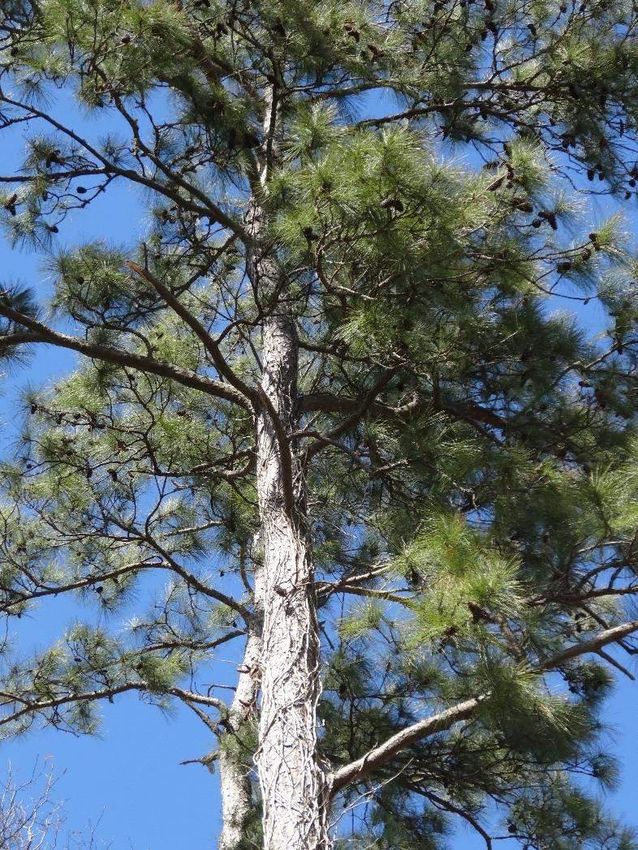
Intern Field Projects:
           Objectives, Procedures, Reporting
• Pre-field investigation preconceptions:

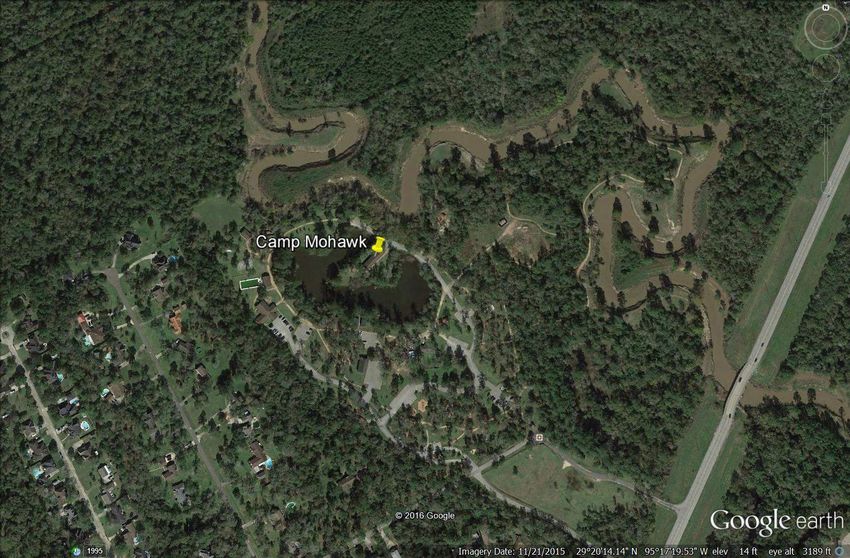
  • Camp Mohawk County Park has an
    abundance of Loblolly Pine growth. It is
    uncommon for Loblolly Pines to be
    present in such large numbers on the
    South Texas Gulf Coast.
  • Why are Loblolly Pine Trees growing at
    Camp Mohawk?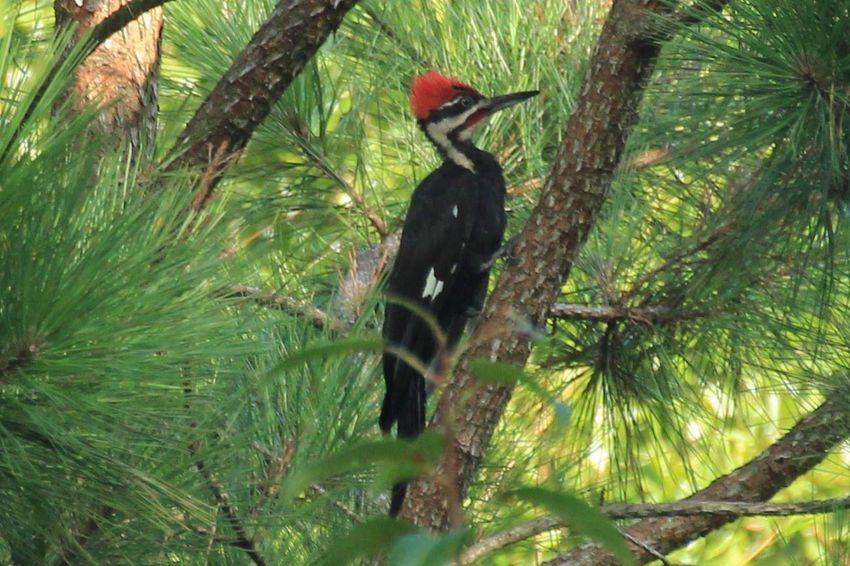
Intern Field Projects:
          Objectives, Procedures, Reporting
• Our Team Hypothesis:

  • The extant Loblolly Pine collection at
    Camp Mohawk is a result of both
    natural and human impact on the area.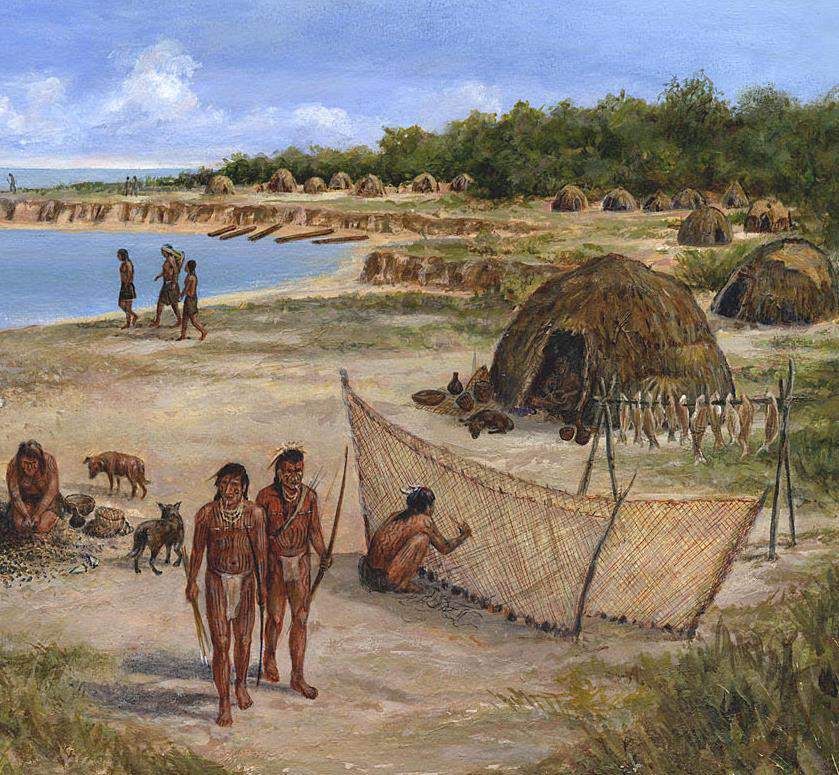
Intern Field Projects:
            Objectives, Procedures, Reporting
• Our Procedure:
  • Physical observations of Camp
    Mohawk and the adjacent areas
  • Obtain information on:
     • History and background of the
       Camp
     • Loblolly Pine scientific facts
     • Other fauna and flora associated
       with Loblolly growth
     • Soil geology of Brazoria County
  • Review, evaluate and discuss           Our team: Jerry Krampota (mentor), Jo Myers,
    results                               Karen Leder, Herb Myers, Bryan Frazier (mentor),
                                                  Lisa Myers, and Kristine Rivers.
  • Develop conclusion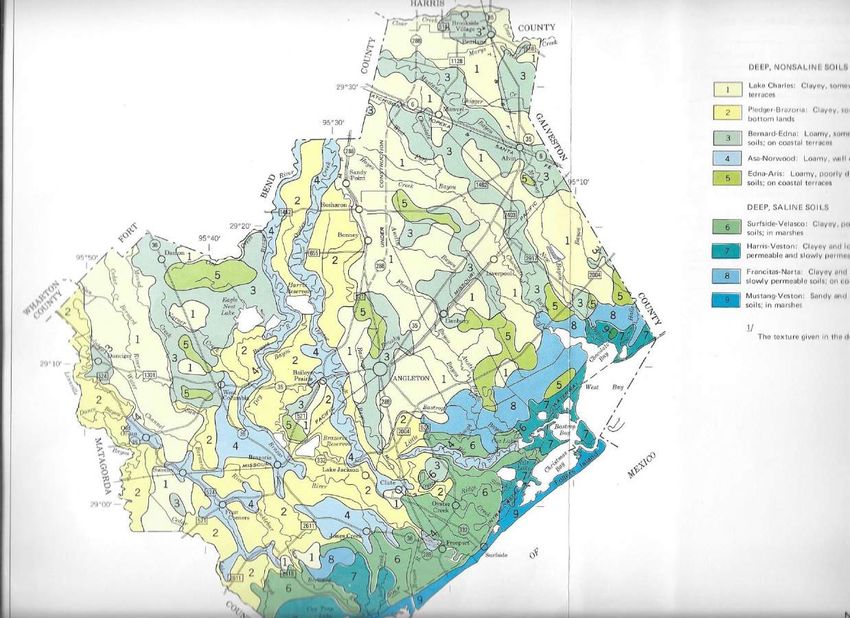
Camp Mohawk November 2015. Hardwood leaves have fallen;
         the deep green trees are Loblolly Pine.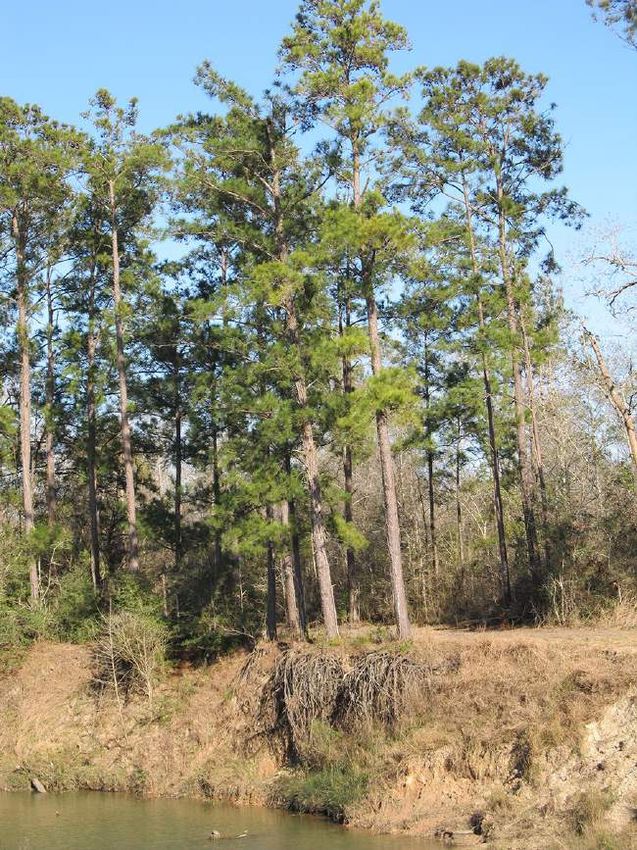
History and Background of Camp Mohawk
• Before 1800 - Land occupied by Karankawa Indians
    • Remnants found by local settlers
• Early 1800s - Pirate Jean Lafitte’s crew came up
  through the area in search of fresh water and to
  hunt game.
    • Rumors of pirates burying
      treasure in the area
    • Government banned them
      from the area and some
      including Captain Snyder
      stayed behind and lived on
      Chocolate Bayou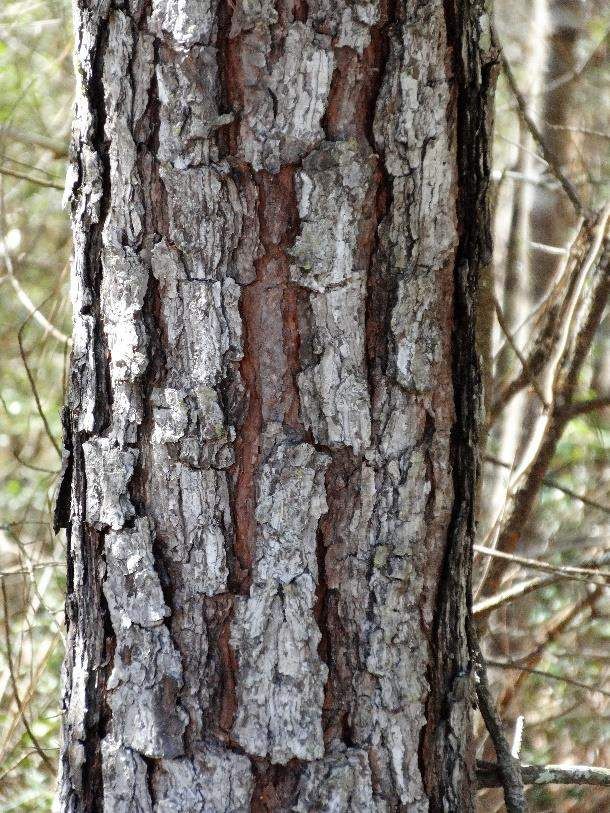
History and Background of Camp Mohawk
• 1861 - Texas joined the Confederate States and the Camp was used as a
  Confederate Army Training Camp.
   • Brown’s Company was stationed here for 18 months, later known as
     Bates Regiment, one of the most fearless regiments of the Confederate
     Army.
   • Joseph Clement (Karen’s Great-Great-Grandfather) served in the GAC
     Bates Regiment in 1863 under Capt. Bennett and was wounded.
   • Soldiers built log pens to round up the local’s cattle for milking and
     slaughter.
   • Army built a low water bridge in the area to allow them
     to roll the cannons across the bayou.
   • Remnants of the low water bridge and old Army
     barbeque pits were still visible in the 1930s.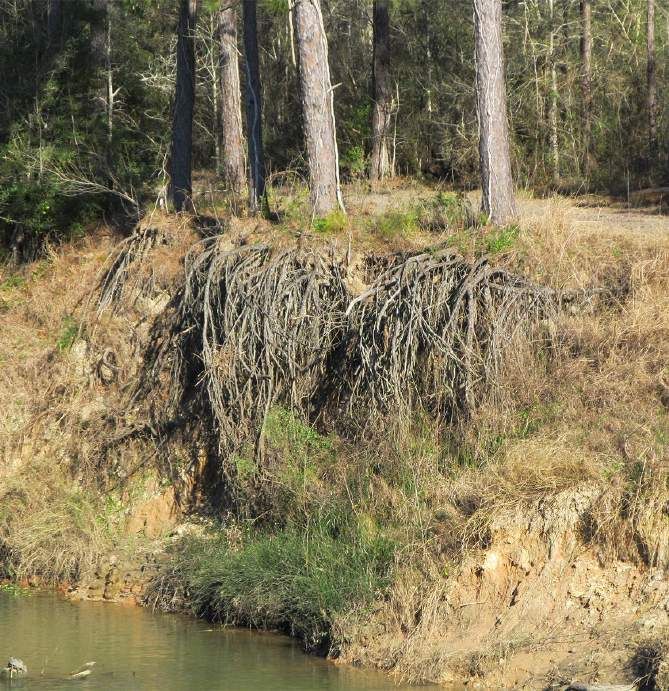
History and Background of Camp Mohawk
• 1929 - Andrew Moller received a check for $10,000 for an
  oil lease on some property he owned, and on December 21
  he used it to purchase these 35 acres of land for a camp
  meeting ground and church camp.
    • Property was deeded to the trustees of the Gulf Coast
       Union Camp Meeting Association.
    • Neighbors far and wide came to help clear the land for
       camp meetings.
    • Dug Horseshoe Lake, dammed it up and put a levy
       around it.
    • Henry Clement (Karen’s great-Grandfather) was hired to
       oversee construction of the camp.
                                                               Young Henry Clement
History and Background of Camp Mohawk
• 1930 - First meeting held on April 21 with 1200-1500
  attending.
    • Officially named the Gulf Coast Union Camp Meeting
      Association.
    • Directors and trustees were elected; W.A. Moller,
      Henry Clement and J.T. Loggins were elected as the
      first 3 trustees.
    • Henry Clement built the first Tabernacle and poured
      the foundation on July 1, placing a 1927 nickel in the
      cornerstone of the slab, according to his personal
      diary, which he kept daily from 1894 until his death in
      1964.
    • The association began holding non- or                       Page of Henry Clement’s personal
                                                                diary, showing entry from July 1, 1930
      interdenominational church service in the Tabernacle.
History and Background of Camp Mohawk
• 1940 - Brazoria County Old Timers Association was formed.
   • There are no dues or fees to belong to the association.
   • Members voted to have an annual barbeque every year
     at no cost to attendees.
   • Barbeque to be held 3rd Sunday in October at 1:00pm
     so all had a chance to attend church before event.
   • The Old Timers reunion and barbeque is still held every
     year and is attended by many.
• 1941 - Henry Clement fell and broke his hip, and wasn’t
  able to maintain the camp buildings any longer.               Elderly Henry Clement
   • He walked with a single crutch the rest of his life, but
     was still able to put a new roof on his home.
   • Died on December 20, 1964 at the age of 95.
History and Background of Camp Mohawk
• 1944 - Signed 20-year lease with the Bay Area Boy Scout Council; camp
to be used for training and camping programs.
• Boy Scouts named the site Camp Mohawk and later it was officially
changed to that name.
• Boy Scouts cleaned brush and weeds and built additional camp
sites.
• They also built a large swimming pool at the camp.
• When lease expired in 1964, the Boy Scouts chose not to renew
lease and the camp was used very little after that.
• 1965 - New Chapel was built to replace the old Tabernacle.
• July 25, the chapel was dedicated and named the Andrew Moller
Chapel and a memorial service was held in honor of Henry Clement
and EC Kimmons, two faithful workers of the camp that had passed
away.History and Background of Camp Mohawk
• 2001 - Brazoria County acquired the camp property, and made it a
county park.
• It is a 55-acre day use park with overnight facilities.
• The camp features self-contained cabins, climate-controlled
dormitories with kitchens, tent camping areas, a chapel, covered
pavilions, picnic areas with grills, a three-acre lake with a canoe
launching area, swimming pool, playground, basketball court,
baseball field, extended trail system, paved parking areas, and
restrooms.
• The park includes the only native stand of Loblolly Pines in Brazoria
County.
“The pine trees and the winding bayous will echo for some time to
come with the strains of ‘Look who’s here,’ and ‘I haven’t seen you in
so many years!’”
– Houston Chronicle October 2, 1949Loblolly Pine—Background Information • pinus taeda (pron. PIE-nus TEE-duh) L., Sp. Pl. 1000. 1753. • Aka: rosemary pine (due to aromatic, resinous foliage); old field pine (due to tendency to take over abandoned areas); bull pine (due to large trunk); Indian pine; longstraw pine; Arkansas pine; North Carolina pine; and shortleaf pine. • In the south, loblolly means “a depression” — originally seen in river beds; also “mudpuddle.” • It is the most commercially important forest species in southern U.S. — extensively cultivated in forest plantations for pulpwood, lumber, and biomass. • Also important in reclamation, screen and erosion control, and to provide light shade.
Loblolly Pine Growth Habits
• Medium-lived tree with average life of 100 years.
• Oldest recorded stand (in North Carolina) has an
  average age of 240 years with largest tree
  measuring over 53” dbh (diameter at breast height)
  and 150’ tall. (The current species champion near
  Urania, LA, is 56.3” dbh and 163’ tall.)
• Fast growing—2’ per year.
• Mature height 50-80+ feet (but can reach 150’) with
  a 30’ spread.
• Pyramidal shape when young (so ideal for
  screening), but loses lower limbs as it ages and
  forms a fairly open oval with rounded crown at
  maturity.
Loblolly Pine Growth Habits
• Foliage
   • Simple-leaved evergreen with alternate, spiral leaf
     arrangement.
   • Filiform (needle-like shape)
   • Blade length 6-9” with clusters of 3 needles (versus 2 for
     Virginia Pine, and 5 for Eastern White Pine.)
   • Color turns from light green to darker green to brown.
• Flower
   • Yellowish-orange inconspicuous, spring flowering (Feb-
     Mar) that gives way to cones
• Fruit
   • 3-6” dull-brown, prickly cones in groups of 2-5 with sharp
     spines that mature in fall.
   • Both males and females present on tree; males are
     yellow and release yellow pollen.
Loblolly Pine Growth Habits
• Rooting Habit
• Influenced by age, soil, and soil environment.
• Young trees develop short taproots that
generally cease growth in favor of extensive
lateral-root system.
• Longer taproots in deep, sandy or loamy soils;
shorter and stouter in heavy clay;
prominent superficial roots in wet or
impenetrable hardpan soils.
• Root system generally wider than crown.Loblolly Pine Growth Habits
• Trunk, Branches and Bark
• Straight trunk with mostly
upright branches that don’t
droop, and are not showy;
susceptible to breakage at
crotch or its weakish wood.
• Thick dark gray and “scaly”
bark — resistant to fire;
brown layers underneath.Loblolly Pine Growth Habits
• Associated Forest Cover
• Found in pure stands and in mixtures with other pines and/or hardwoods and in
association with a great variety of other vegetation. When it predominates, it forms the
forest cover type “Loblolly Pine”; in fields it is a pioneer tree.
• In east TX, often found in mixed stands, as is the case in Camp Mohawk, where the Feb.
2008 survey identified: cherrybark, bur, live, bottomland post, shumard, swamp
chestnut, water and willow oaks; American hornbean beech; eastern red cedar; rough-
leaf dogwood; American, cedar and sugarberry elm; mimosa; American basswood;
chinaberry; box elder; red mulberry; green ash; dwarf palm; parsley hawthorn; gum
bumelia; western soapberry; Chinese tallow; American sycamore; pecan and water
hickory; eastern cottonwood; and black willow.
• Found in association with a great variety of lesser vegetation (per the Feb. 2008 survey,
approx. 12 species of shrubs; 13 vines; 46 forbs; 16 grasses; and 1 fungus.)
• Moderately tolerant of shade when young but classed as intolerant as adult.Fauna Associated with Loblolly Pine
• Camp Mohawk provides a checklist of species that
includes:
• 57 species of birds
• 46 species of butterflies
• 17 species of dragonflies
• 4 species of damselflies
• 11 species of amphibians and reptiles
• 4 species of mammals
• We believe that more species are likely that have not
yet been documented.
• The Loblolly Pine provides an important source of food
and shelter for this fauna.Fauna Associated with Loblolly Pine
• Animals Using as Food Source (in or likely in Camp Mohawk):
• Eastern Cottontail; Eastern Gray Squirrel; White-tailed Deer; Beaver; White-
breasted Nuthatch; American Goldfinch; Red-bellied Woodpecker; Carolina
Chickadee; Tufted Titmouse; Mourning Dove; Yellow-bellied Sapsucker; Green
Stinkbug; Dogday Harvestfly; and Virginia Pine Sawfly.
https://www.google.com/webhp?sourceid=chrome- https://www.google.com/webhp?sourceid=chro https://www.google.com/webhp?sourceid=chrome-
instant&ion=1&espv=2&ie=UTF-8#q=eastern+cottontail me-instant&ion=1&espv= 2&ie=UTF- instant&ion=1&espv=2&ie=UTF-8#q=green+stink+bug
8#q=tufted+titmouseFauna Associated with Loblolly Pine
• Animals Using as Shelter (in or likely in Camp Mohawk):
• Eastern Cottontail; Raccoon; Virginia Opossum; Red Fox; Eastern Gray Squirrel; White-
tailed Deer; Pileated Woodpecker; Red-bellied Woodpecker; Bald Eagle; Osprey; and
American Robin.
https://www.google.com/webhp?sourcei
d=chrome-instant&ion=1&espv=2&ie=
UTF-8#q=red-bellied%20woodpeckerLoblolly Damaging Agents
• Insects*: (the majority of attacks are insignificant in terms of damage and mortality)
• Bark beetles, especially southern pine beetle (dendroctonus frontalis)
• Pine engraver beetles (ips spp.) in small or isolated stands
• Pine tip moths (rhyacionia spp.) in young trees
• Seedling debarking weevils (hylobius spp. and pachylobius spp.) in seedlings
* most infestations occur in stands under stress or in dead wood
• Diseases:
• Seedling susceptibility to black root rot (fusarium spp.) and fusiform rust (cronartium quercuum
f. sp. fusiforme)
• Root rot (Heterobasidion annosum), generally not a problem in natural stands
• Phaeolus schweinitzii causing root and butt rot
• Red heart (Phellinus pini) via dead branch stubs and usually in older trees
• Weather:
• High winds (especially older trees and those with large cankers due to rust disease and in
thinned stands); cold and ice; water standing over two weeks; severe drought; and lightning.Loblolly Damaging Agents
• Fire:
• On Labor Day 2011, the Bastrop Complex Fire was the
worst fire in the history of Texas:
• 32,400 acres destroyed
• 1,696 homes / businesses / structures destroyed
• The fire, aided by high winds and severe drought,
jumped four-lane divided highway 21, also jumped
four-lane divided highway 71, and jumped the
Colorado River.
• Many of the trees destroyed in this fire were Loblolly Pine trees, in a part of the “Lost Pines”
region of Central Texas.
• This is the westernmost stand of Loblolly Pine trees in the U.S.History of Loblolly Damage at Camp Mohawk
• Hurricane Ike
• In September 2008, caused the loss of
approximately 300 Loblolly Pines.
• Drought
• In 2010-2011, the severe drought left the
Loblolly Pines susceptible to insects.History of Loblolly Damage at Camp Mohawk
• Insects
• Southern Pine Beetles caused the loss of approximately 200 more Loblolly Pines.History of Loblolly Damage at Camp Mohawk
• Erosion
• Many of the Loblolly Pines along the banks of
Chocolate Bayou are in danger of falling as the
soil has eroded, leaving their root structures
exposed and no longer firmly anchored.Loblolly Range • Native evergreen in 14-15 states
• Native Range: east coast from NJ to
central FL and west to eastern TX
• Northern extension limited by low
temperatures and cold damage
• Western extension limited by inadequate
precipitation
• Prefers humid, warm-temperate with long,
hot summers and mild winters with avg.
annual rainfall from 40-60” and frost-free
period in the range of 5-10 monthsLoblolly Pine Growth Habits
• Soil and Topography
• Thrives in wide variety of soils, from flat, poorly drained to relatively
dry soils of inland Atlantic Plain, Piedmont and Intercoastal Plain of E
Mississippi, NE Louisiana, S Arkansas and E Texas.
• Best growth on moderately acidic soil with imperfect to poor surface
drainage, a thick medium-textured surface layer, and a fine-textured
subsoil.
• Poorest performance on shallow and/or eroded soils, and very wet or
waterlogged sites.
• Topography varies: from flat near the coast to hilly inland (up to 1,000’
elevation in GA), valley floors, ridges, ridge tops and narrow valleys,
flats and mesa-like forms, depressions and low domes.Loblolly Pine
Range and
Habitat
Bastrop
State
Park
Camp
Mohawk,
Brazoria
County AreaBrazoria Soils
Supporting Camp
Loblolly Mohawk
Woodland
General Soil Map
of Brazoria County
Loblolly Pines along with mixed
hardwoods are predominant in the
following soil types in Brazoria County:
• 1 Lake Charles
• 3 Bernard-Edna
• 5 Edna-Aris
The remainder of the county soil types
predominantly support mixed
hardwoods.Detailed Map
of Soil Types Camp
MohawkConclusion and Future • Loblolly Pines are normally associated with mixed hardwoods and are primarily located in an 8 to 12 mile radius of Camp Mohawk in northern Brazoria County. • From the perspective of natural impact, the type of soil is the primary reason for Loblolly Pine success in the area. • From the perspective of human impact, the historical utilization of the area as an encampment during the Civil War, followed by its use as a private recreational camping area, and finally by its designation as a county park, has protected the extant population of Loblolly Pines from the agricultural clearing that has greatly affected the majority of the landscape in this part of Brazoria County.
Conclusion and Future
• The huge loss of Loblolly Pines due to Hurricane Ike and the pine bark
  beetle infestation associated with the 2010-2011 drought has already
  greatly impacted the number of pines remaining in the area.
• Much of the current population is fragile due to erosion along the
  banks of Chocolate Bayou.
• If weather conditions in the future bring about another devastating
  storm system and/or drought, we could lose even more of the
  remaining Loblolly Pines.
Conclusion and Future
• Our team feels that it is important to
  establish a program focused on transplanting
  and protecting young pines within the
  boundaries of Camp Mohawk in order to
  ensure that the population is able to rebound
  and thrive. Prescribed burns or clearing may
  be required.
• The designation of Camp Mohawk as a
  county park provides us with the opportunity
  to ensure that the Loblolly Pines are here for
  many more generations to cherish and enjoy
  in the future.
Source Information
• Cradle of Texas Master Naturalist Camp Mohawk Flora 02/06/08
• http:// www.arborday.org/Trees/treeguide/TreeDetail.cfm?ItemID=899
• http:// www.na.fs.fed.us/pubs/silvics_manual/Volume_1/pinus/taeda
• http:// www.fcps.edu/islandcreekes/ecology/loblolly_pine.htm
• http://www.forestry.ok.gov/Websites/forestry/Images/trees,pineloblolly.pdf see printout US forest svce dept of
  agriculture
• http://www.wildflower.org/plants/result.php?id_plant=PITA Lady Bird Johnson Wildflower Center ed 2015
• https://www.ncsu.edu/project/dendrology/index/plantae/vascular/seedplants/gymnosperms/conifers/pine/pinus/austral
  es/loblolly/loblollypine.html North Carolina State University
• Soil Survey of Brazoria County, Texas, United States Department of Agriculture Soil Conservation Services, in cooperation
  with the Brazoria County Commissioners Court and Texas Agriculture Experiment Station, 1978
• “The History of Liverpool, Texas and Its People” published by the Liverpool History Book Committee, 1996
• Personal Diary of Henry Clement , 1929
• Houston Chronicle, Oct. 02, 1964 ‘Brazoria Old-Timers Have Big Reunion” Page 22A
You can also read


