LOGGERHEAD TURTLE - Dance Matters
←
→
Page content transcription
If your browser does not render page correctly, please read the page content below
LOGGERHEAD
                        TURTLE

                                     GRADE: FIRST
  SUBJECTS: ELA, SCIENCE, SOCIAL STUDIES, VISUAL ARTS

Earth Songs is made possible by the Cities of Charleston and North Charleston Lowcountry Quarterly
    Arts Fund, the Joanna Foundation, the John and Susan Bennett Memorial Fund of the Coastal
 Community Foundation, the Post and Courier Foundation, and the South Carolina Arts Commission
LOGGERHEAD TURTLE
Make a line stage right
Rare, Threatened, and Endangered Species of South Carolina
Move to a new spot
Northern Cricket Frog
Bachman's Sparrow
Green Salamander
Timber Rattlesnake
Eastern Red Bat
Move to your dancing spots
Eastern Woodrat
Island Glass Lizard
Santee Crayfish
Swamp Rabbit
Eastern Cougar. Cougars were eliminated from South Carolina due to loss of the forests and due
to farming and hunting in order to protect the farms. Today there are no wild populations of
cougars in South Carolina.
The Little Blue Heron is threatened by habitat loss linked to climate change especially in coastal
areas. Sea level rise and saltwater encroachment, as well as extreme weather events, negatively
impact the species. Important nesting sites need to be protected with buffer zones to inhibit
disturbance.
Bottleneck Dolphins are not endangered, but they are susceptible to human activity. Getting
caught in fishing gear, pollution. Even noise pollution can interfere with their ability to
communicate. Ten years after the heat wave of 2011, researchers found that dolphins’ survival
rates decreased by 12 percent and female dolphins gave birth less often -- a phenomenon that
lasted at least until 2017.
Black Swamp Snake. The snakes reliance on fishless wetlands makes them vulnerable to habitat
destruction. In the United States, many states have lost as much as 80% of their wetlands,
resulting in the loss of species that are restricted to these wetland habitats. When average yearly
temperatures rise, species like snakes will need adapt by migrating to warmer climates.
Loggerhead turtle
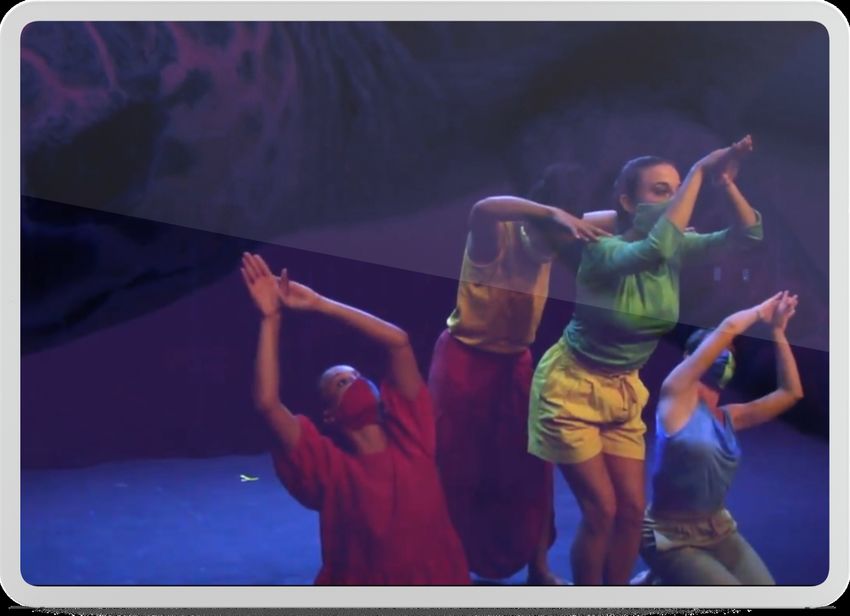
Form a giant sea turtle
The waters off the coast of South Carolina are host to many sea turtle species, ranging from
massive loggerheads to the smallest Kemp’s Ridley.
Despite their tough shells, these ancient reptiles face daily battles for survival.
Injured turtles that wash on shore are victims of everything from commercial dredging and
fishing hooks to shark and stingray attacks.
2“Turtles” begin to exercise
The South Carolina Sea Turtle Rescue Center are on constant standby, ready to rehabilitative
these ancient reptiles and return them to their natural ocean habitat.
One by one the “turtles” return to the ocean (spread in a wavy line close to the audience)
Tank 1 Edisto, 30 years old, found floating with a crab trap entangled around it’s flipper, released 2007
Tank 2 Destiny, female green sea turtle, a cold event in North Carolina causes many sea turtles to strand on
beaches, released 2009
Tank 3 2 juvenile Kemp Ridleys, Little Debbie and Squirt, hooked from a fishing pier, released June 2013
Tank 4 Caldwell, a 45-lb. juvenile Loggerhead, stranded off Hilton Head SC July 2017
Dancers weave in and out of each other in a shape line to form a circle
The Earth does not belong to us: we belong to the Earth.
What we do to the forests of the world is but a reflection of what we do to ourselves and to one
another.
Hold your hands over the Earth as over a flame.
To all who love her, she gives of her strength.
For the gifts of life are the Earth’s and they are given to all.
3LOGGERHEAD TURTLE
AUTHOR: KELLY JAMES SUBJECTS: ELA, SCIENCE,
GRADE: FIRST SOCIAL STUDIES, VISUAL ARTS
STANDARDS
ELA SOCIAL STUDIES
Standard 1: Write arguments to 1.G.4 Describe and compare
support claims with clear various landforms within South
reasons and relevant evidence. Carolina through the use of
1.1 Explore print and primary and secondary sources.
multimedia sources to write This indicator was developed to
opinion pieces that introduce encourage inquiry into a variety
the topic, state an opinion, of sources used to investigate
give a reason for the opinion, and compare different landforms
and provide a sense of closure (e.g., coastlines, lakes, mountains,
and rivers) within South Carolina.
SCIENCE VISUAL ARTS
LS1.D Information Processing: I can use and combine materials,
Animals have body parts that techniques and processes to
capture and convey different make art.
kinds of information needed for
growth and survival. Animals
respond to these inputs with
behaviors that help them survive.
Plants also respond to some
external inputs.
MATERIALS
informational text read-alouds white construction paper
(for teachers and students) colored pastels
4INTRODUCTION
1. The teacher will have the students share their prior knowledge of
endangered species and how they can rehabilitate injured animals.
OBJECTIVE
The students will learn information on how to help protect the
environment and assist with endangered species, specifically the
loggerhead turtles, which are found in the water landforms off the
Coast of South Carolina.
The students will design a persuasive poster on why endangered
species should be protected.
LESSON
1. The students will watch the dance video of the Loggerhead.
2. The teacher will read the informational text of "National Geographic
Sea Turtles" and "One Tiny Turtle" by Nicola Davies to obtain facts for
the informational word web.
3. The teacher will discuss opinion writing using the OREO model
(opinion, restate opinion with 'because', give an example to support
opinion, close the writing with a restatement of the author’s opinion).
4. Students will brainstorm ways to protect loggerhead turtles in the wild
and the importance of not polluting the air and water.
5. The students will design a “Protect Loggerheads, Endangered Species
Poster” that includes their opinion of the importance of protecting
endangered species and conservation of the air and water habitats.
6. The teacher will have the students view a video on how to draw a
realistic sea turtle.
7. The students will develop a visual poster to help save sea turtles.
5CLOSURE
Students will share their posters with their peers and verbally share one
way to help save turtles, their environment, or the significance of
bringing about rehabilitation to those that are injured.
ASSESSMENT
In this informal assessment the teacher will observe students' completed
artwork and small group partner discussion to evaluate student
comprehension of informational facts, science standards, and visual art
procedures.
RESOURCES
Davies, Nicola, and Jane Chapman. One Tiny Turtle. Walker Books Ltd,
2015.
How To Draw A Realistic Sea Turtle, YouTube, 28 Apr. 2017,
www.youtube.com/watch?v=6DXTWTbd8G4&ab_channel=ArtforKidsHub.
Read Aloud- Sea Turtles by Laura Marsh | Nonfiction Animals, YouTube, 21
July 2020, www.youtube.com/watch?
v=UICKJ8GJ0ZA&ab_channel=Mrs.Tempel%27sStorytime.
6You can also read


