Major Events Legacy Framework Braehead and Beyond 2016 to 2020
←
→
Page content transcription
If your browser does not render page correctly, please read the page content below
Scottish Curling
                    Legacy Framework 2016-2020

Major Events Legacy Framework

     Braehead and Beyond

        2016 to 2020

                                              1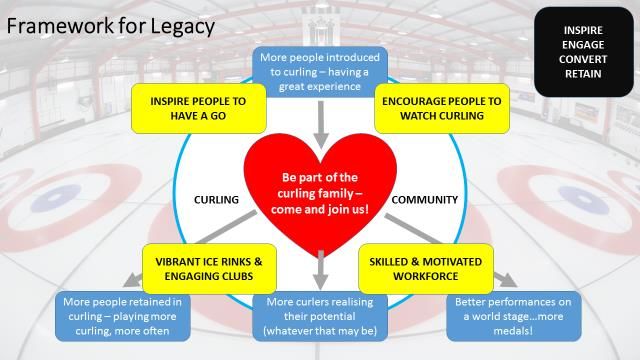
Scottish Curling
                                              Legacy Framework 2016-2020

CONTENTS

SECTION                                                        PAGE

 1   Foreword                                                      3

 2   Introduction – Braehead and beyond                            4

 3   A Curling Legacy for Scotland                                 5

 4   A Shared Purpose                                              6

 5   The Legacy Framework                                          7

 6   Assessing Impact – Making a Difference                        8

 7   Bringing the legacy to life                                   9

     Appendix 1 - Braehead 2016 KPI’s                             16

                                                                        2
Scottish Curling
                                                                Legacy Framework 2016-2020

SECTION 1:            Foreword

Scottish Curling has chosen to use a series of major international curling competitions as
a catalyst that will stimulate future growth across the country. Experts from within the
curling community and some from other sports have lent their expertise to the shaping
and development of this framework that is underpinned by the RCCC Strategic Plan 2015-
19.

The number of people curling in Scotland and the number of curling rinks in the country
have reduced over the last twenty years. This Legacy Framework is the first time someone
has put down on paper a plan for how to grow the sport and increase the numbers enjoying
curling and safeguarding the facilities for the future. It is based on a systematic approach
to planning, organising and delivering activities with well-trained people and ensuring
there is a warm welcome and positive experiences that make people want to come back
and do more.

In addition to the established programmes like Try Curling and Curling’s Cool, new
approaches are being deployed to reach new audiences and bring them into the curling
family in the ice rinks across the country.

The future of the sport is in the hands of the clubs, volunteers and facilities where the
games are played, relationships are made and experiences shared. Having created this
Framework, the RCCC has provided some leadership but it sees its role as being a member
of the team of individuals and organisations that can achieve more by collaborating and
working together to grow the game of curling in Scotland in 2016 to 2020 and beyond.

                                                                         Bruce Crawford
                                                                    Chief Executive Officer
                                                             Royal Caledonian Curling Club
                                                                           November 2016

                                                                                           3
Scottish Curling
                                                                      Legacy Framework 2016-2020

SECTION 2:             Introduction – Braehead and beyond

18th November 2016 will see the first major check point along a journey that began back
in 2014 with the monumental announcement that Scotland will host four major
international curling championships between 2016 and 2020. The opening ceremony for
the first of these events, Le Gruyere European Curling Championships, will mark the start
of this exciting period for the traditionally Scottish sport of curling.

No other sport in Scotland will experience such a bright period in their history; this really
is an opportunity unparalleled in Scottish sport in the modern era. For each of the next
four years, curling in Scotland will be able to leverage the huge potential offered by hosting
such an event, which in turn will greatly contribute to the positive promotion of the sport
of curling throughout every community in the country.

                                 European Championships
                                 Braehead Arena and Curling Rink, Glasgow

                                 World Junior Curling Championships
                                 Curl Aberdeen

                                 World Wheelchair Curling Championship
                                 The Peak, Stirling

                                 World Men’s Curling Championship
                                 SSE Hydro, Glasgow

This ambitious and unique multi-event package presents a long term commitment to the
sport by the national governing body for curling in Scotland, The Royal Caledonian Curling
Club, and its bidding partners EventScotland and UK Sport, and key Local Authorities of
the City of Glasgow, Renfrewshire, Aberdeen and Stirling.

The events will form part of EventScotland’s International Events Programme and UK
Sport’s Gold Event Series. Significant partner funding has been secured across all four
championships and this collaborative approach aims to take the sport to the next level in
Scotland by delivering a series of events to the highest possible standard and promoting
wide spread public participation and engagement.

The purpose of this legacy framework is to articulate how the curling community
throughout Scotland intends to work together to ensure that the full impact of this unique
opportunity is understood and developed to its’ true potential. This is truly an ambitious
project which will amplify the enthusiasm, excitement and passion of the current curling
community into the wider communities across Scotland.

“Hosting these events will raise the profile of the sport and give our curlers a huge opportunity to
  compete in front of their enthusiastic and patriotic fans here in Scotland, the home of curling,
        which I hope will encourage more people try their hand at this wonderful sport.”

                                  Jamie Hepburn MSP, Scottish Government Sports Minister

                                                                                                   4
Scottish Curling
Legacy Framework 2016-2020
SECTION 3: A Curling Legacy for Scotland
The ambition for all those involved in curling across Scotland is that the European Curling
Championships in Braehead in November 2016 will mark the start of a meaningful legacy
that will go way beyond the four major events considered in this framework. From novice
curlers to elite athletes; from club volunteers to qualified coaches; from those who have
been involved in curling for a lifetime, to those who have not yet discovered the joys of
the sport…this legacy is about creating an inclusive and inspiring infrastructure that will
support the development of the sport throughout the traditional home of the sport.
What is legacy?
Defining the word ‘legacy’ as relates to a major sporting event is, in itself, somewhat of a
challenge. Individuals will have their own interpretation of what ‘legacy’ should be, and
on many occasions there is an expectation that the mere presence of a major event will
somehow magically deliver a sense of lasting legacy.
The Concise Oxford Dictionary defines legacy as:
1. A gift left in a will
2. Something handed down by a predecessor
The Glasgow 2014 Legacy Framework considered legacy for the 2014 Commonwealth
Games to be as follows:
“Legacy is the set of benefits left behind well after a major event, like Glasgow 2014, has ended.
Lasting benefits will be both tangible (e.g. job opportunities; business opportunities; new
infrastructure investment), and less tangible (e.g. enhanced image; civic pride; improved health;
improved community engagement).”
Legacy research into the 2012 London Olympic Games by the Centre for Sport, Physical
Education and Activity Research at Canterbury Christ Church University identified two clear
areas of impact resulting from major sporting events:
1. Demonstration Effect – the notion that individuals will see a new activity at a
major event and subsequently want to ‘have a go’.
2. Festival Effect – the general ‘feel good’ impact created through a major event
Both effects are relatively short-term and therefore action must be swift to maximise the
opportunity of building on the excitement created by a major event – be that in terms of
participation or development. For curling in Scotland this means being ready to act from
the first event in 2016.
In simple terms for Scottish Curling, the real legacy of the European Curling
Championships at Braehead in November 2016, and the subsequent events in 2018, 2019
and 2020, is the opportunity to enhance and build upon the existing passion, programmes
and projects. Our legacy will be the development of stronger partnerships, more strategic
collaborations, more innovative ways of working and more consistent communication
throughout the curling community in Scotland. The events themselves will not deliver
legacy; it is the motivated people and vibrant communities around the ice rinks of Scotland
who will come together to deliver a long-lasting and successful legacy. We collectively
believe that the focus on each of the four major events in Scotland over the coming years
will allow us to:
Accelerate the progress of development to help us achieve our dreams more
quickly
Motivate more people to become part of the curling community of Scotland
Raise the profile of curling across Scotland to showcase the very best of the sport
5Scottish Curling
Legacy Framework 2016-2020
SECTION 4: A Shared Purpose
Our shared purpose within the curling community is simple. We want more people to join
us and discover all that involvement in curling has to offer. Curling is not just a sport; for
many it is a way of life and for others the heart of their personal and social lives. Curling
offers the opportunity to be physically active and socially engaged. It provides individuals
with the chance to test themselves mentally as they work out the tactics and techniques
that are unique to our sport. It enables people to connect with each other in a friendly
and supportive – as well as competitive – environment. Whilst curling is built around the
notion of competition at all levels; it is also underpinned by a strong sense of community
spirit and support for others.
Everyone involved in curling wants to utilise this exciting period to share the true meaning
of curling throughout Scotland. With the spotlight on the sport in Scotland whilst these
major events take place, the entire curling community will work together in collaboration
and partnership to share our consistent message. We want to promote our sport to a
wider audience and enable those who are inspired to participate, to do so in a friendly and
welcoming environment. We also want to support everyone involved to realise their own
potential – whatever that may be – and to develop future champions who will continue to
help us promote curling on the highest possible stage.
6Scottish Curling
Legacy Framework 2016-2020
SECTION 5: The Legacy Framework
As already highlighted within this document, the intention is that the presence of the four
major events in Scotland between 2016 and 2020 will help to accelerate progress towards
our shared goals, motivate people to join the curling community and raise the profile of
all the great work that already happens in curling clubs and facilities throughout Scotland.
This Legacy Framework sits alongside the Strategic Plan for curling (2015 to 2019) and
seeks to bring to life the collective aims and objectives outlined in this existing plan. All
involved in Scottish curling want to see the development of stronger partnerships, the
emergence of more strategic collaborations, the establishment of more innovative ways
of working and the delivery of more consistent communication throughout the curling
community in Scotland.
This will be the true legacy of these four major events and the unique opportunity
associated with their presence in Scotland.
LEGACY VISION
To inspire and engage more people to become part of the curling family
SHARED PURPOSE/OUTCOMES LEGACY THEMES
To drive and support world class
Encourage people to watch curling
performances at world level
To introduce more people to curling through
Inspire people to have a go
a great first experience
To ensure those already involved in curling,
Vibrant ice rinks and engaging clubs
stay involved
To help all curlers realise and achieve their Skilled and motivated workforce
potential
By working together to create a shared purpose and approach, the motivated people and
vibrant communities around the ice rinks of Scotland will deliver a long-lasting and
successful legacy for curling throughout Scotland. This Legacy Framework will help curling
schools, clubs, Local Authorities, Development Groups, ice rinks, provinces, areas, the
governing body, funding agencies and all those with an interest in and passion for plan
and direct their efforts and resources in the coming years.
Each Legacy Theme is set out in more detail in Section 7 – Bringing the legacy to life.
7Scottish Curling
Legacy Framework 2016-2020
SECTION 6: Assessing Impact – Making a Difference
Measuring the impact of this framework is essential if we are to evaluate the success of
this framework and associated plans. The legacy of these events, as already outlined, will
be delivered over a significant period of time and therefore true success will not be fully
visible or understood for several years. This framework will therefore adopt a logic model
approach to evaluating success, which is based on the ‘theory of change’ approach that
considers how immediate activities (i.e. programmes delivered today) link to longer-term
change in a specific context.
Utilising this approach will enable those leading this framework to truly understand the
impact of the actions taken and interventions made within the scope of each legacy theme
and the broader framework. It will provide the basis for identifying how each activity or
intervention will lead to the desired within each theme. It is well-documented that this
type of approach leads to better planning and more informed evaluation, as it is possible
to measure progress towards the achievement of longer-term goals that goes beyond the
identification of program outputs.
In simple terms, the success of this legacy framework will ultimately be measured in terms
of the overall impact of all activities and interventions on our end goal – i.e. more people
joining the curling community. In order to get to this point, we will have ‘checkpoints’
along the way that indicate how we are progressing. These checkpoints will be identified
in terms of the activities we deliver (short-term), the outcomes that we see (medium-
term) and the overall impact that we have (long-term):
GOALS ACTIVITIES OUTCOMES IMPACT
But what does this really mean? Each Legacy Theme will include information on how we
will chart our progress along the way. For each theme, we will identify what we aim to do
(our goals); the activities we will implement along the way in order to progress towards
our goals; the check-points along the way that identify the changes and/or developments
we will see (outcomes); and also we will highlight the intended impact for each theme.
HEADLINE WHAT IT MEANS
GOALS We aim to…
ACTIVITIES We will do this by…
OUTCOMES As a result we will see…
IMPACT Impact in 2020 will be…
In the initial phase of development, (November 2016), activity will focus on events at
Braehead around the European Championships in 2016, where specific KPI’s have been
established and agreed. These KPI’s are detailed in the Appendices.
Longer-term, activity will spread across Scotland and seek to engage the entire curling
community in working towards our shared goals. Ultimately we all need people to be
curling in our ice rinks in order to sustain and grow our sport – and the facilities and
communities within which this activity takes place. We must all work together,
collaborating and challenging each other along the way, to ensure that we continue to
develop innovative solutions to our collective challenge of continuing to grow curling for
now and for the future.
8Scottish Curling
Legacy Framework 2016-2020
SECTION 7: Bringing the legacy to life
This section will detail each theme and identify the headline activities, outcomes and
impact for each theme – linked to the overall goal.
THEME 1 – ENCOURAGE PEOPLE TO WATCH CURLING
We know from the SPEAR research into major events, referenced
earlier in this framework, that there is a ‘Demonstration Effect’
created by major events, based on the notion that individuals will
see a new activity at a major event and subsequently want to ‘have
a go’. It is this ‘demonstration effect’ that we need to harness with
the major events taking place in Scotland in the coming four years,
which must include our own Scottish Championships and other key
events such as the Winter Olympics and Paralympics in
PyeongChang in 2018.
We have to find ways to encourage new spectators to the sport so
Why is this important?
that we can ‘showcase’ what curling has to offer – not just on the
ice, but throughout the whole curling experience from the moment
they walk through the door the ice rink. We need to raise the profile
of curling as an activity that people see as something that ‘could be
for me’.
This will require challenging and changing perceptions about the
traditional curling experience…and is likely to ultimately require the
introduction of new, shortened and simpler formats of the game and
an altered perception about what being a ‘curler’ really means for
the 21st century consumer.
Utilise the major curling events in Scotland to promote curling as
We aim to…
an opportunity to a wider audience
Delivering a high quality major event experience for curlers,
volunteers and spectators at every major event in Scotland
(including key domestic championships)
Providing access to major events for non-traditional curling
audiences
We will do this by… Developing innovative new ways of marketing the sport of
curling and our major events to untapped markets
Seeking to create a ‘buzz’ around curling that appeals to the
non-traditional or non-curler
Creating a focus and spotlight on curling during the period
2016 to 2020 that seeks to challenge current perceptions
Sell-out crowds at all our major events
New audiences enjoying their curling experience – which
includes watching games and interacting in ‘fan zones’ and
similar off-ice activities
An uptake of the new Scottish Curling Supporters
As a result we will see…
Membership – people actively engaging in the curling
community and showing their support for our teams
Increased awareness of the sport of curling in ‘non-
traditional’ audiences; people starting to see curling as
something ‘that could be for me’
An increased demand for curling from new audiences who have
seen/experienced curling at a major event and now consider it as
Impact in 2020 will be…
something they could engage with, and who want to connect with
curling on a longer-term basis.
9Scottish Curling
Legacy Framework 2016-2020
THEME 2 – INSPIRE PEOPLE TO HAVE A GO
We know from our Membership data that numbers of curlers have
been steadily declining over the past decade. From a time when
curling clubs had full memberships and long waiting lists, we are
now seeing fewer people curling in clubs, fewer teams entering
competitions and fewer new people coming through the doors of
curling rinks. We are also seeing people leaving curling clubs for a
variety of reasons (including lack of time, family commitments) and
we also know that we have an aging curling population.
The simple fact is that we all need want and need more people to
curl if we are to continue to grow the legacy of this great Scottish
tradition. Without new people coming through the doors of ice
rinks…and coming back time after time…we do not have a
sustainable business model. Clubs will fold, rinks will struggle and
we will lose the great sense of community that underpins the sport
of curling. So we have to act now.
We know that we need to try new things – if we simply keep doing
Why is this important? what we have always done, we will not attract this new audience.
We know that we live in a different world today where people face
different pressures on their time and income; choices about leisure
time and disposable income are made in very different ways today
than even ten years ago. We also need to appreciate and
understand that the modern ‘consumer’ (potential curler) may
want/need a curling experience that looks very different to our
current ‘offering’. We need to present curling in a way that appeals
to what our potential customers want – be that a more social
‘experience’ that demands shorter, more recreational formats of the
game, or more coaching provision, or more regularity of time slots.
For a vibrant future, we need more curlers. We must work together
to find ways to inspire people to ‘try curling’, engage these new
people in positive ways within our ice rinks, seek to convert them
into regular curlers (and be prepared to see regular curling in a
different way to our current model), and we must also then retain
all our curlers in the sport and the wider community – if we want
our sport to remain current and vibrant and have a future.
We aim to… Introduce more people to curling through a great first experience
Developing strategic insights into our curling marketplace
to gain a better understanding of what potential new curlers
might want/need from a curling experience
Translating these insights into action at a local level by
developing new and alternative ‘products’ and ‘experiences’
to attract individuals and groups into curling
Marketing curling in a way that appeals to specific market
segments – matching our key messages with a targeted
audience and through appropriate communication channels
Exploring the notion of a ‘curling awareness week or month’
to create a focal point for the sport that challenges existing
We will do this by…
perceptions and opens up local opportunity
Developing new formats of the game that facilitate greater
engagement and involvement in curling at an early stage.
Stepping outside our comfort zone and introducing/trying
new schemes, programmes and activities that present
curling in a way that will appeal to a new audience
Ensuring that every ‘first’ experience of curling is a positive,
welcoming and inspiring one…so that they actually come
back for a second, third, fourth time and beyond
Creating an open and welcoming environment in all of our
ice rinks and facilities
10Scottish Curling
Legacy Framework 2016-2020
A strong and clear communication campaign in place across
Scotland to promote curling to new audiences in a new light
Clear and consistent messages about curling and the
opportunities it offers being delivered through planned and
considered marketing/communication plans
More targeted local recruitment campaigns, driven by
consumer insight and based on local intelligence
Ice rinks reporting increases in numbers of new curlers
coming to try the sport
As a result we will see… A shifting demographic and age profile of curlers – younger
curlers (particularly from the 30 to 55 age bracket) from a
more diverse background
Curling opportunities delivered at a local level reflecting the
wants/needs of consumers and are evolved to ensure that
they provide an engaging ongoing experience
Different formats of the game at all levels – including (for
example) social competitions, coaching sessions, less-
structured ‘turn-up-and-play’ opportunities, shortened
competitions.
A culture of innovation and growth, where ice rinks and clubs are
developing curling ‘products’ and ‘experiences’ based on the
Impact in 2020 will be…
wants/needs of their curlers (and potential curlers). A culture that
is leading to more people being inspired to try curling.
11Scottish Curling
Legacy Framework 2016-2020
THEME 3 – VIBRANT ICE RINKS AND ENGAGING CLUBS
Clubs are at the heart of every sport and curling is no exception.
From their nineteenth century roots, curling clubs have been part of
the fabric of their local communities. Whilst the game has evolved
over time, the essence of curling as a competitive game played with
a true sense of sportsmanship, has remained.
In more recent years, economic, environmental and social factors
have resulted in the evolution of the traditional infrastructure of
curling from its’ original outdoors bases on the frozen fields and
curling ponds across Scotland, to an indoor base within ice rinks and
local facilities. This evolution has had an impact on the sport across
Scotland as it has had to adapt to a structure built around 22 ice
rinks rather than 600+ individual clubs.
Just as the game has evolved since the 15th century, it will continue
to evolve in the 21st century and beyond. Our challenge today (and
particularly for ice rinks, facilities and clubs across Scotland) is to
Why is this important?
understand and embrace these changes in order to develop the next
evolution of the game. We already know from the introduction to
Theme 2 (inspire people to have a go), that the world is ever-
changing and the wants and needs of the potential curler
marketplace are ever changing. Our clubs and facilities must work
together to find new ways of meeting these needs and ensuring that
curlers now, and in the future, have facilities and clubs of which they
can be proud.
We must accept that the traditional curling model does not
necessarily meet the demands of the 21st century consumer – and
we must develop an understanding of what needs to change in order
for us to succeed. We also need to have the courage and conviction
to make these changes. If we do not adapt to our current social
and economic climate by developing facilities that offer a valued
experience, then our facilities and clubs will struggle. We need to
act now to retain our existing curlers (and the new ones we inspire)
so we can continue the curling legacy for generations to come.
Ensure those already involved in curling, stay involved because
We aim to…
they value their curling experience and the opportunities on offer
Developing strategic insights into the wants/needs of our
existing curlers to gain a better understanding of what we
need to deliver to retain their interest and commitment
Translating these insights into action at a local level by
developing new and alternative ‘products’ and ‘experiences’
to retain current members
Seeking to understand why people leave curling and what,
if anything, we could do to retain their interest
Implementing more effective Partnership Agreements and
local Development Plans that accurately reflect the business
needs and priorities of the ice rink and clubs
Working collaboratively between governing body, ice rinks
We will do this by…
and clubs to share knowledge and insight on successful
approaches – and ideas that were not so successful
Supporting clubs and ice rinks to develop their
understanding of areas such as market segmentation,
business planning, innovation and communication
Reviewing central activity (such as competition calendar) to
ensure that the opportunities on offer meet the wants and
needs of each curler segment
Develop new formats of the game to encourage greater
involvement in ice rink/club activity and competition (e.g.
shorter format competitions that take less time; ‘turn-up-
and-play’ style social sessions)
12Scottish Curling
Legacy Framework 2016-2020
Curling rinks becoming more accessible and better utilised
by local communities
Curling rinks perceived as being at the heart of a community
More diverse activities taking place within ice rinks – both
on and off the ice
A greater sense of connection from curlers and their
friends/communities to their local club and rink
Ice rinks generating revenue from an increasing broad
portfolio of activity
Curlers, their friends, families and other local people visiting
the curling rink for social reasons as well as curling purposes
A greater diversity of memberships available within a club
and ice rink
As a result we will see… Membership structures that reflect the wants/needs of
curlers and the local community
Formal Partnership Agreements and Development Plans in
place at local level that are built upon local needs, driving
curling at a local level and more broadly contributing to the
overall strategic goals of curling in Scotland
An increased sense of local ownership over curling activities,
plans and developments
A culture of leadership at all levels as people within clubs,
rinks and facilities take responsibility for driving change at
their local level
A sense of courage amongst clubs, rinks and facilities as
people are willing to try new things in an effort to recruit
and retain new and existing curlers in different ways
More people curling; curling more often; and making more use of
curling facilities and ice rinks – or to put it simply...our 22 ice rinks
Impact in 2020 will be…
will still all be open and at least breaking even financially at the
end of every year.
13Scottish Curling
Legacy Framework 2016-2020
THEME 4 – SKILLED AND MOTIVATED WORKFORCE
Good coaching is an integral part of the development of any player
in any sport and great coaches are known to play a crucial role in
the development of sport and in the lives of the people they coach.
We can all remember the coach or the teacher who inspired us at a
young age to get involved with a sport or a subject…equally we can
also all remember the teacher or coach who put us off that sport or
subject for life.
We know from research from sports coach UK, and other agencies,
that people who receive coaching are more likely to maintain their
involvement in that particular sport. We also know that great
coaching helps to develop a sound connection with a sport as well
as individual confidence and competence within their chosen sport.
Coaching is therefore often seen as ‘business critical’ to the growth
and development of any sport.
For most sports, coaching is an integral part of the experience – at
every level, from beginner to intermediate and beyond. Just as
research tells us that coached players are more likely to stay in a
sport; we equally know that people drop out of sport is because they
don’t feel like they are getting any better; that they are becoming
increasingly frustrated with their own performance. Within curling,
Why is this important? however, there is not currently an obvious ‘culture of coaching’.
Generally speaking, beginners and juniors are offered a variety of
coaching opportunities through schemes such as ‘Try Curling’ and
then into ‘Virtual Clubs’; but for the wider population of curlers,
coaching is not seen as part of the weekly life of a curler
There is also an expectation from new curlers, that coaching will be
on offer for them throughout their curling experience. The dawning
reality that there opportunities for coaching are very limited once
they join a curling club, could very well be a contributing factor to
the drop-out rate from new curlers.
However, this theme is not just about coaching. It is about the
enthusiastic volunteers, time clock operators, line scorers and
umpires that we need to sustain the competitive side of the sport.
It is also about the ‘behind-the-scenes’ volunteers who willingly
invest their own time and energy into developing clubs and creating
opportunities for people to keep curling. This theme is about
creating a curling culture that values and recognises those who
volunteer their time in an effort to grow and sustain the sport of
curling for future generations. Without these coaches, umpires,
club secretaries, competition co-ordinators, officials, development
group members, we will have a sport for the future.
Help all curlers realise and achieve their potential…whatever that
We aim to…
potential may be.
Recruiting, training, supporting and retaining the right
coaches for key roles at all levels
Continuing to develop and implement appropriate coach
education and development opportunities for coaches that
include UKCC endorsed coaching qualifications
Developing a system of mentoring for coaches to develop
We will do this by… and progress post-qualification
Supporting coaches nationally and at local level to ensure
that they continue to progress and develop in their roles
Developing a system of recognition for coaches and
volunteers to acknowledge time and effort
Providing ‘community of practice’ style opportunities for
club and rink volunteers to share practice, success and ideas
14Scottish Curling
Legacy Framework 2016-2020
A strategic workforce strategy in place for coaching and
volunteering
Implementation of an online portfolio system to help
coaches track and manage their progress through coaching
qualification
A network of regular support sessions for coaches and
volunteers at a local and regional level
Sharing of ideas between volunteers in ice rinks and clubs
As a result we will see… as they acknowledge the importance of collaborating and
working together to develop solutions to complex
challenges
A wide range of coaching opportunities delivered by
appropriate coaches at each ice rink to reflect the needs of
the local curlers
Improved and regular communication with coaches and
volunteers through the implementation of a robust and up-
to-date database system
A curling culture that values coaching and coaches as a fundamental
Impact in 2020 will be… part of the curling experience; and that appreciates the time and
effort of the volunteer workforce in creating and sustaining change.
15Scottish Curling
Legacy Framework 2016-2020
Appendix 1
Braehead 2016 KPI’s
Workforce
KPI Measure(s)
Education of new support staff and less experienced Number of coaches and
athletes through the opportunity to invite coaches and athletes attending
athletes to participate in a programme to inspire and programmes
mentor future coaches and athletes
Recruit 100 volunteers to roles identified by LOC. Number of event volunteers
Recruit from established international event volunteer recruited
databases in Scotland and existing RCCC Membership
RCCC to conduct skills audit and compare with workforce Percentage of the
requirements then design workforce training programme workforce receiving special
training for the event
RCCC to provide volunteers with introductory officiating Number of volunteers
courses in areas such as umpiring and time clock attending officiating
operation. RCCC to provide opportunity for existing courses and advanced skills
officiating volunteers to develop their skill sets with the courses
provision of advanced courses
Development
KPI Measure(s)
To introduce the sport of curling to 5-10 schools by Number of schools
providing FOC opportunities to spectate attending the
championships
To provide opportunities to participate in the ’Curling’s Number of schools
Cool’ programme to 5-10 schools participating in the Curling’s
Cool Programme
2,000 people to participate in the Try Curling Number of Try Curling
programme annually participants
Use the event to raise the profile and level of interest in Membership reporting pre
the sport which will in turn lead to increased RCCC and post event that
membership demonstrates 1,000 new
members by June 2017
16You can also read


