Manhattanhenge Offers Photographers a Rare Photo Opportunity - Nikon Photography ...
←
→
Page content transcription
If your browser does not render page correctly, please read the page content below
DECEMBER 30, 2020

INTERMEDIATE

Manhattanhenge Offers
Photographers a Rare Photo
Opportunity
Featuring JAVAN NG

                            © Javan Ng

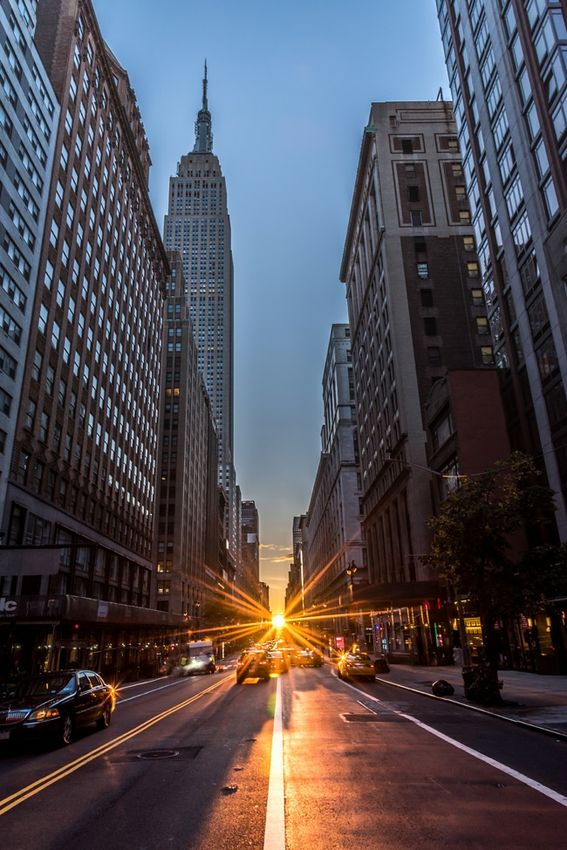
     Sunbursts or flare may fill the frame                                    © Javan Ng
     since you're pointing the camera
                                                       For the starburst effect on your
     directly into the setting sun, adding
                                                       Manhattanhenge photo, use a
     to the photo. D750, AF-S NIKKOR
                                                       small aperture such as f/11 or
     24-120mm f/4G ED VR, 1/125
                                                       smaller. D750, AF-S NIKKOR 24-
     second, f/16, ISO 200, Aperture
                                                       120mm f/4G ED VR, 1/30 second,
     priority, Matrix metering, focal
                                                       f/16, ISO 200, Aperture priority,
     length at 120mm.
                                                       Matrix metering, focal length at
                                                       24mm.

Updated with 2020 dates! Please be safe and practice social distancing if
you venture out to see or photograph this year's Manhattanhenge.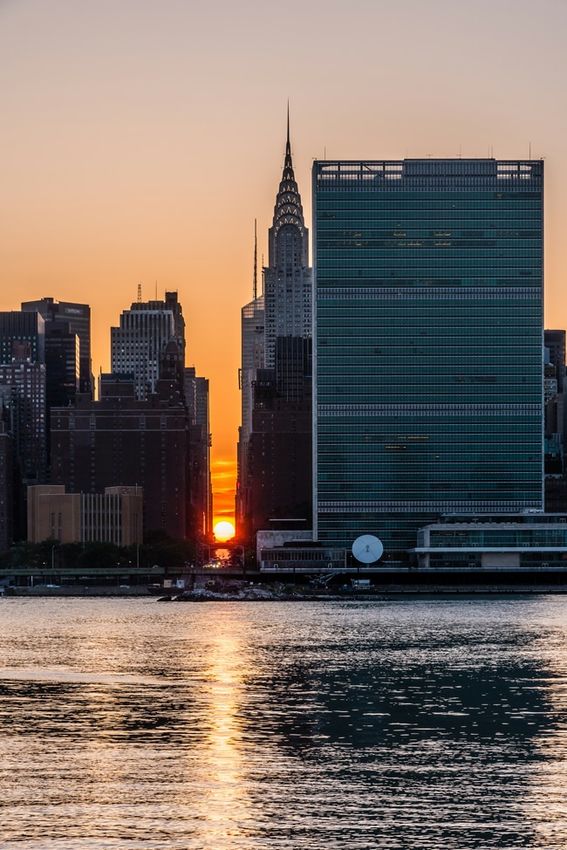
E
      very photographer knows taking the perfect photo requires being in the right
      place at the right time. Nowhere is this truer than during the rare sunset
      photography opportunity of Manhattanhenge, the unique phenomenon that
occurs twice a year around the summer solstice in NYC.

“It’s all about location,” says Singapore-based photographer Javan Ng, “for
Manhattanhenge, you have to be on the city street grid.”

Specifically, during Manhattanhenge (a reference to Stonehenge in England) the
setting sun is aligned perfectly with the east-west street grid of Manhattan.

Indeed, it is such a unique event that only certain cities throughout the world are
fortunate enough to experience a henge like it.

Why does Manhattanhenge happen in
NYC?
And why is that? The answer: City planning.

Specifically, when New York City was designed, the Commissioners Plan of 1811
called for the east-west streets to be 29 degrees off true east/west. As a result, the
event does not happen on the exact solstice each year. Instead it usually occurs in
May and July.

And, it makes NYC ideal for Manhattanhenge—a term coined by astrophysicist
Neil deGrasse Tyson.

When is Manhattanhenge 2019?
For 2020, Manhattanhenge will happen on May 29, 8:13pm (Half sun) and May
30, 8:14pm (Full sun) and July 12, 8:20pm (Full sun) and July 13, 8:21pm (Half
sun).

During the half sun event, only the top half of the sun is seen while during the full
sun the entire circle of the sun is seen between buildings.

The best way to stay up to date on future cityhenges, is to search the internet;
meanwhile the American Museum of Natural History in New York lists the
upcoming New York City ones, as it gets closer to the dates.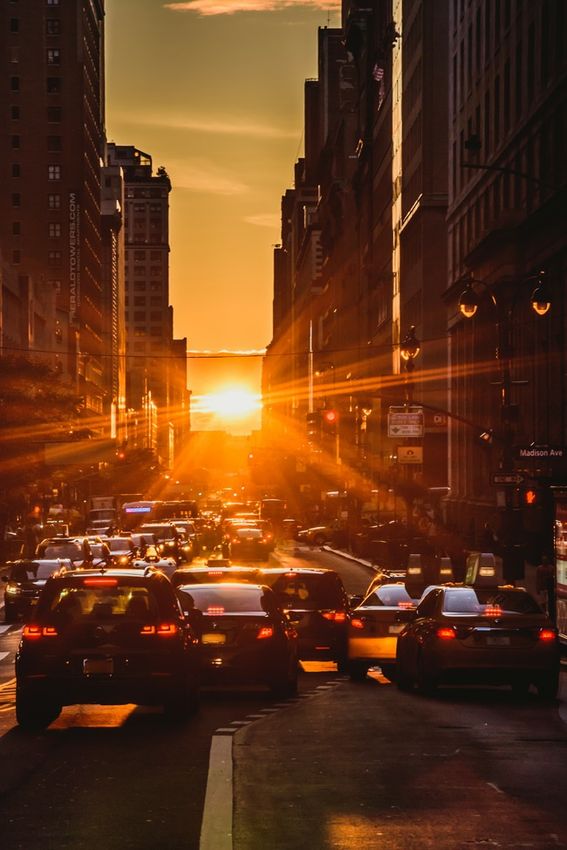
© Javan Ng

            Gantry Plaza State Park in Long Island City is East of Manhattan. The view
            of Manhattanhenge from the park allows you to capture a wide-angle shot
            of Manhattan and the setting sun. D750, AF-S NIKKOR 24-120mm f/4G ED
            VR, 1/125 second, f/16, ISO 500, Aperture priority, Matrix metering, focal
            length at 95mm.

Manhattanhenge Photography Tips
How can photographers capture the best
Manhattanhenge images?
The good news is any camera will do the trick—assuming you are in good
position for the henge. Another suggestion is to use a tripod if you have one to
steady the camera, especially because you might be using long exposures. If you
are shooting handheld, just increase the ISO for a fast enough shutter speed so it
won’t cause blur.

That said, while Manhattan is not the only city with its own henge, it is necessary
to be in one with an east to west street grid.

Where else can I see a city henge?
Other major cities with a cityhenge include: Montreal, Toronto, Chicago, Philadelphia, Boston and Washington DC. Where is the best place to photograph Manhattanhenge? For the clearest views, it’s best to position yourself on the widest crosstown streets, like 14th, 23rd, 34th, 42nd, and 57th Streets. Remember to look around for famous New York City landmarks to enhance the sense of place in your images. For example you have the Empire State Building on 34th Street, or the Chrysler Building and Times Square on 42nd Street. To that end, Javan offers: “Another one of my favorite venues to photograph Manhattanhenge is Gantry Plaza State Park in Long Island City. You get to see the sun setting behind 42nd street. You can shoot close up with a telephoto lens or include the Manhattan skyline in your shot with a wide-angle lens.” Overall, Javan—who first shot the unique event while based in New York City— encourages photographers to take advantage of the opportunity if they can. “It’s a rare sight to see the sun setting in perfect alignment with the city street grid. You don’t get to see this very often." He continues: ”I would love to be back in New York to capture it again if I have the opportunity. It’s amazing and beautiful to see the sun momentarily float above the distant horizon, casting a golden glow on the New York City streets.” In fact, even for a world traveler such as Javan, the opportunity to find another cityhenge is very difficult. “I’m always on the lookout for such unique occurrences when I travel to other cities or in my own country, but so far I have not found any quite the same as Manhattan [henge],” he concludes.
5 Tips for Photographing Manhattanhenge
1. Any camera will work for photographing Manhattanhenge.

2. Choose a wide crosstown (East/West) street to view the
   Manhattanhenge.

3. The further east you are, the more buildings will be visible in your photo.

4. Use a tripod to steady the camera if you want to utilize a slow shutter
   speed.

5. If you don’t have a tripod, increase the ISO to allow you to increase the
   shutter speed so you can comfortably handhold the camera.

Featuring

JAVAN NG
MORE ARTICLES BY THIS CONTRIBUTOR ▻
You can also read


